

In the second half of my interview with NY Post columnist Michael Riedel about his new book, Singular Sensation – The Triumph of Broadway we continue the story of the Broadway Musical as it moved from the final decade of the 20th Century into the new millennium... Read More
From the show: BROADWAY NATION
Guests
Featured Shows

About
In the second half of my interview with NY Post columnist Michael Riedel about his new book, Singular Sensation – The Triumph of Broadway we continue the story of the Broadway Musical as it moved from the final decade of the 20th Century into the new millennium. Last week’s episode ended with our discussion of the musical Crazy For You and the 1992 revival of Guys & Dolls, two productions that laid the seeds of what soon became a major trend on Broadway – the return of the Musical Comedy. Today we pick up with another herald of that development -- the stripped down, bare stage, modern dress revival of the Bob Fosse, Kander & Ebb musical CHICAGO that opened on Broadway in 1996 and – up until the shutdown – was still running 24 years later.
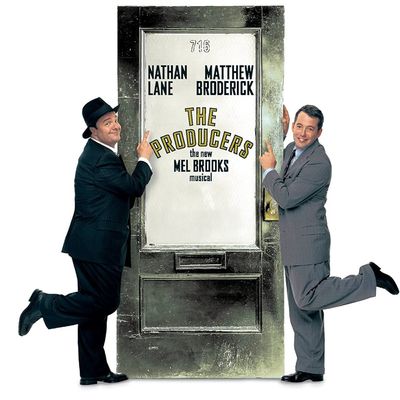
These three shows helped to spark a triumphant comeback for brand new musical comedies (which had been missing from Broadway for nearly 10 years) beginning with The Full Monty and Mel Brook’s The Producers.
Meanwhile another major development of the 90s was taking place – the rise of Disney on Broadway, and the unprecedented popularity of their unconventional, bold, risk taking production of The Lion King.
We close with a timely discussion of the tremendous challenges Broadway faced in the days, weeks and months following 9/11, and the roadmap that may or may not provide for the theater industry’s reopening and recovery as we move out of the pandemic over the next year.
Along the way you will hear insider stories about some of Broadway’s brightest lights – Nathan Lane, Mathew Broderick, David Yasbeck, Susan Stroman, Mel Brooks, Julie Taymor and more.
Transcript
This transcript was automatically generated and might contain errors.
[0:00] David Armstrong: Welcome to another episode of Broadway Nation, the podcast that tells the extraordinary story of how immigrants, Jews, queers, African-Americans, and other outcasts invented the Broadway musical and how they changed America in the process. I'm David Armstrong, and I call this episode "Razzle Dazzle: The Broadway Musicals Of The 1990s, Part 2." This is the second part of my interview with New York Post columnist Michael Riedel about his new book, Singular Sensation, a conversation that proved to be the perfect vehicle for continuing to tell the story of the Broadway musical as it moved from the final decade of the 20th century into the new millennium. Last week's episode ended with our discussion of the musical Crazy For You and the 1992 revival of Guys and Dolls, two productions that laid the seeds of what would soon become a major trend on Broadway, the return of the musical comedy.
Today we pick up that story with another herald of that development, the 1996 revival of the Bob Fosse, Kander and Ebb musical, Chicago. It began as just a one-week concert production that was part of City Center's acclaimed encore series, and it featured a dynamic cast of highly skilled performers, including Anne Ranking, B.B. Neuwirth, James Naughton, Marsha Lewis, and Joel Gray. This stripped-down, bare-stage, modern-dress version of Chicago soon transferred to Broadway, where up until the shutdown it was still running 24 years later. And as you will hear, this helped to spark a triumphant comeback for new musical comedies, which had been missing from Broadway for nearly 10 years and still shows no sign of stopping. Here's our discussion, and as usual, I'll chime in occasionally to fill in any missing information.
[2:16] Michael Riedel: To me, one of the most impactful things about Chicago was it brought performance back. It was not about the scenery, it was not about the costumes, it was not about anything except great performers standing in one and doing their thing. Which was a revolution at the time, or a revelation at the time, because we just hadn't seen that in a long time.
[2:38] David Armstrong: Well, the funny thing, too, about Chicago was, while it's certainly in the tradition of the musical comedy, to my mind it actually is closer to Rent in the sense that Rent, of course, was contemporary. But so was Chicago. Even though it was written by 1975, the reason it hits in the mid-90s is because it opens during the O.J. Simpson trial. Everything that Chicago's about, you know, how can they see with sequins in their eyes, give them the old razzle-dazzle, it's all showbiz, folks, was exactly what was going on in the courtroom that people were watching on television every day. So it didn't seem like an old show. It seemed like a show that had just been written and was inspired by the O.J. Simpson trial, with the mordant humor of Fred Ebb.
[3:20] Michael Riedel: And many people were discovering it for the first time. It was a hit its first time around, but it got so shadowed by a chorus line. And it really had become, I think, a show that musical theater fans loved, because the score is so good. But it was not well known the way it is today. But it's interesting, because one of the things I try to get across in this book is that we know Chicago's a big hit. We know Rent is a big hit. But Jonathan Larson did not know what Rent would do. And Fran and Barry Weissler, who produced Chicago, did not know it was going to make them fabulously wealthy. Because you have to remember, it began as an encores concert. And Fran and Barry went to see it and loved it.
And they called Fred Ebb the next day. And Fran said, Fred, please, if you could just give us a little piece of it before it moves to Broadway, just a little piece, we'd be so grateful. And Fran said, Fran, nobody's called, because everybody thought it was a concert. And it didn't have a falling chandelier and a flying helicopter and a barricade that was on a big turntable. And everyone said, who's going to pay $75 to see a concert version of an old show that most people don't know about? So nobody wanted to produce it. And Fran and Barry Weissler could not raise the money to do Chicago. And one day, they had a couple of million bucks, maybe, because Grease, a revival they had done, had been successful.
And I got the story from Fran and Barry themselves. They just looked at each other one night, and they said, we'll do it. We'll violate the Mel Brooks rule of showbiz. Don't put your own money in the show. And Fran remembered turning out the light that night, pulling the covers over her head and thinking, my God, what have we done? And 23 years later, and worldwide grosses of $3.5 billion. And Fran and Barry had 75% of it. And I've seen the estate in Wacawuck that they were able to buy with that kind of money. And I've been to the house in Palm Beach. Well, they rent there, but it's a nice place.
[5:06] David Armstrong: That is truly another incredible story. And then we have what I think of as sort of a double whammy, The Full Monty and The Producers in the same season. And of course, The Full Monty gets overshadowed by The Producers, but I think those two shows together just sort of cement that musical comedies are back and can work and have been with us ever since. The Full Monty featured a book by queer playwright Terrence McNally and a score by a new composer and lyricist David Yazbek. Yazbek was born in New York City in 1961. His father is of Lebanese descent and his mother was of Italian Jewish ancestry. He began cello lessons in elementary school and took up the piano as a teenager. While attending Brown University as an undergraduate, he wrote an original musical and also directed a production of Hair, for which he composed an original song to complement the classic score.
After college, he got a job writing for The David Letterman Show and won an Emmy as part of Letterman's writing team in 1986, but then he quit to pursue his love of music. From 1987 to 1989, he was the co-owner of the Manhattan Recording Company, where he wrote many jingles for television and radio commercials. During this time, Yazbek released five rock albums that highlighted his unique perspective and wry sense of humor. He also wrote the theme for the PBS TV series Where in the World is Carmen San Diego. Richard Rogers' grandson, Adam Gettle, was first approached about writing the music and lyrics for a musical version of the hit movie The Full Monty. He declined but recommended Yazbek. They had played together in a band. David Yazbek took the job and created a brilliant score.
[6:59] ♪ Musical number ♪
[7:30] David Armstrong: The Full Monty ran for two years, and Yazbek was nominated for a Tony Award for Best Score. This led to four more Broadway musicals, the moderate hit Dirty Rotten Scoundrels, The Unsuccessful Women on the Verge of a Nervous Breakdown, the Tony Award-winning Best Musical Hit The Band's Visit, and last season's Tootsie.
[7:50] Michael Riedel: Yeah, it's funny. I was a big, big fan of The Full Monty. And frankly, I was kind of skeptical of the producers because, again, you don't know these things are going to be hits. Because the last old Hollywood director who had put a show on Broadway was Blake Edwards in Victor Victoria, and it was not very good. And I remember when I heard Mel was going to do the producers, and I love Mel Brooks. We all love his movies. But Mel had not had some currency for a while when the producers of the musical came around. And I thought, oh my God, this could be another Blake Edwards. You know, this guy doesn't really know his way around the theater, can seem so old-fashioned and so out of touch. And indeed, I interviewed both Matthew Broderick and Nathan Lane, and they went over to Stroman's apartment for a reading of the show.
And they read through the script, and Mel sang the songs, and they went out for lunch afterward. And Nathan was, they were both a little concerned. They said, you know, some of Mel's jokes are a little old-fashioned, as Nathan put it in my book. He said, you know, Mel's gays are from outer space. And they looked at each other over lunch, and Nathan said, this is either going to be the biggest hit of all time or one of the biggest flops ever. They just, they did not know. And of course, that season, The Full Monty opened in San Diego that summer. I went to see it. Loved it. Got great reviews. It opened in the fall of 2000 to across-the-board raves. I remember being with David Yazbek at the opening night party, and I said, mark my words, you guys are going to win every Tony Award in sight.
And they would have. And they would have, but for the fact that, you know, that cold February of 2001, as Nathan and Terrence McNally, Nathan's great friend Terrence, told me, and Terrence wrote the book, remember, to The Full Monty. Nathan called Terrence from his dressing room at the intermission of the very first, very first public performance of the producers out in Chicago. And he said to Terrence, he said, it's intermission, and they're still laughing. And that was kind of the end of The Full Monty. And the producers came in and won more Tony Awards than Hello, Dolly!, which had the record before them.
[9:40] ♪ Musical number ♪
[10:04] David Armstrong: The Producers in 2001 was a wildly funny musical comedy, with music and lyrics by Mel Brooks, and a book co-written by Thomas Meehan and Brooks, adapted from his 1967 film of the same name.
[10:10] ♪ Musical number ♪
[11:13] David Armstrong: The story concerns a team of misfit Broadway producers who figure out they could make more money by producing a flop show than a hit show, and therefore they endeavor to find the worst script, the worst director, and the worst actors possible.
[11:59] ♪ Musical number ♪
[12:11] David Armstrong: In his trademark style, Mel Brooks mixed together many genres by folding classic burlesque jokes and gags into a buddy comedy and featuring an outrageous musical within a musical at the show's climax. Directed and choreographed by Susan Stroman, The Producers received a
[12:16] Michael Riedel: Recorded 12 Tony Awards, beating Hello Dolly's previous record of 10, and ran for six years on Broadway.
[13:16] Michael Riedel: And then this story also has a big twist. The producer starts out as the biggest hit ever, but then somehow it runs out of steam.
[13:28] Michael Riedel: I think people believed it was going to be the next Phantom of the Opera, but then surprisingly they have trouble once Matthew Broderick and Nathan Lane leave the show.
[13:35] Michael Riedel: Yeah, I mean, that was a very interesting problem for the show that I have to say I kind of was on to at the time when I was writing about it, just because Matthew and Nathan became such big stars from it that I thought it's going to be tough to recast these guys.
[13:50] Michael Riedel: I mean, they were the toast of New York. Everybody loved them. They were on the cover of every magazine, newspaper, and they were just so good together. Their chemistry was remarkable.
[13:58] Michael Riedel: And I remember thinking, OK, it's going to be tough to cast. And Nancy Coyne, who's a very shrewd advertising and marketing person on Broadway, she worked on the producers, and she begged the producers of the producers not to let Matthew and Nathan leave at the same time.
[14:11] Michael Riedel: She said, if you have two big stars, one can go, but you have to have the other one who's still there kind of as the anchor of the show. But Matthew and Nathan, they were exhausted.
[14:19] Michael Riedel: I mean, it was a tough show to do, and they were just they were ready to move on with their lives. So they left and they cast Henry Goodman, which I have to say I thought was, oh, this is a very smart idea because I knew Henry Goodman's performances from England.
[14:31] Michael Riedel: I'd seen him in Guys and Dolls. He was terrific. Brilliant. He gave a brilliant Shylock. I thought this is not a bad idea. You can't really replace Matthew and Nathan.
[14:39] Michael Riedel: But if you can find someone that New Yorkers don't know who's terrific like Henry Goodman, it'll be a discovery of a new star. And that is a shrewd tactical maneuver.
[14:48] Michael Riedel: The problem was, you know, Henry Goodman did not live in the world of Mel Brooks. He simply did not have Mel's rhythms. He didn't have that Jewish, rhythmic, jokey sound that, you know, all the great writers of the Sid Caesar show like Mel had.
[15:01] Michael Riedel: And I saw it firsthand, and I detailed this in the book. I'd heard from my friends in the cast that Henry Goodman, he wasn't funny. He was not getting the laughs that Nathan could get, you know, with his eyes closed.
[15:11] Michael Riedel: So I went to the matinee performance, Wednesday matinee, and I remember Henry Goodman came out. And there's a great line in the thing that Matthew, you know, brought down the house with.
[15:21] Michael Riedel: When I was young and gay, but straight. And Henry Goodman came out and said, When I was young and gay, but straight, there was no laugh.
[15:29] Michael Riedel: And I heard this banging because I was standing at the back of that. I had this banging on the line. And it was Mel. Mel was banging the wall, the back of the theater.
[15:36] Michael Riedel: And he kept banging throughout the performance because every laugh line Henry Goodman failed to get. And then, you know, they had to kind of a dramatic story, I tell in my kind of little involvement in it.
[15:46] Michael Riedel: They fired Henry Goodman a few days later. And the show never really recovered from that because then it kind of branded the show as, yeah, it's fun and great.
[15:53] Michael Riedel: But if you missed it without Nathan and Matthew, it's just not quite as good. And then to keep it going, they brought Matthew and Nathan back.
[15:59] Michael Riedel: And I asked Nathan, I said, Why'd you go back? He said, Well, let me see. There was the money. And then there was the money. And then there was the money.
[16:06] Michael Riedel: But that kind of did the show in because they were only back for a few months and then they were gone. And there was a sense if you miss them the first time, you missed a lot.
[16:13] Michael Riedel: If you miss them the second time, why bother? Because without them, the show just is not 100 percent, which is a little unfair to the show because it's an excellent show.
[16:20] Michael Riedel: But they just became so closely identified with it. You couldn't get out from under the very long shadows they cast over.
[16:25] Michael Riedel: Well, I also think they didn't manage the show well in terms of the replacement cast. And even I know I know a bunch of people who went into the show as replacements and were in the national tour.
[16:34] Michael Riedel: And there was a very heavy arm of this is how you do it. Yeah. And I think that worked when it was Mel Brooks telling them how to do it.
[16:42] Michael Riedel: But when it was the third assistant telling them this is how Nathan did it and you have to do it exactly this way, it just didn't work.
[16:48] Michael Riedel: And the actors were very frustrated by this. Some really brilliantly talented actors, Tony Award winners who just were stymied by this sort of lockbox they were put in by the people who were maintaining the show and rolling out the national tour.
[17:02] Michael Riedel: That's often a problem, I think, with national tours, because let's face it, I mean, you're in this business as I am. And you know that a Stroman or a Tommy Toon, they're not spending a lot of time on the national tours.
[17:10] Michael Riedel: Now, if you're really lucky, you have a really smart stage manager who knows exactly when to let an actor breathe and find it his own.
[17:18] Michael Riedel: But a lot of them are just like the job is to make sure this is how Nathan said this line and he raised his right hand and put his finger in the air.
[17:25] Michael Riedel: And that's what you have to do. And that's a straitjacket. That's absolutely right.
[17:28] Michael Riedel: I think perpetuated that problem they were having. They just couldn't get the replacement cast to really land the way the original cast had.
[17:35] Michael Riedel: No, I mean, you can't. As Susan Stroman says in the book, she said, you know what Nathan has, you can't teach.
[17:41] Michael Riedel: He feels an audience and he knows how to move with them.
[17:45] Michael Riedel: But he also knows how to move them. And he knows if he says this line and turns his face to the right, the laugh is going to be bigger than if he said the same line and turned his face to the left.
[17:55] Michael Riedel: And that is there's no acting teacher can tell you that.
[17:58] Michael Riedel: And nobody today has 40 years of experience in vaudeville that the people who created Broadway had, which Nathan just somehow seems to have innately.
[18:06] Michael Riedel: At 50, he spent 30 years on the Orpheum Circuit.
[18:09] Michael Riedel: He does. He does. Yes, he really somehow, some way he does come from that world.
[18:13] Michael Riedel: Matthew, to some extent, does too, because remember, Matthew got his start with a Neil Simon plays.
[18:17] Michael Riedel: So Matthew understands the rhythm of those kind of Neil Simon, Mel Brooks jokes.
[18:22] Michael Riedel: But one of the amusing things I discovered when I was writing this book, and Nathan's a big character in it, during Guys and Dolls, Jerry Zaks brought him in to audition for Nathan Detroit, of course.
[18:29] Michael Riedel: And his first audition was great. And all the money people loved it.
[18:36] Michael Riedel: And they said, yeah, but the problem is he's not Jewish because they were thinking Sam Levine.
[18:39] Michael Riedel: And Jerry said, OK, well, I want to bring him in again.
[18:41] Michael Riedel: And again, Nathan was just brilliant in the second audition.
[18:44] Michael Riedel: They said, he's so funny, but he's not Jewish.
[18:47] Michael Riedel: And Jerry finally just erupted.
[18:49] Michael Riedel: And he said, look, unless he has to perform a circumcision on stage, he doesn't have to be Jewish.
[18:53] Michael Riedel: OK. And the irony of all that is, as I remember talking to Nathan about Guys and Dolls, he said, well, you know, the review from Frank Rich was great, but he had one quibble.
[19:01] Michael Riedel: I said, what's that? He said, I wasn't Jewish.
[19:03] Michael Riedel: And I went back and I read the review and Frank praises Nathan.
[19:07] Michael Riedel: He said, but he doesn't quite have the Jewish rhythms of Sam Levine.
[19:11] Michael Riedel: Don't go away. Broadway Nation will be back right after this short break.
[19:16] Michael Riedel: Another thread in the book, a huge one, is the rise of Disney during this, the emergence of Disney on Broadway and their incredible takeover is too strong a word, but certainly they have taken over a large part of Broadway with this series of shows, of course, starting with Beauty and the Beast, which really predates this book a bit.
[19:44] Michael Riedel: But then we get to The Lion King, which is at the center of the book.
[19:48] Michael Riedel: Well, again, I mean, I wanted everyone knows The Lion King is hugely successful, but I wanted to go back and talk to the people who are putting it together, who had no idea it was going to be what it was.
[19:56] Michael Riedel: What actually thought it could be a giant disaster.
[19:57] Michael Riedel: Yeah, absolutely. And they almost pulled the plug on it at one point, as I as I show in the book.
[20:01] Michael Riedel: But, you know, Disney had been kind of seen as this remote, slightly evil thing that was moving in from California and going to do theme park shows of Beauty and the Beast.
[20:10] Michael Riedel: But Michael Eisner, who was then the chairman of the company, to his credit, said, you know, the next show we're going to do is The Lion King, and it can't be like Beauty and the Beast.
[20:17] Michael Riedel: It has to be different. And he was smart enough to appoint as the heads of Disney theatrical Peter Schneider and Tom Schumacher.
[20:23] Michael Riedel: And it's key to understanding what they did.
[20:25] Michael Riedel: They were theater people. They were not movie people.
[20:27] Michael Riedel: They both came from the theater world.
[20:29] Michael Riedel: Tom had been in the experimental theater in L.A. and San Francisco.
[20:32] Michael Riedel: Peter had been the stage manager on Little Shop of Horrors in New York, and they both worked together in experimental theater in L.A.
[20:38] Michael Riedel: So they were not theme park people.
[20:39] Michael Riedel: And they weren't movie people either, even though they had successfully rejuvenated the animation department at Disney.
[20:45] Michael Riedel: But they did that by treating those shows as if they were Broadway musicals.
[20:48] Michael Riedel: And so it was Tom Schumacher. They were trying to figure out how we're going to make The Lion King not into, you know, I think they were calling it Hamlet with fur or something like that.
[20:55] Michael Riedel: And it was Schumacher who said, well, why don't we just call Julie Taymor?
[20:58] Michael Riedel: And, you know, Julie had never done anything commercial in her life.
[21:01] Michael Riedel: She was a total avant garde person.
[21:03] Michael Riedel: And I'd seen a number of her shows and they were beautifully done and imaginatively done with that wonderful international puppetry that she brings into play.
[21:10] Michael Riedel: But they were odd pieces, I have to say.
[21:12] Michael Riedel: And you just could not really put that combination of this queen of the avant garde with this cozy family company.
[21:18] Michael Riedel: It just didn't seem to work in any way.
[21:20] Michael Riedel: And indeed, they had a workshop and Julie had her puppets and the headdresses that she does, all that kind of stuff.
[21:27] Michael Riedel: And it was done in a rehearsal hall and everything wasn't lit and they weren't painted yet.
[21:31] Michael Riedel: And the people from California, the film people, as they always were referred to by the New York people, the film people didn't understand what she was doing.
[21:38] Michael Riedel: I mean, one of them said to Michael Eisner, I don't know what's going on here.
[21:41] Michael Riedel: I mean, there's this actor, he's got this thing on his head. Am I supposed to look at the thing on his head? Am I supposed to look at his face? What is this? Now, Julie, in her mind, because she'd done this kind of work before, she knew when it was properly painted and properly lit, the audience would have no problem at all.
[21:54] Michael Riedel: But these guys from the coast, it's an old fact, the coast, they used to say in the 70s, these guys from the coast, they couldn't get it.
[21:59] Michael Riedel: And, you know, on the way out of that workshop, Michael Eisner said to Tom Schumacher, he said, get, I eat already because we're pulling the plug on this one.
[22:06] Michael Riedel: And Tom and Peter and Julie were left on the corner in New York as Michael's fleet of SUVs took off.
[22:13] Michael Riedel: They were sick to their stomachs.
[22:14] Michael Riedel: And it was Peter who said, you know, Julie, we we failed you. Your stuff wasn't lit properly. It wasn't painted properly. It was in the wrong space.
[22:21] Michael Riedel: We have to get this in front of Michael in the appropriate setting.
[22:24] Michael Riedel: And so they did another workshop for Michael and Michael Eisner alone in the Palace Theater.
[22:28] Michael Riedel: Julie's headdresses and her puppets, they were all painted now. Don Holder had done his magnificent lighting.
[22:33] Michael Riedel: And Julie presented three versions of The Lion King for Michael.
[22:36] Michael Riedel: One was kind of a bit like cats, you know, leotards and fur and that sort of thing.
[22:40] Michael Riedel: One was a combination of her extraordinary work and that kind of old fashioned stuff.
[22:44] Michael Riedel: And the other was just her vision of what it could be with those headdresses and all of her Indonesian puppeteering.
[22:50] Michael Riedel: And Michael, to his credit, looked at and said, you know what? The bigger the risk, the bigger the payoff. We're going to go with your original vision.
[22:56] Michael Riedel: And the payoff turned to be about nine billion dollars and still counting. Amazing.
[22:59] Michael Riedel: Again, you know, it was unexpected. They did not know what they had while they were putting The Lion King together.
[23:05] Michael Riedel: And that it became the highest grossing entertainment property of all time.
[23:10] Michael Riedel: Movies, video games, of anything, a Broadway show is the highest grossing entertainment property of all time is pretty mind boggling when you think that people consider Broadway often to be not at the center of American culture.
[23:22] Michael Riedel: And what your book shows is that it always comes back to the center of American culture.
[23:26] Michael Riedel: After being down and out, it comes back again.
[23:28] Michael Riedel: Yeah. And the chapters on Disney gave me the ability to introduce, I guess you could call him kind of my villain of the piece, Garth Drabinsky, who created a rival empire to Disney called Live-In, which you may remember from the old days.
[23:41] Michael Riedel: And I don't think before I wrote this book, no one had really, really detailed the whole rise and fall of Garth Drabinsky.
[23:45] Michael Riedel: And he, you know, he loomed so large in the 90s on Broadway.
[23:51] Michael Riedel: Well, indeed, all across the country. He had all these theaters and he was producing all these shows.
[23:54] Michael Riedel: And it turned out that the entire company was a fraud.
[23:57] Michael Riedel: And what do you see the legacy of that? You spend a lot of time on Garth.
[24:00] Michael Riedel: And I think it's a fascinating story. But what did Broadway learn from that experience?
[24:04] Michael Riedel: Well, that's a good question. I think what Broadway learned was, well, actually, Garth is is in a long tradition of a lot of charlatans who worked on Broadway.
[24:11] Michael Riedel: There were a lot of people who took investors' money and then disappeared.
[24:18] Michael Riedel: I mean, look at what's the producers about. It's Max Bialystock. You know, we're going to raise one hundred thousand dollars. We're going to produce a play for forty thousand. It's going to be a flop. No one will know what happened to the missing sixty thousand. And we'll talk. Right. You know, so Garth is he's in a long tradition of those.
[25:33] Michael Riedel: It's interesting that you talk about certain people in the book who had his number from the beginning and really had it figured out, but it took, obviously, the whole empire coming crashing down before the world saw it, before everybody could see it.
[26:03] Michael Riedel: Well, Garth was a bully. I mean, he bullied a lot of people who worked for him, as I show in the book. He could be pretty brutal to underlings, but he also bullied the press. And so if you pushed him on something, he would yell and he would scream. I remember having one interview with him after Ragtime opened, and I put this in the book, actually. I sat at his very lavish office, which ironically looked down on the Marquis of the Lion King, which would be the show that would beat Ragtime for the Tony Award and destroy Garth's empire. But I remember saying, I said, you know, Garth, the criticism about you at Cineplex Odeon was that you overspent and you expanded too rapidly. And at the end of the day, you were pushed out of that company.
And I said, a lot of people on Broadway, Garth, think you're repeating yourself. And I remember he banged his table so hard, his desk so hard, that my little tape recorder jiggled and fell off. You know, I mean, he had this explosive personality and would really try to bully you. But then he would switch, like all these kind of slightly psychopathic characters can do, after the eruption happened, and you were kind of terrified. Then there'd be the quiet Garth who would say, you know, Michael, I just want to do good work. That's all I want to do. You know, trying to elicit your sympathy. That's the kind of character he was. And I have to say, aside from myself and the very good reporter Jeremy Girard at Variety, Garth generally had the press bamboozled, because he put on the best lunches, he put on the best opening night parties, he made you feel that you were part of this extraordinary thing that was happening.
And when he spoke to you for an interview, he made you feel that he was giving you the real inside story on what was going to go on. And you were the greatest critic of all time. You were the best interviewer of all time. He had that ability to seduce you and kind of head you off from asking some of the tougher questions.
[27:38] Michael Riedel: But I think so many people who cover Broadway, certainly at that time, were more kind of fans or critics, and they weren't interested in the business of it. And I think somebody like me and somebody like Jeremy, who covers the business from Variety, we were always interested in the business, and we were talking to the real producers and the real theatre owners. So we had insight from them into that this whole economic model just doesn't seem to be working. If you were a critic, and you were going to interview Garth, you would say, Hey, I'm in Kiss of the Spider Woman. It was terrific. Showboat was wonderful. Ragtime was great. So from your perspective, these would be incredible shows that he's doing. Why? Why wouldn't they be hits? Because you just wouldn't understand the economics of what he was really doing behind the scenes.
[28:14] Michael Riedel: So the last section of your book deals with the shutdown and reopening of Broadway after 9-11. And it's impossible to read that section without thinking about what's happening right now. And are there parallels, do you think, between the two situations? Do you see the 9-11 shutdown as any sort of a roadmap for how it can reopen this time?
[28:35] Michael Riedel: There's only one area, which I'll get to in a second. But the biggest difference and the biggest problem is after September 11th. And we forget September 11th was really an existential crisis for Broadway. Because I remember talking to Jerry Schoenfeld, the head of the Schubert organization then, that morning after the attack on the World Trade Center, Jerry said, Michael, I don't know when we can reopen. I mean, Times Square was on the list of the top 10 targets of New York City. Back then, we didn't know there were maybe more sleeper cells in New York. There could have been bombs planted places. We didn't know what was going to happen. And if you remember, in Moscow, some terrorists had taken over a theater and they killed 140 people.
There was a real fear that if you opened up Broadway, terrorists could storm the theater and shoot the audience. But it was Rudy Giuliani, when he was sane, who said, you know, I want to show the world that New York has not been brought to its knees. And the best way to do that is to light the marquees of Broadway. And he called all the producers together. And I detail this in the book. And he said, I don't care what you have to do. I want Broadway up and running on Thursday. And God love them. They got it up and running on Thursday.
[29:29] Michael Riedel: But the difference between that and this pandemic is after September 11, people wanted to be together. You did not want to be alone. You wanted to give a sense of the community of Broadway, of New York City. You just wanted to be with people. The problem with the pandemic is you can't be with people. And, you know, there's nothing more communal than going to see a Broadway show. And you couldn't engineer something better to destroy a business. First of all, you got all the actors who are singing, which is a way to spread the virus. They're kissing. It's romantic. That's how you spread the virus. They're projecting. That's how you spread the virus. In the orchestra pit, the cramped orchestra pit, you've got all these people blowing on things.
That's how you spread the virus. And you have 1,500 people in these old buildings that don't have the best ventilation in the world. And that's another way to spread the virus. So you can't be together. And that's the huge difference between September 11 and COVID-19.
[30:14] Michael Riedel: Where there might be an overlap, I do think the unions and the producers and the theater owners did pull together after September 11 and thought, OK, we got to rethink the finances of this business so we can subsidize tickets or put tickets at a lower price to entice people to come back. And the remarkable thing was it was only a year after September 11 that Broadway was posting record grosses again. I think with COVID-19, what's going to have to happen is this whole business, which frankly has gotten very, very rich and a little greedy with their $1,000 orchestra seats to Hamilton, they're going to have to rethink their entire economic model. You're not going to reopen Broadway when and if you can reopen it in a year, year and a half and say, hey, everybody, come back.
And it's going to cost you $1,000 to see a show. That's not going to happen. So you have to go in there and renegotiate all of the contracts with the stagehands and the actors and the musicians. So when you reopen Broadway, you can say tickets are $150. They're not $800 anymore. To try to entice people to come back. And that is something that's going on behind the scenes right now. But that's going to take a lot of tough negotiations. But they've got time on their hands because they're not opening up for a year, year and a half, I'm afraid.
[31:14] Michael Riedel: Absolutely. And the turnaround after 9-11 was tremendously fast. It was amazing that you went from this reduced economic situation, which, as you said, everybody pitched in for. And it completely, in a way, did go back to the old model and even beyond the old model. But I think you're right. I think this time around, it's going to take a lot longer, number one. First of all, we're going to be shut down for, you know, who knows till when. And the risk to all of those shows on Broadway, whether it's Phantom of the Opera, which those long running shows may be at the most risk of not reopening. But then you look at something like Mrs. Doubtfire, something that was just in previews that has all that money hanging in the balance right now, waiting for an opportunity to realize itself. It's really a mind boggling, you know, conundrum to try to figure out.
[31:56] Michael Riedel: Yeah. I mean, I just go back to my feelings on September 11th. And again, I try to get this across in the book, because we didn't know how things were going to turn out. But we were really worried about the survival of the industry. I mean, I do think it'll come back. It'll come back in a different way. And this one's going to take some time. But, you know, Broadway will never just disappear. I can't imagine that ever happening. But right now, I can't really quite see the path. And, you know, maybe in my third book, when I piece it all together, I'll be able to make sense of how it all happened and why it all happened.
[32:26] Michael Riedel: The rebirth of Broadway.
[32:28] David Armstrong: Right. But that's a book for the future, sad to say, I think.
[32:32] Michael Riedel: You mentioned Giuliani, and he's a real hero in your book and a real hero in that situation. And it's so, again, such a sort of contrast to the Giuliani that we see now every day. But he really did step up and lead in a tremendously inspiring way.
[32:47] Michael Riedel: No question. And also, you know, I mean, the thing that I was admired about Rudy, and I liked about him, Rudy loved the theater. He loved the opera. He loved the theater. He understood the importance of the theater to New York's cultural and economic life. And he went to a lot of plays. He talked up the theater. He pushed the theater all the time.
[33:03] Michael Riedel: And the irony is we have this progressive mayor, de Blasio, who could not care less about the theater. He went to one play in the eight years he's been mayor. And that was Hamilton, of course, because he couldn't get a ticket. And all my friends in the theater say he is completely unresponsive to their concerns because his attitude is theaters for rich people, for the one percent. You guys are all the one percent and I'm not interested in your problems. And that is just that's that's just wrong, because, yes, there are a lot of people on Broadway who made a lot of money. And you and I know them. But Broadway also supports 90,000 jobs of people who are ushers, who are stagehands, who are putting kids through college, who are musicians.
I mean, these people are not making fortunes. There's a whole infrastructure there of working people that Broadway has supported for years and enabled them to have nice lives through hard work. But these people are not millionaires. They are not the one percent. And de Blasio doesn't seem to care about these people.
[33:51] Michael Riedel: And, you know, Hugh Jackman can survive. Nathan Lane can survive. The Shuberts can survive. But I have a lot of friends who were kids in the chorus who have had to leave New York and move back in with their parents because they have no incomes and they don't have even the fallback job, which is waiting tables because the restaurants were closed. And these are middle class workers, like any other middle class workers. But for some reason, we have trouble making people see that, having people understand that this is an industry of millions, really.
[34:15] David Armstrong: And we have the same issue here in Seattle. Yeah, we have this whole world of theater. We have five major theater companies and not to mention the opera and the ballet and the symphony.
[34:23] Michael Riedel: Yeah. And all of those people are out of work.
[34:25] David Armstrong: Absolutely. The publicists and the stagehands and the assistant stagehands and the assistant stage managers and the people in the restaurants next door and the waiters who work in those restaurants and the parking attendants who take people's cars. And that whole infrastructure has been obliterated.
[34:37] Michael Riedel: We'll take inspiration from your book that it will find a way to turn around again, just as it did the last time we had a tragic situation like.
[34:44] Michael Riedel: Well, you know, I mean, my faith ultimately rests with the talent. And I do think a business that attracts people like Nathan Lane and Faith Prince and Edward Albee and Mel Brooks and Susan Stroman and Julie Taymor is a business that just can't die because these people have such tremendous talent and it has to go somewhere. And we can only hope there'll be a new generation of all these people who will want to be in the theater and they will help rebuild it.
[35:05] David Armstrong: I think that's a perfect way to wrap up. Thank you so much, Michael.
[35:08] Michael Riedel: It's a great book. And it was wonderful to talk to you today and hear the inside track on how you came to write it.
[35:13] David Armstrong: Thanks, David. Pleasure talking to you. Appreciate it.
[35:19] David Armstrong: My special guest today was Michael Riedel, whose new book is entitled Singular Sensation, The Triumph of Broadway. On the next episode of Broadway Nation, I'll focus on Broadway in the 21st century. Broadway Nation is written and produced by me, David Armstrong. If you enjoy these podcasts, you could do me a big favor by subscribing to the show wherever you listen. And if you listen on Apple Podcasts, please give us a five-star rating and write a brief review of the show. This can really help to put the show in front of other Broadway fans that might be interested. I also invite you to follow Broadway Nation on Twitter, Instagram, and our Facebook page, where I often post photos, video, and additional information about the musicals that are featured in each episode. Special thanks to KVSH 101.9, the voice of beautiful Vashon Island, Washington, and to everyone at the Broadway Podcast Network.
© Broadway Podcast Network, All Rights Reserved