

At the beginning of each episode of this podcast I state that the Broadway Musical was invented by various marginalized and disenfranchised people, and that in the process of creating it, they transformed American culture as well... Read More
From the show: BROADWAY NATION
Featured Shows



About
At the beginning of each episode of this podcast I state that the Broadway Musical was invented by various marginalized and disenfranchised people, and that in the process of creating it, they transformed American culture as well. This is the second of several episodes in which I demonstrate exactly why I think that is true, and how it happened.
When we consider the people who created the musical it certainly should not be surprising that there are at least 30 popular and successful Broadway musicals that have stories, plots and themes that explicitly deal with Equity, Justice, and Inclusion in regard to Race, Ethnicity and Culture.
People are sometimes surprised when I tell them that this is one the Broadway musical’s principal themes. They don’t think of musicals in that way. But as we have seen over the past 32 episodes -- musicals have always closely reflected American culture, and from the very beginning, these issues have been at the center of America’s story and our country’s many attempts -- and recurring failures -- to fulfill and achieve its founding principal -- that all people are created equal.
The great musicals that I profile today include The Red Moon, As Thousands Cheer, Show Boat, South Pacific, The King And I, West Side Story, Fiddler On The Roof, Cabaret, Ragtime, Hairspray, and Wicked.
Transcript
This transcript was automatically generated and might contain errors.
[0:01] ♪ Musical number: "You've Got to Be Carefully Taught" — performed by Unknown performer ♪
[0:19] David Armstrong: Welcome to another episode of Broadway Nation, the podcast that tells the extraordinary story of how immigrants, Jews, queers, African Americans, and other outcasts invented the Broadway musical and how they changed America in the process. I'm David Armstrong, and I call this episode Equity, Social Justice and Inclusion, the principal themes of the Broadway Musical Part 2.
[0:42] ♪ Musical number: "You've Got to Be Carefully Taught" — performed by Unknown performer ♪
[0:58] David Armstrong: As you just heard, at the beginning of each episode of this podcast, I state that the Broadway musical was invented by various marginalized and disenfranchised people, and that in the process of creating it, they transformed American culture as well. This is the second of several episodes in which I'm trying to demonstrate exactly why I think that's true and how it happened. This podcast is inspired by a course on the history of the Broadway musical that I teach at the University of Washington School of Drama. And when I was preparing those lectures, I compiled a list of the most important and influential writers, composers, directors, choreographers, and producers from the earliest days of the musical right up to today.
More than 350 people were significant enough to make the list. And amazingly, only 36 of them are straight white Anglo Saxon Protestant males. I knew that the overwhelming majority of the inventors of the musical came from these marginalized groups, but I did not expect it to be almost 90%. I update and expand that list frequently, but the percentage barely changes. With that in mind, it should not be surprising that I can name at least 30 popular and successful Broadway musicals that have stories and plots that explicitly deal with equity, social justice, and inclusion in regard to race, ethnicity, and culture. People are often surprised when I tell them that this is one of the main themes of the Broadway musical.
They don't think of musicals in this way. But as we have seen over the past 32 episodes, musicals have always closely reflected American culture. And from the very beginning, issues of race have been at the heart of America's attempts and recurring failures to fulfill and achieve its founding principle that all people are created equal.
[2:39] David Armstrong: Were the creators of Broadway visionary individuals and creative teams that were way ahead of their time in understanding all of this? Absolutely yes. Were they so far ahead that all of their work can be held up to all of the progressive standards of today? Of course not. No artist of any period in the past or the present could fully visualize how society would evolve over the coming decades and centuries. Inevitably, they were influenced and affected by the racist and patriarchal societies and periods in which they lived. Just as no artist of today or in the future will be able to fully understand the full potential of human liberation. The shows of today will undoubtedly be seen by future generations as having out of date problematic elements.
This is already happening with Hamilton. But I don't believe these limitations should take anything away from these great shows of the past. Instead, I believe we should marvel at and celebrate how forward thinking they were for their time, and how much they still speak to the concerns and issues of today, in spite of whatever faults and limitations they may contain.
[4:10] David Armstrong: In episodes three and four, I talk about two waves of black-created Broadway musicals, the first of which spanned from 1889 to 1910, and the second of which coincided with the Harlem Renaissance in the 1920s. Although, on the surface, elements of outright racial equity, justice, and inclusion don't seem to have been part of the makeup of these musicals, they were certainly big social statements in and of themselves. Through these shows, black writers, directors, choreographers, producers, and performers, who were the children and grandchildren of former slaves, claimed their right to an equal place on Broadway right alongside George M. Cohan, Irving Berlin, and the Gershwins. And by creating black characters that were college students, war heroes, businessmen and politicians, and placing them in serious romantic relationships, they were challenging the white establishment view as well.
[5:02] David Armstrong: The musical from this period that I'm most fascinated by is called The Red Moon, which opened in 1909. It had book and lyrics by Bob Cole and music by Jay Rosamond Johnson, and was billed as a sensation in red and black. In his book Black Musical Theater, author Alan Wool describes the show like this: The folklore of two of America's minorities, blacks and Native Americans, was the basis of this musical comedy. Bob Cole claimed that they had decided to do the show while traveling through the Western United States with their vaudeville act. Cole and Johnson performed on an Apache reservation and they discussed Indian music and folklore with their hosts. Rosamond eventually integrated Indian style melodies into his score for The Red Moon.
The leading character of The Red Moon, originally played by the acclaimed black star Abby Mitchell, is the daughter of a black woman and an indigenous man, and the story involves conflict and eventually reconciliation between the two sides of her family. The press hailed the show as brilliant, ambitious, and well worth seeing. And following its New York success, the show toured America for almost a year. But of course, it is almost completely lost to us today.
[6:11] David Armstrong: One of the aspects of these black shows that I would love to know more about is the impact and influence that they had on other Broadway writers of the time. What was the interaction and conversation that went on between the black and white creators? Unfortunately, almost all of the early black creators of Broadway died way too young, no doubt because of a legacy of racism, segregation, and inequity in healthcare that we're still experiencing today. Because of this, their careers, lives, and connections to their Broadway colleagues are woefully undocumented and underreported. But I can't help but wonder what impact shows like The Red Moon had on Oscar Hammerstein and Jerome Kern, and how might this have influenced their creation of the first truly great musical play, Show Boat, which of course has issues of racial justice at the very center of its story.
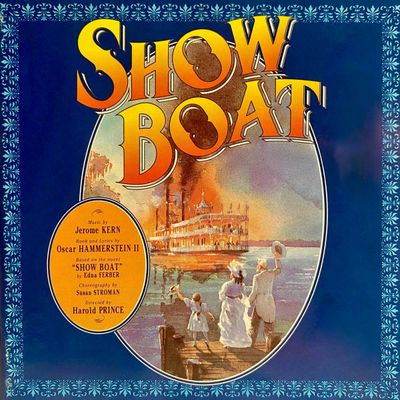
[6:43] David Armstrong: Show Boat was the first integrated musical in both senses of the word. It was the first Broadway show to have both black and white principal and ensemble members performing together side by side in the same scenes and musical sequences. And as Albert Evans and I discussed back in episode 11, in this show, Oscar Hammerstein and Jerome Kern more fully and seamlessly integrated book music and lyrics than had ever been done before. Today, Show Boat remains inspiring and clearly progressive in many ways, while at the same time it includes some badly dated and troubling elements. Still, the most memorable characters in Show Boat are Julie and Joe.
[8:55] David Armstrong: It is the prime example of how a character establishing song can and should work. It instantly creates a fully three-dimensional portrait of this man, and it positions him as the heart and soul of the musical. Although he is never central to the plot, his multiple reprises of the song tie the entire show together. Joe is the embodiment of the life force of the river. And as is clear in the second half of the story, the further the characters get away from the river, the more problems they have. Like the river, Joe is a survivor, he just keeps rolling along. In contrast, Julie is a tragic figure. Even with her limited stage time, she is central to Show Boat's story. Everything that happens in the plot of Show Boat is set in motion by what is called the miscegenation scene, when her black heritage is exposed, and Julie and her white husband Steve are forced to leave the showboat. When we see Julie again in the middle of Act 2, her marriage has fallen apart, and she is performing in a Chicago nightclub called the Trocadero.
[10:10] ♪ Musical number ♪
[11:30] David Armstrong: Because he's just pointing. Magnolia, the show's rebellious ingenue and leading lady, is also living in Chicago.
[11:52] David Armstrong: She now has a young child, and her marriage is also falling apart. After great initial success, her husband Gaylord Ravenel's career as a professional gambler has gone disastrously wrong, and he runs away in shame from not being able to support his family. Gaylord is revealed to be a weak man, and Magnolia is shown to be the braver, stronger person who understands that she must now provide for her daughter. She goes to audition for a singing job at the Trocadero, not having any idea that Julie works there. Unseen by Magnolia, Julie witnesses her dear friend Magnolia's audition and tells the club's owner to hire her, and then Julie leaves the club. We feel and fear that she's going off on a drinking binge.
Magnolia never knows that Julie gave her the job. This eventually leads to Magnolia becoming a famous Broadway star. The white character benefits from the fall of the black character. It's clear that the authors of Show Boat believe this to be a great injustice, and they wanted the audience of 1927 to fully experience that injustice. Overall, the show was a thrillingly entertaining series of wildly funny, satirical, and very topical comedy sketches, literally ripped from the headlines of the day. And these were interspersed with lavishly staged songs and dances by some of the biggest stars of the 1930s. One of those stars was the great black star Ethel Waters, who was billed above the title along with the three white stars of the show, and this itself was a major statement.
And in the midst of all of that show's frivolity and high spirits, Irving Berlin very purposely created one devastatingly serious song, especially for Ethel Waters to perform, The Heartbreaking Supper Time, a song that called out the series of tragic lynchings that were taking place that year. Twenty-eight black men were lynched in eleven states.
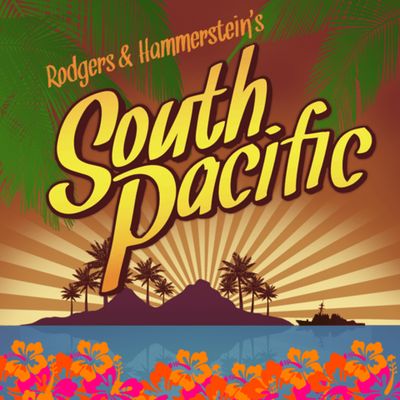
[14:01] David Armstrong: Supper time. Somehow I will cursed. Men of mine. Coming home no more. Why did Berlin do this? I would say it was a savvy combination of social activism and showbiz know-how. He wanted to make a statement, and he knew that he had the right star and the perfect framing for it to have tremendous impact. No one who saw it would ever forget it, and we're still talking about it 90 years later. Don't go away. Broadway Nation will be back right after this short break. Most people live on a lonely island. Lost in the middle of a foggy sea. This brings us to Rogers and Hammerstein's South Pacific. Most people long for another island. One where they know they would like to be. The musical was primarily drawn from two of those stories, with a few additional characters and incidents taken from some others.
Ethnic and racial tensions and issues were central to many of the original stories as they would be to the two main plot lines of South Pacific. To make this work, Rogers and Hammerstein tweaked their formula a bit. Oklahoma and Carousel had both used the standard musical comedy and operetta format of a serious leading couple at the center of the story and a comic supporting couple as the secondary story. But now, for the first time, both couples and both of their stories involved serious plot lines, and they would continue to use this dynamic in all of their future shows. In South Pacific, the central couple is Nellie and Emile, and the supporting couple is Lieutenant Cable and Liat. In the original story and in the musical, Bloody Mary and her daughter Liat are Tonkinese.
Today we would call them Vietnamese, and they were brought by the French planters to work on these Polynesian islands. All of these issues were very personal to Hammerstein. He always had strong feelings about injustice in America and the world, and he supported and worked for a number of anti-fascist groups and causes. But issues of race affected his family personally. His sister-in-law was married to a Japanese man who was placed in an internment camp during the Second World War, and then even after his release, he couldn't find a job until Hammerstein's wife hired him to manage the business side of her interior design firm.
[17:13] David Armstrong: Internalized racism is the central conflict of both of the main plot lines of South Pacific, and Rogers and Hammerstein dramatized this so effectively that South Pacific received the Pulitzer Prize for drama and became the biggest Broadway hit up to that time. RH would make equally bold moves with The King and I. The King and I tackles many major themes: imperialism, globalism, dictatorship versus democracy, and universal human rights. I find one of the most subversive elements of this story to be the central relationship between Anna and the king. There is clearly a strong connection between them, and even a very evident sexual attraction. However, it is abundantly clear that in that time and that place, this is an impossible love story.
From either of their points of view, as well as the views of both Western and Thai society, there could never be a romantic or sexual relationship between them, no matter how connected and engaged they are on an intellectual and emotional level. And this, at least subliminally, makes us ask why. Why can't they be together? We absolutely want them to be together, and as we watch the show, our minds and bodies are emotionally engaged in willing this to happen. This, of course, makes us question the rules and traditions of their time as well as our own. What was so was so. What was not was not. Now I am a man. World have changed a lot. Some things nearly so.
[19:15] David Armstrong: I am a goal living life, as leader of my kingdom, I am a goal. Be father to my children and husband to each wife, etc., etc. and so forth. If mold in heaven Buddha showed away, every day I try to live another day. If the old in heaven put a show the way, every day I do my best for one more day. But is a puzzlement. The second couple, and again, this time it's a serious subplot, concerns Tup Tim, a slave sent by the King of Burma as a gift to King Mongut. But she is in love with Lun Tao, a scholar who has also been sent to the court of Siam at the same time. Tup Tim becomes one of Mrs. Anna's students, and she encourages Tup Tim to read Harriet Beecher Stowe's novel Uncle Tom's Cabin and to write a play based on it to present before the king when the British envoy comes for a state visit.
This story is vividly dramatized through Jerome Robbins' ballet The Small House of Uncle Thomas, and it dramatically underlines the principal theme of The King and I, which is anti-slavery, the fundamental right to freedom for all people. The King and I has been criticized for what can be seen as presenting Western culture as superior and more evolved than Eastern culture. However, I think if you look closer, you'll realize that what Hammerstein is actually doing is pitting feminine, democratic, humanistic values against masculine dictatorial, authoritarian values. The negative aspects of the king don't so much represent Thai culture as they represent a male-centered patriarchal power imbalance.
Although the authors present the king as being incredibly smart, resourceful, charismatic, and dynamic, we also see that the king shares some of the same inhumane values, which at that exact same moment in time, America is fighting the civil war over.
[21:24] David Armstrong: The barbarians of the story are the men who believe in slavery, both American and Thai. The show ends with a complex mix of sadness for the death of the king, who both Anna and the audience have developed great affection and empathy for, in spite of his many flaws. And in addition, she and we also feel great hope for the future of Siam under the new king, who we see will bring freedom and democratic values to his people and therefore the world. Suppose you are king. would make proclamation. Go on, make it, make it. Regarding custom of buying to king in fashion of lowly toad, I do not believe this is a good thing, causing embarrassing fatigue of body, degrading experience for soul, etc., etcetera, etc. This is bad thing.
You are angry with me, my father. Why do you ask question? If you are king. Nor of woman. This proclamation against bowing, I believe to be your fault. Oh, I hope so, Your Majesty. I do hope so. Uh, rise up. Anna has literally been the new king's teacher, at least within the semi-fictional story of the musical, and she has helped to bring this about, not because she represents Western culture, but because she is a woman who represents freedom and democracy. That said, when The King and I is produced today, the director and creative team certainly need to be very careful to avoid any stereotyping or condescension of the Thai characters.
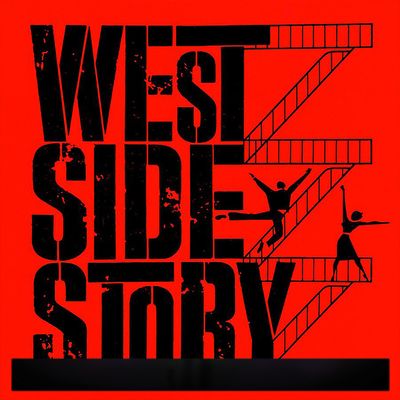
[23:45] David Armstrong: So place for us and quiet for us. Arthur Lawrence, Stephen Sondheim, Leonard Bernstein, and Jerome Robbins. And all four of them were both Jewish and gay. And other queer members of the original creative team included the set designer Oliver Smith, lighting designer Gene Rosenthal, and costume designer Irene Sheriff. This amazing group was clearly making a statement. The anti-racist themes and messages of the powerful musical they created are certainly not subliminal. They are front and center. But did the creators of West Side Story get together and say, we're gay and we're Jewish and we feel oppressed, so we're going to write a musical that will be a metaphor for the prejudice and alienation we experience in this society?
Of course they didn't. But when they decided to create a contemporary retelling of Romeo and Juliet, they could not help but bring their thoughts, their feelings, their emotions, their life experience, and their humanity to the work. That's what great writers, directors, choreographers, and designers do. And their story of rival gangs, ethnicities, and cultures inspired them to write a song about a love that dare not speak its name.
[26:27] David Armstrong: Two great musicals from the 1960s both deal with anti-Semitism. Fiddler on the Roof was part of that era's roots movement, which was a counterreaction to the cultural homogenation of the 1950s. Instead, now America's ethnic, racial, and cultural origins and history were being celebrated. Fiddler dramatizes the pogroms, the organized anti-Jewish riots that swept the Russian Empire at the beginning of the 20th century and drove so many Jews from Eastern Europe to America. And the musical Cabaret by another all Jewish and gay creative team tells the story of Jews trapped in Europe during the rise of the Nazis 30 years later, and it foreshadows the Holocaust that is about to come.
[27:25] David Armstrong: With a book by Terrence McNally, lyrics by Lynn Ahrens, and music by Stephen Flaherty, Ragtime masterfully dramatizes the full spectrum of these issues within its central storylines. White privilege, overt, internalized and systematic racism, and anti-Semitism. The white Anglo-Saxon Protestant establishment is confronted by Eastern European Jewish immigrants as well as the black Americans that have come to New York during the Great Migration. And in Graziella Danielle's brilliant and memorable original choreography, these three groups circle each other warily. But of course, inevitably, these groups will have to come together, and their lives and stories converge in ever deeper and more dramatic ways over the course of the musical.
The people called the Ragtime. The show's final image presents a vision of the future that in reality would have been very unlikely during the ragtime era. A mixed race family that represents what America must become. A family in which all the people of America are embraced, valued, and represented equally. Ragtime's moving ending has certainly affected the hearts and minds of the millions of theatergoers who have seen it, but I think its biggest impact has been on the current generation of theater makers who grew up on it.
[29:26] David Armstrong: So I'll just go into it briefly here. Some people criticize Hairspray for having what they perceive as a white savior narrative. This is often a challenge with storylines set in the past. The black characters can have limited agency within the racist social constructs of the time period. So could the authors of Hairspray instead have created a story with Seaweed or Little Inez as the central characters? Of course, but it would probably be better for black writers to take that on. Instead, the authors of Hairspray focus on an eclectic, interrelated group of very disenfranchised people. Tracy, Edna, Wilbur, Penny, Seaweed, and Motormouth. Poor, fat, black, undereducated, and with a queer subtext as well.
Nearly all of the creative team of Hairspray was gay, the songwriters, director, choreographer, one of the two book writers, and John Waters, who wrote and directed the movie the musical was based on. In the original movie, drag performer Divine played Edna Turnblad, and that tradition was continued with Harvey Fierstein and many others on Broadway and John Travolta in the movie. What does it mean to have Edna played by a man? I think it's a subversive message that undercuts the traditional binary views of gender. The audience grows to love this character and sees themselves reflected back to them through her. That's revolutionary.
[30:45] ♪ Musical number ♪
[31:08] David Armstrong: This focus on equity, justice, and inclusion certainly shows no signs of letting up in the 21st century. So far, we've had Memphis, In the Heights, Allegiance, the Band's Visit, and Hamilton. These and all of the shows I've talked about today, as wildly different as they are in form and content, all do the same thing. They find a potent, compelling way to dramatize the fallacy of what my friend, the activist and journalist, Navagalili calls the Great Lie. She says that it is essentially a collective lie we've been telling ourselves for centuries. And that lie is this: that somehow you and I are inherently different, that your pain hurts differently than my own. That if you hurt, it won't affect me. She says that this lie is the culprit behind the complete lack of awareness to the fact that humankind is actually one, and that the suffering of one will eventually catch up to the rest of the world and be the suffering of all.
[33:10] ♪ Musical number ♪
[33:36] David Armstrong: Broadway Nation is written and produced by me, David Armstrong. If you enjoy this podcast, I invite you to follow us on Facebook, where there is a lively and fun community of Broadway fans to interact with. I hope you'll join us. As always, I want to thank KVSH 101.9, the voice of beautiful Vashon Island, Washington, and everyone at the Broadway Podcast Network.
© Broadway Podcast Network, All Rights Reserved