

My guests are the mother/daughter team of Sammi Cannold & Dori Berinstein, who are the co-directors and co-producers of the new documentary The Show Must Go On -- a film that I found to be both fascinating and very moving... Read More
From the show: BROADWAY NATION
Guests
Featured Shows
About
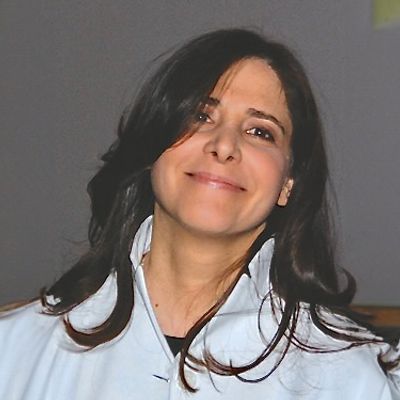
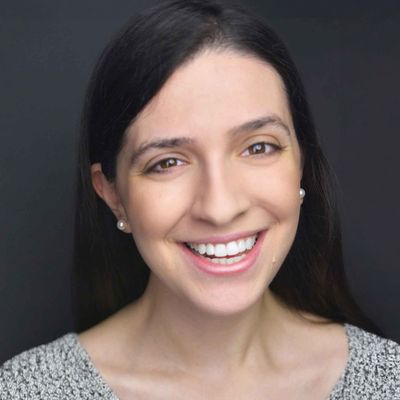
My guests are the mother/daughter team of Sammi Cannold & Dori Berinstein, who are the co-directors and co-producers of the new documentary The Show Must Go On -- a film that I found to be both fascinating and very moving.
Sammi Cannold is a theater director whose recent projects include Evita at New York City Center, Endings at NY Theater Workshop, Ragtime on Ellis Island and Violet on a bus at American Repertory Theatre. In 2019 she was named one of Forbes Magazine’s “30 Under 30 in Hollywood and Entertainment”.
Dori Berinstein is a four-time Tony award winning Broadway producer as well as an Emmy award winning director, producer and writer of film and television. She is also the founder and CEO of the Broadway Podcast Network.
When in March of 2020 the global pandemic shut down live theatre around the world, South Korea was the only country that did not close its theaters. The Show Must Go On primarily follows the companies of two Korean productions -- The Phantom of The Opera and CATS -- which demonstrated how live theater could continue to operate safely in spite of the pandemic.
In this episode you will hear the story of how Sammi journeyed to Korea to document the incredible difficulties, challenges and ultimate triumphs of these two productions. And we will also look at why Korea was able to to do something that theaters in the West could not accomplish.
If you enjoy this podcast, please be sure to follow, rate, and review it wherever you listen. I am happy to say that Broadway Nation has received 75 Five Star reviews.
The latest is from listener “Past0071” and it reads: “I never Knew! So informative! I can’t wait to hear them all, so much I didn’t know. The podcasters themselves are very charming. Looking forward to the next ones coming out." Thank you so much, “Past0071”.
I am hoping that many of you will help me achieve the goal of 100 Five Star reviews before the end of the summer.
Transcript
This transcript was automatically generated and might contain errors.
[0:03] Sammi Cannold: I thought the theater would be pretty empty and that patrons would be a little nervous to come back. Everyone was incredibly nervous about how the South Korea public would respond to a show going forward. I start to peek out and see people masks. And the orchestra starts playing.
[0:45] David Armstrong: Welcome to another episode of Broadway Nation, the podcast that tells the remarkable story of how immigrants, Jews, queers, African Americans, and other outcasts invented the Broadway musical and how they changed America in the process. I'm David Armstrong, and I call this episode It Isn't Over, but we'll get through it. My guests today are the co-directors and co-producers of the new documentary The Show Must Go On, a film that I found to be both fascinating and very moving. And quite uniquely, they are the mother-daughter team of Dori Berinstein and Sammi Cannold. Sammi Cannold is a theater director whose recent projects include the acclaimed Evita at New York City Center, Endings at New York Theater Workshop, Ragtime on Ellis Island, and Violet on a Bus at American Repertory Theater.
In 2019, she was named one of Forbes magazine's 30 under 30 in Hollywood and Entertainment. Dori Berinstein is a four-time Tony Award-winning Broadway producer as well as an Emmy Award-winning director, producer, and writer of film and television. She's also the founder and CEO of the Broadway Podcast Network. When in March of 2020, the global pandemic shut down live theater around the world, South Korea was the only country which did not close its theaters. The Show Must Go On primarily follows the companies of two Korean productions, The Phantom of the Opera and Cats, which demonstrated how live theater could continue to operate safely in spite of the pandemic. Today you'll hear the story of how Sammi journeyed to Korea to document the incredible difficulties, challenges, and ultimate triumphs of these two shows. And we'll also look at why Korea was able to do something that theaters in the West could not accomplish.
[3:39] Dori Berinstein: Thanks for having us. You are the co-directors and co-producers of this brand new documentary called The Show Must Go On. What's amazing about this documentary is it's now a historical document, even though it's just the history of the past two years. Watching it was a strange experience in that regard that felt both like the past and the present all at the same time. We haven't really gotten out of this, and yet some of it seems like so long ago. During this editing process and rolling out process, how has that struck you?
[4:08] Sammi Cannold: Well, we wish it was completely historic and that we had no reason to be worried about COVID today. And that it really was documenting a moment in time. Sad to us that it's still so relevant. Yeah, as we were editing it, it was really interesting because each week we would say, Oh, last week we put that in the film and now it's changed. And last week we said that protocol was the way to go and now it's changed. We sort of eventually took the approach of this is a film that documents a specific story, one of the many efforts to keep theater alive during the pandemic, albeit a very large and sort of watershed one. But we decided to sort of document it as a moment in time versus trying to sort of create a film that would be the tome on theater during the pandemic because that's not over yet.
It's still unfolding. The story you're telling is the story of these two shows, The Phantom of the Opera and Cats in Korea, which is basically the only country in the world that was able to keep theater mostly running during the pandemic. How did it happen that you had two film crews there to record this as this is happening live?
[5:12] Dori Berinstein: The way that it came about was I was FaceTiming with a good friend of mine, Kristen Blodgett, who's the music supervisor of Phantom of the Opera World Tour and does a lot of tours of Cats all around the world, also works on Phantom on Broadway. It was in June of 2020. At that point, we were all in our homes. She said, I'm about to leave New York to go work on the South Korean Tour of Cats. And I was dumbfounded. First of all, no one's leaving to go anywhere. And moreover, leaving to go do theater. I was really shocked. And then my next question was, Well, can I come? And can we document it? I'd never made a documentary before. Dori, who also happens to be my mom, but I call Dori in business ventures, is an incredible documentarian.
And I sort of turned to her and said, Hey, do you want to document this together? We very quickly sort of put a team together, got permission from Andrew Lloyd Webber and his folks to document the process of those two shows surviving. And three weeks later, I was in Korea.
[6:10] Sammi Cannold: Because everybody's arriving, or even before they're being hired to be in the show. Well, I think it's important to note that when you say crew and two crews, you're giving us a lot of credit there. Here's the reality. I had been doing a doc that did do some shooting in Korea. So I did have someone on the ground there that I had worked with. So it was easy to call. And you know, it was in the middle of a global pandemic, so he was available. As you can imagine, Sammy can go into detail about this, but she had to embed with both productions. It wasn't like she could just show up and shoot for a few hours and go shopping. She had to fully commit so that she would be in that safe zone. And our DP had to do the same thing.
And we were only allowed to have the two of them. So Sammy became not just a director, but she also became a filmmaker. We were racing before she left to get her a camera that was fairly user-friendly for someone who hadn't shot before, and to get her all equipped so that she could be our second camera, because we didn't really have a crew.
[7:10] Sammi Cannold: You were doing the second camera and everything, just the two of you are doing the entire production, and you're bouncing back and forth between the shows. Yeah, there were very strict rules about when we were with each company because even the two companies were kept separate. If we did bounce between, there was sort of a testing system and things like that. What we would do is sort of stay with Cats for a week, and then we would go to Phantom. But then what would happen inevitably is when we were with Cats, there would be drama going on with Phantom; over with Phantom, there would be drama going on with Cats, and we would be like, oh no. And there was one point actually where we had followed Phantom to the South Korea city of Daegu, which was sort of the epicenter of the outbreak in Korea when it started, and Phantom was gonna reopen the city of Daegu, basically.
And we were with Phantom there, and cases were getting really bad in Seoul where Cats was. It was announced that they were looking at shutting the border between Daegu and Seoul. And we were like, oh my God, we're gonna be cut off from Cats. So we like raced back to Seoul before they were saying they were gonna shut the border. A lot of drama behind the curtain.
[8:15] Sammi Cannold: You went through the whole process of isolation and quarantine and everything that we see the companies go through in the show, I assume.
[8:22] Dori Berinstein: Yeah. I was in a hotel room for two weeks and it was very intense. We were brought three meals a day. We were not allowed to leave the hotel room. We were told that if we left the hotel room, we would be deported and the window didn't open. It was pretty intense. They would make announcements 10 times a day over the loudspeaker about how important it was that we didn't leave our rooms. That was one of those speakers in the ceiling that was a little scary. It's a little big brotherish.
[8:44] Sammi Cannold: But the food was good. So... And had you already enlisted the cast to be making their own videos on their cameras and sort of documenting things that you could use later?
[8:55] Dori Berinstein: As soon as we got the go-ahead to do the film, we worked with GWB Entertainment, which is the sort of producing entity that oversees different elements of each production. They helped us to reach out to the companies right away and say, please, please, please make video diaries. And we gave them some guidelines and things like that, and it ended up being invaluable because we couldn't be with them in quarantine. That's the point of quarantine. And we couldn't be with them as they were coming from all over the world to Korea. And so we're so grateful to them for capturing their own travel.
[9:25] Sammi Cannold: Which is very captivating. Listeners to this podcast and even people watching the film might not realize that this is just two shows that are running in a very vibrant musical theater scene in Korea. Describe that theater scene to us, because I think people will not really know much about that.
[9:39] Dori Berinstein: Yeah, theater, musical theater in particular, is huge in Korea. It's so exciting to me, having now been there twice. I should find statistics on this, but the majority of their audience is my age, and it's amazing to see. What's particularly interesting is that the Korean musical theater industry basically started about 20 years ago when Phantom of the Opera came over for the first time, and it sort of sparked an interest in musicals and it grew really fast. They started building all these buildings to house musicals. So the industry's only 20 years old, and it's largely sort of sprung up from these like Western megamusicals that have come over. But now two things are happening. One, there are sort of more homegrown, localized musicals that are starting to pop up, local talent that is starting to sort of come of age, which is really exciting.
But also, we in the West are starting to learn from what Korea's doing. And you know, the film is sort of a testament to that because they were the ones leading the way. And we, these industries that have sort of been around for centuries, were looking at what this brand new industry was doing and saying, How do we follow them? Which I really love, sort of the flipping of tables there. They've embraced theater to such a huge extent. I had Legally Blonde there three times in South Korea, which go figure.
[10:53] Sammi Cannold: Yeah, I think that would be staggering to many people in America to understand that this art form is so beloved, not just in Korea, but in places all around the world. It's incredibly popular. Why is it that you think Korea was so successful at figuring this out quickly, keeping the theaters open? Nobody else was able to do that. What was it about Korea that made that possible?
[11:14] Dori Berinstein: I think a few different things. First is Korea has dealt with things like a pandemic before; they had a SARS epidemic in 2015 and really had to figure out preparedness systems, so they were really ready when this pandemic hit. But second, collective conscience is part of the value system of the country. Looking out for your neighbor is part of the value system of the country. Mass compliance when I was there was basically 100% when the government said do this to keep your neighbors safe. People did it. And then in theaters in particular, there's a whole set of protocol, which actually now, when we look back on it, seems really commonplace to us because now it's in all of our theaters. But two years ago, we had to learn that from somewhere.
There's a great line in the film where someone says that it's a culture about we, not I. So I think it is just an organic thing to do to wear masks to protect the person next to you. And that doesn't happen very often here. That message that we just couldn't get across to people from the very beginning of this pandemic is this is not about keeping yourself safe, it's about keeping everybody else safe. For some reason, not enough of us could embrace it. And I think also it was very clear, as you just said, Sammy, that they learned from experience, which we're also not very good at here. They took what had happened in the past and made a plan of action out of it.
[12:33] David Armstrong: You know, a lot of the time when I say to people, "Oh, there was a hundred percent mask compliance," they say, "Oh, well, in Korea they were already wearing masks anyway." Not true. There were certainly pockets of people who, because of smog, wear masks. That's true in Los Angeles. But I was in Korea three years before the pandemic and didn't see anybody wearing masks. So it's really, you know, about logic, and I'm impressed by that. But it is the culture where pre-pandemic they did wear masks if they were sick because they didn't want to get anybody else infected. And it was common courtesy. So that idea was definitely already there. Which totally makes sense. It's something that seems common sense that we would do here as well.
I have a cold, I'm gonna wear a mask. One of the things that is so clear in the movie, and especially in the rehearsals for Cats, because that show is actually in rehearsal as opposed to Phantom, which is up and running and just has to figure out how to stay up and running, is they have to rehearse a show. And so much of the rehearsing of theater, the making of theater is antithetical to keeping people safe from COVID because you're on top of each other, you're singing in each other's faces. Somebody mentions Cats slithering all over each other, which is part of the choreography of Cats, and yet they are able to figure this out. They didn't have to change any of that or very little of it, none that I could see. How were they able to accommodate this without having it affect the way people needed to do their job or to do their art?
[13:52] Sammi Cannold: Cats changed very little. The only significant way in which it changed is that obviously, for anybody who knows Cats, you know that there's fun things that happen in the audience. The cast goes out into the audience. And so some of those moments were eliminated, but for some of them, they had this very creative solution where the makeup designer made masks that matched the cat's makeup so that it was kosher for them to go out into the audience. I think that's the only change on Phantom. I actually don't think there were any changes. A lot of people around the world were very preoccupied with if kissing was still going to be in the show. And it was. But everybody was quarantined and tested every day.
They were not tested every day because it wasn't readily available at that point. It would have been very cumbersome to test every day at that point. You know, I think now when we look at Broadway and the testing regimen, it's so intense. And I think Korea would have certainly done the same had they had accessible testing. The tension certainly builds in the movie when two members of the Phantom Company get COVID when they test positive. It takes us back to that time. I had to jump for a moment to go, oh, there's no vaccine. At that moment, this was serious business.
[15:06] Dori Berinstein: Yeah, the stakes were really high. It made it such that continuing to run theatrical productions was a real dilemma, a real tough judgment call for people. And you see a lot of that in the film. You see a lot of like deliberating on what's the right thing to do. We don't have a textbook for this. And it's not just, um, you know, here in Britain, it's all over the world.
[15:45] David Armstrong: Don't go away. Broadway Nation will be back right after this quick break.
[16:15] Sammi Cannold: You know, I was so amazed, I think throughout, and Sammy, please correct me if I don't have this right, but I don't think that there was ever a case of audience to audience transmission in Korea. Pre-pandemic, pre-vaccine, pre-treatment, all that masks provided protection. Hence, theater's a safe place now in New York, all around the world, everywhere, people can go to theater and know that they're going to be safe because there hasn't been a case of audience transmission when masks are required. And that is huge. And I think that's for both of us, that's something that we really wanted the film to communicate to everybody. As soon as I learned that, I was like, oh my gosh, I have to tell everybody that I know, because I thought that piece of information would be really key in confidence stateside to reopen theaters.
At the time, that was like groundbreaking information that everybody wanted to hear about. I got asked to come talk to these like very important scientists, and I was like, I have no idea what I'm talking about, but I can tell you it's working here. And I think the other part of it that I didn't mention before is that because the Korean theater and musical theater industry is only 20 years old, the buildings are all very new. And so they have HVAC systems that are up to date already. So whereas Broadway houses and regional theaters in many cases had to update their systems, Korean theaters didn't have to worry about that because they were already state of the art. Unlike London and New York, they're not working in hundred plus year buildings to figure this all out in.
But absolutely, that's so clear that if you wear a mask when you sit in the audience, no one will get COVID. Why? That's controversial. I don't know, but it's so clear, and you make it very clear in the film. I feel safer going to theater than I do going to the market.
[17:54] Dori Berinstein: I agree with you. How about for yourself, Dori? Worried about your daughter there when COVID is spreading through the company. How did you feel about that, Sammy?
[18:03] Sammi Cannold: I was like, I'm ready to get out of my apartment. My mother had other feelings. I tried very hard to be her partner on this project. My thinking was also that things were starting to get pretty bad in New York and things were not as bad in Korea. I was quite panicked about having her go anywhere, but at least I felt that he was going to be somewhere where it was safer than here. It was sometimes difficult for me to switch hats from mom to filmmaking partner back and forth because of course I was worried about her. And what about when the two members of Phantom got COVID? Did that up the stakes for you as well?
[18:40] Dori Berinstein: I wasn't there. It seems in the film like I was there because we got so much footage retroactively. But that happened really early. That happened April 1st, 2020. And I didn't get there until July. Fascinating. But we were sort of able to document it retroactively.
[18:58] Sammi Cannold: You did a fantastic job because you told that story very effectively.
[19:03] Dori Berinstein: Thank you. So I think we've talked about this to a great extent, but what is the message of this film? What do you want people to take away from watching this?
[19:12] Sammi Cannold: First and foremost, that it is a testament to the spirit of artists to carry on safely. If there is a way, this is in the film. You know, theater has been fighting for its survival since it came into existence. This is no different, just a bit higher stakes. I think there are so many inspiring stories that we document in the film of individual theater makers, groups of theater makers who said, I believe in the value of this art form. I believe in what it has to give to the world, I see a way forward, and I'm gonna push for it.
[19:41] Dori Berinstein: I would just add to that that it's also about community and the importance of people coming together and experiencing anything together. And during the time of pandemic where everyone is so isolated, having that opportunity to come together and experience something all together. You appreciate it and value it so deeply because we couldn't have that. And I think that that speaks to just how special and magical theater is and what it does for all of us all the time in bringing us together. And that is something that we all need to be reminded of sometimes. And given it was taken away from us, I think so many of us were just so desperate to get back in that theater and experience live entertainment.
[20:22] Sammi Cannold: Absolutely. How is the Korean musical theater scene doing today?
[20:26] Dori Berinstein: Korea did have a tough time with COVID post-vaccine. They got their vaccines a lot later than we did, so sort of continued to ride the ups and downs of outbreaks, unfortunately. But my impression is now they're back on horses and there's plans for a lot of really exciting productions coming up in the next few years. It's basically stayed open the entire time with, as you show in the documentary, they had to close Phantom for a brief time, but things have continued to operate. Yeah, sometimes with social distancing, but I don't think recently.
[20:56] David Armstrong: Dori, you're a member of the Broadway League, which represents all the producers on Broadway. What is the thinking? Take us inside the minds of New York's producers at this moment, looking forward as we finish the season and move into the next.
[21:11] Dori Berinstein: Well, I think that theater will continue to act responsibly and just assess what the situation is currently. They just extended the mask mandate through the end of June. We'll continue to reassess. The community is surrounded by a lot of experts that are guiding all of us so that we can make sure to have protocols in place so that theater can continue to be a safe place, and everyone can come back and just lose themselves to the show and not worry. I do think your movie will inspire people to go back to the theater if they've been afraid to do it, if they've been hesitating, understandably hesitating in many cases, but I think it will give some confidence. At the end of the movie, somebody says the pandemic is still out there, but we'll get through it. And I think, yeah, it makes it very clear. We are and we will, even though some days it seems like it will never happen.
[22:02] Sammi Cannold: A takeaway that is meaningful to me is just how theater makers from all over the world came together to keep theater alive. Theater is so precious and beloved, and the community, the big global community of people who love theater is really tight and comes together in difficult times, and we're there for each other. And I love that takeaway from the film. And if you're just a lover of Cats and Phantom of the Opera, you get to see a lot of footage of those two shows in the movie as well.
[22:31] Dori Berinstein: It's quite amazing, even if the movie wasn't really about how to keep those shows running with COVID.
[22:35] Sammi Cannold: Yeah, we were really lucky to have had the access that we did, and very grateful to Angelo Edweber and his team and all the team Essenco in Korea, the Korean partner that worked with GWB and Andrew to bring these shows to life. They made it possible for us to have that access.
[22:50] David Armstrong: Well, I'm just technically very impressed with the filmmaking. The camera work is fantastic, sounded great all the time. I know that's not always I'm sure there were some struggles in post to figure that stuff out, but really impressive, especially now hearing that it was basically a two-person operation.
[23:06] Sammi Cannold: Yeah, there's a lot of footage in that film that was taken on my iPhone. So it's great to hear that. We had a great post too.
[23:11] Dori Berinstein: It does not look like it.
[23:13] David Armstrong: How do we see this movie? Where can we see The Show Must Go On?
[23:16] Sammi Cannold: Many places. You can watch it on Apple TV just by searching Show Must Go On on iTunes Apple TV, or you can watch it on Broadway on Demand. We're very grateful for the partnership that we've had with them. Or you can watch it on dramaticforces.com, which is Story's website.
[23:32] David Armstrong: Fantastic. Well, congratulations to you both. It's been a great pleasure to talk to you.
[23:34] Sammi Cannold: Thank you, Sammi Cannold and Dori Berinstein.
[23:38] Dori Berinstein: David, thank you so much. And I love your podcast. It's so good. Honored to be on it.
[23:45] Sammi Cannold: Yeah, same. So happy to have you.
[23:47] Dori Berinstein: Thanks a lot.
[23:48] David Armstrong: Thank you. Just a few days after we recorded this, the Broadway League announced a new mask policy for the month of July. All 41 theaters are adopting a mask optional policy as of July 1st, and audience members are encouraged to wear masks during performances, but they are no longer mandatory. And they noted that the mask policy for August and beyond will be announced at a later date as the science surrounding COVID-19 continues to evolve. If you enjoy this podcast, please be sure to follow, rate, and review it wherever you listen. I'm happy to say that Broadway Nation has received 75 five-star reviews. And I'm hoping that many of you will help me achieve my goal of reaching 100 five-star reviews before the end of the summer.
Again, please be sure to follow, rate, and review the show wherever you listen. Broadway Nation is written and produced by me, David Armstrong. Special thanks to Pals Mox for his help with editing this episode, to KVSH 101.9, the voice of beautiful Vashon Island, Washington, and to the entire team at the Broadway Podcast Network.
© Broadway Podcast Network, All Rights Reserved