

New episode out now! My guests this week are JULIE BOARDMAN & DIANE NICOLETTI — the founders and driving forces behind the Museum Of Broadway! In this episode Julie and Diane share with us the story of how this first ever Broadway museum has come to be... Read More
From the show: BROADWAY NATION
Guests

Featured Shows
About
New episode out now!
My guests this week are JULIE BOARDMAN & DIANE NICOLETTI — the founders and driving forces behind the Museum Of Broadway!
In this episode Julie and Diane share with us the story of how this first ever Broadway museum has come to be. They profile the team extraordinary talents they put together to create it, and most importantly they give us the inside scoop on what to expect when this highly immersive and experiential museum opens next week on November 15, 2020, in the heart of Times Square.
I also chat with BEN WEST who is the MOB’s Resident Historian and the creator of one of its central features — the “Timeline of Broadway” history.
As you will hear, the Museum of Broadway seems to be tailor made for fans of this podcast, and by the end of the episode I have no doubt that you will be as excited about it as I am.
The Museum Of Broadway is located at 145 West 45th Street in New York. Tickets are on sale now at: https://www.themuseumofbroadway.com/about
Transcript
This transcript was automatically generated and might contain errors.
[0:04] ♪ Musical number ♪
[0:33] David Armstrong: Welcome to another episode of Broadway Nation, the podcast that tells the remarkable story of how immigrants, Jews, queers, African Americans, and other outcasts invented the Broadway musical and how they changed America in the process.
[0:47] David Armstrong: I'm David Armstrong, and today we're going to get a preview of the new Museum of Broadway, which will be opening next week on November 15th in the heart of Times Square. My guests today are JULIE BOARDMAN and DIANE NICOLETTI, who are the founders and driving forces behind the museum. And later in the episode, you'll meet BEN WEST, who is the resident historian and coordinator of one of the museum's central features, its timeline of Broadway history. As you will hear, the Museum of Broadway seems to be tailor-made for fans of this podcast. And by the end of the episode, I suspect that you will be as excited about it as I am. Here we go.
[1:26] David Armstrong: Welcome Julie Boardman and DIANE NICOLETTI to Broadway Nation. I'm so happy to have you here today to talk about the new Museum of Broadway.
[1:34] JULIE BOARDMAN: Thank you so much for having us.
[1:36] DIANE NICOLETTI: We're thrilled to be here.
[1:37] David Armstrong: What was the inspiration for this?
[1:39] JULIE BOARDMAN: I think Julie should take that one because it was definitely came from her.
[1:43] JULIE BOARDMAN: So I think the idea that there is a Broadway museum, obviously isn't original, so we definitely can't take credit for that. And yet there's never been one.
[1:53] DIANE NICOLETTI: I know, isn't that interesting?
[1:54] JULIE BOARDMAN: We've learned actually that there have been multiple attempts to make one over the years, but for whatever reason it didn't get off the ground. And so we're just really thrilled and honored to be the ones who are actually making this and creating it and bringing it to life. So I come from the Broadway producing side, but then I also have a business that works in experiential marketing, specifically staffing and managing events, where Diane and I have worked together for many, many years, but it actually goes back further than that because we went to college together and we're even in the same sorority. So we've known each other for a very long time and got to work together, like I said, on all of these different events.
Diane for many years has run an experiential marketing agency with many clients in the film and TV space. So one event, for instance, that we worked on was Game of Thrones doing these fan activations in multiple markets across the country. When let's say season five went to DVD, that kind of thing. So we've worked together for a very long time. And when the idea was kind of hatched, it was kind of like one, there hasn't ever been a Broadway museum. And it was at this moment when a lot of experiential museums were starting to really hit. And the idea was well, what if we took the content and the history of Broadway, you know, the actual props, costumes, set designs, renderings, set models, all sorts of artifacts, but then presented it in the way that people seem to really like to experience things now.
Make it immersive and Instagrammable and interactive. And this idea was hatched probably over five years ago now. Diane clocks it based on the age of her child at the time. I was pregnant with my third child. So yep, that's how we remember. And yeah, we've been just developing the idea. And I think the story of Broadway could be told in many different ways. And so before we ever took it around to anyone in the community, we wanted to really hone in on like what is that core idea? How would we present the information? Who would be involved? How would it happen? And so we had pen to paper for quite a while actually, figuring it out. And we landed on this idea of we basically stand on the shoulders of those who came before us.
So had all these people not pioneered and broken ground and been creative geniuses along the way, the art form would be very different. The art today wouldn't exist. And so that's kind of how we approach the content and how you walk through the timeline of Broadway. Basically, it's things that interest us, and then we expand upon it.
[4:28] DIANE NICOLETTI: Julie, when Julie came to you with this idea, what was your reaction?
[4:31] DIANE NICOLETTI: Brilliant. Like, why hasn't there been a museum of Broadway? It just seems like it's so related to New York and the New York experience. And we're hoping that it's just gonna round up people's trips to New York. After they see a show, they can come to see the museum, or vice versa. And then also for New Yorkers that just love theater too, and the experience seekers. So just because you're not seeing a Broadway show all the time, or maybe you're a casual fan and you only go once every couple of years, still think there's really gonna be something for everyone in this that hopefully is really exciting because we have a lot of artists, fine artists, Broadway designers, installation artists. And so for people that that is really appealing to them, hopefully we'll bring in new audiences that get excited about Broadway too.
[5:18] David Armstrong: And speaking of installations, Diane, you are actually there at the museum under construction as we speak.
[5:24] DIANE NICOLETTI: I am, I am. It's very exciting. Our construction team is still doing some work, but we've got a lot of the sets going in now. So our fabrication team has been putting in all the various scenes, if you will, because everything is meant to be like an immersive experience. Describe for us what we're going to experience when we come to this museum. What's the scale? How many floors? How many rooms?
[5:48] DIANE NICOLETTI: Sure. Well, we are right in the heart of Times Square, and we're taking four floors from a building. We literally transformed an Irish pub, actually, into the Museum of Broadway. It doesn't get more New York than that, I guess. We're taking the four floors. It's about 26,000 square feet. And guests will go through a journey across really three different sections, as we like to call it the map room, the timeline of Broadway, and then the making of a Broadway show. I'm gonna let Julie kind of get into the details on that. But the scale is big, but it's definitely not the scale of the Met or MoMA or the really large museums in New York. But it's also the first time that we're having a Broadway museum, and I think the scale feels good.
I remember years ago there was a theater museum in the West End in London in Covent Garden, which I loved going to. And I was so disappointed I was there a few times ago and it was gone. It had closed down. That was a fantastic experience. So I'm hoping this will be even better than that. Yeah, we'll see, I guess.
[6:50] David Armstrong: So continue on that line, Julie. Describe our experience of walking through the museum.
[6:55] JULIE BOARDMAN: Sure. So everyone enters and exits through the gift shop. You head to the back, it's a time ticket. And the reason we did that is just to make sure it's a really great experience for people. It's never too crowded. It just makes sure the flow is really wonderful for people. Otherwise, we thought it would be really busy before and after matinees and before shows. So you'll be able to make a reservation knowing exactly what time you're going to enter the museum.
[7:19] DIANE NICOLETTI: Exactly. If you knew you wanted to be there at 10:15 next Thursday after we open, you could do that. If you wanted to come with a group of your friends, you could do that. If you wanted to do an interactive workshop after your museum experience, you could do that too. So we have lots of different ways that people can experience the museum. So time ticket, you check in, you go through this backstage experience to get to the start, and you start in the Playbill room. We're working with Playbill, and it's everything that's currently running on Broadway on that day. So we'll constantly be changing everything in and out as shows open and close over time. And then from there, there's a door that's going to say, let's start at the very beginning.
You walk through that and you head into the map room. And in the map room, through projection mapping, you basically see the story come to life before your eyes. And it's the history of the theaters in New York because it's really fascinating that Times Square wasn't always what we know it today. Actually, the theater started in the financial district. So how did it become that? How did it migrate north? Julie James has done the voiceover. Jen Tepper curated the content. And we go from the financial district all the way up to present day Times Square and how it became what we know it today through all the ups and downs that have occurred as the migration happened and then just the state of Times Square to get us to where we are today.
[8:40] JULIE BOARDMAN: From there, you start walking the timeline of Broadway. So you start in the 1700s, and then you walk all the way through to present day. So when you first start walking, there are timeline walls that BEN WEST curated that tell the story of plays, musicals, groundbreaking, socially progressive moments, milestone moments in our history. And then you get to a show that really changed the landscape of Broadway or brought in a new audience or pushed the forum forward. Then we stop and we have an exhibit around that show, and it's paired with a designer. Diane mentioned fine artist, an installation artist, or a Broadway designer created the room based on what that show meant in history. The very first one is the Ziegfeld Follies.
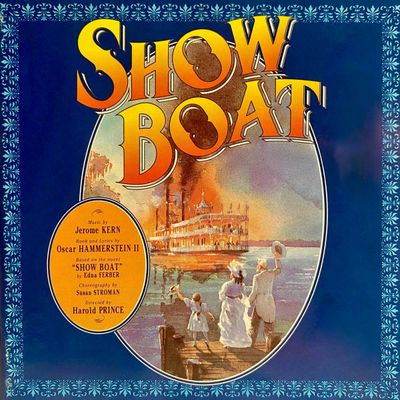
And then you have another timeline wall that connects the dots, and then you get to Showboat. And in Showboat, it's a paper art installation designed by Rachel Marks, taking the pages of the script. And she's made this beautiful paper art installation. And then with AR through iPads, when you hold it over, the words dance to life off the page. So it's evocative of why it was so important in our history. And it's coupled with costumes and artifacts and renderings and the like. So each of these rooms is unique. They're all designed by different designers and using different techniques.
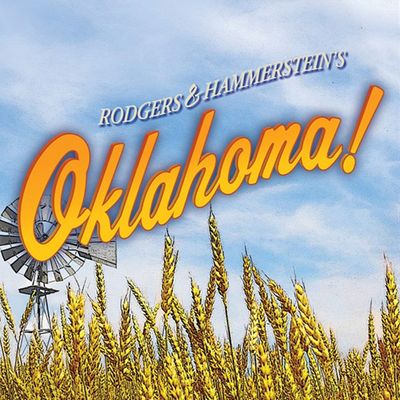
[9:55] JULIE BOARDMAN: Exactly. So if one was interactive, then the next one might be Instagrammable. The one after that might be immersive. We made specific choices along the way to make sure that it was programmed in that way. When you get to Oklahoma, you walk through this immersive cornfield. You hear the song, "Oh, What a Beautiful Morning." There's a bright golden haze on the meadow. The artist painted this impressionistic sunrise on the walls. You've got cornfield and barn, and we have a video of Agnes DeMille talking about the dream ballet, just to give you a little sense of what you might expect. And that pattern of timeline wall and then exhibit takes you all the way through to present day.
[10:09] ♪ Musical number: "Oh, What a Beautiful Morning" — performed by the cast of Oklahoma! ♪
[10:53] David Armstrong: As Diane mentioned, BEN WEST is the curator of the museum's Timeline of Broadway. And in a separate conversation, I had the opportunity to talk with him. So welcome, BEN WEST. It's so great to have you as a guest on Broadway Nation today.
[11:06] BEN WEST: Thank you so much for having me. It's great to be here.
[11:08] David Armstrong: First, let's start with what is your position with the Museum of Broadway.
[11:12] BEN WEST: I am the resident historian and the timeline walls curator. And I can certainly dive more deeply into both of those.
[11:20] David Armstrong: We certainly want to know what exactly what that means. And how did you get involved?
[11:25] BEN WEST: I got involved with the museum at the end of 2019. A mutual colleague had advised me that the museum was happening. And so I reached out to Julie and Diane in November. And then I was officially on board that December. I must say I'm especially grateful, and it was one of those fortuitous moments because when I met with Diane and Julie, they had already mapped out and selected or identified the shows that would be the rooms with the experiential and the immersive environments. They knew that they wanted something that would exist between the years of each of those shows that would touch upon some of the events or highlight some things that happened in that time span. It was fortuitous timing because this falls right into what I had been personally working toward for the past five years, essentially.
So it was a kind of miraculous way to sort of manifest all of my work. So from this concept that they had, and knowing that they wanted something between the years of the immersive environments that they had already pinpointed, I created these timeline walls, is what we're calling them. So this main section, the timeline section, is roughly two floors. And I just want to mention actually, before I go on, because I said I created them, which is true, but I did not execute them on my own. So I just want to mention the museum's two designers who are very important to me and with whom I work to do the layout and the technical specs to prep for printing. They are Stephanie Vidaitch and Julietta Trivoli.
I want to get them out there because they were important. So what we have now, the way it's set up, is essentially it is an extended timeline. So imagine 1732 through the present day, and along the way, you will stop 13 times into a specific show. So, for example, the first wall is essentially 1732 through 1907. And at that point, you enter the Ziegfeld Follies room. The next wall that we have is 1907 through 1927, at which point you enter Showboat. That is the nature of this roughly two-floor section.
[13:23] BEN WEST: In terms of the design, it's inspired by Mondrian. So that can give you a sort of mental view of what it might look like. Across all of the timeline walls, there are more than 750 historical assets. I've been able to hit upon more than 500 individual productions and more than 100 individual artists. It really aims to be a comprehensive, documented history of Broadway. In my work in the museum and outside the museum, there are three elements that I weave into my understanding of history and into the way that I talk about the evolution of the American musical. And one of them is this idea of consciousness that the American musical, or in this case, Broadway, more broadly, captures the American consciousness.
Essentially, it is capturing our social, cultural, political sensibilities at any given moment in time. The second one is the idea of female and African American artists repositioning them in the center of the story. So it's not a matter of shoehorning. They existed as part of this story all along. I think just in traditional histories, they're often overlooked or segregated. But the way that I work, both again in the museum and outside of the museum, is very much to address these individuals and their respective shows as the story goes along. So you will see on the walls the African American artists, female artists, et cetera, as part of this story that is happening between these years. And the third piece is what I call outside influences.
If you look at the evolution of the art form, there are outside influences, which were incredibly integral to the development of what we know today as the modern American musical. And specifically, I'm talking about vaudeville, burlesque, nightclubs. You will be able to see and experience these particular elements as well.
[15:06] David Armstrong: Give us an example of some of those artists or craftspeople who will be featured on the walls of the museum.
[15:12] BEN WEST: Sure, sure. A good example will be, let's do 1907 through 1927. This is a wall that spans the years between essentially the start of the Ziegfeld Follies and the opening of Showboat. You know, this is a heavy period of activity. I mentioned the idea of the inspiration for the design being Mondrian. And also I just want to mention so that as I'm talking about specific assets, folks will be able to picture how they are utilized because there are different components that make up each of the walls. For example, there are visual assets and textual assets. The visual assets, we have certainly a lot of photos, a lot of posters, but then there are also more personal items. On this wall in particular, there is, for example, three script pages from AB's Irish Rose, or we have telegrams, we have manuscript pages, lyric sheets, costume, set sketches, etc. Those are the visual assets that you'll find on the walls.
And then in terms of textual assets, each wall, of course, has a small copy block where I am discussing the trends and what is happening specifically, you know, in this time period between the respective shows. In addition to that, there are specific blocks. For example, we have quote blocks. And to your point about who will be found in the museum, on this wall, there is a quote from Will Marion Cook, for example. And then another element that we have on these walls is what I call milestone boxes or milestone moments. On this wall, there is a milestone box that is about a white female composer named Alma Sanders and a show called Tangerine, 1921. On other elements, there's a milestone box about Canada Lee, a very prominent African American actor, primarily 30s and 40s. On one of the earlier walls, there's a Rosamond Johnson quote that speaks to the idea of ragtime.
There is a flyer that was used to promote the Cole and Johnson musical, The Shoe Fly Regiment. So the cover of that flyer, for example, is on the wall. Those are some of the folks. On the vaudeville wall, there's a milestone box about Ernest Hogan and the Memphis students, a vaudeville aggregation from 1905 that is an early taste of jazz, essentially. And Will Marion Cook again, coincidentally.
[17:12] David Armstrong: And remind us who Will Marion Cook was.
[17:14] BEN WEST: Sure, sure. Will Marion Cook, very well regarded African American composer and sometimes lyricist, very closely associated with the Williams and Walker shows from the first decade of the 20th century. And also in 1898, Clarindy, which was another Ernest Hogan starred piece. So very, very well regarded African American composer, Will Marion Cook. And Clarindy, arguably the very first musical created by black artists on Broadway. I wouldn't personally go that far, but it is certainly among the first musicals written entirely by black artists. It's an interesting period in that regard to try to pin those things down exactly.
[17:52] David Armstrong: Indeed, it's just difficult to say first because it's quite definitive.
[17:55] BEN WEST: Yeah, it's just a very active period.
[17:59] David Armstrong: How much were you involved in tracking down the artifacts that are included in this timeline?
[18:04] BEN WEST: Oh, completely. It was completely. Yeah, yeah. When I say I created the walls, I created the walls with, as I mentioned, the two wonderful designers. But in terms of all the assets, they are virtually all assets that I secured. Julie had been to the Library of Congress and found one or two things that we definitely included, but virtually all of the assets are ones that I secured. And I will add from libraries around the country, too, which is important to note. Certainly the library for the performing arts at Lincoln Center was instrumental in terms of finding and sourcing these items. Also the museum of the city of New York. But beyond that, there are items that I have procured from Library of Congress, University of Washington, Harry Ransom Center, Yale University. Actually, a lot of the assets that you see, particularly in the earlier years, are things that I had already pinpointed and identified in my research over the past five years.
[18:53] David Armstrong: So you'd been scouting in a way for this without even knowing what you were going to do with it.
[18:57] BEN WEST: Yes. That's why I say it was completely fortuitous, and I'm genuinely grateful, you know, that it happened. It was magical, and I'm glad to be a part of it. And hopefully the timeline walls will be visually stimulating and informative and exciting for people to uncover this history and hopefully use it as a tool going forward.
[19:13] David Armstrong: And just to clarify, some of these are physical three-dimensional objects as well as photos of these items and things like that.
[19:20] BEN WEST: Excellent to clarify. On the walls, it's not three-dimensional. So everything you see on the wall is a reproduction of an original item. However, in the museum, there are three-dimensional objects. There are costumes, there are props, and then we have, of course, the immersive rooms around specific shows. The walls themselves, though, are two-dimensional.
[19:38] David Armstrong: And you wrote all the text that we will see there as well.
[19:41] BEN WEST: Everything you see, timeline related, is absolutely mine. All the other pieces were supervised by Julie, and she had a team of folks with whom she worked on writing the copy for all of the specific show exhibits. In terms of my resident historian title and my function in that capacity, it was essentially to provide advice and consultation, you know, especially from a historical standpoint. Julie or Diane would email me something that's been written or ask for my feedback on something, and I would provide it accordingly.
[20:07] David Armstrong: And how would you sum up the story of this timeline? What will we take away from experiencing this timeline? Or what would you like us to take away?
[20:14] BEN WEST: Well, I think there are many things to take away, and there are many themes that are happening throughout. I think first and foremost, the idea that Broadway is an integral part of American culture, is an overriding element throughout the museum. But there are multiple themes and hopefully multiple balls that have been kept in the air as you journey through the timeline. The three elements that I mentioned in terms of the fact that African American and female artists have been a part of this journey all along. The idea of the connection between consciousness and the country, the fact that Broadway, particularly when we get to the early 20th century, is not strictly 41 theaters as we know now.
It is a sprawling entertainment mecca, as it were, with several different forms. So those are all hopefully kept in play as you travel through the timeline, as well as the idea of the evolution of the American musical as an art form. So hopefully that will come across for visitors in a rewarding and satisfying way.
[21:07] David Armstrong: I'd like to hear more about your thoughts on the consciousness. How has the Broadway musical affected the American consciousness? What do you see the relationship being there?
[21:14] BEN WEST: Well, I think there's active and passive. In terms of active, you have protest pieces, you have very political pieces, and you have pieces that appear to be more light and whimsical, such as Finian's Rainbow, for example, which actually has profound social content in it. The American musical has the capacity to actively address social change, social trends, et cetera. But even when it's not an active or a conscious decision, it is still capturing passively our perceptions at a certain time. So for example, the Alma Sanders reference that I mentioned, Tangerine is called a musical satire of the sexes. I won't completely give away the box, but the nature of Alma Sanders' own life as a woman and as a wife is reflective of the time.
Certainly, when we get into the idea of black artists, the stage inherently is capturing the sensibilities of the country, the social sensibilities of the country, especially in looking back historically, you know, as we are in the museum. And I would say looking back to move forward, it provides a context as well. Understanding these shows or seeing these shows provides a context. In a way, it is documenting who we as Americans or we as a country are. There's a quote on one of the walls from Yip Harburg, and you may already be familiar with this quote, but he says a songwriter is really a journalist of time with music. That is something that is an inherent theme. Again, whether it is a show that is actively attempting to address social change or political issues, or if it is a show that is not actively addressing them, but in its sheer nature speaks to where we are in the country socially.
And many of them actually, particularly pre-70, you know, pre-70, pre-60s, speak to where we are in terms of the evolution of the art form itself when you look at them specifically. Hopefully, putting them in context will enhance each of those stories.
[22:24] David Armstrong: So you've been a journalist of time in this project, and it has to end somewhere. So where are you drawing the line? What's the end of the timeline at the museum?
[23:11] BEN WEST: Oh, we go up to the present day. The nature of the timeline will change slightly when we get to the 21st century. So we have the Mondrians all the way through up to 2001, at which point you will enter a room about the producers, and thereafter we have what I refer to as the 21st century. And so the nature of that display is slightly different. It goes to columns for each year. The way that the museum will work is that at the end of each year, we'll simply add another column, which will highlight a sampling of that year as we go forward. And hopefully we'll go forward into the infinite distance.
[23:42] David Armstrong: You'll have to add another floor at some point.
[23:44] BEN WEST: Yes, that would be marvelous.
[23:46] David Armstrong: That would be marvelous. Thank you, BEN WEST. It's been such a pleasure to talk to you about the Museum of Broadway.
[23:52] BEN WEST: Thank you so much.
[23:52] David Armstrong: Thanks for having me. Don't go away. Right after the break, Diane, Julie, and I will be back with more on the Museum of Broadway.
[24:29] DIANE NICOLETTI: So tell us about the making of a Broadway show. That's the final room that we enter. Is that correct?
[24:35] JULIE BOARDMAN: It's the one before the special exhibit in the flow. Yeah, so you've just walked through the timeline of Broadway and you come to a stage door. You knock on the stage door, and then it opens into this kind of romanticized version of a backstage that David Rockwell has designed. It deconstructs a lot of the different jobs that you could have working in the theater. I suppose that comes out of some of my time with like the Broadway League. I think it's really important to show people like what all those different jobs and careers could be in order for them to know it exists, for them to then go learn and get training and then jump into the field. I've said it many, many times, Diane has heard me. But you know, if you are like a little kid and you love math, but you don't think you would ever perform, you may not realize that there is actually a place for you in Broadway. You could be a general manager, you could be an accountant, you could even be a lawyer.
[25:31] JULIE BOARDMAN: That's true. You could also be a dresser. There's so many different departments that you could work in to help create the magic that you see on stage eight times a week. But when you walk into the room, there's different sections dedicated to these different roles that you could have. You'll see different interviews with people who do those jobs, explaining what they do, how they got into it. You know, a lot of people don't know how to get into the Broadway industry. So I think it's really helpful to hear from these people how they got their big break. So you'll go through the process of how does it go from a blank page, how does that collaboration work with the dramatists to get it on the page to then develop it to get it all the way to the stage.
So you kind of walk through that journey and then you see like lighting, projection, sound, direction, choreography, scenic design, props, costumes, wigs, makeup, marketing, press, social, advertising, touring. Because once the show is on Broadway, then it goes on the road and it goes all around the country, and that's how many people actually see their first show and might get hooked before they even come to Broadway. And then it actually takes you that final step of then it goes to licensing. And then that's how the first show I ever did was The Sound of Music. And then I did Annie when I was like five years old. And I never understood the process until I actually worked in Broadway.
[25:40] DIANE NICOLETTI: And have a lot more fun than most lawyers.
[26:47] JULIE BOARDMAN: So we want to kind of pull back the curtain and show people that. So maybe it doesn't take them as long as it took me to figure out how to get onto the producing side. You could enter the museum not knowing anything about Broadway, and you could exit a Broadway producer.
[27:01] DIANE NICOLETTI: Exactly.
[27:02] JULIE BOARDMAN: Perfect.
[27:11] DIANE NICOLETTI: I wanna be a producer.
[27:14] JULIE BOARDMAN: Lunch at Sardi's every day.
[27:18] DIANE NICOLETTI: I wanna be a producer.
[27:21] JULIE BOARDMAN: Wear a tux on opening night.
[27:25] DIANE NICOLETTI: I wanna be a producer and see my name Leo Bloom in lights.
[27:32] JULIE BOARDMAN: Like any Broadway production, which this is, it's all about collaboration. You had to bring a giant team of people together to make this happen. You had to find funding to do this. So who did you go to? Let's talk about some of the people involved with the project from that end.
[27:47] DIANE NICOLETTI: Sure. Once we had the idea down on paper and we had at least one designer on board, we took the idea around, we call it a goodwill tour. So kind of to the heads of state, if you will, within the industry. So we took it to the theater owners, to the American Theater Wing, the Broadway League, Playbill, Broadway Cares, the licensing companies, you know, a whole bunch of different people who are very influential in the Broadway community, just to make sure everyone was kind of open to the idea before we really went down this path.
[28:17] JULIE BOARDMAN: And then from there we started raising money. It's being funded by people in the Broadway community, people who are investors in Broadway, co-producers, producers, the theater owners. It was meant to be so that it wasn't some outside organization that was creating the Museum of Broadway. It was coming from inside the community. I've been part of the community for quite a while. And so basically bringing all the friends together and making this happen, almost the way you'd raise money to do a Broadway show.
[28:48] DIANE NICOLETTI: Exactly. With most of the same people.
[28:50] JULIE BOARDMAN: Yeah, you know, we were raising money during COVID. Sometimes without even having the real estate people believed in it. Yeah, it's come a long way, but we have a really wonderful group of people who are behind it.
[29:01] David Armstrong: And correct me if I'm wrong, but I believe that Dory Berenstein, who's one of the founders of the Broadway Podcast Network, is also involved in making this Museum of Broadway happen.
[29:10] JULIE BOARDMAN: Yeah, she is. She's been involved for quite some time, actually. So she was an earlier person who came on board and believed in what we were doing. Yeah, she's very enthusiastic about it.
[29:21] DIANE NICOLETTI: So now talk about the people who've come together to make the show, the make what we're going to see there. Who are some of the artists that we've seen work on Broadway that you've brought together to make the museum happen?
[29:31] JULIE BOARDMAN: Yeah, it's an enormous team from like the design team that came up with the individual rooms. And those were different artists, as Julie mentioned before, that were paired to each room. And some were Broadway designers, some fine artists, some installation artists, some graphic designers. And then we also have a huge construction team. So our architect, our engineer, our structural engineer, our construction project management team, our lighting design team, our AV integrators, our fabricator. The list goes on and on. Then we also have our curatorial team. So you've obviously interviewed BEN WEST already, but we also have Michael McDonald and Lisa Zinney, who are our costume and 3D artifact curators. And there's some Tony winners in there as well. David Rockwell and Anna Luisa's.
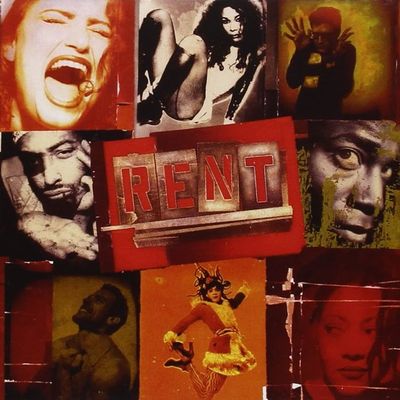
[30:17] DIANE NICOLETTI: Yeah, we're really lucky to have, like you said, David Rockwell, Derek McLean, David Corinth, Anna Luisa's, Paul Clay. Like it's an extraordinary team. And Paul Clay, very interestingly, has actually only ever designed Rent on Broadway, but he's done all this incredible work in the other side of where we found a lot of the other artists in experiential design. He does a lot of work with like Fashion Week and stuff. So we're really excited to have his work. And I think people seem to be very, very excited about the room about Rent in particular.
[30:48] JULIE BOARDMAN: There'll be an educational element involved with the museum as well.
[30:51] DIANE NICOLETTI: Yeah. Well, outside of your museum experience, we'll also have a rehearsal studio. It's rentable. It can be for like a group that goes through that wants to do a class after. It has Marley floors and mirrors, and so it's set up if someone wanted to do a dance class from someone in a Broadway show. They can do a workshop. We can host panel discussions and master classes, all sorts of different things in this rehearsal studio. So it gives us a lot of flexibility. It can be, again, a master class, but it can also be a kid's birthday party or a bat mitzvah. I anticipate that there will be lots of Broadway themed parties happening in that room.
[31:27] JULIE BOARDMAN: And the museum would, I assume, help them to curate that.
[31:31] DIANE NICOLETTI: Of course, yeah. We have an education team that has all of that for someone to work with us to be able to put that together. And we also have a study guide for students and teachers. Anybody bringing an educational group to New York to see shows is now gonna have to make a stop at the Museum of Broadway.
[31:48] JULIE BOARDMAN: Yeah, I know a lot of people don't realize Oklahoma was the Hamilton of its day, right? So this timeline of Broadway puts it into perspective for people. And I think it's meant also to inspire kind of future generations because these shows and when you read about what they did that changed things to move it forward or take a risk or a chance, it gives you hope, I think, and some confidence to actually do that yourself.
[32:12] DIANE NICOLETTI: Absolutely. It's inspirational to see these mostly young artists in their day. Everybody's in their 20s for the most part when they first create a Broadway musical. We think of them sometimes now as being older people because we became aware of them toward the end of their career, but it's a young person's field for the most part. I mean, Hal Prince was young when he produced West Side Story, and then you'll hear an interview from him talking about Cabaret and the inspiration behind it.
[32:39] JULIE BOARDMAN: Yeah, it's meant to really inspire people so that hopefully our future continues to evolve and grow. And it would, of course, without the museum, but we just hope to point people in that direction.
[32:49] DIANE NICOLETTI: Absolutely. You shine a light on that aspect of it. For the two of you, what are you personally most excited about?
[32:55] JULIE BOARDMAN: The way that we're presenting the timeline of Broadway, the most exciting to me. I mean, I love the whole museum, don't get me wrong, but I think it's just really interesting because it's that hybrid of traditional museum walls coupled with these exhibits that are very experiential and not, I think what people are going to expect, but hopefully in a good way.
[33:17] DIANE NICOLETTI: Yeah, I think people don't really know what to expect yet. So I think we're both just really excited for people to be able to walk in the door. And it's a lot of visual storytelling. We have an app that can accompany your experience. We can translate into foreign language. You don't have to speak English to understand what's going on.
[33:36] David Armstrong: So it's under construction right now. What is the opening day? Give us the details. When can we rush through the door of the new Museum of Broadway and how do we do it?
[33:45] JULIE BOARDMAN: You can buy tickets now, even on themuseumofbroadway.com. You can also follow us on social media. We're on basically all the channels at Museum of Broadway. We're open November 15th. So we hope everyone will come and check us out.
[33:59] DIANE NICOLETTI: And what will be the operating hours?
[34:00] JULIE BOARDMAN: 10 a.m. to 10 p.m.
[34:03] DIANE NICOLETTI: Wow.
[34:03] JULIE BOARDMAN: Yeah, with the last ticket at 8:30.
[34:06] DIANE NICOLETTI: Oh, that's fantastic. I love that you can go at all hours of the day. Because when people come to New York, they're usually on a schedule. I know I am. I come and I'm seeing seven shows in five days, and you have to know what you're doing.
[34:18] JULIE BOARDMAN: Exactly.
[34:19] DIANE NICOLETTI: So this is something you can schedule like a show, really.
[34:22] JULIE BOARDMAN: Exactly. Yeah, I like that. You can schedule it like a show. And then you know yourself. So if you're someone who, when you go to the museum, you like to read every single word. That way you can allow yourself enough time. If you're someone who kind of likes to breeze through but stop at certain points, you know yourself, you know how long it'll take. You know you need to get to dinner at seven o'clock, then you can backtrack from there to choose the entry time that works for you. And we anticipate on average, maybe it takes people 90 minutes, but people who want to read every word that Ben wrote, they're gonna be there for a couple hours.
[34:55] DIANE NICOLETTI: So sort of a 90-minute show with no intermission is probably the average way to think about it.
[35:01] JULIE BOARDMAN: Yes, we should hire you on our marketing team.
[35:06] David Armstrong: I'm available.
[35:06] JULIE BOARDMAN: Yeah, it's like a 90-minute no-intermission show. And then the gift shop also is open to the public with or without a ticket to the museum. If you saw your favorite show the night before, but you forgot to get something when you were in the lobby. We're going to be selling merchandise from, you know, if every theater is full of 41 different shows, then we'll have a really really cool line of exclusive merchandise from Hirschfeld. That's our first special exhibit. We have a Museum of Broadway line. We have a couple small businesses that we are supporting and selling their items as well. It should be a really exciting gift shop.
[35:40] DIANE NICOLETTI: And you mentioned special exhibits. So in addition to the permanent exhibit in the museum, there will be rotating special exhibits consistently. Talk a little bit about that and what this first one is.
[35:52] JULIE BOARDMAN: So the first one is around Hirschfeld. People will see original prints from Hirschfeld. They'll actually see a replica of the barber chair that he used to draw in and sketch in. We'll see original sketchbooks. They've developed with sort of our guidance a Hirschfeld yourself to make your own character. We're tying it a little bit into their book that they're releasing. We also are tying it into the retail store where we have a nice shop within a shop.
[36:19] DIANE NICOLETTI: And how long will that Hirschfeld exhibit be at the museum?
[36:22] JULIE BOARDMAN: We haven't announced the end date yet, but into the spring.
[36:36] DIANE NICOLETTI: Which gives people a reason to come back.
[36:39] JULIE BOARDMAN: Exactly. And some of the costumes and props and items that you'll see throughout the timeline will change in and out as well.
[36:45] DIANE NICOLETTI: And what was your process for acquiring those elements?
[36:49] JULIE BOARDMAN: I know we're going to see original costumes, we're going to see props from very famous Broadway shows. What was involved in bringing those together?
[36:56] DIANE NICOLETTI: Yeah, that's a good question. We're working with the community. So when Dear Evan Hansen just closed, I called my friend the general manager and said, could we have something to loan to show in the museum? So it's a lot of that. Our costume and props co-curators are actually costume designers in their own right. So our team comes from within the community. So we basically are like in conversations with friends and family of the community making this all happen.
[37:23] JULIE BOARDMAN: And is there one item that you can tell us about that was especially hard to find or that would be your rarest item in a way?
[37:31] DIANE NICOLETTI: Maybe not hardest to find, but I know Diane and I both think it very cool. We're gonna have original Ziegfeld Follies costumes on display, which I think is just really incredible. They're on loan from Disney Theatrical, who has done a really extraordinary job of preserving things as they took over the New Amsterdam.
[37:48] JULIE BOARDMAN: Yeah, we're really excited. And all the way through to present day too, there's a lot of very cool things in the museum.
[37:53] David Armstrong: So Diane Nicoletti and JULIE BOARDMAN, thank you so much for joining us today on Broadway Nation. It's been so exciting to hear about the Museum of Broadway.
[37:53] JULIE BOARDMAN: Thank you so much for having us.
[38:04] DIANE NICOLETTI: Thank you.
[38:05] JULIE BOARDMAN: My pleasure.
[38:06] ♪ Musical number ♪
[38:24] Just like the strain of a home team referring.
[38:31] She is start upon a marathon and run around your brain.
[38:38] If you enjoyed this podcast, I feel certain that you will also enjoy joining our Broadway Nation Facebook group, where you'll find daily postings of images, videos, articles, and links that relate to and enhance each and every episode of this podcast. Just Google Broadway Nation Facebook group and join the more than two thousand other fans of Broadway Nation.
[39:00] David Armstrong: Broadway Nation is written and produced by me, David Armstrong. Special thanks to Pals Mox for his help with editing this episode, to KVSH 101.9, the voice of beautiful Vashon Island, Washington, and to the entire team at the Broadway Podcast Network.
© Broadway Podcast Network, All Rights Reserved