

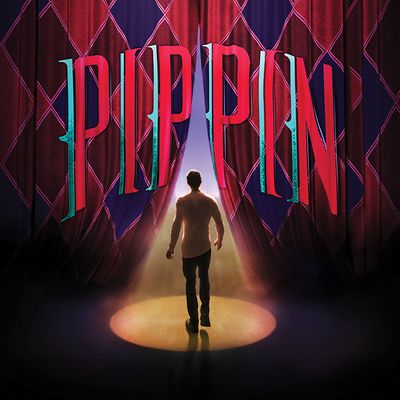
This is the second half of my conversation with author Elysa Gardner whose new book is titled: Magic To Do — Pippin’s Fantastic, Fraught, Journey To Broadway And Beyond... Read More
From the show: BROADWAY NATION
Guests

Featured Shows
About
This is the second half of my conversation with author Elysa Gardner whose new book is titled:
Magic To Do — Pippin’s Fantastic, Fraught, Journey To Broadway And Beyond.
On our previous episode Elysa shared the story of how PIPPIN’s composer & lyricist, Stephen Schwartz, first began work on the show when he was a student at Carnegie Tech (soon to be Carnegie Mellon) University, where an early and very different version of PIPPIN was first produced. After graduating and returning home to NYC Schwartz began creating an all new version of the show but quickly got sidetracked by Godspell.
The massive success of that little Off-Broadway musical and its chart topping hit song, coupled with his high profile collaboration creating lyrics for Leonard Bernstein’s MASS moved Stephen Schwartz into the front ranks of musical theater songwriters, and quickly led to PIPPIN being optioned for Broadway with a new book by Roger O’Hirson, and to be directed & choreographed by then five time Tony Award winner Bob Fosse. This set the stage for a now legendary backstage power struggle between the 23 year old wunderkind composer and the masterful Broadway showman and hitmaker. And that’s where we pick up our conversation today.
Somehow their contentious and difficult collaboration produced one of the most popular, long-running, and influential musicals of the Modern Era, and later in the episode Elysa and I explore the now 50 year legacy of PIPPIN, especially how it has served as a tremendous inspiration to several generations of Broadway show makers such as Jeanine Tesori and Benj Pasek & Justin Paul, and how it paved the way to the pop music inflected musicals of today.
Broadway Nation Backstage Pass Club
If you find this podcast to be extraordinary, I invite you to become a Patron of the show by joining the "Broadway Nation Backstage Pass Club".
For a just $7.00 a month you can receive exclusive access to never-before-heard, unedited versions of many of the discussion that I have with my guests — in fact I often record nearly twice as much conversation as ends up in the edited versions. And you will also have access to additional in-depth conversations with my frequent co-host Albert Evans that have not been featured on the podcast. And all patrons receive special “on-air” shout-outs and acknowledgement of your vital support of this podcast.
And If you are very enthusiastic about Broadway Nation there are additional patron levels that come with even more benefits.
To become one the very first members of the Broadway Nation Backstage Pass Club and receive all of these exclusive member benefits – just click on this link:
https://broadwaynationpodcast.supercast.tech/
Thank you so much for your support!
Transcript
This transcript was automatically generated and might contain errors.
[0:17] David Armstrong: Welcome to another episode of Broadway Nation, the podcast that tells the remarkable story of how immigrants, Jews, queers, African Americans, and other outcasts invented the Broadway musical and how they changed America in the process.
[0:32] David Armstrong: I'm David Armstrong, and this is the second half of my conversation with author Elysa Gardner, whose terrific new book is titled Magic to Do, Pippin's Fantastic Fraught Journey to Broadway and Beyond.
[0:44] David Armstrong: On our previous episode, Elysa shared the story of how Pippin's composer and lyricist Stephen Schwartz first began working on the show when he was a student at Carnegie Tech, soon-to-be Carnegie Mellon University, where a very early and very different version of Pippin was first produced.
[1:01] David Armstrong: Then, after graduating and returning home to New York, Stephen Schwartz began creating an all-new version of the show, but that quickly got sidetracked by Godspell.
[1:11] David Armstrong: The massive international success of that little off-Broadway musical and its chart-topping hit song, coupled with his high-profile collaboration creating lyrics for Leonard Bernstein's Mass, moved Stephen Schwartz into the front ranks of musical theater songwriters and quickly led to Pippin being optioned for Broadway with a new book by Roger O'Hurson and to be directed and choreographed by the then five-time Tony Award winner Bob Fosse.
[1:39] David Armstrong: This set the stage for a now legendary behind-the-scenes power struggle between the 23-year-old wunderkind composer and the masterful Broadway showman and hitmaker.
[1:50] David Armstrong: And that's where we pick up our conversation today.
[1:53] David Armstrong: Somehow their contentious and difficult collaboration produced one of the most popular, long-running, and influential musicals of the modern era.
[2:02] David Armstrong: And later in the episode, Elysa and I will explore the now 50-year legacy of Pippin, including how it has served as a tremendous inspiration to several generations of Broadway showmakers, and how it paved the way to the pop music-inflected musicals of today.
[2:34] Elysa Gardner: Gotta find my corner.
[3:12] David Armstrong: But tell us the reality behind that. Where does this start and what is the main issue between them?
[3:17] Elysa Gardner: You know, everybody has their own version of the story. Stephen will tell you, he'll admit that he was kind of young and headstrong and naive at the time, and that combination of qualities did not put him in a good position to deal with someone who has been called dictatorial, but all directors are to a certain extent, as one of the people I interviewed for this book told me, every director worth their salt in rehearsal has to have a little bit of that in them.
[3:40] Elysa Gardner: The truth is that Bob Fosse already had this incredible track record.
[3:44] Elysa Gardner: But on the other hand, Stephen had this story that he wanted to tell that he wanted to protect, and songs that he wanted to get across in a certain way, because there were songs that Bob Fosse had different ideas about.
[3:56] Elysa Gardner: Not often. More often than not, Stephen Schwartz very much liked suggestions that Bob Fosse and his collaborators in the music department had saying, for example, "No Time At All." I think Stephen had envisioned that more as a rock song, a grandma singing a rock song that would be funny.
[4:13] Elysa Gardner: But Bob Fosse saw it as something very different, and obviously it worked.
[4:18] Elysa Gardner: Throughout this interview process, there were times when Stephen would say to me, "Well, obviously Bob was right. Bob was right, you know, in casting Jill Clayburgh, Bob was right." That kept coming up.
[4:28] Elysa Gardner: And I think you have a quote there. They're talking about "No Time At All," and Stephen Schwartz is complaining to Bob Fosse about it that it's not what he envisioned, and he turned it into a vaudeville song and had lost the rock element.
[4:39] Elysa Gardner: And Fosse said, "But it stops the show." He was talking to a reporter at this point, and it was something like, "I don't care if it stops the show," or maybe "I should care." He kind of went back and forth a little bit. He was being interviewed right after a rehearsal that had obviously been kind of intense, and he was venting a little bit, I think.
[4:56] Elysa Gardner: Yeah.
[4:56] Elysa Gardner: And I think he ultimately said something like, "Well, I guess if it stops the show, I probably shouldn't care."
[5:02] Elysa Gardner: Yeah, I think you're exactly right. This was in a way a torture for Stephen because he actually sees both sides of the story during a lot of it. He sees that what he wants is not on the stage, and he also sees that what's on the stage is pretty fantastic.
[5:16] Elysa Gardner: Yeah, but there were things he genuinely disagreed with and had issues with at the same time. That sense of wanting the audience to make an emotional connection to the characters and particularly to Pippin. Stephen felt that to at least some extent that wasn't happening, or it wasn't happening as much as he wanted it to.
[5:35] Elysa Gardner: And that Fosse was undercutting that on purpose to make the show tougher and less sentimental.
[5:40] Elysa Gardner: Yes.
[5:41] Elysa Gardner: To point up the coolness is a bad word, but that's actually a good word.
[5:47] Elysa Gardner: That's yeah.
[5:49] Elysa Gardner: Um, that's right. That he was above the material to a certain extent.
[5:54] Elysa Gardner: Yeah, like a little bit of a wink, you know, always having that bit of a wink in his eye.
[5:58] Elysa Gardner: And this culminates in Stephen either being asked not to come to rehearsal or deciding not to come to rehearsal. It's another place where you have different people tell different stories.
[6:08] Elysa Gardner: Right, right. There was at least one case that Stephen Schwartz was ordered out of rehearsal. Certainly, Bob Fosse spoke about not wanting him in rehearsal to several people.
[6:17] Elysa Gardner: And I don't know how long he was banned from rehearsal. I do know that by the time they were in Washington, obviously they needed to work together. Stephen was inserting new songs, and that's the kind of thing that the director and the lyricist and composer obviously have to be on the same page and collaborating actively.
[6:34] Elysa Gardner: He never stops working on the show. In fact, "On the Right Track," I think is written during the run in Washington, I believe.
[6:41] Elysa Gardner: "Black Blood Flustered, keep those hopes aloft."
[6:49] Elysa Gardner: "Keith cool as custard, trying hard, stepping soft."
[6:55] Elysa Gardner: "There's no trick to stay sensible, despite each call the sack calls each steps in the specs up all when you're on the right track on the shots."
[7:25] Elysa Gardner: There were two songs that were introduced into the show in Washington. And I think that Bob Fosse was very pleased with both of them.
[7:33] Elysa Gardner: "Love Song" was the other one.
[7:34] Elysa Gardner: Yeah, that was just something that was better for a variety of reasons, one of them being Jill Clayburgh's vocal limitations.
[7:42] Elysa Gardner: But it's a beautiful song.
[7:46] Elysa Gardner: Well, and the lesson always there is you gotta write for the people you have on the stage.
[7:50] Elysa Gardner: That's right, we sure do.
[7:52] Elysa Gardner: We sure do, yeah.
[7:55] Elysa Gardner: "Sitting on the floor and talking till dawn. Candles and confidences trading old beliefs and humming old songs and lowering old defense."
[8:25] Elysa Gardner: "Private little jokes and silly pet names. Lavender soap and lotion. All of the clichés and all of the games and all of the strange emotions show" is very well received in Washington to some people's surprise, just because nobody knew what it was going to be, but it gets great reviews for the most part.
[8:34] Elysa Gardner: For the most part, yeah.
[9:07] Elysa Gardner: Yeah.
[9:08] Elysa Gardner: And then comes into New York with a lot of expectation, but the work continues, obviously.
[9:14] Elysa Gardner: Yeah, yep. And then right before it opens, Fosse insists on a change in the show that makes Stephen crazy, also makes John Rubinstein very, very upset. Talk a little bit about that, because that sort of becomes an irreparable moment.
[9:30] Elysa Gardner: Well, there had been throughout the show, there had been little lines that were either given to other characters or that were played with in a way that they became more cute, more ironic, the kind of thing that Stephen thought um more cynical.
[9:44] Elysa Gardner: Yeah, that Stephen thought just didn't contribute to the audience's emotional attachment to the characters. And that kind of said, "Hey, look how clever we are," which wasn't exactly what he wanted.
[9:54] Elysa Gardner: And the crudeness also. What Stephen thought was crude and crass. And then at the very ending of the show, it's literally the last lines spoken in the show. Pippin has rejected the leading player's bid to get him to kill himself. He and Catherine are standing on stage with Theo, and Catherine asks him, "Pippin, do you feel that you compromised?"
[10:14] Elysa Gardner: "No." "Do you feel like a coward?" "No." He says, "How do you feel?" And he says, "Trapped but happy," which isn't too bad for the end of a musical comedy.
[10:23] Elysa Gardner: "Ta-da," which the ta-da is like a recurring joke throughout the show, or recurring sort of thing that they do to emphasize, you know, this is show business folks. Now, what Fosse thought that the "but happy" was a little bit much or a little bit corny, and so he wanted it out.
[10:39] Elysa Gardner: And he told John Rubinstein this, like backstage, right before he was about to speak the line. John Rubinstein was not pleased. He did as he was told. He was not going to question his director at that point, but he feels the audience didn't like it.
[10:53] Elysa Gardner: He said that the reaction was palpably different than it had been in Washington, where they were just elated at the end. He said there was a feeling of deflation almost. And he even said to Bob Fosse afterwards, "See, I told you it wasn't gonna work."
[11:06] Elysa Gardner: And Bob Fosse said, "It's in, we're keeping it." And that was the ending then during the whole Broadway run.
[11:12] Elysa Gardner: Yes, it was. And Bob Fosse's production, any production Fosse did like the one he did in Toronto in the early 80s that wound up on television.
[11:20] Elysa Gardner: They retained that ending. But Stephen Schwartz actually, as I said, it was kind of the straw that broke the camel's back. He wound up going to court to get permission to make creative adjustments. Not specifically that adjustment, or not only that adjustment. For the future of the show, post-when the show was published, it was going to now be the way Stephen and Roger O'Hurson wanted it to be, as opposed to what had been in the script on Broadway.
[11:47] David Armstrong: That's correct.
[11:48] Elysa Gardner: And they actually created the materials that then were sent out to everyone else. Yes. And then they evolved again because they came into contact with other directors, notably Mitch Sebastian, who created the Theo ending, which is considered now to be part of what Steven considers the definitive book of Pippin. When you rent Pippin now to do, you get this new version of the show with the Theo ending in it.
[12:12] David Armstrong: That's correct. Yeah.
[12:13] Elysa Gardner: Let's go back though, just for a moment to the Broadway opening. The show becomes a major success. And I'm not sure everybody now understands what a big hit it was. Not overnight. It takes a little while to get there. And yeah, yeah. The show was not an instant success. The reviews were mixed, it should be noted. Bob Fosse got raves. Ben Vereen did as well. Some of the cast members did. The reviews of the book and the music, particularly the book, were a lot more mixed. But it did well. It had some cachet, and it became a show that you know people wanted to see when they visited Broadway.
[12:47] David Armstrong: But then what happened was a while later, the producers, Stuart Ostro and Bob Fosse came up with the idea of making a TV commercial. And it was the first TV commercial that actually had live action from the show in it. It was the Manson Trio. It was that famous dance that Ben Vereen did with Pamela Sousa and Candy Brown. Here's a free minute from Pippin. Broadway's musical comedy sensation directed by Bob Fosse. That commercial just hit the airwaves and ticket sales just started booming because it was sexy, it was clever. Again, it's hard for people to imagine today that there were no commercials with live action footage from Broadway shows in that era.
[13:29] Elysa Gardner: Yeah.
[13:30] David Armstrong: That's correct. And Bob Fosse wound up directing it. That was not the original plan. But the guy who they sent in to do the initial directing, the producer, Stuart Oster, who was there, just was a little worried. He didn't know what he was doing with camera angles, so he thought I gotta get Bob here because at that point, of course, Bob Fosse was already a big film director, and he knew precisely what to do. You can see the other 119 minutes of Pippin live at the Imperial Theater without commercial interruption. And the commercial is a classic. It won a Clio Award. People have told me, and I have the stats to bear this out that sales picked up substantially, and not only that, but it became the show to see. You know, celebrities would come backstage. It really became the hot commodity on Broadway.
[14:38] David Armstrong: Don't go away. Broadway Nation will be back right after this short commercial interruption.
[15:04] Elysa Gardner: What I really appreciate is that you don't end your book there. You continue with the story of Pippin post-Broadway right up to today. And it had several incarnations. I actually saw one of the national tours, I think it was a bus and truck tour of Pippin in Dayton, Ohio, which was one of the spin-offs of the Broadway production, starring Barry Williams as Pippin, who was quite good actually.
[15:27] David Armstrong: Oh, okay.
[15:28] Elysa Gardner: People went in thinking was sort of stunt casting because he was from the Brady Bunch. But he was actually fantastic. And then what nobody seems to remember is that Paula Kelly was the leading player. Paula Kelly, who had been a Fosse dancer, who'd been in the movie of Sweet Charity, leading player in whatever year this was, there was already a black woman playing the leading player, which I mentioned to people sometimes, and it doesn't seem to have gotten on the radar when Patina Miller did it. This was seen as something new, and Fosse did it first.
[15:57] David Armstrong: I did not know that.
[15:58] Elysa Gardner: I actually did not know that. One of Fosse's tightest collaborators, Catherine Doby, had spoken about auditioning Debbie Allen for the role and not wanting her because he did not want a woman for the role. I guess this was a little earlier. But maybe it put the idea in Fosse's head. I don't know.
[16:13] David Armstrong: Wow. That's something else I have to update. Where was this again?
[16:16] Elysa Gardner: It was the bus and truck tour. I saw it in Dayton, Ohio. But this was the Broadway tour, not the first national tour, but what they used to call a bus and truck tour, the sort of more streamlined version of it.
[16:27] David Armstrong: Yeah. Yeah, yeah, yeah. Interesting. So talk a little bit more about what happens post-Broadway. And the show becomes very, very popular, especially with professional theaters initially, and then every high school in America has done Pippin at some point.
[16:41] Elysa Gardner: Yeah, yeah. Eventually, I mean that's a slow process too. I mean, it does not go over well in London initially. The first London production did not go over well. It did better in some other countries, and now it's performed all over the world. And yes, it is performed by high schools, by colleges, by middle schools, even.
[16:59] David Armstrong: Yeah, I think because the way one colleague of mine described it, which I thought was a really good point, it wasn't just that Fosse put his imprint so heavily on the show. It was that he made it the case, because he did have such a strong influence on the show that any other directorial vision would shape the show just as strongly, if that makes any sense. That it didn't have to be his vision necessarily. So that means that you can have, you know, anything from a group of middle schoolers doing it to, you know, really shaping it for those kids, or you could have an avant-garde professional troupe. So it's very open to interpretation in a way, which is interesting.
[17:38] Elysa Gardner: Your colleague is saying that's partly because Bob Fosse defined it so strongly that then it was right for other strong visions to come in, or not so strong visions, I guess.
[17:49] David Armstrong: Exactly. I mean, you know, I don't know how many strong middle school visions there are, but they're probably great for middle school. I mean, it's a story about the journey from innocence to experience, and that is a story that you know anyone can work with. There are aspects of the story, I'm sure, that when they're done by kids under the age of 18, you have to kind of gloss over. And I'm sure that in most schools they can't get anywhere near the Fosse choreography, but a lot of productions have been done at this point. Most productions without the Fosse choreography. So when it's time to revive the show on Broadway, this is a very different quantity. This is a show that a lot of people now go into the show knowing and having some experience and been in. Talk about how the revival came about.
[18:28] Elysa Gardner: Do this starts with the Weislers?
[18:30] David Armstrong: Yeah, the Weislers were interested in it. Obviously, Barry and Fran Weisler had done a bunch of very successful Broadway revivals of classic musicals, and they kind of sort of set upon Pippin. And Barry Weissler was in touch with Diane Paulus, who at that point had gotten rave reviews for production of Hair and other productions she'd done, you know, was really a hot director. They came together and they also enlisted a circus troupe known as the Seven Fingers. And just coincidentally, around the time that Diane Paulus had done some stuff for Cirque Soleil, she had become interested in this other circus troupe that was very innovative that Barry Weissler had also been impressed by. And they sort of decided that this might work into a new production of Pippin. That the idea of these players being members of a circus and enlisting acrobats and people who do what circus people do to be part of the show.
[19:28] Elysa Gardner: And of course, what's very different now is that Stephen Schwartz has to be very involved in the show, and he is to a great extent a driving force behind this new production. As is Roger O'Hurson. Roger O'Hurson was still alive at this point. And Stephen, I believe, was a little reluctant at first about the circus idea. It was not the first time anyone had run by him, the idea of Pippin as a circus. But Diane Paulus, he trusted in her talent. He liked her ideas. They just got along very well.
[19:57] David Armstrong: Join us, leave your field of flower. Join us, leave your cheese to sour. Join us. Come and hoist an owl all too. Doodley do journey. Mystic and exotic journey through our anecdotic review. We've got magic to do just for you. We've got favorable plays to play. We've got hearts to perform. Hearts to warm. Kings and things to take my storm as we go along our way.
[21:03] Elysa Gardner: Which you would think would be the last thing they would do, at least that Stephen would want, and yet he's supportive of this. I think his ideas about Bob Fosse evolved. Certainly, one thing that a lot of the dancers stressed to me that you know made sense to me when I went back and looked at a lot of Fosse's work just on video, is that as sexy as his dance is, there's also a subtlety there. There's a discretion, there's a class. It's not vulgar. That's something they stressed. The kind of crudeness that Stephen detected in the original production was not really as much in the choreography. I mean, I've come across quotes where he talks about bumping and grinding, but he never mentioned that to me.
That was not an issue as much as the language, the tone, the way characters were dealt with. So I think Chet Walker, when he came on board, did not want to recreate Bob Fosse's choreography, but he wanted to incorporate aspects of it. You know, in the style does not mean a replication. They also had a lot of circus choreography, which was done by a woman named Gypsy Snyder, who was with the Seven Fingers. So this was by no means Bob Fosse's Pippin physically, purely. It had elements of his Pippin, particularly in certain numbers like the Manson trio. You know, you can't mess with the Manson trio. And there were other aspects that were Fosse, but it was not a replication. It seems like Diane and Stephen both felt like you couldn't do this show without Fosse at least being part of it.
[22:23] Elysa Gardner: Well, she said you've got to keep the Fosse in it. Oh, wait, no, actually, that was Stephen Schwartz who said you've got to keep the Fosse in it.
[22:30] Elysa Gardner: He at that point had come to recognize the elements that Bob Fosse contributed to it when he revisited it around the time we spoke, he became once again aware of things that Bob Fosse had done that he wasn't entirely crazy about.
[22:44] Elysa Gardner: But he recognized the genius for sure. We started talking about this, the ending has been controversial from the beginning, from opening night on Broadway, and this new Broadway production had an entirely different ending.
[22:56] Elysa Gardner: Yeah, it's basically just the very end. Instead of the trapped but happy, which is a good way to end a musical comedy, Catherine's son, Theo becomes the focus.
[23:07] Elysa Gardner: And he starts singing. And part of what makes this work is that now they start casting Theo as a teenager rather than a nine-year-old child.
[23:17] Elysa Gardner: I think he might have been like in early teens, perhaps.
[23:20] Elysa Gardner: Like 12 or 13, I thought.
[23:21] Elysa Gardner: 12 or 13, I believe, yeah, yeah.
[23:23] Elysa Gardner: So it's still a very young boy, innocent, as Pippin was, or as Pippin is when we meet him at the beginning of the show. We see him essentially being seduced, or we get the idea he's going to be seduced because he starts to sing "Corner of the Sky."
[23:43] Elysa Gardner: Eagles belong where they can fly.
[23:56] Elysa Gardner: Gotta find my corner of the sky.
[24:26] Elysa Gardner: Obviously, we don't see that happening, but it's very strongly hinted. So it's cyclical. The story's going to start all over again and then play itself out now with Theo rather than Pippin and then blackout.
[24:41] Elysa Gardner: That's right. And we don't know that it's going to be the same journey. Theo is not Pippin. We don't know how he's going to respond. We don't know if they're gonna try to get him to do the same things. We don't even know if they're going to try to get him to kill himself. But the idea is that every person has this journey from innocence to experience. It's a lovely notion. I mean, it really is.
[25:01] Elysa Gardner: And this is a new ending that was initiated in a production in London, a sort of fringey production that Stephen went to see and fell in love with.
[25:09] Elysa Gardner: Yes, that's correct. And he had been in touch with Mitch Sebastian, the director who subsequently directed another production that was a little less successful. But anyway, he had been in touch with Mitch Sebastian, as he had with a lot of directors. I mean, Stephen has been very hands-on, but he continues nurturing them. And he works well with directors.
[25:26] Elysa Gardner: You could say that's ironic given the story of Pippin, or that just he was a very young guy when Pippin started. And I think it was a real learning experience for him.
[25:35] David Armstrong: So in your estimation, what is it about Pippin? You got to read every version, you got to hear every song, you got to go through the entire journey of Pippin. Pippin's journey, I guess. Why? Why are we talking about it today? Why is it worthy of a book 50 years later? What's the magic there?
[25:51] Elysa Gardner: The magic is Bob Fosse and Stephen Schwartz. I mean, the magic of the original production, just the style. Style is too slight a word, though. I mean, it's not superficial. There's a soulfulness there to his movement. And even people who did not adopt that movement, even other directors, other choreographers can't help but nod to him.
[26:15] Elysa Gardner: I mean, it's all there in the idea of the troupe, the idea of the leading player, the Manson Trio. So many of the original elements that Fosse introduced are still very much part of what makes Pippin enduring. And the score, I just think it's one of the great pop-influenced musical theater scores.
[26:33] Elysa Gardner: But there's so many musicals we've had in the rock era that are heavily influenced by arena rock, and they're bombastic, they're almost turgid. Some of them, not all of them, even ones that I like, don't necessarily have the sort of grace that Pippin has. There is a grace, that's the word that I keep coming back to Stephen Schwartz's music. Just something very lyrical and lovely.
[26:57] Elysa Gardner: And groovy, too. He uses the piano. I interviewed Jeanine Tesori for the book, and one point she made is that he uses the piano as a rhythm instrument, which is what it is. And you can dance to these songs. You can't dance to anything from Jesus Christ Superstar. I guess some people can. I can't. But I can't dance to most rock and roll. There is that R&B, if not technically, there's that danceability in the music. Otherwise, Fosse couldn't have done what he did with it.
[27:25] Elysa Gardner: And you talked about Jeanine Tesori. This show has been incredibly influential on now several generations of writers, and you got to talk to some of them. Who were the people that expressed that they had been inspired by this show?
[27:38] Elysa Gardner: Well, Jeanine Tesori for one. Also Benj Pasek and Justin Paul talked about how the song in "Dear Evan Hansen," "Waving Through a Window," was very much inspired by "Corner of the Sky."
[27:49] Elysa Gardner: I've learned to slam on the brake before I even turn the key.
[27:55] Elysa Gardner: Before I make the mistake, before I lead with the worst of me.
[28:02] Elysa Gardner: Give them no reason to stare.
[28:05] Elysa Gardner: No slipping up if you slip away.
[28:09] Elysa Gardner: So I got nothing to share.
[28:12] Elysa Gardner: No, I got nothing to say.
[28:15] Elysa Gardner: Step out, step out of the sun if you keep getting burned.
[28:22] Elysa Gardner: Step out, step out of the sun because you've learned, because you learn.
[28:33] Elysa Gardner: Will I ever be more than I've always been?
[28:36] Elysa Gardner: 'Cause I'm tap tap tapping on the glass.
[28:44] Elysa Gardner: Try to speak, but nobody can hear, so I wait around for an answer to appear.
[28:50] Elysa Gardner: I'm watch watch, watching people pass.
[28:53] Elysa Gardner: I'm waving through the window.
[28:58] Elysa Gardner: Can anybody see?
[29:01] Elysa Gardner: Is anybody waving back at me?
[29:07] Elysa Gardner: That is the "I want" song, and how his music has so much provided a template for making character work and story work through pop-influenced scores in theater, making it all theatrically compelling.
[29:21] Elysa Gardner: I think that may be Pippin's biggest legacy is the inspiration it's given to other writers who are now contributing their own inspiration to the next generation.
[29:30] David Armstrong: Yeah, absolutely. I think he's been a hugely influential songwriter. And he's very generous with that. I know, much like Sondheim, he has participated actively in encouraging the generations that have come after him and the songwriters.
[29:44] Elysa Gardner: Yeah, absolutely. Absolutely, absolutely, including Justin and Benj. I mean, he was very generous with them. He's very generous with me. I mean, he spoke with me on FaceTime for weeks on end, just recounting these stories and patiently fielding my questions, even when I repeated them. His work is really a labor of love for him. I get the idea very clearly. That's why he keeps coming back to it. And the work is a labor of love, the musical theater. It's so clear he loves musicals. He may not always love Broadway, but he loves musical theater.
[30:12] David Armstrong: Yeah, yeah. Well, same as me. I guess same with all of us.
[30:17] Elysa Gardner: Right, exactly. Elysa Gardner, it's been so wonderful to have you today on Broadway Nation to talk about "Magic to Do: Pippin's Fantastic, Fraught Journey to Broadway and Beyond."
[30:28] Elysa Gardner: It's been a pleasure to be here. I really appreciate your time. I enjoyed reading the book so much, and I know many other people will as well.
[30:35] Elysa Gardner: I hope you're right.
[30:37] Elysa Gardner: Thank you.
[30:38] Elysa Gardner: Thank you so much.
[30:55] David Armstrong: If you find this podcast to be extraordinary, I invite you to become a patron of the show by joining our Broadway Nation Backstage Pass Club.
[31:04] David Armstrong: For a contribution of just seven dollars a month, you can receive exclusive access to never-before-heard unedited versions of many of the discussions that I have with my guests.
[31:14] David Armstrong: In fact, I often record nearly twice as much conversation as ends up in the edited versions of the podcast. You will also have access to additional in-depth conversations with my frequent co-host Albert Evans that have not been featured on Broadway Nation.
[31:29] David Armstrong: And all patrons will receive special on-air shout-outs and acknowledgments of your vital support for this podcast. And if you're particularly enthusiastic about Broadway Nation, there are additional patron levels that come with even more benefits.
[31:43] David Armstrong: To join, go to BroadwayNationPodcast.tech. That's supercast.tech S-U-P-E-R-C-A-S-T. Or you can find the link in the show notes to this episode or in our Broadway Nation Facebook group, which I also invite you to join.
[32:00] David Armstrong: Now it's my pleasure to give my heartfelt thanks to longtime members Elizabeth Troxler, Ellie Schaefer, Judy Hooker, Gary Fuller and Randy Everett, Steve Reynolds, Robert Braun, Roger Clarice, Chris Mode, and Neil Hoyt.
[32:14] David Armstrong: Thank you so much for your generous support. Broadway Nation is written and produced by me, David Armstrong. Special thanks to Powell's Mox for his help with editing this episode and to the entire team at the Broadway Podcast Network.
[32:28] Elysa Gardner: I gotta be someone who lives all of his life and superless when you're extraordinary.
[32:37] Elysa Gardner: You gotta do extraordinary things.
[32:46] Elysa Gardner: So why doesn't anybody know it but me?
[32:50] Elysa Gardner: I'm extraordinary.
[32:52] Elysa Gardner: I need to do extraordinary things.
[32:57] Elysa Gardner: Every so often a man has a day.
[33:00] Elysa Gardner: He truly can call his.
[33:10] Elysa Gardner: Oh, give me my chance and give me my wings.
[33:14] Elysa Gardner: And don't make me think about everyday things.
[33:18] Elysa Gardner: They're unnecessary.
[33:21] Elysa Gardner: To someone who is very extraordinary.
© Broadway Podcast Network, All Rights Reserved