

The progressive and disruptive social movements of the 1960s and 70s had a huge impact on the Broadway Musical and were reflected back into the culture by them. These include the Civil Rights movement, Women’s Liberation, Black Power, and the Gay Liberation Movement... Read More
From the show: BROADWAY NATION
Featured Shows

About
The progressive and disruptive social movements of the 1960s and 70s had a huge impact on the Broadway Musical and were reflected back into the culture by them. These include the Civil Rights movement, Women’s Liberation, Black Power, and the Gay Liberation Movement.
The Stonewall Rebellion in 1969 brought gay issues into the mainstream and during the 1970s LGBTQ+ people would become “out, loud, and proud” in significant numbers.
Of course, it makes sense that this new visibility and feeling of liberation would be felt on Broadway where there had always been a large representation of queer people throughout the industry, including in positions of leadership. As a result queer characters and stories began appearing on Broadway -- especially in plays -- but also in a few musicals as well.
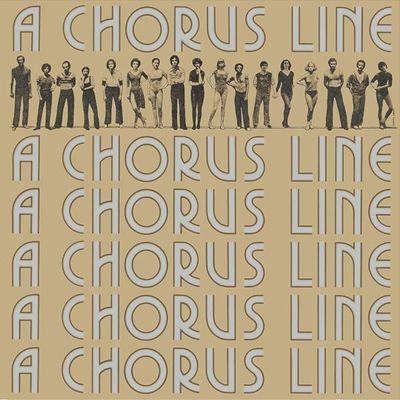
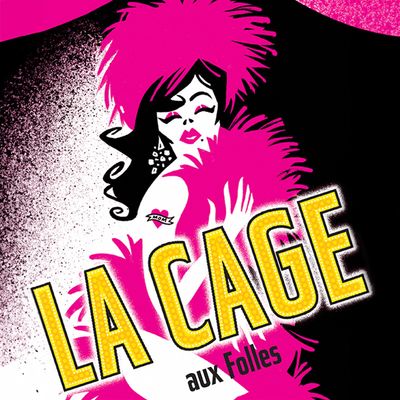
In this episode I explore the growing visibility of openly queer content on Broadway in musicals such as Hair, Coco, Applause, Seesaw, A Chorus Line, La Cage Aux Folles, and the works of William Finn.
I also recount the devastating effect that the AIDS Crisis had on Broadway during the 1980s and 90s when a whole generation of creative talent was eliminated or sidelined by the disease.
AIDS claimed the lives of hundreds of actors, singers, musicians, stage managers, production assistants, and designers -- as well as scores of dancers that had been trained by Bennett, Fosse, Champion, and Tune and might have one day become influential directors and choreographers themselves.
The devastation of AIDS opened the door to the “British Invasion” that would soon dominate Broadway.
Transcript
This transcript was automatically generated and might contain errors.
[0:00] David Armstrong: Welcome to another episode of Broadway Nation, the podcast that tells the extraordinary story of how immigrants, Jews, queers, African Americans, and other outcasts invented the Broadway musical and how they changed America in the process. I'm David Armstrong, and I call this episode I AM WHAT I AM, Gay Liberation and the AIDS Crisis on Broadway, the Modern Era of Broadway, Part Six. As we have seen, all of the progressive social movements of the 1960s and 70s would have an effect on the Broadway musical and be reflected back into the culture by them. These include the Civil Rights Movement, Women's Liberation, Black Power, and of course, the Gay Liberation Movement. And legend has it that the Gay Liberation Movement's inciting incident, the Stonewall Uprising, was actually sparked by a musical theater-related event that took place that same day, June 22, 1969, the first of three days of rioting that began as a protest against a police raid on the Stonewall Inn, a gay bar in New York's Greenwich Village.
Earlier that day, 20,000 fans had jammed the streets of the Upper East Side where Judy Garland's funeral was being held. Garland had a gigantic gay following, and the theory is that the gay community's grief over her death later fed their anger and spurred on their resistance to this latest episode in a long line of police harassment. Some historians reject this idea, pointing out that the queer street youth that were at the center of the rebellion were more likely to be into rhythm and blues and pop music than be fans of Judy Garland's show tunes. However, I don't think the separation between these two musical worlds was as rigid as later historians might assume it was. Whatever the case may be, Judy Garland is certainly tied in a multitude of ways to the gay rights movement, as is evident from its symbol, the rainbow flag, which was inspired by her signature song, Over the Rainbow.
The Stonewall Rebellion brought gay issues into the mainstream, and its first-year anniversary would inspire the first gay rights parades in New York and Los Angeles, and these would eventually lead to gay pride parades and celebrations held nationwide and around the world. The 1970s would see queer people begin to be out loud and proud in significant numbers. And of course, it makes sense that this new visibility and this feeling of liberation would be felt on Broadway, where there had always been a large representation of queer people throughout the industry, including in positions of power. As a result, queer characters and stories began appearing on Broadway, especially in plays, but also in a few musicals as well.
I talked about the pansexual content of Hair in a previous podcast, and that show actually opened on Broadway over a year before Stonewall, but Hair was groundbreaking and controversial in so many ways that its queer content was and is largely overlooked. Just six months after Stonewall, actor Rene Aubergenois won a Tony Award playing the role of Sebastian Bay, a flamboyant fashion designer in the musical Coco, written by Alan J. Lerner and Andre Previn, and starring Katherine Hepburn as the legendary designer Coco Chanel. This was the first openly gay character of the modern era, and actually it was very similar to the role Danny Kaye had played in Lady in the Dark 30 years earlier. This time, however, the gay character was the antagonist, and even at the time, he was seen as a stereotypical, demeaning caricature of a homosexual.
[3:40] ♪ Musical number: "Fiasco" — performed by the cast of Coco ♪
[4:58] David Armstrong: Then, three months later, came the 1970 hit Applause, with a score by Straus and Adams, book by Comden and Green, and based on the classic film All About Eve. Applause featured actor Leroy Reams as Dwayne, the gay best friend, hairdresser, and confidant of Broadway star Margot Channing, played in the musical by Lauren Bacall. In contrast to Coco, this was a very positive depiction of an out gay man, and most importantly, it was included in a very popular, mainstream, Tony-winning, big transgressive lady musical. The authors of Applause boldly had the gay character take the star out for a night on the town to a gay bar in Greenwich Village.
[6:38] ♪ Musical number: "Applause" — performed by the cast of Applause ♪
[7:33] David Armstrong: Applause became the biggest hit of the season, winning four 1970 Tony Awards, including Best Musical, Best Leading Actress in a Musical for Lauren Bacall, and two for the spectacular work of its queer director and choreographer Ron Field. Then in 1973, Tommy Toon won his first Tony Award portraying another gay best friend character in the musical Seesaw. This character dreams of being a Broadway choreographer and becomes one.
[8:59] ♪ Musical number: "It's Not Where You Start" — performed by the cast of Seesaw ♪
[9:56] David Armstrong: This was truly a case of life reflecting art. Tommy Toon would soon become one of Broadway's most accomplished director choreographers. Both Applause and Seesaw featured subplots involving Broadway chorus dancers and choreographers that were without a doubt precursors to the 1975 Broadway smash, A Chorus Line. I covered A Chorus Line in some detail in last week's episode. Among its many significant aspects was a giant step forward in queer visibility. This show put multiple smart, funny, accomplished, and empathetic gay characters center stage and introduced them to an enormous mainstream audience during its 15 years on Broadway, its multiple long-running national tours, international productions, and revivals.
[11:01] ♪ Musical number: "Who Am I Anyway?" — performed by the cast of A Chorus Line ♪
[12:28] David Armstrong: In 1979, a small four-character musical called In Trousers made its debut off-Broadway. This musical was not well-received, but it introduced a character named Marvin who would continue to struggle with his sexuality in two later hit musicals, and most importantly, it marked the debut of queer composer and lyricist William Finn. William Finn was born in Boston in 1952 into a conservative Jewish family. He majored in music at Williams College, and like another Williams alumni Stephen Sondheim, he received the Hutchinson Prize for Musical Composition. In 1981, in collaboration with director James Lapine, Finn premiered a one-act musical called March of the Falsettos, in which his alter ego Marvin leaves his wife and son and begins a stormy relationship with a man named Whizzer.
[12:58] ♪ Musical number: "I Want It All" — performed by the cast of March of the Falsettos ♪
[13:06] David Armstrong: I want it all. I want it all. I want it. Don't go away, Broadway Nation will be back right after this brief message.
[13:29] David Armstrong: The 1983 musical comedy La Cage Aux Folles was created by two queer artists from the Golden Age, Jerry Herman, who wrote the music and lyrics, and the director Arthur Lawrence, and they partnered with a brash young queer playwright named Harvey Fierstein. The musical was based on a smash hit French play and film of the same name, which later inspired the movie The Birdcage. The story was set in a nightclub in the south of France that featured drag entertainers, and for the first time the leading characters of a musical were a gay couple involved in a long-term relationship. La Cage Aux Folles received eight Tony Awards including Best Score, Best Book, and Best Musical, and it ran over four years on Broadway, and its big song, I Am What I Am, would quickly become a gay anthem.
[15:02] David Armstrong: La Cage Aux Folles has been revived twice on Broadway in 2004 and 2010, and both productions would win the Tony Award for Best Revival of a Musical. Meanwhile, even as La Cage was in its early planning stages, gay men in New York and Los Angeles began to get horribly sick and die very quickly of an unknown cause. This mysterious gay plague, as it was called, was first mentioned in the New York Times in 1981 in an article headlined, Rare Cancer Seen in 41 Homosexuals. The disease would soon be officially called AIDS, autoimmune deficiency syndrome. The shameful history of AIDS is that even as hundreds and eventually thousands of people were dying, it was largely ignored and reviled by the mainstream.
President Reagan refused to even mention it until 1985, by which time more than 12,000 people had died. Meanwhile, much of the gay community was in denial because it rightly feared that identifying AIDS with gay men would negatively affect the giant strides that the community had made over the past decade in achieving greater tolerance, acceptance, and freedom. As a result, during the 1980s and 90s, AIDS had a devastating effect on Broadway and all of the performing arts. An article in the New York Times in June of 1987 was headlined, Creative Arts Being Reshaped by the Epidemic, and it goes on to read, The AIDS epidemic, which is increasingly causing death and illness in the worlds of art and entertainment, is having a strong effect on the substance and spirit of creativity.
More and more imaginative work is being shaped by the disease, from paintings to plays. While the disease has given rise to a body of works related to AIDS, it has also brought a sense of despair felt throughout the arts community.
[17:23] David Armstrong: Beverly Sills, General Director of the New York City Opera, said that within recent months, two dozen members of the City Opera, including singers, musicians, and support staff, had died and that she had delivered 10 eulogies for AIDS victims during that time. Joseph Papp, producer of the New York Shakespeare Festival, commented, I have had so many people around me dying of this, I don't even want to talk about it. It's too painful. We realize we are losing, first of all, friends, said Colleen Dewhurst, an actor who is also president of the Actors' Equity Association, the union of professional actors and stage managers. But then, too, we are losing some of the great creative minds and some of the coming creative minds.
And the article goes on. The impact of AIDS can be discerned in the work not accomplished, as well as in the obituaries. Michael Bennett, one of the most influential Broadway directors and choreographers of his generation, withdrew as director of the musical Chess in January 1986, when, according to information confirmed by the New York Times, he was stricken with the illness. He has been in Tucson, Arizona, since December, battling the disease that has prevented him from working for more than 18 months.
[18:33] David Armstrong: Vincent Lift, a Broadway casting director, said his agency contended with the consequences of AIDS every day. I must confess that it's horrifyingly widespread in the community we're dealing with on a day-to-day basis, he said. The sheer quantity of losses is stunning and ever-growing all through the industry. I would easily say that over the past four years, 150 performers that we have known, been in our shows, or auditioned for us over the years are dead. We work a great deal in the musical theater, and an astounding number of them have died. The Broadway creators that died of AIDS include three of the creators of A Chorus Line, Michael Bennett, who was 44 years old, and book writers James Kirkwood, who was 58, and Nicholas Dante, who was 49.
The co-choreographer of Dreamgirls was Michael Peters, and he died at age 46. He had also been the choreographer for Michael Jackson's Thriller and Beat It videos. The book writer for Dreamgirls, Tom Ian, died at 50. The Tony Award-winning director and choreographer Joe Layton, who had worked on 17 Broadway shows, including choreographing The Sound of Music, died at age 63. Director and choreographer Ron Field died at age 54. He had won Tony Awards for his choreography of Cabaret and his direction and choreography of Applause. And lyricist and book writer Howard Ashman died at the age of 40. He had written the musical Little Shop of Horrors, as well as the lyrics for the classic Disney films The Little Mermaid, Beauty and the Beast, and Aladdin.
And finally, actor Larry Kurt died. He had been the original Tony in West Side Story and had also played Bobby in Company. AIDS also claimed the lives of hundreds of actors, singers, musicians, stage managers, production assistants, and designers, as well as scores of young dancers who had been trained by Bennett, Fosse, Champion, and Tune, and might one day have become influential directors and choreographers themselves.
[20:29] David Armstrong: It was only natural that the impact of the AIDS epidemic would be reflected on stage, and in 1990, William Finn and James Lapine brought Marvin and his family back in the hit one-act off-Broadway musical, Falsettoland. As in March of the Falsettos, the catchy, tuneful score was sung through without any dialogue, but there was no hint of paparazzo. Instead, Finn employs his own quirky style of comic and heartbreaking, pop-inflected show tunes, as well as complex musical sequences that again demonstrate the legacy of the bench scene. This time, they added two additional characters, the lesbian couple that lives next door, and the focus of the story is on Marvin's son's bar mitzvah and Whizzer's diagnosis and ultimate death from AIDS.
[22:31] David Armstrong: In 1992, March of the Falsettos and Falsettoland were combined into the Broadway musical Falsettos, which ran for 487 performances, and William Finn received two Tony Awards for Best Book and Best Score. Falsettos was revived on Broadway in 2016. Offstage, the theater community was at the forefront of AIDS activism and caregiving. In October 1987, the Council of Actors' Equity Association founded Equity Fights AIDS, and in February 1988, the Producers' Group founded Broadway Cares, both in response to the growing AIDS epidemic. The two groups merged in May of 1992 to form Broadway Cares Equity Fights AIDS, and as of today, it has raised over more than $300 million. A whole generation of creative talent was eliminated or sidelined by the disease, and this opened the door to the British invasion that would soon dominate Broadway and unexpectedly bring the operetta back into fashion with the musicals Les Miserables, Phantom of the Opera, and Miss Saigon.
[25:16] David Armstrong: On the next episode of Broadway Nation, we'll look at these shows as well as the one element they all have in common, producer Cameron Mackintosh. Broadway Nation is produced and written by me, David Armstrong. If you enjoy these podcasts, I hope that you will do me a big favor by subscribing, rating, and especially writing a quick review of the show on Apple Podcasts or wherever you listen. And please follow us on Twitter, Instagram, and our Facebook page, where I often post photos, video, and additional information about the musicals that are profiled in each episode. Special thanks to KVSH 101.9, the voice of beautiful Vashon Island, Washington, and especially to the entire team at the Broadway Podcast Network.
[26:49] David Armstrong: Bye!
© Broadway Podcast Network, All Rights Reserved