

The 1920's brought the second great era of musicals that were written by, staged by, and starring Black theater artists to Broadway... Read More
From the show: BROADWAY NATION
Featured Shows
About
The 1920's brought the second great era of musicals that were written by, staged by, and starring Black theater artists to Broadway. In this episode I profile these brilliant creators and stars including Eubie Blake & Noble Sissle, Flournoy Miller & Aurbry Lyles, Bill "Bojangles" Robinson, and their musicals -- "Shuffle Along", "Runnin' Wild", "Blackbirds of 1929", "Hot Chocolates" and more. It also includes a brief history of that great African-American/Irish-American co-creation -- Tap Dancing.
And featuring music by The Paragon Ragtime Orchestra -- for more music from this era check out their terrific "Black Manhattan" series of recordings.
Transcript
This transcript was automatically generated and might contain errors.
[0:07] David Armstrong: Welcome to another episode of Broadway Nation, the podcast that tells the extraordinary story of how immigrants, Jews, queers, African Americans, and other outcasts invented the Broadway musical and how they changed America in the process.
[0:21] David Armstrong: I'm David Armstrong, and I call this episode Eubie Blake, Bill Robinson, and the African Americans who invented Broadway.
[0:29] David Armstrong: In our last episode, I outlined the vibrant but almost entirely forgotten series of African American musicals that thrived on Broadway during the first decade of the 20th century and strongly influenced the creation of the Broadway musical.
[0:42] David Armstrong: Just at that moment, it was becoming its own separate and distinctive art form.
[0:47] David Armstrong: That productive era, however, was followed by nearly 10 years in which black musicals were entirely absent from Broadway.
[0:54] David Armstrong: But during that decade, the great migration of African Americans from the South to the North, combined with the dynamic social changes that emerged after the First World War would transform Harlem into a vibrant breeding ground for modern black culture and lead to a new and even more significant series of black musicals.
[1:28] David Armstrong: With music by Eubie Blake, lyrics by Noble Sissle, and book by Flournoy Miller and Aurbry Lyles, the show opened in the spring of 1921 and almost immediately caused a sensation, and it jump-started this new era of black musicals on Broadway.
[1:47] David Armstrong: Its plot revolved around an election for mayor in an all-black town in the South. The characters did not stray very far from the old minstrel show stereotypes, but even so, Shuffle Along is considered by many to be one of the instigators of the Harlem Renaissance.
[2:03] David Armstrong: Just what was the Harlem Renaissance? In his book Harlem, The Crucible of Modern African American Culture, author Lionel Baskum says the Harlem Renaissance was a sudden blossoming of black visual performing and literary art in New York, and he explains how these, quote, seismic cultural changes created an unprecedented opportunity to use art to recast the Negro as a deserving, worthwhile American, no longer to be seen as just the downtrodden descendants of slaves.
[2:35] David Armstrong: And Langston Hughes said more than once that Shuffle Along was the instigator of this incredible period. He added that for nearly two years the show was always packed. Shuffle Along, he said, gave a scintillating send-off and a pre-Charleston kick to the Negro vogue in Manhattan that soon spread to books, African sculpture, music, and dancing.
[2:56] David Armstrong: The creators of Shuffle Along were all talented vaudeville performers who began writing their own material. The book writers were the comedy team of Flournoy Miller and Aurbry Lyles.
[3:06] David Armstrong: Miller and Lyles were both born in Tennessee in the mid-1880s, and they met while attending Fiske University. Their vaudeville act consisted of songs, jokes, and physical humor, and included a sketch called The Mayor of Dixie, which they thought could be expanded into a full musical comedy book.
[3:24] David Armstrong: Shuffle Along's songs were the creation of Noble Sissle and Eubie Blake. Sissle was born in Indianapolis in 1889, and he began singing in his high school glee club. He dropped out of college to join James Reese Europe's Society Orchestra and later played in Europe's regimental band with the 369th Infantry Regiment known as the Harlem Hellfighters during the First World War.
[3:48] David Armstrong: James Hubert Blake was born in Baltimore in 1883. Both of his parents were former slaves. Eubie started exhibiting extraordinary piano skills at the age of six, and by the age of twelve, he had already composed the Charleston Rag and other ragtime tunes to the great disapproval of his mother, who did not want to have the devil's music in her house.
[4:11] David Armstrong: I wrote this, ladies and gentlemen, in 1899. Now I'll play the Charleston Rag.
[4:24] David Armstrong: His professional career began in Atlantic City, where he worked with James P. Johnson and other veterans of the first wave of black musicals on Broadway, and he briefly took over leadership of the Society Orchestra after James Reese Europe's death.
[4:40] David Armstrong: Eventually, Sissle and Blake also teamed up to form a hit vaudeville act called The Dixie Duo. It was during this time that Miller and Lyles approached them about joining them in creating a musical comedy for Broadway.
[4:52] David Armstrong: After much struggle, they persuaded the white producer John Court to give the show a trial run, and following a severely underfinanced tour, the show opened at a rundown, seldom-used theater on 63rd Street, more than 10 blocks away from most other Broadway shows.
[5:08] David Armstrong: Featuring all four of its authors in leading roles, Shuffle Along opened on May 22nd, 1921, and soon became a smash hit. Eubie Blake's score for Shuffle Along helped to usher in the jazz age, although it doesn't sound all that jazzy to us today.
[5:25] David Armstrong: And his music would inspire every Broadway songwriter of the decade. The song I'm Just Wild About Harry became an enormous hit.
[5:34] David Armstrong: There's just one fellow for me in this world. Harry's his name. That's what I claim. For every fellow, there must be a girl. I found my mate by kindness of fate. Yes, I'm just wild about Harry.
[5:53] David Armstrong: The story goes that Blake loved the music of Victor Herbert, and he wrote a waltz for the show in Victor Herbert style. I'm just wild about Harry, not with those words, of course. Later, when it was decided that a waltz wasn't such a good fit for the show, Blake kept the melody, but changed the 3-4 time to a lively four-four, I'm just wild about Harry.
[6:17] David Armstrong: Harry's wild about me.
[6:36] David Armstrong: Oh, I'm just wild about Harry. And he's just wild about... Can I do about he's just wild about me? Harry would become a timeless standard and even be used as Harry Truman's campaign song during his successful run for president in 1948.
[6:58] David Armstrong: Shuffle Along's large cast introduced many African American stars, including Adelaide Hall, Florence Mills, Josephine Baker, and Paul Robeson. And it attracted a large mixed-race audience with unsegregated seating.
[7:13] David Armstrong: The white cast members of other Broadway shows were so eager to see Shuffle Along that special midnight performances were added on Wednesdays to accommodate them. Overall, the show would run an incredible 500 performances.
[7:26] David Armstrong: And as I said, the show was tremendously influential. Irving Berlin went to see it many times, and there's no doubt that George Gershwin and almost all of the other songwriters of the day were affected by it.
[7:38] David Armstrong: The show's choreography and wild dancing also had a tremendous impact on Broadway. Ziegfeld and other producers hired the dancers and the creators of Shuffle Along to teach their dancers how to move like that.
[7:50] David Armstrong: Perhaps most importantly, Shuffle Along's immense success demonstrated that both white and black audiences were once again eager to see talented black performers on stage and in black authored shows.
[8:08] David Armstrong: Broadway Nation will be back right after this short pause.
[8:27] David Armstrong: Several of these shows were virtual sequels to Shuffle Along. They were set in the same town called Gymtown and featured some of the same characters. For example, the 1923 musical Runnin' Wild would run 228 performances and introduced the dance, The Charleston, along with the song of that same name by James P. Johnson and Cecil Mack.
[9:07] David Armstrong: It would become the signature dance of the 1920s, and it's a tune that still defines the decade.
[9:21] David Armstrong: The creators of these shows included a mix of returning veterans from the earlier era of black musicals, as well as new emerging talents. Toward the end of the decade came a show called Lou Leslie's Blackbirds of 1928, and it was even more popular and successful than Shuffle Along.
[9:39] David Armstrong: The producer was a Russian Jewish immigrant originally named Louis Lezinski. He was totally captivated by African American performers and spent most of his career producing shows with all black casts.
[9:51] David Armstrong: Inspired by the Ziegfeld Follies and other revues of the era, Blackbirds of 1928 was a lavish star-studded musical revue with a cast of 100. It was first performed at a theater in Harlem, then traveled to Paris and London before returning for a 515 performance run on Broadway.
[10:19] David Armstrong: I can't give you anything but love, baby. That's the only thing of plenty, baby.
[10:31] David Armstrong: All of the songs were written by lyricist Dorothy Fields and Irish American composer Jimmy McHugh. Dorothy Fields was the daughter of Lou Fields of Weber and Fields, and the sister of book writer Herbert Fields. We will hear much more about both of them in future episodes.
[10:48] David Armstrong: Following Ziegfeld's example, Lou Leslie would stage multiple editions of the show, including Blackbirds of 1930, 1934, 1936, and 1939. And along the way, featuring such stars as Adelaide Hall, Bill "Bojangles" Robinson, Ethel Waters, and Lena Horne.
[11:07] David Armstrong: The success of Blackbirds inspired the 1929 revue Hot Chocolates and would introduce Fats Waller and Andy Razaf's classic songs Black and Blue and Ain't Misbehavin', sung and played in the show by Louis Armstrong in his Broadway debut.
[11:35] David Armstrong: I've been so black and blue.
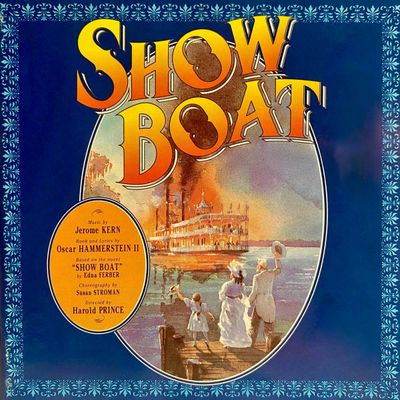
[11:52] David Armstrong: Just as this flourishing of black musicals was reaching its peak, the landmark musical Show Boat opened. This 1927 Jerome Kern, Oscar Hammerstein the Second show was based on the best-selling novel by Edna Ferber, and it was groundbreaking in a number of ways that I'll discuss in depth in future episodes.
[12:11] David Armstrong: But for right now, we should note that its plot revolved around controversial themes such as racial inequality and interracial marriage. It was the first musical to intertwine stories of both black and white characters who shared equal importance in the book and the score.
[12:28] David Armstrong: The show also had a large multiracial cast with white and black actors sharing the stage side by side. Show Boat would run 572 performances. It would tour extensively and have a hit revival on Broadway just five years after its premiere.
[12:45] David Armstrong: And in the process, it would offer significant employment to African American performers. It is arguably the single most influential musical of all time.
[12:55] David Armstrong: Unfortunately, the onslaught of the Great Depression in 1929 would make the economics of producing any kind of show on Broadway extremely challenging.
[13:05] David Armstrong: By the mid-1930s, we have entered another bleak period for black songwriters, directors, and choreographers, and unfortunately, they will not find significant opportunity on Broadway again until the 1970s.
[13:19] David Armstrong: As we have discussed, one of the most influential aspects of these black musicals of the 1920s was their exuberant dancing and choreography.
[13:28] David Armstrong: We talked about the Charleston whose wild abandon captured the zeitgeist of the era and whose basic steps would soon evolve into the Lindy Hop and Swancing.
[13:37] David Armstrong: However, without a doubt, the most significant dance style of the 1920s was tap dancing.
[13:43] David Armstrong: And I want to conclude this episode by exploring the fascinating history of this unique African American and Irish American co-creation.
[13:52] David Armstrong: During the 17th and 18th centuries, over eight million Africans were brought to America as slaves.
[13:59] David Armstrong: They came from a wide variety of regions and cultures and carried with them many diverse art, music, and dance traditions.
[14:05] David Armstrong: And these traditions themselves blended and intermingled, and as all people throughout history have done, the slaves sang and danced for various reasons to reinforce a sense of community, as religious expression, to relieve pain and suffering, and just for fun and entertainment.
[14:23] David Armstrong: And Southern whites were exposed to the singing and dancing on a regular basis.
[14:27] David Armstrong: For generations, white children spent more time with the slaves who nursed and cared for them than they did with their own parents.
[14:33] David Armstrong: White children and the children of slaves played together and grew up in close contact.
[14:38] David Armstrong: And as a result, music and dance was exchanged back and forth between them on a constant basis over hundreds of years.
[14:54] David Armstrong: African slave music was originally centered around various kinds of drums and rhythmic beats.
[15:00] David Armstrong: However, there was an unsuccessful, but for the whites, very alarming, slave uprising in 1739, in which it was believed that the slaves had used drums to send messages to one another to help coordinate the rebellion.
[15:13] David Armstrong: And after that, laws were passed forbidding slaves to use drums for any purpose.
[15:19] David Armstrong: So the slaves created a number of ways of working around this by transferring the rhythms of the drums to their feet and their hands.
[15:26] David Armstrong: They also clacked bones together like castanets and put strings on a gourd called a bonja, and in the process invented the banjo, a musical instrument found nowhere else in the world.
[15:37] David Armstrong: Another consequence of the Great Irish Famine and the migration to America that we talked about in episode two was that it brought thousands of members of an outcast itinerant group, very similar in many ways to the Roma people.
[15:51] David Armstrong: They were known as the Irish Travelers or Tinkers, who traveled throughout the South and performed their jigs and reels and clog dances wherever they went.
[16:04] David Armstrong: The Tinkers' foot rhythms intrigued the black slaves, who picked them up quickly.
[16:08] David Armstrong: Eventually, they transformed the Irish downbeat into a syncopated off rhythm.
[16:13] David Armstrong: And instead of the stiff upper body and arms that the Irish were locked into, the blacks used their arms and entire body in exuberant ways.
[16:21] David Armstrong: As Agnes DeMille states in her 1980 book America Dances, the blacks threw away all the restraints until the decorous hornpipe and the Irish clog became the exuberant American buck and wing tap and jazz.
[16:36] David Armstrong: Well, that's one version of the story.
[16:38] David Armstrong: Another thread centers around dance competitions that were mounted in and around the infamous Five Points district of New York in the 1840s.
[16:47] David Armstrong: The competitors were an African American man named William Henry Lane, also known as Master Juba, and the Irish American dancer John Diamond.
[16:57] David Armstrong: The Five Points was New York's poorest and most dangerous neighborhood, and where the most poverty-stricken Irish, Jewish, German, Chinese, and African Americans lived, all packed together in tenement buildings.
[17:10] David Armstrong: If you've ever seen the movie The Gangs of New York, that is set in Five Points.
[17:15] David Armstrong: When Charles Dickens visited the area and one of its dance halls in 1841, he was appalled by the poverty he found, but he was thrilled by the dancing of 16-year-old William Henry Lane.
[17:28] David Armstrong: Here is how Dickens described his dancing: shuffle, double shuffle, cut and cross-cut, snapping fingers, rolling his eyes, turning in his knees, presenting the backs of his legs in front, spinning about on his toes and heels, dancing with two left legs, two right legs, two wooden legs, two wire legs, two spring legs, all sorts of legs and no legs.
[17:56] David Armstrong: What's it to him?
[17:57] David Armstrong: And in the walk of life or dance of life, does man ever get such stimulating applause as thunders about him when he finishes by leaping on the bar counter and calling for something to drink?
[18:14] David Armstrong: Just as boxing promoters would later purposely pit black prize fighters against white boxers, beginning in 1844, theatrical agents organized dance contests between Juba and what they called his greatest white contemporary, 20-year-old Jim Diamond, who was called, quote, one of, if not the greatest jig dancer the world has ever known.
[18:37] David Armstrong: The contestants were each paid $500, which was an enormous sum in those days, equivalent to about $17,000 today.
[18:46] David Armstrong: This must mean that these competitions drew large and lucrative crowds.
[18:50] David Armstrong: We don't know who the winners of these contests were, but according to Tyler Anbinder in his History of Five Points, we do know that such contests, as well as the friendly rivalries between native-born whites, Irish immigrants, and African Americans within the Five Points dance halls, had a profound influence on the direction of American dance.
[19:11] David Armstrong: Each group incorporated favorite steps from their competitors' dance idioms into their own.
[19:16] David Armstrong: In Juba's case, he adopted some of the high-stepping, foot-stomping style of the jig into his own footwork.
[19:23] David Armstrong: It was from this interaction between Irish Americans dancing the shuffle and the Irish dancing the jig that tap dancing developed.
[19:31] David Armstrong: Juba and Diamond competed in a series of these competitions across the United States and continued to influence each other's dancing.
[19:39] David Armstrong: Diamond would become a star performer in minstrel shows, and Juba became one of the first black performers to guest star in a white minstrel show.
[19:48] David Armstrong: Juba's fame took him to London, where he performed before royalty, and where he died in 1852 at the age of 27.
[19:57] David Armstrong: Which version of the birth of Tap is true?
[19:59] David Armstrong: Probably both of them and many similar interactions that have not been recorded.
[20:04] David Armstrong: A dance historian in 1948 contended that the repertoire of any current tap dancer contains elements that were established theatrically by Juba.
[20:14] David Armstrong: One of those was certainly the breakout dancing star of the 1920s, Bill "Bojangles" Robinson.
[20:23] David Armstrong: The name of this band is doing the new lowdown.
[20:32] David Armstrong: I'm now putting on my wooden shoes, and I'll give you my idea of a tap routine to this number.
[20:59] David Armstrong: Bill Robinson was born in Richmond, Virginia in 1878.
[21:03] David Armstrong: He was primarily raised by his grandmother, who was a former slave.
[21:08] David Armstrong: As a young man, he was given the nickname Bo Jangles because of his prickly and cantankerous disposition.
[21:15] David Armstrong: At the age of five, Robinson began dancing for a living, performing in local beer gardens, and by the age of 12, he was touring with a show called The South Before the War.
[21:25] David Armstrong: In 1902, he teamed up with another dancer named George W. Cooper, and they became a popular vaudeville act on the Keith and Orpheum circuits.
[21:34] David Armstrong: They did not wear blackface makeup, even though it was still typically used by almost every black performer in mainstream vaudeville at that time.
[21:42] David Armstrong: When they split up in 1914, Robinson launched a very successful solo career.
[21:48] David Armstrong: He soon rose to the top in big time vaudeville and became one of the few African Americans to headline at New York's prestigious Palace Theater.
[21:57] David Armstrong: His signature routine was his stair dance, which he introduced in 1918, and he would perform various versions of it throughout his career.
[22:04] David Armstrong: This routine was remarkable for both its showmanship and its musicality.
[22:09] David Armstrong: As he danced up and down the stairs, each stair step would emit a different pitch.
[22:14] David Armstrong: In 1928, he starred on Broadway in the immensely successful musical review Blackbirds of 1928, where he introduced the songs Digga Digga Doo and Doin't the New Lowdown.
[22:25] David Armstrong: Make them play that crazy thing again.
[22:27] David Armstrong: I got to do that lazy swing again.
[22:29] David Armstrong: Hi ho doing the new lowdown.
[22:33] David Armstrong: Got my feet to misbehaving now.
[22:35] David Armstrong: Got a soul that's not for saving now.
[22:38] David Armstrong: Hi ho doing the new lowdown.
[22:40] David Armstrong: Although already a star, Blackbirds was a huge breakthrough for Robinson.
[22:45] David Armstrong: It was during this time that he became well known as Bo Jangles, which for his white fans suggested a cheerful, happy-go-lucky demeanor, but signaled nearly the polar opposite meaning for his black audience.
[22:58] David Armstrong: He went on to star in 14 Hollywood movies, most of them musicals, and including multiple roles opposite the child superstar Shirley Temple.
[23:06] David Armstrong: Despite his fame, Robinson was limited to a very narrow range of stereotypical roles, usually servants of some kind.
[23:14] David Armstrong: In 1939, at the age of 61, he returned to Broadway to star in The Hot Mikado, a jazz-inspired interpretation of Gilbert and Sullivan's operetta.
[23:25] David Armstrong: Robinson celebrated his 61st birthday publicly by dancing down 61 blocks of Broadway.
[23:32] David Armstrong: Despite earning millions during his lifetime, Robinson died poor in 1949 at the age of 71.
[23:39] David Armstrong: This is not as sad as it sounds, however, because he had actually given away much of his wealth to various charities during the last years of his life.
[23:48] David Armstrong: According to newspaper reports of the time, his funeral was attended by 100,000 people, including many of the biggest stars of show business.
[23:57] David Armstrong: In 1989, a joint congressional resolution established National Tap Dance Day on May 25th, Bill Bojangle Robinson's birthday.
[24:07] David Armstrong: Robinson would inspire the tap dancers of his day as well as all who came after him, including John Bubbles, Fred Astaire, Honey Coles, Eleanor Powell, the Nicholas Brothers, Gene Kelly, Ann Miller, Gregory and Maurice Hines, and Savion Glover, to name only a few.
[24:24] David Armstrong: Hi ho, doing the new lowdown.
[24:28] David Armstrong: During the 1940s, tap dancing would fall out of fashion on Broadway, and it would rarely be seen in musicals throughout the 1950s and 60s.
[24:38] David Armstrong: But then it made a gigantic comeback in 1971 when a hit revival of the 1925 show No No Nanette jumpstarted the nostalgia craze of the 1970s.
[24:49] David Armstrong: Ever since then, tap dancing has retained a strong presence on Broadway, and indeed has come to symbolize the very essence of the classic Broadway musical comedy.
[25:09] David Armstrong: Broadway Nation is produced and written by me, David Armstrong.
[25:12] David Armstrong: Special thanks to Sean Griffin for his voice acting contributions and to the Paragon Ragtime Orchestra and New World Records.
[25:19] David Armstrong: For more music from this era, check out their amazing Black Manhattan series of recordings.
[25:24] David Armstrong: I also want to thank everyone at KVSH 101.9 FM on beautiful Vashan Island, Washington, and at the Broadway Podcast Network.
[25:34] David Armstrong: Take it from me.
© Broadway Podcast Network, All Rights Reserved