

Hello Broadway Nation listeners! This week for the first time in more than 126 episodes some unforeseen technical complications have reared their ugly heads and those, on top of the tech rehearsals for the upcoming production of White Christmas that I am co-directing at Seattle’s 5th Avenue Theatre, and some important deadlines for my upcoming book, have all come together and kept me from posting a new episode of this podcast as planned... Read More
From the show: BROADWAY NATION
Featured Shows
About
Hello Broadway Nation listeners! This week for the first time in more than 126 episodes some unforeseen technical complications have reared their ugly heads and those, on top of the tech rehearsals for the upcoming production of White Christmas that I am co-directing at Seattle’s 5th Avenue Theatre, and some important deadlines for my upcoming book, have all come together and kept me from posting a new episode of this podcast as planned.
This is especially frustrating to me because we are in the middle of what I think is a fantastic series of episodes about Oliver Soden’s new biography of Noel Coward which I promise we will get back to as soon as possible!
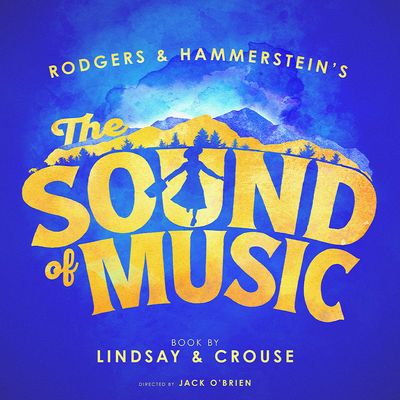
In the meantime, here is another of my favorite episodes Gypsy vs The Sound Of Music in The Golden Age Of Broadway which I thought would be appropriate since the The Sound Of Music opened on November 16, 1959, 63 years ago this week. Enjoy!
The 1950s were crowned by four legendary musicals that went head to head for the “Best Musical” prize at the TONY Awards. In the last episode we looked at the 1958 contest of West Side Story vs. The Music Man,. In this episode I focus on the 1959–1960 which brought us Gypsy vs. The Sound Of Music. And you could subtitle this episode Ethel Merman vs. Mary Martin!
Spoiler alert: There was a tie for the Best Musical Tony Award that season, but if you don’t already know the story, it probably didn’t end up the way you think it would have. As with the previous pair, there are still Broadway mavens that remain outraged over which show won, and which musical was in their view unjustly denied its rightful award!
And in addition to Merman and Martin, the giants of Broadway that are figure significantly in this episode include: David Merrick, Leland Hayward,, July Styne, Stephen Sondheim, Arthur Laurents, Jerome Robbins, Joe Layton and, of course, Rodgers & Hammerstein,
WARNING:: There are a few historically correct curse words used in this episode. You know how theater people are!
Transcript
This transcript was automatically generated and might contain errors.
[0:00] David Armstrong: Hello, Broadway Nation listeners. This week, for the first time in more than 126 episodes of this podcast, some unforeseen technical complications have reared their ugly heads, and those on top of the tech rehearsals for the upcoming production of White Christmas that I'm co-directing at Seattle's Fifth Avenue Theater, and some important deadlines for my upcoming book have all come together and kept me from posting a new episode of this podcast as planned.
[0:29] David Armstrong: This is especially frustrating to me because we're in the middle of what I think is a fantastic series of episodes about Oliver Soden's new biography of Noel Coward, which I promise we will get back to as soon as possible. In the meantime, here's another of my favorite episodes, Gypsy versus the Sound of Music, which I thought would be appropriate since the Sound of Music opened on November 16th, 1959, 63 years ago this week. Here we go.
[1:55] David Armstrong: And today I will focus on the 1959-1960 season, which brought us Gypsy versus the Sound of Music. Spoiler alert, there was a tie for the Tony Award for Best Musical that season, but if you don't already know the story, it probably didn't end up the way you think it would have. As with our previous pairing, there are still Broadway mavens that remain outraged over which show won and which musical was in their view denied its rightful award.
[2:21] David Armstrong: Surprisingly, the Sound of Music and Gypsy, two seemingly very disparate shows, actually have a lot in common. Both of these shows were star vehicles created specifically to showcase the talents and personalities of two of Broadway's greatest stars, Ethel Merman and Mary Martin, both of whom, as we've heard in earlier episodes, had made star-making Broadway debuts in Silver Age style shows in the 1930s, and both of whom had successfully navigated the transition from the Silver Age to the Golden Age of Broadway, which allowed them to rise to even greater heights of stardom.
[2:54] David Armstrong: However, unlike most star vehicles, both of these shows have lived on without their original stars and become centerpieces of the musical theater canon. And one of them, by many estimates, has become the most popular musical of all time. Both shows feature children in significant roles and key musical numbers, and the stories of both shows revolve around the upbringing, education, and welfare of those young characters. And both of these musicals share a producer, a dynamic man named Leland Hayward.
[3:25] David Armstrong: In contrast to the majority of writers, directors, choreographers, designers, and performers that I've profiled on this podcast, many Broadway producers came from very waspy privileged backgrounds, because, of course, that's where the money was. Leland Hayward was born in Nebraska in 1902 into a very wealthy and illustrious family. After dropping out of Princeton, he kicked around aimlessly for a few years and then fell into show business almost by accident.
[3:52] David Armstrong: He was hanging out at a New York nightclub in 1926 when the owner, who was a friend of his, began complaining that business was terrible and that he would pay serious money if he could find an act that would really pull in the crowds. Hayward leapt at the challenge. He hurried over to the Liberty Theater where Fred and Adela Stair were then starring in the Gershwin musical Lady Be Good, and he recruited that famous couple for a 12-week engagement at the club.
[4:17] David Armstrong: It was a lucrative deal not just for the Astaires, but for Hayward as well, and this inspired him to pursue a career as a theatrical agent. In short order, he became one of the most powerful agents in Hollywood, where in addition to Fred Astaire, he represented Ginger Rogers, Boris Karloff, Greta Garbo, and Judy Garland. Then in 1945, at the height of his power and success as an agent, he sold his talent agency and became a Broadway producer.
[4:41] David Armstrong: Again, he had almost immediate success, eventually producing and co-producing a string of Broadway blockbuster plays and musicals, including Rogers and Hammerstein's South Pacific, starring Mary Martin, Irving Berlin's Call Me Madam, starring Ethel Merman, and in 1959, he would work with them both again on Gypsy and the Sound of Music. But a few years prior to that, he was hired by the Ford Motor Company to produce a two-hour live television spectacular to celebrate Ford's 50th anniversary.
[5:10] David Armstrong: In the 1950s, Ford was at the center of American culture, and this event, one of the very first television specials, was scheduled to be broadcast simultaneously on both NBC and CBS, the only two television networks that existed at that time. The stature of this event required engaging entertainers that were equal to Ford in their prestige and importance to American culture. And in the 1950s, that meant Broadway.
[5:36] David Armstrong: So for the centerpiece of the show, Hayward persuaded the two women that personified Broadway at its highest level, Ethel Merman and Mary Martin, to perform together for the very first time. In her autobiography, Martin fondly recalled that Hayward had talked her into doing the show by telling her Merman had already agreed, and he told Merman that Martin had already agreed, thereby tricking them both into saying yes.
[5:59] David Armstrong: The idea was that they would each sing several of their signature hits and then partner together on a 12-minute medley of old favorites. And Hayward brought in Jerome Robbins to stage the sequence. Robbins wisely decided that with these two powerhouse stars center stage, nothing else was needed except some simple stools for the ladies to perch on. Many Broadway wags had expected there would be conflict between these two great divas of the stage, but Martin and Merman had a ball rehearsing the show and got along wonderfully.
[6:27] David Armstrong: Ethel Merman even used her old secretarial skills to type up the daily changes that were made in the medley. On June 15th, 1953, the Ford 50th anniversary show was watched live by a phenomenal 60 million viewers, a larger audience than Merman and Martin would perform to in all of their Broadway shows combined. And forever after, star performers would sit side by side on stools and perform medleys of hit songs like this.
[6:55] David Armstrong: Hiya, how about singing some whole song? I think that'd be fun. I want a school. To my honey aisle prune loves too. Wait till the sunshine when the clouds go with the mind. We will be so happy many. Don't let me hear you make a sign. Don't let me hear you make a smile. I'm the sheikh of Arabie. Your love belongs to me at night when you're asleep into your gentile tree. When the red red robin goes bop, bop, bop and alone, alone.
[7:57] David Armstrong: There we go for a sober with each of it. Sweet song. Wake up, wake up, you sleepy and get up. Get us get out of bed, cheer up. Cheer us, the sun is red. Live alone, a laugh and be happy. What if I'm the blue? Now I'm walking through field. I'll sound rainbake listen, but still I listen for hours and hours. I'm just a kid again. Do it wanna do it again. Sing it on eye with the red red robin. And fa-bomb and aver seen a video of this, I encourage you to track it down.
[8:38] David Armstrong: It's a rare chance to see these two great stars at the height of their power and just a few years before their two greatest triumphs. Now let's turn our attention to Gypsy. In 1957, the renowned striptease artist turned unlikely celebrity, Gypsy Rose Lee, published a memoir in which she wrote of her early rough and tumble days in Vaudeville and Burlesque, and most vividly about her ferocious stage mother Rose. The book became a bestseller, and producer David Merrick quickly acquired the stage rights.
[9:19] David Armstrong: David Merrick is perhaps the most famous Broadway producer after Ziegfeld. He was born into a Jewish family in St. Louis in 1911, and he would go on to produce almost 90 plays and musicals on Broadway, including Gypsy, Hello Dolly, Oliver, Promises, Promises, and 42nd Street. He was known in the business as the Abominable Showman because of his ruthless producing style and his Machiavellian competitive manner. He once said that his guiding philosophy was that it is not enough that I should succeed, others should fail.
[9:51] David Armstrong: However, he was a marketing genius and a virtuoso at the publicity stunt. His most well-known scheme was cooked up to try to save the 1961 Julie Stein Compton and Green musical comedy, Subways Are for Sleeping. He located seven New York residents that all had the same names as one of the leading New York drama critics. Merrick had actually been planning this stunt for many years, but he had to wait for the critic Brooks Atkinson to retire since he could never have found a match for that name.
[10:18] David Armstrong: Each of these seven non-critics contributed a short but glowing review under their name that was used in a full-page ad for the failing show. The ad was quickly spotted as a hoax and was pulled from most newspapers, but it still became a giant news story and the talk of the town. And the stunt generated enough publicity to allow Subways Are for Sleeping to run almost long enough to recoup its capitalization. You will no doubt hear more about Merrick in future episodes.
[10:45] David Armstrong: Merrick first engaged Betty Comden and Adolph Green to create the book and lyrics for Gypsy and their frequent collaborator Julie Stein to compose the music. But after a while, Comden and Green dropped out to write the screenplay for Auntie Mame, and Gypsy sat dormant for nearly a year until Merrick joined forces with Leland Hayward to get the show back on track, now with Ethel Merman as its intended star.
[11:07] David Armstrong: Ethel Merman was born Ethel Merman in Queens, New York in 1908, into a working-class family of German and Scottish ancestry. Her father was an accountant and her mother was a teacher. From her childhood through high school, on Friday nights, the Zimmerman family would take the subway into Manhattan to see that week's vaudeville show at the Palace Theater. There, Ethel saw Fanny Brice, Sophie Tucker, and Nora Bays, among many others.
[11:31] David Armstrong: At home, she tried to emulate their singing, and through this she discovered her own distinctive vocal style. Meanwhile, she enrolled in a special secretarial course at her high school. After graduating in 1924, Merman was hired as a stenographer and was eventually made personal secretary to the company president. During this period, she also began appearing in nightclubs and vaudeville shows. And she decided that Zimmerman was too long of a name to fit on a theater marquee, and she shortened it to Merman.
[12:00] David Armstrong: Her Broadway debut was in George Gershwin's Girl Crazy. She had a small featured role with two songs, the second of which was I Got Rhythm. I got rhythm. I got my man for anything more. And in the second chorus of that song, she held a belted C for 16 bars, and according to all reports, unleashed pandemonium. As Stacy Wolf writes in her book, A Problem Like Maria, Merman's stardom burst forth from that long, long note and from a legendary intermission conversation with Gershwin, who, according to Merman said, Do you know what just happened to you?
[12:48] David Armstrong: She had become a star in one night. And the story goes that he also told her to never take a singing lesson. Merman was one of those rare Broadway singers to belt, to use what is called the chest voice rather than the head voice, like a classical singer.
[13:18] David Armstrong: Sophie Tucker had belted, and she had modeled her red hot mama persona on African American blues singers like Bessie Smith.
[13:25] David Armstrong: Merman's voice and personality are always described in terms of power.
[13:30] David Armstrong: She was a powerful woman who belted out a song.
[13:33] David Armstrong: And the greatest musical theater writers all wanted to write songs and shows especially for her.
[13:38] David Armstrong: But Merman acknowledged that she was not always the easiest person in the world to write a part for.
[13:43] David Armstrong: She said they had to be built to emphasize the brassy side with lots of oomph, something with guts and sock songs, not sweetness and light.
[13:51] David Armstrong: And as Stacy Wolf goes on to say, Merman never played ingenue romantic heroines.
[13:57] David Armstrong: She always played women who defied gender expectations in some way.
[14:01] David Armstrong: She starred in 15 Broadway musicals, most of them written especially for her, including two shows by Irving Berlin and five by Cole Porter.
[14:10] David Armstrong: And she became a legend in her own lifetime, referred to as the Myrm, stories about her brash, straightforward, down-to-earth manner and body humor abound.
[14:19] David Armstrong: She cursed like a sailor and loved telling dirty jokes.
[14:22] David Armstrong: There are dozens of legendary and very racy anecdotes about her.
[14:26] David Armstrong: I'll give you just one.
[14:27] David Armstrong: Ethel was hired to be a guest star on Loretta Young's television show, and Young was a famously religious and conservative leading lady who did not allow anyone to curse around her.
[14:38] David Armstrong: This is, of course, a challenging position to take in show business, so she kept a jar handy on the set of her show, and anyone that used bad language had to put a dollar into the jar for each infraction.
[14:48] David Armstrong: The money was sent to some Catholic religious charity of some kind.
[14:52] David Armstrong: Well, Ethel shows up for the first day of rehearsal, and within minutes she shouts, damn, in frustration over trying to remember a line.
[14:59] David Armstrong: Loretta grabs her jar and says, Naughty naughty, Ethel, you have to put a dollar in the jar.
[15:04] David Armstrong: A few minutes later, Ethel exclaims, Oh hell, over some new frustration, and Loretta comes at her again with the jar.
[15:11] David Armstrong: Then, just a few minutes after that, Ethel fumbles a prop and exclaims, Shit.
[15:15] David Armstrong: But before Loretta can even pick up the jar, Ethel shouts, Look, Loretta, here's $20.
[15:20] David Armstrong: Now go fuck yourself.
[15:22] David Armstrong: Gypsy would be the highest point of Ethel Merman's incredible career.
[15:25] David Armstrong: But first, the producers needed a book and score that would be worthy of their star.
[15:30] David Armstrong: They engaged Arthur Lawrence to write the book and Jerome Robbins to direct, both of them still basking in the success of West Side Story.
[15:38] David Armstrong: First Cole Porter and then Irving Berlin were asked to write the songs, but Porter was in failing health, and Berlin did not see himself writing songs for a stripper.
[15:48] David Armstrong: Cy Coleman and Carolyn Lee wrote a few songs on spec as an audition, but they did not get the job.
[15:53] David Armstrong: Next, they approached Stephen Sondheim, who said he would only do it if he could write both the music and the lyrics.
[16:00] David Armstrong: But Merman said no.
[16:01] David Armstrong: She felt that she had been burned her last time on Broadway by inexperienced songwriters on the show Happy Hunting, and she told the producers that she wanted Julie Stein to write the music.
[16:11] David Armstrong: He knows my style and he writes great show tunes, she said.
[16:14] David Armstrong: Sondheim went to Hammerstein for advice, and he argued that the valuable experience that Sondheim would gain from writing for a famous star would well outweigh the negatives.
[16:23] David Armstrong: Sondheim later described it like this.
[16:26] David Armstrong: Instead of writing for Madame Rose, you write for Madame Rose as played by Ethel Merman.
[16:31] David Armstrong: This turned out to be very useful because when I wrote Joanne for Company, I wrote Joanne as played by Elaine Stritch.
[16:37] David Armstrong: I wrote Mrs. Lovett as played by Angela Lansbury.
[16:41] David Armstrong: It's not so much that you tailor the material, but you hear the voice in your head whether you want to or not.
[16:46] David Armstrong: And he goes on to suggest that this is why so many hit songs have been written during the out-of-town tryouts for so many shows.
[16:53] David Armstrong: Because by that point in the process, he says, you know the person who's playing the character.
[16:58] David Armstrong: You know their strengths and weaknesses, and whether it's conscious or not, it filters into what you write.
[17:04] David Armstrong: Now many reports claim that as this full team set to work, Arthur Lawrence got the idea of shifting the focus of the story away from Gypsy and making Rose the leading character.
[17:15] David Armstrong: But that doesn't make any sense to me.
[17:17] David Armstrong: The show was already being written specifically for Ethel Merman, and I can't imagine anyone expected that she would play a supporting role.
[17:24] David Armstrong: Having Rose be the focus of the story must have surely been the plan from the very beginning.
[17:29] David Armstrong: Stein and Sondheim were both worried that they would have a rocky, difficult collaboration.
[17:33] David Armstrong: Broadway's established old guard in conflict with the brash young new generation.
[17:38] David Armstrong: But their collaboration turned out to be very successful, with each of them pushing the other to do brilliant work.
[17:44] David Armstrong: However, late in the process, the team had still not figured out what to do for Rose's climactic moment of revelation that the entire story was building to.
[17:53] David Armstrong: Robbins' original idea had been to create a nightmare ballet that would bring back moments and images from Rose's past to dramatize her emotional breakdown.
[18:03] David Armstrong: But after about a week of trying to stage it, he decided that it was simply not going to work.
[18:07] David Armstrong: It was going to have to be a song, and this song would have to bring the show to its dramatic climax.
[18:13] David Armstrong: Here she is, boys!
[18:15] David Armstrong: Here she is, world!
[18:18] David Armstrong: Here's Rose.
[18:29] David Armstrong: The show was rehearsing in the run-down, decrepit but picturesque roof garden of the New Amsterdam Theater, where Ziegfeld's midnight frolics had been staged 30 years earlier.
[18:39] David Armstrong: After rehearsal one night, Jerry Robbins said to Sondheim, why don't you stay and we'll talk about the number?
[18:45] David Armstrong: Sondheim proposed the idea of taking all of the songs in the show that were connected to Rose and mashing them up in a similar way to what Robbins had been planning for the choreography for the nightmare ballet.
[18:56] David Armstrong: It was one of those things that you dream about when you're a kid, Sondheim said.
[19:00] David Armstrong: You write a song with a star, only it was Jerry Robbins as the star.
[19:04] David Armstrong: He started moving, performing a strip, sashaying back and forth on the stage.
[19:09] David Armstrong: Hello, everybody!
[19:11] David Armstrong: My name's Rose!
[19:12] David Armstrong: What's yours?
[19:15] David Armstrong: How do you like that, Mr. Goldstone?
[19:20] David Armstrong: Hold your hands and hallelujah.
[19:23] David Armstrong: Mama's gonna show it to you.
[19:25] David Armstrong: And I started to ad lib at the piano with the tunes that were already written.
[19:30] David Armstrong: A few days later, after working with Julie Stein, the authors presented this dramatic musical monologue to Ethel Merman.
[19:37] David Armstrong: Ready or not!
[19:39] David Armstrong: Here comes Mama.
[19:40] David Armstrong: Sondheim performed it with Julie Stein accompanying him on the piano.
[19:44] David Armstrong: Why did I do it?
[19:46] David Armstrong: By all reports, it was a thrilling performance.
[19:49] David Armstrong: All your life and what does it get you?
[19:52] David Armstrong: Thanks a lot.
[19:53] David Armstrong: Out with the garbage.
[19:54] David Armstrong: They take bows and you're back in zero.
[19:58] David Armstrong: And after Sondheim belted out that final defiant for me, Merman with tears running down her face rushed to embrace the songwriters.
[20:07] David Armstrong: It's a goddamned aria, she exclaimed.
[20:11] David Armstrong: For me.
[20:46] David Armstrong: And its critical acclaim has only grown over the years.
[20:50] David Armstrong: Walter Kerr said of the original production that it was the best damn musical he's seen in years.
[20:55] David Armstrong: In 1974, Clive Barnes said Gypsy is one of the best of musicals.
[21:00] David Armstrong: In 1989, Frank Rich called it his favorite Broadway musical.
[21:04] David Armstrong: And in 2003, he wrote that Gypsy is nothing if not Broadway's own brassy, unlikely answer to King Lear.
[21:11] David Armstrong: And in 2008, Ben Brantley said, it may be the greatest of all American musicals.
[21:16] David Armstrong: Many theater professionals also consider Gypsy to be the best written, most brilliantly crafted musical of all time, and it is certainly one of the pinnacles of that style of golden age musical play that had largely been invented by Rodgers and Hammerstein.
[21:31] David Armstrong: So it is somewhat ironic that it would go head to head at the 1960 Tony Awards with a show written by Rodgers and Hammerstein themselves.
[21:39] David Armstrong: Broadway Nation will be back right after this brief pause.
[21:54] ♪ Musical number: "Do-Re-Mi" — performed by Mary Martin ♪
[22:11] David Armstrong: The first three notes just happened to be.
[22:33] David Armstrong: She said that she got hooked on performing right from the start.
[22:36] David Armstrong: Give me four people and I'm on.
[22:38] David Armstrong: Give me four hundred, and I'm a hundred times more on.
[22:41] David Armstrong: After working in Vaudeville and Radio on the West Coast, she made her Broadway debut in Cole Porter's 1938 musical, Leave It to Me.
[22:49] David Armstrong: Sophie Tucker was the star of the show, and Mary Martin only had one song, but that song was My Heart Belongs to Daddy.
[22:55] David Armstrong: While tearing off, a game of gong, I may make a play for the caddy.
[23:03] David Armstrong: But when I do, I don't follow through, cause my heart belongs to Daddy.
[23:10] David Armstrong: If I invite a boy some night to dine on my fine thin hattie, I just adore his asking for more, but my heart belongs to Daddy.
[23:34] David Armstrong: Dilly UV, Daddy.
[23:38] David Armstrong: So I want to learn you, Laddie.
[23:42] David Armstrong: Though I think you're perfectly swell.
[23:45] David Armstrong: Then my heart.
[23:45] David Armstrong: The New York Times wrote that Martin's mock innocence made My Heart Belongs to Daddy the body ballad of the season.
[23:53] David Armstrong: And my daddy.
[24:02] David Armstrong: With that one song, she became a star overnight.
[24:10] David Armstrong: Among her many Broadway performances, she originated the roles of Nellie Forbush in South Pacific and the title role in Peter Pan, as well as Maria von Trapp in The Sound of Music.
[24:20] David Armstrong: She had a unique combination of very feminine softness and tomboy playfulness.
[24:25] David Armstrong: Her personal life was complicated.
[24:27] David Armstrong: In 1941, she married Richard Halliday, a closeted upper-class gay man who became her manager.
[24:33] David Armstrong: Martin was queer as well, and she had close relationships with several women over the years, including film actress Janet Gaynor.
[24:41] David Armstrong: The initial idea for The Sound of Music came from the show's eventual director, Vincent J. Donahue, who had seen a German film called The Trap Family that had been a success in Europe and South America, and which told the life story of Baroness Maria von Trapp.
[24:55] David Armstrong: He said in many ways it was amateurish, but I was terribly moved by the whole idea of it, almost sobbing.
[25:01] David Armstrong: He immediately saw it as a perfect vehicle for Mary Martin, and he sent the film to Martin and her husband, who was one of Donahue's closest friends.
[25:09] David Armstrong: They both loved it, and Martin later said the idea was irresistible, a semi-Cinderella story.
[25:15] David Armstrong: And soon Leland Hayward joined the team, and Howard Lindsay and Russell Krauss were engaged to write the book.
[25:21] David Armstrong: Initially, they envisioned it as essentially a dramatic play featuring authentic Trapp family songs and one new number ideally written by Rodgers and Hammerstein.
[25:30] David Armstrong: Then, as Rodgers recalled in his autobiography Musical Stages, Oscar and I saw the picture and agreed that it had the makings of an impressive stage production, but disagreed with their concept.
[25:41] David Armstrong: If they wanted to do a play using the actual music, fine, but why invite a clash of styles by simply adding one song?
[25:48] David Armstrong: Why not a fresh score?
[25:49] David Armstrong: When I suggested this to Leland and Mary, they said they'd love to have a new score, but only if Oscar and I would write it.
[25:56] David Armstrong: We had to explain that we would be tied up with The Flower Drum Song for a year, but they came back with the two most flattering words possible: we'll wait.
[26:05] David Armstrong: Rodgers and Hammerstein became co-producers with Halliday and Hayward, and because Lindsay and Krauss had already been signed as the book writers, The Sound of Music became one of the few productions in which Oscar Hammerstein's contribution was only the lyrics.
[26:18] David Armstrong: It's interesting that four great writers that had all been young breakout stars of the Silver Age of Broadway would now come together to create one of the Golden Age's crowning achievements.
[26:28] David Armstrong: Oscar's limited participation, however, turned out to be for the best.
[26:32] David Armstrong: As rehearsals got underway, Oscar was diagnosed with terminal cancer. He accepted it with equanimity and told his wife and partner that he intended to go on working as long as he could. With Joe Leighton now on board as the choreographer, rehearsals went smoothly. If you've not heard my Trudy Rittman episode, be sure to check that one out for more information on her and Joe Leighton's contributions to the show. The Sound of Music's out-of-town engagements went smoothly, and the advanced ticket sales for New York broke records. The only issue with the show seemed to be the final concert sequence. Rogers was still not satisfied with it. He felt that one more song was needed: a solo for Captain Von Trapp. Hammerstein had been too ill to attend the preview performances in Boston, but he made it there for the opening and agreed with Rogers about the song. Six days later, Edelweiss was put into the show.
[28:01] David Armstrong: It was the last lyric that Oscar Hammerstein would write. The Sound of Music opened on Broadway in November 1959. The reviews overall were positive, but many critics found the story to be corny, sentimental nonsense. And as they would ever after, they described the show with adjectives such as sugary, sickly sweet, and saccharin. In spite of that, The Sound of Music became an immediate smash hit. It ran almost four years on Broadway and was even a bigger success in London. The original cast album spent 16 weeks as number one on the album charts and remained on the charts for 276 weeks. And remember, this was not the cast album charts, because there wasn't anything like that at the time. These were the charts for all albums.
Then in 1965, the blockbuster movie version of The Sound of Music would take the show to even greater heights. Driven by unprecedented repeat viewings, the film quickly became the number one box office movie in America, and it held that position for 30 out of the next 43 weeks. It received five Academy Awards, including Best Picture, and soon became a worldwide sensation, and one of, and possibly the highest-grossing movie of all time. The soundtrack album is also one of the most successful in history. Incredibly, as Lawrence Maslin tells us in his book Broadway to Main Street, How Show Tunes Enchanted America, in an era marked by the rise and triumph of Beatlemania, the ascension of Motown, and the Beachhead of the British Invasion, the two most dominant LPs of the mid-1960s were far and away, the soundtracks to Mary Poppins and The Sound of Music.
[30:35] David Armstrong: And the repeat viewings would never stop as the movie made its way to TV and video, along with Broadway revivals and countless stock and amateur productions. There were also Rocky Horror style audience participation sing-alongs with cosplay costume contests, and most recently live television remakes that drew large audiences. His family was poor, they had almost nothing, but they did have an old VHS of The Sound of Music. He said as a child, he watched it constantly, nearly every day, and through it fell in love with Broadway musicals. For some reason, The Sound of Music is incredibly moving, inspiring, and meaningful to a mass audience around the world, and they want to see the story replayed over and over time and time again.
One naturally has to ask why. What has made The Sound of Music such a success? It's easy and fashionable to criticize the show and the film, and indeed many critics and theater professionals despise it. Of course, the music is glorious. The songs are tuneful, infectious, and unforgettable, but they only exist because of the story they are helping to tell. I don't believe it is possible for a work of art to have such a major cultural impact and capture the public's imagination on such a global scale or become so universally loved unless it has a story with the power to connect deeply with its audience on an emotional, conscious, and subconscious level.
[32:33] David Armstrong: What is it about the story of The Sound of Music that causes it to have such impact? Mary Martin described the show as a Cinderella story, and that is certainly a fairy tale that has lost none of its mythic power over the centuries. Author Ethan Morton also classifies The Sound of Music as a fairy tale with all the power to move us that we find in The Wizard of Oz. And he summarizes its plot like this: a prince who is under an enchantment that has frozen his heart meets a young woman of an order of healers who frees him. Monsters overrun the land, but the healer's people open up a hidden portal of escape. The magic of the spirit versus the magic of destruction. And music does the healing. I would propose that the story of The Sound of Music is an epic, if quiet battle between the forces of good and evil.
The antagonist is the greatest villain of all time, Hitler, and the specter of the Nazi regime and its evil philosophy hangs over the show and film, even as they are only rarely mentioned or alluded to. We never see any direct depiction of their ruthless persecution of Jews, homosexuals, or other minorities. And in fact, the one character that might be Jewish and/or gay is funny Uncle Max, and he is presented as a lovable but decadent, amoral collaborator who is too weak and too much in love with his access to wealth, privilege, and power to stand up to the Nazis. He is a cautionary tale. When the next wave of fascists come, don't be like Max.
[34:11] David Armstrong: The Von Trapp family itself becomes a metaphor for rescuing Germany and the world from Hitler's grasp. The author, Raymond Knapp, points out that prior to Maria's arrival, the Trapp family is basically a mini fascist state run by an autocratic militaristic captain blind to the individual needs of his own children. It is above all the children that are at stake in the story, for they not only represent the quintessential family unit that will certainly be destroyed by totalitarianism, they also, and more basically represent the future. They are an empty page that the world is about to write on. They are tomorrow, and to borrow and invert the language of Cabaret, the show is about who they will belong to.
Maria, of course, represents the key to rescuing the family, and it's amazing how much of an idealized American she is. She has the courage to stand up to the captain, and courage was widely seen as what the good Europeans lacked in the 1930s: the courage to stand up to Hitler and Mussolini. And she is in touch with nature, and she loves freedom too much to accept life as a nun. She pays attention to the children and is immediately more mother than governess. She's resourceful, able to turn curtains into play clothes, and most importantly, she has music, specifically the music that will make you one with nature. As in The Music Man, music solves all of the problems and conflicts in the story of The Sound of Music.
[35:39] David Armstrong: In an upcoming episode, I will explore one of the principal and most powerful themes of the Broadway musical: transgressive women that refuse to follow the rules and live the life that society and the patriarchy has set out for them. You can be certain that both Maria and Rose will figure prominently in that discussion. So what happened at the 1960 Tony Awards? Five musicals were nominated for Best Musical that year. Take Me Along, Fiorello, Gypsy, The Sound of Music, and Once Upon a Mattress. And the music for that show was written by Mary Rogers, marking the only time that a father and daughter would compete for the Tony Award, at least so far. Gypsy was nominated for eight Tony Awards, including Best Actress, Best Supporting Actor and Actress, Best Director, Best Scenic Design, and Best Musical.
But Ethel Merman and everyone else went home empty-handed. The Sound of Music was nominated for six and won four: Best Actress, Best Supporting Actress, Best Scenic Design, and Best Musical. But unusually there was a tie that year, and Fiorello also received a Tony Award for Best Musical. With a score by Bach and Harnick, Fiorello was a musical biography of New York's beloved Depression-era mayor, Fiorello LaGuardia. It must have been a great show because it also received that year's Pulitzer Prize for Drama, but it has never entered the musical theater canon in a major way, probably because it connected most effectively and strongly with a New York audience that revered LaGuardia and remembered him with great affection.
[37:11] David Armstrong: So in essence, Gypsy came in third. In hindsight, it's easy to get a little outraged about that. There were no separate categories in those days for book and score, and if there had been, it's possible that the awards might have been spread around a bit more. Privately, Merman was deeply disappointed, but in public, she pretended not to be bothered. "How are you gonna buck a nun?" she would say.
[37:59] David Armstrong: As we've seen, the 1950s came to a close with Broadway at its zenith. But in the next episode of Broadway Nation, we'll look at two shows that opened in 1960 and as if on cue kicked off the new decade by foreshadowing a number of major upcoming changes in American culture, changes that will dramatically affect the Broadway musical and by the end of the decade leave its very future in doubt.
[38:38] David Armstrong: Broadway Nation is written and produced by me, David Armstrong. If you enjoy the show, please rate and review us on Apple Podcast or wherever you listen. It's very helpful to spreading the word about the show. Special thanks to KVSH101.9, the voice of beautiful Vashon Island, Washington, and to everyone at the Broadway Podcast Network.
[39:06] David Armstrong: Now here's the information about how you too can become a patron of Broadway Nation. A donation of just $7 a month will not only keep Broadway Nation rolling along, it will also provide you with exclusive access to the complete unedited versions of many of the interviews that you hear on this podcast. And all patrons will receive special shout outs and acknowledgments of your vital support for Broadway Nation. To join, simply go to BroadwayNationPodcast.tech. That's Broadway Nation Podcast. Or click the link in the show notes to this episode.
© Broadway Podcast Network, All Rights Reserved