

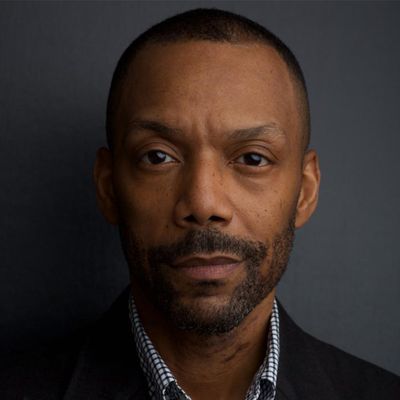
T. Oliver Reid / @toliverreid. A true Broadway veteran, T. Oliver Reid has performed in over 10 Broadway shows and is currently in Hamilton. He shares insight and wisdom from his many years of experience on and off the stage in the theatre industry... Read More
From the show: Built For The Stage Podcast
Guests
Featured Shows


About
T. Oliver Reid / @toliverreid
A true Broadway veteran, T. Oliver Reid has performed in over 10 Broadway shows and is currently in Hamilton. He shares insight and wisdom from his many years of experience on and off the stage in the theatre industry. Reid encourages other artists to focus on doing the work and keeping things simple and focused, wether its always showing up early, being very attentive during rehearsal, living s life as a supportive creator, and he continues to do just that.
www.builtforthestage.com - free trial sign up
Transcript
This transcript was automatically generated and might contain errors.
[0:00] T. Oliver Reid: Blake kicked me in the head. I always tell his full name when that happens. And it was just like a fluke accident during It's All About the Green. And we were in these two concentric circles, and they were just off one night, and we're all tilting, and we tilted and his split clicked and hit me in the head. And I literally was like, Richard just hit me in the head.
[0:35] Joe Rosko: Hey, what's going on? Welcome to Built for the Stage Podcast. This is Joe Rosko, founder of Built for the Stage, Broadway's number one fitness platform. If you want to go to the website, Built for the Stage.com, you can try a free trial where you'll work with your own Broadway fitness coach on an interactive fitness app. Special thanks to Broadway Podcast Network, our producing team. You can check them out at BPN.fm. Okay. As always, super exciting guest. Super excited to have on a Broadway legend. This actor has wrapped up so many shows. I'm super impressed and super excited to see how they've put out such a consistent resume. They've been in 10 Broadway shows. You can see that in the description of this episode. They're currently in Hadestown, they're also currently in Cleveland, Ohio, filming a little Netflix feature or movie or series. We're gonna get into details that could fill you in. But please welcome to the podcast, T. Oliver Reid.
[1:39] T. Oliver Reid: Hi, Joe.
[1:41] Joe Rosko: How are you?
[1:43] T. Oliver Reid: I'm doing so well. Thank you for sitting through that intro there. But I wanted to give credit where credit is due. So thanks again for being on the episode.
[1:54] T. Oliver Reid: Thank you, my pleasure. So let's jump into. I'm excited because you're in Cleveland, Ohio, and as we said before the recording, I also am from Ohio, just about an hour southeast in Youngstown. What are you up to? And I'm super impressed about how you're balancing and juggling rehearsals for Hadestown and this Netflix project at the same time.
[2:17] T. Oliver Reid: Yeah, some people will call it juggling, some people will call it running around with my hair on fire, what there is of it. But yeah, it's you know, it's that point where everything is starting to happen again. So it's great, but it also is a little scary that you know, going literally. I've been in Cleveland since the middle of June. I was here for a month back in New York for two weeks, and I apparently had said yes to teaching a musical theater workshop as well. So the two weeks I was back there, I was doing that, and then also then we started some rehearsals for Hadestown because we have two cast members who are not coming back right now. We have one who's Patrick Page is gonna be, I think I can say this, is gonna be filming a movie for the first two months.
So we have someone coming in for him, and then one of our fates is on maternity leave, so we have someone coming in for her for a few months. So I've been in Cleveland working on this Netflix film. I'm associate choreographer, but also will be seen in the movie as well. It's the movie of the novel from probably 12 years ago, Don DeLillo's White Noise. So in Cleveland filming that right now, and then jumping back and forth to New York.
[3:34] Joe Rosko: All right. So you're on the production of the film, but you're also on the other side of the table as a choreographer. They both are different, but do you tend to lean towards one or the other? Do you enjoy choreography just as much as performing?
[3:48] T. Oliver Reid: I enjoy directing as much as performing. But David Newman, who's choreographer on Hadestown is also the choreographer on this, and he asked me if I would, you know, be as his associate on this. I was like, yeah, I mean, David Newman is one of the coolest, one of the kindest people on the planet. So when he asks, like, I'm like, anytime he asks to do anything, I'm like, absolutely. And it also is at that point, it's like, you know, I think he asked me like last February, and at that point we didn't know what was going on with the Broadway when we actually came back. It's like this is perfect. Like it'll give me something to do all summer around teaching and everything. And it just happened that that all you know after we said yes to all of these, all this, then Hadestown sounds like, oh yes, and you're going back in rehearsals on this day. So yeah, like literally like loading things on top of other things to make it happen.
[4:40] Joe Rosko: Right. Okay, so is that network connection? So everyone listening, put all this, connect the dots here. You just listened to Carla Puno Garcia's episode a few episodes ago, and it's really just about putting in good work, showing your worth with the people around you, being likable and having that desire to be worked with, and then boom, it just keeps going for you. So everyone out there, you know, take note from T. Oliver as well. So congrats to you. That's awesome that you're busy.
[5:11] T. Oliver Reid: You're busy, so that's good. But you're right. I mean, it's that things like people. I don't think people realize, especially like early on in the careers, like the person you are early on, there are a lot of people who are remembering that. So just be nice to everybody all the time. I mean, I promise you, I booked one gig because I held a door open for the producer, didn't realize she was the producer of this thing, and we are both walking into this building, and I held the door open, smiled. We both got in the elevator, got off on the same floor, I thought nothing of it, went you know, changing into you know, like a dance something for an audition, walk into the room, and she's the producer of the thing, smiling at me. I'm like, yep, that's fine. But yeah, it seems like it's so little for us to be nice to people always, and it really does make a difference. That reputation you have will stay with you.
[6:01] Joe Rosko: Yeah, so good human first, good performer second, for sure.
[6:07] T. Oliver Reid: Yeah, well, let's get into that because as I mentioned in the intro of the episode, you're on your 10th show on Broadway now, and along with just being a kind person, what in your life or career do you practice on a daily basis as a routine or habits that you think kept you on this consistent path?
[6:30] T. Oliver Reid: Okay, well for sure, clarification. This is actually 13, but don't tell anybody.
[6:35] Joe Rosko: Oh my gosh, what we gotta talk to Playbill then.
[6:40] T. Oliver Reid: One, two, three, four, five, six, seven, eight.
[6:44] Joe Rosko: Which one are they missing?
[6:45] T. Oliver Reid: So we got I wanna I want to brag, I want to brag, I want to brag for you. So Thoroughly Modern Millie, is that your debut?
[6:52] T. Oliver Reid: No, debut was the first revival of Kiss Me Kate, then I have to do them in order or I don't remember them. So Kiss Me Kate, then Follies, then Thoroughly Modern Millie, then Never Gonna Dance, then La Cage, Chicago, Wedding Singer, Mary Poppins, Sister Act. After Midnight. Yes, Sunset Boulevard, Once on This Island, Hadestown.
[7:27] Joe Rosko: Okay, so they're missing Chicago.
[7:30] T. Oliver Reid: They're missing your debut, which was what again?
[7:34] T. Oliver Reid: Kiss Me Kate with Brian Stokes Mitchell, Marin Mazzie, Amy Spanger, Michael Baris.
[7:39] Joe Rosko: Mm-hmm.
[7:40] T. Oliver Reid: And I think they're missing one more off that list.
[7:42] Joe Rosko: All right, I'm writing a letter. I'm writing a letter after it's on it's always about like what whatever I need to like with these shows that I have I have to have a really scheduled life. Like I am much better if I have like 16 things going on than if I'm just doing the one thing.
[8:04] T. Oliver Reid: So for me, a lot of times it is making sure that one my gym time is like the same every day. Like to have that as part of the schedule. It's like I know I'm gonna be here at this time every day. Depending on the show, sometimes it's also making sure that I have scheduled a visit to the chiropractor every week, sometimes as acupuncture. It really is everything for me is whatever my body needs to get me to eight o'clock at night, so that I can actually do the show eight times a week.
[8:33] Joe Rosko: So you have, I guess, some non-negotiables as far as routine times of when you'll be somewhere and what you're gonna be doing, like the gym you had mentioned.
[8:42] T. Oliver Reid: Yeah. Yeah, like and again, and again, it's like more and more. It's like figuring out like I'm these days, like I try not to eat breakfast or anything until like after 10 o'clock, so that so that I really am. And I don't like to think of it as you know, this the idea of this fasting, it's just like if I can wait until 10 o'clock tonight, eat and I'll eat for these next hours so that one, I'm not stopping myself first thing in the morning or especially late at night. You know, we find it, especially when you get to a certain age, like reflux and all these things sort of creep in. So not eating a lot and then trying to lay down and go to sleep. So just sort of figuring out what like an eating schedule is for me.
But yeah, I these days, like eight o'clock in the morning is like prime workout time for me. So I'll get up, pull myself together, grab an iced coffee, and hit the gym. And then everything else sort of fits in around that, like what, especially these days was like scheduling everything, sort of figuring out what the schedules need to be, and also just making sure you like, you know, keep a little time for yourself. And that's that's been a big thing for me lately, because you know, you just get so busy and you think I gotta fit all this up in. It's like, no, you actually have to not have a nervous breakdown. You have to not like fall apart mentally or emotionally or physically. So find some time in a day that's just gonna be for you.
[9:58] T. Oliver Reid: Yeah, like gym and listen, you you get you gotta, we gotta get in the gym at some point. I would that would be great. But like I live in like like gym is like just it's always been an important part of staying I honestly, I think it's staying focused. Like that gym time for me is like, and I rarely work out with like a trainer or workout partner only because that time is like good, like me thinking and sort of going through whatever I need to on my own. It's like for me, it's like also like bike riding or any of that stuff. It's like that's the time that you actually get to sort of, you know, work through whatever you got in your head for the day.
[10:33] Joe Rosko: Absolutely. I just sat some bike intervals for about 45 to 60 minutes today, and not only was it physically refreshing, but the mindset and just how you can just cycle through all those thoughts and flush it out while you're in the midst of your workout.
[10:51] T. Oliver Reid: Yeah. Yeah.
[10:52] Joe Rosko: So yeah, I was gonna ask you, you kind of just touched on it there, just to stick with that gym first thing. What else does it do for you like as far as setting the tone for your day?
[11:03] T. Oliver Reid: Well, I mean, that I mean that's is like one unless it sets the tone for the day, but also like when I don't get to the gym, I my emotionally I feel like I'm sort of like pulling pulling down and sort of dragging a little bit. So it really does like sort of like give me the energy to like sort of push myself through or and and walk myself through the rest of the day. Also, it's like it's just that thing, you know, you you want to make sure that muscles aren't atrophying that, and again at this point it's like it's not necessarily about getting bigger or being leaner or any of those things. It's like it's just about maintaining so that I can do all the things that I like to do day in, day out.
So, you know, you want I want to make sure that all the parts that are the working parts, the knees, the elbows, the shoulders, all those things that I that you need to just sort of like keep through the day, make sure that those are as strong as possible. But then also, you know, you want to look cute too. So, you know, you you keep the chest in order, you know, you keep everything the way it needs to look. But yeah.
[12:01] Joe Rosko: Yeah, okay, let's recap that people listening. So T. Oliver says every day it's the same time, and that's important because so many times you'll wake up and you don't feel like it, but when you make something routine, a non-negotiable, you're going because it's no different than you brush your teeth in the morning. You just make it a part of it. T. Oliver also said that he gets a mental relief or upswing from it.
[12:29] T. Oliver Reid: And then on top of that, he's really focusing on the functionality of it. If you keep moving, you keep moving, and if you stop moving, you stop moving. So I love all that. Um, let's get into a favorite show of yours that wasn't on Broadway. I wanted to ask you this question. After I looked at this list, I was like, all right, what's T. Oliver done that probably is a hidden gem that people don't know about? I'm sure, yeah, I mean, the first thing that popped in the mind, there is a musical version of Romeo and Juliet that Terrence Mann wrote. And we did it, oh gosh, that was at least like 20 years ago. So Terrence Mann wrote it. Christopher Demboise was a choreographer. Patrick Wilson and Irene Malloy were the two stars of it.
And it was great. I mean, a lot of like really amazing music. It was a great cast. We did it at the Ordway in Minneapolis. And yeah, it was just like, it was just a great story, and it was like this first time that it really had this sort of rock music telling. And yeah, there were some beautiful songs in it, and Christopher Demboise's choreography was just so athletic and so amazing, but it was also the show that I totally like ripped three intercostals because there was one moment in the opening sequence of the show there was this big sword fight and then we were running around and it was like the scaffolding around the stage and at one point I ran towards one of the bars and I grabbed hold of it and I swung around and it brought me right back on stage to finish the fight.
Well, one night I swung around and went and fell to the ground and everyone looked at me and it's like we're not done yet. I had to get up and finish because I was about to catch someone, so I caught this guy and then ran off stage because I literally was like, I can't do anything. And you know what, like if you tear or aggravate an intercostal, like you can't pull yourself up out of bed, you can't really roll over, you can't do any of those things that are a part of your normal life. So literally for the next week it was me wrapped in ace bandages just to kind of get through whatever I could, but even with that, like that show was just like, it was so exciting and the music was just, yeah, it was honestly, I think that was probably my favorite off-Broadway show and one of those shows that I keep hoping will have a life somewhere.
[15:22] Joe Rosko: Okay, so on the topic of choreography, what elements do you enjoy of Hadestown? Because from what I've seen so far, it's very deep plie down gritty type of... walk us through that as a swing in the show and different things that you covered.
[15:22] T. Oliver Reid: Yeah, I love it. I mean, again, I love David Newman. I love the way he moves. David's background is in contemporary dance, but he also was a hip hop guy and a voguer. He was in the dance scene in New York when he was in his teens and early 20s. So he has all of that sort of wrapped up in who he is and how he choreographs. But he also has this way of, even though things are deep and you feel grounded, it all also feels like there are movements that you would naturally do. So it's rare that all of a sudden there's a bot mod that's thrown into something or anything that feels like it is dance in the way that we know it on Broadway. It all feels like the movement is coming out of some emotion or out of the story that we're telling.
So for me, that's great. I mean, and again, it's like every show has its own feel, every choreographer does, and it's just, you know, again, at this point in my life when I've had two ankle surgeries and have spinal fusion in my neck, it's like the idea of doing a lot of whacking my leg or any of that, it's like let's find the way to move that is less abrasive on my body.
[17:03] Joe Rosko: Let's get into the injuries, because I just love to keep bringing up things that we can have the listeners kind of draw from because we're all going through things and we're all trying to figure our way through our own personal journey. And I know that people out there have probably struggled with injuries themselves or trying to come back. How was that each time for you? How did you have patience or maybe not? Tell us about some of those experiences.
[17:32] T. Oliver Reid: Yeah, well, let's... I'm trying to think of even where to start. I think part of it is like at the place I am now, it's great to know yourself and to know what limitations are and to be able to say, yeah, this is what I'm gonna be able to do eight shows a week, or yeah, this is what I want to do. I don't want to do that because I don't think it's gonna be healthy for me, sort of mentally or physically. And that's hard to say when you're at the beginning of a career or you're in a place that you really want a job, but it's good to know when you can say, okay, I need to make sure that this instrument that I have, that I'm taking care of because I may not, I'm not gonna get another one. I may be able to get a metal plate and something, but it's not gonna be the same.
So the first ankle injury, it's called osteochondritis dissecans where the bones start to deteriorate. It's something apparently that a lot of football players get. I didn't know this until it happened to me. And it was from doing toe touches in Thoroughly Modern Millie, and we were in tap shoes doing toe touches in a really fast tempoed number. And so every night it was like up and then slam back into the floor. And after a while, it just started, it was no good. So had surgery for that, was on crutches in the city flops, wetting my way around New York City for six months. Like could not bear weight at all for those six months, and then could start PT after that. And then Wedding Singer, Richard H. Blake kicked me in the head.
I always tell his full name when that happens. And it was just like a fluke accident during "It's All About the Green," and we were in these two concentric circles, and they were just off one night, and we were all tilting, and we tilted and his split clicked and hit me in the head. And I literally was like, Richard just hit me in the head and thought nothing of it for the rest of the week. And then one night, like I couldn't sleep, and I was like, what's going on with my arm? Too cold, called a doctor. And then, like, later, like that Saturday matinee, we were doing Saturday Night in the City, and I started to do this move, and I felt my body falling. I was like, what's going on? What's going on?
And right before I hit the floor, like my leg caught me. I was like, oh, okay. So went to the doctor the next week and told him that, and he's like, oh yeah, so you aren't doing anything else until you have that taken care of. You just had an episode of quadriparesis. You are out. And literally, I was like, wow, okay. So then those next few months, I literally couldn't do anything. They're like, you can't even get in the back of a cab because if they slam on brakes, you could be paralyzed. So it was a couple of months of just like, this is a little crazy. Had the surgery, was in a neck brace for 10 months. That was the longest. I mean, again, because we live our lives and okay, let's do this quickly, let's, this is all this is gonna be, and let's get back to it.
And so that was the long one. That was during Wedding Singer, and then had another one, another ankle surgery where they went back in just to drill into my ankle to get the blood flowing a little better. And that one was shorter. But I was so cocky for the next surgery. I was like, he's like, okay, it's gonna be a year. I was like, I give you nine months, that's all we got, and we're going back to work. But it's like once those things happen, you realize like we're not, we are not robots, and these body parts are all we're gonna get. So you really got to figure out how to maintain and take care of yourself and still work and do all the things you want to do. But know that at the end of the day, it's like we can all be replaced by someone, even though we are all singular individuals and human beings.
It's like you gotta figure out what's gonna be best for you and your body and you mentally, and sometimes that's like I need to take this time away just to do this, or I need to have this mental health day so I can take care of myself, or I need to leave this show now because it's wreaking havoc on my entire body, and I just don't want to live my life always in PT, always in acupuncture, always in these things. It's just, it's a balancing act to figure out what makes sense and what your body can take.
[21:38] Joe Rosko: All right. Well, thanks for sharing all that. Yeah, someone needed to hear it. Last question, and then we'll let you go. I wanted to go through your process when you approach auditions, just with your success career-wise in shows. Do you have either affirmations? Do you have little tricks of how you like to address the table when you come into the room? How do you approach auditions or what do you think draws from your success?
[22:07] T. Oliver Reid: A lot of that's now is like, it's just, you know, it's this idea of people like having this full book of things that like, you know, I used to carry that book around of like 400 songs in a book with the 16-bar cuts and all these things. Like, I just don't do them anymore. Like I go in, I probably have 10 songs in a book. It's like these songs I can sing any time of the day, always well. So those are the songs I sing. I always go in now, and it's like I don't think of anything as an audition anymore because then I'm waiting for them to accept me or tell me how good I am. When I walk into the room, like I know who I am, I know what I do well. So now everything is a performance. Some of these performances are teeny weeny mini performances that are just those 16 bars or just 32 bars.
But to go in and say, this is how I come into the room, then I'm not expecting anything from them. I only want to give them what I have, and then I can leave the room and not care about it anymore. So that has been the biggest difference for me. But also just like knowing who you are and what you bring to the table is a lot, and that just being kind. It takes nothing to walk into a room and smile at people. Sometimes they're busy at the table, sometimes they're not. Sometimes it's nice to go in and just like have a quick second with the accompanist. Hey, how are you? This is what we're gonna do. Is that all the same? Cool, that's great. Or I've gone in times and someone started to play something, I'm like, you know what?
Let's not sing that song. Let's do the other one. And that's fine as well. But to make sure that when you enter the room, it feels as comfortable to you as possible. And however it is you learn to on the dance side, it's like figure out what that is so that when you walk into the room, you can click into that immediately. Like I learn combinations really well because I always get the music in my head really quickly, and I know, oh, this step goes on that music. So because my background is music, for me, it was always figuring out what that was. There's some people, just the steps in the order makes perfect sense to them. But for me, it's like I will hum along so I know exactly what needs to happen with my feet on certain things.
So again, just so that I feel comfortable so that when I have to, I'm in that place where they're actually looking at me and looking at my resume at the same time, I again feel as comfortable with what I'm doing as I possibly can.
[24:20] Joe Rosko: Yeah. Awesome. All right, T. Oliver, that's it for today. Thank you so much for being on the episode.
[24:25] T. Oliver Reid: My pleasure.
[24:27] Joe Rosko: Everyone, give T. Oliver a follow on the gram. That will be in the description of this podcast. Go see Hadestown reopening September the 2nd. And yeah, so thank you for listening, everyone. This is Joe Rosko from Built for the Stage, signing off later.
© Broadway Podcast Network, All Rights Reserved