

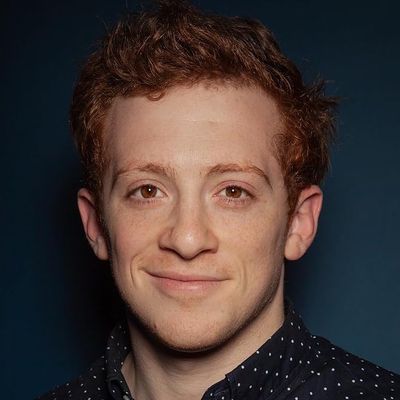
Ethan Slater / @ethanslater. Ethan Slater is an actor and a writer. He recently starred as SpongeBob in The SpongeBob Musical on Broadway (and now on Paramount Plus!), for which he won Drama Desk, Outer Critics Circle, TheaterWorld Awards (and more) and earned a Tony Nomination... Read More
From the show: Built For The Stage Podcast
Guests
About
Ethan Slater / @ethanslater
Ethan Slater is an actor and a writer. He recently starred as SpongeBob in The SpongeBob Musical on Broadway (and now on Paramount Plus!), for which he won Drama Desk, Outer Critics Circle, TheaterWorld Awards (and more) and earned a Tony Nomination. He recently closed Assassins at CSC as The Balladeer and Lee Harvey Oswald. Ethan is now performing in Chicago in the new play, Good Night Oscar. (You can also see him on TV in things like Fosse/Verdon, Murphy Brown, Law and Order: SVU and more. It's all on imdb.com). As a writer, he has a number of things in development including the musical Edge of the World written with Nick Blaemire (the concept album starring Norbert Leo Butz, Lilli Cooper and Ethan is available wherever you listen to music), the upcoming films the Interveners (with Nadja Leonhard-Hooper), Silent Mode (with Marshall Pailet), and more. You can check out more of his music on Spotify or wherever you listen.
Edge of the World
https://open.spotify.com/album/0QrI6q1Qb1pnfb80FwAWHX?si=Z6rrMddURUmW3nVBTz0xlg
Broadway Records announced today the forthcoming release of Assassins (The 2022 Off-Broadway Cast Recording). The album will preserve Stephen Sondheim’s full score with the recent Classic Stage Company cast with direction by John Doyle. Assassins is available for pre-order at Broadwayrecords.com. The album will be available digitally on March 18, with a physical CD release date of April 15, 2022.
https://builtforthestage.com/subscribe - $1 coaching for your first month + unlocking a 20% discount code on apparel!
Transcript
This transcript was automatically generated and might contain errors.
[0:00] Ethan Slater: A memory that I'm gonna be telling my grandchildren, hopefully one day, is sitting a foot and a half away from Steven Sondheim playing his music on guitar at opening night of his show, and one of the last opening nights that he would get to see. It was really, really meaningful and it was, you know, his passing away during the run was really painful and imbued it with a lot of meaning for us. So it was a really unbelievably special experience, and the production is something I was so proud to be a part of.
[0:50] Joe Rosko: Hey, what's going on? Welcome to Built for the Stage Podcast. This is Joe Rosko, founder and host of Built for the Stage, Broadway's number one fitness platform. If you haven't tried Built for the Stage yet, go to BuiltfortheStage.com and you can be on your way to a seven-day free trial where you'll work one-on-one with your own Broadway fitness coach on an interactive fitness app. Special thanks to BPN Broadway Podcast Network, our producing team. You can check them out at BPN. All right. Exciting guest as always. You may have seen our guest a few years back, starring in the title role of SpongeBob, where the physicality that he displayed on the stage was just beyond captivating. I fell in love with this performance from the get-go.
I did not expect to love a show like SpongeBob, but I showed up and was like transformed, or I should say teleported into this cartoon world, and I was so bought in. And a lot of people obviously were because our guest won a Drama Desk, an Outer Critics Circle Award, a Theater World Award. He was nominated for a Tony. He also was recently in Assassins Off-Broadway, where they just recently closed, I believe it was January 20th or the 22nd, something like that. If you miss the performance though, never fear, don't worry. They have a cast recording that's gonna be coming out soon. I believe March the 18th. I'm looking through my notes right now, but I'll pull that up in just a second. Let's bring him on. Enough of my rambling. Please welcome to the podcast, Ethan Slater. What's up, Ethan?
[2:45] Ethan Slater: Hey Joe, thanks for having me.
[2:48] Joe Rosko: My pleasure. Introduction. That was a bit long-winded, but I just, you know, it was just rambling on the side. It's an awesome Monday morning. There's something really fun and uncomfortable about hearing your resume a little bit read out loud, but it's also kind of like, all right, nice. Like, oh yeah, those were things that I did.
[3:10] Ethan Slater: Exactly. I have trouble with that as well, as far as just like slowing down to say, hey, you're doing some good things, like good for you, you know, keep it going. So congrats. I love on your website when you do write about your bio, you're like, I'm gonna write this in the third person. And I thought that was very genuine and like, oh, this he's a cool guy. But going back to my intro with SpongeBob, honestly, I had some friends that wanted to see it, they were from out of town. And growing up with my niece and nephew, wow, they watched SpongeBob on repeat. So when I was going, I had like a vast, vast plethora of experience watching SpongeBob. So when I was showing up, I'm like, is this gonna be like Disney on ice? Like, is this gonna be super lame? What is this? And it was just so endearing, and like just the way that you all pulled that off was incredible. So congrats to me.
[4:20] Ethan Slater: But that's like the classic journey with SpongeBob. Like, even for me, when I got the audition, you know, there was no script yet, there was nothing about it in the world. It was secret, it was called the untitled Tina Landau Project, and my character's name was Chipper Chip. Like, there was nothing about it. But I knew that it was SpongeBob because of the sides, and then when I went in for the audition, the first thing that Tina said to me was like, Hey, so I know that I know what you're wondering, but like, no, there's not gonna be big foam costumes, it's not gonna be an amusement park show. We're not doing an arena show, we're gonna like use your body to tell the story. So, like, my audition, even most of it had to do with doing physical comedy and doing a physical comedy routine, and trying to be sort of cartoonish without being cartoonish, you know, cartoonish no, because truly that's for me, that's what made it was like you kept that element of oh, yeah, these are humans and they're kind of reenacting this cartoon, but at the same time, it was still coming from an authentic place, which was really cool.
[5:34] Joe Rosko: Yeah. I mean, I have to say, like, not to get too into it too quickly, but I've got this sort of deep obsession with sort of like the silent movies and the silent movie comedians, and you know, I think that started a little bit before I worked on SpongeBob, but casually, and then working on SpongeBob, you know, it was based on the way that they like the cartoon was based on the way that Laurel and Hardy moved their bodies and Buster Keaton moved his body, and Charlie Chaplin and you know Harold Lloyd and like the it's sort of like this chicken or the egg kind of question, you know, the cartoon elements came from what human bodies were doing, and then they went a little further, and then the human bodies then had to do what the cartoons took a little too far, you know what I mean?
So I there was always like there is like this human core of comedy, even in the sort of like flaws of physics breaking cartoon world. There's there's always it comes from what bodies can do. So I always found that like a really fun sort of touchstone.
[6:41] Ethan Slater: So before we jump into Assassins, I want to continue this SpongeBob rant just a little bit longer because before we hit record, I had mentioned that when I saw the show, I really genuinely was dying to get to chat with you someday because of your physicality on stage, and I had seen or heard some other interviews that you took part in, and you talked about your history as a wrestler. And I myself am a former athlete and performer. I actually played Division One college football as a musical theater major, the only one in the country. So I need to hear more about that. I need to hear a little bit more about that.
[7:20] Joe Rosko: Okay. So I will, I will, I promise. But the reason I bring that up is because when I heard you had a wrestling background, I was like, oh, you know, someone in wrestling that also was involved in theater. You know, this is not a common, this is not a common thread. But, you know, real quick, not to bore everyone that maybe has already heard this, but I grew up. Sorry, everyone, I'm not bored. I need to hear it.
[7:50] Ethan Slater: Yeah, yeah. I grew up as a three-sport athlete and in middle school in the seventh grade, my you know, little middle school girlfriend at the time was like, oh, I want to, she said, you know, quote unquote, try out for the school play. And I was like, Oh, you know, I don't have a car, obviously that's in seventh grade, so you're just dying to find any way to hang out with your significant other a bit more. So I was like, sure, I'll do the play, having no interest in it. And it was Shakespeare, Much Ado About Nothing, and I was cast in the play, and she was not. So I actually was in this show for no reason because she wasn't even in it. And I hated every second of it. And then my choir teacher sat me down after and was like, just give it one more try.
And it was Guys and Dolls Jr. in the spring, and I did it. And ever since then, in seventh grade through my senior year of high school, I was the lead in all the shows. And I ended up going to study musical theater in college, and I was just gonna do theater. I had some offers to either play football or baseball, but I thought, you know, if I did that, it would only last another four years and then it would be over. But if I chose to go for theater, you know, I could do that my whole life. So I went, but during my freshman year of college, I would hear the PA announcer on campus announcing the football games, and I would be crying in my dorm room because I was missing it.
[9:23] Ethan Slater: Yeah.
[9:23] Joe Rosko: So that spring I walked on to the team, I made the team, and from then on was playing football and majoring in musical theater at the same time. So that's how that happened.
[9:37] Ethan Slater: I do have a lot of follow-up questions, but I'm gonna not take up too much time with it. But I am curious, like what were you able to do shows when you had a practice? You know, like what and what was the what did that look like?
[9:54] Joe Rosko: Yeah, so I was really fortunate in high school and college to be able to have professors and teachers and coaches that would work with me. One example I always love to bring up from high school was I was playing Curly in Oklahoma, but at the time we had just started baseball practice in Ohio, and in Ohio at the beginning of baseball season is still very cold. So you'll start your practices in the basketball gym, like pitching or doing batting practice. So at nighttime we were practicing, and a girl that was in the show would run out of the theater to the basketball court and say, Hey Joe, your scene is coming up, and I would stop pitching and run to the theater and do my scenes, and then I would run back to baseball.
And in college, college was insane because being an athlete alone in college is just crazy. As well as being a theater major, it's also crazy. So my day usually looked like 5:30 was weights, and then class, and then you had practice until about five or six, and then you had rehearsal from about seven to ten thirty, and then you just kept doing that over and over again. So yeah, it was a lot of people. Sleep when you graduate.
[11:15] Ethan Slater: Sleep when you yeah, but it's just kind of my, I don't know, my kryptonite is to never allow myself to not be overly busy.
[11:25] Ethan Slater: So I still kind of keep that same kind of schedule. No, I definitely feel that it's always better to have your time sort of filled up to the inch, and then you can like when you have that free time, you can use it the best.
[11:40] Joe Rosko: Yeah, yeah. It's some moderation that I need to work on, but yeah. Okay, all right. Going back to you though, so you're center stage in SpongeBob, and I remember you doing like you either did like a kip up or some type of broad jump down center stage, and I was like, holy shit, like this kid's so athletic. Um, excuse my—I have another podcast as well, and we speak a bit more freely on that podcast. So that just came out. So all of our middle school listeners, I apologize. But anyways, um tell us how wrestling had a factor in your physicality, or just how you've been able to carry that over to the stage because honestly, it was extremely impressive and something that is not common, um, even from the best of the best.
[12:30] Ethan Slater: Oh, well, first of all, thanks. I mean, wrestling was like a huge, huge part of my life. Uh, and I think I learned a ton just about my body from wrestling. Um, I was pretty deeply obsessed with it; I still am. And I, you know, it was—I also was kind of in this place when I was a senior in high school, and I was trying to figure out whether I was gonna wrestle in college or do theater. Um, and I had a couple of places where I'd been talking to the coaches, I had a couple offers to go to some places to wrestle. And the kind of basic understanding was like, if you want to be a starter on our team, if you wanna, you know, if you want to be wrestling, then you're not gonna be able to do shows. It's just that—it's just kind of incompatible.
Um, you know, I could ride the bench for four years and I could be a theater major, but if I wanted to actually try to crack the starting lineup, it probably wasn't gonna happen. And I made that sort of heartbreaking decision to, you know, do theater instead. And then I was, you know, my freshman year, I found a freestyle club nearby where I was going to school. And so I was wrestling a few times a week and I was getting really into it and I was still training, and then I—at the beginning of when I, you know, when I was 19 years old, I had a pretty bad injury while I was kind of messing around, honestly, and then I was on crutches for eight months. Um, so, which is just to say, like it was a version of the decision that you made though it wasn't as conscious, which was like, well, theater is gonna be my life, and I'm really passionate about it, and I love it.
And if I wrestle, it'll be four years. There's no chance I'm an Olympic wrestler who then gets sponsored and makes it my life. You know, it would be something I would do for four years, and then I would be moving on. Um, then I got injured and realized that I wouldn't have been able to do it for even four years. So I feel really grateful that I made that choice. But yeah, wrestling taught me so much about my body, about like where my body is in space and how to use it. Um, I learned how to tumble because I was trying to like warm up and be kind of flashy in my warmups, and that's how I learned how to tumble a little bit.
[14:40] Ethan Slater: And no way. Yeah, I mean, there was this one guy, my freshman year. There's this guy at Damatha High School, uh, which is an unimportant detail. But he was from—sorry. Where are you from?
[14:51] Joe Rosko: I'm from DC, Washington, D.C.
[14:53] Ethan Slater: Oh, okay. Okay. Yeah, not a storied wrestling city, but Maryland is a sick wrestling state. Um, and you know, Ohio—you were from Ohio, right? Is that what you said?
[15:04] Joe Rosko: Yeah, from Ohio, yeah.
[15:05] Ethan Slater: Oh, Ohio is one of those powerhouse places. But Maryland is like this amazing wrestling state. And so there's this one guy who's just like unreal. And my freshman year, we went to this huge tournament, and everybody is like sort of lunking around and like, you know, being like tough and overly intense, and that's kind of how a lot of wrestlers are. And this one guy is like skipping and doing backflips and doing cartwheels and just having the time of his life, not trying to look hyper-masculine, just like getting limber and tumbling, and then he went out and he whooped everyone. And I was like, that's my version of this. Like, that's what I aspire to be is somebody who's like not out there to be performative in spite of the fact that I'm a performer, but who's out there to like be, um, you know, the most version of myself out on the mat and figure out what my body can do and how I can wrestle in the best ways.
And like, you know, I learned how to be flexible from wrestling. I thought it was really cool when people would go into the splits to stop you from taking them down. So I learned how to do the splits so that when someone was in on my leg, I could just stretch my other leg back and keep pushing away.
[16:17] Joe Rosko: Wow.
[16:19] Ethan Slater: So it was like all of these little things that then I got to do SpongeBob and it was like, okay, what's your bag of tricks? And I was like, all right, well, here's my wrestling bag of tricks. Let's see how they work on stage.
[16:30] Joe Rosko: Yeah, they transferred over amazingly.
[16:33] Ethan Slater: So, uh, your wrestling background. Wow, thanks.
[16:37] Joe Rosko: Yeah. I mean, it definitely took some work, you know. It was like I hadn't really done any dance classes, um, which I kind of really regret. But I never took a dance class until I took one in college and then I took a lot after college. I started like really, really trying to do that. And I was—I struggled with it because it felt really new and scary, and it still feels really new and scary to me. Um, but I've always loved watching dancing. So it's something that I always like loved. And then, you know, but learning wrestling techniques, I was like, oh, right, okay. So I actually do know how to control small parts of my body, and it became applicable in that way.
[17:17] Joe Rosko: Yeah. I think as performers, um, we all obviously know the athletic requirements it takes to be a successful performer. But as an athlete, uh, at our core, watching dancers or watching performers, I find it hard to believe that not all athletes could at least find some appreciation or joy from watching performers or dancers because of how athletic it is. It's kind of undeniable.
[17:46] Ethan Slater: Totally. I—they feel pretty intertwined. I have to say though, I also like I had the best wrestling team. I—it's not lost on me that my high school wrestling teammates were just—they were so supportive. And I was—I was running, but you know, when I was a kid, I was like obsessed with baseball and I wanted to play baseball with my life forever. I was gonna be a professional baseball player, even though I wasn't that good. And, uh, you know, it was like this big deal to me to do the musical instead of playing baseball in the spring. That was like a tough choice that I, you know, I was like 14 and I was really like it was tough. But my wrestling teammates came to every performance I did. Um, in the fall they came, in the spring they came. They came when I was, you know, doing a show over the summer. I had just like this incredible cheering section from my wrestling teammates, and it was just—it was awesome.
[18:39] Joe Rosko: Wow. So we have a very similar background, you know, getting my football teammates and all my other teammates to show up to see me. Uh, by junior and senior year, I even convinced some of them to actually be in the musicals. So I had some of these—I—yeah, it was that bridge. That—that's, you know, that's kind of what Built for the Stage is as well, is just trying to bridge that gap from a performer trying to train like the athlete they need to be and bridging that kind of, you know, discomfort we have in a gym or fitness environment. You know, it's not always maybe the most inviting type of place. I've been going to the gym since sixth grade, and sometimes I still walk into the gym and I'm like, uh, this is a little, you know, a little stuffy in here for me. So we're just trying to bridge that gap.
[19:30] Ethan Slater: Let's transition away from SpongeBob and wrestling. Everyone that's been listening, I'm sure based off the demographic of our listener or viewer, um, y'all really enjoyed the SpongeBob talk. If you didn't like the wrestling or other talk, we apologize. So that was just a little selfish banter between Ethan and I. So thanks, thanks for hanging with us.
[19:50] Joe Rosko: Yeah, thank you. I appreciate it. Let's jump into Assassins. Uh, let me get this right. I was—I was doing the intro, I was just struggling to pull up my notes, but you can get the off-Broadway cast recording of Assassins that Ethan is featured in March 18th, and you can get that at BroadwayRecords.com. And you also on April the 15th have a chance to get it in a physical CD format, throwback right there, TBT, throwback Thursday of a physical CD recording. Will there even be like a CD pamphlet in there with like photos and like liner notes?
[20:28] Ethan Slater: I hope so.
[20:29] Joe Rosko: Yeah. That's like that would be awesome. Bringing me back to like buying Nelly's Country Grammar back in, uh, six—this is the first CD that popped in my head. Or maybe Will Smith's Big Willy Style, listening to Will Smith on the bus going to school. Yeah, I'm dating myself, so I'm letting everyone know about how old I am. So the first albums I bought were Weird Al, I think.
[20:52] Ethan Slater: Yeah, okay.
[20:53] Joe Rosko: There you go. Weird Al, yeah. I'm thinking about Chumbawamba as well.
[20:58] Ethan Slater: Um, all those good things.
[21:00] Joe Rosko: All right, all right, all right, all right, all right. So Assassins, so Assassins. Y'all just closed at the end of January. Um, the cast list was like wow, like a who's who of cast lists, um, as far as who was in it. How was that experience for you? And yeah, it was a lot different than SpongeBob, I'm assuming.
[21:18] Ethan Slater: It was really different than SpongeBob. It was an incredible experience. I mean, um, SpongeBob is one of the greatest experiences in my life, and this is right up there, one of the greatest experiences of my life. I mean, there's, uh, you know, in terms of the company that I was keeping, the company that I was with, um, just some of the cast, unbelievable people, but also like everyone backstage, and we were at Classic Stage Company and just unbelievable. Not to mention we were working on an incredible show by Stephen Sondheim and John Weidman, and they were really involved. They were there. Um, and a memory that I'm gonna be telling my grandchildren, hopefully one day, is sitting a foot and a half away from Stephen Sondheim playing his music on guitar at opening night of his show, and one of the last opening nights that he would get to see.
It was really, really meaningful and it was, you know, his passing away during the run was really painful and, you know, imbued it with a lot of meaning, imbued the run with a lot of meaning for us. So it was a really unbelievably special experience, and the production is something I was so proud to be a part of. I mean, you were saying like the cast list, it's like outrageous, yeah.
[22:35] Ethan Slater: You know, like everyone on there is somebody that I've um you know been enamored with from afar for my whole life. So yeah, absolutely pretty special. Yes, if you put you in a room with pretty much anyone and you all were introducing yourselves and you did the whole like you know, tell a special story that you have or whatever. I feel like you would you would win uh as far as that story goes, play playing guitar uh right next to Steven Sondheim from one of his his own works, uh that had to have been just like crazy. I I uh I couldn't bear to uh look while the but there's this one moment during uh the ballad of booth sung unbelievably by Mr. Stephen Pasquale, and I cannot wait for this album for y'all to hear.
I mean, it's just like unreal. So there's this part in it where he's he's singing his booth and I'm playing guitar and I'm sitting on the uh downstage right corner, again, a foot away from Steven Sondheim, and I couldn't make eye contact with him because you know he's the the greatest of all time. Um, and I don't want to butcher his music. Yeah. And uh and a after the show, um, I think it was Steve, uh Steve Pasquale who pointed out to me that during that moment, uh you can well, y'all can't see me, but uh Sondheim leaned in over his knees and was staring directly at my fingers as I was playing the guitar. And Pasquale was like, you know, could you could you feel it? Could you feel it burrowing into your hands? You know, it's just so like so much pressure. Uh, but got the sign of approval, um, the seal of approval, which is great. But it was just you know, uh just unreal.
[24:16] Joe Rosko: That's awesome. Yeah, I don't know how I don't know how you did it. My my hands would be uh probably shaking too much to play the guitar if he was sitting just feet away from me.
[24:24] Ethan Slater: I was in cold sweats. Um anything that like stuck out to you from that time on the stage that you didn't expect to happen, I like to throw out this question from time to time. You you you go into your expectations of like, all right, I know this show. Um, yes, this cast is phenomenal, and I'm probably gonna be in awe every day. But was there anything else that kind of like came out of nowhere for you that was a you know, uh unexpected, pleasant surprise during that experience?
[24:58] Ethan Slater: Yeah, I mean, millions of things. Um one of the first things that like just blew me away. This is such a uh I'm just gonna compliment someone, basically, is what I'm gonna do. Um, but uh I I knew the show a little bit. I'd seen it at when I was in college and I I'd listened to the music. And I didn't really realize that that the role of Cholgosh was was such a powerful role until I saw Brandon Uranowitz do it day two of rehearsal. Um and he does this incredible scene, like this unbelievable scene with Bianca Horn, but who's playing Emma Goldman. And I remember just like as soon as it started the first day of rehearsal, I was like, oh my God, this is the this is the role. You know what I mean?
Like sometimes you see shows and you're like, this is the role. And then I everybody else did their moments. I was like, oh my God, like booth, that's the role. Oh my god, Gateau, that's the role. You know, and it was one of those things where every time somebody was working on it, I was just kind of blown away because I got to watch everything. But that that was a moment I I feel like I learned so much about what it means to just switch into a character and inhabit somebody so fully from watching Brandon do that. Um so if you hear this, Brandon, uh, I I do mean it and I'm a little embarrassed to be saying it, but it it's true. Yeah, it was like just an no, I'm not not really. I'm it was just such a such a special thing.
Um everybody had those moments, but uh, you know, he he took that role and gave it such pathos and like such deep like pain. Um that that to me was just it was one of the most beautiful things to see a role that you didn't realize could be such a revelation, be one. Um yeah, I mean, I guess the the only other thing that was like a beautiful surprise is you know everybody is was so cool. You know, we had such a good time hanging out backstage, and I knew it was gonna be a creatively incredible experience just because I knew everyone's work. But I I um it's not often that you uh stay after every show for an hour, an hour and a half just because everybody wants to chat and hang out. Right.
[27:06] Joe Rosko: Awesome. Well, I'm glad you had a great experience with that. Uh sad that the show was you know a limited engagement, but again, everyone that's wanting to take a listen, the cast album is right around the corner, so you can check that out um digitally March 18th. All right, let's uh close out the interview with uh one of your own works, actually, called Edge of the World. Um can you can you tell us a little bit about that? I I love to just um kind of spotlight when performers, you know, aren't just performing, but they're on the other side of the table, if you will, and and kind of doing things uh behind the scenes in a in a creative light. So tell us about uh tell us about that a little bit.
[27:46] Ethan Slater: Yeah, I would love to. I'm uh I I've been working on this show uh with Nick Blaemire. Um we wrote it together called Edge of the World, which is about uh a young boy who um his father moves him to rural isolated Alaska where where they grow up in isolation, and he you know uses his imagination to cope with the loneliness of his surroundings. Um, and it's it's uh it's a musical that's like really you know, near and dear to my heart, and and we and we love it and and it's uh it's in development to be brought to the stage, and we're really excited about that. Um, but then there was this kind of thing that was happening over over the pandemic, which is that we'd been planning on doing a workshop and some development and stuff, and and uh March 2020 hit and we couldn't. Um for a while we were like, what do we do?
Do we do we just sit on it? Do we just like hope that the world gets back to normal soon? Or is there something we can do? Is is a story about isolation in the Arctic circle like too much for right now? So we waited a couple of months. Uh and then um and then we decided, you know what? Like maybe maybe making a record could be a good way to do this. And we've been approached by by Broadway Records, who's also doing Assassins and they're wonderful, Van Dean at Broadway Records. Um like we talked with with him about what it would mean to make this album remotely. And we reached out to Norbert Leo Butz, who is um just one of the greatest of all time. Um, and you know, just you know, the unbelievable human and like incre like just one of the best performers ever, like this actor who um his voice is unbelievable, but like just the sensitivity he brings to every character.
He's so good. And, you know, the music struck a chord with him, and he was like, Yeah, man, I'm in. Um let's do this. And Lilli Cooper, who's been a friend forever, um, another one of the greatest performers of all time, and um, you know, we got this this small group together and made an album. Um, sorry, so that's a long-winded way of saying like it's this thing that we've been bringing to the stage, but we but we have this album that's out, and you can listen to it wherever you listen to music um or on Broadway Records.com. And uh I'm really proud of this thing that we made um from each of us in our own closets in different parts of the country, um, being mixed by this awesome producer Aaron Ankrum in Minneapolis.
So uh, you know, a true kind of um unique quarantined album, but it feels like we were all in the room together, and it was uh for a show that's about connection and imagination and and family. Um it was uh pretty special to to make that in the pandemic. So anyway, that's a check out I'm really proud of it.
[30:28] Joe Rosko: Keep going. That's why I brought it up. We want to talk about it. Uh, talk about f talking about physical CDs earlier. The amount of uh plays my burnt CD of last five years had in my in my pickup truck in Ohio was just unheard of.
[30:43] Ethan Slater: Yes, I mean, tell me about it. Like I I remember uh um, you know, I so I did my senior year of high school, uh, my friend Kaylin and I did our senior project was to put on the last five years because you know, obviously we were obsessed with it, but also I was just like so obsessed with Norbert, right? Um his voice, and I just like want like I um and I I think I've told him this, and if I didn't, then uh well he'll hear it eventually. Um, you know, when when uh when I was asked like who my idol, my sister was like, who who is like the person that you most look up to who's an actor who's in the theater? She was like, Is it like Tom Cruise? Is it like and I was like, it's Norbert Leo Butz, man.
It's Norbert, like uh this guy. Um getting to work with him was was unreal. And I I'm just like, you know, um, you know, I I just, you know, check it out, check out what he sings on Edge of the World. It's out, it's outrageous. Nick and I were brought to tears when we heard um heard him sing uh rocks and things for the first time.
[31:48] Joe Rosko: Cool. Yeah. Everyone, everyone that's listening right now, all of this will be uh in the description of this episode. So if you want to click any of these links um that we've talked about, just reference the description of the episode and it'll all be there for you. Um the album, Assassins and uh Edge of the World, um, as well as Ethan's website, EthanSlater.com and his Instagram handle, Ethan Slater. Um, Ethan, thanks so much for being uh on the episode.
[32:15] Ethan Slater: Thank you for your time. Again, huge huge fan and just you know, super excited for what you have to come in the future.
[32:23] Ethan Slater: Thanks for having me. Do you mind if I if I plug one tiny thing?
[32:26] Joe Rosko: Yeah, please.
[32:27] Ethan Slater: One tiny thing. Um, I'm just I'm uh if you happen to be a listener in Chicago right now, I'm I'm in Chicago doing a play at the Goodman Theater called Good Night Oscar, um, starring Sean Hayes, and it is uh a really great play written by Doug Wright um and directed by Lisa Peterson. So I just I would be remiss not to say if you're in Chicago and you're able to come to the Goodman Theater, this thing is is also pretty special. So um, yeah, thanks for letting me plug it.
[32:54] Joe Rosko: No, of course. Uh I'm sure we have listeners from Chicago, but we definitely have actors in Chicago and the Built for the Stage family. So I'll put a message out on our app and and say, hey, go see Ethan and his play right now.
[33:07] Ethan Slater: All right.
[33:08] Joe Rosko: All right. Uh a uh pleasure again. Thanks so much.
[33:10] Ethan Slater: Thank you.
[33:13] Joe Rosko: All right, everyone, that was Ethan Slater on Built for the Stage Podcast. Uh special thanks to BPN, Broadway Podcast Network. You can check them out at BPN.fm. And you can check us out. Builtforthestage.com at BuiltForTheStage, uh, anywhere that you swipe your thumb. Instagram, Twitter, TikTok, podcasts, whatever. All right, Joe Rosko signing off bye.
© Broadway Podcast Network, All Rights Reserved