

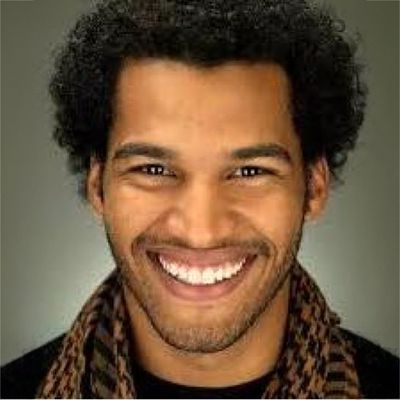
Christian Thompson / @christianthompsonactor. "Pivot"- A word we have all heard throughout our industry, over and over again. Christian Thompson, who plays Smokey Robinson and Damon Harris in Ain't Too Proud the Musical... Read More
From the show: Built For The Stage Podcast
Guests
Featured Shows
About
Christian Thompson / @christianthompsonactor
"Pivot"- A word we have all heard throughout our industry, over and over again. Christian Thompson, who plays Smokey Robinson and Damon Harris in Ain't Too Proud the Musical
Christian has experienced so much in his journey, from cruise ship work to Rent National Tour. Then, to go from rehearsals for a promised Broadway show to working at the Hamilton merch store, he has felt the ups and downs of the journey. But even in the tough moments, he shares with us how he has found the drive to pursue passions and creative opportunities that, in the past, he had counted unattainable. Christian also expresses the joy in finding himself as a true, unique artist and the individuals along the way who have helped mold him into the person he is today!
www.builtforthestage.com - Schedule your one week trial today!
Transcript
This transcript was automatically generated and might contain errors.
[0:00] Christian Thompson: And I got an email from Dominique, and she was like, hey, can you be in New York on Monday? So I took a bus in the middle of the night, got down there. Um, but I honestly didn't know who I was auditioning for or what slot was up. Uh, it wasn't until I got the offer that it was for Smokey Robinson.
[0:34] Joe Rosko: Hey, what's going on? Welcome to Built for the Stage Podcast. This is Joe Rosko, founder of Built for the Stage, Broadway's number one fitness platform. If you want to see what it's like to interact with a coach online, you can go to BuiltForTheStage.com for a free trial, or you can just click the link in the description of this episode. If you like the podcast, please rate, subscribe, and leave a message, swipe up, double tap, whatever platform you're on, we appreciate it. Thanks again to our producing team, Broadway Podcast Network. You can check them out at BPN.fm. All right, as always, we have an exciting guest for you. Actually, a kind of OG to Built for the Stage. We got to talking way back in July of 2018. Uh, here we are in the mystical land of 2021, and we're excited to bring on Christian Thompson. Christian, welcome to the show.
[1:34] Christian Thompson: Thanks for having me. It's so great to be here.
[1:36] Joe Rosko: My pleasure. Thanks for taking the time. Everyone listening, Christian made his Broadway debut in Ain't Too Proud, and he's currently still with the show, playing the role primarily of Smokey Robinson, correct?
[1:50] Christian Thompson: Yeah, that's right. Smokey Robinson and Damon Harris in Act Two.
[1:54] Joe Rosko: Gotcha, gotcha. We're gonna get into that in just a second. But for those of you that listen a lot to Built for the Stage podcast, you know that we just like to kind of get the backstory on how the actors made their debut and just the journey they took to get there. So, Christian, let's rewind to that. And um, first you went to Penn State, right?
[2:15] Christian Thompson: Yeah, I got my BFA in musical theater from Penn State, graduated in 2015.
[2:23] Joe Rosko: Okay, very good. All right, so it's 2015. You get out of school and you book Broadway, right? Is that how it happened?
[2:29] Christian Thompson: Absolutely not. Um, I've got a couple of friends that you know that's kind of how that went, but it was not the case for me. Um, I graduated and actually stuck around State College, which is where Penn State is for a few months, and it wasn't until um probably about I would say three months after I graduated that I booked a regional production of Dream Girls. Um, but while I was still in school, I also booked a cruise.
[3:00] Christian Thompson: So I was waiting for that cruise to start up. Uh, and I did After Midnight, which is this massive dance show, um, choreographed by Warren Carlyle uh on Norwegian Escape. It was a brand new ship, uh, and that was cool. Um, so that's the first thing I did, and I did that for five and a half months um until I got injured on that contract.
[3:24] Christian Thompson: Um, after that, I jumped on the Rent tour and I did that for how was overcoming was the injury major? Did it take a long time to recover? How was that?
[3:32] Christian Thompson: It was pretty serious. Um, I um partial it was a partial tear in my adductor, in my right adductor. Um, so for a dancer, that's uh that's a lot, you know. Um, and I was doing the role I was doing was uh tap brother too. So it was uh based off of the Nicholas brothers.
[3:53] Christian Thompson: So of course we had a bunch of those jazz splits and like jump 360, like land in a split, come on back up and keep tapping, uh, which was really cool, but real hard on a cruise ship, you know, and you'd do it, and then sometimes the floor would meet you early or not be there when you thought it would be because the ship's listing.
[4:11] Christian Thompson: Um, you know, it was fun, it was a good time. Um but yeah, so it took a while. I I'm still dealing with some of the uh the fallout afterwards. If I dance too much in a day, I'll start to feel like just a little fatigue. It gets tired earlier now. So I'm still working on rehabbing it uh correctly because I I didn't get the proper uh rehab kind of right off the bat uh in the physical therapy that I probably should have been, but we're working on it now, so you know, uh all things pointing up for the future.
[4:42] Christian Thompson: Um but it was it was tricky.
[4:44] Joe Rosko: Yeah, how was that? You know, we're all on a break right now, a forced break, uh, but a lot of times plenty of performers go through injuries and are also put on forced break. How have you did you learn anything from that experience that you kind of used uh during the pandemic or vice versa?
[5:04] Christian Thompson: Uh tell us a little bit about that and just maybe some uh some inspiration or insight for those listening that might be struggling.
[5:12] Christian Thompson: Yeah, um that's a I that's a fantastic question. I'm gonna try to put the put these thoughts together, say something smart. Um, but yeah, I think the biggest thing for me was learning how to, it's my new favorite word, which is pivot, right?
[5:28] Christian Thompson: Um, I had to focus on other things, right? I couldn't lean on my dancing. I couldn't just walk into a uh a dance call and know I'd get a callback, which is what I I could do. You know, I was like, that's the thing I know I can make happen.
[5:43] Christian Thompson: Um, where all of a sudden I had to focus more on my acting and my singing, and you know, at that time because there were still auditions and stuff to be had. Um, and so and that's how I booked the Rent tour, you know, um, where there wasn't too much dancing, I thought.
[5:58] Christian Thompson: Uh, and then I booked Benny and realized that he has a major dance number in uh in contact. Uh, but other than that, it was it was definitely something where I had to re-look at uh who I was and and what I was as an artist, right?
[6:15] Christian Thompson: And what defined me. Uh so I think it's always a good idea to re-evaluate, to take some time and reevaluate and you know, maybe try something different. You know, if you know you think of yourself as that dancer dancer, you maybe it's time to, you know, make sure you're in those those singing lessons because sometimes we can feel so good about training the thing we're good at that we forget to train the other things, um, especially in musical theater.
[6:41] Christian Thompson: You know, we've got to be triple quadruple threats, you know. We're out here singing, dancing, acting, and like yourself, personal training, you know, so we're trying to do it all. Um, and it's important to to, you know, to make sure that you're working out both the strengths and the weaknesses.
[7:01] Joe Rosko: Love that. It was a great response.
[7:02] Christian Thompson: No pressure there. Nailed it.
[7:05] Joe Rosko: Well done, but no pressure in the future of this conversation. All right, let's go. You talked about a little bit uh being a road warrior in Rent on tour. So you did cruise ship, you did the tour life. What brought you to the Ain't Too Proud audition? Tell us about just that pursuit of booking Broadway.
[7:26] Christian Thompson: Yeah, so um we actually have to rewind even further to really get this full story. So while I was at Penn State, uh I met Dominique Moriso because she came in, she was commissioned to do a piece uh for Penn State, and through happenstance and certain situations, uh I became the only undergraduate student in this this uh graduate uh performance uh show called Blood at the Root.
[7:55] Christian Thompson: So it was myself, five graduate uh actors, and Dominique and Steve H. Broadnacks III, who uh has his first Broadway show coming whenever we open again in uh Thoughts for a Colored Man, uh of a color man.
[8:10] Christian Thompson: And so we created this show together called Blood at the Root, and we got to see the world with it. We went to Edinburgh and South Africa and um Australia, and we we got to do a lot of cool things with that.
[8:23] Christian Thompson: But so I I made a personal connection to Dominique, she became like a mentor to me. Um, so when I was on the road, I had reached out to her about doing Pipeline because that was going to the Lincoln Center, and um that didn't work out, and then we were in Buffalo, I think it was with Rent, and I got an email from Dominique, and she was like, Hey, can you be in New York on Monday?
[8:48] Christian Thompson: So I took a bus in the middle of the night, got down there, um, auditioned for, I don't even know if they were using Ain't Too Proud is the name at the time. I think it was still uh the Motown Project or something like that, or the Detroit Project.
[9:05] Christian Thompson: Um, but I knew it was a bunch of Motown songs, you know, they had all that. But I honestly didn't know who I was auditioning for or what slot was up. Uh it wasn't until I got the offer that it was for Smokey Robinson, and uh, and it wasn't until the second read-through that I knew that I was playing Damon Harris, um, which was a big shock for me.
[9:32] Christian Thompson: We went through the first read-through and nobody read for Damon.
[9:35] Christian Thompson: And so I like went to stage management. I was like, I'm sorry, but are we like missing somebody? What's what's happening here? And they were like, oh no, that's you. I was like, oh, great, fantastic.
[9:45] Christian Thompson: Um so yeah, uh, it really was uh just uh just a happy blessing of you know having met someone so influential that uh and made a a real connection with and um yeah, got an email, got a bus, and you know, wound up, you know, what was it, two years after we started on Broadway.
[10:09] Joe Rosko: Wow. Did you have a good feeling from the start? Or when you first got there, did you think it was just gonna be, you know, any any other shot in the dark of like, uh, I'll put my name out there, but you know, I don't know if it'll actually happen?
[10:23] Christian Thompson: Well, it was so interesting because there seemed to be a buzz around the show from the get-go. So before I had joined, they had done a workshop in New York, and uh that had gone off really well.
[10:50] Christian Thompson: And so it was just this like powerhouse of a creative team where I was like, wait a minute, you know, um, we had Howell Blinkley, uh, rest in peace, doing lighting, you know what I mean? It was just one of those things where there was just too much energy behind it. Um, so from early on, we knew that that was the goal, that this was not a show that was uh just being created to be created. There was a focused goal to make it to Broadway, which was really exciting. It was the first time I had ever been a part of something like that. Um it was tough though, because we got so close. We got, you know, we were in Berkeley, we were breaking their box office records at the time. Um, and so we were like, oh, this is yeah, this is for sure.
Like we we got a little cocky about it. We were like, oh yeah, we're gonna go in like three months, we're gonna be there. Um, and we ended the run after I think it was three extensions um with no Broadway house. And the kick in the face that that was, you know, just getting so close and then having that door kind of slammed on you. And the only thing they said was, We're we're we're trying to work something out for May, for May-ish. Uh, it wouldn't be Broadway, but they're working on something. I was like, great. In my head, I was like, all right, we're gonna tour and they're gonna make this the first national tour. And then once the tour does well, we'll go to Broadway. Then they announced the pre-Broadway tour, and I was like, see, see this I knew it.
I knew it. Um, but it only had three uh cities on it. It had DC, LA, and uh Toronto. And LA is actually where I did my first little stint with built for the stage. Um, so that was it helped me get ready for the show. Um really, truly. Um, but yeah, it was it was tough because we were on the road, and there was still this thing of like, are we gonna get there? Or is are they just gonna keep tacking on cities, you know? Um, and then it was just before we opened in LA that they gathered us all on the stage and announced that we'd be going uh in the spring, well, early spring. Um, and I mean it very surreal, very surreal moment because then we had to turn around and do the show, right? We couldn't really sit in it.
It wasn't one of those things where like Broadway didn't call, right? Like they they got us together and it was like, oh my god, and I was sobbing because that's all I know how to do. Um I just I if any anyone who knows me knows that I'm just a crybaby, it just it is it's in my genes, and that's okay. You know what? Listen, I'm gonna own it.
[13:36] Christian Thompson: Um we you know, we did that, and then we dried our tears, and then we were in, you know, previews, and you know, we had a show to do that night. Um, so it was really no rest for the wicked uh in that situation. But it was great because then we got to do like a victory lap, right? We had LA and Toronto to be like, ah, this is the show that's going about way. Um and that was a lot of fun. So and yeah, and then it was we stopped that in November, and then we opened in March. Uh so we had a little bit of a break in between. Um, I sold, I sold some merch for some shows in between to make some money. Um because you know you can't you can't stop, right? The hustle doesn't stop. And I think that was that was really interesting because I was working at the Hamilton store, which is right across the street from our theater. So I watched them put up the marquee while I was working at the Hamilton store, which was which was also very surreal. Um, but that I mean that's that's pretty much it. That was that was the journey.
[14:39] Joe Rosko: Tell us, tell us about that, like how that how that was that in between. I love stuff like that. I find that I get riled up, I get inspired when I hear just like the hustle doesn't stop, you know. What was that like? You you got done with the mini tour, you're waiting on Broadway and you're you're selling merchandise at the Hamilton store. Are you just are you grateful knowing your time's coming or like how was it?
[15:05] Christian Thompson: You know, I'm gonna be honest because it's you and built for the stage, you know, and so I'm always trying to try to give you all the reel. Um it was tough, it was it was really frustrating. Um because uh love love to Jeremy Pope, but Jeremy Pope was already doing another show, right? And it was one of the reasons we had to wait. We had to let Choir Boy get into their run before we could start taking him away for rehearsals and for tech and then to do shows. Um it's one of those things where um I just I was a little frustrated because it took me a while to to kind of get in this mindset of like it's coming, and I just have to wait for it, right? Because I had already waited a year and a half or so, right?
Um, so it was a little tough, uh, where I was like, all right, well, now it's here, but I can't, I can't have it yet. Uh and that was that was hard, because then I also would be, you know, selling merch for a show like Hamilton, which is one of my dream shows. Um, so I'd be sitting there listening to the music, and I'm like, I just wanna be on stage, you know. But I also knew that like I couldn't be financially irresponsible and like go in the red waiting for Broadway to come. Broadway's not gonna fix all of my, you know, my problems. It's not gonna change, you know, everything if I go there broke, you know. So I was like, all right, I've gotta do something.
[16:38] Christian Thompson: Um, you know, and there were moments where people would give me lip as I was staring at my theater, you know. I was just like, if you knew. But that was the cool thing, right? That was the thing for me, is that it then reminded me that's right. Like, you have to treat everyone with the same respect you would, you know, the people you look up to. Cause you never know who's who, especially in our industry, you never know which waiter is right in that musical that's about to win the Tony next year. Like you never know. And we hear stories about it all the time. But it was so true. I mean, I will never forget, you know, some lady yelling at me because you know, I wasn't ringing her up fast enough, and she thought she was gonna miss the show, even though it was two hours later.
What I don't know, whatever it was, where I was just like, lady, if you knew. Like, if you knew that like literally you're gonna be paying 200 and some odd dollars to see me on stage soon. Like that's what's the because she even talked about it. She was like, Oh, I'm so excited for Ain't Too Proud, it's gonna be great. I'm so and I was like, if you just go across, like my face is on that door, like so it was just it was very surreal, but it also was super humbling, right?
[17:50] Christian Thompson: Um, so it was a mixture of of a very positive like self-reinforcement and also the the humbling experience of like, yeah, but at any time you could be selling some t-shirts, and that's okay. And that's okay. A hundred percent. I love that story in the theater world. I love it in the fitness space where you might be on top of your game one day, and then you either have a setbacks, an injury, maybe you go through a little bit of a mental struggle, and that brings your fitness down as well. But hey, this is uh I like to call it a a highway with no exits. You know, we're on this thing for the long haul, and you just gotta keep moving forward, uh, no matter what peak or valley you're in at the moment.
[18:39] Joe Rosko: Absolutely. Thank you so much for sharing that. I hope that everyone listening gets a lot out of that, especially in these times. Um, I'm taking a lot for sure. So thanks for being transparent there.
[18:52] Joe Rosko: Um you mentioned uh Dominique and that relationship or connection that like meant a lot to you starting out. Do you have any other influential people that really just set you on a path that you could look back and be grateful for?
[19:10] Christian Thompson: I've I've got so many to to be completely on it. I was thinking about this the other day. Uh don't don't know this is a no judgment zone. Uh, but I was doing one of those uh random acceptance speeches that you do in the shower, you know. Every once in a while where you're like, oh, well, if I got this award, what wouldn't this sound like? Um, but it got me thinking to like who got me here, right? How did I get to this spot? And it's such a like built by a village situation, right? Um, in a way that I didn't realize until I got older and until I could like sit back and really think on it.
[19:48] Christian Thompson: Um, but I had mentors from when I was younger. Um people like uh, and these people are just community people that no one would know, you know what I mean. But there were people in my life, like Woody Cadet, um, like uh Willie Butts down in Florida, like uh Pablo Malco, also down in Florida, like all of them are down in Florida. But those are these are theater artists? No, so that's the crazy thing. So two of them are dancers, and one of them was just a community leader, right? Um, but there was this situation where they would just always take care of me in a way that was like um that was just so uh comforting and nurturing, and it was a situation of like we're we know you're special, right? We know you've got something. So they kept me out of trouble, right? They they they got me to dance, you know, practice or whatever it was that I needed to be at. Um, so that was the first thing.
[20:45] Christian Thompson: And like Woody would come to my shows, like he didn't miss a show. Um, Leslie Shell's another one. Uh, and then then Steve, Steve H. Broadnax, the third, who uh is a director, he's the head of the MFA program at Penn State. Um, he's director, writer, I mean, does it all? Um, but he took me under his wing in college, and that was life-changing. Um, because he was the first person that let me express myself as a black artist um as well, and to be to be proud of that fact and not try to fit some kind of mold or anything like that.
[21:25] Christian Thompson: Um, so that was absolutely aging.
[21:29] Joe Rosko: Can you go into that a little bit more? How was that? What did that transition entail like, uh specifically? Were that just freed you up to be who you were?
[21:40] Christian Thompson: Yeah, absolutely. Um it was it's a fascinating transition, right? Um, because in specifically in musical theater, right? There's so often a um kind of a crutch of fitting molds, right? You've got to fit into this mold, like be this, or you know, um uniqueness isn't really allowed unless you're on the front of it, right? So, like with Ain't Too Proud, I got to create my character, right? So I could be my unique self in that role. But usually you're fitting roles that are already done by somebody else. And you know, so there's things, there's cookie cutter things that need to exist. And then on top of that, most of the roles that I was trying to fit in weren't created for me to begin with, right?
They weren't created for my body or for my experience to begin with. Um, so there was this sense of always having to be a chameleon or always having to, you know, squish myself into a space that felt um acceptable or you know, easy to understand, or easy to, you know what I mean. Um, but Steve opened my eyes to a lot of the black theater repertoire. He introduced me to Dominique's work, to August Wilson's work, you know, and things like that. Uh, introduced me to the foundations of hip hop theater and that it already existed, right? That was one thing that I always I was always super passionate about, but didn't really know that it was around. But hip hop theater's been around. Like, I mean, we talk about Hamilton and in the Heights.
Um, those were commercial successes in musical theater, but people have been writing hip-hop musicals long before them. And I feel like that was a massive thing for me, and I hope for you know, people listening to realize that that people have been doing the work for a long time. Um, and the you know, the theater of the oppressed and and things like that. Um, so and then we did shows that had hip-hop in it, and he let me help choreograph Blood at the Root. So I got to do, you know, I got to be entrenched in who I was as a human being. I got to put my experiences and cultures and specific talents to use, where usually I was shutting all of those away to try to be what I, you know, what people wanted me to be or what I needed to be.
Um, so opening that up just transformed me really, because then I could take me, and instead of trying to fit a form, I was like, this is what it looks like on me. It became a cope, right? It became a way of like, yeah, I'm gonna do this role, but I'm gonna do it like me. Uh, and that's a hundred times better. And it's a hundred times more authentic and is going to feed my soul a hundred times more than trying to, you know, break my body down into a way that you know you think you want to see.
[24:40] Joe Rosko: Thank you. Um that must have just been, I don't know, like a gust of wind behind you, just like surging you forward out of, you know, maybe an idle place where you felt stuck.
[24:56] Christian Thompson: For sure. I mean, it also was one of those things though, where like when I was in it, I didn't realize how massive it was, right? Like when I was when I was a part of it, it was just like, oh, I'm doing stuff, right? I'm doing, oh, you need me to do this, I got you. You need me to do this, I got you, right? Oh, I'll read that, cool. We can talk about it, right? Um, and it just felt very natural. And it was just one of those things where it was like, okay, cool. I'm just in it. But it wasn't until I took a step back and realized how much I had grown as an artist, right? Um, I also uh, you know, shout out Kikora Franklin, who's a professor at Penn State, the dance professor, uh, who pushed me to my limit, right?
Um, but it was one of those things where I was like, this is training, right? This is just training. What I didn't realize is they were training me mentally, you know, they were training my soul to be a part of the art, right? Uh they were helping me carve out the artist that I could be. Um, but that you can't see that while you're carving, right? When when a sculptor's sculpting, you're not gonna be able to see what the form is until they step away. Um, and so it really wasn't until they until I took I I took a step back and realized, oh, right. That's where I get, you know, um, I've been writing a lot more in in the COVID times. Um, and I look at my writing and I go, oh, that would have never happened if I didn't have the experience that I had with Kikora and Steve.
[26:27] Joe Rosko: Wow, cool. Awesome testament to them.
[26:29] Christian Thompson: Yeah. Last question as we wrap up the episode here. I like to ask this one a lot during the pandemic times, like you said. Fast forward, you get to go back to Ain't Too Proud. You get to step on the stage. What will you take with you from the pandemic that you might have learned or acquired? And what will you leave behind? I know the pandemic for me, just to give like an example, is that since the world stopped, quote unquote, in a way, it let you look back and realize that there might have been some things in life that just happened organically because of the speed of our day-to-day, especially in New York. Right. And once I slowed down, I realized, like, oh, when we get back to the everyday, I need to remember, like, I don't need that. So when you get back on the stage, what's one thing you're gonna take with you? And what's one thing you'll make sure you leave behind?
[27:34] Christian Thompson: Definitely. Um, I love this. This is great. Um, I think the one thing I would um I'm definitely gonna take with me is um is the thing, and it's kind of also the thing I'm leaving behind. The thing I'm taking with me is a an energy and an acceptance that my ideas are worthy of exploration, right? Um, because what I'm leaving behind is the crippling self-doubt, right? So, not just self-doubt, because we're always gonna have that little voice in our head that's telling us, but the crippling self-doubt that stopped me from writing for over 10 years, right? I wanted to write back when I was in high school, but I always thought that maybe I just wasn't good enough. Maybe that wasn't my thing. So I made excuses.
I don't have the time, right? Like you were talking about, oh, we're in the hustle and flow of things. Like I don't have time to sit down and write. I don't have, you know, and so when COVID hit, I had the time. So it was one of those things where I had to then put, you know, pen to paper, aka, you know, fingers to keyboard. Um but it hasn't gone poorly, right? It's uh people have reacted positively to what I'm writing. And I was like, oh, well, crap. If I had started this earlier, you know, who knows what could be happening now. Um, but that, and then the other thing, and this is a funny anecdote. Um, we went to Japan with Rent. And when we went to Japan, of course, everyone was wearing face masks on like public transit and things like that.
I got back to the States and I was like, you know what I wanna do? I'm gonna make a designer mask company, right? And then I'm gonna go to Japan, I'm gonna get the cool kids over there wearing it, and it'll go viral. And so then the kids in America start wearing them, you know, it'd just be a fashion thing. Like, you know, we get Gucci over, you know, over the mouth, and it'll be, you know, it'd be all Gucci. Um, so that was my idea, and I was like, nah, never mind, I'm not gonna do it. If I had known that a global pandemic was gonna hit, you know, me and Jeff Bezos would be sipping on some my thighs. So you know what I mean? It's just one of those things where, and who knows? Like, really, I probably wouldn't have been able to get off the ground anyway.
But it was that thing of like you don't. You do that no. You're just you're right. We cut that out. Take that part out. Um, no, you're absolutely right. Who knows? You know what I mean? But it's it's uh that self-crippling doubt of just stopping yourself and not finding out the what if, right? And let other people try to stop your what if. Like, don't you stop your what if there's enough obstacles out there in life, you know, there's enough naysayers, like haters got their job to do. Let them do that, right? Don't do it to yourself, right? Uh, if if if you're not rooting on your team, uh, you know, that's gonna that you that's self-sabotage, you know. Sabotage is sabotage. So I'm I'm sick of sabotaging myself, so that's what I'm not gonna do. Uh, and I'm gonna keep letting my ideas, you know, grow and and see see what happens with them.
[30:53] Joe Rosko: I love that. I say that all the time to clients. Allow yourself to succeed. Allow yourself, just let yourself succeed. Because a lot of the times it's just you holding yourself back. So amazing. Thank you so much, Christian, for taking this time to join us on Built for the Stage Podcast.
[31:15] Christian Thompson: Thank you. Thank you. This was so much fun.
[31:18] Joe Rosko: Our pleasure. All right, everyone. Thanks for listening to Built for the Stage Podcast. Once again, if you want to try that free trial, go to the website builtforthestage.com or click the link in the description of this episode. You can work with a coach, you can get fitness training, nutrition guidance, and how you can marry those things together with your life in theater. All right, until next time, Joe Rosko signing off later.
© Broadway Podcast Network, All Rights Reserved