

Air Date: 11/23/2023. #286. Turkey Day. I am not a huge fan of turkey-the bird I mean. I have it at Thanksgiving because it is there. But usually, the rest of the year, I skip having the foul... Read More
From the show: Casting Actors Cast
Featured Shows
About
Air Date: 11/23/2023
#286
Turkey Day
I am not a huge fan of turkey-the bird I mean. I have it at Thanksgiving because it is there. But usually, the rest of the year, I skip having the foul. For actors, the word turkey can be synonymous with an inferior show or failure and started in 1927 as show business slang, probably from the bird's reputation for stupidity. I have had my share of experiences with acting in some turkeys and watching a fair amount of turkeys as I recall. So lets take a moment and reflect on some of our not-so-great experiences so we can see how far we’ve come! Turkey Day, on Casting Actors Cast.
Transcript
This transcript was automatically generated and might contain errors.
[0:00] Jeffrey Dreisbach: I am not a huge fan of turkey. Um, the bird, I mean. I have it at Thanksgiving because it's there, but usually the rest of the year, I skip having the foul. Now, for actors, the word turkey can be synonymous with an inferior show or failure. And it started in, oh, I don't know, 1927 as show business slang, probably from the bird's reputation for stupidity. I have had my share of experiences with acting in some turkeys, and watching a fair amount of turkeys as I recall, and actually more recently as a casting director. So let's take a moment and reflect on some of our not so great experiences, so we can see how far we've come. It's Turkey Day on Casting Actors Cast.
[1:25] Jeffrey Dreisbach: Well, hello and welcome to today's episode of Casting Actors Cast. I'm Jeffrey Dreisbach. I'm a casting partner with McCorkle Casting in New York. How are you? It's really good to see you today. I'm so glad you're here and listening. And maybe it's around Thanksgiving time when you're listening to this episode, which is kind of why I wanted to put it together, talking about turkeys. Have you been in any? Do you recall what that experience was like? Well, we're gonna cover that subject, and I'm gonna share some stories about that in my own life and in my own acting work as well. But first, this is that moment of the podcast where I simply get to say thank you for tuning into Casting Actors Cast. We continue to grow an audience of like-minded individuals who want to grow as a community, and I couldn't be more thrilled, I couldn't be more delighted.
[2:15] Jeffrey Dreisbach: Hey, listen, if you haven't checked out the website, I encourage you to do so. Casting Actors Cast, all one word.com, castingactorscast.com. There you can find out about the newsletter. We call it Jeff's Jots. It's corresponding show notes to each of the episodes. So you can have some notes if you want them on each of the episodes that we share with you. Additionally, there is a place that says dive into the talent pool. It's a form, it's just your name and your email address, which I honestly I don't do anything with that. Um, on occasion, I might send out an email to you about a cool episode or something like that, but that's about it. Uh, I don't chew up your bandwidth. You know what I'm saying?
But anyway, if you do fill out that form, and there's no indication that anything is gonna happen, but when you fill out the form and you um send it, it'll open up a freebie web page for you, and that's a bunch of freebies that you can have. One is a book that I wrote on doing voiceover work called Conversation Pieces Out of the Studio, the voiceover workshop for professional actors. It's a 100-page PDF. I'm just giving it away for free. So if you're interested in doing some voiceover work, that would be a great, great place to start because, well, hello, it's free.
[3:33] Jeffrey Dreisbach: Uh next, you're gonna find a video that I put together. It's an exclusive video. You can't find it anywhere else. It'll take you to YouTube and open up the video called Casting Secrets, What They Don't Tell You. And I'm gonna tell you in this free 20 minute video. All of these freebies, and I'm only doing this just to get you interested and hopefully keep you as a listener and watcher because we are also simulcasting all of this on YouTube as well. So that's it for the housekeeping. My shout out to Actors Connection. Hey, I'm teaching a class at Actors Connection coming up in a few weeks. ActorsConnection.com slash New York. So if you want to work with me about putting yourself tapes together and figuring out the best way to do that and coming up with some tips and some strategies that are gonna make a difference when you submit videos, please, please go ahead and check out um actorsconnection.com slash New York.
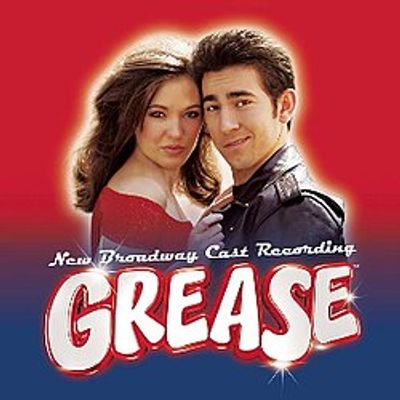
[4:29] Jeffrey Dreisbach: All right, let's just jump into the subject now, shall we? Um, so I want to start off by talking about some of my acting experiences and some of the not so great shows that I participated in during my career. And by no means do I call these shows all turkeys necessarily, but I will say that there are rather a couple of uh projects that I was involved with that really kind of just uh in hindsight ended up not being the best experience in the world. Uh, my first one is a national tour that I was cast in. This is a long time ago, and I'm not gonna bring up or mention any names in the show, but just about the show. But I just want to share with you that this particular uh Broadway musical Grease had run for quite a long time in New York, and uh we decided, or it was decided to put together a national tour, and I auditioned and beat out some really cool competition, I have to say, for the role of Eugene.
And it was really um exciting. It was gonna be a national tour, touring all over the country, and we were uh rehearsing in New York, and we opened at the Warner Theater in Washington, DC. Now, here's the thing: the reviews from that Washington uh location, that Washington opening, were going to be used to sell the rest of the tour uh across the country. So, in other words, a really great uh review from the Washington Post or the Washington Times or whatever um was going to help propel the sales of that um national tour.
[6:15] Jeffrey Dreisbach: And here's the other thing we were told it was a six-month contract and to be ready to dress uh and wear really light clothing because it was gonna be tropical climates, and also make sure you bring your heavy winter clothing. So here, all of us we all had big huge trunks, and the show starred a soap opera actor at the time who was very, very well known, and uh he was uh uh the lead in the show, and so we opened at the Warner Theater, and it was um really an exciting night, and we were all excited to go on this national tour. And the review came out the next day after opening, and the review title said, Not even soap can clean up this grease. Oh man. Oh, talk about a stab in the stomach. That gut punch really affected us.
We I think we're able to sell maybe another week of shows in Washington, and then the entire show came to a screeching halt. Two weeks after the show opened, I remember getting on a bus coming back to New York. Oh my goodness. You know what? And I had sublet my apartment, and so it just became this huge kind of nightmare. So that was an indication that I happened to be in a turkey when you got that kind of a review. There's no coming back from that. So that's my national tour of Grease, which wasn't such a national tour after all.
[7:52] Jeffrey Dreisbach: Now there was also a Neil Simon play that I was in called Come Blow Your Horn. I don't know if you know that Neil Simon play. And we were just rehearsing it, and uh this was in uh Michigan, and we were working really hard, and we thought the show was fun, and it was really um uh exciting and fun and opening night. We had more cast members in the play than in the audience. Think about that. Now, there is an equity rule that says if you have more cast members than audience, you can elect to not do the performance if you choose. But guess what? That was it. We opened and closed very, very quickly, and all I remember was just looking at the four people in the front row of the audience looking up at us from the stage, and my thought was, I wonder what they're thinking.
But apparently they seem to enjoy the show, but that was kind of a humiliating kind of experience. So you know you're kind of in a turkey when you have more uh cast members than you have audience members.
[9:13] Jeffrey Dreisbach: Um my final story that I wanted to share with you is um I had the great pleasure of being in A Few Good Men. I was cast, uh I was part of the original cast, and then uh very short time after the Broadway opening moved into the role of Kendrick, which I did for over a year and a half on Broadway, over 500 performances. And that was really, really uh exciting, you know, not too shabby working with Aaron Sorkin, directed by Don Scardino. Um, the producers were like kind of like the old guard Broadway producers, so it was a very exciting time. And we were at the Music Box Theater in New York City. And as I recall, it was relatively early on in the run.
[9:55] Jeffrey Dreisbach: And I was um uh in the courtroom as well as almost I think all of the cast was in the courtroom for this big scene. The way that it was directed was it just was very fluid. Move stuff moved in and out uh of scenes all the time. It was almost cinemographic. But anyway, it came time, and I'm not gonna mention names again because I don't want to, you know, this is not about hurting anybody's feelings, but there was an entrance from the prosecuting attorney that was right at that moment was supposed to have taken place, and nothing happened. And the actor playing Kathy, the lead, just sort of stood there, kind of waiting for this scene to happen. Well, clearly, the actor who played the prosecuting attorney completely missed the entrance.
And it is dead silence. Now, you guys, listen, we're on Broadway. Do you know what I mean? It's like this kind of stuff doesn't happen. Well, let me tell you, this did. And I can always, I'll never forget this. I remember hearing from like the third floor of the dressing rooms the sound of footsteps in this manic, crazed hyper pace, jumping down the stairs all the way from three stories up, coming down the stairs, and the actor running out on stage. So he literally came right into the scene and started the scene right away. What was so funny is just hearing him racing out of the dressing room and you could hear, and the entire audience could hear the steps coming down the steps, down the steps, down the steps, and then right onto the stage.
Unforgettable. Now, again, I that a few good men was not a turkey. The show wasn't. That experience, however, kind of just triggered this like, oh my God, moment. When you miss an entrance like that, there's a terrible pit in your stomach feeling, right? And so that was why I wanted to share it with you because we've all had experiences like that. Um, sort of like you haven't lived until you've had a turkey on your hands.
[12:09] Jeffrey Dreisbach: Now, there are some potential signs that I want to share with you that might let you know that you're in a turkey. So here are signs or potential turkey signs that might trigger off a thought that this may not be going your way. For example, you know you're in a turkey. Uh, if you're in rehearsal for a comedy and no one is ever laughing, like never. Yeah, that might be an indication. If you're not getting the stage manager to smile, or even other cast members, if they're not sort of enjoying that process, you might want to think about the show that you're in. Here's another one. If you're in rehearsal and the director is falling asleep, uh, that might be indication an indication that you need to sort of think again about the project that you're in.
Here's another indicator. If you wish your castmates liked each other, have you been in a show where people just kind of didn't get along and like you're supposed to, because it's like an ensemble piece or whatever, but there's nothing worse than feeling like you're not getting along with your fellow castmates. They don't like you, you don't like them, and yet you have to sort of put on that brave face and go out there. That is not helping that project, that is not helping that production, and you might very well be in a turkey. Have you ever been in a show where the audience is really like shifting a lot in their seats? That's an indication that something's not working on stage. Oh, here's one.
Family members don't know what to say after the performance. Oh man, that brings up some memories. If your family members are in the audience, and after the show, you're looking at them like, well, what did you think? And they're not responding, maybe like not at all. Like your mother says something like, Where are we gonna go to dinner? Then you might think twice about whether you're in a stellar uh production or not.
[14:34] Jeffrey Dreisbach: Oh, along those same lines, here's one. The use of the U U from your agent. Oh, you might you don't might not know what that is, the U U. So I've had this experience where the agent is waiting backstage to greet me after the performance, and I'm done with the dressing room, and I come out, and the agent says, you. It was all you, you. Okay, that's kind of an indicator, don't you think? When your own agent can't kind of come up with the words to describe their experience with you on stage? That feels kind of weird, doesn't it? Oh, here's one. Um, you have the curtain call at the end of the show, and the applause stops before you're off stage. Right? God, I hate that. That's such a terrible experience.
It's like the people are still trying to get off stage and the applause is like over, people are getting up and leaving. That's an indicator that they might not be responding the way that you hoped they would. Uh, here's one. How about a silent dressing room? Yeah. When you're after the show and you're with others, perhaps in a small dressing room environment after the play is over, and no one is like saying anything to you. There's nothing going on, and it's like this dead silence. Mmm, that might be kind of an indicator that you need to think about. The last one I want to share with you. You know, you are in a turkey probably, not always, but probably if you're thinking about what you're gonna eat after the show, during the show. Uh that's kind of a good indicator that this might not be the production for you.
[16:40] Jeffrey Dreisbach: Now, of course, these are all fun, right? And this is in jest. I'm trying to be lighthearted about these things, but there are some reasons for thinking about the turkeys that we've been in. There are some ways to kind of look at those experiences and not to try and sugarcoat it, not to try and just make it, you know, there's a bright side to everything, kind of thought. But there are some things to think about in some of the work that we've done as we reflect back. One is when we think back about those experiences that we've had that were less than ideal, it helps us keep a perspective on how far we've come. We have a little bit of objectivity when we are further away from that experience, but it really helps us kind of keep ourselves grounded in a good way because we are humbled.
And humility is just, honestly, it's a powerful, powerful motivator uh for not repeating the experience. I also happen to think that when you're in a turkey, it's sort of, oh, I don't know how to say this right, but it is a rite of passage for all actors. You know what? It's bound to happen at one point in your career. When it does happen, you'll know it. And I think that there's something about earning your stripes, so to speak, when you've had that experience. So nothing to look forward to, but it's nothing to beat yourself up over either. When we can laugh at our past turkey experiences, you know what's happening? Actually, we're gaining insight at the true nature of acting as art. Yeah, truly.
It's like taking risks, uh, failing, uh, trying to make the best choices we can, despite the reality that it just doesn't work. These are in my mind all part of the profession we have signed up for. So I want you to take a moment and simply be grateful for the turkeys. Because they help us grow, and we are less inclined to gobble up the scenery. I'm sorry. I couldn't resist. Hey, happy Thanksgiving. We'll see you next time on the next episode of Casting Actors Cast. If you loved this episode, please let me know. Give me a like, a thumbs up, please share it. Uh subscribe. You could subscribe. That's a cool idea, and that would be a lovely gift from you to me. Thank you so much. Have a great day. Please don't forget to review, like, and share Casting Actors Cast wherever you get your patio's podcast videos. Thanks. I'm Megan Grace Martinez.
© Broadway Podcast Network, All Rights Reserved