

The Marquis Theatre was having great success in 2001 with the revival of Annie Get Your Gun. It had opened in 1999 with Bernadette Peters and Tom Wopat and became just the second show in Marquis history to surpass 1000 performances... Read More
From the show: Closing Night
Guests

Featured Shows
About
The Marquis Theatre was having great success in 2001 with the revival of Annie Get Your Gun. It had opened in 1999 with Bernadette Peters and Tom Wopat and became just the second show in Marquis history to surpass 1000 performances. It closed with Crystal Bernard in the title role with Tom Wopat coming back as Frank Butler to close the show on September 1, 2001.
But ten days after Annie Get Your Gun closed, all of Broadway closed, New York City shut down, and an entire nation was brought to its knees in anguish, heartache, and disbelief. Everything stopped.
So far this season, Closing Night has been focused on individual shows at the Marquis Theatre and how and why they closed. But in this special episode, we’ll look at the whole Broadway community—the shows and actors and industry leaders—how they were affected by 9/11 and what it took to bring theater back to New York City.
Follow on Instagram and listen to Closing Night on your favorite podcast app.
Closing Night is a production of WINMI Media with Patrick Oliver Jones as host and executive producer. Dan Delgado is the editor and co-producer, not only for this podcast but also for his own movie podcast called The Industry. Maria Clara Ribeiro is co-producer, and a big thank you goes to Playbill, the Guides Association of NYC, and the American September Project whose resources made this episode possible.
Click here for the transcript and full list of links and resources used in this episode.
Transcript
This transcript was automatically generated and might contain errors.
[0:10] Patrick Oliver Jones: The summer of 2001 was a huge time for Broadway. The Lion King was still going strong at the box office. Viola Davis began her EGOT journey with her first Tony Award for Best Featured Actress in a play, and 42nd Street had made a big comeback to Broadway with all those dancing feet. But the hottest ticket in town was The Producers, having swept the Tony Awards with 12 wins, including Best Musical. When we think of Broadway, Broadway is more than shows going on. It is really the number one tourist attraction in New York City. This is Karen Noassad, an English professor and founder of Broadway Neighborhood Tours. So the summer of 2001 looked very promising, even better than the year before had been.
[1:38] Patrick Oliver Jones: But it would be Crystal Bernard in the title role with Tom Wopat coming back as Frank Butler to close the show on September 1st, 2001. It was leaving the Marquis to make way for a new musical based on the 1967 movie Thoroughly Modern Millie. But ten days after Annie Get Your Gun closed, all of Broadway closed. New York City shut down, and an entire nation was brought to its knees in anguish, heartache, and disbelief. Everything stopped. Then we shut the league down and everybody went home. I guess most Giuliani was, uh, sending most people were told to go home. The subways were shut down. The buses were stuffed with people. Couldn't really get on a bus. Well, we were all so traumatized by it.
We were just kind of shocked and walking around and so inundated. I don't know how you could not be, but we were inundated with the pictures of it because it was running on the news constantly. The horrible devastation of 9/11 may have been 22 years ago, but its effects are still with us today. Every time we get on a plane or visit that somber memorial in Lower Manhattan. I mean, closing one show is pretty common, but having the entire New York theater scene go dark is a rare event. Though the scope and circumstance of 9/11 is different from our recent adversity with the COVID pandemic, both events have certainly affected and changed Broadway in profound ways.
[3:22] Patrick Oliver Jones: But in this special episode, we'll look at the whole Broadway community, the shows and actors and industry leaders, how they were affected by 9/11, and what it took to bring theater back to New York City. September is a month of transition for both New York City as well as Broadway. The weather begins to change, kids are going back to school, and actors come together on an outdoor stage in Times Square to strut their stuff for Broadway on Broadway, which is one of the biggest annual events to kick off the fall theater season. On that September 9th, Chicago, 42nd Street, Rocky Horror Show, Les Misérables, and Phantom were there, as well as the cast of Urinetown, which was set to open four days later. And even though they hadn't started rehearsals yet, Mamma Mia! was there showing off their dancing queens.
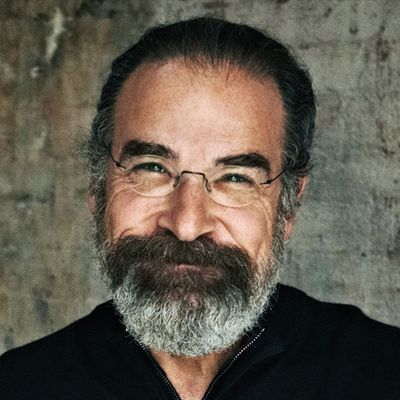
[4:36] Patrick Oliver Jones: We are the dynamos. Donna and her dynamos. The debut of the debut of the dynamos in New York. Revivals of Assassins, Dreamgirls, and Noises Off were also preparing to open in the coming weeks. Adina Menzel was about to join the cast of Aida, and Mandy Patinkin gave a one-night-only Broadway concert on September 10th to promote his new CD. And according to Theater Mania, this particular concert is best remembered for its poignant and in hindsight, fateful encore medley. After receiving a thunderous standing ovation, Patinkin returned to the stage and placed two small flags, one Israeli and one Palestinian on a stool. Standing behind those two powerful symbols, he sang HaTikvah, the Israeli national anthem.
Suddenly, halfway through the song, he knocked both flags to their sides as the warm white light changed in that same instant to a fiery red. The volume of Patinkin's voice jumped like a gunshot as he cut the air with "You've Got to Be Taught," Rodgers and Hammerstein's eloquent indictment of bigotry and hatred from South Pacific. Then the lighting and performance suddenly became gentle again as Patinkin righted the flags and summed up with Stephen Sondheim's warning for the future, "Children Will Listen" from Into the Woods.
[6:21] Patrick Oliver Jones: That morning, actually, you know, I'm never up before at least 10 or 11 when I'm working. So, but ironically, that morning, I was going to be heading out to Queens for an audition for some TV show. We had done a preview the night before September 11th at Urinetown. And that morning was a bright and early morning for me because my daughter had just started middle school. For me, I was actually halfway around the world performing in Japan as part of the opening cast of a review show called Broadway Encores at the newly opened Tokyo Disney Sea theme park. Being 13 hours ahead of New York, it had already been a full day for us because of a tsunami that had shut down much of Tokyo and kept most of us actors from being able to even get to the park. So by that night, American cast members from the various Disney Sea shows were all gathering around to tell our stories from the day when someone came in and turned on the TV to CNN.
[7:24] Patrick Oliver Jones: This, Justin, you were looking at obviously a very disturbing live shot there. That is the World Trade Center, and we have unconfirmed reports this morning that a plane has crashed into one of the towers of the World Trade Center. CNN Center right now is just beginning to work on this story, obviously calling our sources and trying to figure out exactly what happened, but clearly something relatively devastating happening this morning there, the south end of the island of Manhattan. Twenty minutes later, we were all still watching the news coverage when the second plane crashed into the South Tower on live television. It's a moment I'll never forget. Back in New York, just two hours after that second plane hit, it was decided that Broadway shows would go dark that night. And as the dust and debris settled throughout that day and into the next, New York City was plunged into sorrow and mourning, grappling with the enormity of the tragedy.
[8:59] Patrick Oliver Jones: The state owes it to itself to sustain and encourage them. Ill fares the race which fails to salute the arts with the reverence and delight, which are their due. In his speech to the Royal Academy of Arts, Churchill succinctly highlights how integral the arts are to society as a whole. So just as London Theatre was an important part of life for the British people during World War II, so too was Broadway an essential ingredient of New York City, returning to some sort of normalcy. But against this backdrop of grief and determination, Broadway and city officials faced a critical decision. How could shows go on, and when to reopen them? The League of American Theaters and Producers, which is now simply called the Broadway League, rallied behind the mayor and urged the industry to reopen. But their executive director, Jed Bernstein, recognized there were still some big challenges ahead.
[10:20] Patrick Oliver Jones: Would there be shows that could not reopen? And that's certainly something we tried to translate to the actors and the crews, the companies of all the shows, because some of those folks had misgivings when the decision was taken to try to open the next night, that Thursday night the 13th, which is in fact when we opened.
[10:38] Patrick Oliver Jones: A big part of those misgivings had to do with the fact that Broadway's physical landscape had been altered by the attacks.
[10:45] Patrick Oliver Jones: Bridges and tunnels were closed, and security was tightened all around Manhattan.
[10:51] Patrick Oliver Jones: The sheer logistics of getting actors and crew members to the theaters posed a significant hurdle, especially to those who lived outside Manhattan.
[11:01] Patrick Oliver Jones: So they said, How are we gonna get the people in to do these shows?
[11:06] Patrick Oliver Jones: So a plan was hatched.
[11:09] Patrick Oliver Jones: Giuliani came up and said, if they can show their union card and where they work, they will have ability to get through the police blockade.
[11:21] Patrick Oliver Jones: So that's how they made the plan.
[11:24] Patrick Oliver Jones: But the big focus, believe it or not, was on New Jersey, because that's where a lot of these people lived.
[11:31] Patrick Oliver Jones: So a lot had to be done to kind of bridge the gap so that people could come through.
[11:41] Patrick Oliver Jones: But before they could open, these productions took a hard look at the content of their shows and considered any changes that might be needed in light of what had just happened.
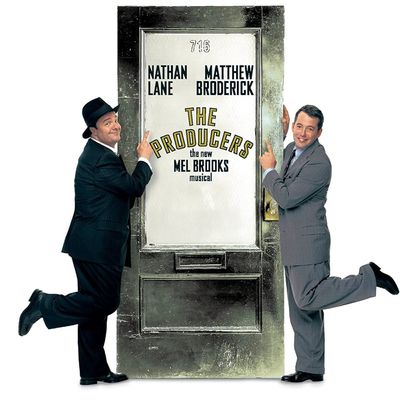
[11:52] Patrick Oliver Jones: The producers, for example, had bombs going off during Springtime for Hitler.
[11:58] Patrick Oliver Jones: Those were taken out for a time until the trauma of 9/11 subsided.
[12:03] Patrick Oliver Jones: When Urinetown postponed their opening and made revisions, those changes remained in the show throughout its Broadway run.
[12:11] Patrick Oliver Jones: Roundabout Theater, on the other hand, took an even bigger step with Assassins and canceled the entire production due to some of the disturbing and provocative content in the show, like a monologue from Samuel Bick, in which he says, I'm gonna change things, Linny.
[12:29] Patrick Oliver Jones: I'm gonna drop a 747 on the White House and incinerate Dick Nixon.
[12:35] Patrick Oliver Jones: It's gonna make the news.
[12:37] Patrick Oliver Jones: So on September 13th, Steven Sondheim and book writer John Weidman released a statement.
[12:45] Patrick Oliver Jones: Assassins is a show which asks audiences to think critically about various aspects of the American experience in light of Tuesday's murderous assault on our nation and on the most fundamental things in which we all believe.
[12:58] Patrick Oliver Jones: We the Roundabout and director Joe Mantello believe this is not an appropriate time to present a show which makes such a demand.
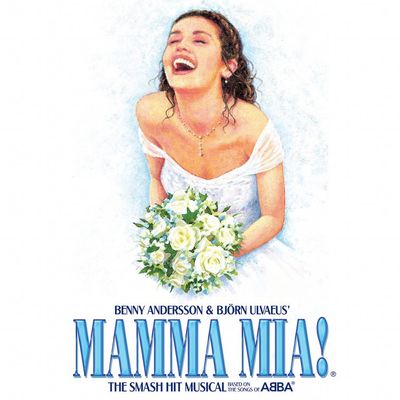
[13:07] Patrick Oliver Jones: A very different kind of show, Mamma Mia! was just starting rehearsals.
[13:12] Patrick Oliver Jones: But as Karen Mason recalls, it was a slow and difficult process back to singing and dancing again.
[13:19] Patrick Oliver Jones: We get there, and there was what they did at that point was had a circle of people so that we could all tell our experiences and talk about it if we need to.
[13:31] Patrick Oliver Jones: And they continued that for a few days, which I thought was very healing.
[13:34] Patrick Oliver Jones: It gave everybody a chance to bond with each other about this horrific experience that we were all going through.
[13:43] Patrick Oliver Jones: For other shows, September 13th marked a return to the Broadway stage, where Marquis once again illuminated the theater district.
[13:52] Patrick Oliver Jones: As each curtain rose, a collective spirit of resilience, yet trepidation was palpable among casting crew, with some shows more full than others.
[14:04] Patrick Oliver Jones: I can't even describe it.
[14:05] Patrick Oliver Jones: It was, it was it was unusual and sad and sort of strange to be going back to work.
[14:14] Patrick Oliver Jones: Our director John Rando gave a speech, a curtain speech before the show, which was very moving.
[14:21] Patrick Oliver Jones: We had about a half a house, I would say.
[14:25] Patrick Oliver Jones: Many shows were giving curtain speeches before and or after performances, which were just a reflection of the raw emotions of a city in recovery.
[14:36] Patrick Oliver Jones: And when it came time for the bows in shows like The Music Man, instead of reprising another song from the show, the cast and audiences joined together to sing My Country 'Tis of Thee.
[14:48] Patrick Oliver Jones: Other musicals like The Lion King, Proof, 42nd Street, and The Producers ended their performances with God Bless America.
[14:57] Patrick Oliver Jones: This idea had come from seeing members of the U.S. Congress on the night of 9/11 standing on the steps of the Capitol singing that song.
[15:06] Patrick Oliver Jones: And of course, since the song was written by a Broadway composer, Irving Berlin, it seemed fitting and appropriate for cast members like Brad Oscar to join hands and hearts with the audience in a chorus of unity, singing an anthem of defiance and determination.
[15:24] Patrick Oliver Jones: It was just as overwhelming emotionally as you would think it would be, and yet again, never had I never had I sung that song with such conviction and such understanding of what it meant or what it meant to me.
[15:40] Patrick Oliver Jones: There were glimmers of hope amongst a vast sense of dread and fear.
[15:45] Patrick Oliver Jones: As much as theaters and the nation as a whole were trying to return to normalcy, for many people that had simply lost its meaning.
[15:54] Patrick Oliver Jones: What was normal?
[15:56] Patrick Oliver Jones: How or why can we even go back to it or find some new version of it?
[16:02] Patrick Oliver Jones: This sentiment ached inside much of the country, including actors like Derek Smith from The Lion King.
[16:09] Patrick Oliver Jones: We came back Thursday, which I thought was a little bit soon.
[16:14] Patrick Oliver Jones: I think mainly because I and everyone else was afraid to be in any kind of congregation of people.
[16:22] Patrick Oliver Jones: You know, we didn't know.
[16:23] Patrick Oliver Jones: I mean, at that point, people really wondered what's next.
[16:27] Patrick Oliver Jones: I was scared to go to my car.
[16:28] Patrick Oliver Jones: I thought when I I thought it would explode.
[16:31] Patrick Oliver Jones: So Broadway's reopening was a mix of hope and hesitancy, met with countless challenges, the biggest of which was finding an audience.
[16:41] Patrick Oliver Jones: Ticket sales had all but ceased in mid-September, and without enough presold seats to guarantee at least breakeven business, shows couldn't survive.
[16:51] Patrick Oliver Jones: Five Broadway shows, including Kiss Me, Kate and The Rocky Horror Show, had to close in part due to the financial fallout from the attacks.
[17:00] Patrick Oliver Jones: But really every show in New York was affected by low turnout, even the popular shows.
[17:06] Patrick Oliver Jones: The Lion King lost about two-thirds of its box office the week of 9/11, and The Producers fell by about half.
[17:14] Patrick Oliver Jones: That's because there were no tourists coming to New York.
[17:17] Patrick Oliver Jones: So audiences were mostly made up of locals who could physically and emotionally make it to the theater.
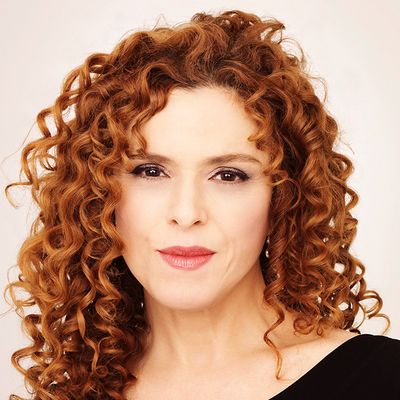
[17:33] Patrick Oliver Jones: A pivotal moment came when a large group of Broadway actors, led by Annie Get Your Gun's Bernadette Peters and The Producers' Nathan Lane, they all donated their time and talents by gathering in Times Square to perform Kander and Ebb's classic anthem New York, New York.
[18:04] Patrick Oliver Jones: This powerful display of unity was captured on camera and broadcast across the nation, inspiring a renewed sense of assurance.
[18:13] Patrick Oliver Jones: And as the weeks passed, audiences began coming back to Broadway.
[19:15] Patrick Oliver Jones: I don't know what to do with my feelings.
[19:17] Patrick Oliver Jones: It just gave them permission to be to release it, to get loud and scream and laugh and get up on their feet and dance.
[19:29] Patrick Oliver Jones: And I've never seen that before, and I think that's when I truly realized the power of the theater and of music and of art is that it allows people to release their feelings through other people.
[19:50] Patrick Oliver Jones: And so as we reflect on this tragic chapter in our nation's history and theater history, let us remember the courage and determination that helped bring Broadway and this country back to life after the darkest of days.
[20:05] Patrick Oliver Jones: The lights may have dimmed for a moment, but they were never extinguished.
[20:17] Patrick Oliver Jones: A big thank you goes to Playbill, the Guides Association of New York City, and the American September Project to make this episode possible.
[20:27] Patrick Oliver Jones: Closing Night is a production of WINMI Media with yours truly, Patrick Oliver Jones as host and executive producer of the show.
[20:34] Patrick Oliver Jones: Dan Delgado is editor and producer, and co-producer is Maria Clara Ribeiro.
[20:40] Patrick Oliver Jones: For a transcript and full list of the numerous resources used to create this episode, look for a link to that in the show notes.
[20:48] Patrick Oliver Jones: Be sure to join me next time as another single production makes its way to closing night.
© Broadway Podcast Network, All Rights Reserved