

In April of 2012, the very first revival of Evita came to Broadway, having done the same in London six years earlier. And in both productions, the title role featured a relatively unknown actress to Western audiences: Elena Roger... Read More
From the show: Closing Night
Guests


Featured Shows
About
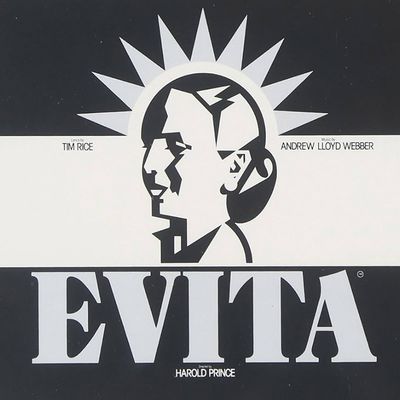
In April of 2012, the very first revival of Evita came to Broadway, having done the same in London six years earlier. And in both productions, the title role featured a relatively unknown actress to Western audiences: Elena Roger. She followed a select few chosen to take on one of the most difficult female roles in musical theater. First, there was Julie Covington, then Elaine Paige, Patti LuPone, and Madonna. Among this group of women, Madonna was the only one to have already been a celebrity when she took on the role. As for the other ladies, it was Evita that introduced them to the world and turned them into stars. Such is the power of this musical, with book and lyrics by Tim Rice and the iconic score by Andrew Lloyd Webber.
Whether it’s the 2006 West End revival or its subsequent transfer to Broadway in 2012, neither version even lasted a year, a far cry from their respective original productions. So how did this revival differ from those previous productions? And why couldn’t it recapture the fame and longevity of the original? In this episode, we’ll explore the history of this high-flying adored musical and the factors that led to its Broadway revival. We’ll also highlight some challenges this production faced and the impact Evita continues to have on audiences today.
Follow on Instagram and listen to Closing Night on your favorite podcast app!
Closing Night is a production of WINMI Media with Patrick Oliver Jones as host and executive producer. Dan Delgado is the editor and co-producer, not only for this podcast but also for his own movie podcast called The Industry. Blake Stadnik composed the theme music, and Maria Clara Ribeiro is co-producer. Much appreciation goes to Hal Luftig, Christina DeCicco, and Sammi Cannold for their insights as well as the voice talents of our very own Dan Delgado.
Click here for the transcript and full list of links and resources used in this episode.
Transcript
This transcript was automatically generated and might contain errors.
[0:00] Patrick Oliver Jones: In April of 2012, the very first revival of Evita came to Broadway, having done the same in London six years earlier, and in both productions, the title role featured a relatively unknown actress to Western audiences.
[0:16] Patrick Oliver Jones: She certainly carried big expectations to perform in a show that so many have seen and formed opinions about before even setting foot in the theater.
[0:16] Patrick Oliver Jones: I mean, Eva Perón is a tough role for any actress, much less one whose native language isn't English.
[0:34] Patrick Oliver Jones: What's new?
[0:35] Patrick Oliver Jones: Buenos Aires.
[0:37] Patrick Oliver Jones: I'm you!
[0:38] Patrick Oliver Jones: I want to say I'm just gonna just talk on you.
[0:41] Patrick Oliver Jones: You'll be on me too.
[0:43] Patrick Oliver Jones: For most people, the musical Evita brings to mind the actresses who have taken on one of the seminal roles in musical theater.
[0:51] Patrick Oliver Jones: First, there was Julie Covington, then Elaine Paige, Patti LuPone, Madonna, and now add Elena Roger to that list.
[1:01] Patrick Oliver Jones: The only one among them to have played the role both on the West End and Broadway.
[1:07] Patrick Oliver Jones: Also among this group of women, Madonna was the only one to have already been a celebrity when she took on the role.
[1:13] Patrick Oliver Jones: As for the other ladies, it was Evita that introduced them to the world and turned them into stars.
[1:19] Patrick Oliver Jones: Such is the power of this musical, with book and lyrics by Tim Rice and the iconic score by Andrew Lloyd Webber.
[1:29] Patrick Oliver Jones: But then there's Evita, the person, an Argentina icon, who elicits strong visceral feelings of either adoration or anger, as someone who rose from being an Argentina singer and actress to becoming wife of President Juan Perón during the 1940s and 50s.
[1:47] Patrick Oliver Jones: Elena Roger was born in Buenos Aires and came to the role with a sense of ownership that those other leading ladies never had.
[1:56] Elena Roger: All my life I hear to talk about Eva in my house.
[2:01] Elena Roger: And all my life because I am Argentina.
[2:06] Elena Roger: So always win when there is a problem in my country.
[2:23] Patrick Oliver Jones: So whether you're talking about the musical or the actual person, Evita comes with a contentious but long-lasting history.
[2:32] Patrick Oliver Jones: However, when it comes to revivals, that history is rather short.
[2:37] Patrick Oliver Jones: Whether it's the 2006 West End production or its subsequent transfer to Broadway in 2012, neither version even lasted a year, a far cry from their respective original productions.
[2:50] Patrick Oliver Jones: So what led to Evita's return to Broadway after a 30-year absence?
[2:55] Patrick Oliver Jones: How did it differ from previous productions?
[2:58] Patrick Oliver Jones: And why couldn't it recapture the fame and longevity of the original?
[3:03] Patrick Oliver Jones: In this episode, we'll explore the history of this high-flying adored musical and the factors that led to its Broadway revival.
[3:12] Patrick Oliver Jones: We'll also highlight some challenges this production faced and the impact Evita continues to have on audiences today.
[3:30] Patrick Oliver Jones: And forgotten Broadway shows that close too soon.
[3:33] Patrick Oliver Jones: I'm Patrick Oliver Jones, and I'll be your guide in this first season as we go through the ups and downs of one of Broadway's youngest venues, the Marquee Theatre.
[3:45] Patrick Oliver Jones: These episodes will give a behind-the-scenes look at some of the shows that have come and gone from here, and what led to their closing night.
[4:01] Patrick Oliver Jones: As a member of the ensemble in the 2013 National Tour of Evita and understudy for the role of Juan Perón, I really fell in love with this score from our very first rehearsal.
[4:14] Patrick Oliver Jones: Our music supervisor, Kristen Plagge, said she considers this to be one of Lloyd Webber's most beautiful scores.
[4:22] Patrick Oliver Jones: I don't expect my loveliness to lie.
[4:30] Patrick Oliver Jones: Now, our national tour was basically a replica of the Broadway revival at the Marquee Theatre, which was itself based on the 2006 revival in London.
[4:40] Patrick Oliver Jones: So before diving into those productions, let's explore the origins of this musical and how it first came to the stage.
[5:03] Patrick Oliver Jones: I heard the repeat of the program, and the more I learned about Eva Perón, about whom I knew nothing beforehand, the more interested I became, and it just seemed to work for our style.
[5:12] Patrick Oliver Jones: After that, Rice completely immersed himself into the world of Eva Perón.
[5:17] Patrick Oliver Jones: There was a documentary about her called Queen of Hearts that he saw at least 20 times.
[5:23] Patrick Oliver Jones: Then he flew to Buenos Aires to research original documents and interview those with personal knowledge of Eva's life.
[5:31] Patrick Oliver Jones: And in 1975, he even went so far as to name his newborn daughter Eva.
[5:31] Patrick Oliver Jones: At first, Lloyd Webber was somewhat intrigued by the idea of creating a Latin-flavored score full of tangos and pasodobles, but ultimately he turned it down, saying he really didn't want to do another piece about an unknown who rises to fame aged 33 and then dies.
[5:56] Patrick Oliver Jones: Instead, Lloyd Webber chose to work on a 1920s musical comedy called Jeeves with iconic British playwright Alan Ayckbourn.
[6:05] Patrick Oliver Jones: However, Jeeves was a magnificent flop in 1975, receiving a chorus of negative reviews and ending its run with only 38 performances on the West End.
[6:05] Patrick Oliver Jones: After that, Lloyd Webber smartly came back to Rice, who had continued working on Evita for almost a year.
[6:39] Patrick Oliver Jones: The first, Another Suitcase in Another Hall, as well as Good Night and Thank You.
[6:45] Patrick Oliver Jones: Now, though inspiration for Evita came from many sources, the choices made by Rice and Lloyd Webber in crafting the songs and characters were influenced more by theatricality than authenticity.
[6:58] Patrick Oliver Jones: So when it came time to introduce their musical to the public, they decided to do what they had done with Jesus Christ Superstar by recording and releasing a concept album, which came out in late 1976.
[7:12] Patrick Oliver Jones: It featured Julie Covington in the title role and Combe Wilkinson as Che, the irreverent and often critical narrator of the show.
[7:22] Patrick Oliver Jones: Well, the concept recording for Evita was a huge hit on many international charts, outselling Superstar and turning Don't Cry for Me Argentina into a worldwide sensation.
[7:35] Patrick Oliver Jones: However, Covington didn't want to do any press or publicity for the album, so it was Barbara Dickson who sang the part of Perón's mistress on the album.
[7:45] Patrick Oliver Jones: She was often called upon to sing the show's big hit song.
[8:02] Patrick Oliver Jones: The Evita concept album was sent to legendary director Hal Prince, who agreed to direct the piece, and over the next two years, he helped shape a concept into a full-stage musical with a brand new cast.
[8:17] Patrick Oliver Jones: And one of the biggest changes he made was to the character of Che.
[8:22] Patrick Oliver Jones: The original concept was meant to represent a kind of Argentina voice of the people, someone to comment on and at times chastise Eva Perón's rise to power.
[8:32] Patrick Oliver Jones: Even the name Che comes from traditional Argentina usage, basically meaning mate or buddy.
[8:39] Patrick Oliver Jones: But Prince decided, however, to turn this everyman into a very specific man.
[8:45] Patrick Oliver Jones: The real-life South American Marxist revolutionary Che Guevara.
[8:50] Patrick Oliver Jones: As the stage musical started to take shape, Lloyd Webber rewrote all the dance music from the concept album and, along with Prince, focused on the structure of the show, turning it into one of the first completely sung-through musicals.
[9:05] Patrick Oliver Jones: This allowed Don't Cry for Me Argentina in particular to be a full-blooded song, a performance in and of itself.
[9:26] Patrick Oliver Jones: And it broke box office records as the relatively unknown actress Elaine Paige would go on to win for Best Performance of the Year at the Olivier Awards.
[9:36] Patrick Oliver Jones: And the show itself won Musical of the Year.
[9:41] Patrick Oliver Jones: When the show moved to Broadway the following year, Paige was originally promised the opportunity to recreate her role in New York.
[9:50] Patrick Oliver Jones: However, Actors' Equity Association refused permission for a non-American to perform in the New York production.
[10:18] Patrick Oliver Jones: However, there was no exchange of actors this time around, so casting had to look for another Evita.
[10:26] Patrick Oliver Jones: Many actresses were considered, including Ann-Margret, Charo, Raquel Welch, and Meryl Streep.
[10:33] Patrick Oliver Jones: But in August of 1979, People magazine announced that, quote, acting nobody, Patti LuPone had won the role.
[10:43] Patrick Oliver Jones: Although LuPone had already earned her first Tony nomination three years earlier in The Robber Bridegroom, so she certainly was not a nobody.
[10:52] Patrick Oliver Jones: But just as in London, this New York production broke box office records, and it became the very first British import to ever receive the Tony Award for Best Musical.
[11:03] Patrick Oliver Jones: Of its 11 Tony nominations, Evita won seven of them, including Best Book and Score for Rice and Lloyd Webber.
[11:12] Patrick Oliver Jones: And with her win for Best Actress, Patti LuPone became synonymous with the show and set a high bar for any actress who came after her.
[11:21] Patrick Oliver Jones: However, LuPone told the New York Times in 2007 that Evita was the worst experience of her life.
[11:29] Patrick Oliver Jones: Quote, I was screaming my way through a part that could only have been written by a man who hates women.
[11:35] Hal Luftig: And I had no support from the producers who wanted a star performance on stage, but treated me as an unknown backstage.
[11:44] Hal Luftig: It was like Beirut, and I fought like a banshee. Yet most critics did praise her performance. However, they weren't so eager to rave about the show itself. The subject matter was the biggest complaint. Nobody even applauded Hal's innovation in staging this. They just said, How dare you put Evita Paton on the stage? Nonetheless, the original Broadway production ran more than three years with 1,567 performances. While in London, the show would last twice as long, closing in 1986 and still ranks as one of the top 20 longest-running musicals on the West End, right behind me and My Girl. Over the next 20 years, this blockbuster musical would go on to at least 14 major international productions and tours, including five national tours here in the U.S., not to mention countless regional and community productions.
One of the most highly touted productions, though, was the 1996 film adaptation starring Madonna. This brought Rice and Lloyd Webber together again to write a new song specifically for the movie, called You Must Love Me, which went on to win the Golden Globe and Academy Award for Best Original Song. Honestly, the film version of Evita has such a rich and tumultuous backstory that it could be the subject of its own podcast. But for now, let's get back to the stage productions. So, 10 years after this movie version and 20 years after the first London production closed, Evita finally began preparations for a return to the West End. This time produced by Lloyd Webber's Really Useful Theater Company, and they brought in choreographer Rob Ashford and director Michael Grandage, both of whom were responsible for a West End revival of Guys and Dolls just a year earlier.
While Lloyd Webber has said that there were no rewrites of the script or lyrics for this revival production of Evita, Grandage was, however, given the freedom to approach this iconic musical with fresh eyes and rethink certain aspects of the show. For one, he made the decision to return Che to its original concept as an everyman voice of the people, no longer associated with Che Guevara. The score was also updated. First, by incorporating that song You Must Love Me from the film into the stage version for the first time. And then secondly, by giving Lloyd Webber the chance to revisit his music and bring more authenticity to his orchestrations. Back in 1975, six, when I was writing and recording it, I mean, we didn't have much knowledge, frankly, in this country, of Latin music or Argentina music.
I mean, I'd never heard really a proper Argentina tango. I mean, though although there is the tango in the piece very often, I can't wait to get at the score and do it with some of the authentic instruments. It'll be really intriguing for me. And with that more authentic sound, Grandage also made dance a more important element in the show. As someone who did Rob Ashford's choreography eight times a week on tour, I can attest how central it was to the storytelling and how intricate and tiring it was as well. But the most notable change Grandage brought to the show was in the casting of Ava Perón, which by this point was an enormous and intimidating role for any actress to play. Here's Grandage at a press event for the revival on how their new Ava was chosen.
[15:42] Michael Grandage: Some of the British actors who came in inevitably had as a role model, um, Elaine Paige on the CD or, um, Julie Covington, a few of them Madonna. A lot of the Americans had, um, Patti LuPone as their role model and, uh, a bit of Madonna. But, uh, Elena came and had, uh, Ava Perón as her role model, and it showed in everything she did.
[16:07] Hal Luftig: Elena Roger was a prolific actress in her home country of Argentina during the late 1990s and early 2000s, having done a wide variety of musicals in Buenos Aires, from Les Misérables and Fiddler on the Roof to Beauty and the Beast and Saturday Night Fever, but she had never done Evita. I only knew the song, the most famous song, Don't Cry for Me Argentina. I saw the film, but what I remember, and one time in a little show I can sing, I sang, it was Don't Cry for Me Argentina. Then in October 2005, an Argentina friend of Elena's was working in London for Lloyd Webber's Really Useful Group when she heard about plans for a revival of Evita. So she recommended that Elena be considered. Her first audition was a bit unusual back in 2005, but something that actors of today are very familiar with: a self-tape, where she sent in a DVD with samples of her singing and dancing.
According to Tim Rice, it was clear she could sing, but quote, the initial concern was whether she had the command of English, end quote. But that didn't stop Elena from giving these auditions everything she had, as Broadway producer Hal Luftig explains.
[17:39] Hal Luftig: She had flown herself over from Argentina for the audition, didn't speak a word of English, learned the whole show phonetically. And you know, because she was new, she had that fire in her belly like Ava Perón did. I'm gonna predict that she will be an extraordinary performer and is one of the greatest discoveries that we've had in theater for a very, very long time. And I I'm I'm wrong, I'm I I'd be very surprised because she absolutely has it.
[18:09] Hal Luftig: Back in the late 70s, the original production was actually panned in Argentina because they resented the disparaging caricature of their once beloved leader and his wife. But in 2006, Buenos Aires, there was great excitement when it was finally announced that a native actor would be playing the West End Evita. Joining Elena on stage was the incomparable Philip Quast as the Argentina dictator Juan Perón. On a personal note, I consider Quast to be the quintessential Javert in Les Misérables, so I wish I could have seen this Evita production with him and Elena when it opened on June 21st, 2006 at the Adelphi Theatre, 28 years to the day after Hal Prince's original London premiere. And much like that production made a star of Elaine Paige, this revival elevated Elena Roger to new heights.
The Daily Telegraph said she dominated the stage with tremendous presence. The Independent called her simply sensational. And the theater critic for the London Evening Standard said, I am a touch ashamed to admit I have fallen head over heels for Evita again. But The Guardian had a different take.
[19:23] Hal Luftig: There's always one, right? And it was less than impressed with Elena and the musical itself. Lacking any coherent idea, the show is motored by a succession of Lloyd Webber songs. They are some of Lloyd Webber's best, and many have been enhanced by new orchestrations filled with tango textures. But the show is certainly a great vehicle, and the Argentina Elena Roger rides it in modest triumph. While her voice pleases, it doesn't have the clarion ring of Elaine Paige or the lyric intensity of Julie Covington. And what you gain in Latin American authenticity, you sometimes lose incomprehensibility. One consistent and interesting comment among all the critics, though, centered around her size and how she was barely five foot high and a hundred pounds.
In fact, one director early in Elena's career told her that she was too short to ever be a leading lady. Well, Evita received four Olivier Award nominations, including one for its leading lady. The other three nominations were for Best Actor, Philip Quast, Best Choreographer, Rob Ashford, and the Big Prize of Outstanding Musical Production. However, in February 2007, just two weeks after the Oliviers, it was announced that the West End revival of Evita would close on May 26th, less than a year after opening. Well, even though Evita may not have won any Olivier Awards and was closing earlier than expected, producer Hal Luftig, who had brought shows like Thoroughly Modern Millie and Annie Get Your Gun to the Marquee Theater here in New York, he saw that London revival of Evita and had other ideas for its future on stage.
[21:12] Hal Luftig: I just saw it as a visitor. I did know Rob Ashford, obviously from Millie. And when I saw Rob again, I just fell madly in love with it. I just everything about it, and especially Elena. And I just said, Rob, you didn't ask me, and I don't care. I'm doing the show. Kind of thing. And that's how it came to be. But this $11 million Broadway production led by Luftig and his producing partner Scott Sanders wasn't going to be some immediate transfer from London to New York. Far from it. After the break, you'll hear why it actually took five years to finally bring this Evita to Broadway.
[22:20] Hal Luftig: But as one production source told the New York Post, Elena Roger may be wonderful, but you need a real star in order to sell tickets on Broadway. So casting chose a pretty well-known pop singer who just happened to have a Broadway credit as well, Ricky Martin. However, as Luftig explains, it would be another five years before any Broadway revival would finally come together.
[22:48] Hal Luftig: Well, uh first it took like a couple of years to figure out Michael Grandage's available, the director. So we had that. Then when we signed Ricky, we had to wait almost three years for his availability. You know, he had tours, he had an album coming out, and so it all worked out.
[23:05] Elena Roger: Like the pieces just came all together. You know, they always have to fit together like a Rubik's Cube. And sometimes you have a lonely time to do that. They're like children, I always say they're born when they're ready. So by the time rehearsals began for the Broadway revival of Evita in January 2012, I was in a different place from that London revival in both my life and career. I did it six years ago, and now I'm older and I mature, so I am thinking about the character like in a little bit different way that I used to. I try to do my best and I do all the research and I give my heart, my love, and well, that's it. That's what I do for every character.
[23:55] Elena Roger: She joined a cast of more than 30 performers, which now included Michael Serverus as Juan Perone, Rachel Potter as Mistress, Max von Essen as Magaldi, and of course Ricky Martin in the role of Che, who had made his Broadway debut in 1996 in Les Miserables. It's amazing because I did Marius, who was a man that spoke for the people. And I guess Che does the same thing, you know. It's just been fascinating. I'm in another place mentally, physically, spiritually today. It's been a very beautiful journey, very spiritual, and I'm here to learn, I'm here to grow, and it's been a fascinating trip.
[24:36] Hal Luftig: While in many ways this revival was going to be a remounting of the London production, there was one track that was added, or rather altered for Broadway. This time the creative team designated a single actress, in this case, Christina DeCicco, whose only job was to be the alternate Ava two times a week. However, once rehearsals began, Christina says they kind of didn't know what to do with her, as she was often not part of the schedule when Elena was rehearsing. That was until Elena intervened.
[25:08] Elena Roger: She spoke to the Stage Manager and was like, listen, you need to schedule Christina every time that I'm doing work with Michael or with Ricky. We need to be together. She needs to know what's going on. And so I got to be, luckily because of her, I got to be in those early rooms where you're just discussing character and you're breaking this down. And with this being the first Evita revival on Broadway, you can imagine how the history and expectations of that original production surrounded them. But from Hal Luftig and Michael Grandage on down, there was an emphasis on making this revival unique and its own show.
[25:50] Ricky Martin: And that included individual performances as well. Che, he's a chameleon. You know, he can be so many people at the same time. And that was for me new. When I'm on stage as Ricky, well, I'm Ricky. I am nobody but me. And I think that tomorrow I can be someone else in this portraying this character, which I find fascinating. It's like an open canvas that I can find colors and textures every night with respect and dignity. It's gonna be amazing.
[26:21] Ricky Martin: But while there was freedom to create each character and the moments within the show, that doesn't mean it was any easier to actually perform the show. I can certainly attest to how hard the music is, and remember it's completely sung through, so there's no rest for your voice on stage from beginning to end, especially for the lead roles. I told Vanity Fair that it was very different from the pop singing I was used to, because Evita is a classical score where everything is more pronounced and the vocal range was quote, pretty aggressive and challenging. And yes, you know the anxiety is there, but the next step was to just get on stage and feel the energy of the audience. That was the next step. That's what we were begging for at this point.
[27:10] Hal Luftig: Preview performances began on March 12th, 2012, and the very next day a big press event was scheduled for the show. In fact, the past few sound bites you've heard from Elena and Martin have been from that press conference. So during that press event with the cast busy elsewhere, the fire department came into the Marquee Theater to do a regular maintenance check on the safety systems. Now, in many theaters, there is what's called a fire curtain, which prevents fires from spreading from the stage to the audience, and vice versa. In the Marquee, they opted for what's called a deluge curtain, which is a 200-gallon tank being emptied onto the stage to create a wall of water to combat any fires.
[27:57] Hal Luftig: Well, in testing this kind of water curtain, there's a key that has to be put in when you press the button to let the system know it's just a test. Because all the fire department is checking for is the pressure. That water has to come down really hard. And mind you, this isn't regular tap water in the tank. No, this is pretty gross water, not fit for human consumption. Well, the person testing the system forgot that important key. So when he hit the button, the system reacted as if there was a fire. And a wall of this slimy water came down onto the stage, which was a raked stage that angled slightly downward into the orchestra pit. Yep, that's right. It quickly turned from an orchestra pit into an orchestra pool.
[28:48] Hal Luftig: And you might say the curse of the Marquee Theater struck again. At this point, the company manager called up Hal Luftig to let him know what had happened. And I got to the theater and the pit was like a sea with sheet music and instruments. And when Kristen Blanchett, God love her soul, who was our music director, she jumped in the pit to try and say, you know, and like the crew was like, get out of it! There's live electricity in there. And so, you know, again, they got all the water out, but we had to literally, literally, take the sheet music, spread it out over the orchestra sheets, and dry it with hand dryers. That's because the show was still in previews. The music notes and changes that the orchestra had been making to their sheet music hadn't been transcribed into the actual orchestrations yet. So those wet pages were the only documentation of the music changes to the score.
[29:50] Hal Luftig: So for the next several days, the orchestra had to gingerly turn those crinkled dried pages throughout those performances. Thankfully, that was the last bit of drama during the previews, until opening night on April 5th. For decades, Tim Rice and Andrew Lloyd Webber have been asked about their partnership in many interviews. That's because ever since the original concept album Evita in 1976, the two of them stopped writing together. Rice even turned down Lloyd Webber's invitation to write lyrics for The Phantom of the Opera back in the mid-1980s. They did collaborate on a 30-minute musicalette called Cricut, which was commissioned for the Queen in 1986, as well as a song here or there like You Must Love Me for the Evita film. But they hadn't done any full-length projects together.
[30:45] Hal Luftig: That was until 2010 when Rice provided additional lyrics to a new production of The Wizard of Oz on the West End. A 34-year hiatus had come to an end. Almost. But I wanted, you know, them to like, you know, become friends again. And also, you know, be honest, I wanted that photo of them together at the opening night. So, you know, I staged a couple of things, and the idea was to have them on opening night together for the first time, posing for a photo. Didn't quite work out that way, but that was the plan. That's because Rice and Lloyd Webber decided to meet on their own before the opening night performance and have a private cocktail.
[31:53] Hal Luftig: Well, it wasn't just one cocktail, and by the time a limo picked them up to bring them to the theater for their six o'clock photo call together, they were feeling quite celebratory. However, there was tons of traffic, and they soon realized that they were going to be late. So the two decided to get out of the limo and walk instead. Now, whether it was because of the drinks or they just didn't know the city that well, well, they walked in the wrong direction. And suddenly they found themselves at FDR Drive, which is on the very east side of Manhattan. The Marquee Theater, on the other hand, is in Midtown, many blocks away. Now it's 6:30, now it's 6:40, now it's 6:45, and I have a theater full of people.
And you know, I said we have to start. You know, we just can't wait, but you know, I don't know where that kept calling it. You know, and they finally showed up about 10 o'clock, a little late, and the front of house said, "Left, you know, they all went home." So it was funny. It's funny now at the time, not so funny.
[33:10] Hal Luftig: But by the time the opening night performance was over, everyone was all smiles and cheering that after three decades, the first lady of Argentina was finally back on Broadway. And that excitement extended from the audience to the cast as well, especially Ricky and Elena.
[33:28] Ricky Martin: I'm overwhelmed with emotions, to be quite honest, and I think when I go home tonight, I will allow myself to really be specific, but I am very thankful. A lot of gratitude because of the people that I'm working with. Amazing. Everything is like so happy for me. It's everything. Also, the cast is amazing. I feel that while we did a great show, the audience was with us all the time. I feel happy, I was very nervous.
[33:58] Hal Luftig: Unfortunately, that nervousness came through as many critics focused on Elena's vocals, mentioning a few frayed top notes and worrying how long her voice, a little brittle at the top, will hold up even on a limited performance schedule. Others, like the Associated Press, just wanted more La Vida Loca. Quote, all of the heat actually comes from the guy shaking his bonbon. Ricky Martin is easily the best thing about this revival. New York magazine even took a swipe at the theater itself, saying that, quote, Grandage's imposing new vision uses the marquee's vast cavernous tastelessness to suitably overblown effect.
[34:42] Patrick Oliver Jones: Well, they certainly packed a lot of descriptive words into that one sentence, didn't they? But Entertainment Weekly gave the show a C and was particularly harsh on its leading actress. And how does she handle that vocal cord killing score? For Argentina actress Elena Roger in the adequate new Broadway revival, the answers are passable, effective, and badly. We knew we had something special anyway, no matter what critics were going to say about it not being the original production. So we just took pride in what we had and what we were creating every night anyway. And the money kept rolling in from every side. Despite those reviews, Evita had the sixth highest box office gross on Broadway in 2012, just ahead of Phantom of the Opera, and well ahead of the other Rice Lloyd Webber revival that year, Jesus Christ Superstar.
In fact, Evita was reaching around 1.5 million dollars a week leading up to the Tony Awards, where it was nominated for Best Choreography, Rob Ashford, Best Actor in a Musical, Michael Cerverus, and Best Musical Revival. But even after no wins at the Tony's, the show was still averaging around $1 million a week for the rest of that year. And that included stretches of time when Elena was out and alternate Christina DeCicco was the full-time Ava.
[36:37] Christina DeCicco: I got to go on a lot because Elena, they allowed her to film two movies in Argentina while during our run. So she was gone for five weeks for one, I believe, and then three and a half, four weeks for another movie. So I became the six shows a week, and Jess Patty became the two shows a week. It was really kind of a sisterhood of the traveling Avas. And that was it was very, very special to have an actor like her who was so welcoming and so not threatened by anything. She was there to do what she was there to do, and nobody was going to say anything that was going to make her feel bad about it.
[37:21] Hal Luftig: With the first Argentina actress playing Ava and with Ricky Martin as Che, producers obviously wanted to capitalize on this production. Co-producer Scott Sanders said, quote, there is a genuine hunger from our audience members, expressed at the theater merchandise stands, on the show's website, and through its social media outlets for us to deliver a complete recording of this beloved show and its score. You see, the London Revival cast recording was only a highlights album. So for this Broadway revival, they decided to release a two-CD complete recording of the score. As 2012 was coming to a close, the contracts for the three leads, Elena, Ricky, and Michael, were nearing their end. And none of them planned on staying with the show beyond January 2013. So the search was on to find replacements for these leads.
[38:15] Hal Luftig: But in all honesty, Ricky Martin was the main attraction of the revival. During some of the weeks when he was on vacation, ticket sales would often fall sharply. So Luftig and the production team held an extensive search for someone with name recognition who could actually sing the score. And it mainly focused around big name stars to play Ava Perón. We just thought we could keep going. And then at one point, um, for instance, I remember Scott Sanders, my producing partner, had a conversation with J-Lo. And Ricky was like, you know, I would actually stay a couple of weeks longer if she came in just to get her in the role. And she came to see it, and she just said, I can't sing like that. I can't do, you know, eight times, six times a week.
I can't do that. You know, that's not how I sing, which is true when you think about it. So we tried, we went down a whole list, you know, J-Lo, Lea Michele, Adina, like Adina was very interested. But ultimately, Adina Menzel signed on to do the new Tom Kitt musical called If/Then and wasn't going to leave that show for Evita. So producers made the decision that it just didn't make financial sense to keep the show running without their three stars, and with no viable options to replace them.
[39:38] Hal Luftig: And in mid-December 2012, it was announced that the first revival of Evita on Broadway would close at the Marquee Theater the following month on January 26th, 2013. We didn't close because of numbers or poor ticket sales or anything. We closed because the contracts were ending and they decided not to pursue anybody else to continue it. Um, so it was disappointing, but we also were glad that we were still going out with a bang. Evita ended up closing on a Saturday, so that meant DeCicco and Elena got to have their final shows on the same day, giving the cast a chance to give their all for these two Avas.
[40:23] Hal Luftig: When it was all said and done, the Broadway revival of Evita played 26 preview performances and 337 regular performances. The hardest thing we have to do as a producer is make that decision. But we did, so I cried my eyes out for a couple of days, and you know, on we went. And you guys came along with the national tour, and I was just as proud, you know, not more, and we did extremely well on the road. Unlike the Broadway production that relied on Ricky Martin's star power, our national tour focused on selling the show itself. We often had larger houses on the road than the Marquee Theater, and we would fill them with applauding audiences of 2,000 plus. But the success of any tour depends not only on ticket sales, but also on the cast and crew.
[41:14] Christina DeCicco: Unfortunately, we had a fantastic group that enjoyed each other's company on stage and off. Another thing, tours tend to be less expensive than the original production. Our sets were simplified for transportation, our cast size was reduced from the New York production, as was our pay. My weekly salary was about a third that of my counterpart who played the same ensemble role on Broadway. So our tour maintained the high quality look and feel of the Broadway show while being cost-effective and cheaper. The investors from the Broadway production had the first right of refusal to invest in our tour, and many of them chose to do so. And fortunately, the tour was able to recoup its investment, unlike the Broadway revival production.
And that meant overages for the cast as well. Meaning that in certain cities where box office was higher than expected, the cast got a cut of the profits. And believe me, an extra few hundred dollars here and there go a long way on tour.
[42:17] Hal Luftig: Well, three years after our US national tour, Hal Prince actually teamed up with original choreographer Larry Fuller and directed an international tour of Evita that traveled through South Africa, Southeast Asia, Japan, Taiwan, and Australia. In his memoir that came out about the same time called Sense of Occasion, Prince expressed disappointment with that 2012 revival and outlined his intentions to bring Evita back to Broadway as it was originally produced and directed. He believed audiences were ready for a proper treatment of Evita, which he considers to have been one of the best musicals he's ever worked on.
[42:58] Patrick Oliver Jones: Well, that Prince-led tour never made its way to New York. But there is another up-and-coming director who might possibly bring Evita back to Broadway someday, and that's Sammi Cannold. She led the widely praised New York City Center's Encore production in 2019, when she was only 25 years old, and has mounted another version at the Cambridge, Massachusetts American Repertory Theater in the summer of 2023.
[43:26] Sammi Cannold: It's the same DNA, the same sort of design elements, the same team, but it's sort of grown into a full production because that was like a, you know, a concert production and we rehearsed it in 10 days. And I think the biggest difference now is that we have so much more time. So there's a lot that we're developing that I'm really excited about. This production will only have one Ava. We did have two when we did City Center, but that's sort of the big fundamental difference. But otherwise, it's really about just sort of expanding, both physically and in terms of depth of ideas and time to make them.
[44:03] Sammi Cannold: That truly is the beauty of Ava Perón's story and the musical given to us by Tim Rice and Andrew Lloyd Webber. It continues to speak to us today and find relevance in our politics and society as a whole. And that gives artists like Sammi a chance to share compelling stories like these in fresh new ways.
[45:13] Patrick Oliver Jones: Closing Night is a production of WINMI Media with yours truly as host and executive producer of the show. Dan Delgado is editor and producer. Be sure to check out his own movie history podcast called The Industry. Theme music for Closing Night composed and created by Blake Stadnik. And co-producer is Maria Clara Ribeiro. Thank you to those who you heard in this episode: Hal Luftig, Christina DeCicco, Sammi Cannold, and our very own Dan Delgado. For a transcript and full list of the numerous resources used to create this episode, look for a link to that in the show notes. Be sure to join me next time as another production makes its way to closing night.
© Broadway Podcast Network, All Rights Reserved