

Throughout March of 1982, in often cold and wet conditions, thousands actors and demonstrators gathered at a portable stage in midtown Manhattan in the heart of the theater district... Read More
From the show: Closing Night
Guests


Featured Shows
About
Throughout March of 1982, in often cold and wet conditions, thousands actors and demonstrators gathered at a portable stage in midtown Manhattan in the heart of the theater district. For weeks they shouted and sang and pleaded in front of an empty Morosco Theatre to protest its impending demolition along with other historic venues, which were to be replaced by a huge hotel and theater complex.
Along the way, some of the biggest names of the stage and screen offered their support as well like Tony Randall, Liza Minnelli, Robert Redford, Susan Sarandon, and Christopher Reeve. But one of the biggest voices in this protest was The Public Theater’s founder and producer Joseph Papp, who wanted to stop this destruction and actually preserve these beautiful and historical venues.
In this introductory episode, we’ll learn about the significance of five theaters (the Morosco, Bijou, Astor, Gaiety, and original Helen Hayes) that were all demolished to make way for what would become the Marriott Hotel and Marquis Theatre in what critics have called “The Great Theater Massacre of 1982.”
Listen on your favorite podcast app!
Closing Night is a production of WINMI Media with Patrick Oliver Jones as host and executive producer. Dan Delgado is the editor and co-producer, not only for this podcast but also for his own movie podcast called The Industry. Blake Stadnik composed the theme music, and Maria Clara Ribeiro is co-producer.
Much appreciation goes to Joe Rosenberg and Mark Robinson for their insights, Tim Dolan for his support, Robert Armin who captured those street protests back in 1982, as well as the voice talents of our own Dan Delgado and Kate McClanaghan from Actors’ SOUND ADVICE.
Click here for a transcript and full list of resources used in this episode (and there were a lot of them, believe me).
Transcript
This transcript was automatically generated and might contain errors.
[0:00] Patrick Oliver Jones: Throughout March of 1982, in often cold and wet conditions, thousands of actors and demonstrators gathered at a portable stage in Midtown Manhattan in the heart of the theater district.
[0:14] Crowd: Let me hear you say shame as loud as you can.
[0:18] Crowd: Let him hear it all over the goddamn world.
[0:21] Crowd: Hey!
[0:22] Crowd: Shame!
[0:24] Crowd: Hey!
[0:25] Crowd: Shame!
[0:26] Crowd: Hey!
[0:30] Patrick Oliver Jones: For weeks they shouted and sang and pleaded in front of an empty Morosco Theatre to protest its impending demolition, along with other historic venues, which were to be replaced by a huge hotel and theater complex.
[0:45] Patrick Oliver Jones: One of the biggest voices in this protest was the Public Theater's founder and producer, Joseph Papp.
[0:53] Joseph Papp: We didn't come here today to preside over the demolition of this theater. We're here to stop the demolition. New York is not just made up of buildings and hotels, it's made up of people and the theaters are made up of people who occupy those theaters, which means the audience and actors.
[1:13] Joseph Papp: Why striking this blow, they're striking a blow against the spirit of this city. We cannot replace these theaters anymore.
[1:20] Patrick Oliver Jones: But for years, theater buildings had been replaced. In fact, during the 20th century, a total of 72 Broadway theaters were demolished to make way for office buildings, apartments, parking garages, and hotels.
[1:35] Joe Rosenberg: People like me wanted to stop this vicious cycle and actually preserve these beautiful and historical venues.
[1:44] Joe Rosenberg: Theaters were torn down all the time. I mean, all the theaters in Soho. That was a theater district one time, 14th Street. They all disappeared. Theaters were just expendable. Until you just have a few more. And then when we lost five at one time, we had 35 operating theaters left. Then it became a reality. If we lose five theaters seven more times, we have no theaters left.
[2:11] Joe Rosenberg: I co-founded the NYC Historic Districts Council and sit on the board of directors for the League of Historic American Theaters. I also took part in the original efforts to save Radio City Music Hall from being torn down. And now I and others were trying to do the same with five theater buildings in Times Square.
[2:32] Joe Rosenberg: But there's a symbolic act here that everybody, not just people standing here, we have a few stars, a few actors, and some people passing by. This is the spirit of the city that's under attack. And we must keep this city alive. Keep these fairs alive.
[2:51] Patrick Oliver Jones: Along the way, some of the biggest names of the stage and screen offered their support, like Tony Randall, Liza Minnelli, Robert Redford, Susan Sarandon, and Christopher Reeve.
[3:04] Christopher Reeve: Well, finally, there's one time I wish I were Superman. I would just stand there and just catch the wrecking ball in Jerry Park.
[3:13] Patrick Oliver Jones: But what was so special about these particular theaters in 1982? Why the outrage and the groundswell of public and artistic support at this time? Well, because several beloved Broadway theaters had to be raised in order for this hotel and theater to go up.
[3:33] Mark Robinson: It brought down five theaters, including the original Helen Hayes Theater, the Morosco, the Bijou, the Astor, and the Gaiety. And in this introductory episode, we'll learn about the significance of these five theaters that were demolished, as well as the controversial new hotel theater complex that took their place in what critics have dubbed the Great Theater Massacre of 1982.
[4:06] Patrick Oliver Jones: Welcome to Closing Night, a new theater podcast about famous and forgotten Broadway shows that close too soon. I'm Patrick Oliver Jones, and I'll be your guide in this first season as we focus on the tumultuous and contentious beginning of one of Broadway's youngest venues, and its continued struggle as show after show has come and gone from here, leading many to call this the curse of the Marquis Theater.
[4:49] Patrick Oliver Jones: As more and more theaters migrated uptown, mostly due to cheaper real estate, they went from Union Square to Madison Square and then finally settling in their new home in Times Square. The oldest Broadway theaters still in use today are the Hudson, Lyceum, and New Amsterdam Theaters, which all opened in 1903. While the most recently constructed is the Lyric Theater, built in 1998.
[5:17] Patrick Oliver Jones: But as the theater district was moving and growing, there were also plenty of theater buildings coming down as well. In any given year, there might be anywhere from one to four theaters torn down. But only twice has there been a total of five theater buildings demolished in one year. The first was 1954, but all five of these former Broadway venues had already been converted into television or radio studios.
[5:46] Patrick Oliver Jones: One of them, however, the Vanderbilt, did try to make a go at being a legitimate Broadway theater again, but that effort only lasted about a year before being torn down to build a parking facility designed by renowned theater architect Herbert J. Krapp, a name you'll be hearing again.
[6:10] Patrick Oliver Jones: The second and only other time five theaters were demolished in a single year was in 1982. And this was to make way for the Portman Hotel, which was proposed by John Portman.
[6:24] Joe Rosenberg: Portman was an Atlanta architect and developer who rose to prominence in the 1960s and 70s, having built or designed a number of hotels, office buildings, and retail complexes around the country. John Portman at the time was a star architect. And he wanted to do something in New York. And all of his hotels were these big atriums with elevators going up and down. And also his hotels were not only big atriums, but they were everything on the inside of the hotel, nothing on the outside.
[7:03] Joe Rosenberg: In most cities, it didn't matter, but in New York, life is on the street, not inside the buildings. So to draw all these people and restaurants and that stuff inside the building and then leave the outside of the building with not even any stores. It was just completely anti-New York.
[7:22] Patrick Oliver Jones: Portman's initial development plan in 1973 included a hotel, retail stores, convention space, and a 1600-seat theater. But that plan didn't really go anywhere until it was revived again in 1978 by New York City's mayor Ed Koch.
[7:42] Patrick Oliver Jones: After a lot of back and forth, it was finally decided that the Portman Hotel Complex would be located in the heart of the theater district between 45th and 46th streets. This ambitious plan meant that the Piccadilly Hotel, several restaurants, a small assortment of retail shops and offices, as well as five theater buildings would all have to disappear to make way for this grand hotel.
[8:06] Patrick Oliver Jones: And these five theaters are at the heart of this story. So it's important to recognize their place in theater history. The oldest of them was the Astor Theater, which opened in 1906.
[8:43] Patrick Oliver Jones: In 1917, the Astor was home to Why Mary by Jesse Lynch Williams, the first drama to be awarded the Pulitzer Prize. A few years later, Lowe's Theater bought the Astor and converted it into a movie house, which it remained until 1972, when it then became a storefront.
[9:02] Patrick Oliver Jones: The Gaiety Theater opened next door to the Astor in 1909 and was designed by renowned architects Henry Beaumont Hertz and Hugh Tallant, and it was owned by George M. Cohen. The Gaiety actually introduced two revolutionary concepts in theater design that are still in use today.
[9:23] Patrick Oliver Jones: One was cantilevered balconies. Now, if you're like me and have never heard that word before, basically it means that the balcony was self-supported and no longer needed columns underneath it, which also meant audiences' views weren't blocked by these columns anymore.
[9:41] Patrick Oliver Jones: The second innovation was that of a sunken orchestra pit. The previous configuration had the orchestra on the same level as the seats in front of the stage, but now the orchestra was out of sight, save for the conductor or music director. Now above the Gaiety Theater rose several floors of offices, which housed many black talented composers who were not allowed in other places like the Brill Building. This became historically known as the Black Tin Pan Alley, with artists like Harry Pace, W. C. Handy, and Perry Bradford having music writing and publishing businesses here.
[10:23] Patrick Oliver Jones: Another interesting story about the Gaiety is that in 1918 it hosted what would be Broadway's longest-running show at the time, Lightning, with 1,291 performances. Its lead actor, Frank Bacon, became such a huge star, and the city threw him and the play's cast a parade when it closed in 1921. It was led by the mayor, and revelers marched down Broadway from the theater to Penn Station to send the cast off on their national tour.
[10:56] Patrick Oliver Jones: Now, having been on two national tours myself, we never got that type of send-off. Anyway, as the years went by, the Gaiety would also showcase vaudeville teams like Abbott and Costello, as well as burlesque performers like Gypsy Rose Lee, until finally becoming a movie house in 1943, changing its name to Victoria Theater.
[11:23] Patrick Oliver Jones: The next of our five classic era theaters was also designed by the Hertz and Tallant architect team. And it was originally called the Follies Bergère when it opened in 1911, just west of the Gaiety. Though it wasn't the first, Follies advertised itself as "the only theater in America where one may dine and from the same chair witness an elaborate musical entertainment."
[12:08] Patrick Oliver Jones: One such performer, 18-year-old Brooklynite Mary Jane West, was lauded by the New York Times for her performance. She would later go on to Hollywood and become better known as Mae West. The Follies, however, didn't find much success, lasting only six months before transforming into the Fulton Theater, where for the next 40 years it housed such original productions as The Jazz Singer, a 1925 play that would eventually be turned into the first talkie film, Arsenic and Old Lace, starring Boris Karloff in 1941, and the play Gigi, which marked Audrey Hepburn's stage debut in 1951. Four years later, the Fulton was renamed the Helen Hayes Theater in honor of the renowned actress, and opened with Eugene O'Neill's Long Day's Journey in Tonight, which went on to win the Tony Award for Best Play as well as the Pulitzer Prize for Drama.
[13:12] Patrick Oliver Jones: The last of our five theaters opened just a few weeks apart in 1917: the Bijou and the Morosco. Both were designed by an architect you might remember, Herbert J. Krapp. He had actually once been on staff at Hertz and Talent, but eventually became the in-house architect for the Schubert organization. Today, he has more Broadway houses to his name than any other architect—15 in total, including the Ambassador, Barrymore, and Imperial Theaters. Hmm. So I guess it could be said that more than a third of all Broadway houses are Krapp. I make no promises that that will be the last dad joke you'll hear on this podcast.
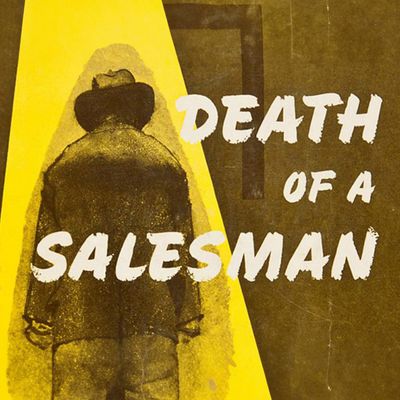
[14:00] Patrick Oliver Jones: Anyway, the Bijou Theater was smaller than the Morosco, with only 600 seats and a narrow stage. It had trouble finding audiences and never really achieved much success, although it did have the premiere of A Moon for the Misbegotten by Eugene O'Neill. In 1951, though, the theater became a studio for CBS, and then later an art film house before going back to stage productions again in 1970. It did have one long run with the experimental Mime Troop Momminchance, which lasted three years. However, most of its Broadway productions closed within a month of their opening. By contrast, the Morosco was the larger of the two at around 955 seats and was far more successful as well, being the birthplace of many iconic pieces of American theater, including Cat on a Hot Tin Roof, Death of a Salesman, Blythe Spirit, Our Town, The Norman Conquests, and Side by Side by Sondheim.
[15:05] Patrick Oliver Jones: Also, in keeping with the trend of plays by Eugene O'Neill, the Morosco featured the original production of his first Pulitzer Prize drama, Beyond the Horizon. In fact, the Morosco has housed more Pulitzer Prize-winning dramas than any other theater on Broadway, including the play No Place to Be Somebody, written by Charles Gordon, the first African American to win the prize in 1970. The importance of these houses has to do with plays. They got to reconstruct in their plans another musical house. Well, musicals are fine; we love them. We have a couple on Broadway ourselves. But there has to be room for serious writing on Broadway, which means houses of the size that what better be offered to be torn down. We need more of these houses, not less.
[15:59] Patrick Oliver Jones: The Astor, Gaiety, Helen Hayes, Bijou, and Morosco theaters each made their mark on Broadway. And Joe Papp knew that. He also knew that losing them, especially the Morosco and Helen Hayes, would mean losing important venues for smaller Broadway productions. The New York City Landmarks Preservation Commission had internally described the Helen Hayes as "one of the finest theaters in the Times Square area, and unquestionably deserving of a place on the National Register of Historic Places" in 1978. The Morosco was also deemed eligible for this listing in 1981. But unfortunately, all efforts to register either of these two theaters were ultimately denied. And so plans for Portman's hotel continued to move forward.
[16:51] Patrick Oliver Jones: A Daily News editorial identified his project as the Great Hope and laid out quite a grandiose argument in support of it. This soaring glass and chrome dazzler could become one of the city's great tourist attractions, drawing an army of visitors, inspiring other investors and developers, driving up property values, and driving out the sin merchants. This attitude was echoed by the Urban Development Action Grant Program, which was established in 1977 to provide public funds in an effort to revitalize distressed cities across the country. Their philosophy was to hold those slums and build new buildings in the empty space. And they had their eye on Times Square. To them, Times Square was a slum. They always wanted to tear down that block. It was just ingrained in their minds.
[17:47] Patrick Oliver Jones: Rosenberg is correct that in the 1970s, Times Square was not the safest place for tourists or residents. You see, it was a dark time for New York City as it reached record levels of crime in 1976, only to be surpassed four years later. And the subways were especially susceptible to muggings, vandalism, and assault. So government officials were happy to support any effort to breathe new life into Midtown Manhattan. And the city supported it, the state supported it, the Empire State Development supported it because the U.S. government was going to pay for it. Portman's project also found support from theater owners and producers like Gerald Schoenfeld, chairman of the Schubert organization, along with the Musicians Union and the Stage Employees Union. They believed this hotel theater complex would help the theater district, promote further development, and infuse much-needed money into the industry.
[19:26] Joseph Papp: So I decided a long time ago that we needed larger theaters. First one was the marquee. You know how I got that? I called John Portman. He says, "Well, what do you want to do?" I said, "I'd like to take the theater," and that's what happened.
[19:43] Patrick Oliver Jones: With city officials, theater producers, and others firmly behind Portman's hotel, it became quite clear that none of them were interested in saving these historic theater buildings. But having been a part of the successful campaign to save Radio City Music Hall in 1978, Rosenberg had an idea.
[20:15] Joe Rosenberg: We're gonna lose them. So can we start a group to try to save them? And Equity started Save the Theaters Incorporated, and then Equity funded it. And so we started contacting as many people as possible who were household names, and Joe Papp was one of them. And he really got involved a million percent. There are ways to build around these theaters. There's no need to build an ugly jutting wall that goes out onto Broadway. This whole proposition was ill-conceived from the very beginning, irresponsibly, and I'm accusing not only the city of New York, but the people on Broadway, certain producers, certain real estate holders who felt to be very advantageous to have this ugly demographic take place and to eliminate two major dramatic houses.
[21:08] Patrick Oliver Jones: Joe Papp was one of the few theater producers who opposed the Portman Project. He was on the side of the Actors Equity Association, along with the Screen Actors Guild, the Society of Stage Directors and Choreographers, and the Wardrobe Union. Big name stars also joined the efforts like Christopher Reeve, Colleen Dewhurst, Estelle Parsons, and Jason Robards. However, there was one actress who remained in support of the new hotel. She was one of the most unlikely supporters of demolishing these theaters, and she happened to be a personal friend of Rosenberg.
[21:46] Joe Rosenberg: When they were going to demolish the Helen Hayes Theater, I went to her, and I was so sure she would join us and help us. And she wouldn't do it. She was very nice about it. She wouldn't do it. Later on, I found out that they had already promised her that they would change the little theater into the Helen Hayes Theater. So as far as her having the theater named after her, she was going to still have it. And she didn't really care which theater was named after her.
[22:16] Patrick Oliver Jones: But Rosenberg wasn't the only one Hayes spoke with. In a letter to John Portman, who had also been courting her approval, she wrote, "I must confess I'm not on the side of saving old buildings in New York. I don't like to confess this because I hate to hurt people who have a different idea about me. But I hope the preservationists give up soon and let you get on with the building."
[22:42] Patrick Oliver Jones: But they didn't give up. For two years, the Save the Theaters campaign held meetings, sent letters, filed lawsuits, proposed alternatives, and made phone calls to various members of city, state, and federal agencies. They exhausted every legal maneuver and lobbying tactic, even going as high as the Supreme Court. For months now, there's been only the porn injunctions that have stopped the demolition. We may be near the end of what will help we can get from the courts. Without the courts on our side, the only one who can ensure the rescue of these theaters is the mayor. And we're not gonna leave here until he agrees to save the theaters.
[23:33] Patrick Oliver Jones: To say tensions were high in the theater community would be an understatement. In January 1982, the New York Times reported that one night before a performance of Nicholas Nickleby, the playwright David Mamet approached Gerald Schoenfeld.
[23:50] Joe Rosenberg: You call yourself a producer, Mammoth said, but you don't know how to create anything. All you know how to do is destroy.
[23:58] Joe Rosenberg: Schoenfeld quickly snapped back that Mammoth didn't know how to write plays, and the two men stormed off in opposite directions. This had become a fight to the finish.
[24:08] Joe Rosenberg: By the time the street protests were in full swing in March of 1982, three of the five theater buildings had already been torn down. Only the Morosco and the Helen Hayes still remained.
[24:21] Joe Rosenberg: Demonstrators filled 45th Street hoping the few remaining court injunctions and public pressure would stop further demolitions, with specific hopes that they could convince Portman to build around and on top of these two classic era theaters.
[24:38] Crowd: We, who are not a bunch of disorganized left-wing, radical hippie baggage actors, we are a theater to survive. We are mainstream and we mean it. You can have both. You can have the dinner, you can have tradition, you can have jobs for actors, and you can also have a hotel. Why the hell can't we do both?
[24:58] Joe Rosenberg: Papp had actually assembled a 50-man honor guard to be on duty around the clock to prevent the wreckers from doing their work in the dead of night.
[25:07] Joe Rosenberg: On March 4th, protesters celebrated the 65th birthday of the Morosco Theater by setting up a makeshift stage in front of the theater as the focal point of the demonstrations, where various theater artists and actors like Colleen Dewhurst and Christopher Reeve would get up to speak.
[25:26] Christopher Reeve: I guess I could only speak to you personally about Waffen Theater meeting. I can tell you that I know that for heart of New York City is the theater.
[25:45] Joe Rosenberg: In 1920, there were nearly 100 plays running on Broadway. Some good, some not so good. But there was an incredible wealth and a luck choose run, and the theater was in its heyday.
[25:58] Joe Rosenberg: And right here at the Morasco on February 3rd, Eugene O'Neill's first full length play, Beyond the Horizon, was performed at a matinee by actors who were appearing at other shows in those days giving 12 performances a week.
[26:13] Joe Rosenberg: And I just want to read a very short selection from his play Beyond the Horizon. In fact, many actors read scenes from the Pulitzer Prize winning plays that had been produced at the Morosco and Helen Hayes theaters.
[26:27] ⚠ About 3 minutes of audio could not be automatically transcribed.
[29:26] Joe Rosenberg: The demolition of the Morosco and Helen Hayes theaters began.
[29:30] Joe Rosenberg: Performers continued to sing and speak at the portable stage through the afternoon, while demolition crews did their work behind police barriers across the street.
[29:40] Joe Rosenberg: Though the demolition did happen fairly quickly, some historically and architecturally significant items from the Helen Hayes and Morosco were preserved.
[29:50] Joe Rosenberg: And from the rubble of these two historic theaters and the anger over their demise, one silver lining did emerge.
[30:00] Joe Rosenberg: When this was happening, I never thought I would ever dare say anything like this. Looking back, there were aspects of the Marion Marquee that helped Times Square and helped save the remaining theaters.
[30:13] Joe Rosenberg: First of all, the resentment that you're talking about and the anger that you're talking about, there were a lot of people with the city, including the landmarks preservation commission, that wanted to get back into the good side of the people who were angry at them.
[30:28] Joe Rosenberg: And they remained angry for years.
[30:34] Joe Rosenberg: And on the three-year anniversary of the Morosco's demise, they held a commemorative event in the heart of Times Square. This included the likes of Celeste Holm, Rosemary Harris, Mark Hamill, and others, continuing to voice their support of preserving the remaining Broadway theaters.
[30:54] Joe Rosenberg: Theater owners like Gerald Schoenfeld, though, were still against what he called willy-nilly landmarking. But Joe Papp and Save the Theaters continued their fight.
[31:04] Joe Rosenberg: And eventually it was a landmarks commission who came to us and said, okay, we didn't save these theaters. We regret it. In some ways, we were forced into doing this. What can we do to redeem ourselves?
[31:19] Joe Rosenberg: And we said you can let us designate the remaining theaters as landmarks so that this can't happen again. And they said, fine.
[31:30] Joe Rosenberg: Throughout the 1980s, Rosenberg and Save the Theaters would help other Broadway theaters receive landmark designations so that they would never have to face the wrecking ball, much to the disappointment of the theater owners, who actually sued the landmark preservation commission to stop these efforts.
[31:50] Joe Rosenberg: It went all the way to the Supreme Court, but the landmark designations were upheld.
[31:57] Joe Rosenberg: Meanwhile, construction continued on the Portman Hotel, which eventually changed its name to the New York Marriott Marquee Hotel.
[32:07] Joe Rosenberg: And James M. Niederlander got his wish, as the Niederlander organization beat out nine other bidders to take over operation of the Marquee Theater.
[32:17] Mark Robinson: As they say, hindsight is 2020, and theater historian Mark Robinson shares his own take of this demolition battle and its aftermath. I think at that time in New York, they couldn't fill the theaters that were there.
[32:32] Mark Robinson: I mean, we're also talking about a time where not long after this, the Mark Hellinger became a church. You know, I mean, theater spaces were just not fillable.
[32:40] Mark Robinson: Some of the theaters that were torn down were not in the best shape to begin with, and it was going to cost a lot of money to fix them, and there just wasn't the economy for that in the 80s or the ticket buying public to support having every one of these theaters occupy.
[32:53] Mark Robinson: Do I like that they had to do it? No. I mean, I think it's sad when we have to lose these great old spaces, but I can't argue the fact that it made more sense to get rid of some of those theaters to be able to create a space that was a little bigger that could accommodate musical theater, which is where the money was, especially in the 80s.
[33:10] Joe Rosenberg: The Marriott Marquee Hotel began taking guests in September 1985. However, controversies and setbacks continued to follow this building, not to mention the anger of a theater community still holding a grudge for those theaters that were torn down.
[33:27] Joe Rosenberg: The Marquee Theater held its first official performance in July of 1986. Sure, the heating didn't work, the toilets backed up, and there weren't any dressing rooms, but the marquee forged ahead, and a month later opened with a hit musical transfer from London called Me and My Girl.
[33:49] Patrick Oliver Jones: Join me for the next episode as we talk more about this gem of a show that gave the marquee its longest running and most successful musical to date. But then there's also the boycotts and construction blunders, the union strikes and maintenance mishaps that plagued this show and the marquee theater itself.
[34:09] Patrick Oliver Jones: Throughout this first season of Closing Night, we'll be taking a look at some of the famous and forgotten Broadway shows that have come and gone from this troubled theater, examining what went wrong and why they closed.
[34:24] Patrick Oliver Jones: I mean, I can't say that I necessarily believe in curses, but I do think that it sure has had its string of bad luck, and it makes you, you know, maybe second guess the idea of curses.
[34:33] Patrick Oliver Jones: They're like, well, yes there could be.
[34:35] Patrick Oliver Jones: Closing Night is a production of WINMI Media. And with yours truly as host and executive producer, Dan Delgado is editor and producer, not only for this podcast, but also for his own movie podcast called The Industry, which I highly recommend.
[34:52] Patrick Oliver Jones: Much appreciation goes to Joe Rosenberg and Mark Robinson for their insights, Tim Dolan for his support, Robert Armin, who captured those street protests back in 1982, as well as the voice talents of our own Dan Delgado and Kate McClanaghan from Actors’ SOUND ADVICE.
[35:11] Patrick Oliver Jones: Their website is voiceoverinfo.com. For a transcript and the full list of sources used in this episode, and believe me, there are a lot of them, please check out that link in the show notes.
[35:24] Patrick Oliver Jones: We'll see you next time as another production makes its way to closing night.
© Broadway Podcast Network, All Rights Reserved