

DEEP DIVE BROADWAY is DEEPLY honored to welcome legend, Sir Tim Rice, lyricist of enumerable beloved smash hit shows and unforgettable songs. Joseph and the Amazing Technicolor Dreamcoat. Jesus Christ Superstar. Evita. Chess. Lion King. Beauty and the Beast... Read More
From the show: Deep Dive Broadway
Featured Shows


About
DEEP DIVE BROADWAY is DEEPLY honored to welcome legend, Sir Tim Rice, lyricist of enumerable beloved smash hit shows and unforgettable songs.
- Joseph and the Amazing Technicolor Dreamcoat
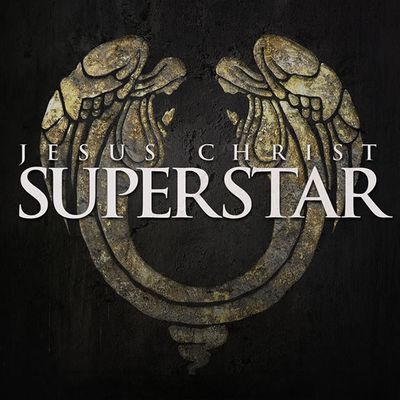
- Jesus Christ Superstar
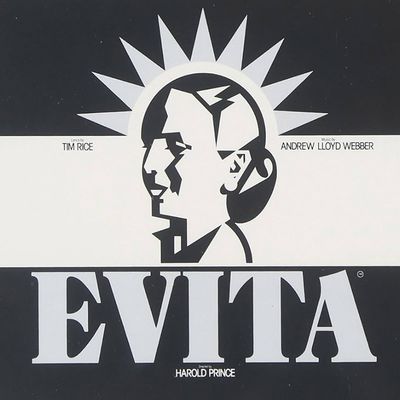
- Evita
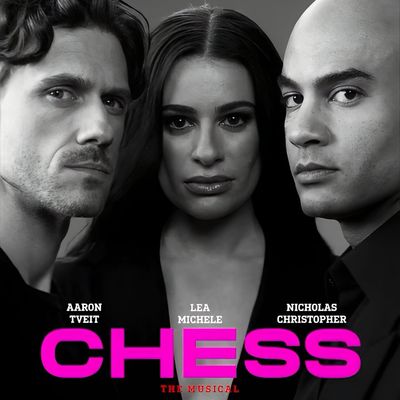
- Chess
- Lion King
- Beauty and the Beast
- Aladdin
- King David
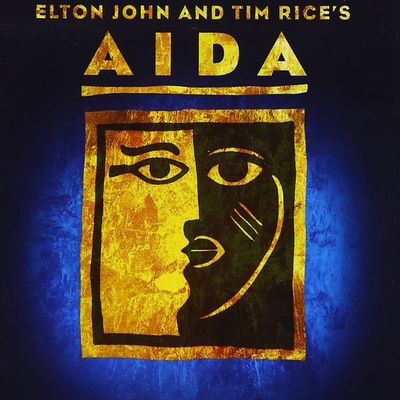
- Aida
...to name a few.
As the Winner of 3 Oscars, 4 Grammy’s, 3 Golden Globes, 3 Olivier Awards, 3 Tony Awards and 1 Emmy, our guest is one of only 15 people in the entire world – ever – to become an EGOT. And Sir Tim Rice is now a Podcaster! bpn.fm/getontomycloud. So much to chat about! Let's dive in....
Transcript
This transcript was automatically generated and might contain errors.
[0:06] Dori Berinstein: My guest today, together with his many esteemed collaborators, has created innumerable beloved smash hit shows and unforgettable songs that are forever entrenched in the musical theater canon and way beyond that. His phenomenal creations on stage and on screen continue to break box office records all over the world. I'm sure you've heard of a few. Joseph and the Amazing Technicolor Dreamcoat, Jesus Christ Superstar, Evita, Chess, The Lion King, Beauty and the Beast, Aladdin, King David, Aida, and so many more. He is the winner of three Oscars, four Grammys, three Golden Globes, three Olivier Awards, three Tony Awards, and an Emmy for the recent Jesus Christ Superstar Live in Concert production, which was so great. Our guest is one of only 15 people in the entire world ever to become an EGOT. And now he's a podcaster. Sir Tim Rice, welcome to Deep Dive Broadway.
[1:02] Tim Rice: Thank you, Dori. Thank you. I read your magnificent autobiography, Oh, What a Circus. Loved it so much, but it only took us through 1978. So I'm ecstatic you're now sharing your precious behind-the-scenes stories on your podcast, Get Onto My Cloud. What made you step into the wild world of podcasting?
[1:23] Tim Rice: Well, partly because my diary was suddenly empty as a result of the lockdown. But also a good friend of mine, um, who's a well-known cricket commentator, so obviously he doesn't get very well known in America, um, began a podcast himself, and it was rather good. And I thought I could do this. And um, he gave me a couple of links and I began doing it, and I found it quite therapeutic going back to various um episodes in my past career, some successful, some definitely not. And I'm finding things out that I didn't really know sometimes even about my own shows. So, and I think some people might be quite interested in it as well. And I'm trying not to play always obvious stuff. I talk for 20, 25 minutes, um, including two or three songs from whatever I'm talking about.
And I'm trying not to play the obvious things like, you know, "Don't Cry for Me Argentina" or stuff from The Lion King that's very well known. I'm trying to find alternate takes or bad versions of things so people can see sometimes how one got to the final stage of a certain song or a show. Um, and I recently did one on Superstar on Broadway, which was not to be brutally honest, but an art and out success, even though the work survived and has gone on to be around for half a century. But that was very interesting for me, and I found myself reminiscing a lot about Barry Denon, a wonderful performer who was on the Superstar original studio album, he was on the um Broadway show, he was in the film, he became a very good friend, and um, we managed to find his last ever performance as um Pontius Pilate, which I actually saw live in Holland um in 2017.
And that was really very moving for me to go back and remember Barry in particular, who isn't quite as well known in some areas um as you know other people who were on the superstar bandwagon, as it were. Um, but what a great talent, and what a great guy. And um, you know, it was absolutely smashing to get back into a little bit of Barry world as well as Yvonne Ellerman world and all that. It's really a treat for me, and I just hope one or two other people quite like it.
[3:45] Dori Berinstein: I thought it was so interesting in that episode uh with Yvonne Ellerman, you talked about how you created uh a new song for the production when she was in it. How did that come to be?
[3:56] Tim Rice: Well, when we did the album of Jesus Christ Superstar, we had no guarantee or even necessarily that much hope of getting it onto a stage. We were just making a really good album, what we hoped was a really good album and telling a great story in a new way. And we thought maybe it might get staged, but if it doesn't get staged, maybe somebody will like it and commission us to do something else. Um, but of course, the record took off amazingly, particularly in America, almost overnight and was a massive great hit. And although the piece as written on the album could have been staged, it wasn't quite right for one or two theatre um possibilities. And one of the problems was that Mary Magdalene, sung beautifully by Yvonne on the album, disappeared after about 30 minutes, and we thought firstly, we needed something extra in the second act between the sort of, I mean, just coming up to the fairly gruesome ending of the show.
Um, and I wanted to find something that Yvonne could sing in the second half, and um, we wrote a song, Andrew and I wrote a song called "Could We Start Again, Please," which worked really well, and as a result, that song has stayed in all the productions since, and it's been recorded many, many times. But it's the one song that wasn't on the original album, otherwise, the original album, which we recorded in the studio in 1970, is there very few changes. And one of the good things about being unknown when you're writing something is that people don't try and interfere because they don't think it'll be a hit. So we had nobody else telling us how to do it. We did it ourselves. And when we delivered the finished product, which turned out to our surprise to be a massive success on record, it was difficult for any director to say, right, I want to take out these five songs.
He couldn't really do that. So apart from a few minor tweaks, and not I mean, obviously Tom Hogan, the director didn't want to do that anyway. But we might have done something. I mean, I found this later in my career, having had a bit of success, and people then getting interested before it actually comes out because of one's, you know, name value, whatever that is. And you get far more people once you're successful telling you what to do than when you're unknown. When you're unknown, nobody cares what you're doing. When you're successful, everybody has a view. And I think Chess in particular suffered from that with too many people chipping in, assuming it was going to be a mega hit. The record did very well, but the show was, I think, slightly clobbered by having too many, you know, directors, too many producers, too many writers, too many. Everybody was suddenly being helped, and they didn't need to be.
[6:39] Dori Berinstein: Well, your career as a successful musical theatre lyricist started so early, but even before that, you had um some exciting jobs. You were a gas station attendant, I believe.
[6:55] Tim Rice: I was really happy doing that. That was a great job.
[6:55] Dori Berinstein: And you were also a management trainee at a music company, I believe.
[7:01] Tim Rice: Well, yes, it wasn't just a music company, it was EMI Records, who really at the time were the biggest company in the world, Record Company, even though they were based in London, they had the Beatles, and they had a whole host of groups and acts that and they had the Tamla Motown label in Great Britain. Um, they had the they owned the Capitol um label with the Beach Boys and Frank Sinatra and all these sort of people. They were a big, big company, and I was a humble management trainee, which is a polite way of saying office boy, and I would go in at nine o'clock every morning, clock in and wear a suit and a tie. Um, this was in the last days of the record industry being rather respectable, and you could almost have been in a lawyer's office.
But nowadays lawyers' offices are real hippie and long hair and everything. Um, and uh dressing down, and the record business, of course, is like that as well. But in my day, and I didn't get very far in EMI, I was simply a um bit of a dog's body, but I did learn about recording studios. I went to the recording studios on many occasions at Abbey Road. Um, I learned about all aspects of the business, which proved helpful. But when I left EMI um and took a gamble and a risk as I saw it with Andrew, we were we found that agent who was happy to pay us a little bit more than my EMI salary. Um, I hadn't, you know, we hadn't really achieved anything. I'd learned about the business, but we hadn't had any hits or anything like that. But it was invaluable training for the music business. But for the record business more than theatre. I wasn't not until I met Andrew that I even think of going into the theatre.
[8:40] Dori Berinstein: And you were also, you were at the time when you met him, you were a law student, right?
[8:44] Tim Rice: Yes, that was just before I joined EMI. Um, I met him and I was still a law student, and I was a very unsuccessful law student. I failed my exams uh with monotonous regularity. And it dawned on me by the time I was about 21, this may be not the career for me. I felt at 21 I was rather over the hill, and it was almost a bit too late to find something else to do. But I simultaneously met Andrew and then got into EMI. So I had two simultaneous uh career changes at once, if you like.
[9:18] Dori Berinstein: Well, you've had many different careers before that point in time, because I was reading that you were a rock star um vocalist for the Artworks as well.
[9:32] Tim Rice: Um, well, I was quite keen to be a rock star, but I never really I don't think I had enough faith in myself. I mean, I wasn't the world's greatest singer, I was quite a good, I had a certain um stage presence, I suppose, but I never got much chance to demonstrate that. I had a pop group at school, and we were always quite popular at the school dances, but there again we were the only group, so um it wasn't that difficult, and the audience were basically on our side. Um, but I, you know, auditioned for the old group here and there, and I made a demo record, which I hawked around the place, and nobody really liked the demo records particularly, but the songs that I'd written in order to show off my voice, and um, I wrote songs that A didn't have too much of a range, and B, nobody else had done before, so I couldn't be compared to other versions.
And that's why I wrote the songs, not because I particularly thought of myself as a great songwriter. And these were not great songs, but they were nice songs, and one of the songs got picked up and recorded by a group right at the middle of the beginning of the British beat boom. And um, the group never made it, perhaps because they recorded my song. But I did actually have a single 45 RPM record with my name on it. And in those days, if you had a recording released, which could only be done on a piece of plastic with a hole in the middle, that was quite an achievement. Nowadays, anybody can make a beautiful CD with 15 tracks, wonderfully packaged. And that doesn't necessarily mean it's good, but because anybody can make a CD or an album or streaming or whatever at home.
In my day, if you wanted to make a record, very few people had a large record pressing plant in their front room. And the very fact that you were on a label that was an established label meant that somebody else had liked it. So that was like quality control in a way. It wasn't a hit, but it was good enough to get recorded.
[11:39] Dori Berinstein: And all these extraordinary experiences that you had, including being a gas attendant, clearly contributed along the way.
[11:47] Tim Rice: Yeah, I learned mathematics through having to multiply complicated sums in the old English money system, four and nine but savvy times four and all that. So it all adds up for those listening who are aspiring artists, you know, whatever you're doing right now to make ends meet. Head for the gas station.
[12:04] Dori Berinstein: Head for the gas station. So now, and for decades and decades, you've been uh such an inspiration for an endless stream of creators. Who over the years have been your inspirations?
[12:18] Tim Rice: Well, I guess my inspiration came originally from rock and roll, and I probably didn't realize it at the time, but the rock and roll records I appreciated, not just for the excitement and the rhythm, but I was always intrigued by the words. And a rock and roll song with good words meant more to me than one which didn't have good words. And by good lyrics, I mean something like "Blue Suede Shoes," I think it's an absolutely brilliant lyric. Um, "Tutti Frutti," what Baba Blah Bamboo. This is it was I loved songs where the words meant as much and were as important as the music. Jerry Lieber, one of the great lyricists, and I was very inspired by early rock and roll. I mean, the Everly Brothers had some wonderfully funny records like "Wake Up Little Susie," which again could have been a um Broadway song.
Um, and it was really that coupled with my parents' LPs. Remember them, long players? My parents' LPs of all the great shows, like mainly Rogers and Hammerstein at Oklahoma, South Pacific, Carousel, King and I, and they had My Fair Lady, which is perhaps my favorite, a bit later West Side Story. And again, I just loved the words, and the words, of course, in all those shows were absolutely brilliant. And it didn't really fire me weirdly with a great ambition to see the show. I was so happy with the album. I was a bit of a vinyl junkie and just loved holding the sleeve and reading the sleeve notes time and time again and looking at the label and trying to work out what everything on the label meant.
And that was my inspiration and enthusiasm. And I certainly, when I met Andrew, who was totally um determined to become a success in the theatre, that hadn't really crossed my mind. I was sort of rather half-heartedly hoping I might by sheer luck become a pop star.
[14:10] Tim Rice: Um, but I wasn't pushing it hard enough because I didn't really think I was good enough, as Andrew had absolute conviction that he was going to make it as a musical theatre guy.
[14:19] Tim Rice: Um and I I was very lucky in a way, well, I was very lucky full stop to um meet Andrew at that time. But then again, he was quite lucky to meet me. I should say, and and that's a perfect segue. I am so yeah, the collaborations that you have had over the years, whether it's uh Andrew Lloyd Webber or Elton John, ABBA, Alan Menken, I mean that each one uh is so extraordinary, each artist. Um what for you uh was unique about those collaborations? I know you talk in your podcast about how uh Elton John was the only one where lyrics came first in your creative process, but what else was unique about the collaborations with those amazing partners?
[15:04] Tim Rice: Well, uh in a way they weren't unique because they were all so good. I mean, you could you could argue that that I mean they were I think perhaps super outstanding is is um the word I would use. But what what was interesting for me was that Elton and ABBA um hadn't really been into the musical theatre before. Um so I was kind of more experienced in musical theatre than they were. Whereas um when I joined up with Andrew, Andrew, although he hadn't had anything actually produced, he was much more educated and interested in musical theatre. And I was interested in it, but just didn't know much about it. But in a way, I think had I been like Andrew, and I'm coming back to the ABBA Elton thing, um, had I been like Andrew back in 1965 and had and known just as much about musical theatre as he did, I think we would have been much more conventional.
Because what I I I brought ignorance to the um table, which was very helpful. I I didn't really know the rules. And the first show we did followed all the rules, the likes of us, and it and it didn't really quite work, although it showed us we could work together. Once we went off in a slightly different direction and did did did shows that were not conventional, like Joseph and particularly Superstar, then I think we found our own path and we had success. And I think working with Elton and with Bjorn and Benny in particular, because Alan was an established theatre, brilliant composer, but he was already established in that field and he knew all about it. Elton and the ABBA boys weren't really hampered by feeling they've got to be a bit like Richard Rogers or a bit like someone else, or they've got to follow in this this path.
Um so I think that was what was interesting about working with those guys. And of course, Elton and Bjorn Benny write the most wonderful tunes, and I think you've got to have good tunes in a show. It helps. A story is the most important thing. You've got a good story, that's number one. But very close behind is is having some good tunes. Ideally, you want both.
[17:09] Tim Rice: And you have uh endlessly. Um so uh you talk a little bit in your podcast about uh that you've seen productions of your work around the world. Uh, is there a favorite production or unique take on on your work uh anywhere in the world for any of your shows that that you'd like to talk about?
[17:31] Tim Rice: Well, that's tricky. I've seen quite a lot in lots of different countries. Um, and of course, if I'm watching it in a in a non-English speaking territory, I don't really understand a word of what's going on. But I quite like that because it A, you don't have to worry about will they get the words right? And B, because you wouldn't know if they didn't. And and and B, it often makes gives me a chance to listen to the music without any distraction. So I've seen productions of of um Lion King, say, in many different languages. For example, in in Korea or Japan. And it's quite nice just to sit back and listen to the wonderful music that Elton wrote for that, you know, and and it's and it's not as it were, um, I don't have to worry about whether I whether I was happy with that line or not.
Um, but uh Superstar, which one of the best superstars I ever saw was was an Australian tour in 1992, which um was a was a big arena tour. It was like a big rock show, and it was very exciting, and I hadn't seen Superstar done that big before. I'd seen it at the um Universal Amphitheatre outside, and that was great. But this was like 20,000 people, and it was touring Australia as if it was a big rock band, and they did the show so well. They had very big Australian stars in it, but and and but I didn't, to be quite honest, I didn't know their work that well, but they were all so good. Um, and that was that was a version that that particularly struck with me. Very recently in Regents Park in London, the open air theatre, there was a wonderful version of Superstar which um matched anything um before.
And it's interesting that both the Australian one I loved and the one I saw in Regents Park in London last year, it was it was it was done two years running. They were really almost more like concerts, very dramatic. They had all the, you know, they looked great, they had the drama, but just as rock music has become more theatrical, it's quite nice to see a piece like Superstar, which drew on concert tradition as much as on theatre tradition. And as both the arenas and um Regents Park were in essence outside, they weren't in a conventional Proscinium Ars uh arch theatre. Um I think that that for that particular work it works well. Um one of the best productions of Chess I saw was in a tiny little theatre in um in Southwark, and uh it was done by a comparatively unknown theatre company, very good one, and it that kind of just worked because you were right in the middle of the intimate story.
Because Chess is is really, I mean, the the basis of the game of chess is two guys very close together on a board, and there was a there were two separate love stories going on, and it kind of worked much better than it than it did on on on the bigger stage. But I've seen big versions of Chess that have worked, but a lot of them don't quite work. But this this little one in Southwark worked beautifully. So I mean I can I could rabbit on forever about shows I've I've enjoyed seeing the ones that I haven't.
[20:37] Tim Rice: And when you're in the beginning process of of creating uh a new show, whether it's an original idea or a collaborator suggests it, what is it that that attracts you? What is it that that says to you this has to be a musical, and I'm going to dedicate the next 20 years of my life to this this production? Um what pulls you in?
[20:59] Tim Rice: Well, as I've often said, and I think I even said to you a little while ago, the story is the thing that matters. It's got to be a good story. You've you you've got to have a a a tale to tell. And um if you I mean, we didn't really realize at the time, but um we wanted to do Superstar, for example, then it was a cracking good story. I mean, we knew it was a good story, but it was such a good story that it was because and such a good idea. I feel if we'd written exactly the same quality material, words and music about something else, you know, Lord Nelson or whatever, it wouldn't have been as good. You know, it was the fact that people immediately, even if they were remotely if they were totally irreligious, if they disapproved of Christianity, if they love Christianity, whatever, it it everybody had a view on it, and they wanted to see what we what we were going to say about it.
This didn't cross our minds until it was a hit. We thought, oh, that's probably one of the reasons. And Eva Perón was a story um which I I was aware of Eva in my uh childhood when I collected stamps, because she was on the Argentine stamps, which was slightly unusual to have somebody other than our own dear Queen on any stamps. It was usually some historical figure or whatever, um, and usually a bloke. But so I remembered her from my childhood, and when I heard a radio programme by chance about her, I thought this is a good story. And we were looking at the time for something to follow Superstar with, and Superstar was a tough act to follow, and everybody thought we were one hit wonders. I thought we were one hit wonders.
So um Eva Perón was a lucky break. And looking back on the reason I've I've gone for some shows is that it's usually been something for my childhood. I mean, obviously I went to you know, fairly religious schools as a kid in the 50s and sixties, and and the Pontius Pilate, Judas Iscariot characters, you know, were just as much intrigued to me as as as Jesus and the disciples. I mean, I I I had the Bible stories rammed into me, which I didn't mind. I mean I they they were good stories. Um and Eva Perón from my stamps and Joseph was my favorite Bible story when I was very young. So in a way everything I did when I was grown up was based on things that happened to me in my childhood. And I played a bit of chess in my in my in my childhood as well. Um I don't think I went to a Lion King um you know went to the zoo particularly often but uh um that was that that was a clearly a good story again, but not my idea but a good one.
[23:28] Tim Rice: And now I heard you were working on an ec uh an epic new musical uh on Machiavelli which Well I've been working I've been saying I've been working on this for a while and I have been I'm not sure if I'll ever get it off the ground um so it's a good story. I mean if I were 30 I think I would say yes in about five years time it'll it'll happen or it won't. I mean it or it'll either happen or it'll it'll try to happen and flop. And I think I ought to get I mean I can see a book on Machiavelli just over there on my shelf. Um it it is a good story. He's a very intriguing character. Um I bought The Prince which was his his great work which never got published in his lifetime weirdly and then got banned and um I bought that book in a paperback when I was still a law student in nineteen sixty three and I was very intrigued by um the character of Machiavelli.
Um and it was always something you know I guess for 50 years I've had that thought maybe that would make a good if maybe might make a good show. Back in 63 I didn't know what I was going to do with my life but I thought if I if I ever became a writer or wrote a book or wrote a play or wrote a musical I guess or even a song, Machiavelli would be a good topic and I still haven't got around to it. I mean I've done a lot of work on it so I'm I could I could go on a quiz show and answer questions on Machiavelli.
[24:54] Tim Rice: Cannot wait uh I hope that happens you might have to I am I am going to be true to my word as as torturous as this is for me because I have an another three weeks of questions for you. I'll return.
[25:08] Dori Berinstein: Okay I'm I'm going to have a different shirt.
[25:12] Tim Rice: Okay we're definitely going to do that. In the meantime for everybody who is listening to this podcast get onto my cloud the most extraordinary podcast um a deep dives into all of these amazing shows and uh uh the life of um Sir Tim Rice you can't you have you're not going to be you just block out time you will have you'll do them all in one sitting and also because this was um very important to me uh oh what a circus um is a book that you you need to run out and get right away uh but distressingly it only it only goes until 1978 so I'm waiting for I I've sort of begun that I mean it's quite funny because when it came out in England in 1999 I think um and it came out in England and Australia and and and did okay it wasn't you know number one bestseller but it certainly paid its way and um I said what about putting out an America and I went to see some agent in America and he said well I don't think people know, you know, not know enough about you.
And at the time I had four shows on Broadway. And I remember saying, how many more shows do I need to have running right now to to get? But they weren't interested. I mean, I thought, well, fair enough. Um I I just couldn't be bothered, I'm afraid, to go around endless agents and say, how about this book? Um, because I thought what real fans who know about me can order it anyway, and they can get it from England or whatever. Um, in fact, my daughter wrote a novel, which was a big seller in England about 10 years ago, and that came out in America and did much better than my book. So I was very pleased about that.
[26:50] Tim Rice: Time for a re-release, I think.
[26:52] Dori Berinstein: I think a re-release.
[26:54] Tim Rice: Well, I'm hoping when I do volume two, which I really am working on at the moment, um, and the podcasts are a very good way of getting getting myself into that um mode. When I do volume two, I think I will try and get in America anyway, volume one re-repushed.
[27:12] Dori Berinstein: Oh please. Uh I would appreciate that so much. And also, if you listen to the first episode, you know you will know a great deal about uh uh Tim Rice's mantle. And I hope in future podcasts we'll get to know uh other amazing parts of your home.
[27:27] Tim Rice: Um the airing covered and uh exactly.
[27:33] Dori Berinstein: Thank you so much for joining uh and and welcome to the Broadway Podcast Network. So excited and honored to have you.
[27:41] Tim Rice: I'm very I'm very much looking forward to that. It's very glad.
[27:48] Dori Berinstein: Thank you all for joining us for this very special Deep Dive Broadway with Sir Tim Rice. You can find Tim's new podcast, get onto my cloud at bpn.fm forward slash get onto my cloud. Or you can find the podcast on the BPN app or anywhere podcasts are available. You can also race to get Sir Tim's book, Oh, What a Circus. You won't be able to put it down. Look forward to seeing you next time.
© Broadway Podcast Network, All Rights Reserved