

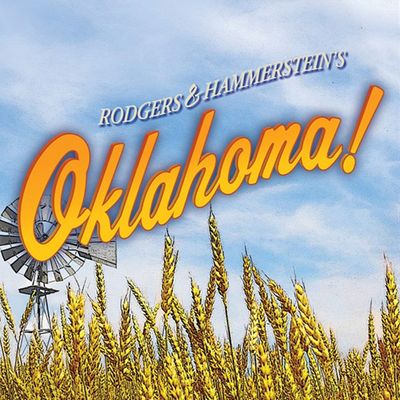
Part 2 of the deep dive behind-the-curtain of the 2019 Tony-winning revival of Rodgers & Hammerstein's OKLAHOMA with extraordinary artists from the show including: Director Daniel Fish, star Mary Testa (Aunt Eller), star James Davis (Will Parker), Music Director Nathan Cosci and Producer Eva Price... Read More
From the show: Deep Dive Broadway
Guests

Featured Shows
About
Part 2 of the deep dive behind-the-curtain of the 2019 Tony-winning revival of Rodgers & Hammerstein's OKLAHOMA with extraordinary artists from the show including: Director Daniel Fish, star Mary Testa (Aunt Eller), star James Davis (Will Parker), Music Director Nathan Cosci and Producer Eva Price. DEEP DIVE BROADWAY explores how this classic musical was entirely re-imagined for a contemporary world without changing one word of dialogue. Oh what a beautiful podcast!
Connect with Dori
Transcript
This transcript was automatically generated and might contain errors.
[0:07] Dori Berinstein: Welcome back. So much more coming up on the creation of the Tony-winning revival of Rodgers and Hammerstein's Oklahoma.
[0:17] Dori Berinstein: Well, I'm curious to know a little bit to deviate for a second about the marketing because, you know, it's a very stark production. You've really peeled it back, and the marketing is so beautiful and lush and elegant and inviting in a kind of traditional way, but obviously all the acclaim you've gotten, you know, you're drawn into it for that reason. Was there an interesting evolution to get to the campaign that you landed on?
[0:48] Eva Price: Yeah, I mean, what we always wanted to do in the campaign was to make sure that people knew that it was the show that they always knew and that they loved and that they grew up in and that they wanted to experience because no one goes to see a musical to be turned off, right? They go to be let in. But we kept a lot missing from the artwork. You know, you don't often see full stage pictures because our show is in the round and there's a lot of audience seen in every angle, and we wanted to keep a sense of mystery. Sort of both within the darkness, there is light, right? You know, even in that final encore of Oklahoma, everyone's going through their own experience because real life is just set in and the future is either bleak or bright or hopeful or neither or angry or unknown.
And we've wanted all of those emotions to also exist within the campaign. So we've created sort of a hyper-realized sophistication, which is one way to say that there's something bigger and different going on, as well as a sparseness, which is why you often see a bright light and you see darkness and you see a connection between our leading lady and our leading man because there is both a romance and sex appeal that is very vibrant in the show, and there is a lot of romance and sex appeal and mystery and darkness as well. So those were sort of the inspiring ideas for the campaign that exists.
[2:30] Dori Berinstein: It's beautiful, it's a beautiful campaign.
[2:33] Dori Berinstein: And I'm curious, speaking of lightness and what you said a few moments ago, the fact that you guys are performing, except for a moment of when everything goes dark, you're performing with all the lights on, and you are performing in a 360 space. It's such a vulnerable experience, I would imagine, as actors, but you tell me, you are so exposed, and it's a different experience, I would think.
[3:02] James Davis: Um, yeah, take it, Jimmy.
[3:05] James Davis: I'm thinking about it. Yeah, we were at another interview over at Google, and somebody asked a question like what happens when what's the first thing that happens when the curtain goes up? It's like, well, there's no curtain, there's no blackout. We all walk on stage with the lights up and they don't change as we start the show. And we also, the cast sits on stage for a lot of the beginning of the piece. We have this idea that, you know, the first act is a lot of solos, it's a lot of duets between people, and we say, like, batter's up, it's your turn, you know, the first person has their song, I do "Kansas City," Allie does "Can't Say No," and it's and the rest of the cast is sitting, so it's like one person on stage surrounded by 600 people plus their castmates sitting, and it's up to you to live in that moment and deliver.
And it's every night it's unnerving. You're up there alone, you don't feel like you have any support, you feel like you're being watched. And so you kind of, and you need to sort of take the audience in, but you also need to push them out to do your job a little bit. I've never been comfortable doing it on stage. Never. And Allie is the same way. We've talked about it. Like we always get really nervous right before we have to do our solo act. I've never felt comfortable in that way. The group stuff is I'm not uncomfortable. I just, I'm so old and bitter. I just cannot take people sometimes. People don't, when they're wrapped and into it, I've said this a million times, it's really wonderful, but people just eat and make noise and pull their phone out, and it makes me insane, and it's very difficult to focus sometimes when somebody right near you is chewing or opening a packet. It's dead quiet, and somebody's I keep hitting this thing, and somebody's opening it, and it's like, do you hear that you are making noise in a very silent room?
[5:23] James Davis: And I think we were talking about how it's a particular issue in this show because the audience doesn't quite know how to behave.
[5:30] Eva Price: Yeah.
[5:31] James Davis: They think, I think they think it's more of a casual experience because the lights are up and there's no division. It makes me crazy. It's like you wouldn't go to a dinner party and do that. You would like, you know, I know, like behave everybody.
[5:46] Eva Price: No, I know.
[5:47] James Davis: We had to change, we changed our announcement actually, which is a little tougher and a little, it's not rude, but it's like two announcements now, but I just to reflect on your question, you know, something I know about my work and particularly in this show is that, you know, everything I'm doing is entirely dependent on the preparedness and the vulnerability and the presence of those people, the actors on stage. And they have to be that way every night, and they have to go out there in a sense not knowing how the evening's gonna end, knowing that someone's gonna die and someone else is gonna pull the trigger, and anyone could be one of those people. And they have to be able to bear themselves and be naked. And it's, you know, it's interesting to hear the two of you talk about you have very different experiences.
[6:46] Eva Price: No, I have, and that's not the only experience I have, but you know, that is just one of the things that sticks in my craw, and I always talk about it in every interview there is. You know what I have learned though, and this, well, I can't, I keep hitting this thing. Sorry. This is a very specific thing that I've learned doing this show, and it's almost hard to articulate. But I have learned as a performer, I always thought that whatever I was doing was interesting. And I realized doing the show, that's not the case. And I think it's a wonderful lesson to learn because it's not always interesting. Sometimes it's just where you need to go. You need to get from point A to point B, and maybe that little journey is really not that interesting to the audience. And I think it's a really wonderful lesson that I've learned.
[7:43] James Davis: And you think when they think it's not interesting, they unwrap the candy.
[7:46] Eva Price: No, no, that has nothing to do with that. It is a lesson that I've been trying to like wrap my brain around lately, and I'm just putting it on the table here because why not? But it's kind of fascinating to me. This environment, this show, with the lights on and with the audience just constantly sort of being right there. I mean, they always are in every show, but when they're in the dark, somehow it's a different story.
[8:14] Dori Berinstein: I find it fascinating. I was talking to John Hagenbotham about, uh, about who's the choreographer of the show, and he said whenever he sees the show, he's always amazed how unaware the front row audience who are at tables how unaware they are that they are so in the show. They don't, it's he's watching them not realize how present they are and how seen they are, which I found kind of a fascinating observation.
[8:44] Eva Price: It is because if you don't think you're seen, then you can behave however you want.
[8:50] James Davis: Which is, you in most theater, you are so anonymous, you're so, you're all facing forward, you're not facing other audiences.
[9:00] Eva Price: They're not delusional, you know you're in your bathroom with 650 other people.
[9:01] James Davis: I mean, no, I know, but I was watching a show from a balcony, and you really like, it's funny that you know, in a normal Broadway house being in the second or third balcony, you actually forget about the whole audience, and you're like, oh, this relationship's is between me and that stage, which I can see very clearly.
[9:18] Eva Price: But aren't you still cognizant of the person sitting next to you?
[9:21] James Davis: If they're making noise, not wanting to disturb the person.
[9:23] Eva Price: If they're making noise and they're eating, yeah.
[9:26] James Davis: So I think when you get wrapped into a story and wrapped into and you lose yourself to what's happening on stage, you do forget your presence, how you're visible, what you're doing. I mean, I do the same thing. I watch the people at the tables whenever I'm there, and it's amazing that they don't realize that at least 550 people, including the cast, can see their faces.
[9:50] Eva Price: And body language.
[9:52] James Davis: Take an entirely different, please, and positive spin on it. I'm gonna say that people have heard that this show is so spectacular that, and there are people, perhaps some of them, that have never been to a Broadway show. And it's like, you need to see this, and they don't know theater etiquette, and maybe they are used to going to movies and having their popcorn or whatever else. So this is not, they're not being rude necessarily, they just don't know theater etiquette, and hurrah that they're there.
[10:26] Eva Price: And we can see them.
[10:27] James Davis: I think it's also, it's a very quiet show, too. I mean, I think that is a big part of it. And I think a lot of musicals are as quiet. Yeah, plenty of shows. There's a lot of moments where you could unwrap a whole packet of Nicolas and no one's. And no one would hear that because they're so amplified, and we are not that way.
[10:42] Eva Price: Yeah.
[10:43] Dori Berinstein: Well, I think it's so fascinating because the lights are on the whole time that when the lights go out during "Poor Judd Is Dead," it's such a transformative moment. It's really powerful because you've been in such bright light the whole time. What was the inspiration for that moment?
[11:05] Daniel Fish: Um, you know, contrast equals interest. And the idea that all the smoke, I mean, the smokehouse is kind of the one, if you're thinking about the locations that the show happens in, and ours really just happens in a single location, but it is the one place in the script where it goes someplace else, and you know, and it's described, you know, as a kind of dark place. I don't know if does she say it's dark? You ever go down to that old smokehouse where he's at? Well, it's so descriptive. I don't know. I just thought, well, what if we turn on all the lights? You know, sometimes I don't, you know, you don't kind of know why you're doing something until you do it. At least that's the way I work. I don't, it's I sort of, it's the reverse.
It's not like, oh, there's an idea, how do I express the idea? It's like there's just the idea, and then you sit with it and you try it, and then it starts to talk back to you and it starts to tell you things. And you know, if that resonates and continues to resonate, then I think it's probably a good idea. I always think of Shakespeare in that moment when you're staging Shakespeare, how some people stage Shakespeare, where something can be so descriptive, the forest can be so descriptive. You can talk on and on about the light and the trees and the letters tacked to the trees. And if you're describing it so beautifully, then you don't, it's redundant to see it, to see the trees, to see the letters, to see the grass, to see the sky.
And I stand on stage in the dark with them with the camera, so I listen to it every night. And it's part, it's the only scene where there's so much description of what the interior of the smokehouse looks like, with like pornographic pictures on the wall, and oh I see you have a rope there, and you could hang yourself on that beam, like right above the smokehouse.
[12:56] Eva Price: And if they're saying all of that, then you don't need to see all of it, you know.
[13:02] Dori Berinstein: Oh, absolutely. Well, it's a very powerful moment. I had a friend who saw it, she was like, I loved it, but what's with all the darkness? I said, Why? And she's, I, she said, I just was so uncomfortable. And I said, Well, good. Good. That's the point.
[13:19] James Davis: The audience thing too is so, it's very disorienting, I think.
[13:23] Eva Price: Yeah, and I think that's part of what makes it good. And I think that makes it difficult for us at times on stage because people do, people don't know how to act because there's not a lot of the usual markers where, except where we come on and say, Hey, everybody, turn your cell phones off. No, no, really, please turn them off. Yeah, no, seriously.
[13:41] James Davis: Yeah, but you know, a lot of the usual trappings aren't there, and I think it's really, I mean, it makes them such a part of it, which can be challenging, but I think it is part of what makes people freak out for better and for worse.
[13:53] Eva Price: Yeah, it's, you know, it's so much fun to listen to people in the autograph line because what they say is really interesting. And a woman was there the other night who said, I'm from Oklahoma, I hate this show. And now I love this show. And so, you know, there are people that do, and then there are people that walk out, so it's really interesting, a dichotomy of how people absorb things and what they see and how they feel about it, you know.
[14:20] Dori Berinstein: Well, and for those people who were expecting the traditional Oklahoma, it is gonna be a little surprising. And to that end, could you just speak for a little bit about the Dream Ballet and how that evolved, maybe from the BARD production, the original one?
[14:37] Daniel Fish: I think it's probably the thing that has evolved and changed the most in all the productions. Um, it's been in many ways the hardest thing to get right. I think where it is now is really great. Uh, you know, when we started with the student production, there was a sort of insane, it ended the first, first of all, the dream ballet typically ends the first act of Oklahoma, and we moved it to the beginning of the second act, which we did at Bart in 2015. Um, the first student production, there was like a crazy long dream ballet that had like, you know, it was kind of like a little corny and like teenage basement like sex party, and like it was all this stuff. I think Judd put the gun in Curly's mouth, and there was a camera on the end of a gun. So it was like he was like giving in head with the gun and all this stuff. And there was a sleeping bag moment, and so and then and that didn't seem right.
[15:37] Daniel Fish: Yeah, it was exactly it's college. It was like it was a bunch of 20-year-olds, like, this is what we should do. Um, that did not seem like it would be good with older people, and although I think we tried some of that stuff, and then um, there was very little Dream Ballet in 2015. It was really just the kind of the mus a version of the music that you currently hear, which was to try to, you know, take each song that we've heard and give a kind of highly amplified electronic cover of it um that suggested a sort of, you know, a kind of subconscious version of each song. Um, and Ted Chapin at the time said to me, said, you know, I really think it's important that there be a dream ballet. Um, and we um, we did a number of workshops, John Hickenbotham, myself and some of his dancers.
We did a couple of workshops like three, four or five days at St. Anne's, um, trying to figure out what that would be. You know, and I think I had been very resistant to the idea of like a ballet. I'm in awe of the DeMille in the film, I think is brilliant.
[16:43] Daniel Fish: Um, and at some point I just said, well maybe that we should just have dancers. I should stop so we should like actually see what it would be like to actually have a dance. So we did that. Um, and we began to find the vocabulary that led to the dream ballet, and then we s and then we began looking for a lead dancer, and Gabby Hamilton came in and just you know, kind of changed everything. Um, and John and her would sort of made it in I mean it's John's choreography, but it's like everything in the show, it's so dependent and made on these individuals. Um, who they are is absolutely a part of everything they're doing. Um, and so they really evolved out of Gabby and who she is and her presence and how she moves.
[17:32] Daniel Fish: Um, and um, it was a lot of trial and error. Um, and um, I think it's better on Broadway than it was at St. Anne's. It brought more video into it. There's more video. There's it's kind of um, it's hard to describe. I don't know why it is, but it's a clear story. It's it feels you know, it just it feels better. And you know, one of the jobs I think of the Dream Ballet production is to start the second act and decide and a lot of people are you know really confused by it. Um, you know, there are people who are totally on board with it and love it, often younger people, but not always. I mean, I think it's the audiences are very unpredictable, and you can't kind of assign it to an age or anything to you. I'm always surprised by you know, the 80-year-old white woman who comes in is knocked away by the dream.
[18:23] Daniel Fish: That's true. It's true. But um, I do think it has a job in its production, which is to totally change the rules of the show at the top of the second act and say everybody, okay. The thing that the way you've been experiencing the event until this moment is gonna change, and you all gotta change with it, um, because it's going down a different place, it's going to a different place. We call it a palette prepper in our marketing meetings. Like not a palette cleanser, but a palette prepper to let everyone know that the rest of the act is just different.
[18:53] Daniel Fish: Well, there's so many things about this production that that's different. And you set a bar, you know, across the board in so many ways in terms of how this show is presented. Um, I can't imagine, you know, anyone coming in with a revival who isn't gonna stop and think, oh my gosh, you know, this is how am I ever gonna do what these guys have done? Um, but there are other firsts and other amazing things that Oklahoma, this Oklahoma has done with um Allie, and and I know that you went to great lengths to make that seamless and to make um, you know to make uh the wheelchair disappear and there's there it's a non-issue.
[19:35] Eva Price: Totally.
[19:36] Eva Price: Yeah. I mean, it you know, when we went to cast Ellie Stroker, it was about finding the best person for the role, and she's sexy and powerful and brilliant and hilarious, and all the things you want in in Ado Annie in Daniel Fish's Oklahoma, right? Um, and uh, and I think Jimmy and Allie's romance and and love is palpable and brilliant and beautiful and hilarious, and um I you know I can't think of I can't think of a hotter couple on Broadway.
[20:10] James Davis: Totally.
[20:10] James Davis: Well it comes through just like you, you know, you've been out in the world, but you know, there's no one like uh Ado Annie. That's you know, it's very powerful love.
[20:19] Eva Price: Yeah, that's fun.
[20:20] Eva Price: So fun to do with her.
[20:22] James Davis: Yeah.
[20:23] James Davis: Um in for all different ways.
[20:26] Eva Price: I know the audience you talked a little bit about how there are sometimes a few people are are taking out candy, but I in my experience and the people that I know who've seen it, um, they're so completely swept away. And and um, you know, I think the storytelling, the um the uh basically the how this the vision for this is so different than anything else is so it's so provocative and it does make you see this show in a brand new light.
[20:53] Daniel Fish: Um, are there things for any of you that surprised you that surprised you for your own experience in working on this show, in you know, at the stage doors or a moment for you that just was so you know, made you stop?
[21:09] Mary Testa: My dad.
[21:11] Mary Testa: I couldn't believe my dad loved this show. I remember when you talk about watching people from across the aisle uh whose face you cannot read. I was mortified watching him for two hours and 45 minutes because I was certain I avoided him intermission. I was certain he was hating it, and he had the uh the ear listening assisted devices on, and he had this look on his face the whole time where his face was scrunched up, and I met him after I went around down front and uh and I just looked at him and he started weeping and hugged me and said, honey, I can't believe it. I can't believe it's this good. I can't believe you brought this to Broadway. I mean, it was like a beautiful moment, and this is you know, my parents are who took me to the classic American musicals at the barn in New Hampshire from age six on.
[22:12] Mary Testa: And you know, I thank them for my love of musical theater. But to have my my mom and dad at that same performance together, both loving it. I knew my mom would because she's um pretty hip, but I didn't know my dad would. And uh, and it was that was a big surprise for me personally.
[22:32] Eva Price: I had an experience I've had more family, extended family that I haven't seen in years, for not their fault, but you know, that I've seen in a long time. But I have some aunts and uncles from the Midwest and from Indiana and Tennessee, who are fairly, to my knowledge, conservative, and things in the past. I've always kind of they've wanted to support, and I'm like, oh, okay, this is me. I don't know if this is really for you, I don't know if you're gonna like this. Um, but my my aunt came a couple months ago and I was like, okay, so you know, kind of assuming on some level, this is a weird, maybe left, maybe it's left-leaning, maybe this is gonna offend you on some level.
[22:57] Eva Price: And I was like, um, I was like, oh, do you want me to tell you where the gunshots are? Sometimes I've had musician friends come who get angry that I didn't tell them there was gonna be a loud gunshot. So I always offer to like, I can take the surprise away and tell you when there's gonna be loud shots. And my aunt was like, I live across the street from a gun range. Like, what are you talking about? And I was like, oh, you know, just this surprise of like, oh, assuming that it's that it's only interesting to a progressive or left-leaning or liberal person, is really, I think it does. And and she really loved it, and it's kind of beautiful that she loved different things, and the things that I think are a little bit uncomfortable or a little bit like commenting on something, she's like, no, that's how it is.
[23:47] James Davis: Yeah, you know, she I don't think she was clapping along at the end, but I don't think she was feeling sorry for Judd either. She was like, Yep, that's how it goes. And I and I'm putting words in her mouth, but there's something that I was I don't know, at least open my eyes of like, oh, my discomforts and my the things that are challenging for me in the show are, you know, some people are live with guns all you know. She's like, I have my concealed carry permit. I'm like, wow, and okay.
[24:13] James Davis: I'm both terrified, and I guess if anybody should have a gun, you're a pretty boss lady, like, all right, I'll I'd follow you in a fire. So uh I think that kind of thing. Again, where you're like, oh, this is someone thinks this is weird, and that person's like, no, I didn't think that was weird. Why'd the boots fall? That's the that's my you know, the thing people focus on are different as a number of people in the house.
[24:35] Eva Price: So same with kids.
[24:36] Eva Price: I feel like sometimes I'll see young young people in the front rows, and I'll be like, oh my gosh, what's what's gonna happen to this eight-year-old when something violent happens on stage? And they're just like if anything, they look bored. They're like, okay, what's gonna happen next? You know, it's just like the things you assume are gonna be impacting people are always different than what they are.
[24:58] Mary Testa: I just think it's been so challenging, and um I was talking about feeling uncomfortable and and um we use the word being vulnerable, but I actually love that. I really do because I think I've been in other shows before where there is a separation of an audience and the performers, and my mind starts to check out. You know, I go up on lines, you start you start doing things, you know, on automatic pilot or by road. And with this, I because I'm moving through so many people's discomfort, and I feel so uncomfortable, it's it makes it super present.
[25:36] Mary Testa: And I never thought I would be in a long-running show where I remained, I was demanded to be present every night. Um, and so that's great. And I I can never tell what people are thinking, um, but I love doing something that makes people think, and a lot of people don't know how to respond to you after the show, and you think that they don't they don't have much to say, and then they come back to you three, four days later, a week later, and they say, I just need a time to process what I just saw. But I absolutely loved it, and here are all these my thoughts, and I'm seeing it again. And I I'm always I'm always surprised by that.
[26:16] James Davis: Uh yeah, briefly, I we were doing a performance, it was early at St. Anne's, and uh it was about the show was about to start. I noticed that there were I think six or seven, eleven-year-old girls uh sitting at the in the front row. They were there for a birthday party, and I think some were even younger, and I thought, oh my god, we have to tell them what's gonna happen about the blood and violence. And I made like art, you know, I was just I was very nervous about the entire show. Um and uh it ended and I and I looked over at them and uh and they were all balling.
[26:48] James Davis: Oh wow.
[26:49] James Davis: Just bawling. And then I went and spoke to them, and they and they were, you know, just the full range of emotions, you know, upset, ecstatic. They wanted to talk to Gabby, the dancer about the ballet, they were all dancers, and I just it was yeah, it was a surprising and kind of wonderful moment for me.
[27:08] Eva Price: Um, as I said before, uh I uh I'm learning things about myself as an actor, and I think the surprising thing for me in this show is the emotions that come up sometimes that are unchecked. But also um I'm I'm not surprised, but I'm very grateful that I feel this, and I've said this before that the show's made me a better actor because I really uh listen to everything, and um and it's a fantastic, I don't want to use the word journey because that's so like annoying, but it's a fantastic trip that we go on every night.
[27:45] Eva Price: Um, everything, even when I get annoyed with audience, all of that has propelled me into a different territory from what I do, and it's the kind of work I love to do. And I'm surprised and delighted and very grateful for all of that.
[28:02] Mary Testa: And I'm so grateful to all of you for talking with me today. Uh love your show. Um I am craving cornbread very seriously right now. I've got to go do something about that. But thank you all and thank in everyone. Please go right now. Go to Circle and the Square, get your tickets. Don't just go and see this magnificent, beautiful show.
[28:28] Mary Testa: You will call and thank me.
[28:30] Eva Price: Thank you, Dori.
[28:31] James Davis: Thanks for having us.
[28:32] Daniel Fish: Thanks, Dori.
[28:32] Eva Price: Thank you.
[28:33] All: Thank you so much for listening to Deep Dive Broadway in today's immersion in the 2019 Tony Winning Revival of Oklahoma. You can find me on Instagram at Dori.berenstein or at bpn.fm forward slash deep dive broadway. Join us next episode for a deep dive into the creation of Beetlejuice.
© Broadway Podcast Network, All Rights Reserved