

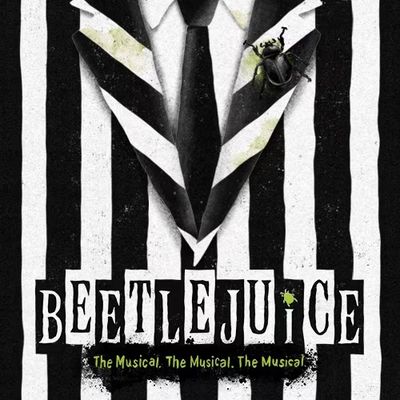
Part 1: How did the Broadway hit BEETLEJUICE come to life? DEEP DIVE BROADWAY goes back in time with Tony-winning Director Alex Timbers, Warner Bros. Theatre Ventures EVP Mark Kaufman and Beetlejuice himself, Alex Brightman, to explore the creative evolution of this hauntingly fun, mischievous and inventive theatre adaptation... Read More
From the show: Deep Dive Broadway
Guests

Featured Shows
About
Part 1: How did the Broadway hit BEETLEJUICE come to life? DEEP DIVE BROADWAY goes back in time with Tony-winning Director Alex Timbers, Warner Bros. Theatre Ventures EVP Mark Kaufman and Beetlejuice himself, Alex Brightman, to explore the creative evolution of this hauntingly fun, mischievous and inventive theatre adaptation.
Connect with Dori
Transcript
This transcript was automatically generated and might contain errors.
[0:07] Dori Berinstein: Hi, this is Dori Berinstein. Welcome to Deep Dive Broadway. I'm truly thrilled to welcome three incredible gentlemen from the underworld of Beetlejuice. I adore and admire each one tremendously. Mark Kaufman, Executive Vice President of Warner Brothers Theater Ventures. He has been responsible for such shows as The Curious Incident of The Dog in the Night Time, Hairspray, Elf, Charlie in the Chocolate Factory. Alex Timbers, two-time Tony nominated writer and director. He's represented on Broadway right now with two other shows. So three total, which is incredible. David Byrne's Masterful American Utopia and the monster hit Moulin Rouge. And finally, joining us is star extraordinaire Alex Brightman, two-time Tony nominated best actor who recently starred in School of Rock, who is Beetlejuice. Let's dive in.
[1:04] Dori Berinstein: Welcome. I am so excited to be talking with you about Beetlejuice, which is basically the soundtrack of my home. I'm not kidding. My son is beyond obsessed with the show.
[1:24] Mark Kaufman: How old is your son?
[1:25] Dori Berinstein: He's in college.
[1:26] Mark Kaufman: That's right.
[1:28] Dori Berinstein: He loves it and is doing his best to promote the show to the world.
[1:32] Mark Kaufman: Um street team.
[1:35] Dori Berinstein: Totally on the street team. It's captured him on every level, you know, your performance, your direction, your original vision, and just the incredible world that you're transported to. And so just my own passion for it, but also his love for it is very, very infectious. And so it's an honor to be talking to you guys today about your incredible show.
[2:01] Mark Kaufman: So super nice. Wait, name, what's his name?
[2:03] Dori Berinstein: Noah.
[2:03] Mark Kaufman: Can Noah, thank you for listening to the album and liking the show.
[2:08] Dori Berinstein: Loving the show. Oh sorry. We'll cut that out.
[2:13] Dori Berinstein: So what I'd love to do is just to get a real deep sense of your creative process and how you came to create this magnificent show. So Mark, day one. What happened?
[2:25] Mark Kaufman: Day one. Wow, that was uh that's how we're starting to do that. It's a reflex. There we go. You know, to be completely frank, I inherited Beetlejuice. Day one was hey, we're producing Beetlejuice. Do you want to continue? Yes. And Alex Timbers is directing it.
[2:41] Dori Berinstein: Oh my god.
[2:45] Mark Kaufman: I've never met Alex and I was a big fan of Bloody Bloody Andrew Jackson. And did you even know this?
[2:52] Alex Timbers: I didn't know that.
[2:53] Mark Kaufman: Because we had never had a meeting until I started working at Warner Bros. And then so Alex we met at a restaurant and we had an what I thought was amazing conversation, although I don't remember it because I was too in awe of being like, Oh my god, I'm sitting with Alex Timbers. And one thing that stayed with me, which I will I talk about it all the time, is he pitched the set having the production and the set having an arc like a character, which I thought was brilliant.
[3:22] Mark Kaufman: And I didn't quite understand what he truly meant until Dave Corns came in and laid out Alex's vision that the house changes from the Maitland's house to the Dietz's house to Beetlejuice's house and then to where we end up at this in the show. And when I tell people about that, that's my biggest takeaway from the creative process because that sold me on Alex as much as it was like, oh my God, and I get to work with him, and this is what he came up with.
[3:54] Dori Berinstein: I completely understand your reaction. How long ago was that?
[3:58] Mark Kaufman: That was a little about maybe eight years and two months ago.
[4:05] Dori Berinstein: Oh my gosh.
[4:06] Mark Kaufman: I wasn't even born yet.
[4:08] Dori Berinstein: Wow, guys. So that isn't really day one. So go back to Alex just for a second. You get the call, and you know, would you like to direct Beetlejuice?
[4:20] Alex Timbers: Yeah, well, it sort of didn't weirdly, I would the call was uh, would you like to direct Risky Business the musical? If we're actually going back to that.
[4:29] Dori Berinstein: Yeah, my.
[4:30] Alex Timbers: And we started developing it a little bit, and I think there started to be a sort of a sneaking suspicion that like maybe maybe it wasn't like you know, I didn't know if I was like the right person to do a Risky Business the musical, though I liked everyone on it. And at a certain point, Kevin was Kevin McCormick, who Mark spoke about, and my co-producer. Yeah, they're partners on this, and they said he said, What about Beetlejuice? And I thought there was you know, as someone who saw Beetlejuice, you know, in the theater when I was 10, you know, that movie has a lot of imaginative power in my life, and I remember like feeling like, oh my gosh, this is about outsiders, this is in the visual world of Tim Burton. So I said, can I think about it? And so we went away and we sort of came back together, and I think with Mark and Kevin, we sort of came up with kind of a couple principles.
[5:22] Alex Timbers: One, we wanted to center the musical more on Beetlejuice and Lydia, who are more like secondary characters in the movie, and sort of followed their emotional arcs. We saw them as just sort of yins and yangs of each other, and kind of like Trickster Conman figures, which musicals do really well. Second, we wanted to have like a homemade DIY quality, you know, just like the sort of like the Bertonian world, we want it to be a kind of magic box set where it all kind of took place mostly in one location, which it still does, which Mark talked about, like that has sort of evolution, like The House and The Shining, and so being like a haunted house show in a way, and we want it to be really, really funny.
You know, the movie feels really funny. Sometimes I think when you feel a little, you know, when you go see a musical theater, I always talk about like the kind of like anesthetization, sorry, screw up that word by musical theater of like these movies that you love to have a sort of grit and interest. And so that was something that Mark and Kevin really embraced. They were like, okay, let's go with the funniest writers and funniest performers we can and lean hard into the emotion and the comedy and the mischief. And I would say that while the shows had like a wild journey, we could talk about draft one being like so insanely different from the current draft on stage. But I would say that those principles that everyone sort of embraced early on, that's sort of I feel like what's on stage now.
[6:46] Mark Kaufman: No, and you brought up the thing about focusing on the Lydia and Beetlejuice relationship because when you look at the movie poster, the poster is Beetlejuice and the Maitlands. And for our, you know, our campaign is Beetlejuice and Lydia, and we wanted to be, you know, we wanted her to be the alpha character, we wanted Beetlejuice to be just this amazing relationship between the two main characters, and we wanted her to be somebody to relate to. And Beetlejuice, you know, what I love about Alex's vision for it, and I'm talking about Alex Brightman now, is that it's his vision for Beetlejuice and what he brings to stage is not the Michael Keaton version. And it's and you know, there was also a cartoon version.
It's the Alex Brightman version, absolutely, and it pays homage to it, but it's its own thing, and that's what's really important. That he's not trying to do what he did in the movie. He didn't make it a souvenir of Keaton's performance. He actually brought Alex Brightman to it, and that's what's so amazing.
[7:39] Dori Berinstein: Well, I think that's something that's so key to any successful movie to stage adaptation, that you have the inspiration, you have the basic story, but then you basically start from scratch and create what is this on stage and really recreating the whole thing. And so, you know, it is so unique for the stage. Alex, you know, yeah when you when this project came to you.
[8:01] Alex Brightman: I like that you think that it just came to me.
[8:10] Dori Berinstein: Yeah, well, of course, of course it just landed in your mind.
[8:13] Alex Brightman: As most things do because I think just about anybody who heard, oh, Alex Brightman is starring in Beetlejuice, it was like, well, of course he is.
[8:19] Alex Brightman: That's the nicest thing ever. That was I mean, that's still a shock when people just assume that's the right thing, only because how hard anybody has to audition for anything. It's different than like Hollywood when people do get just put them in this movie, put them in that movie, and they just sort of wedge their way into something that may not fit. Musical theater, is in my opinion, and Broadway especially, is still a meritocracy. It has this sort of, you know, yeah, you've done six Broadway shows, but that was them. This is now now audition for us and prove that you're still talented. And I like that. There's something about that that is not, you are not your resume on in theater, because you are constantly evolving and potentially getting worse.
So I like the idea of having to continually prove yourself. So when you say this came to me, what came to me was a phone call 24 hours before I walked into a room and got to audition for Alex Timbers for the very first time. We had circled around each other at like parties, at like opening nights, and every once in a while I got the balls enough to say, like, I want to work with you someday. And then I would like run away. And I had worked with Mark on a number of things, like two things. One thing at that point, right?
[9:32] Mark Kaufman: Right called Night Shift.
[9:34] Alex Brightman: It was a musical adaptation of the movie Night Shift, and I was doing that, and I had just finished that and then got this call to come in the next day to read a couple of sides, a couple of pages, and sing a bit of the opening number as it was then, and did not have a ton of time to do it, so I sort of just did the thing that most people do, which is like do the best you can, show who you are in the room rather than show somebody else. Just go here's who I am. Did that to the best of my ability, had a really good time doing it. Walked out, said, I think I'd cast myself if I was in there, and went home and found out very quickly that I was gonna do the reading.
[10:09] Mark Kaufman: That's great.
[10:10] Alex Brightman: But what was even cooler is that over the last four and a half years, every time we've done it, sorry, I should say every time they've done it, they've continued to ask me back. And I think that is two-sided. One, it's like a virtue of working super hard even after you have the job, because you don't really have the job until it's yours. And also them for their faith in something that is, you know, I'm not a I'm not really a name. Like, you know, I don't sell a ton of tickets just by my name alone. I hope to someday it, but like I was really as much of an ensemble member than everybody else. So to work hard and to have their faith to work hard and to be given the permission to try things and be a little dangerous, I think helped with the show in general.
[10:53] Mark Kaufman: Well, I have to argue that coming, you know, back to back School of Rock going right in to, you know, Beetlejuice probably.
[10:59] Alex Brightman: I sell like 20 tickets.
[11:03] Mark Kaufman: It was also like, oh, well, he was like, I'm not getting vacating my dressing room unless you give me the next show here.
[11:09] Alex Brightman: Yeah, and typically only do shows that require only a thousand percent of my energy.
[11:13] Mark Kaufman: Exactly.
[11:14] Alex Brightman: Your experience in Wolf Hall was really underheralded.
[11:16] Mark Kaufman: Well, yeah, but I wouldn't, it was a cameo because I was preparing for the next thing.
[11:20] Alex Brightman: Yeah, I was really saving it. So the finding the Beetlejuice character, your Beetlejuice character, came much later.
[11:28] Mark Kaufman: It didn't come during your audition. You weren't trying to be that.
[11:32] Alex Brightman: No, I honestly in the Beetlejuice audition that I first did, I came out going, boy, if I actually do get this, I think this might be my last show because my voice was on fire. Because I just was doing what a little bit of what Keaton did and just what I thought a monster would sound like, and it just wasn't healthy. So it was sort of that weird handcuff situation where you do get offered the thing and you go, great, and then you go, how on earth am I gonna sustain this? So the Beetlejuice voice and character sort of evolved as we went on. I thankfully had the time to find the nuances and make him likable, even though he's a bad guy and make him way different than the movie and cartoon and infuse both.
And then the voice came with, you know, there's videos online now of my vocal cords, having learned the things I've learned to make it sustainable through a process called ventricular fold phonation, which I will not get into because we will be here for the next hour and a half. But you can you can look it up online.
[12:28] Dori Berinstein: And but I just have to ask, is that something that you said, oh, I'm going to figure out how to do this, or it just your voice naturally?
[12:36] Alex Brightman: No, it was a choice completely. I wanted to figure it out. Because when I was doing it to success, it didn't feel good. So I was like, I want to do this to success to the point where I can do this eight times a week. Because in School of Rock, I created a role that was not sustainable. And that was my big learning lesson. I hemorrhaged my vocal cords like eight months into the run, and it's never been the same. So I knew very cautiously going into this, like I can't do the same thing now. And I don't just mean just for me. Because if I leave the show, someone else has to do it. So I don't want to ruin other people's lives and by making something that is impossible to do. And I think I might have done that with School of Rock.
I think it was clear. I mean, it was something a big learning lesson. Make something that's great, but also something you can do eight times a week. I think that is important for theater. I think we should strive to do eight times a week, not strive to make a role that's possible only five times a week.
[13:27] Mark Kaufman: Yeah. Well, that's a whole other podcast.
[13:29] Alex Brightman: We'll have to talk about that.
[13:30] Dori Berinstein: I'll come back whenever.
[13:32] Alex Brightman: I live at the Winter Garden, so I'm right down the street.
[13:35] Dori Berinstein: Going back to you walked into the door Mark, Alex was attached, and with his amazing vision that you really just immediately embraced. But that was eight years ago, you know. Could you talk us through the creative process and Alex please jump in also about how you know how all the steps along the way to get to Broadway?
[14:01] Mark Kaufman: Well, I mean, Alex, it wasn't just Alex. Alex then introduced me to Scott and Anthony, who we're gonna write the book, who Alex had worked on, Gutenberg. And I had known this is one of those things that was easy because you know, when you know the property and you're familiar and you're fan, you're like, oh great, these are the guys I get to work with.
[14:19] Mark Kaufman: That's the you know, so being handed those guys and Alex was kind of a treat.
[14:23] Mark Kaufman: And then the difficult part for us, I think, was finding the right voice because this, you know, aside from the fact that there are two musical numbers that are unbelievably iconic that you guys pull off both Alex and Alex in the most unbelievable way, and I mean it that's one of the movie that you guys pull off on stage in such an amazing way.
[14:46] Mark Kaufman: But also Danny Elfman wrote the music to the film, and there needed to be something, and it was this iconic score that you hear in tons of trailers, and it's very, oh, this is very Burton-esque, and we also wanted to make sure we pay tribute by, you know, to Burton and to Elfman, but not actually, you know, but do our own thing, which is what Alex has done.
[15:05] Mark Kaufman: So we need to find a composer and lyricist that could do just that.
[15:10] Mark Kaufman: And it took us like several years.
[15:12] Mark Kaufman: Yeah, it's like I would say almost three, three and a half, four years to find the right composer lyricist.
[15:17] Mark Kaufman: And we met, I mean, with tons, and we, I mean, we're gonna be a good one.
[15:20] Mark Kaufman: Really talented people.
[15:22] Mark Kaufman: And some of them, some of them would, um, uh, some of them would, uh, you know, had done demos for us, and they were amazing.
[15:31] Mark Kaufman: But I was on the demo for one of the people that spec'd for the show.
[15:35] Mark Kaufman: That's hysterical.
[15:36] Mark Kaufman: I found it the other day.
[15:37] Mark Kaufman: I have it.
[15:38] Alex Brightman: Oh my god, I gotta hear about this.
[15:39] Mark Kaufman: Yep.
[15:40] Mark Kaufman: But and these, and some of these songs, I mean I've listened to, uh, you know, the ones that we still have, they're amazing, and they're, you know, in their own right, they could be another show, but there had to be something, it wasn't until I think we were literally got to Eddie where I mean.
[15:55] Mark Kaufman: Yeah, I think at that point there was like, there was a sort of moment right before the moment with it, because we got sort of of where it was kind of like anyone who has an idea of, you know, there were sort of briefs, you know, we would talk to them about like here two song spots we'd love you to try and things like that.
[16:13] Mark Kaufman: And it really was fun.
[16:14] Mark Kaufman: Like Eddie, we got these unsolicited demos, uh, over the email from this guy in Melbourne, and, uh, and immediately like instantly called each other and were like, oh, this is a good idea.
[16:24] Mark Kaufman: Yeah, we all felt it because it felt it was so interesting because we again we were, we all the one thing that's really was really positive when we went into this is, um, that all of us had the same sound.
[16:35] Mark Kaufman: Kevin, you know, Kevin and I would talk about this all the time, and you talked about with, with the gu with Scott and Anthony.
[16:40] Mark Kaufman: We all knew exactly what we were looking for, so that was why when Eddie came along, we all were, it was like a light went off.
[16:47] Mark Kaufman: You see it was simultaneous light bulbs around all five of us.
[16:51] Mark Kaufman: Um, and it was pretty amazing.
[16:53] Mark Kaufman: And the first two songs he submitted, both of them in the show was a version of "Whole Being Dead Thing" and "Dead Mom."
[16:59] Alex Brightman: Oh my gosh.
[17:00] Mark Kaufman: So right from the get-go, those songs made it into the show.
[17:03] Mark Kaufman: And it was the tone, it was the sense of humor, it was everything that story emotion, um, and hit it off well with the book writers immediately.
[17:16] Mark Kaufman: You know, musical theater is the most collaborative medium I've ever encountered, uh, you know, and, and, uh, one can't underestimate how important it is that people like Alex and Mark and Eddie and Anthony Scott, uh, all the people that work on it are so, uh, easygoing and like-minded, you know, that that really, really helps.
[17:34] Mark Kaufman: And then after that, I would say there were a lot of hotel rooms and, uh, and, uh, and conference calls and like let's meet up in Burbank for two days and break story on the second half of Act One and lots of emails and getting on the phone and, um, and collaboration that way because we, you know, what's, uh, Anthony lived in, I live in New York, you live in New York, Anthony and Kevin McCormick live in LA and Scott was in, Scott lives in the Berkshires and, uh, and then you have Eddie in Australia.
[18:07] Alex Timbers: Australia.
[18:08] Mark Kaufman: It's tough.
[18:09] Mark Kaufman: Times most happy and, and as you were creating this, uh, at what point did, did the look and feel start to infiltrate how the show was taking shape?
[18:21] Mark Kaufman: Because you've, you've, you know, with David Corins have created such an extraordinary world, but it it's so interactive with the, uh, the scene work and the, and the staging and the everything else.
[18:34] Mark Kaufman: I'm sure that it, it wasn't just, you know, up here's our set, and you came to it later on.
[18:39] Alex Timbers: It was, I mean, I mean, Alex, I think from the start, you wanted, you wanted David.
[18:44] Alex Timbers: I've, I've never, I don't know about you, Mark, but I've never worked on a show where the set designer was involved that early.
[18:49] Alex Timbers: He came on, we just knew that was gonna be a big part of it.
[18:52] Alex Timbers: He came on, uh, uh, uh, you know, after the book writers before Eddie.
[18:58] Mark Kaufman: Yeah, no, and, and, and basically also because you pitched his set as, as like I said, a character.
[19:03] Mark Kaufman: What was, and I had just worked with, um, Corins, you know, maybe six months before he had, uh, created the house for "Misery" that was amazing, yeah, and which to me still is one of the most amazing sets I've ever seen.
[19:15] Mark Kaufman: And anyway, so when he's talking about building another house, I was like, oh, oh, you built the visitory house, but why, why not build the maintenance house?
[19:22] Mark Kaufman: It was like it was a very easy, um, you know, segue.
[19:26] Mark Kaufman: And one of the other things just to mention, because this is true about you, Dori too, but it's also true about Alex Brightman, Mark Kaufman and, uh, and David Corins is one of the things I love most in terms of collaborating with people in a kind of whole body way is collaborating with multi-hyphenates, right?
[19:39] Mark Kaufman: Uh, Alex is a writer, he's a producer, he's an actor, he's an improv comedian.
[19:46] Mark Kaufman: He, you know, Mark is also a writer and a producer and Dave Corins does award shows and he has a business and you're a filmmaker.
[19:53] Mark Kaufman: You're like, you know, the, I think people that can look at projects from multiple angles all at once are the m sort of, it's feel to me it's the most satisfying form of collaboration.
[20:04] Mark Kaufman: And I think for Corins, you know, having been a producer of edge theater company, being a sort of writer director figure himself in certain ways and an interior designer and a restaurant designer and all that stuff.
[20:16] Mark Kaufman: It w it just made that collaboration really rich from the beginning while your storytelling is still fomenting, you know?
[20:23] Alex Timbers: I also felt, I mean one of the things just to go on about Corins for a minute is that I felt he was so invested in the project immediately.
[20:31] Alex Timbers: It wasn't, it wasn't a job.
[20:33] Alex Timbers: I, I mean literally from the first time we discussed it he actually brought it up to me when we were doing "Misery" and then when we met we had our first meeting he, it was, it was just so natural for him.
[20:44] Alex Timbers: It wasn't about like pitching oh I should be the guy for you it was oh this is the way I see it and it, and again that dovetailing with Alex's original vision it was very clear that this was going to be, you know, the way the process and it was a really good process, uh, the way it worked.
[20:59] Mark Kaufman: And also well sound and lighting being is so essential for the show in such a, you know, being completely visionary, but also what you were saying before, so collaborative and integrated into what the overall vision is.
[21:13] Mark Kaufman: And so, uh, did that those guys come on board?
[21:16] Mark Kaufman: I mean, I'll let you talk, um, I'll let you Alex talk about that, but for me personally, it's, it's that's actually a tribute to Alex and actually Alex, because that this tech process putting those pieces together, unlike any show I've ever seen, because you have magic tricks dovetailing with visuals, uh, dovetailing with, uh, sets and set movement, it was such an intricate, intricate process.
[21:40] Mark Kaufman: Um, we had an entire tech table dedicated to smoke.
[21:45] Mark Kaufman: It was like there were more tech tables in this theater than, yeah.
[21:48] Mark Kaufman: It looked like NASA.
[21:49] Mark Kaufman: I mean it was crazy.
[21:51] Mark Kaufman: But it was because we have departments that most shows never require.
[21:55] Mark Kaufman: Other than like, you know, maybe now "Harry Potter," but we had like illusions department that was different than the magic department.
[22:01] Mark Kaufman: Sure.
[22:01] Mark Kaufman: It was different than the, you know, special effects.
[22:03] Mark Kaufman: It was like crazy how hyper specific things got.
[22:06] Mark Kaufman: And how many people had to get hired because of this.
[22:09] Mark Kaufman: Yeah, and we had, we had flow charts about like all this effect and this fact.
[22:12] Mark Kaufman: You know, and everything we kept coming back to that Tim Burton DIY thing.
[22:16] Mark Kaufman: How do you, I read this book early on about where he talked about like making Batman versus making Batman Returns, and the thing he realized was that you can't really apply that kind of like handmade aesthetic as well to these sort of bigger and so I immediately I was like, oh that's well that's exactly what we do in theater.
[22:31] Mark Kaufman: It's like how do you, how do you make things handmade?
[22:34] Mark Kaufman: And so for us a lot of the time it was like, okay, so here are three different ways you can do that.
[22:39] Mark Kaufman: What's the most, um, sort of low-tech way and lo-fi way?
[22:44] Mark Kaufman: And so we kept sort of coming back to that, and that was kind of fun.
[22:47] Mark Kaufman: So we'd have these like flow charts about all the different here's the how you do the burning in the hand and the thing, and you know, here's who's taking the lead on that, here's who's supporting, and, and um, and as we built the team out, it was, uh, it was really wonderful for me.
[23:00] Mark Kaufman: I always, since I was doing downtown theater, I've always loved to work with sort of like two designers I've worked with before and have a great relationship with, and two ones that I'm meeting for the first time, because I think it always challenges you, but it also gives you a comfort zone.
[23:13] Mark Kaufman: And, um, and so for this, Corins and Hylenski were people, uh, I'd work, Hylenski's the sound, and Peter Negrini did the video, but then Michael Curry, our puppet designer, who's a, you know, world renowned was brand new, and Ken Posner, lighting designer, who's amazing, and William Ivy Long, the costume designer that we all revere and dream and wish we were.
[23:34] Mark Kaufman: I never worked with, I mean you've worked with him extensively, right?
[23:36] Alex Brightman: Yeah, I worked with him on "Hairspray," so this was, and this was such a different.
[23:40] Mark Kaufman: I mean, if you look at Edna's costume, you look at Beetlejuice's costume.
[23:43] Mark Kaufman: I mean, no similarity.
[23:46] Alex Brightman: Surprisingly, surprisingly no.
[23:48] Alex Brightman: Can I say one thing just about like this design process and having to hire the all the different people is that what what was cool about that is that a lot of these people didn't, we didn't just get to meet starting in the theater.
[23:59] Alex Brightman: We got to meet them in the room.
[24:00] Alex Brightman: And what was great personally for me in any type of rehearsal day was, uh, just to give an example, there was a day where it was like, what would it wouldn't it be funny if I crossed my leg and then what if I crossed a third leg?
[24:13] Alex Brightman: Like, wouldn't that, and we had that conversation like on a break or something like that?
[24:16] Alex Brightman: I remember it was something that wasn't necessarily in the day's plan, and then the next day, uh, our props people had kind of jerry-rigged what would be sort of a third leg idea, and just seeing it work, even in the very low tech mannequin leg style version, is what then led to the thing that's on stage now, which is a delight.
[24:35] Alex Brightman: But it was things like that.
[24:37] Alex Brightman: We got a chance as actors to go, what if this, what if that, knowing that if the what if was a yes, maybe in 24 hours we'd have at least a version of that to use to just to see if it was right.
[24:48] Alex Brightman: Rather than everyone thinking about it and going, no, I don't think that's gonna work, or right.
[24:53] Alex Brightman: We could just see right away whether it was gonna work or not, because we had the people in the room.
[24:57] Mark Kaufman: Well, that that's exactly right.
[24:58] Mark Kaufman: And I think it speaks to like a larger thing.
[25:00] Mark Kaufman: First of all, I'd like to say that Beetlejuice on stage would be nothing like it is without Alex Brightman having been involved with all the development.
[25:07] Mark Kaufman: 100% feeding in exactly to the writing and these ideas.
[25:10] Mark Kaufman: I mean, he could have been like, uh, a director for Hanna Barbera back in the day.
[25:14] Mark Kaufman: I mean, this guy thinks in terms of sound effects and gags for days and visual jokes.
[25:19] Alex Brightman: I mean, it is.
[25:19] Mark Kaufman: Days take longer, but I feel like they're worth it.
[25:22] Mark Kaufman: No, it's so fantastic.
[25:24] Mark Kaufman: And what what it really caused us to do, and, and because I think we had, uh, particularly with the book writers, like TV writers who were like fast holder, like work for Broad City, so they're like throw out a joke, put in alts, all that stuff.
[25:35] Mark Kaufman: Is I think it gave us, as we did the development, a real shorthand with each other to be able to say, let's throw that out, let's try this new idea, let's try this.
[25:44] Mark Kaufman: Hey, on a lunch break, let's let's do this different thing in the afternoon.
[25:47] Mark Kaufman: And, um, and also with working with Mark and Kevin, it it made us all work so that when we came out of DC and we said, okay, here's a big pivot, it meant we all were like a comedia troupe that had been working together for 20 years, and we're like, okay, we can do it, let's let's nail it.
[26:03] Alex Timbers: You know, well, you also have this thing where you like to top yourself.
[26:06] Alex Timbers: And I mean, you know, to your credit, you also, oh that that's good, but I could do better.
[26:13] Alex Timbers: I feel like that's one of the things we came out of DC the end of the first deck, which people went nuts.
[26:18] Mark Kaufman: I, you weren't you weren't at all satisfied.
[26:20] Mark Kaufman: And we did something, and we created, you know, the Beetlejuice puppet, which had all these different iterations, but ended up in the best possible form and takes everybody by storm at the end of the show, at the end of the first act.
[26:34] Alex Brightman: That's great.
[26:35] Alex Brightman: I'm very happy that we changed that.
[26:36] Mark Kaufman: Yeah.
[26:38] Mark Kaufman: And I just funny, by the way, just stepping back one second, I actually thought you were going to talk about something else.
[26:42] Mark Kaufman: When we were doing our workshop, uh, down at Barut during the along the process, I thought you were going to talk about how the costume and set design, uh, costume and um makeup guys would come in and we actually look at, I mean that getting the Beetlejuice look just right for everybody, not just for Alex and Alex, but also for the studio and for eight or nine different makeup and costume-y sort of tests, but certainly makeup was, it went from exactly the movie to something that was really too grotesque.
[27:16] Mark Kaufman: I remember there was something that was like we can't even pay attention because it's so awful.
[27:19] Mark Kaufman: I mean, it was like out of a horror movie, to something way too cartoony to something that we kind of decided on, which was like I was pulling a lot of faces in the room and sort of figuring that out as I went.
[27:29] Alex Brightman: And so I think what we came ended up coming up with was that we wanted something that would just be contoured enough to change my face that I could sort of add the finishing touches with my face, which I think is really successful because you don't want to hide behind a mask because then you're just seeing the mask, and you might as well just be seeing a theme park show.
[27:46] Mark Kaufman: That's the thing.
[27:47] Mark Kaufman: It's like Alex Brightman is so funny and so moving in this show, and what we ended up doing with and loving him in all the developments, and then we'd put this makeup on and you'd be like, we'd lose something in a huge way.
[27:58] Mark Kaufman: And so it felt like how sort of in the end, kind of like how little do we need to do so we don't mask his performance at all?
[28:06] Mark Kaufman: Because it's so, you had said like Bowie and Elephant Man.
[28:08] Mark Kaufman: You'd say like it was something that was like, how far can we dial it back?
[28:11] Mark Kaufman: So it's not Bowie and Elephant Man, but it's like just a little bass on top of that.
[28:18] Mark Kaufman: Thanks so much for listening to part one of Deep Dive Broadway.
[28:22] Mark Kaufman: Coming up, more incredible stories on the creative evolution of the hit musical Beetlejuice.
© Broadway Podcast Network, All Rights Reserved