

Camp Broadway presents Develop Your Character hosted by Elysa Gardner who talks with theatre insiders about ideas to help culture-loving kids and aspiring artists become great performers at every stage of their lives... Read More
From the show: Develop Your Character
Guests
About
Camp Broadway presents Develop Your Character hosted by Elysa Gardner who talks with theatre insiders about ideas to help culture-loving kids and aspiring artists become great performers at every stage of their lives.
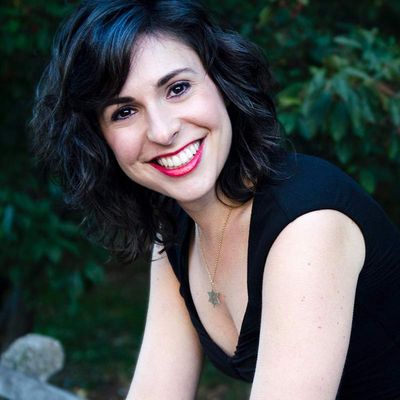
This episode features Ruthie Fierberg, Senior Features Editor for Playbill where she creates informative behind-the-scenes stories, artist interviews, and multimedia features, and hosts Playbill's “Live from the Red Carpet” specials on Broadway's opening nights. She's also led Talks at the New York's 92nd Street Y, BroadwayCon, and more.
Ruthie’s passion for the theatre began at age 2 when she started her journey of creative discovery through the theatre arts. She found her career path at Barnard College when she became a writer and the theatre editor of the Columbia University newspaper. Since then she has become a prolific contributor to many national publications and a role model for many young professionals. She shares her advice about the importance of authenticity, preparedness and being informed about all aspects of the field one wants to pursue.
Camp Broadway’s Develop Your Character podcast is available on the Broadway Podcast Network and iTunes. For more information on Camp Broadway’s many youth-focused programs, visit campbroadway.com or post a comment about this episode on our Facebook page.
A proud member of the Broadway Podcast Network.
Produced by Dori Berinstein and Alan Seales.
Edited by Derek Gunther.
Transcript
This transcript was automatically generated and might contain errors.
[0:09] Elysa Gardner: Hi, I'm Elysa Gardner, host of Develop Your Character brought to you by Camp Broadway.
[0:14] Elysa Gardner: We'll be bringing you candid conversations with theater educators, industry experts and insiders, and savvy parents geared toward helping culture-loving kids and aspiring artists become great performers on and off stage at every stage of their lives.
[0:29] Elysa Gardner: Our guest today is Ruthie Fierberg, the senior features editor at Playbill, where she creates written, multimedia and video pieces and hosts Playbill's Live from the Red Carpet specials spotlighting Broadway's opening nights.
[0:43] Elysa Gardner: Ruthie has also written for such national publications as Good Housekeeping, Parents, American Baby, Parents Latina, and Backstage.
[0:52] Elysa Gardner: And she has moderated panels for the 92nd Street Y, the JCC of Manhattan, Disney Theatrical Productions, BroadwayCon for a number of years, and the annual American Performing Arts Professionals Conference, and made guest appearances on Sirius XM Volume Radio and a number of podcasts.
[1:11] Elysa Gardner: She'll have her own soon, so we're gonna ask her about that in a bit.
[1:15] Elysa Gardner: Ruthie is well-schooled in the business of theater as well and the arts generally, having worked some years ago as an intern for leading producers Kevin McCullum and Jeffrey Seller.
[1:25] Elysa Gardner: And she got her start in marketing, working as assistant to the publisher of Time Out New York, then serving as executive assistant to the executive vice president of the Parents Network.
[1:36] Elysa Gardner: Ruthie is a graduate of Barnard College and is involved with such causes as Covenant House International and the Actors Fund.
[1:43] Elysa Gardner: Thank you so much for joining us today.
[1:45] Ruthie Fierberg: Thank you so much for having me.
[1:46] Elysa Gardner: It's kind of wild to hear your own bio read.
[1:50] Ruthie Fierberg: Yeah, well, there it is.
[1:52] Ruthie Fierberg: It's a lot of stuff.
[1:53] Elysa Gardner: Uh, how did it start? Tell us a bit how you first became interested in theater. Were you involved in school or camp productions, or were there any playwrights or composers who drew you in at a young age?
[2:04] Ruthie Fierberg: Um, I was involved in doing it from a young age. My mother was a singer growing up.
[2:09] Ruthie Fierberg: Mine too.
[2:10] Ruthie Fierberg: Yeah.
[2:10] Ruthie Fierberg: I'm the eldest of three. And um, my mom did community theater and she was a semi-professional singer doing like a cabaret act back in the day when like you'd do that at a corporate luncheon or at, you know, the New Year's celebration in Hartford.
[2:25] Ruthie Fierberg: Um, and so she just always had cast recordings on, and there's a video of me at the age of two, you know, scream singing, "God, I hope I get it." Like literally, I think I might be in a diaper.
[2:39] Ruthie Fierberg: Um, so from that very young age, and I started ballet when I was two. I danced all the way up through my graduation at Barnard.
[2:47] Ruthie Fierberg: Um, I never had professional aspirations for it, but yeah, I took dance class, I did every special choir. The first musical I did was in the fourth grade at the JCC doing Annie.
[2:58] Ruthie Fierberg: I was Pepper, and then I did um, I did musicals at the JCC through the eighth grade.
[3:05] Ruthie Fierberg: I did musicals through a summer program in West Hartford, Connecticut, where I grew up.
[3:10] Ruthie Fierberg: Um, because we didn't do musicals during the year, we had a jazz show instead, and I was a jazz dancer for four years there.
[3:18] Ruthie Fierberg: Um, the idea was kind of like to flip the script where the jazz band and the musicians were the forefront and the singers and the dancers were the background, and our jazz band was number one in the country for a little while, which was amazing.
[3:30] Ruthie Fierberg: So it was a public school, but a really, really strong arts program.
[3:34] Ruthie Fierberg: And then um, I came here to New York for my undergrad, and that's really when I started to expand my theater knowledge consciously.
[3:48] Ruthie Fierberg: I definitely, a very motivating factor for choosing Barnard was that I was going to be in New York City proper.
[3:56] Ruthie Fierberg: And I went to Broadway all the time. I was all about rushing, like every Saturday morning before I went to synagogue, I'd get up early, I'd go rush, I'd get my tickets, I'd come back, go to synagogue, I'd go back downtown for the matinee or the evening show, whichever they gave me.
[4:10] Ruthie Fierberg: But when I was having trouble being cast in college productions, it was very competitive.
[4:16] Ruthie Fierberg: And my father made the suggestion to me, you know, why don't you write for the school paper? You're in New York. I bet you then you'll get free tickets instead of having to like spend all of your money on tickets.
[4:25] Ruthie Fierberg: And uh, so I signed up for the paper and I ended up writing features for them.
[4:31] Ruthie Fierberg: I kind of just had some on-the-job training that way, and then I became the theater editor for the arts section at the Columbia Daily Spectator because Barnard is one of the four undergraduate colleges of Columbia University.
[4:44] Ruthie Fierberg: So I was doing like campus coverage, but then I was also doing greater New York theater coverage because we students are going to see theater.
[4:52] Ruthie Fierberg: And um, that was when I said, you know, I really need to expand my knowledge.
[4:56] Ruthie Fierberg: I really only know musicals. I really haven't seen very many plays.
[5:00] Ruthie Fierberg: So I started, you know, cultivating that.
[5:02] Ruthie Fierberg: And then when I graduated, I was still creating a better balance of that.
[5:08] Ruthie Fierberg: And as I worked more for Backstage and certainly my time at Playbill, it's just been a constant expansion of, you know, okay, now I see all of Broadway, let's see more off-Broadway.
[5:08] Ruthie Fierberg: Okay, now I see more off-Broadway, let's see more regional productions.
[5:22] Ruthie Fierberg: Okay, let's see more readings that are going on in the city.
[5:25] Ruthie Fierberg: Let's see more, you know, concerts at whatever venue here in the city that's featuring new composers so I know who's on the rise.
[5:33] Ruthie Fierberg: Um, it's just constantly amassing knowledge.
[5:38] Elysa Gardner: Yeah, that's great. Clearly, it's paid off.
[5:40] Elysa Gardner: Uh, you've been at Playbill during a period where I think media and producers have become more aware of the crucial role that young people can play, with lots of musicals in particular, plays appealing heavily to young audiences and showcasing young artists.
[5:56] Elysa Gardner: So, uh, you must think about that in the different roles you play.
[6:00] Ruthie Fierberg: Oh, absolutely.
[6:01] Ruthie Fierberg: I mean, my one of my now motivating factors in the content that I produce for Playbill has to do with who I was as a 12-year-old girl.
[6:14] Ruthie Fierberg: I had a class called research, just like you have like music and gym.
[6:20] Ruthie Fierberg: We had research as well, and we had to pick a research question.
[6:25] Ruthie Fierberg: And then, you know, this was before even Wikipedia was a semi-legitimate source.
[6:31] Ruthie Fierberg: Um, you had to go to the library and find the answer to your question.
[6:34] Ruthie Fierberg: And my question was, how do you make a Broadway musical?
[6:37] Ruthie Fierberg: And back then, there was not, you know, the grimmery from Wicked.
[6:40] Ruthie Fierberg: There was not Hamilton, there was not "Waving Through a Window," like this was not a regular thing that productions made of, okay, here's now the show's a hit.
[6:51] Ruthie Fierberg: Now here's how we did it.
[6:53] Ruthie Fierberg: There the only show that had anything near that was um, Savion Glover's "Bringing a Noise, Bringing the Funk."
[6:59] Ruthie Fierberg: And I had to kind of adjust my question stuff.
[7:02] Ruthie Fierberg: So now when I do any of my coverage on Playbill, I am constantly trying to educate people in an engaging way.
[7:10] Ruthie Fierberg: This is how theater is made.
[7:12] Ruthie Fierberg: These are all of the people who make theater.
[7:15] Ruthie Fierberg: These are all of the jobs you never knew existed.
[7:17] Ruthie Fierberg: You know, you mentioned my working for Kevin McCullum and Jeffrey Seller.
[7:22] Ruthie Fierberg: I had no idea what producers really did, what a general manager was, what a company manager was.
[7:28] Ruthie Fierberg: And if you are listening out there and you don't know, don't worry, you're normal.
[7:33] Ruthie Fierberg: But also you can find out on Playbill because I do a column called Theater Jobs that's all about, you know, we pick a job in the playbill that, you know, is past the cast bios, and you're like, oh, music supervisor, what do they do?
[7:46] Ruthie Fierberg: Well, you can find out what they do, and that there are so many more careers to have in the theater than just the ones that are on stage or even in the wings, you know, pulling the fly system.
[7:56] Ruthie Fierberg: Not that those are unimportant.
[8:00] Elysa Gardner: Um, you do play a huge role in curating these stories that inform and engage and are relevant to a national audience.
[8:07] Ruthie Fierberg: Yeah, and I am constantly thinking, like I said, about my 12-year-old self and thinking like, okay, I want the however old you are out there to know all of the ways you can be involved in theater if this is something that you love, if it's something that you love watching, you know, not every kid who likes theater grows up doing the JCC musical.
[8:28] Ruthie Fierberg: So I am constantly thinking about that young audience and letting them know all of the opportunities and um, but also speaking their language and answering to them in a way that, you know, we watch the social coverage, we watch what people are interacting with, we watch different age demographic groups, including, you know, young theatergoers and their parents.
[8:55] Ruthie Fierberg: So I think about that constantly.
[8:57] Elysa Gardner: Yeah, yeah.
[8:58] Elysa Gardner: And it makes you kind of a role model to people who are interested in non-performance careers, particularly, although you have a background in that yourself.
[9:06] Ruthie Fierberg: I hope I set a good example.
[9:08] Ruthie Fierberg: I mean, that would that's an honor for, you know, people say, I get emails sometimes, you know, I'm a journalism student at so and so college, and I want to do what you do, and that's always first of all very flattering, but second of all, kind of wild to me because I didn't even know that I wanted to do what I do.
[9:28] Ruthie Fierberg: Um, I didn't know it was an option.
[9:31] Ruthie Fierberg: I it didn't occur to me for whatever reason that like non-celebrities wrote for Playbill because the bylines that I used to read in the Playbill were like, you know, Seth Rudetsky, and I was like, okay, well, he's on the inside, you know, he's a musical director, he's an accompanist.
[9:45] Ruthie Fierberg: I'm I don't do that.
[9:47] Ruthie Fierberg: Um, but I think that you know, there's also been a shift at Playbill too.
[9:51] Elysa Gardner: Yeah, and journalism itself has shifted.
[9:51] Ruthie Fierberg: Oh yes, yeah, very much so.
[9:57] Elysa Gardner: Um, among those lines, I want to ask you about Play Builder, which is a digital platform that enables schools to produce their own official playbills for their productions.
[10:08] Elysa Gardner: And it even sponsors a marketing award for best playbill as part of the Roger Reese Awards, which is given to schools in the greater New York area.
[10:21] Ruthie Fierberg: Yeah, so as part of the Roger Reese Awards, and this is through, like you said, through Play Builder, and um we have someone at Playbill, his name is Logan Culwell Block, who handles Play Builder and Playbill EDU.
[10:33] Ruthie Fierberg: So that's kind of like our education and our outreach to all the young community theaters and school theaters.
[10:44] Ruthie Fierberg: So the beauty of Play Builder is that when you put on a production anywhere and you're selling tickets, you had to license the rights to that production.
[10:55] Ruthie Fierberg: And you have to make sure that everyone who created that originally gets credit for the work that they did.
[11:02] Ruthie Fierberg: And sometimes you're making your program and you might accidentally forget to include something because you know, okay, do I have to include the orchestrator or do I only include the composer?
[11:15] Ruthie Fierberg: Well, Play Builder answers it for you.
[11:17] Ruthie Fierberg: And if your school is doing The Music Man, then you just click The Music Man and it fills all of that in, and you get to fill in the cast bios, you get to drop in the headshots so that it's custom made for your production.
[11:32] Ruthie Fierberg: And of course, the cover gets to be custom made.
[11:34] Ruthie Fierberg: You're not stuck with, you know, the original Broadway Music Man art.
[11:38] Elysa Gardner: Right, which is what the Play Builder Award has to do.
[11:42] Ruthie Fierberg: Um, what they award is the most creative and the most visionary design of your Play Builder, which I think is thrilling.
[11:52] Ruthie Fierberg: And it's really not expensive.
[11:53] Ruthie Fierberg: And you can also, you know, people use this for their bar mitzvahs and bat mitzvahs, people use it for their weddings, people use it for a graduation.
[12:02] Ruthie Fierberg: It's like really fun.
[12:03] Ruthie Fierberg: You know, there are other formats you can use for personal events if you want to have the official Playbill logo and go really all out to theme.
[12:12] Elysa Gardner: Yeah, yeah.
[12:13] Elysa Gardner: And there's a lot of great merchandise as well.
[12:15] Ruthie Fierberg: Uh, you cover a lot of young actors in your job as well.
[12:20] Ruthie Fierberg: Yeah.
[12:21] Ruthie Fierberg: What have you learned from them who, uh, for those who might be seeking careers in performance or even not?
[12:28] Ruthie Fierberg: I think what I've learned from actors of any age, any successful actor is they say that you need to be you.
[12:41] Ruthie Fierberg: And that's actually I think the hardest thing for all of us in life.
[12:46] Ruthie Fierberg: Who am I?
[12:48] Ruthie Fierberg: Who do I want to be?
[12:50] Ruthie Fierberg: What do I want to present in the world?
[12:53] Ruthie Fierberg: What are my values?
[12:55] Ruthie Fierberg: I think there's, you know, the beauty of being a child actually is that you're not self-conscious.
[13:02] Ruthie Fierberg: You haven't learned that yet.
[13:04] Ruthie Fierberg: And it's as you get older that you learn what you think is societally acceptable, what you think is embarrassing, what you think is weird, what you don't want anyone to know.
[13:18] Ruthie Fierberg: And the more and more we hear, you know, like whether it's Ben Platt's speech on the Tony Awards, that, you know, what makes you different makes you strong, and Ari'el Stachel said the same thing, and Ali Stroker said the same thing.
[13:32] Ruthie Fierberg: And I think that's the common thread that I find in every interview I do with actors and performers specifically, is like they succeeded when they just decided to be who they are in that audition room.
[13:47] Ruthie Fierberg: And that is, I mean, that's so much easier said than done.
[13:50] Ruthie Fierberg: Like I said, like I think it could take in some cases years of therapy to figure that out who you are in the world before you can do that in the audition room and bring yourself to the story.
[14:03] Ruthie Fierberg: That every time it's not, you know, if I'm going into audition for Audrey in Little Shop, I'm not singing just, I'm not singing "Somewhere That's Green" just as Audrey.
[14:14] Ruthie Fierberg: I'm singing it as like, okay, who is Ruthie as Audrey?
[14:19] Ruthie Fierberg: What is my experience that relates to Audrey?
[14:23] Ruthie Fierberg: And that is the thing that will distinguish you.
[14:27] Ruthie Fierberg: It seems so obvious in the room.
[14:29] Ruthie Fierberg: But it's like, are you the hurt Audrey?
[14:32] Ruthie Fierberg: Are you the strong Audrey?
[14:34] Ruthie Fierberg: Are you the resilient Audrey?
[14:36] Ruthie Fierberg: Are you a self-conscious Audrey?
[14:38] Ruthie Fierberg: Like, what are the layers of who you are that only you can bring to that character?
[14:45] Ruthie Fierberg: Um, so I think that that's a common thread throughout.
[14:48] Ruthie Fierberg: And also preparedness.
[14:50] Ruthie Fierberg: Everyone who has ever done well in an audition is because they have worked hard.
[14:57] Ruthie Fierberg: They have honed their craft, they have invested the time, whether that is dance class and voice class and acting class, or going to a vocal coach, or um just drilling, you know, their harmonies at home, whatever it is, they walk into that room prepared.
[15:16] Ruthie Fierberg: And I would also like to add that I think as prepared as you are on the actual disciplines and on the craft, I think that we're losing something lately in the knowledge of our industry.
[15:29] I think you need to know the history of the industry that you are entering into, whether you're going into an audition room or a job interview.
[15:39] Theater history is important.
[15:41] And that's why I think publications like Playbill are important.
[15:44] You know, I'm working every day, I publish one feature a day on Playbill.com to try and give you context and give you history and help you understand process.
[15:55] But Matthew Lopez does not happen without Terrence McNally, without Larry Kramer, without, you know, there's a legacy of playwrights.
[15:55] There's a legacy.
[16:05] Right.
[16:06] Without I mean, and there I didn't mention Tony Kushner because I think they're a sidetrack, there are a lot of parallels between Angels in America and the Inheritance just because they're two parters, just because they touch uh um gay issues, and I actually think it's a much more apt comparison to the normal heart or to love, valor, compassion.
[16:25] But yes, the point is that these things happen in in a legacy and in a lineage and with a cultural ancestry.
[16:36] And you know, Lynn Manuel Miranda says, I couldn't, it's not weird to me to make history into Broadway.
[16:43] Like this has been happening for forever.
[16:46] I didn't do this in a vacuum.
[16:48] Like 1776 happened, Les Miz happened.
[16:52] We all learned history from watching musical theater or plays.
[16:57] Um Rogers and Hammers.
[16:59] Yeah, all of it.
[17:00] Every single one of it.
[17:01] And because for generations, theater has been the reflection of ourselves.
[17:07] So I also think it just makes you a much more informed citizen to engage in the theater, whether or not you're looking to make a life in this.
[17:14] I am such an advocate for arts education, having come from a public school system that invested in that.
[17:21] It is not a coincidence, the number of students who are successful in a number of fields, but particularly in theater.
[17:29] Like I went to the same high school as David Yazbeck's um music director.
[17:36] I went to the same high school as the owner of subculture.
[17:40] I went to the same high school as Cameron McIntosh's right-hand man for all of North America.
[17:46] Like I went to someone who works for the league.
[17:50] And then there are plenty of performers out there who came through my program.
[17:54] And that's one high school in one town in one state of America.
[17:58] And a public school.
[17:59] And a public school.
[18:00] And so for people to say, you know, and that's just in the arts.
[18:04] Like I said, like there are so many people who participated in the arts who are now journalists at the top of their field.
[18:12] They are, you know, they're at the daily at the New York Times.
[18:15] They are excellent biomedical engineers and doctors and lawyers because the theater teaches you to examine and to introspect and to articulate and to present, you know, being able to be forward-facing and present your ideas and be cognizant of the way you speak is extremely important.
[18:42] And understanding other people and being able to relate and have empathy.
[18:46] I don't know any more crucial skills for the game of life, truly.
[18:51] So for schools that are gutting their arts education, you know, that that's the first thing to go.
[18:58] I think that's the last thing that should go, you know?
[19:01] And not that STEAM isn't that important.
[19:06] Um but or STEM, because you know, the A we're the A.
[19:10] It's not that STEM isn't important, but it's all important.
[19:13] Yeah.
[19:13] And it's, I just it makes me so, so sad when we're not teaching young people to be creative.
[19:21] And when we're teaching them that it's not valuable, right?
[19:25] Just the very act of saying this is what goes first is saying that it's not valuable when I think it's quite literally what makes us human.
[19:33] Yeah, absolutely.
[19:34] And it's funny, you should mention all this we we just spoke with a teacher for this podcast, Tasha Partee, who mentioned all these qualities uh empathy and um self-direction.
[19:44] Um, it's all important stuff and work and discipline as you mentioned.
[19:48] Preparedness.
[19:49] I mean, I learned how to do six hours of work in two hours because I was dancing five hours a day and the homework had to get done.
[19:58] I thought you were gonna say for deadlines.
[20:01] Probably for that too.
[20:02] That's what I'm saying.
[20:03] Like, but I can fit if you give me if you give me eight hours to do five hours of work, it will not get done.
[20:03] If you give me two hours to get five hours of work done, I will finish it and have 15 minutes to do it.
[20:14] Isn't that scary?
[20:15] It's so true though.
[20:17] Um, I've noticed in in following your career and your work that you really get the importance of promotion.
[20:22] Your website is meticulously designed, it's so much fun.
[20:26] It tells us a lot about you.
[20:28] Um, in this age of of branding, how vital is that aspect?
[20:32] And have has your work with with uh celebrities with other people in in high profile positions taught you anything about that?
[20:40] I think that a personal website is an absolutely crucial ingredient to literally any field.
[20:50] Because as a journalist, I'm a researcher.
[20:53] And before I go into an interview with anyone, I am looking for everything there is to know about you.
[21:01] And that's your moment of control.
[21:04] That's your moment of power to say, this is what I want you to know about me.
[21:09] And I will still read any of the articles and interviews and all of those things that you have done, you know, particularly if you're a creative.
[21:16] There are usually a lot of things out there.
[21:19] Um, but you know, like the perfect example is um Joelyn Pellman, who just got cast in the prom, uh, the Netflix, the prom.
[21:28] And nobody knows who she is.
[21:30] And I said, Well, we should know who she is.
[21:32] I want to know who she is.
[21:33] She's gonna be the lead in this amazing musical movie next to Meryl Streep and everybody else we know.
[21:39] So uh, so I looked her up, and there's very little because she is brand new, but she has a personal website.
[21:47] And that is where I got a lot of information and was and said to myself, well, now I know a little bit about who you are.
[21:53] I think it's absolutely crucial.
[21:56] And it's only to your advantage to be able to tell your own story and things I am so not tech savvy when you said that my website is beautiful.
[22:04] I'm like, oh, thank you.
[22:05] I'm doing something right.
[22:07] Um, I literally designed it on Wix.com, thank you, Wix.com.
[22:12] Um, and it's just it's easy now.
[22:15] It's you know, you don't have to know how to code because I certainly don't know how to code.
[22:19] But you know, I just added a reel to my website because my on-camera presence has become more and more important and uh important to me as well as to Playbill.
[22:29] And I think, you know, as you gain assets, you have a chance to say, This is who I am.
[22:34] And and that goes, you know, the social media part of it is hard too, but particularly if you're looking to be a performer, casting directors are using that stuff.
[22:43] Um, especially if you don't have a website, but they're looking at your YouTube channel so they can see you sing.
[22:49] They're now looking at Instagram because Instagram allows videos, so if you can sing on your Instagram, why wouldn't you do that?
[22:56] Yeah.
[22:56] So it's all, it's all up for grabs now, folks.
[23:00] Yeah, yeah.
[23:01] Especially if you can sweeten it a little bit.
[23:03] No.
[23:04] Just a joke.
[23:05] Um, I want to ask you about your advice, kind of start wrapping up there.
[23:08] But I do want to mention you have a podcast coming up.
[23:11] I do on the Broadway Podcast Network.
[23:13] So why don't you tell us a bit about that?
[23:16] Sure.
[23:17] Um so the reason I do what I do is because I fully, other than educating and engaging all the young people and older generations of the world, how many people create theater and what it takes to make the things that we love on Broadway and that then just get disseminated to the masses, is I believe in the art specifically theater to change the world.
[23:45] I think it's the only thing that will change the world, truly.
[23:48] I think that the mindset shifts and then the culture shifts, and then laws and policies tend to follow that because then we demand it.
[24:00] And the arts are the way that we tell stories to relate to people to change those minds.
[24:07] And I have been going to the theater for years.
[24:09] You know, you asked if I have particular writers that I follow, and I do now.
[24:14] And like now I've developed a taste for, you know, specific directors.
[24:18] I go to everything that Liliana Blaine Cruz directs and Lee Silverman directs, and I go to everything Dominique Moriso writes, and um I have my people, but part of what I'm attracted to in those people's work is that they're saying real things.
[24:33] And I was noticing that, particularly with plays, um, writers have been kind of putting this ball out on the court that is the stage, if you will.
[24:44] And they're bringing up these issues that are so desperately in need of us to answer to them, not answer them, but answer to them with a responsibility to continue a conversation that they are starting with their artistic work.
[25:01] And instead, we are coming in as passive viewers.
[25:03] We're sitting, the curtain rises, we watch it, we're emotional.
[25:07] If all things go well, the curtain falls and we walk out feeling like we did our good deed for the day because we saw it.
[25:13] But that's not the end, that's the beginning.
[25:15] And so my podcast is the intersection of theater and social justice, where we look at the questions that theater makers are raising in their work.
[25:26] I talk to the artists themselves, and then we bring in a panel of experts to talk about how that applies to the real world.
[25:33] What are we doing?
[25:34] If this is the issue you're passionate about, what are we doing to further that?
[25:39] And what are the practical steps you can take?
[25:41] What's an organization you should follow or donate to, or a petition you can sign, or a rally you can go to, you know, and and this isn't just political by any means.
[25:53] Um, you know, I've spoken to Jocelyn B about Bio about coming on for school girls or the African Mean Girls Play, and that's a perfect example where we're going to talk about self-esteem in young girls and colorism and how we relate to each other in the real world.
[26:08] And the podcast is called Why We Theater.
[26:11] Oh, fabulous.
[26:12] That sounds great.
[26:13] So we can expect that uh in January and February.
[26:16] So we're starting recording in January, and then we'll start to roll some episodes out on the Broadway Podcast Network.
[26:23] VPN, right?
[26:24] Sister Podcasts here.
[26:26] Excellent.
[26:27] Well, I I did want to ask you about advice since you have had already at this point so much experience over 10 years.
[26:34] You could probably advise some young people who are pursuing a variety of goals in theater education and business.
[26:41] Is there one piece of advice it could be general or Pacific, uh specific, other than enunciate your words, uh that jumps to mind that you'd like to mention?
[26:51] Oh gosh.
[26:52] Um other than what I already said about honing your craft and whether that's you know, practicing interviewing people if you want to be a journalist or practicing your singing if you want to be a performer and really knowing your theater history.
[27:07] I think the other thing is to be resourceful in seeing the art that you want to see.
[27:14] Um, there are a lot of free and inexpensive ways to do that.
[27:18] I also think that it's about connecting.
[27:21] Um, reach out, ask for an informational meeting, tell someone you just want to hear their story.
[27:27] And I came up learning from a lot of people that way, and not necessarily a lot of people in theater, just a lot of people in general.
[27:36] And you know, you can look on like the masthead of a magazine, and I wouldn't go for the jugular with the editor in chief, but like just look a little farther away down because they're gonna have the time and they're also gonna remember the people that did it for them.
[27:48] So I think that's really valuable in any field you want to go into.
[27:52] Look who's doing what you want to do and talk to them and reach out to them.
[27:57] I think that's simple, but great advice.
[27:59] Uh, since the title uh and the mission of this podcast is develop your character, what what does character mean to you?
[28:07] And 140 words in class.
[28:10] I'm so glad we're on a podcast and I don't have to limit to that many characters.
[28:14] It drives me nuts on Twitter.
[28:16] Um, when I hear the word character, I think of my grandfather.
[28:20] Um I don't know that he ever used the word character specifically, but my grandpa Lester, and actually my my other grandfather who is still alive, my grandpa Jed, um I think they take their character very seriously.
[28:35] I think it has to do with reputation.
[28:39] I think it's who you what you stand for, who you are in the world, what you what you claim as what's significant to you and what you are then projecting out into the world in that way.
[28:59] Sounds like you have a couple of terrific grandfathers.
[29:02] That's a good thing.
[29:04] Um, thanks again for joining us, Ruthie.
[29:06] This has been a pleasure, and we're gonna listen to your podcast name name it again.
[29:10] Ruthie Fierberg: Why We Theater.
[29:12] Elysa Gardner: Why We Theater coming soon to Broadway Podcast Network.
[29:15] Uh, and thanks to all of you who've tuned in to this episode of Develop Your Character.
[29:19] We are always looking for listeners' input.
[29:22] So if you have a question or observation about Ruthie, about something we have discussed with Ruthie, or anything else theater or character related, you can reach us on social media or visit our website.
[29:34] And if you've enjoyed this podcast, you can leave a review on iTunes or share with your friends on social media.
[29:40] And for more information on Camp Broadway, Broadway's original destination for theater loving kids, check out our site at Camp Broadway.com.
[29:48] Ruthie Fierberg: Thank you so much for having me.
[29:50] Elysa Gardner: Oh, thank you.
[29:50] This was a pleasure.
© Broadway Podcast Network, All Rights Reserved