

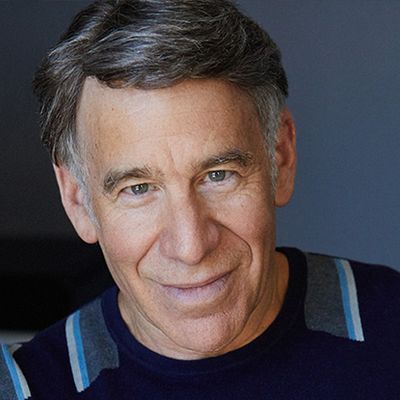
The Oscar, Grammy, Drama Desk, Golden Globe and honorary Tony winner on bringing the official DreamWorks adaptation of The Prince of Egypt to the stage, his thoughts on jukebox musicals rising in popularity, and the new British show that’s got his vote... Read More
From the show: eleven
Guests
Featured Shows

About
The Oscar, Grammy, Drama Desk, Golden Globe and honorary Tony winner on bringing the official DreamWorks adaptation of The Prince of Egypt to the stage, his thoughts on jukebox musicals rising in popularity, and the new British show that’s got his vote.
Host: William J Connolly
Technical: Jordan Priestley
Produced by: William J Connolly + Darren Bell
Follow eleven on social media via @elevenpodcast and via elevenpodcast.com
Transcript
This transcript was automatically generated and might contain errors.
[0:01] Stephen Schwartz: Hi, my name is Stephen Schwartz, and you're listening to Eleven, the official theatre podcast.
[0:16] William J Connolly: Hello, and welcome to Eleven, the official theatre podcast that brings the biggest stars and creatives together in one place to discuss life in the arts. Our guest today is an internationally renowned composer and lyricist. In 1976, at the age of just 28, he had three musicals running simultaneously on Broadway: Godspell, Pippin, and The Magic Show. Since then, he's truly changed the landscape of modern musical theatre. He's known internationally for his work with Alan Menkin on Disney classics Enchanted, Pocahontas and The Hunchback of Notre Dame, and his breakout musical Wicked has been performed in more than 130 cities in 16 countries around the world, and is now officially the fifth longest-running show in Broadway history.
Oh, and he's casually been the recipient of three Academy Awards, four Grammy Awards, a Golden Globe Award, and the Isabel Stevenson Tony Award. He's also a six-time Tony nominee and has been presented with 16 lifetime achievement honours. Has a star on the Hollywood Walk of Fame and has been inducted into both the Theatre Hall of Fame and the Songwriters Hall of Fame. After the global success of the animation movie, of which he wrote both the music and the lyrics, he joined us today to discuss the official stage adaptation of The Prince of Egypt, which is now playing at London's Dominion Theatre. And the Academy Award-winning song When You Believe? That's one of his as well. Please welcome to Eleven one of the greatest theatrical giants of all time, Mr. Stephen Schwartz.
[1:33] Stephen Schwartz: Hi, how are you? That guy sounds so impressive to me. I'd like to meet him sometime. I feel a little bit exhausted just reading all of that out.
[1:41] William J Connolly: I got very tired hearing it. I was like, who is that?
[1:44] Stephen Schwartz: Is that your natural reaction to when people read stuff back? Do you like it or are you a little bit embarrassed?
[1:48] William J Connolly: It's a little bit embarrassing, let's face it. Um, I mentioned that we are here at the Dominion Theatre. We're backstage. It's very, very exciting because you are just a few days away from the official launch of The Prince of Egypt's opening night. At this moment in time, it's a brand new piece of work for the stage. How are you feeling?
[2:04] Stephen Schwartz: Uh, I'm feeling very encouraged. We are in the middle of our preview process. Um, obviously we've been changing things every night. No one audience has seen the same show as the audience the next night or the night before. Um, but the audience response has been quite encouraging to us, and that gives you energy to continue making the changes and just trying to make the show better and better until they finally tell you you're out of time.
[2:29] William J Connolly: How often do you get to change it? So you said that it's a different show every day. Do you make those changes every single day?
[2:34] Stephen Schwartz: Yes.
[2:35] William J Connolly: And I guess how does that progress the story? Why would you do that?
[2:38] Stephen Schwartz: Um, because we want to be trying to tell it as um excitingly, as efficiently, as emotionally and as clearly as we possibly can. And that's what you learn in previews. You can feel where things are working, you can feel where the audience is restless or confused. Obviously, we're talking to people after the show and saying, you know, what parts didn't you like, what parts didn't you get. Um, and you're not going to do every single thing that every single person says, but the whole point of doing theater is to communicate within an audience. So yeah, we one continues to try and make it better and better. Um, to do exactly that. Um, you know, just because we got this great reaction first preview didn't mean that we were done. Um, and uh, and we knew it could be better. And um, and um frankly, when we freeze the show, we'll still know it can be better. But we're, you know, we're making it as good as we possibly can within the time we've got.
[3:42] William J Connolly: It's interesting you mentioned talking to audience members because the audience really do play an impact on what we see on stage. You really do listen to them, and they they kind of, I guess, part of the creative family. They're kind of like the extra person, I guess.
[3:53] Stephen Schwartz: Of course. Well, that's what theater is. That's what makes it extremely exciting, is because the complicity of the audience in this event, which is after all quite an artificial event if you think about it. You know, movies are literal and they're very real. Even if they're animated, it's you're it's it's real people in real landscapes. The events are supposed to look as if they are actually happening. Theater is all about metaphor and theatricality and the audience's imagination supplying part of what's not really there. That's what makes it an incredibly exciting art form to me, but it means the communication with the audience is is central to the job of theatrical storytelling.
[4:42] William J Connolly: So I guess the million-dollar question is why now? Why was The Prince of Egypt the right story to tell for 2020?
[4:48] Stephen Schwartz: Um, I think it has a lot of resonance, and that's why there suddenly was a groundswell of interest in telling this particular story at this particular time. I mean, if you think about it uh the times we're living in, people are sort of I there's a lot of like my side, your side, us against them. Um I'm only hearing from people with my point of view, um, the class or sect or race into which I was born is different than others, and we have to prevail over them. And these are the exact conflicts that we deal with in The Prince of Egypt. Obviously, it's not a very good way to run a world. And that's sort of the journey of The Prince of Egypt, and I would hope the journey of our own world.
[5:39] William J Connolly: It's interesting how when you were mentioning all of the things that influence your decisions to do the show now, how really relevant it is now to the conversations that so many of us are having.
[5:58] Stephen Schwartz: Of course, yeah. People are talking about how, even though it's a story that took place 5,000 years ago, um, how much the conflicts and the sort of themes are things that everybody is thinking about and talking about. We you know, we're this is a story of human beings caught up in events which are larger than themselves and over which they don't have a great deal of control, even if they're the pharaoh and should have control over them, they don't. But yet, what do we do as individual human beings to to live in the world to make our world better, to be able to get along with our fellow human beings? Um, and I think these are issues we're we're all dealing with now because there seem to be huge events that we're being swept up in that we don't have a whole lot of control over, and yet we don't want to have the world end, and we don't want to have you know be an endless clash and conflict. So, what can we as individuals do about that?
[7:02] William J Connolly: Yeah, definitely. So, when you begin to discuss mounting a full-scale production like this, how long does it take you from I guess that first germination of an idea through to, you know, right now where we're a few days away from opening? How long does that take?
[7:13] Stephen Schwartz: Musicals take a long time because they're highly collaborative and they're developmental. I believe we've been working on The Prince of Egypt, not obviously not every single day, but um for about seven years.
[7:27] William J Connolly: Okay.
[7:27] Stephen Schwartz: For on the stage adaptation, since the time when DreamWorks decided, you know, there's a there's an appetite for a stage version of this show. Let's start developing it through all the writing and the various readings and workshops and a couple of small developmental productions till now. Um yeah, I think it's been about seven years to get to this point.
[7:50] William J Connolly: And was it much convincing for you and DreamWorks to even think about it? Because the film means a lot to a hell of a lot of people, and I think they're rightly, even from a fan perspective, very protective of the material, as I imagine you also are for your world as well.
[8:02] Stephen Schwartz: Yeah, I think DreamWorks was hesitant for that reason at first, um, which is why this undertaking began so many years after the film's release. But there was a sort of groundswell of requests that DreamWorks was getting from various theater groups uh and church groups and regional theaters, uh, actually internationally saying we would like to put on some kind of production of The Prince of Egypt. Does a stage version exist?
[8:35] Stephen Schwartz: Um, obviously we want not to disappoint the fans of the movie. Um, and thus far the indication from audience response and from things we're hearing is that we are not disappointing them, but we are not taking the movie and putting it on stage. It's quite different.
[8:52] William J Connolly: That was gonna be my next question: is that this is not a carbon copy of the movie on stage.
[8:57] Stephen Schwartz: Absolutely not. No, it's it's considerably different, and not just because it's longer and not just because it has more songs. Um, the look, times have changed, and um theater is a bit of a, you know, in some ways it's a more, if you will, adult medium. It's certainly a more three-dimensional medium than film. So um we really reapproached the story. Um, I think that the one of the things that was much admired about the original film was that there wasn't so much like good guy, bad guy as in traditional animation, but I feel we've gone even further away from that in the show that we've really tried to make characters who are nuanced and have flaws and are heroic, and every single one of them is coming from a point of view that to them seems justified.
[9:53] William J Connolly: And moving from animation to real life also includes you writing, I believe, is it 10 new songs for this? Or is it is it more? Is it 10 songs?
[9:59] Stephen Schwartz: It's it's uh um that's a little bit misleading. Yes, there are ten new songs, but it's not as if you know the action grinds to a halt and someone sings a song and then it goes on. I've approached it the way I approach any score, you know, like the score to Wicked, where I'm thinking of added uh I'm thinking about it as an overall score and themes that come in and out.
[10:26] Stephen Schwartz: Um, you know, it's not just write some new songs and plug them into the story, it's really incorporating them along with five songs from the movie into an overall score.
[10:39] William J Connolly: Is it nice for you to revisit that world, but then as you say, like you know, start essentially start again and write these new songs? Did you enjoy, I guess, writing for this story again?
[10:48] Stephen Schwartz: This musical world is really fun for me because the sort of Middle Eastern scale is different than the Western scale, and so it leads to different harmonization, different kind of melodies, the vocal style of singing is a little different. We're using more than the movie did, a lot of instrumentation of the region. So musically, I think it just has its own sound, and consequently, as a composer, that's really exciting for me to explore.
[11:18] William J Connolly: How do you feel about audiences getting to hear new work from you? Does that kind of bring the butterflies in the stomach, or are you kind of quite excited?
[11:26] Stephen Schwartz: Um, I feel like that's what I do. You know, I write musicals, and usually the audience is hearing all new songs when they come in. The only thing that I'm a little bit aware of, because I've seen this happen to my good friend Alan Makin and other people, is people always feel a little bit more comfortable with songs they've heard before. Yeah, so one always gets the reaction of, well, the new songs, they're not really as good as the old songs. Then when they get to know them a little better when they hear the cast album, etc., then sometimes those songs get embraced. But I know right now that that's going to be happening a little bit, and that's just the nature of the game. I think if we play this conversation probably within the next month, everyone will be like, well, I love all the new songs as opposed to the ones from the film. I love the fact that people have that slight in-between period where they're like, well, they're not as good as the originals when actually they end up loving them probably more than the originals.
[12:21] William J Connolly: Yeah, and one hopes that that will be the ultimate response. You mentioned the cast album, so I have to ask you for people that perhaps can't make it to the Dominion Theatre or live in another part of the world. Is there gonna be an album? Are you planning to do that?
[12:36] Stephen Schwartz: We have recorded the cast album. Amazing. Um, it is not finished in that it's not mixed yet or fully mixed, but it's in process and I think it's gonna be available quite soon.
[12:50] William J Connolly: Oh, fantastic. I mean, we originally had the goal of having it be fully available by press night. I don't think we're gonna quite meet that goal, but it's gonna be pretty quick. Um, and I think it's come out really beautifully. I mean, the recording sounds great, you know. I hope within the mixing process will enhance it even further. The one thing that I will say looking on social media, the reaction as I'm just about to go see the show, is that everyone's talking about now I want to listen to the songs. Like that is definitely one thing, and if you have social media, I'm sure you'll have seen that people are saying, it was great to experience it live, but now I want to go away and listen to all the songs. So I think that will be really exciting for me. I'm excited to hear that.
[13:27] Stephen Schwartz: To be honest, at this point, I've been staying away from social media because you can just read one troll and it can be so hurtful. But what we have been doing is asking our producers to be checking social media, and it's been useful to us in finding areas where the story hasn't been as completely communicated as we would hope. And we've tried to address that and then seen, all right, are we still hearing the same criticism? No, we're not hearing that anymore, which means we've probably fixed that. So actually the audience response, whether it's been in the theater or individual audience members to whom we've spoken, or social media has actually been very helpful to us in our process.
[14:20] William J Connolly: It's interesting how important social media is in, I guess, the development of modern theater. But how did you have those conversations, you know, 10, 15, 20 years ago when you were creating? Was that down to word of mouth outside of the theater? Was it the same sort of principle?
[14:33] Stephen Schwartz: Well, you didn't have all these opinions to read. Um, but you still could tell just by sitting in the audience things that were working, things that were not working, and then you would invite, as we still do that, and we still invite friends and colleagues and ask them, you know, what worked for you, what didn't work for you? Was there anything you didn't understand? Was there any place you were restless? Um, you know, and then you try to address those issues. Um, I think social media is a great thing for live theater and for the arts because it's direct communication. It means, you know, in the old days, particularly in the States, if you opened on Broadway, you were very dependent on what one person from the New York Times happened to say.
And if that critic really liked your show, you're in good shape. And if he or she really disliked the show, it was very difficult. And it's just one person with one opinion. Now, because of social media, there are so many opinions out there that you get to have a kind of consensus and a more direct relationship to the audience, and I think that's very welcome.
[15:55] William J Connolly: Yeah, definitely, absolutely. And it's so nice to see theater progressing with the outside world as well. I think you can almost be a little bit too kind of shy to look outwards, whereas actually it feels so collaborative now, and it seems really exciting.
[16:06] Stephen Schwartz: Well, one of the other exciting things that's happened in previews of this show, and I don't know how much of that is due to social media, but it's been very exciting for us, is that our audience is not only the traditional theater audience. There are a lot of young people, it's a younger audience than we expected, and it's extremely diverse.
[16:27] William J Connolly: Okay.
[16:28] Stephen Schwartz: And we've been hearing that a lot of people are there for the first time ever, or they don't really go to theater, but they'd heard that this was something that might appeal to them. Um, and that's really exciting to sit in that broader spectrum of an audience.
[16:46] William J Connolly: A young, diverse audience in theater, just you saying those words is so exciting and actually quite moving to hear that that's really translating. So much to your credit and to everyone here. Um, we're gonna take a break, we're gonna be back in 60 seconds.
[16:58] William J Connolly: Welcome back to Eleven. Stephen Schwartz is here, thank you very much. Um, let's talk about this cast. So it's a cast of 42 and 16 musicians. I hope I've got that right. Um, but let's talk about Christine, Alexia, Luke, and Liam.
[17:10] Stephen Schwartz: Right.
[17:10] William J Connolly: It's a pretty four most beautiful people on Broadway.
[17:13] Stephen Schwartz: Yeah, I mean in the West End.
[17:14] William J Connolly: In the West End. I mean, it's a pretty impressive lineup, it really is the crème de crème of West End talent. I mean, what's it been like working with this cast and getting to bring this story to life? Because they are amazing. We saw that from the launch, and we've seen that from the videos as well. Just stunning.
[17:26] Stephen Schwartz: Well, the whole cast is first of all, they sing really, really well. Um, which to be honest didn't always used to be the case in the West End. I find that the level of just the vocal ability is higher than when I was working here in the 90s. Um, and it's particularly high in this cast, not just with Luke, Liam, Christine, and Lexi, but the entire cast, the ensemble, many of whom of course are covering roles and will probably frequently be going on, are really great singers. Um, but the level of acting is also very high because I think just here in London people just train in that way. So that's been really exciting because you know that what you've written is gonna be given its best presentation and therefore if it's not working you can't just blame the actor, you actually have to fix it.
[18:24] William J Connolly: Of course. I could think of a million reasons why to the answer to this question, but I guess from your perspective, why London and why not anywhere else? Why is London the right place for you to start with?
[18:34] Stephen Schwartz: Well, first of all, some of it has to do in fact with the level of acting, the kind of acting that, you know, is pretty commonplace in London because actors are so well trained. But frankly, the other reason is that our lead producers Michael McCabe and Neil Laidlaw, who are producing in association with Universal Theatricals, but our lead producers are British, and so they're bringing the show basically to their home constituency if you will. I thrive on pressure. I quite like the idea of pressure when people think, oh, he's done this before, so therefore I've got to do this. Does the fact that Wicked is literally the most successful thing ever, and everyone knows about it, has heard about it, does their expectations of that show in you, does that is that exciting, I guess, or are you a bit like, oh gosh, just see this as itself? I guess how do you approach it?
[19:26] Stephen Schwartz: Yeah, I don't feel any pressure from that. Um, I feel fortunate that it creates attention focused on this brand new project and some interest people will want to see like, oh, we liked Wicked, maybe we'll like what he's done next. So that's just helpful, frankly. Um, but they're just two completely different projects, and I don't really associate one with the other. Um, but as I say, I'm grateful for the attention.
[19:57] William J Connolly: I think it's nice as well that we get to hear a different sound to that show with this as well. It feels like we're getting the best of everything from you.
[20:05] Stephen Schwartz: It's a different world, um, you know, and as I said earlier, part of the fun of this is the new instrumentation and the harmonies of the Middle East that are different than how they sing in Oz. So, um, yeah, so it's different, but I feel my approach to songwriting is pretty much always gonna be the same in that I'm always going to be trying to get at the emotion of something and something that makes me feel when I write it or when I have to sing it.
[20:42] Stephen Schwartz: Um, and that I hope that emotion will translate to the audience. I know that um, you know, not everybody in the world is a fan of my approach, and I may be a little uh you know hard on the sleeve for some people, but um but I'm always just gonna do that because that's that's the way I write.
[21:01] Stephen Schwartz: And Prince of Egypt is a family affair as well. Your son is the director, is that right? So does he boss his dad around? Of course, because he's the director, he totally bosses me around. But um, you know, we've worked together before where Scott was the director, he did the stage version of Hunchback of Notre Dame, which was fantastic. Um, but even before we worked together, of course, Scott has you know a very good reputation and has done a lot of stuff that had nothing to do with me. Um, but we've always had a professional component to our relationship in that I will go to see his shows and um you know early on and give some thoughts to him. He comes to readings of my shows and will give me thoughts. He actually solved a writing problem for us that we were having in Wicked when he came to see one of the early readings. So the point being that nature of our relationship existed before we were working together as writer and director.
[22:00] William J Connolly: Do you think creatively you have or almost like an unspoken connection about things where you work together? Do you feel that I guess that magic? Do you think that there is that connection?
[22:08] Stephen Schwartz: Well, I think we have very similar sensibility in that we tend to like the same things. You know, if we see we we both usually will like a show or not like a show, however, we don't agree all the time. And I also think that his skill set is quite different from mine. He's extremely visual and has sort of big theatrical ideas of how things can look and how they can be staged, and that's not really my skill. Okay, but um, I think both of us have very strong storytelling um impulses that that for both of us telling the story is is paramount, and and so that makes the collaboration um pretty easy.
[22:55] William J Connolly: Looking at new work here in the West End, looking at new work in New York and elsewhere around the world, because theater's been created in so many varying different places now it's really exciting. Tell me about something that's caught your eye. What's been a show that you've either heard of or been to see and thought actually that's interesting. I'm I'm intrigued by that.
[23:11] Stephen Schwartz: Um well in the West End um I just saw Anne Juliet.
[23:17] William J Connolly: Okay, how did you find that?
[23:18] Stephen Schwartz: I had a really great time I have to tell you I'm not a fan conceptually of jukebox musicals. Obviously as a composer I think it's very disappointing that so many shows are just recycling songs and that the audience, you know, that they're depending on the audience responding to a song that they already know when they come in. So I had my backup a little bit about seeing it but I thought it was really witty and clever and well done and extremely well performed. So um and and the audio it was just like a big party in the theater and because I was playing hooky from this show um that was I I sort of needed a party to go to um tonight I can't speak about it because I haven't seen it yet but I'm actually playing hooky again tonight I'm gonna go see Leopoldstadt.
[24:09] William J Connolly: Oh yes yeah and an amazing player. You know I feel like any new work by Tom Stoppard I want to be there so I'm really looking forward to that.
[24:18] Stephen Schwartz: Absolutely one show in the West End that has gone everywhere and it's just about to open in New York is six.
[24:23] William J Connolly: Yeah I feel six I have not I've met the writers and I like them very um very vibrant personalities and I I you know I I understand very talented. I know they there's been very good response early on to um pre-I don't think six is opened yet.
[24:43] Stephen Schwartz: Yes, it's very soon, yeah. But but I've heard been hearing very good things in previews. But frankly, I haven't seen it here because I I have to see it in New York because I'm a Tony Voter. Uh so I figure I want to come in completely fresh to it and uh and see it there. But I've I've been hearing, you know, the buzz is very good, as they say.
[25:01] William J Connolly: Definitely. Have you heard any of the songs from it?
[25:03] Stephen Schwartz: I've heard nothing. It's quite it's quite a beautiful thing because the cast album is very musical theater means pop. And there are obviously always gonna be um examples where that's happened before, but it feels like almost like a new step forward. It really does feel fresh and exciting, and I I think it's exciting that people are trying new things.
[25:18] Stephen Schwartz: Yeah, I mean, uh it's interesting on Broadway now, um, because it's both encouraging and extremely discouraging and disheartening. Um, you know, every now and then there'll be uh, you know, there's like one show a year or two shows a year. Like I was a huge fan of Hades Town.
[25:38] William J Connolly: Yes.
[25:38] Stephen Schwartz: Um I just loved it. And you know, before that, Dear Evan Hansen and you know, some other shows, obviously Hamilton. But at the same time, I feel like there's so much playing safe. There's so much, all right. Well, we're gonna do a musical about this pop star or this rock group, or we're just gonna recycle these old songs and and um you know, or we're gonna take this movie and just you know, because people already like the movie and that we're just gonna stick some songs in it. Um that's that's been pretty discouraging. But every now and then something rises above.
[26:15] William J Connolly: Why do you think that happens? Why do you think there seems to be this trend of movie musicals?
[26:20] Stephen Schwartz: Because producers are playing safe. Because there's a they know there's a built-in audience for the title.
[26:27] William J Connolly: Okay.
[26:27] Stephen Schwartz: Now, this is very hypocritical of me to say, of course, because here I am doing Prince of Egypt, where there is a built-in audience for the title. What we hope is that we're going to give the audience m something more than they're expecting. And indeed, some of these works do that, but I find that a lot of times it's just recycling and we're just, you know, doing something because somebody liked it before, and we don't have to work very hard.
[26:58] William J Connolly: Do you um or have you even been asked previously to work on jukebox musicals or other pieces of work that you've actually said is this is not the sort of thing that I go for?
[27:06] Stephen Schwartz: Well, I wouldn't have been asked to work on a jukebox musical though though there are um you know there are a couple of compilation reviews of my work, and actually there is this very sort of strange scrapbook show called Snapshots, which is a bunch of my old songs but with new lyrics to tell a different story, which is kind of a jukebox musical, but kind of not because the lyrics are new. Um but yeah, I I mean I have been asked to work on some projects where it was like, oh, this was a hit movie and now we want to do it as a show, and and I've just turned it down because it unless I can find something new that uh new in it and something of my own to bring to it, I I'm just not interested in recycling.
[27:49] William J Connolly: How many projects at any one point do you work on? Do you have multiple or do you just focus on the one?
[27:53] Stephen Schwartz: No, no, I I think when you're a writer, you have to throw a lot of spaghetti at the wall because you really do not know what's going to stick. So, you know, I have um uh a a show that a new um theater piece that I'm just starting on, and a few movie projects that are in various stages of development. I have no idea if any of them will ever see the light of day. So yeah, I think I think that's what you have to do. If you just concentrate on one thing, you're you're likely to you know have it not happen, and that's pretty disappointing.
[28:26] William J Connolly: I'm just thinking of all the gems of musicals that aren't quite finished that you've got kind of on the back burner that never perhaps never even see the light of day.
[28:33] Stephen Schwartz: That's well, I wish everyone would share your enthusiasm and actually produce these shows and movies, and you know, um sometimes it happens and sometimes it doesn't. Without I know you obviously won't say any names, but there probably are a couple, I imagine, that you think, oh, I really think that should that should happen, and that's what I think.
[28:49] Stephen Schwartz: Of course, yeah. But um, but I don't run movie a movie company, so uh, you know, I'm not in charge of a studio, so it's not up to me.
[28:57] William J Connolly: Fingers crossed, fingers crossed. Um, okay, we've actually got a couple more minutes. Um I wanted to ask you about the lasting impact of Prince of Egypt on your life. Um from the original movie and the animation all the way through to now. How do you think this story and this music has changed your life?
[29:16] Stephen Schwartz: Well, I think it has made me more aware of other people's point of view. And and that it's not as simple as I'm right and you are wrong. Um, you know, politics. I have very strong opinions. Um and it's hard sometimes to think of the about the people who don't share my point of view as being as not being evil idiots. Um, but of course they're not. Yeah, um, some of them. And uh, and I think working on a on a piece like this gives me a little bit more empathy and understanding and and and actually just interest in in knowing why someone shares a point of view that's inathema to me or just seems completely benighted. You know, what's behind that? How can I understand that? Is is there a middle ground? Is there something where I'm seeing things um too from too one-sided a perspective? Um I think those sorts of questions are contained in Prince of Egypt and therefore they're now in my head as well.
[30:30] William J Connolly: Absolutely. Um Stephen, thank you very much for being on 11. A real pleasure to meet you, and thank you so much. Um, I should say best of luck with the Prince of Egypt. It's now playing at the Dominion Theatre in London's West End.
[30:43] William J Connolly: You've been listening to Eleven, the official theatre podcast. Find out more about Eleven at ClubEleven.london or via our official social channels.
© Broadway Podcast Network, All Rights Reserved