

The EGOT winner on a portfolio of work that will last beyond his 35 years of global success, collaborating with Lin-Manuel Miranda to add rap into the upcoming adaptation of The Little Mermaid, and why he was honoured to have Ariana Grande sing one of his songs... Read More
From the show: eleven
Guests

Featured Shows

About
The EGOT winner on a portfolio of work that will last beyond his 35 years of global success, collaborating with Lin-Manuel Miranda to add rap into the upcoming adaptation of The Little Mermaid, and why he was honoured to have Ariana Grande sing one of his songs. Plus, we get an update on his new projects, including the Enchanted sequel, a Hercules stage show, and completing the musical adaptation of Night at the Museum.
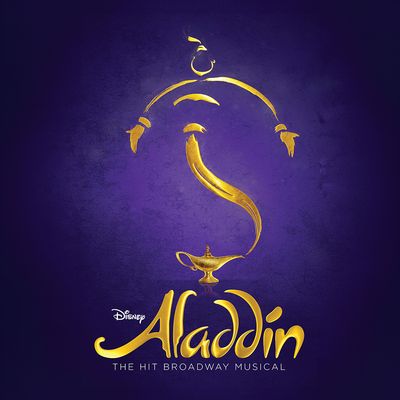
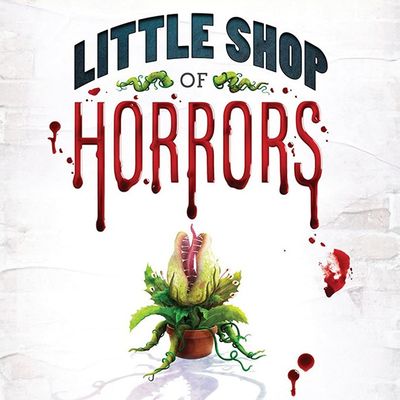
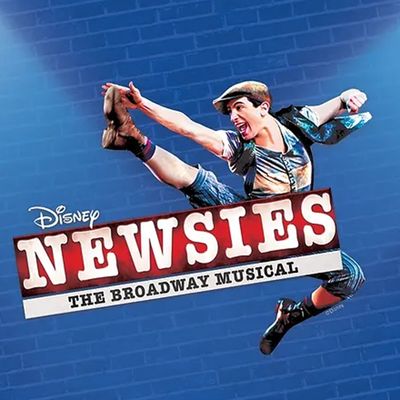
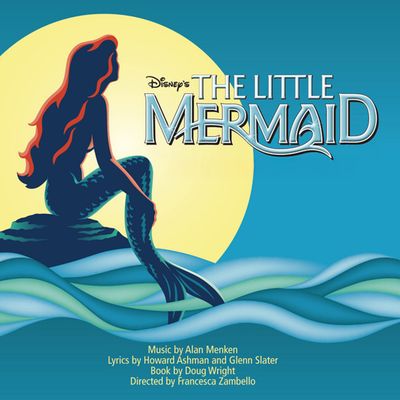
Please note: this podcast includes mention and discussion about... Disney, Beauty and the Beast, Little Shop of Horrors, Ariana Grande, The Little Mermaid, Aladdin, Newsies, Leap of Faith, The Hunchback of Notre Dame, Rocky V, Pocahontas, Hercules, Sister Act: The Musical ...and Alan’s first ever musical, Separate Ways!
Host: William J Connolly
Technical: Jordan Priestley
Produced by: William J Connolly + Darren Bell
Follow eleven on social media via @elevenpodcast and via elevenpodcast.com
Transcript
This transcript was automatically generated and might contain errors.
[0:01] Alan Menken: My name is Alan Menken, and you listen to Eleven, the official theatre podcast.
[0:15] William J Connolly: Hello and welcome to Eleven, the official theatre podcast that brings the biggest stars and creatives together in one place to discuss life in the arts. The term legend gets thrown around rather a lot these days, but it's never been more deserving than for my next guest on this, the finale of season two. He is a Disney legend, a record-breaking Academy Award-winning composer. He's the man behind The Little Mermaid, Beauty and the Beast, Aladdin, Newsies, Pocahontas, Hercules, Little Shop of Horrors, Leap of Faith, The Hunchback of Notre Dame, Enchanted, Sister Act: The Musical. The list of classics is endless. For his work, he's received eight Academy Awards. That's more Oscars than any living person.
And he's also the recipient of seven Golden Globes, eleven Grammys, Drama Desk Awards, and a Tony. Here, and in exclusive conversation, it's time to discuss it all, including collaborating with Lin-Manuel Miranda to add rap into the new adaptation of The Little Mermaid. What we can all expect from Halle Bailey's Ariel, Ariana Grande performing his hit song, his recent EGOT crowning, the lasting legacy of the late Howard Ashman, the hilarious story of him accidentally letting slip to Whoopi Goldberg about him writing a musical adaptation of Sister Act. Plus, we get an update on some of his new projects, including bringing Hercules to the stage, writing the sequel to Enchanted, and completing the musical adaptation of Night at the Museum. It's all here with the man himself. It's Mr. Alan Menken on this, the season finale of Eleven, the official theatre podcast.
[1:41] William J Connolly: Just to let you know, due to the COVID-19 global pandemic, Alan and I connected across the pond digitally, so please forgive any brief moments while we wait for the internet to catch up. Enjoy.
[1:57] William J Connolly: Please help me welcome to the next episode of Eleven. I'm absolutely honored to say that I have Mr. Alan Menken with me today. Alan, hi, how are you doing?
[2:05] Alan Menken: Hey William, good. How are you?
[2:06] William J Connolly: I'm doing very well. Thank you so much for being on Eleven today. I was joking just before we started recording that you do have this career that is enormous and there are so many things to discuss. And we don't really have, I don't think, enough days in a year to be able to talk through all the projects that you've worked on. So let me try and touch on a few of them here and celebrate those. Before I do that, I must wish you very many congratulations on your most recent award, which was received, I think it was June or July last year.
[2:31] Alan Menken: Oh, oh, the I finally got the E on EGOT.
[2:35] William J Connolly: You did. You got the infamous E on EGOT, which for anybody that doesn't know is Emmy, Grammy, Oscar, and Tony Award, which is reserved for very few people in the world that have the sort of the full lineup. So congratulations to you on that. Was it kind of nice or was it just a little bit strange to get such an accolade?
[2:51] Alan Menken: It was a relief. My reps for, you know, for years have been saying, you're almost at an EGOT. I said, uh okay, whatever. I don't, it's fine, whatever. Oh no, okay, you'll get it now. And then it didn't happen. I go, I don't care. But they kept okay, fine. So finally.
[3:07] Alan Menken: Finally, I got the EGOT for the song from the Tangled TV show. I'm glad I got that out of the way. You know, I have actually a regot, as I've said often, which includes my Razzie Award for worst song of the year for the same project that I won my Tony for.
[3:25] William J Connolly: That's a way to justice. So I imagine when you win, I think it was best score for Newsies at the Tony Awards, but you get the Razzie like you mentioned. I suppose it's a full circle moment, but also you must have felt pretty smug that day. That's a good moment, right?
[3:38] Alan Menken: Yes, it's a good moment. Oh but listen, it was a fun moment when I won the Razzie because I was backstage with the Oscars talking to the press after having won for Belle and Beauty and the Beast. And then I found out about the Razzie for Newsies. And I loved Newsies. I loved working on it. The song that they mentioned was actually one that we had ended up cutting anyway, and it didn't make it into the Broadway show, and that was High Times Hard Times.
[4:03] William J Connolly: When you get so many awards, and I just want to check that I get the statistic right. So this may be very embarrassing for you, so please forgive if I go through all these. But eight Academy Awards, seven Golden Globes, eleven Grammy Awards, and a Tony win. I mean, some people can dream of only one of those. And an Emmy and now the Emmy.
[4:19] Alan Menken: Oh, thank you.
[4:20] William J Connolly: Okay. Forgive me. I almost missed it. When you get all these awards and you get, you know, not just one of them, but multiple of them. Do they get even more special or any less special? Does it become normal or does it become slightly strange? I guess how do you approach it?
[4:34] Alan Menken: I think it's more the latter. It's like strange because there are so many variables that lead to one getting an award. A lot of it is the quality of the work, but a lot of it is the visibility of the work. You know, it's the project that your work is attached to. And I like to think that the contributions I make to those projects help make those projects one that are worthy of bringing my material forward, but still, you know, a lot of it's serendipity. A lot of it has to do with who you're associated with and the timing and all that. For a while I looked at it as, you know, God playing a trick on me because I was terrified of public speaking for a while. And it kept, and I kept being shoved up there onto that podium in front of, you know, billions of people going, ah blah blah blah. But no, it was amazing, especially with the Oscars, the effect that they have on your career. And it's a blessing, it's incredible.
[5:33] William J Connolly: And as much as we joke as well about getting multiple of these awards and sort of completing the set as it were, you know, you have had a career that covers 35 years plus. You're not sort of new to the game as such, and you've had the opportunity to build on some projects and to learn and to be able to grow. And I imagine that in itself is also nice for you that you feel like there's sort of personal growth within your career that you get to, you know, build and build and build.
[5:56] Alan Menken: I see that, yeah, I see the growth, but a lot of it has to do with just sort of what life brings to me and what I get to, you know, open my heart and open my mind and contribute my musical gifts to. And it's, you know, each day to me is a wonder about what, you know, might come through me that day. And yes, it is amazing when I see accumulating all the things that have accumulated over the years, you know, and part of that is, you know, I always tell young people, you know, that thing that you're passionate about that you want to do every day of your life, that's what you should do with your life. And that's, you know, kind of playing music and playing, you know, writing songs and writing, you know, writing music is that thing for me. And so it's kind of natural that I would accumulate this big catalog because not only, you know, my career, but it's kind of my passion as well.
[6:59] William J Connolly: And I imagine the passion itself is what drives you to try new things, to be able to work on projects that are exciting for you. And I think when you see someone living in an authentic space that's working, you know, within their means and doing what they do best, that's where they tend to shine. And I love the fact that you talk about passion because a lot of it does have to come down to passion. You know, it is a job, of course, but passion is a key part of the creative process.
[7:21] Alan Menken: Yes, it is. That and also you're sharing a space, a creative space with other people. And so, you know, writing a musical is also having a relationship with your collaborators, the lyricist, the book writer, the director. It's a wonderful world that you're sharing with people, and it's a wonderful, you know, shared activity that just also gives your life just a wonderful value.
[7:52] William J Connolly: When the pandemic first happened, and perhaps from then up until now, how has that changed your life? Have you been able to continue on that creative process, or has it sort of put a bit of a bump in the road?
[8:01] Alan Menken: Well, there's no bump in the road as far as the creative process of writing. There's obviously a huge bump in the road in terms of the creative process of performing live, of attending recording sessions, of being in the room with actors or directors, all the attendant aspects of our lives that, you know, because a big aspect of my life is car picking me up and go off to the airport, I'm off to the hotel, and then I'm off to the meetings, and I'm off to the meals, and just the life of this international community of people working in theater and in film and in television. It's a rich, wonderful life. And the pandemic pulled the plug on that and basically it's made a star out of Zoom, and other platforms like that.
But we've really been able to keep our projects going full speed for the most part as far as writing. The sequel to Enchanted was basically started during the pandemic and now is ready to start filming. The animated film I'm writing with John Lasseter's new company Skydance, it's called Spellbound, that's having a screening coming up. I completed a musical of Night at the Museum, which is now talking with the directors and, you know, when the pandemic lifts we're ready to go. Of course, just before the pandemic, Hercules had premiered in Central Park and there's a lot of projects that are just waiting to move forward. And I'm juggling about ten projects now, and thank God because it keeps, that's what keeps me sane through this, you know, this crazy period.
[9:42] William J Connolly: I think you might just answer my next question, which was gonna be do you work on multiple projects at the same time? That's a definitive yes for me.
[9:49] Alan Menken: You have to, you have to. You know, I feel terrible for people who just work on one thing at a time because it really limits what you do. But it's easier for me to multitask because of collaboration, number one, and because of technology. My ability to have, you know, the work in MIDI files or Word files or whatever it is and I can just bring it back, thank you know, thank God for that technology. And I am blessed with being able to get off one project to go to the other. And part of that is something that, you know, it started when I was working with Howard Ashman, which is every project having its own very, very specific musical universe that it comes from, a period of time, a place, a sensibility that's unique to that project. So that when I return to a project, I go, ah, I'm back in this place. And as much as possible, I try to keep each of these worlds distinct.
[10:54] William J Connolly: You mentioned about community in your answer before about going around the globe and getting to perform and meet people and to go through so much of your success and the work that you've produced. When did you first notice when you were traveling internationally that you'd sort of hit the jackpot, that there was success there for you? And when that hasn't happened before, and then it does happen, how long does it sort of take for that to become normal?
[11:15] Alan Menken: Um boy. It's a gradual process of becoming quote unquote normal.
[11:21] Alan Menken: You know, uh there are for me, I really get very touched, genuinely touched, when I feel acknowledged either by my peers or by people, you know, I've never met before who are just fans of the work. And I feel humbled by that. And I'm not saying I'm a humble person necessarily. You don't have an ego like anybody else, but it does the reaction I have tends to be one of feeling a sort of an outpouring of love for that person and um a desire to have them in my life. Um I just feel sort of the blessing in my life as that opened up for me. And I do remember the times, you know, where a bad review would devastate me. Um, or uh, you know, a negative comment would just, which is you know, crush me. And one of the things that having a prolific career and having success has done is it um it lures you from those ups and downs to the and but the ups as well.
You know, you somebody says you won this fantastic award, you go, Oh, nice. Because it's all a little bit unreal. You know, I've had situations where people have loved a song of mine that I thought was the maybe the dumbest song I ever wrote in my life. And people go, Oh, we love that song. I go, okay, great. And I've had the situation where people have completely ignored or traced a song I've written that I thought I really know the song is so special. But again, contextually, for whatever reason, if it fell beneath the radar, or and you learn to just go with the flow on those things. And also if you look at the Newsies lesson, yesterday's failure was today's success. And um you just don't know what happens because of the effect of time, uh, and uh time on a piece of art, or you know, and you never know.
I never could have predicted the staying power of Little Shop of Horrors. It was wonderful when it was first a hit, but the idea that it's still doing what it's doing all these years later, and and more so and more so and more so is of course a revelation to me. And you go, who knew? And of course, it keeps, you know, uh our dear departed Howard Ashman very much in my heart and in my mind on a very constant basis, because it's like incredible that it's just all the work he and I wrote together so stood the test of time. And he only saw actually of those works, really only saw two of the successes, and barely that. I mean, he saw the success of Little Shop of Horrors, obviously, and he saw the success of Little Mermaid, but it was in the midst of his illness.
Never lived to see Beauty and the Beast, never lived to see Aladdin. With regards to Little Shop of Horrors as well, I think it would be a miss of me not to say that that movie, the movie version of it, obviously I found your first Oscar nomination as well, which would probably be quite nice. I mean, we always remember your first, and that's quite nice. It's always nice when you obviously get uh an award for that as well. But also the highest grossing off Broadway show of the time. I mean I imagine I sort of said, when was the moment that you realized that there were some great successes happening? I can imagine that's one of them.
[14:55] Alan Menken: That was yeah, well, that was the big breakthrough was that one. When I did Little Shop of Horrors, I had as well as writing for theater, I was writing jingles and I was playing in clubs, and I was basically, you know, struggling writing songs for Sesame Street, doing you know the things we do. And I remember telling the man who had the jingle company that I was working at part-time, but I would come in and do lots of jingles. Um I said, look, I have one more show. If this one goes away of the along with the root of the other ones, which is excess you know, success into steam, but then doesn't make me money, or then I'll take an office here and I'll do I'll write jingles on a regular basis. And I was set for that, you know.
Um and then Little Shop opened and it was this phenomenon. Yeah, and that's like an out-of-body experience. You know, it's you really never can internalize that kind of success and take it. You let's put it, you should never take it onto yourself as a um something you own. It's something you're blessed with, and you're very fortunate. And you know, you really have a responsibility as a human being to share your blessings, you know, with your family, with your friends, with the and with the world, and also to realize that these gifts are things that are that come through us and are given to us, and then you pass the torch on to others. That's I think the price of having the gifts that we have.
It's we it's a wonderful moment, that feeling of, oh my god, this monkey's off my back. I I have I look, I have a si a success. And that's that's a very big moment. And then you go right back to work. That's what I was trained to do, and that's what I live to do. And that's I think one of the keys to my success.
[14:55] William J Connolly: Do you think that Little Shop of Horrors has had this success that perhaps your first musical, Separate Ways, deserved?
[16:52] Alan Menken: Separate Ways? No, I don't think Separate Ways deserved much of anything. Uh I was at college and oh my god. Yeah, but it's a song called Thank God for Marriage of Wan. Marriage of Wanna, I want to have another back. I was a hippie at NYU and I met this girl named Elise Wakerman, and I wrote music and lyrics to this show, which was about generation gap. I remember, you know, we talk about generation gap in the 60s. No, I think I think exactly what was meant to happen is what happened. But there are sh early shows of mine that I still very much want to have out in the world, and I want them to be recognized. There are some where I go, I don't need to go back to that, and some that I would, but not certain, certainly not Separate Ways. I feel like we can make a hashtag sort of justice for Separate Ways, and we can—
[17:46] Alan Menken: Oh no, no, please don't. Please don't, William.
[17:52] William J Connolly: I was joking at the start about you working on so many different projects, and I think it'd be very easy for me to go through a list of the things that you've done and ask you questions about everything. But I feel like you've been asked multiple, multiple and then multiple times again, about you know, working on Beauty and the Beast and Aladdin and the successes that you've had, and of course, those movies, those obviously stage adaptations, even in some cases the remakes, have very sentimental moments within the audience's lives. You know, people grow up with a young age, and then they come around to being a parent and they get the opportunity to pass that joy on to somebody else. Do you find now that the generations of people from your earlier work are sort of now adults with their small children? And do they sort of explain to you how much it meant to them and now their kids?
[18:35] Alan Menken: Absolutely. I'm a part of that. Just before the whole Disney chapter of my life began, we were in the throes of the AIDS crisis. I had had to discuss the success of Little Shop. Um Janice and I had bought a farm out in rural Pennsylvania, just a place to go out out to, you know, a second home. I love being out there. And my daughter Anna had been born, and it was a terrifying time because of the AIDS crisis, and because none of us knew how pernicious this would be, and whether it was gonna just wipe out the world, and you bring a child into the world, and Disney has was re-releasing all the Disney classics on VHS, and I would put in these movies that I grew up on: Pinocchio and Fantasia and Peter Pan and Cinderella and all of the Disney classics, and it all came back to me and through me.
And I shared it with my daughter at that time, this incredible space, which is these movies. And it was with that spirit in me that I embarked on working at Disney when Howard called me and said we have this opportunity to work at Disney. Yeah, that the torch was passed to me and the torch keeps getting passed. Yeah, and I love that people so passionately remember, you know, the work that they responded to as a child. And the lesson in that a little bit is that in some respect, always write to the child in people. Doesn't mean that you write to children, but you write to the child in the person. And that is a very primal part of yourself and a very innocent or open part of yourself. Never lose sight of that.
[20:14] William J Connolly: That's such a fantastic way. And the perfect message I think is I imagine not just for your success, but for us as an audience as well. Is I think is about escapism. And I love the fact that when you watch movies from the past or even new creations and remakes, you know, I remember thinking it with Beauty and the Beast. I feel like this is the first time I've ever seen this tale on stage, and I think that's part of the success.
[20:34] Alan Menken: It is. Although I would I would quibble with the word escapism, because in essence it's tapping into very real parts of our psyches that want to be tapped into. You know, if you look at a movie like Beauty and the Beast and you have all the enchanted objects, well, we're tapping into really a sense of family, finding your authentic family. So they're about love, they're about acceptance, they're about our fears, they're about our yearnings and our goals in life. And they very they touch those things very primally. I think that's the key to success of these things.
[21:10] William J Connolly: One show that I know has caught the attention of a music superstar is Miss Ariana Grande. And I know that she performed I Won't Say I'm in Love, which is just the most amazing rendition. I must confess I had it on about five minutes before I opened up our chat today. What was it like the first time you got the opportunity to s to sort of witness her perform that?
[21:23] Alan Menken: Oh I love she's adorable. And I've you know I've been obviously I've been seeing her work since she was a little girl. There are certain people, Ariana, Lin-Manuel Miranda, who I knew as a little boy you see the essence of who they are in is sort of as a child and then you the but the passion that they feel about both as a listener and as a performer and just this hunger to be a part of it and then you see that become a part of who they are as they grow and as performers that's an amazing thing to watch. And it also tells you again that stifling you know a young child's passions is a is a huge crime. If you allow them free form to indulge those passions it will grow into something so powerful in the world. And you see that in Ariana and you see that in Lynn.
[22:19] William J Connolly: Is it then a full 360 moment when you get the opportunity to collaborate and work with Lynn on The Little Mermaid? I mean apart from the fact I imagine you feel really old, is it quite nice to get to work with him?
[22:30] Alan Menken: I don't feel that old but it was you know the way it came about is people became aware about uh Lynn's passion for this particular project.
[22:39] Alan Menken: Little he was obsessed with Little Mermaid; his son is named Sebastian, and he would give interviews about that. I think it was Sean Bailey at Disney had read one of those interviews and said maybe Lynn should work with you on Little Mermaid. I had no idea what a collaboration with Lynn would even look like or feel like, but I said, "Oh, okay, sure." You know, because a lot of what's happened in this part of my career is me being teamed with new collaborators, and I have wonderful collaborators I've worked with for many years, whether working with Benj Pasek and Justin Paul on Aladdin or working with Lynn on A Little Mermaid, but that brings out new parts of myself. I'm working on the museum with these young writers, Alan Schmuckler and Michael Mahler as lyricists, and I love that.
But I'm still working on projects with Steve and then with Stephen Schwartz and Glenn Slater and Jack Feldman and Tim Rice, and still working on, you know, with the late Howard Ashman and there's a collaborator named Steve Brown. I wrote a few shows with back just before Little Shop of Horrors, and also even after he passed away. Also during that AIDS crisis time, three of my collaborators at that point passed away. Being teamed with different collaborators just brings out all these different things in me. And when someone like Lynn comes into the room or Pasek and Paul, I mean, they also walk in with a sense of, "Oh my God, I can't believe I'm here," because the child in them is going, "Wow."
That's just part of it; they grew up with what I do. Well, people are growing up with what they do. So you have to have a perspective about that and know that how people invest in those artists and their work is magical. Magical's definitely the word.
[24:31] Alan Menken: So the next Alan Menken musical, because of Lynn Manuel Miranda, is gonna feature lots of rapping. Is that the new direction? Is that what we're doing? There is some rapping in it, and I really can't take much credit for the rap aspect of it. Yeah, there's some rapping in it, but there are some very Menken songs. There are some very Miranda songs, but it's all, you know, the blend of Menken and Miranda. You know, I love him, and I love working with him, and I'm glad that we had the opportunity to do that. He's also a producer on the movie, but Lynn, you know, he juggles a lot of things as I do, and so we will have occasional contact. But right now, it's in the hands of the amazing Rob Marshall. And as we speak, they are in London right now; we're filming.
[25:17] William J Connolly: I would very quickly just like to ask you, speaking of The Little Mermaid, just about your Ariel, because she's an unbelievable talent, and it's wonderfully exciting. Can you talk to me about Halle?
[25:25] Alan Menken: Oh my gosh, she's adorable and so talented. I met Halle at the recording sessions. Well, first we had a luncheon when the cast was assembled, which was, you know, as usual, those moments are unreal. You know, there's Javier Bardem in my musical playing Triton, and oh, I'm blanking on Melissa McCarthy and just an amazing cast. Awkwafina. But Halle, oh, what a sweetheart and so talented. I did have to, you know, be educated in terms of what she and her sister do together, which is incredible. Yeah, she's just an amazing talent, a beautiful girl, and I got to meet her family, and for them, it was again that out-of-body experience, like, "We can't believe our daughter's involved with this." But you know, for me, this is something I started 30 years ago. And so really, I'm sort of just the happy grandpa kind of helping to watch the kids.
[26:27] William J Connolly: One project of yours that when I met you last time that I embarrassed myself a lot by telling you repeatedly how much I loved it, much to your surprise, and that was Leap of Faith.
[26:37] Alan Menken: Yes, that's right. Now it's all coming back to me.
[26:41] William J Connolly: I said, "Oh, do you know what? Unfortunately, I never did get the opportunity to see it, but I do know the soundtrack very, very well." And I love the fact that it feels like you—there are, of course, so many exciting different sort of genres in there as well. It sort of covers so many different places.
[26:58] Alan Menken: Yes, and at its essence, it's a musical told through a gospel revival, which is a compelling idea. I don't really want to belabor what the downsides of the musical were because I understand why it did not achieve the success it could have. And I don't want to point fingers at why. I loved working on it. It was a long process of working on it because we went through a lot of changes and story changes and book writer changes and going from a cinematic sensibility to a stage disability. The mountain of incredible material that didn't make it into the show that were in for a nanosecond, you know, it would have been a much more painful experience for me had it not come out exactly at the same time that Newsies reached the stage, so I got to have sort of, you know, what is it, what you know, when you get a shot, they sort of grab one arm and give you the shot in the other arm to distract you from it.
Well, in a way, winning the Tony from Newsies distracted me from the fact that it was a very painful night, the night of Tony's for Leap of Faith for a lot of reasons. I loved the cast; I loved being in the room with them. I don't regret anything about the experience. I don't know if the show will ever have that much of a future, but again, like Newsies, look at Hercules. Hercules was not the biggest animated film, but the passion about Hercules when it came to the stage had just grown and grown over the years. Do I think that'll happen for Leap of Faith? I doubt it. But one never knows. I can keep everything crossed. That first musical entry, the hashtag is gone. Maybe I'm gonna put my money behind Leap of Faith.
[28:51] William J Connolly: I'd love that. I'd quickly like to ask you about Sister Act because we're getting a production back to the West End. I must confess when I came to see Sister Act, like most people, I was very protective, of course, of the film and just had the best time. Like the music, I mean, "Raise Your Voice" is an anthem now. I mean, you must have seen the success that it's had all across the globe. Stepping into that world and obviously getting to work with Whoopi, I imagine, is a great moment for you.
[29:15] Alan Menken: I love working with Whoopi. I worked with Whoopi as a producer. Whoopi is—I adore her. She's just the most amazing spirit and intellect, and I love her so much. Mike Bloomberg, he was mayor of New York, and he had a—I think it was a luncheon for people in the arts. They played a medley, and someone asked, "Who are you working on?" and I said, "Oh, I'm working on this and that, and I'm doing a stage musical of Sister Act," and I hear a voice in the room go, "What?" And it was Whoopi. She didn't know anything about it. It's like, "Whoops." It came through the Disney channels, no pardon, you know, through the Disney process. But Whoopi obviously felt an emotional ownership, which is justified. And so from that point forward, you know, the producer said, "Let's, you know, Whoopi should be involved in this."
And of course, it was a great boon that she was. You know, she was very helpful in sort of being our eyes and ears, A, to the original intentions of the movie, but also the sensibility of racially sensitive issues, avoiding stereotypes, avoiding making light of the wrong things, but also understanding that you're licensed to make light of certain other things. And Whoopi was very instrumental in being our lightning rod on so many levels with that show. Of course, we had Jerry Zaks directing it on Broadway, and he did a wonderful job. I loved working on that show.
[30:49] Alan Menken: I think one of the key moments was finding again the unique world. I had already written a musical that had a Motown and an R&B score to it, which of course was Little Shop of Horrors. I always had wanted to do a show that was an homage to the sounds of the 70s, which is disco and funk and psychedelic soul and all that crazy, over-the-top stuff. And so we found the perfect opportunity with Sister Act. And I think as much of a success as it was, I still think Sister Act has still underachieved. We were up against, I believe, was it Book of Mormon, I think, which was a phenomenon. But we still ran for two years and had a wonderful run in London. But anyway, I look forward to Sister Act having a really long and successful life in the public.
[31:50] William J Connolly: My final question to you, and this seems like a very silly question to ask, so let's see how this goes. Do you think there will come a point in your career where you decide, "I think I've done my bit, I think I've contributed enough, and I think I'm ready to stop"?
[32:05] Alan Menken: I don't think that day will come. I think there'll be a realization that as I get older and older, there'll be fundamental changes in the vocal musical vocabulary and musical sensibilities that are not natural to me. They're not things I grew up with at all, and so they're not natural vocabularies. And I never really want to be that person who's, you know, trying to dress up in younger clothes, you know, getting a facelift and coloring my hair and putting on the artistic equivalent of that; that would be a little sad and pathetic. I do think that I am the keeper of a flame for a certain classic kind of songwriting that I think people are very, very invested in. And I don't see a lot of that kind of songwriting in the world. So I think there's a unique place for what I do and for my sensibility and a unique contribution to the world in doing that. I don't see ever stopping.
[33:21] Alan Menken: Alan Menken, an honor and a privilege and a pleasure. Thank you so much for your time today.
[33:25] William J Connolly: Thank you, William. Good to talk to you. Most importantly, please stay safe during these rather crazy times, and I look forward to seeing you very soon. Bye-bye.
[33:33] William J Connolly: You've been listening to Eleven, the official theatre podcast. Find out more about Eleven at elevenpodcast.com or via our official social channels.
© Broadway Podcast Network, All Rights Reserved