

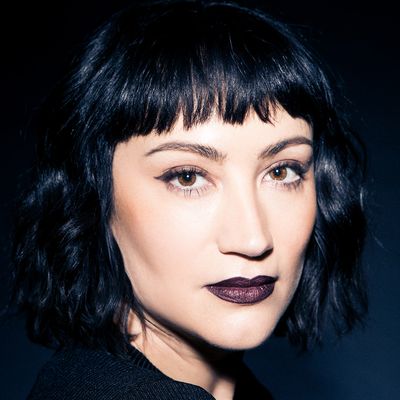
The Disney and Broadway star on her extraordinary vocal gift, how leading the final Broadway company of RENT changed her life, and why her time in Wicked made her feel like a real-life rock star. Plus, why YouTube videos and the comparison of Broadway vocalists harms what we see on the stage... Read More
From the show: eleven
Guests
Featured Shows


About
The Disney and Broadway star on her extraordinary vocal gift, how leading the final Broadway company of RENT changed her life, and why her time in Wicked made her feel like a real-life rock star. Plus, why YouTube videos and the comparison of Broadway vocalists harms what we see on the stage.
Host: William J Connolly
Technical: Jordan Priestley
Produced by: William J Connolly + Darren Bell
Follow eleven on social media via @elevenpodcast and via elevenpodcast.com
Transcript
This transcript was automatically generated and might contain errors.
[0:01] Eden Espinosa: My name is Eden Espinosa, and you're listening to Eleven, the official theatre podcast.
[0:15] William J Connolly: Hello, and welcome to Eleven, the official theatre podcast that brings the biggest stars and creatives together in one place to discuss life in the arts. Today we welcome a lady with a unique vocal talent that's led her to play some of the most iconic roles on the stage. With credits including Evita, Joseph and the Amazing Technicolor Dreamcoat, Rent, In the Heights, Falsettos, and a rather small show called Wicked, alongside originating the leading role in the new musical Brooklyn, her voice has launched her to international success and recognition. Here in an exclusive conversation, it's time to talk to Broadway's legendary vocalist about her fantastic vocal gift. How leading the final Broadway company of Rent completely changed her life, and why her time in Wicked made her feel like a real-life rock star.
Also, why YouTube videos and performances online that you see filmed with that little camera and the comparison of Broadway performers actually harms the performances that we see on stage. It's time to get very personal and very honest with one of my all-time favorite people. I'm very excited for this, and I hope you are too. It's Icon, Eden Espinosa, on this, the next episode of Eleven, the official theatre podcast.
[1:28] William J Connolly: Just to let you know, due to the COVID-19 global pandemic, Eden and I connected across the pond digitally, so please forgive any brief moments while we wait for the internet to catch up. Enjoy.
[1:44] William J Connolly: Please help me welcome to the next episode of Eleven. Somebody that's actually been a constant in my life for a significant number of years, and she's not even aware of it. And today I must confess, I'm gonna do my very best to well tell her all about it. So please help me welcome to Eleven, Eden Espinosa.
[1:59] Eden Espinosa: Hi.
[2:00] William J Connolly: How are you?
[2:01] Eden Espinosa: I'm doing okay. You know, it's a bit crazy over here in the US, but given everything that's going on, I'm doing well.
[2:09] William J Connolly: You look amazing. I was saying before we started recording that Eden has this humongous sort of blown-out hair and this amazing sort of ready, pinky colored velour tracksuit on, which I'm very, very jealous of.
[2:19] Eden Espinosa: Which I've literally rolled out of bed, threw on a pair of glasses, and I have my onesie on.
[2:24] William J Connolly: So thank you. We're off to a good start. I don't, although I am wearing a very boring black t-shirt, so I do feel sort of not very dressed up. So I'm so glad this is a podcast because people would just be staring at you, as they would anyway. But I want to do just a quick public service announcement and just check on behalf of all the gays and girlies out there. How's the Eden Espinosa belt doing? Is it safe and well?
[2:43] Eden Espinosa: It's safe and well. It's actually funny because I haven't really sung that much during the pandemic. And I'm not the type of singer that just sings every day. I mean, in the car, maybe. And I actually had a session yesterday for voiceover where I had to sing like two songs, and my voice was like, "Yo, what is going on?" Where I called a friend after, and I was like, "Am I a singer?" Because my voice was literally looking at me, going, "What do you think you're doing right now?" But yes, it's well and intact, possibly a tiny bit out of shape right now, but we're doing good.
[3:18] William J Connolly: I mean, to be fair, we could probably stop here.
[3:19] Eden Espinosa: That's what I wanted to know.
[3:20] William J Connolly: So signing off.
[3:23] Eden Espinosa: Literally be the shortest podcast in the world.
[3:25] William J Connolly: No, I joke. I wanted to check because we're all obsessed with it. We all love it, and it's an amazing, amazing instrument that you've used, as I mentioned, to on in so many different shows. And one I referenced just a second ago was Falsettos. You did the national tour across the United States. And it's a show that had this resurgence. I mean, we had this production in London, which went crazy. I mean, people are obsessed with it. And obviously, we had the huge production most recently on Broadway, and obviously the people listened to the cast album and rediscovered it. So I guess, you know, you said when you were doing that show, I think it was sort of towards the start that being in it healed you, you know, it was a sort of full 360 experience.
And I loved this idea that you can benefit not just creatively but personally from your work as well. And that was incredibly inspiring as somebody that follows you and follows the show to know that you still feel that being in it. So I guess in your own words, what was it about that show that really connected with you? Why did you, you know, just have to be part of it?
[4:18] Eden Espinosa: Funny story. Like I didn't want to be a part of it. You know, I think that like, you know, I saw the revival on Broadway. I have so many friends in that production, and it was a gorgeous production. And to be honest with you, I wasn't incredibly familiar with the show as a whole. With individual songs, I definitely was. And auditions were coming around for the tour, and I passed on the audition, mostly because I'd never toured before and I wasn't particularly interested in touring at this moment in time. And then the other reason was because I didn't really see myself as a Trina. And I'd never played a role like that before, really, and so I said no to the audition actually twice. And then it came around the third time, and I finally sat myself down and I said, you know, I was like, "Eden, James Lapine and Bill Finn are asking to see you.
Get over your whatever the reasons are and go in." Like, you know, I try to think about things of this is coming around again, and there might be a reason. And I went in, and I didn't think I was gonna get this job until my audition was over. And I thought, "I'm gonna get this job." I think mostly because I had a completely different take on the role than what they had seen before. And it just was a lesson in don't limit yourself based on what you think of yourself. You might show them a different version that they respond to. So Trina was very, very unexpected, and I had just come off a divorce that was actually finalized while we were on tour. And so, you know, there were things that about Trina and her, you know, my ex-husband wasn't gay, but there were things about Trina and Marvin and their journey that evoked things in me that I thought that I was over.
And so there was just a lot of uncovering and a lot of rawness, and it actually helped me get past a lot of stuff that I didn't think I needed to get past. So it was a surprise in a lot of different ways. But also it was beautiful and fulfilling in the moments of being a mother.
[6:56] William J Connolly: It's an amazing show, and it's so interesting how many different ways that it connects with individuals going to see it, having seen and listened to the cast album on so many different occasions to see how different ages and different types of people respond to it. And I imagine that's something that you experienced on the national tour, you know, state to state, city to city, you know how this story itself isn't just one sort of size fits all. It really does connect to different people in different ways, and I guess that's a testament to the way in which it fit into your life.
[7:25] Eden Espinosa: Yeah, absolutely. It's funny because when I saw the show, of course there were beautiful moments that I was moved by, but as a whole, I literally looked at these people and was like, "Everyone is horrible." And that's actually what was beautiful about learning the show and appreciating the fact that Bill Finn wrote these characters that are incredibly flawed and incredibly human and messy, but they are a family in all the different ways that people can be a family. And it was awesome to get in it and then find the connections for me and for all of us as individuals, also separating ourselves from the original revival cast and making it our own, which was cool as well. But it was interesting taking it around to certain cities who possibly weren't as progressive as others.
It's a very niche piece of theater, you know, it's not everybody's cup of tea, you know, sonically the way that it's written, melodies and stuff, it's not that accessible to everybody. And so it was interesting to see, you know, city to city how it was received. You know, sometimes in certain cities, people would leave after act one, and the theater was definitely more empty for act two, which is a completely different vibe than act one. So, you know, it was a very varied tour. But we had an amazing time.
[9:12] William J Connolly: What about the interactions that you had with people perhaps after the show or, you know, even passing in the street? I know some people spot, you know, stars from shows and they say, "Oh, I came to see the show and I got this from it." Because I imagine it probably did cross your mind at least once that the story that you're telling could, you know, is a real story. It does happen to some people. You know, did that ever happen? Were you ever sort of mindful of that?
[9:36] Eden Espinosa: Absolutely. And what was, I think we all were shocked at the amount of young people that really identified with these characters and what they were going through, you know, for a million different reasons. You know, the relationship of a young person with their parents when it came to Judaism, when it came to maybe my dad left us and is now married to a man, or my mom left and now married, you know, that kind of thing. And also the amount of awareness that it brought to a generation about the AIDS epidemic and the AIDS crisis in the world and in this country. We felt the weight of that, the responsibility of exposing what this was at the time, which was a death sentence, pretty much. So yeah, there were so many different aspects to the show that really, it was actually talking to people after the show at the stage door that we really understood the nuance in how the connection that people were having to the show that was just so layered and nuanced with everybody for a million different reasons, which is what's so beautiful about art, you know? And so it was incredibly, it was an honor and it was gratifying and fulfilling to know that.
[10:31] William J Connolly: And were you aware during the show that there was this, you know, desperate need for leading ladies to belt with bananas in their mouths? Were you aware that this was a thing?
[10:31] Eden Espinosa: I was. I wasn't aware, but it still tickles me to this day that because it is quite a science, believe it or not, where to place it in your mouth so that you don't inhale a piece or I put too much in that time or, you know. But that moment in a show is easy, is one of the iconic things. It's like, you know, you very rarely get a chunk, a number that is so beautifully crafted that can let you just play and have fun. It's so naughty, and it's probably gonna make absolutely no sense to anybody that's never seen the show. Like they'll think this is some form of very crude innuendo. I promise you it's not. It's quite literally a scheduled part of the show. It does make sense if you go see it.
[12:10] William J Connolly: You mentioned the AIDS crisis because it is a huge part of that show, and I'm really, you know, grateful that stories like this are being told. We often don't see them on stage. The Inheritance has been this phenomenal play that came from England that played on Broadway and had an amazing reaction. And I'm so grateful for that. And Falsettos is another piece of theater that really does that. Another show that you were part of, which you closed the Broadway company was Rent. And that show in itself, I mean, the two shows that I referenced before had amazing impact on the theater community. But Rent, I think, is the original, you know, that tackled the AIDS crisis in a way that literally sent a seismic shift through the world.
I mean, it really is to this day. If you were to put a full-scale production on, there's nothing like it. Nothing will ever beat it. It sits in a genre all of its own. The production itself, we're very lucky to say was recorded, and we get to just see you belting for the gods once again. See with this wonderful hair, and those leather pants and the white top, and it's just amazing. Were you aware when you were going in just, you know, it sounds cliché, but just how much of a big role and a big show it was, or did you sort of have to, you know, close yourself out from the outside world, or you probably just poo yourself?
[13:21] Eden Espinosa: No, I was completely aware. You know, this show was monumental in my journey. You know, it was I always loved theater and I always wanted to do it. But when I first heard Rent and these voices in that original cast, I immediately was like, "Oh, if these people are on Broadway, I can definitely make it." You know, it wasn't like I had to sound more legit or more, you know, this stuff. One of the first times, besides like Hair and Jesus Christ Superstar, that you had like pop rock voices, true pop rock voices, and again, monumental in shaping me and what I wanted to do.
[14:08] Eden Espinosa: It was the first show I ever saw on Broadway. Um, I definitely stage-stored with all and got all the original cast signatures. And so when this opportunity came around, you know, I also auditioned for the show 11 times when I was like 18, 19 years old, never got it. Um, auditioned for the movie, didn't get it. And so when it came, you know, I kind of resigned myself of like, all right, this dream isn't meant to happen. And so many of my friends were in the show over the years, and um, this happened, and it was uh, it wasn't an offer. I didn't have to audition, which is like the first time that had ever happened in my career as well. It was like yes, and this was before we even knew that it was gonna be filmed.
We didn't know at the time it was gonna be filmed. I just thought, oh, I get to be Maureen in the closing cast on Broadway. The answer is yes. Um, it was a full circle moment, um, you know, very emotional, huge dream come true. And then also to like all I ever wanted to do was be Maureen and and to also have the link and connection to Adina Um and to have been her standby on Broadway and then to be the closing Maureen. It was just like a lot of connections and full circle moments that were just beautiful for me.
[15:25] William J Connolly: Were you or are you even one of those people that think if you put stuff out there, it comes back to you? You know, if you say to the world, I really want to play this role, then maybe perhaps it might do a 360 and come back to you because there's been lots of different parts of your career that sort of happened. And I love the fact that you pushed away falsetto so much, but actually it ended up giving you more than you could ever expect from a job. And then 11 times for Rent, and obviously your connection to Adina and you know, that feels amazing, but that does also feel like a, you know, it was always sort of meant to happen.
[15:55] Eden Espinosa: Yeah, I strongly, strongly believe in that, but it's also about like acceptance and surrender, you know, kind of I I'm very much I've learned this the older I've the older I get and and the more time I spend in this career in this industry is like, you know, what's meant to be yours will be yours in the time that it's meant that you're ready for it. And I am I'm very much a believer in roles teaching you what, you know, and and um breaking you open and always learning from connecting to that person, um, the character that you're playing. And so I always try to learn lessons and get something out of it, whether I know it's gonna happen or not. Um, so yeah, I mean yeah, I've I you're right. I have had several moments like that in my career, and um I'm grateful that I've been um open enough to receiving uh everything that that that I've been given.
[17:00] William J Connolly: Did playing Maureen having auditioned for it, I think you mentioned 11 times fulfill what you wanted it to, because I imagine sometimes with roles it's perhaps doesn't quite live up to the you know the height and expectation that you have, you know, was it everything that you wanted?
[17:13] Eden Espinosa: Yeah, because you know, it it's just like an incredibly special time. That group of people, we weren't all the typical people they would cast for those roles. You know, some of the some of the people had done the show for years and years, but like at the very beginning and came back. I think we were all, with the exception of Adam Cantor, a little bit older than than what would normally be cast in those roles, but it it was just still to this day the summer of my life. It was only three months that that I spent in that show, but it was just it was everything I wanted it to be and and more. You know, and also we were given, you know, that show at the time had been running for 12 years on Broadway and we were we were given the freedom to put our own stamp on these on these roles, which you know is always a gift.
So to to use a false items term it was it's still to this day a very much a tight knit fam. And I feel like Rent has the ability no matter where you've done it in the world it's like you have this instantaneous connection where it's like with other shows I haven't had that. So I think I think that Jonathan's words and and what he wrote are the reason why that is because his his soul and his heart are very much woven into every word of that show and you feel it and that's that's the difference I think that that brings us all together.
[18:45] Eden Espinosa: Take Me or Leave Me and Over the Moon are signature songs. I mean they're probably I imagine certainly Over the Moon like one of those songs I imagine that gets sung all the time in auditions. It's probably like don't sing that song in audition because it's starting sung so much because it's such it just has to be delivered in a certain way you know it has to be performed in a way perhaps even you know just as written or perhaps that people have heard in the movie or the musical so when you then go now it's my turn to sing that song how do you carve out you without pulling away too much from the album or what people are expecting of you? How do you make it, you know, Eden? How do you put your isms on it?
[19:20] Eden Espinosa: That's um that's funny because when you were saying that, like something just came to my mind because you know, when I I didn't go to school for theater after the original company had been on Broadway for a little while, and like the national tour hadn't happened yet, none of the other companies had happened yet. Um, and I was like a senior in high school getting ready to graduate. And every time the woman that I got, I I'd make it past the first round into the second round, and I I auditioned for that woman 11 times. And the thing she would say to me every time is don't sing it like the cast album. But at the time I had no training, and I really didn't have the tools to like make it my own, because in my mind, I'm like, I'm doing it exactly like her, and she has the part, so why aren't you giving me the part?
So cut to, you know, probably 13 years later, um, I was given the freedom to to make it my own. And I have to be honest in saying, like, Over the Moon is probably one of the scariest things I've ever done um in a show. It's frightening because you're you feel like you're out there without a safety net. Um, and for me, you know, I think that um Maureen can be um misconstrued as as an incredibly selfish, self-centered person. And I wanted, I wanted her, my version of her to be so serious about her art. Um, and that, and that can be comedic in how invested she is. Um, and so I just wanted to take that moment as serious as possible, even when things went wrong, you know, with the like the sound machine or getting a dry throat.
And so there were things in there that would happen to me naturally that I would add lib off of that Michael Grife was like, that is a really great moment. And if you can make that organic as possible, keep it. Um, so there were things like that that um that he allowed me to to bring my own stuff to it. But but throughout the show, I wanted I wanted her love for Joanne to be apparent, even though their relationship is tumultuous, and I wanted her love and passion for her performance art to be apparent. And if if hilarity ensues through through all of that, all the better. But I I wanted it, I wanted her to be taken seriously, um, or she wanted to be taken seriously.
[21:59] William J Connolly: I can only imagine the pressure of having your performance sort of cemented in history, because I do love the movie version, I think it's wonderful, but it your production is the one that I watch, not just because I was fortunate enough to come and see the show, but because it's live theater, and I just think, gosh, they're just you know, those imperfections that you mentioned when things go wrong is actually sort of what makes live theater exciting, because nobody else in the world is ever gonna get the same performance that you just delivered, or you know, the audience isn't gonna have the same emotional or physical reaction to to what you just did. And in a show like Rent, as it, you know, as emotional as it understandably is and powerful it is, it is also a very fun show, and I think that's important to remember that we are supposed to be celebrating life.
[22:43] Eden Espinosa: Yeah, exactly. And it's funny because when I watched that, when I watch our our our movie or you know, our version, I there are moments that I can that that viscerally like I remember um because you know, it was something that we all commented on almost every single Roger, Mark, Angel, Collins, Maureen, they were all there. Um, and so as intimidating as that could be, it was easy for us to shift the perspective on this theater is just full of love for this show, for these roles, for this music and for this man who created this show that has impacted our lives so deeply, and um and countless others. Um, and so um, you know, I think I think that is what kept us grounded and centered, um, because it was overwhelming, you know, having having that much energy coming at you is you know, is indescribable.
[23:52] William J Connolly: Do you go home feeling uh you know elated? Do you go home feeling emotionally drained? You go home feeling somewhat content when you do a show like that that hits so many different nuances?
[24:02] Eden Espinosa: Oh, all of those things, yeah. It's just depending on the day. Um it's all different, but yeah, I mean, I think that like, you know, I think all of us, um, if you're lucky enough, you're you're paired with like-minded artists, um, and that particular group of people, we and I think because of that specific time, we knew it was the end, we knew we were the last cast, and so we literally savored every moment and every show, we left everything we had because we didn't want to take advantage of any of it. You know, we knew it wasn't gonna be another year. We, you know, we knew our time was limited. It was exhilarating and equally as exhausting because you know the audiences on throughout that entire summer were just as enthusiastic as that closing day. So that fuels you, but it's also, you know, it also drains you at the end. You feel, yeah, you feel like, oh, I did that, I did that.
[25:06] Eden Espinosa: If anybody's wanting to watch that production and that performance, not that we're here to plug too much about Rent, but it is available on iTunes and it's worth every penny. It's it's really is you know a staple now of you know, I was gonna say British history, that's habit, American history, and all of our history and our collective musical theater history. It's an amazing, amazing production.
[25:25] William J Connolly: So let's drop the B bomb. Let's talk about one of my favorite things in the whole entire world, and that's Brooklyn.
[25:32] Eden Espinosa: You you look terrified then.
[25:33] William J Connolly: I was like, oh my gosh, what did you think I'm gonna talk about?
[25:35] Eden Espinosa: No, I don't know. I was like B bomb. I was like, what's be?
[25:37] William J Connolly: I was thinking like and there you go. Anytime anybody mentions you, apart from the show, which we'll talk about in a second, this one gets brought up because I mean the songs, the story, I'm getting a little bit sick of myself just constantly saying this to you. You're gonna be like saying the same statement about every show, but it's true, right? Let's just start the beginning. So it's a it's a role that you got to workshop and you know, bring through and bring it to the genius that it is now. I mean, for you getting to originate a role, does that mean that all of your dreams, all of your aspirations to want to make something your own come true in, I mean, essentially a rock opera? Does it all just come together in one wonderful piece?
[26:11] Eden Espinosa: Well, um Brooklyn actually is the thing that brought me to New York. Um and gave me my equity card and you know, got me into the community. Um, and so I didn't even know what a workshop was. You know, at the time I was working at Universal Studios, which is a theme park here in Los Angeles and Florida, and I was doing a show um called Spider-Man Rocks, and it was when Spider-Man was like huge and it was a rock and roll like stunt show, spectacular. And a lot of my friends um were a little bit older, had come to New York and worked on Broadway and then moved back to LA. And so I always like looked to them for guidance and advice, and I and I got a call from the casting director who who had seen me a few times in LA for things, and and he said, you know, there's a workshop of a new musical, and we haven't found what we're looking for in New York, really.
And we want to come to LA and I I want I want the team to see you. And I was like, great, okay, no problem. And then I got I was in the break room and I got off the phone and I literally was like, hey guys, um, what is a I didn't have an agent or anything. I was like, um, I just got a call to audition for a workshop. Like, what is that? Should I do it? And they're like, Yes, you should. It's it's like the very beginning of a long journey, and that means you could be the original. I'm like, oh, okay, okay, great. Um so yeah, it it I didn't fully understand what it all meant to originate something. I was because I was so young and was just like, yay, I get to do this thing in New York.
[27:54] Eden Espinosa: Um and uh so at the time I didn't fully grasp the entire concept of originating something. Um, but obviously I do now. Yeah, I mean, it's a pretty big deal. I think it was a good call that your friends at Universal said in terms of taking it. I feel like, you know, well well done to your friends for saying, yeah it's probably a day off that you should take. It's quite a smart move.
[28:18] Eden Espinosa: Yeah exactly. Once upon a time is an anthem now. It's yours. It belongs to you. You're on the album. We've all played it far too many times. If CDs were such a thing I'd probably have to have 10 different copies because you just go back and much love to the rest of the songs in that show but you do sort of you know every song every show even has an anthem. When you get presented with material like that, apart from the fact you probably think what a beautiful song do you think, oh good Lord, why are they making me belt all the way up here? Why are they making me do this? Give me a rest.
[28:46] Eden Espinosa: Yes you know it's so funny is somebody um it's just yesterday or today like re you know put a put it on their Instagram stories of a press day that we did for Brooklyn and it shows Karen Olivo and Ramona Keller like in the background and it was the last moment of Once Upon a Time and I just reposted it today and I was like baby Eden and Karen and Ramona and Karen sent me a DM and she was like I'm still mad I'm still mad that they made you do that. And I was like yes I know seriously you know it just comes with like age you know I I would have done anything they asked me to because I you know because I could I was young enough um and you know now you know I'm a I'm a lot older now and now I'm like maybe we maybe just a half step down or I have to do this eight times a week can we like reframe it a little tiny bit um but at the time I wasn't concerned about any of that because I was just like we know but I do remember that song in the workshop was very different.
[29:57] Eden Espinosa: It was a different song, and Once Upon a Time was like a very intimate, quiet, lullaby-ish thing that street singer sang to Brooklyn. And then when we were going in our out-of-town tryout, they changed it, took out that old song, made it my song, and it made it like the theme of the show that would come back every now and then. And I remember John McDaniel playing this new version for me and then playing the end on the piano, what they wanted me to do. And I remember like saying to him, I was like, I I I can't do that. And he's like, Yeah, you can, and you will. And I'm like, okay.
[30:38] Eden Espinosa: So um I don't know if I had ever sung, I don't know why they thought I could, but obviously they heard something in my voice that maybe I did it later. I don't know, but that note is crazy, and I would never wish it on anyone because now, of course, years later, there's pressure and there's like more mind games that come along. Then I was literally just like living out my best life, and I wasn't concerned about pressure and expectations, and now uh it would be a nightmare to have to execute that eight times a week. For me, it would be a nightmare.
[31:16] Eden Espinosa: I just imagine you going around your house being like, Yeah, it's still there, yeah. I've still got it. Like, or are you like Donovan Troy? No, I do, I do. Um, I I don't sing Once Upon a Time very often, but and I and I don't sing the song to see if I still have it because I I there's a lot of like there's just a lot of not trauma, but there's a lot of stuff connected to that show. But like I uh, you know, I'll go up there every now and then and be like, she's still there okay okay girls all right she still got it like she's in there so it's an amazing song anyway and I can imagine that as much as you go oh my gosh I could never sing that and obviously you come to realize that you can and it's within your bandwidth to be given and presented with and get to make a song an anthem I think it's very very fair to say it's become an anthem yours and obviously you shared it with the world and it's been sung by so many people is homage to the show and in celebration of the show but I imagine this probably sounds a little bit cliche to say but like you're very grateful for that.
[32:15] Eden Espinosa: No and that's exactly what it is you know at the time I think um I think the show Brooklyn was ahead of its time you know people really weren't singing that crazy on Broadway at the time and and now of course like there's a million shows where it just gets crazier and crazier and I think that like people you know in college and at the time they were too young to have known the show or seen it but the fact that people are still connecting to it the fact that there was a production in the UK um and and that people are still discovering it and it's touching them and like the amount of people that I meet or message me that say like you know this this song or this show has helped me all these years later um it's it makes me proud um you know and it makes me just know that it was meant to be for however short lived it was and for however it wasn't received well in New York at the time.
[33:20] Eden Espinosa: So that makes my heart incredibly happy to know that that people love it. And um, and still to this day, even if it's not streaming on, you know, they took it off all the streaming platforms, but people are still still digging it, and so that makes me happy. If you look online at clips from that show, but also if you look at um your performances in Evita, which was fairly recently, and also which again is you and your signature notes and making it your own so beautifully.
[33:46] Eden Espinosa: And then if you look at the sort of slightly professional recordings of you as the narrator in Joseph, um sort of towards the start of your career, and then you we talk back to you singing, I think believe it's Ariel at Universal Studios and all these performances. I sort of do feel like you set yourself up for a little bit of a challenge because you just apply a hundred percent of you and the crazy interpretations that you do to it. And I think and not sort of a Wednesday afternoon, you know, mid-March when it's raining, and not that it ever rains in the States, but you know, and you'll think, oh gosh, have I got this in me?
[34:16] Eden Espinosa: And you I feel like you've sort of set yourself up to really deliver as well. Is there ever the other side to that where you think, oh gosh, people are expecting so much, not just of the character, but of me, and I I don't think I can deliver, you know. Just does that happen?
[34:33] Eden Espinosa: A million percent. Um, yeah. I mean, I had a I had a real um dark time in my career um for a lot of years where I had to kind of like step back because I I didn't go crazy, but I was paralyzed by um by what I thought people's expectations were, and it affected me. Um, and it affected me obviously emotionally, but you know, I'm I'm very much an empath, and my emotions can affect me physically in a in a very big way so I developed a lot of tension and um just bad shit um when it came to singing and like I didn't want to sing for a very long time and I I stopped auditioning and I um and because I mentioned earlier like I didn't go to school for this so I I felt like I had reached a point in my career where I needed a skill set I needed some tools to really help me cope with nerves and to ground me in the craft so that I didn't let my mind get away and affect me because it was um and so yeah I took a two-year acting program in New York at the William Esper studio that literally changed my life and and gave me um a skill set to to bring myself to things so authentically that I don't have to think about or worry about people's perspective of me because there's always gonna be people who don't care for you or what you do and the the end of the day it doesn't really matter.
[35:02] Eden Espinosa: And so yeah I feel like once you hit a certain point there's um can easily get swept away at the result you get you get very obsessed with the result in anything um and I I had to get out of that um quickly because I was thinking um and there's still moments of it there's still you know but I've I'm like I said I think the older the older I got the more comfortable I got in in me being a flawed human being.
[36:49] Eden Espinosa: You know, that's the other thing. Like with younger generations who were inspired by me and my voice, who have literally in skill and technique have surpassed me by far. And that is also a mindfuck of like comparing yourself to your younger self, accepting where you are at that moment and accepting the way that your voice changes and ages, and knowing that, like I can still do what I did then, but like there's so much more.
[37:23] Eden Espinosa: It doesn't sound the same because it's however many years later. Um, and and accepting that like I want to be a multifaceted flawed human. And I always want to approach my work that way. And if it's not perfect, I personally am okay with that. Everybody might not be like, oh, that's flat, ooh, that was tight, ooh, that sounded a little strained. Well, um, it's going to because I'm not a robot.
[37:52] Eden Espinosa: So that took me a long time to really be okay with that. But I feel like I've I've overcome a lot of that mindfuckery, and um, and it's it's empowering at the end of the day for me.
[38:02] William J Connolly: It's incredibly empowering to hear you talk about it as well. I mean, there are many people that have been brave enough to discuss the same types of situations or similar to the one that that you just mentioned there, but I don't think that we do tend to have these types of conversations within the industry for you know a multitude of different reasons, both good and bad.
[38:19] William J Connolly: I think some people see it as weakness, a lot of people see it as great strength, you know, in acknowledging the fact that yes, okay, you have a completely different relationship with your voice now. But gosh, if that didn't happen, you wouldn't have gone, you know, for two years and studied and improved on your acting. Perhaps you wouldn't have got Falsettos. I mean, there's there's so many, there's so many benefits to it.
[38:38] William J Connolly: I feel like actually I'd rather see, and I've you know, just focusing on singing it, people expect the notes, but actually, I've seen so many actresses with you know voices that aren't as strong as the album that are much better actresses on stage and you think well I'd rather have that than the alternative you know it's it's very much a give and take situation and I I applaud you for being completely honest about that because I feel like this is a conversation we should have more often.
[39:01] Eden Espinosa: I agree I agree I'm very much a believer in transparency and vulnerability and being honest about struggles because we all have them and there's nothing wrong with them and of course with the struggles comes growth and you know comes um knowing yourself even more um which in turn just just gives you more depth as an artist so I'm I'm happy to have the conversations about struggles and shortcomings anytime.
[39:33] Eden Espinosa: Danielle Steers who stars in Six here spoke about being slut shamed and having negativity brought to her being in because people compared it to the original and I feel like this is a little very niche and unwanted pocket of our community that that needs to sort of fuck off basically it needs to go.
[39:49] William J Connolly: Yeah and you know it's funny because like I this was years and years ago but I did a a blog post about that same thing because there are a lot of things being said online about certain people's performances you know or or like having done an eight show a week gig and then doing like a New Year's Eve thing in the middle of Times Square in the freezing cold and like how dare you like you know because people so easily sit behind their computer screen and throw out these insults, but then you're waiting at the stage door asking for their autograph.
[40:21] William J Connolly: So you have no idea what anyone's um, you know, life has been like, what they're dealing with. And of course, they're not going to be like the person who does it eight times a week because they're not afforded that opportunity. So yeah, I just um, you know, it's that thing of like it's it's really empathy and compassion of just like I don't understand. Of course, everyone has their opinions, but do you have to like say them online and tag the person in it? Because that is I don't understand why you're doing that.
[40:54] William J Connolly: Um, because you wouldn't say my face. Um, you know.
[40:59] Eden Espinosa: So it's funny, uh, that kind of thing is is I don't really understand it. It's somebody just showed me this thing on TikTok just recently where this voice teacher was taking a YouTube clip of me and like dissecting it and just saying, oh, well, here there's a little too much weight and she's under pitch here.
[41:19] Eden Espinosa: And of course, you know, it could she could have been tired, she could have this and that and the other. So I'm like, so then why are you taking a clip of a moment and dissecting it for for why? Um, and then I'm you know, I'm I have an account on TikTok, but I haven't done anything, but like I'm tagged in it. And so it's like, so you wanted me to maybe take your advice as a voice teacher. I don't understand this. Um, it's just a very weird thing.
[41:46] Eden Espinosa: And that's part of what why I talk about it, because you know, when I was just starting to come out, you know, come up in the industry on Broadway was right when social media was right when YouTube was blowing up, right when chat boards were happening.
[42:05] Eden Espinosa: And so as I was doing more and more roles, more and more cameras and my live concerts and stuff like that, you just become more and more aware that people are gonna put this online and they're gonna say whatever the fuck they want and not think about me.
[42:21] Eden Espinosa: And it literally feels like someone's choking you, and it's awful. Again, I'm not saying that I'm gonna be everyone's cup of tea, totally entitled to your opinion. I just don't fully understand why you're tagging me in it. Um, so I don't think I'll ever fully get that, but who knows. It's part of the culture, and of course it's gonna happen. But also, if anybody's gonna know that something isn't totally perfect, it's you, you're the person singing it like duh.
[42:53] Eden Espinosa: Yeah, of course. Yes. I'm very well aware. I have ears. I am present, thank you very much. Also, I'm not a CD and I haven't been through a desk, so like just back it up a bit, you know.
[43:07] William J Connolly: Oh, I thought this feels like therapy. I'm like musical theater, social media therapy. Something that a friend of mine said, oh my god, I said to her, I'm talking to Eden, and she was like, you have to ask her about Tangled Adventures because like, oh my gosh, like this world, I mean, going into getting to voice this role and getting to be, you know, immersed in this universe. I mean, apart from all of the questions that I know you've been asked a million times, it just looks like really good fun.
[43:32] Eden Espinosa: It is, it was every moment was an absolute dream come true. I've always wanted to voice a character for Disney, and the fact that I had auditioned for the movie for Tangled, I had auditioned for Frozen. Um, obviously we know how that went. So to have Tangled come back around in this way, and to have me be one of the only new characters and have so many people, you know, connect to Cassandra and embrace her and the music and like just all of it was over the moon. It just sent it still sends me over the moon. And I just love that people love the show so much.
[44:09] William J Connolly: Is it nice to also step into a world that you are perhaps not too familiar with, you know, to get to sort of focus solely on the voice and know that other people can do that bit, you get to bring everything to you to that, and especially I imagine through your voice, your acting as well.
[44:23] Eden Espinosa: Yeah, it's a completely different medium. And I'd had a lot of experiences with voiceover before, but not to this extent, not the same character for three seasons. So it really is like a different medium, and you have to sort of learn the nuance of capturing emotion through your voice without your face and without your body and without your gestures. And so I learned so much over the three seasons voicing Cassandra and also, you know, you're never in the same room as people, but you know, sometimes having Zach or Mandy's voice to work off of like was just amazing because they have more experience than I do, but also super cool that all the new characters were from the Broadway community, you know, James Moreau Eigelhart, Jeremy Jordan, Laura Benanti, Gavin Creel.
[45:21] Eden Espinosa: So it was just very, very cool that they embraced us and included us in the fun. The music is so good, and you are in really good company. I mean, the list of names that you mentioned there, especially musically getting to who you will work together, it's like one of my go-to albums. I mean, I just think it's great. I love it so much. And I was actually when I recorded "Waiting in the Wings," I was actually in Boston doing Maria Friedman's production of Merrily We Roll Along with Mark Umbers and Damien Humpley.
[45:52] Eden Espinosa: And so whenever I hear "Waiting in the Wings" or people mention it, I always end up like thinking about Merrily because it was like a time. So it's so cool. We haven't spoken about it yet. So there are so many questions that you've been asked about Wicked, and therefore trying to find something original to ask you is, I must confess, quite difficult. I was like, what hasn't she been asked? And we've spoken so much about how you've applied yourself and so many of the options and choices that you did have been put in as alternative versions and you've claimed very much that role as part of your wheelhouse and you've been celebrated for it on so many different occasions.
[46:29] William J Connolly: And so when I was trying to think of stuff that I wanted to ask you, I was sort of curious as to what you felt the woman who performed that role when you were in the final stages of playing Elphaba, what would the girl that first started off think of her? What do you think she would think of the different productions, performances, you know, from going as a standby with Idina through to full time, traveling everywhere? What would she think of the journey that you went on with Wicked?
[46:56] Eden Espinosa: Oh my gosh, that's such a good question. I think there would be nothing but pride. Um, because I think because I spent so much time playing that role, and at such formative years for a young woman, like I played it from 25 to 32, always coming back after having left to do another project, and then I would come back and do it for a little bit, leave, do something else and come back. But I think that like it was really my contact with Joe, um, and having Joe Mantello who directed it and having been there in the very beginning and having him really kind of take me under his wing and give me the permission, you know, it's funny when you're younger and you start with a show as a standby and I remember the first time that I was gonna do the role without being the standby, it was only going to be for six-week period on the national tour and I remember him saying to me, you know, you're not the standby anymore and you can put your own, you know, not that when you're a standby you have to copy what the, you know, you don't have to do an impression of that person but you're not fully at liberty to completely put your own spin on it.
[47:22] Eden Espinosa: And so every time I came back I feel like I would evolve into a better artist and a more nuanced so by the time I was done doing the role, I almost felt like I was, it almost felt out of body in the sense that like I knew my version of Elphaba so well that I could react to anything that was thrown at me, anything that went wrong I could respond, I was just kind of like in the matrix, which was very cool. Very, very cool. So I think that like that younger woman would look at that journey. And I don't know if I would have believed I would have gone to the depths that I did, but I think I would just be like, whoa, I think she would look at me and just go, whoa.
[49:15] Eden Espinosa: And I'm proud of you. Um, for taking it to the depths that I did because I really did. I learned so much from playing Elphaba for that long, and I'm very, very connected to her still. I think it's a testament to the different productions and the fact that Wicked could never let go of you and always wanted to welcome you home that you really did embrace that role. And I think, you know, we as much as I joke about you know the choices and being obsessed with your voice and the fact that you completely made it your own. I do think that is what makes you so special is because you do have a real sense of ownership over it, which is why it's somewhat surprising when I hear that remark for I think you said it was Joe that said, you know, you're not the standby anymore. I can't ever imagine you copying somebody else or you know, not feeling completely at home with that.
[50:03] William J Connolly: And again, I think that's a really commendable thing to say, which is that so often when a role isn't yours full time, you do sort of feel in the shadow of somebody else, and therefore I can imagine, you know, when you get to go to LA, you know, of all places and get to perform that role, you go, yeah, fuck this, this is mine, and I'm taking over.
[50:22] Eden Espinosa: Yeah, and that was that specific production with that specific cast was really almost all of us, except for Adam Wiley, maybe, we had all done the show before and it in different productions, and so Joe really stripped us of everything and really like pushed us to find new levels and new depths, and our own stamp. And it was hard. Um, and there was a lot of like tears and it was, he really pushed us but I can't think and continue to throughout the run like he would come in and check and he never let us, um, because that particular production was like Hamilton me and when we were in LA like it was never like it was like that on Broadway at the beginning but LA was like a rock concert and you know when you listen to those like YouTube clips you're like oh that was closing in LA because it sounds crazy.
[50:58] Eden Espinosa: He never let us fall back on our back foot, he never let us you know take advantage of the fact that the audiences were gonna love it no matter what, he always pushed us to be on our toes and I'm forever in his debt for that because it just, it's still, um, these are real events happening to real people right now what he would always say and I still use that phrase to kind of ground me and center me in making it fresh and staying present. So yeah, it's the gift that will always give to me and I'm forever grateful and I will never be like oh Wicked again. I really never get tired of talking about it because I love it so much and that my love, my time with it.
[52:11] William J Connolly: We're never gonna be without memories because literally the internet is awash of you singing that song. I mean, it's like gosh, I don't want to listen to Eden singing that bloody song like come on, I want, it's everywhere.
[52:21] Eden Espinosa: Well I can't wait till I'm old enough to be Madame Morrible because I'm going, I've already put it out in the universe like I cannot wait to be Madame Morrible.
[52:30] Eden Espinosa: I can't wait. How can she riff that start of "Wizard and I"? She'll find a mate, that's hilarious.
[52:37] William J Connolly: Oh my God. I can't wait. Has there ever been a discussion about you doing the production in the West End?
[52:42] Eden Espinosa: There was at one point, a long time ago. It was like it was right before I was about to do my last contract that I did in San Francisco. Um, that there was they were throwing around the possibility, but then it was like a shuffle. They were trying to like shuffle some people around, like, well, maybe we'll put Eden in the UK. Um, but then it never, and then I ended up doing San Francisco. So I was thrilled at the possibility, and I was hoping that it was going to work out.
[53:14] Eden Espinosa: But I know that also it was like I was just about to get married, like I was getting married in a few months, and like there was a bunch of stuff happening that it didn't end up panning out. One day I hoped something in London, um, on the West End and I miss my time there. I did Lizzie a few years ago there at the Greenwich Theater, which was a blast.
[53:33] Eden Espinosa: And so I hope to get back there. I love it and I miss it so much.
[53:37] William J Connolly: We miss you, and it was actually going to be my final question, but you sort of very carefully and you managed to answer it for me, which is very good work. So thank you for that. Is just the possibility of us having you here for a, you know, prolonged period of time. And you know, the British writers at the moment, I must confess, are coming up with some pretty extraordinary work. It sometimes can feel a little bit USA heavy where we're like, why all the good writers there? But I mean, the success of Six is ridiculous, it's gone global and UK writers really are sort of upping their game, and it's wonderful to see.
[54:07] William J Connolly: And I look forward to seeing what the pandemic has given them time to hide away and create stuff. But I imagine that you sort of answered it then. But if there was a, you know, Union Jack flag that came waving, I imagine we could perhaps see you here.
[54:20] Eden Espinosa: In a heartbeat, in a heartbeat. Call me.
[54:26] William J Connolly: I love that. Well, I'm gonna hold you to that because it would be pretty extraordinary to have you here. And I know that there are going to be lots of my friends who are gonna pretty much collapse when they find out that I've had this real opportunity and luxury to get to spend some time with you today. So thank you so much for that.
[54:39] William J Connolly: And I should say some of the other things I want to talk to you about, which we've literally been talking for over an hour, was talk about your amazing album.
[54:45] William J Connolly: So when you've listened to this podcast, please go and listen to Eden's albums because she is extraordinary.
[54:51] William J Connolly: And I'm so glad they say, you know, don't meet your idols, but I'm so glad that we got the opportunity to do this today.
[54:56] William J Connolly: So thank you so much.
[54:57] Eden Espinosa: It is my pleasure. Thank you for having me. I had a great time.
[55:00] Eden Espinosa: It flew by. I was like over an hour, really. Let's talk some more and have some tea.
[55:04] William J Connolly: Well, when you come here, consider the tea on me. We can do tea and scones and crumpets and whatever else this cliché tradition is.
[55:11] Eden Espinosa: And I'll make you bell all the way through your order.
[55:14] William J Connolly: There we go. I'll give to receive.
[55:19] Eden Espinosa: And on that note, thank you very much. Most importantly, and above everything else, please stay safe. And I look forward to seeing you very, very soon.
[55:26] Eden Espinosa: Likewise.
[55:29] William J Connolly: You've been listening to Eleven, the official theatre podcast. Find out more about Eleven at ClubEleven.london or via our official social channels.
© Broadway Podcast Network, All Rights Reserved