

The Tony nominee and Broadway leading man on joining the Sondheim legacy with the release of the Assassins cast album, the wild ride of bringing Hair to West End audiences and how starring as drag queen Tick in Priscilla - Queen of the Desert taught him some extra things about life in heels... Read More
From the show: eleven
Guests
Featured Shows
About
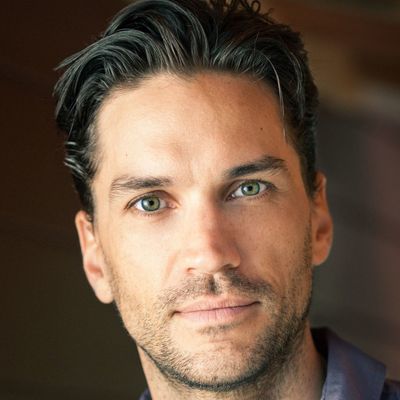
The Tony nominee and Broadway leading man on joining the Sondheim legacy with the release of the Assassins cast album, the wild ride of bringing Hair to West End audiences and how starring as drag queen Tick in Priscilla - Queen of the Desert taught him some extra things about life in heels.
Host: William J Connolly
Produced by: William J Connolly/Darren Bell
broadwayrecords.com
Welcome to eleven. The official theatre podcast that brings the biggest stars and creatives together in one place to discuss life in the arts. Follow eleven on social media via @elevenpodcast and via elevenpodcast.com.
Transcript
This transcript was automatically generated and might contain errors.
[0:01] Will Swenson: My name is Will Swenson, and you're listening to Eleven, the official theatre podcast.
[0:16] William J Connolly: Hello and welcome to Eleven, the official theatre podcast that brings the biggest stars and creatives together in one place to discuss life in the arts. He's the Tony nominee and Broadway leading man that's made fronting an ensemble of fellow players his norm, having starred in some of the most exciting and lauded pieces of theatre in recent years.
[0:35] William J Connolly: Not one to limit himself, he's gone from the darker side of characters in shows such as Waitress and Le Miz to letting it all hang out in Hair, alongside Assassins, Brooklyn, Disaster, and now Broadway bound new musical, A Beautiful Noise. So here, in an exclusive conversation just ahead of him starting rehearsals for A Beautiful Noise, the new Neil Diamond musical, we discuss the personal milestone of joining the Sondheim Legacy with the release of the Assassins cast album and the joys of being part of such a musical masterpiece.
[1:06] William J Connolly: The wild ride of bringing Hair from Broadway direct to West End audiences, and now starring as drag queen Tick in Priscilla, Queen of the Desert, talk about serving it up in heels and living life on the more fabulous side. This was such a joy, so please help me welcome Will Swenson here now on this, the next episode of Eleven, the official theatre podcast.
[1:32] William J Connolly: To ensure the safety of all involved in this episode of Eleven, Will and I connected with this conversation digitally, so please forgive any brief moments while we wait for the internet to catch up. Enjoy.
[1:47] William J Connolly: Please help me welcome to this, the next episode of Eleven. Where there's a will, there's a way, I believe, is the saying. Well, how about two of them? I'm William, he's Will, so from one Will to another. Hi, Will Swenson, how are you?
[1:56] Will Swenson: I'm good. How are you doing, Will?
[1:58] William J Connolly: Actually, very rare for me. And people go, this can't be true, but genuinely is that I meet another Will. I don't think there's that many of us in the... I say the same thing, and people are like, that's a super common name, but I beg to disagree.
[2:09] Will Swenson: Well, it's nice to meet another one. I feel like we have some form of connection instantly.
[2:12] William J Connolly: So I'm more of a William. Are you a... you're more of a Will, right?
[2:15] Will Swenson: I go by Will. Uh yeah, but I think all great theater artists have been Wills, right?
[2:22] William J Connolly: Absolutely. There's certainly one that comes to mind that's one in particular.
[2:26] Will Swenson: Yeah, and he did all right for himself.
[2:28] William J Connolly: He was all right, yeah. It's probably the name though that sparked all the genius.
[2:31] Will Swenson: That's obviously why we're just so great, right? You know, it's just a natural thing. We're just going along with the punches.
[2:37] William J Connolly: Are you ever a William when you get in trouble? Are people like William or are you just...
[2:38] Will Swenson: Yes, yes, I was a Will Swenson.
[2:44] William J Connolly: I love that. It's always parents that do that.
[2:46] Will Swenson: Well, thank you so much for agreeing to do this. Such a pleasure to get the opportunity to talk to you about a very, very special project, which I think now feels more important than ever. Because I don't know, and I imagine it's exactly the same in the United States, but whenever anybody talks about Assassins, it's like gold tier in terms of musical theater. Like, I don't really think there are many other shows and cast recordings and albums that sort of get us good.
[3:09] William J Connolly: And I can imagine for you when the opportunity was brought to you to say, yeah, of course I want to be part of it, you were like, I have to do it.
[3:15] Will Swenson: Yeah, it's just one of those. The second you discover it, I feel like in most musical theater actors would agree, it's just you're just entranced and instantly want to be a part of it. I discovered it when I was in college, and I was like, oh, well, there's like 12 parts in here that I would love to play. And um knew the score very well. And legit when I got the call, I was just like, yes, I'll do it. Who else is doing it? Who's directing? What you know? It was like, I just... it's just one of those you just want to be a part of.
[3:38] William J Connolly: Do you remember the sort of the thing it was that you like so much? Because what's so interesting about the show, and you reference the different parts is that people see themselves in so many different parts of it that everyone sort of has a different answer.
[3:48] Will Swenson: I just... I mean, crazy is always fun to play, and there's a whole lot of crazy in this show. And I, you know, I'd like to identify as an actor who happens to be able to sing a little bit. I mean, I started in college by just studying theater, and then I kind of moved over to musical theater because I realized there were more musicals produced than plays, and thought I could sing all right. So it's just an actor's musical. I mean, first and foremost, it's very much Assassins very much feels like a play that breaks into song that has songs in it. And it's Sondheim, so it's just like challenging and incredibly character-driven songs and just it's all the best stuff that you look for in any show.
[4:28] William J Connolly: Did it meet your expectations you referenced at the start for the person that first discovered it and sort of fell in love with it? Did you think very much back to, I guess, to the person what they would have thought about you doing it now? Were you like, this is kind of cool but weird?
[4:40] Will Swenson: Absolutely. And to have done it in such highly esteemed company was incredible. Like our cast was filled with people who have led their own Broadway shows, let alone put, you know, 10 of them in the same show. It was just I felt like I felt like to an extent I'd been selected for the all-star team. As far as comparing it to like how I would have envisioned it 20 years ago when it came out, it's such a different musical now, just in the way that it rings in our culture that's changed so much as far as gun culture and American entitlement and like that whole thing has changed a bit.
[5:25] William J Connolly: Do you think it's become more relevant as time's gone on?
[5:28] Will Swenson: Yeah, I mean, I mean, it sounds cliché sometimes, and I think as actors we say this a lot because we're looking for it, but as we were rehearsing it, we just kept saying it's as if this piece were written last month and is saying things that are desperately needed to be said now. You know, it probably always was this relevant, but it sure is ringing much more in the verbiage of what's going on in political discourse and social discourse, yeah.
[5:56] William J Connolly: So it's the golden question, but having been at the center of it and a part of it, have you sort of figured out what the golden egg is, what it is specifically about this show and this music and this production that we just all fall so madly in love with every time the possibility of either being part of it or seeing it comes around?
[6:12] Will Swenson: I mean, there are so many elements of it that are intriguing and that pull you in. I kept coming back to as I was doing it is the genius behind their angle. They somehow, through this bizarre idea of putting nine or however many of us are assassins in the same room and just letting them sort of hash things out among one another, they somehow make it funny, comical. You find yourself kind of endeared to these crazy people, troubled people, and laughing at the most horrific things that have happened over the course of this country's history, some of the most horrific. And so it's almost as if we're participants in creating the irony of it. I can't explain it. I'm not smart enough. Just the fact that we're liking these horrible people somehow turns the bad guy thing on its head and makes us realize that we're part of the problem.
Like, you know, popular culture is so intrigued by this violence, we pay so much attention to it. And my character, Gato, was like a massive celebrity. And he got exactly what he wanted. He wanted attention. He wanted to be, other than wanting to be president of the United States, but he got everything that he wanted. He wanted to be the center of it all, with adoring fans, and he got it all. He just had to, you know, get hung from the gallows as a price for him.
[7:34] William J Connolly: As an audience, do you feel that level of excitement as well? Because the people sat in the audience will have been the same type of person that you were going, I love this show and I want to see it and be part of it.
[7:43] Will Swenson: I think so. I mean, it was an interesting production in that the theater that we did it at, Classic Stage, is a very small space and it's almost in the round, it's a thrust stage. And so it's only about four rows deep on all sides. So it was very immediate and it felt very sort of delicate because we're saying and doing these awful things, but because we were all clearly in the same room, there was almost not a fourth wall in this production. It felt more garish and brash and tasteless to be doing some of this stuff. I wish I could speak to the audience's experience of this production, but I didn't get to see it.
[8:20] William J Connolly: You were doing the other job, the fun bit. Add in then the music and lyrics to this, which is as much as I sort of joke at the start about being gold tier, it sort of is the crème de la crème. I can imagine for you as an artist, as somebody that's very much leans into your acting and then also your singing, you sort of feel very enriched by the material. Do you sort of feel like you have struck gold every day when you get to go and sing Stephen Sondheim's lyrics and music?
[8:44] Will Swenson: Yeah, yeah, you just do. When you're in a show where your song is maybe a really pretty song that just doesn't necessarily have something to do with furthering the story or isn't necessarily coming out of the character's wants and needs, you know, it's fine, it's fine and it services the project. And you know, some musicals accomplish that better than others. Sondheim being the genius that he was, we all as actors kind of love to have that kind of meat and potatoes to connect to. And then in particular, doing this show at the end of Sondheim's life was incredible. He came to our opening night performance and our opening night party, and we got to sit around with him and he, you know, he told us stories about the show and creating the show with John Weidman.
And so not only get to do it, but to get to have his input and his approval with it just felt pretty magical and, you know, one of those boxes that you can check off for the rest of your life and be like, Yep, I actually got to do that. And it's, you know, we all felt like we were getting to work with the Mozart of our time. Just kind of he's the greatest of them all.
[9:54] William J Connolly: They sort of say, don't they in the industry, like don't sing the song that made the person famous for that person because it's always never really a good idea. But I can imagine with Stephen Sondheim, it's the complete opposite. You want to sing it for him.
[10:03] Will Swenson: We were all just terrified. Um, you know, you want to impress him so much, but you know, he famously was, you know, he wouldn't give you a compliment if he didn't mean it. Just a completely honest, a genuine teacher in the way that he worked, but wasn't gonna tell you you were wonderful if it wasn't working. So, you know, we all wanted to meet with his approval and luckily he liked the show.
[10:28] William J Connolly: So when somebody presents the opportunity for a cast recording to be sort of cemented in history for people to pay reference to this in the future, this will sort of be their staple, or perhaps even their first introduction to Assassins. Do you leap at the opportunity, or do you take just a cautious pause and go, hold on a second, this is a moment that I would have only have dreamt of before?
[10:46] Will Swenson: I mean, I'm always thrilled to get a cast recording, probably for ego reasons. But I just love the historical record of it. Like in New York, I don't know if Britain has this sort of thing where we have the Lincoln Center Library for the Performing Arts, where many, many shows get recorded for posterity that wouldn't have gotten recordings otherwise. And you can go to the library kind of as research and watch all these wonderful shows. So I feel like cast recordings, and they're a little less produced nowadays for some reason, I guess, because they're expensive. But I just love having the historical marker of it. I mean, there are already two recordings of Assassins, terrific recordings, but each is certainly unique with the casting and the, in our instance, particularly the orchestrations.
I was thrilled to learn that we were going to get a cast recording for our orchestrations. Our music director, Greg Jarrett, did these incredible new orchestrations with a more of an Americana feel. Sondheim wrote the show with each song sort of representing the historical era in which the assassin lived. And so it's this great tableau of mosaic of American folk styles, particularly American music styles, and the arrangements really played to that strength. Lots of American instruments, banjos, and mandolins and fiddles and brought, I feel like a real kind of depth and authenticity to some of it that was super enjoyable.
[12:08] Will Swenson: And also, you are now part of the Sondheim legacy. We talk about what he did for the world, but you are very much part of that now because his work continues on through all of us, and this is a great example of that. And I can imagine that's something you're probably very proud of.
[12:20] Will Swenson: Oh my goodness, I'll brag about it forever.
[12:22] William J Connolly: Yeah, let's keep talking about it.
[12:24] Will Swenson: That'll be my pleasure.
[12:26] William J Connolly: Did he get the opportunity to know before he passed away to actually get to hear the cast recording? Did he sort of get to explore it in any capacity?
[12:32] Will Swenson: Not the cast recording because we hadn't done it yet, but I think that there was an idea that one might happen, and I imagine he was fine with that. In terms of listening to stuff back, it's always interesting talking to stars of theater because some people love being able to have their performance sort of encapsulated into recording if it's through, as you referenced, a filmed recording or if it's through cinema now, which has become very popular and makes the theater very accessible. Some people absolutely run the other way. They say, I'll do it, but I'll never listen to it. How does it sort of play out for you?
[13:01] Will Swenson: I can't stand listening to myself on recordings. I judge, I judge the heck out of it.
[13:05] Will Swenson: I'm just one of those that overthink it. And um, maybe that's why I like theater as a medium a little more than film and TV, because it's film and TV is so locked in, and that's one performance that you did once and it got recorded, and that's what people will see forever. And there's certainly value in that and the opportunity to get to do it on multiple takes, etc. But theater is such an awesome ethereal art form in that it's different every night and then it just vanishes into the ether. Um, so locking something into a specific that's what I did this one time, I guess for me it is a little frustrating. So it's like, oh, but there were so many other versions and facets and ideas that you know may or may not have played out in that particular performance.
So as your career progresses and you get the opportunity to, because you've played so many varying different roles, sort of real opposite ends of the spectrum, when you get so many of these roles under your belt and you also get lauded for your performances in reviews, but then also with Tony nominations, does it make you more conscious about the roles that you want to first see A take on, but also the performance that you deliver? Do you feel there's that extra level of pressure? Or is it perhaps as I know as some people do, it's sort of a sense of comfort that okay, I know what I'm doing. And I guess it's almost a level of sort of self-reassurance.
[14:17] Will Swenson: I enjoy the challenge of pushing myself to do something brand new. I think something that I clocked early on in the business is that it's very easy to get pigeonholed as the guy that does this. And I very quickly got called in on the same roles over and over. And I was like, well, that's not why I became an actor at all. I don't want to keep playing this note. So I very quickly started gravitating to opposite ends of the spectrum and trying to push myself in one direction in one way to prove to myself that I had range and that I could play different colors, and also to prove to the industry that I wasn't just that one thing either. So I mean, I really dig the challenge of shifting gears. If something scares me, then I know that's probably a direction I want to head.
[15:02] William J Connolly: Is it about testing yourself? Because interesting what you said there about almost like saying, okay, can you do this? Do you sort of is like okay, well go on then? What can you do?
[15:09] Will Swenson: I don't that that seems fun. Yeah, absolutely. Um, you know, when I went from playing a hippie in Hair, which was kind of more of my comfort zone at the time and what I was being seen as, the next thing was to play a drag queen in Priscilla - Queen of the Desert, and that couldn't be further away from that. And it seemed terrifying and impossible. I was like, I can't, I can't possibly do that. I should absolutely go in that direction. So yeah, it's I think it's the tightrope walk that is the allure to a lot of actors, just like it seems impossible and it's scary as hell, and I'm gonna do it anyway.
[15:40] William J Connolly: Is it a big pivot to be able to do that? I mean, if we take the reference of going from Hair to Priscilla, I mean, like Tick is so extreme to what you did in Hair. Just does it take a long time to be able to get there? And that seems slightly crude to say in that sense, but for you to be able to change as an actor and to feel comfortable there, I guess what's that journey sort of like?
[15:57] Will Swenson: I mean, it all varies. I don't know. I'm terrible about having like a process to figure out what my next thing's coming from. And I'm always surprised when that window of that portal into the character sort of opens up, and I'm like, oh, this is okay. I've got my first step in the door, and now I can flesh out from here. Some take longer than others. Honestly, Gateau in Assassins was probably one of my last minute character discoveries that I've ever had. I'm not sure for what reason. I think one is that I did way too much history on the actual guy, and while that was awesome, and if I were playing him in a biography movie or something, that would have been extremely helpful, but it didn't necessarily serve the piece in that he's written as a bit of a comic buffoon in the piece.
So playing a lot of the heavier craziness that he had in real life wasn't going to necessarily serve our piece. And so finding a character, a dude that could, you know, service the insanity and the piece at the same time was just a trickier navigation than I wanted.
[17:04] William J Connolly: I mean, we talk about sort of testing yourself and characterization, but perhaps if we take the Priscilla example, you just wanted to wear the heels, right?
[17:10] Will Swenson: That's really the truth. That's pretty much it. That was pretty much I just wanted to get dolled up. I mean, literally, disco songs, lots of fun. I mean, sometimes it's like, yeah, I want to be a really serious artist, but sometimes I do also just want to challenge myself and have fun.
[17:22] William J Connolly: That seems fair.
[17:23] Will Swenson: It was a ball, yeah. I will say, and it was a good workout every night. Just like, you know, at least I can have a little bit of empathy with what my wife goes through now. Like I can have just a bit of an understanding, right?
[17:31] William J Connolly: Exactly.
[17:34] Will Swenson: I can and now I can be that bad husband when she's like, I know, but I just have to put on makeup and shave my legs. And I'm like, yeah, well, I know what that's like.
[17:42] William J Connolly: Sorry. Not a sentence I could imagine you thought you'd be saying at the start of your marriage, but yeah, anyway. I get where you're coming from. I want to talk quickly about the United Kingdom because you have a great relationship with British theater here, and that you've of course performed here, and I know that you come to the UK and you very much support British theater.
[17:58] Will Swenson: For sure.
[17:58] William J Connolly: And it's the cliché question like, is there a difference? But so many people now have this sort of transatlantic career where they get to spend time in the United States and then come to the West End. And also it's nice to see lots of Brits getting their opportunity to go to Broadway, as much as there, of course, are the obvious differences. It does feel like one connected family. And I wonder, as somebody that spent time in the West End on Broadway, would you agree with that?
[18:18] Will Swenson: Theater is beautiful anywhere. I love it in a community theater. I love it on a high school stage. I love it on the West End and I love it on Broadway. You know, that said, I think you calibrate to any environment to any audience, and just like you calibrate a show to the tone of the piece and what you're trying to say. Every, you know, every theater on Broadway is different on any night, given the piece and the size of the room and the intensity or lack thereof of the show that you're doing. That said, if I had to, you know, try to give big differences between the West End and Broadway, I would say Brits listen harder, and it's the biggest privilege as a performer. There's something about a British audience that maybe it's their exposure and lineage of Shakespeare having to listen real hard to make it make sense.
But from the get-go, when the curtain comes up, I feel like the Brits are just enraptured with the language and their attention, and it's incredible. And I want to throttle Broadway folks sometimes for their inability to do so. I mean, it's probably more of a tourism-based industry in New York. I would imagine that a lot of folks that are on vacation are like, yeah, I guess we'll go to a Broadway show. Whereas on the West End, maybe a little less so.
[19:34] Will Swenson: And then because the big show that I did over there was Hair, another big difference, and this is probably because of the nature of our show. We were a very in-your-face kind of a show, energy-wise, and we were feeling very good about ourselves, I think, with the success of the show over here, just being rambunctious and raucous and ballsy, and so we went over to the West End thinking this is great. They transplanted our whole show, we're gonna do our thing. And the first night we went out there and I did my normal spiel where I kind of put my junk up in somebody's face, and the entire audience just you could feel all of them just like back up about 12 inches in their chairs and look away, and it quickly became apparent like okay, this is gonna have to be a more delicate relationship because they're not having this right off the bat because we just shut them down with our kind of American brashness.
And if we were just patient enough, we learned pretty quickly that we could let them come to us, and it was an adjustment period of 20 minutes of the show where then we could go back to pretty much what we did, but it was just like putting it on the audience's terms and letting them agree to the transaction instead of it being a little bit more of an artistic taking advantage of someone. That was the most sort of British and perfect example of how a UK audience reacts, literally 20 minutes of shock. I was like, you study this to the T, like you nailed exactly what we're like.
[20:57] William J Connolly: So true. It does have just a little bit of observation. I went to see Marianne Elliott's production of Cock, not with Tyrone Edison and Jonathan Bailey, and they talk about such a variety of different things, and it was very much a listening audience until they sort of realize that they could start to be vocal and enjoy it. And it's just interesting and I sort of love the study of how we particularly post-pandemic as human beings are feeling connected while also still being individual and it feels like theater has shifted a little bit.
[21:24] Will Swenson: Yeah, I'm interested to see how the dynamics of audiences play out in the near future. I mean now there's a weird dynamic of everyone has to be vaccinated at certain theaters but not other theaters and mask wearing is strongly encouraged and other folks don't and so there's this disconnect in the audience as well when you look next to you and someone's not masked and you're like but it's always been such a communal experience and you've I've always felt and I think a lot of folks have this community of oh we are all coming here for the same purpose and therefore we're on the same team and I'm sharing this experience with you as an audience member and to have these sort of disconnects which at least in America have sort of political reverberations attached to them a little bit is a weird energy. And from the stage I think that's noticeable and odd and I just, you know, it's cliché to say now but I just I'm so ready to get back to the way it was.
[21:30] William J Connolly: It's back to before to make a use of musical theater reference it's a very very stagy reference but also my favorite musical theater song ever so 10 points for that one that was a very strong choice.
[22:36] Will Swenson: Does the same sort of shift happen in terms of you feel an audience either I want to say like freezing or reacting differently when you play a darker character or perhaps traditionally known as the baddie, for example, when you're in something like Waitress or if you're in Les Mis or whatever it might be, do you feel a different energy from an audience? Because they're perhaps not necessarily willing the character on, but obviously they're willing you on.
[22:56] Will Swenson: I mean, good question it and hard to answer, I think. Because if I'm playing, you know, what one would say is the bad guy in a show, you know, he's that guy from the beginning. So noticing a shift is maybe tricky because I wasn't on stage before that. Like if it's sort of a comedy sort of show with what like Waitress, for example, yeah, you definitely notice them kind of rollicking and having a good time. Um, yeah, I have no idea how to answer that question.
[23:25] William J Connolly: Yeah, I can imagine the reaction to a drag queen versus a bad character in Waitress would be very different, but perhaps because there's no alternative to that, therefore you haven't had a different experience, as you say, with that particular audience on the night. So maybe the energy is different, but the reaction is the same, if that makes any sense.
[23:42] Will Swenson: Yeah, I think so. I think so. I mean, there's so different show to show as well, that clocking the differences between characters without comparing the differences between shows seems like changing the variables and we're in deep weeds now, I think. I feel like I might have just summed up theater, which is its only individual.
[23:57] William J Connolly: In terms of the cast recording and people getting the opportunity to listen to it, I know that it's a personal milestone for you. I know it's a great thing for you to be able to know that the legacy lives on, the journey lives on, and you get to be part of, as I mentioned earlier, that sort of Sondheim legacy, and people will reference it and it will be their first sort of introduction to Assassins. But we think back as you referenced at the start to you listening and first discovering the genius of Stephen Sondheim in this show. What do you think this sort of moment now of being on a cast recording and having done the show will have meant to that person back then that started this journey? What do you think this would have meant to them?
[24:35] Will Swenson: If you had told 22-year-old me that I would one day make a cast recording of Assassins and would have received the personal approval of Stephen Sondheim among a cast of Broadway elite, it would have absolutely blown my mind. I would not have believed you that I could have made it that far and I would have been thrilled beyond my wildest dreams. Yeah, absolutely a full circle kind of thing. It was one of the kind of inspiring musicals that kind of solidified the idea that I might want to do this permanently for a living and yeah for it to have been one of those shows that inspired me to now be able to have a cast recording on the books in a well-received production is thrilling. It's just been thrilled the whole production was dreamy start to finish and we almost didn't get there. We got interrupted by the pandemic, we started rehearsals and then had to shut down and we never thought we'd get all of us back together again and somehow we pulled it off.
[25:30] William J Connolly: Will, it's been such a pleasure to get the opportunity to talk to you today. Thank you so much for your time.
[25:32] Will Swenson: And equally nice to chat with you, William, and congratulations again on the release of this. It's unbelievably exciting. It basically just means we've all got an excuse to listen to more of Assassins, not that we need it, so thank you for giving us permission.
[25:44] Will Swenson: Anything I could do to help.
[25:46] William J Connolly: Amazing, enjoy the rest of your day and I will see you very soon.
[25:48] Will Swenson: Thanks a lot, talk soon. You've been listening to eleven, the official theatre podcast. Find out more about eleven at elevenpodcast.com or via the Broadway Podcast Network.
© Broadway Podcast Network, All Rights Reserved