

The history-making playwright on the living legacy of his masterpiece The Inheritance, working and collaborating with industry legends including Dame Vanessa Redgrave, Stephen Daldry CBE and Uma Thurma and joining the world of directing with Prime Video's much-anticipated queer-focused new film, Red, White & Royal Blue... Read More
From the show: eleven
Guests
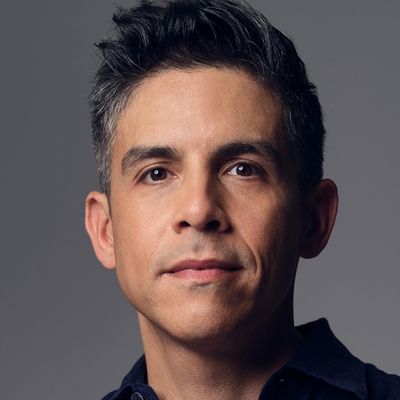
About
The history-making playwright on the living legacy of his masterpiece The Inheritance, working and collaborating with industry legends including Dame Vanessa Redgrave, Stephen Daldry CBE and Uma Thurma and joining the world of directing with Prime Video's much-anticipated queer-focused new film, Red, White & Royal Blue.
Host: William J Connolly
Produced by: William J Connolly/Darren Bell
Red, White & Royal Blue will premiere globally on 11 August, exclusively on Prime Video
Welcome to eleven. The official theatre podcast that brings the biggest stars and creatives together in one place to discuss life in the arts. Follow eleven on social media via @elevenpodcast and via elevenpodcast.com.
Transcript
This transcript was automatically generated and might contain errors.
[0:01] Matthew Lopez: My name is Matthew Lopez, and you're listening to Eleven, the Official Theatre Podcast.
[0:15] William J Connolly: Hello, and welcome to Eleven, the official theatre podcast that brings the biggest stars and creatives together in one place to discuss life in the arts. The mastermind behind one of the greatest pieces of theatre, his 2018 Epic, The Inheritance, directed by Stephen Daldrey, fused generations of queer theatre goers into a story that is spoken of even today. Not settled with making his mark just on the stage, now he's turning his hand to the world of directing as he joins Prime Video's's blockbuster and much-anticipated movie release of Red, White and Royal Blue. So here, in an exclusive conversation just days before the global release, we discuss stepping into a new world with Prime Video's for a queer-focused story that's about to grip the world and how he's proudly embracing the original book while adding his own magic to this telling.
Plus, we discuss fan theories, why he's hiding from social media, and we find out if Good Gay Shit is the best review he's had so far. And with the genius in full flow, we reflect on the creative and deeply personal joy of mounting The Inheritance, his involvement in Broadway, Some Like It Hot, and what it's like working alongside legends including Uma Thurma, Vanessa Redgrave, and Mariah Carey. As far as episodes go, this is the one I've waited for. So let's step into the genius mind and world of Mr. Matthew Lopez here now on this, the next episode of Eleven, the official theatre podcast.
[1:42] William J Connolly: To ensure the safety of all involved in this episode of Eleven, Matthew and I connected for this conversation digitally, so please forgive any brief moments while we wait for the internet to catch up. Enjoy.
[1:57] William J Connolly: Please let me welcome to this, the next episode of Eleven. He is the history-making and record-breaking Tony and Olivier winning writing star of the theatre world that's turning his genius mind to Prime Video's and the much-anticipated release of Red, White and Royal Blue. So may I say a very big hello to Matthew Lopez?
[2:14] Matthew Lopez: Hi, how are you?
[2:15] William J Connolly: I'm really great. How are you?
[2:16] Matthew Lopez: I'm doing really well. Thank you so much for agreeing to do this. Now, you told me when we were just talking a second ago, there's two things that I need to do in this conversation. So we're gonna see how we can seamlessly put them in. So let's go for it from the start. So, number one, nice hair.
[2:29] Matthew Lopez: Thank you very much. I mean, we worked a long time on getting it looking this nice today.
[2:35] William J Connolly: Obviously, this is a podcast, so people just have to believe me, but it looks very cute. So we'll go along with that.
[2:39] Matthew Lopez: You have to trust. You have to trust.
[2:41] William J Connolly: Um, you know, just just just believe that I look fantastic.
[2:44] Matthew Lopez: Yeah, he looks hot, so we'll go with that. And the other one we're gonna see how long it takes for that to come in. So let's see how long it takes to see. I'm sure it'll be pretty obvious when that one happens. But just to say thank you so much in advance for agreeing to do this. And I mentioned about the fact you've had such phenomenal success so far in your career. So to have something so extraordinary and exciting and really, really, really sort of the anticipation is huge with this release with Amazon. I mean, we'll talk about specifics in a second, but where are you at in terms of like excitement, nerves, anticipation, desperation for it to come out? I mean, what's happening in your mind right now?
[3:16] Matthew Lopez: It's all of the above. It's um I'm really proud of the movie. I'm really excited to share it with people. Um, I have spent the last two years of my life working on this film. Um, and a lot of people have put a lot of their great time, talent, and energies into the making of it. So yeah, it's ready to be seen. That said, uh, I am a person in the world with access to social media, and I think I'm gonna hide under a duvet for the entire weekend that it comes out because. Because, you know, because like here's the thing is that like um we're sort of hardwired evolutionarily to sort of like ignore praise and seek out um the opposite. So and I and then you know but most people also aren't playwrights and filmmakers.
So if you actually add that level of neuroses to it that it's just it's you know it it's um it's terrifying. But I think it's terrifying in the same way that like walking a tightrope is terrifying, which is like nobody walks a tightrope unless they actually want to, you know, and so I kind of feel the same way about it. I hope people like it. Um and if they don't like it, they really shouldn't tell me about it.
[4:26] William J Connolly: Well I hope that you do look online I hope you do look on social media and just to have a sense of the real excitement that's around like it's on the top of everyone's list to watch. People are talking about it. People are dissecting it in a way that I love I love the fact it's creating these conversations but do you?
[4:36] Matthew Lopez: Yeah no I do I mean look you know you'd be a fool not to want to create it's more than buzz right it's it's like um it's genuine passion. I think it I think I think it really does come down to the book to be quite honest with you. I think that the book does engender genuine passion. Um people love the book. I love the book or else I you know I mean that's that's really why I made the movie was um I read the book and I was so obsessed with it that I you know I I had to be the one to make this film. I um I like to think of this as like the world's most expensive bit of fan fan art, you know I mean like you know. Um, so yeah, I share that. And I think it's really, really cool that um that the fans are in the process of taking this ride with us because it it was made for them by one of them, you know.
So I think I think it's fun. And I'll honestly, like, the fun thing is is like listening to theories that people have about it that have nothing to do with the truth, and like, you know, and just sort of like knowing that you know more than anybody else at this moment about what's in the film or why certain decisions were made of the film and and and listening to these these these these theories. They're it's fun. I mean it's it's it's um in lieu of the actual thing, I think it's a fun thing to hear people just sort of um uh sort of like wonder what could possibly be on on August 11th.
[6:06] William J Connolly: But you are also gonna have to listen to the fact that you are gonna open this massive can of worms of people thinking, well, I thought this, but then this happened, but then what about this? What about this? Like it's gonna create so many more conversations. You've got to be ready, okay.
[6:16] Matthew Lopez: Why do you think I'm hiding?
[6:18] William J Connolly: I I I you know, I I'll let I you know, I'll let you I'll let you tell me what they're saying. The thing is, I think coming from the theater, I have this experience of sharing something with an audience and then getting to take it back every day and tinker with it and then putting it back out into the world. And even when we get a not so receptive audience one night, the actors can regroup and come back the next night and and try again with the movie, it's done. It's the same you're gonna see the same movie that my mom's gonna see that some stranger in Poughkeepsie is gonna see there, you know, it's the same movie and everybody has access to it simultaneously. And so you you really do sort of have to let go.
You really like I didn't have to let go entirely of The Inheritance. I could I could I could swing by and give notes with this, I'm really letting go of it, you know, and it's and it belongs to the people who see it. It doesn't belong to me. I mean, legally, it literally doesn't belong to me. Um, and and now even creatively and artistically, it doesn't belong to me anymore. It belongs to the people who see it.
[7:27] William J Connolly: How long did it take for you to say, right? Okay, I really can't change it anymore. There's really no going back on, there's really no tinkering with it. Because I imagine, as you say there, there's always something you could change, right?
[7:36] Matthew Lopez: Yeah, absolutely. I think, you know, well, it helps when you you have a uh you know a post-production supervisor telling you you're done. And you don't get that theater, you know, there is a funny thing that happens. I I don't know, I I suspect it's pretty common for for for playwrights and and hopefully for filmmakers, where you just turn that part of your brain off. I can actually watch the movie now and and just and and I'm done. My I've put my crayolas away and and I'm finished. Um, I have that ability when I see one of my earlier plays. I I don't rewrite as I watch, so it does happen naturally, I think that you just you finish.
[8:17] William J Connolly: Was it a natural progression then for you to want to go right? Let's direct something, let's step into this world because you're you know, it's as I could see you cringing a little bit when I was doing the introduction of like all of these amazing accolades coming away, but they are truth, they are things that you've been have been bestowed upon you, they're successes that you've rightfully earned. So when you have a legacy, does it make you go right? I want to do something completely different. I don't want to continue in this direction because I've done that, or is that actually your comfort zone? I guess how much of an easy yes was stepping into the world of directing for you?
[8:46] Matthew Lopez: Because I know it took a hundred pages for you to go, yes, but then when you go right, I'm gonna do it, you've then actually got to do it. So that's quite a big task to mount, right? You have to be passionate about two things. A, the story you're telling, or B, the amount of money you're being paid to tell it. And on and for this, you s this was for me the most passionate storytelling um endeavor uh since uh The Inheritance. Like um it's very different from The Inheritance. I you know, I could not have gone through the years and years and years of work on The Inheritance if I didn't need to tell that story. And it really was the same thing with this. I really, really needed to tell the story.
And everything becomes easier when you really want to be doing it, you know, when you really, really feel this urge. And and it never occurred to me uh at the time that I was doing something that was so stylistically different. I knew I wanted to make movies. I'd wanted to make movies since I was a teenager. This was my first chance to. I had been looking for projects, and then this book came along. My my agent actually sent it to me thinking maybe I wanted to turn it into a stage musical. I read it and I was like, well, let's talk about the movie. And I really like it, it really, really spurred on my ambition. To the degree that I'm involved with it, I willed it into existence. The fact that the movie was gonna be made is beyond me.
The movie was gonna be made, right? For me, it was I want to be the one to do it. And I know that that comes with a tremendous amount of responsibility because I'm the one holding the bag when it comes to decisions that are made of what's in the movie, what's not in the movie, how you make the movie, what the movie ends up being. You, you know, when you're a playwright, you can always blame the director when when when you're when you are the director, who there is there's very few other people left to blame. And uh luckily I feel I'm in a place right now where I'm I have no one to blame, and I'm really, really excited for people to see the work that all of us have done in service of putting this movie together.
[10:45] William J Connolly: Were you trying and mindful of the fans and the book and the fact that people have perhaps their own preconceptions of what this world is starting off, or is this you trying to say I'm gonna honor that but do what I want to do? I guess how do you how do you bridge that gap while also giving something really exciting for for an audience to watch it in a different medium away from a book, but this time in a film?
[11:06] Matthew Lopez: Look, the thing that makes the book special is the thing that makes the book special. And those are the things that you obviously want to put into the movie, those are the things that cause you to want to make the movie. For me it it started and ended with those two characters, Alex and Henry as characters. Like that's the first thing, right? I'd be sent to storytelling jail if I didn't include the cake. I'd be sent to storytelling jail if I didn't include the VA scene. You know, there's just there's things that you're just like you you'd have to be a fucking moron not to put into the movie, right? And then we can start to have conversations about oh, uh, you know, the other things that are or not in the movie, and and then it really does become what is best for the movie.
And as the director of the movie, my responsibility is determining what's best for the movie. And everybody is gonna have very different opinions about what's best for the movie. Um, and I I really, really had to listen to those other opinions very sparingly because at the end of the day, it's my name is the one up there. Um, I'm the one who's gonna be taking responsibility for it. So I was I was left uh with great partners in this, but also with the ultimate responsibility of saying this, this is what this thing is gonna be. And uh for me, the most important task beyond like the obvious, you know, the obvious highlights of the story is Alex and Henry. It was always always about Alex and Henry, first and last.
And for me, what was most important was this challenge that I gave myself, what which was we are a movie is not a book. You are gonna take a different journey than the book takes throughout a lot of it because that's just the inevitability of the art form. Can I get the movie? Can I end the movie having delivered the same emotions that the book delivers? Can I create something that allows the audience to feel to feel exactly the same way they felt when they closed the book for the first time, when they finished that book for the first time? Um, do we do we end up at the exact same place? Um and that was that was the goal. And the journey there, that's called adaptation. That is called that is called making a movie.
And those decisions are my decisions, my responsibility, but also then my prerogative as well, right? I stand by it and I'm I'm proud of the film. And I I make I I when I showed it to Casey McQuiston was the most nauseous thing I could ever do in my life. Like I was more nervous to show this movie to Casey and McQuiston than I was ever to like do a first preview of The Inheritance or any other thing, you know. Like um, I'll sit through 2,000 Tony Awards um with my heart and my throat um before I I have to show a novel as the film adaptation of their work.
[13:53] Matthew Lopez: And sitting in a dark room with Casey McQuiston watching it together was one of the most harrowing and then ultimately one of the most joyful experiences of my life.
[14:04] Matthew Lopez: Um so I'm very proud that it passes the Casey McQuiston test, and um then we'll see from there.
[14:10] William J Connolly: Does that always happen where there's like the writer and I guess the director? Is there always that conversation? Is there always like that official okay? Like, you sort of throw it at them and run away and hide and hope. Like, did that happen with The Inheritance, for example? Did Steven say, I hope you like it? Or was like, is that something that happens more in film?
[14:28] Matthew Lopez: With The Inheritance, I was there every step of the way with Steven. Steven insisted that I be— as a matter of fact, I remember very vividly one morning when we were in rehearsals with the Young Vic. I decided to take the morning off to do laundry and to catch up on rewrites. I think we were working on part two, and I was like, you know what, I'm gonna catch up on some part one stuff. And it was like 10:20, I get a phone call from the stage manager saying Steven wants to know where you are. And I'm like, I'm at home doing laundry, and she's like, Steven will like you in the room. Can you come in now? And like, so there was never a moment in The Inheritance where I wasn't there for the birth of it, you know, and the creation of it.
[15:07] Matthew Lopez: There was something really, really exciting, actually, and in many ways of going off and making. But I also, you know, I was given the great sort of honor of being trusted by Casey. Like Casey really gave me a lot of leeway. And I think that I also know Casey well enough to know that if Casey didn't like the movie, I'd know it.
[15:28] Matthew Lopez: Yeah. Casey is not— Casey is not a shy. Casey is a lot of things, but shy ain't one of them. And so, like, if Casey hated the movie, we would all know it. We would all know it. And I would be having a very different summer than the one I'm having. You can believe it when Casey says that they like the movie.
[15:46] Matthew Lopez: I'm fascinated by this sort of almost unspoken relationship between like writer, director. Obviously, then you introduce the cast into it and also the fans. Like, I had such a great conversation with Christopher Nolan last week about Oppenheimer and how much of a huge part the fans play in what happens on screen, directly, indirectly. At what point does the handover happen? Does it become a them thing, not a him thing? Like, and I'm fascinated by this. Movies, especially popular entertainment.
[16:14] Matthew Lopez: Um, and it's funny to live in a world in which Oppenheimer is popular entertainment. That is a miracle, right? That is a miracle. It's for the audience. Like, you know, I'm not making beautifully here. I'm not, I'm not, you know, I'm not— I'm making popular entertainment with this thing. You have to think about the audience. You can't pander to the audience, you cannot pander to the audience. You cannot give them what they want because it'll make them like you. That is where you fail.
[16:43] Matthew Lopez: If you pander to the audience because you just want them to like you, you're gonna fail. But you always have to have the audience in mind when you're making something like this. It comes everything from the pacing of the thing to you have to be able as a playwright, and now I've learned as a filmmaker, you have to make yourself willfully ignorant of the story that you know so well, and you have to sit there and watch it like you're watching it for the first time, and you have to be very honest with yourself. Where's a drag? Where am I getting ahead of the story? Where am I confused? All those things.
[17:13] Matthew Lopez: Um, it's for the audience. It's for the audience. Other movies are not for the audience, and those are great movies too, but it's for the audience, it's for them. And so you have to take into account what it's like to be in the audience receiving this story.
[17:30] Matthew Lopez: I was having a look at some of the social media sort of buzz and like the comments on the posters release and like the trailer release, and just I'm always curious as just to see how people interpret stuff. What sort of audiences is it attracting? What sort of people is it attracting? And it's a very varied, inevitably, with it being such a mainstream release as well. It's obviously got a very varied audience.
[17:47] Matthew Lopez: But one comment just commented, it just said it's good gay shit. And I really liked that. And I wondered, is that— is that fair?
[17:47] Matthew Lopez: It's good gay shit.
[17:55] Matthew Lopez: Yeah, it's good gay shit. Um I'll take it.
[17:57] William J Connolly: Is it true though? Would you describe it as good gay shit? Is that a good synopsis?
[17:59] Matthew Lopez: Good gay shit is in the eye of the beholder, I guess. I've longed for it just, you know, to be seen as good gay shit. Maybe what they mean by good gay shit is it delivers on what we want to see in queer storytelling. I hope that's what they mean by that, and I hope that's the experience that they have when they see it. I certainly wouldn't spend two years of my life making gay shit that I didn't want to see.
[18:31] Matthew Lopez: But I mean, we all have our opinion, so you know, hopefully the good gay shit contingent is robust. Also, I was gonna apologize for saying the word shit, but you did say fuck earlier, so therefore you lose.
[18:41] William J Connolly: You listen, uh you warned me that I could say it, and you warned me that you might say it.
[18:46] Matthew Lopez: And the only way I got you to say it was by quoting me.
[18:49] William J Connolly: So um have I lost or have I won?
[18:52] Matthew Lopez: Um I'll meet you in the middle, how about that?
[18:54] William J Connolly: Yeah, fair.
[18:55] Matthew Lopez: Okay, deal, deal.
[18:59] William J Connolly: There's no escaping the incredible names and actors and talent that you have in this. Was it just a monopoly of the who's who of who you just wanted and dreamt about? And I presume, judging by this cast, everybody said yes.
[19:10] Matthew Lopez: I mean, everybody who I wanted to spend a couple of weeks in last summer working with said yes. There was a two-pronged approach to the casting. There is the let's go out and really do a very thorough search for some people who are maybe new to most audiences. And then there is the who can we— who would we be lucky enough to get?
[19:32] Matthew Lopez: And for me, uh with Uma especially, like that was dream come true. And there was a list, there was a list, and we whittled that list down very quickly with the very simple question of would you vote for this person for president? And that took a lot of people off the list. And but Uma stayed near the top of that list.
[19:54] Matthew Lopez: Getting Stephen Fry was an absolute dream come true. I didn't actually think Steven would say yes. It was that was very much of a Hail Mary. He was our first, and it turned out our last offer on that role. I genuinely didn't think he would say yes. I was like, well, let's waste a little time offering it to Stephen Fry, and then we'll figure out who we are gonna end up working with.
[20:16] Matthew Lopez: And Steven said yes almost immediately. Um the boys, that took a long time. That took a lot of seeking out, but it was worth the time because um I can't imagine this movie without either Taylor or Nick in it. I really— I genuinely I try to imagine other actors in it. Um now that I don't have a movie to make, and yeah, I genuinely can't.
[20:37] William J Connolly: When you have people of this stature working on your material, working with you as a collaborator, do you have to then— does it elevate you to do more, to want to be more, to strive for more? For example, you've got the phenomenal stars in this, but you've got so many people you've worked in your career. I mean, personal hero Vanessa Redgrave will always be the ultimate for me, but like it's not every day you get to play with people of this stature creatively.
[20:58] Matthew Lopez: The simple answer is yeah, obviously, you— the first day on set with Uma Thurma, you're gonna— you want to make sure you're— you've upped your game. I hope I treated every actor on set as if they were as important as Uma Thurma, because that's how you get really good work out of people. I think that you know, if you create an environment that feels warm and welcoming and loving and fun, um, you'll get that work out of them.
[21:22] Matthew Lopez: And that's what this movie needed. I needed an incredibly happy set in order to pull this off. I needed people to want to be there every day when we were putting it all together. We— my line producer had a— we've got a no pricks policy, no pricks. Um everybody's nice, and like when we were working on all of our, you know, we were staffing up, uh, we'd get a list of names, and I'd like what about him? And he goes, ah, he's a prick. And I'm like, all right, take him off the list. You know, we had a no prick pause across the board, and it really was like a very loving, loving environment.
[21:56] Matthew Lopez: That set, you know, all it takes is one person to not agree to have a warm and loving environment, and you can really, really— it can sour very quickly.
[22:05] William J Connolly: Yeah, and that never happened. Everybody was just sort of like jolly and really happy to be there.
[22:11] Matthew Lopez: And I suppose that will reflect on screen because the work is better because they're creatively in a better position, right?
[22:16] William J Connolly: So it's a collective success all round.
[22:18] Matthew Lopez: Yeah, I don't necessarily know if all of my like approaches to the filmmaking process on this movie would behoove me if I was making like a serious, serious drama, you know. Like I don't know if the Barbie set was as fun. I don't know if the Oppenheimer set was as fun as the Barbie set. Maybe not, um, but that's okay too.
[22:38] Matthew Lopez: Uh you know, look, uh I was taught by Stephen Daldry, and I was taught by Tom Fontana, who's one of the great TV creators in America. You treat people with respect, they'll do good work. I mean, it's as simple as that, you know. And if you have a serious set because you have got a serious movie, fine. If you've got a fun set because you got a fun movie, fine. But if you treat people with respect and you give them the opportunity to succeed, they will.
[23:04] Matthew Lopez: Definitely. And if they don't, you fire and replace them.
[23:07] William J Connolly: That sounds like a threat or more of a promise.
[23:09] Matthew Lopez: So I'm very conscious of time, so I've just got a couple more questions. I just wanted to pick your brain as this genius in the world of theater and just talk about Quinn.
[23:22] William J Connolly: Shut up within the— okay, you're terrible. Have you ever done anything good?
[23:25] Matthew Lopez: Is that a better approach?
[23:26] William J Connolly: Yeah, that's better. I like it.
[23:27] Matthew Lopez: Okay, fine. We'll go with that one.
[23:28] William J Connolly: I wanted to mention Some Like It Hot because you've had this extraordinary success with it. And of course, you've got Mariah Carey on board now, which is just the queen of camp. I mean, everything you touch seems to just bring in campness and gayness, which I love. So please don't ever stop doing that.
[23:41] Matthew Lopez: But for you, banking a Tony nomination for that, for the success that it's had, the fact that it's bringing queer people and non-binary actors to the stage to get them the opportunity to be seen. I mean, I always want to say, are we still moving forward? It feels like the most basic of questions, but do you feel the shift even from The Inheritance on Broadway through to Some Like It Hot? Are we still spinning forward?
[24:01] Matthew Lopez: I think so. I mean, look, you're also talking to someone who is 46 years old who when I was a baby gay, everything— what little queer content I had was about death and dying. You know, every message that I got while I was in the closet as a teenager was that I'm gonna die of AIDS. Like that was what I was fed, right? So you gotta understand the perspective that I'm taking it for, which is I'm like, Jesus Christ, this is a fucking bonanza wonderful, wonderful queer storytelling.
[24:33] Matthew Lopez: But I can also imagine being 21 years old and looking at it and going, huh, not nearly enough. And I think that I think we're both right. Me and the 21-year-old, we're both right. I think for me, it looks amazing from this perspective. For a 21-year-old, it's probably not enough. And I think I would probably err on the side of agreeing with the 21-year-old that it's not enough. Better than it was, for sure. But better is not the same as great.
[24:58] Matthew Lopez: So um I like great. And so, but I also just sort of think that means like, you know, if in my lifetime it is exploded so much. And it's actually really even not just in my lifetime, it's been in the last five to ten years. If that continues at the rate that it's going, then I think that we have a shot of getting there.
[25:20] William J Connolly: But great is better than good, and good is better than something, which is what you said at the start, which shows that there has to be progression there, right?
[25:27] Matthew Lopez: Absolutely. Absolutely. I mean, also, you know, great is better than good is the least, you know, profound thing I've ever said in my entire career. And I'm so proud that you actually thought to quote that of all the things that I've said in this interview.
[25:28] Matthew Lopez: Great is better than good. Slap it on a bumper sticker.
[25:43] William J Connolly: Matthew Lopez, you heard it here first, folks. Great is better than good. Gee whiz, really, Matthew? Who knew?
[25:48] Matthew Lopez: Thanks for— thanks for um clearing that up for us.
[25:52] William J Connolly: And thank you, William, for really sort of underlining that for me.
[25:56] Matthew Lopez: Good gay shit. I told you. We're going with good gay shit.
[25:58] William J Connolly: Good gay shit. You know, really at the end of the day, it's all good gay shit.
[26:03] Matthew Lopez: Um I'm so sorry, I promise that won't be the thing that we run with, I promise.
[26:07] William J Connolly: We'll do that. If that's the title, if that's the title of this episode.
[26:10] Matthew Lopez: Someone once said to me, I ask really good questions and that it was a really moving in-depth conversation. I don't feel like you're gonna say that fun as this, so I'm quite sad about that.
[26:18] William J Connolly: I let— can I be honest with you?
[26:20] Matthew Lopez: Of course.
[26:21] William J Connolly: Beyond, of course, you can— you can back me up that I look fabulous right now.
[26:26] Matthew Lopez: Like good— good hair.
[26:28] William J Connolly: Great hair.
[26:29] Matthew Lopez: Um I'm actually having fun, which is probably dangerous for me right now, actually, if I'm being honest with you. Very dangerous.
[26:37] William J Connolly: Well, fun is good. I'll go with fun rather than good gay shit.
[26:40] Matthew Lopez: Which good gay theater shit, that's what I go for.
[26:43] William J Connolly: But most importantly, congratulations. Please look at social media. Please embrace the fact that people are gonna go wild for this, and please just enjoy this crazy ride because you've earned it. It's really extraordinary.
[26:52] Matthew Lopez: I think on August 11th, I'm gonna watch Oppenheimer twice in a row, with maybe a Barbie chaser in between.
[26:59] William J Connolly: And hide and hide and hide and hide and hide.
[27:02] Matthew Lopez: Matthew Lopez, this has been such a pleasure. Thank you so so much.
[27:05] Matthew Lopez: Thank you. It was real fun.
[27:06] William J Connolly: Thank you, boy.
[27:09] William J Connolly: You've been listening to Eleven, the official theatre podcast. Find out more about Eleven at elevenpodcast.com or via the Broadway Podcast Network.
© Broadway Podcast Network, All Rights Reserved