

Guests
Featured Shows

About
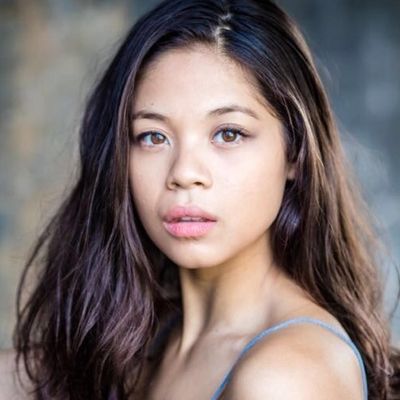
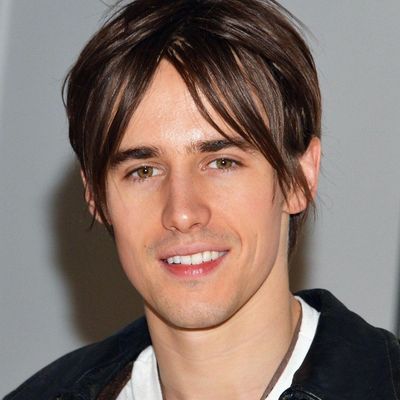
They’re the remarkable leading stars who created the roles of Orpheus and Eurydice in the original Broadway company of Hadestown, later returning to the show at the Lyric Theatre in London’s West End for the live cinema capture.
Now, the Anaïs Mitchell-penned musical comes to the big screen for audiences across the UK, Ireland, Australia and New Zealand.
Direct from their home Stateside, they celebrate the show that changed their lives and taught them about the power of always believing in love, including stepping back into the show in London, getting a front-row seat to the exquisite performances of their original co-stars and why this cinema capture helps bring detailed, magical moments to the forefront for audiences.
Plus, they revisit the early days of the show, including initial audience reactions, why it remains “very hard” vocally to perform this material live each night and why the energy of the audience does impact the performance you see on stage.
They also discuss revisiting productions of the show and celebrating every individual take on Orpheus and Eurydice, the “devastating” feeling of watching moments back they’ve never experienced live when performing the musical themselves and why “Wait For Me” Reprise really is “everything”.
Host: William J Connolly
Produced by: William J Connolly/Darren Bell
hadestownfilm.com
Transcript
This transcript was automatically generated and might contain errors.
[0:01] Reeve Carney: My name is Reeve Carney.
[0:02] Eva Noblezada: My name is Eva Noblezada. And you're listening to Eleven, the official theatre podcast.
[0:17] William J Connolly: Hello and welcome to Eleven, the official theatre podcast that brings the biggest stars and creatives together in one place to discuss life in the arts. They're the remarkable leading stars who created the roles of Orpheus and Eurydice in the original Broadway company of Hadestown, later returning to the show at the Lyric Theatre in London's West End for the live cinema capture. And now the Anaïs Mitchell-penned musical comes to the big screen for audiences across the UK, Ireland, Australia, and New Zealand. So direct from their home stateside, they celebrate the show that changed their lives and taught them about the power of always believing in love, including stepping back into the show in London, getting a front-row seat to the exquisite performances of their original co-stars, and why the cinema capture helps bring detailed, magical moments to the forefront for cinema audiences.
Plus, they revisit the early days of the show, including the initial audience reactions, why it remains very hard vocally to perform this material live each night, and why the energy of the audience does impact the performances that you see on stage. They also discuss revisiting productions of the show and celebrating every individual take on Orpheus and Eurydice, the devastating feeling of watching moments back that they've never experienced live when performing the musical, and why “Wait For Me” Reprise really is everything. It's the extraordinary Eva Noblezada and Reeve Carney here now on this, the next episode of Eleven, the official theatre podcast.
[1:51] William J Connolly: Please help me welcome to this, the next episode of Eleven. They are the exceptional theatre superstars that broke hearts and reminded us all that love is really worth fighting for. When they created the roles of Orpheus and Eurydice in the original Broadway company of Hadestown, later reprising the lovers here in London during a sellout run at the Lyric Theatre, a place that remains home to those living it up on top today. Now, their definitive performances of Orpheus and Eurydice can be found on the big screen, thanks to the release of the live movie capture of Hadestown here in London. And I'm honoured to say, with their favourite friend, that they are here together to celebrate the exceptional musical and the world of Anaïs Mitchell. So I say, Eva Noblezada and Reeve Carney, are you there?
[2:39] Eva Noblezada: Yeah!
[2:40] Reeve Carney: Thank you so much for agreeing to do this with, I should say, I know this is a podcast, but you have a very special guest. Please do a very important introduction to who is with you.
[2:47] Eva Noblezada: This is Petunia, she's our baby doggy, and she's also here with her cousin Rosie.
[2:51] Reeve Carney: Yes.
[2:52] Eva Noblezada: I'm sure you heard her about a few minutes ago make a noise out of her mouth.
[2:56] Reeve Carney: Yeah.
[2:57] William J Connolly: I want to hear as many noises as possible during this, that's absolutely approved. So, so lovely to see all of you and these gorgeous, gorgeous little humans in a time when, as a Hadestown fan, and as I was saying at the beginning, I feel so rich, so spoilt, so kind of almost overwhelmed with the opportunity to connect with this show. I'm so grateful that the musical continues to run in London. But the fact that we get to experience both of your, as I said in the introduction, definitive performances originating these roles. I did have the pleasure of seeing you both in New York and London. And now having it on the big screen, it feels extraordinary to me. But how are you both feeling about the fact that you went back to this beautiful world that I know means so much to both of you and the fact that people are getting to experience it kind of every day? It's never, ever, ever going to disappear. And that feels really special.
[3:40] Reeve Carney: Oh yeah, absolutely. And getting, you know, I've mentioned this before, but the, I wasn't particularly surprised by any of the brilliant performances of my cast mates in the film because I got to see that every day on stage. But this is literally the first opportunity, in my opinion, that anyone's been able to see some of the things that I got to watch. Even from the front row, you can't see a lot of the things that you see in this film. So it's very exciting for us. But also it doesn't lose the magic of the theatrical experience either. I find that they chose pretty much every shot that I would have wanted them to put in the film. That's the shot they chose pretty much. So I can't say enough nice things about the team that put this together.
[4:28] William J Connolly: Reeve, was it then an exciting or slightly challenging prospect, knowing that there were things that you wanted people to see, but perhaps due to the live medium of like an auditorium, perhaps they weren't seeing, but you knew were there, but you then knew it was going to be on the big screen? It was going to be sort of supersized and zoomed in and that you were going to be showing new things, fresh things to audiences.
[4:47] Reeve Carney: Yes. I mean, I think having the cameras there, there was a sort of comfort and a relaxation that it inspired in us, I think. I mean, that's how even I felt about it. Because on Broadway, there were so many times. I mean, we loved doing the show every night and edit in London. But I remember thinking quite regularly, man, you know, I'm not sure if anyone's actually seen this thing. It is like totally crucial to the fabric of the piece for us. And once the cameras were in the room, we never knew what they were going to choose for the edit. But we're like, OK, we know that they're capturing it. It's going to be filmed and we'll see what they do, what they put in the film. Which is great. It's great to trust that.
[5:30] William J Connolly: Eva, for you, when you have so much love and respect for a part, and you know, particularly with your life partner, that you both care about these roles so much, does it make the prospect of revisiting something and going back to it an easy or slightly challenging prospect for you because you know that not only do the audience love it, but you as a human being really care for this person you can do it alongside and also the material that not only did you perform, but you helped to originate as well.
[5:53] Eva Noblezada: Absolutely. It was nothing but exciting and terrifying, but the best way because it was really, you know, we filmed. I mean, there were some times where we had like two chances to get something shot. Oh yeah. To get to get something shot. And so for me, that was the only scary thing, because in the theater you do it. And it's once the train leaves the station, it's gone. But, you know, with, you know, that this medium with cameras, it's a little different. But the terrifying aspect of it, I think, kept in my brain me on my toes more than I maybe would have done before, because I'm so familiar with the piece. But it was great. I mean, the good thing is I've worked with Brett before, the director, the film director doing Saigon.
He did the pro shot for Miss Saigon as well. So there was a I could really relax knowing like, man, if that's what I did with Miss Saigon, like I can't even imagine what he's going to do with this realm of storytelling. But it was we just had a great time. And like, thank God for the UK, the London, the West End cast for being so generous and so open to, you know, whether it be an adaptation of what they were doing or just like scrapping something that they thought was the point of this part of the show. And then, you know, changing gears like without their cooperation and without their joy, we wouldn't have, you know, captured what we've captured. So huge just thanks to the West End cast. Because every cast does the show completely differently.
I mean, we watched on Broadway a number of times and it's always a different show. And so, yeah, blending our worlds together, that was a challenge for everyone involved. And they were so brilliant and so welcoming to us. We were walking into their house, you know, at this point at the Lyric Theatre and we felt so welcomed by them.
[7:45] William J Connolly: Eva, what was it like as well when you got the script? Like how much did you feel it in your soul where you're like, ah, she never really left me because I had the pleasure of talking to your Hades, Mr. Patrick Page. And he was like, when I was reading through it, I remembered how much I loved it. And Dara said like, he said he missed it. And actually it was nice to experience the fact that it meant something to him even when he'd left.
[8:03] Eva Noblezada: Absolutely. I think what's, I don't even, to be honest with you, I don't remember receiving a script.
[8:07] William J Connolly: Oh, from Hadestown?
[8:08] Eva Noblezada: Yeah, I think, I think because it's like, I could probably do Saigon tomorrow if you ask me. Like they're just in my bones. They're carved into my bone marrow. I always miss doing shows that I've done, even the ones that are really hard. And Hadestown for me was very hard, just mainly vocally, which meant psychologically it was really hard. And just also hard on like my body. But I love theater so much and I love Hadestown so much that, and also more importantly, I love the people that I get to work with. You know, Amber is like my sister, Andre, you know, we kiss his feet, you know, and Patrick and obviously love my life, but just the piece, the piece itself, like it's already immortalized to me.
So it was very easy to step back in. In fact, I think the only annoying thing was, not annoying, but like remembering what you did. And then like, Rachel would sometimes be like, oh, remember what you were over here? And I was like, I never did that. That was another cast. And then there was one time Rachel said that to me and I said, I never did it. And she said, let me show you the video. And I was like, oh. Yeah, I did. That was like, but it was fun to like, you know, it's like putting on an old pair of jeans that you used to like go clubbing in. And it's like, oh, I remember this, you know.
[9:24] William J Connolly: Reeve, I imagine for you as well, it's also a reminder of just how far this show has traveled through, of course, the cast albums of the respective different times in which Hadestown has been captured. But also from a fan perspective, people that did travel to New York that have obviously subsequently turned up to see the show in London and continues to sell out, continues to be one of the big tickets that you can get here. And I imagine that's not lost on you, that you're coming into a space where people not only care about the material, but are actually showing up for you and your co-stars and they want it to be good. They want to be on your side and they are on your side. And the fact that this whole run, when both of you were here with your cast, sold out within minutes.
[10:00] Reeve Carney: I guess it's a testament to that. Yeah, that was quite exciting because we had originally done a version of Hades at the National Theatre, which felt like a much more kind of intellectual experience. Part of it is because the show was not fully formed yet. And also it's the National Theatre, so there's a more like kind of gravitas and seriousness about being at the National at the Olivier, I feel like. But coming back to London, it really did feel every night it felt like someone's last show. We had many cast members leave throughout our run at Hadestown, and any time Andre left or Amber or Patrick and Eva, because I stayed the longest, the response from the audience on those particular shows was insane.
And every single show was like that. There was only one actually. I remember there was one Saturday matinee that was like a National Theatre audience. I don't mean National Theatre as in all the shows like that, but the experience we had, which was a little bit more of a muted response. It felt like a bunch of... No, this is just my observation because I love the UK. It felt like a bunch of grandmas from Cheltenham got off the National Express bus and had like a buy, get a half-off ticket for Hadestown and then a half-off ticket at Nia LaPizza Express after the show. But otherwise, they were insane. That helped. Like you said, you could feel the enthusiasm. You could feel that everyone's rooting for you and for this show.
I feel like that does help your performance. I think audiences forget that they are a crucial part of the energy and spirit of a live performance. That's why it's live theatre for a reason. We can feel your energy. There is no fourth wall. We can hear you, see you, and smell you. We've had the extra energy of having to ignore the fact that we don't think you're liking the show. We're going to do the show anyway. We're going to do our best no matter what, but it does help. I'd love to be able to explain to somebody that has never even heard of Hadestown the concept. Can you imagine that conversation? Oh gosh, that's so stressful. Because where do you start? That's like explaining Lord of the Rings to a nine-year-old who's not into that at all.
It's such an interesting point though, because I remember the first time seeing it, particularly with that such a definitive way to start a show in a musical, which is like introducing characters as if you aren't them but you are them. But I also feel like I do see you as the respective people and the human beings and then it almost begins where you're sort of starting at one end and it's sort of beginning and it's almost like a roll call of characters and then you go into the hard-hitting emotion. It's the second these two people meet that you go, oh I get it now. And actually that's one of the great joys of Hadestown is it is very different to anything that we have seen before. And I wondered when you were first creating it and building it up for the National Theatre and then subsequently Broadway, was that one of the things as creators that kind of turned you on?
That was like I know that Rachel and Anais aren't just creating something that is a sort of traditional musical theatre piece, they're actually trying to create something that penetrates the soul in a way that we've seen it successfully does in those closing few moments.
[13:19] Eva Noblezada: That's it. It was one of our first questions for them and I think everyone approached it slightly differently because I remember asking, seeing the way it was written, I asked as a National Theatre, I asked Rachel Chavkin, so wait are we in character when we first come out on stage during Road to Hell 1? And she's like Amber what are you doing? And Amber just stayed silent. She didn't share any information with us. For me I personally chose, I felt that I always was in character. I've always been in character from the jump. But I do share some things in common with Orpheus so I can see how maybe that's enough for the audience to think that it is maybe me and then I'm moving into Orpheus. I've always taken it that way but I don't think everyone has.
I think everyone has a different approach. But I like that because it keeps the sense of mystery and like I've seen Hades on so many times and every time I see something new that makes, that alters the chemistry that I have with the show in my brain. So it's like it's nice that people do it. I feel like Patrick wouldn't even share what he's doing because he wants to keep it like a secret. Yeah the only time I ever left character and pretty much every regularly, I found that Orpheus is no longer really Orpheus during Razor Cup, during Cups or Razor Cup. That's the moment where I transition out of character in the show.
[14:32] Reeve Carney: That's so cool. Mainly because, one little piece of information, I don't know if every Orpheus does this, but the only line I sing in that song is to Orpheus and all of us. And I do that because we're looking for Orpheus. I mean the whole point of the show, everyone always asks me, you know, why do you turn around? I'm like, well, so you don't have to. And so I think we're looking for the Orpheus that doesn't turn around. And so that's the only moment in the show where I'm not quoting character because he's no longer on stage, I guess.
[15:04] Eva Noblezada: That's so cool. What's it been like as well for you? Because I feel like we know that some musicals touch the soul in a way that others don't. They seem to have this way of really penetrating into people's psyche, into the emotions that they feel. But it's not overstated to say that this show does that on a level that we haven't seen in a long time. And I feel like probably one of the really recent examples, actually, funny enough, connected with you, Eva, is Miss Saigon, where people are just absolutely devastated by the end, to the point of which you get that, like, kind of, you can see like 10 or 15 people just sat in their seat, like, kind of trying to get it together and understand how they're then gonna then try and leave the theatre and make it successfully home.
But what was it like in those first few shows when you started to realise that all the work that you put in was truly starting to work, and that people were having the types of reactions that continue even today? Even for people that go 1, 2, 3, 4, 5, 6, 10, 15, 20 times, they still feel those things. What was that like at the beginning?
[16:03] Eva Noblezada: I think it's a testament to everybody's deep reverence to not just the piece and their desire to tell the truth, but also just, like, Hadestown, in the best way, requires everyone to have no ego. And you can always tell when that's not apparent, but, you know, teach his own. But I do think that, I don't even think I remember being like, yeah, like, I did that. I think I just remember being like, what a great feeling to feel like I've hit this point of the story, and I did my absolute best to be honest and truthful on the entire spectrum of what Eurydice is, which most of Eurydice's story is just horrible, just, like, distraught, which, you know, in some great way, you know, God has allowed me to be able to cry and kind of live in that area of emotion kind of comfortably, I guess.
So it's enjoyable for me. It's also, like, selfishly quite cathartic for me to play roles like that. Because also, like, I think that's the most interesting part of going to theatre, you want to see somebody break down and get angry, because you feel that on the inside, too. Or you want to see someone break free of something, because you want to liberate yourself from something in your own life. So the way that I feel when I watch the show is always like, oh, wow, that's so horrible. But at the end of the show, I'm like, wow, what a reminder of, you know, the greatness of life. So I'm also feeling that while I'm on stage, too.
[17:27] William J Connolly: Reeve, was it also interesting for you, like, on an emotional level to be a witness to your life partner going through a situation where you want to help? Like, some of the experiences that she goes through, you would want to be able to help her and support her. And while he does do that, there's a great sense of independence about these characters, where you do have to separate the fact that, like, she does have to do it on her own, and he has to trust that she's doing it with her. And obviously, while we don't get the ending, spoiler, that we perhaps want, there's that hope there as well. So, like, what's it like for you to experience, like, a lot of those emotions, which I know, even after a hundred shows, I imagine you're still feeling?
[18:01] Reeve Carney: Yeah, you know, people talk a lot about, like, method acting, and I think they misunderstand what it is, because the method was, as I understand it, was designed by Lee Strasberg, which wasn't about staying in character, like, on set 24-7. It's about the method by which you are able to build a character and present that character to the audience in a truthful way. And so, for us, like, we're not, I did find, like, we're not really blending the world, the lines between our personal relationship and our characters, unless there's, like, something that's useful. But the characters and our relationship, our personal relationship is so different from Orpheus and Eurydice's relationship, that I didn't find there to be a, I don't know, I guess I, and I, obviously, like, there's no one better than Eva at the things that we're talking about.
So, I know it's, her own safety is, like, is safe in her hands, in that dangerous, those dangerous waters, emotional waters of that kind of work. So, I didn't really feel, like, you know, I know that she's got it, you know, she knows how to do all of that in a way. It's like a magician, you know, you get, like, look at Houdini or something, oh yeah, he can do the trick with the underwater and get out of the chains. He's fine with that, you know. Just like you, I hate it, I will say, like, I think the only thing that I can conflate is, like, we love each other and Orpheus and Eurydice love each other. So, and those loves are very different, but you still, you know, that's where I think we, yeah, associated with.
So, like, in doubt, I hated, as Eurydice, I hated seeing him walk cautiously, knowing that he, even if I can't hear what he's thinking, and I can't hear him sing, I feel his, I feel the fear, because we're all feeling that, and, like, there is a moment where he, like, kind of stumbles, and I, like, reach out to, like, make sure he's okay, but, like, those moments I hated, as Eurydice, as well, but also as Eva, because as much as I am in the moment, I have to be outside of my body watching myself, in a way, but those were the moments that I hated. I think in the film that was actually real.
[20:00] Reeve Carney: I'm pretty sure that one stumbled because really it didn't have much. I mean, I would always do it at some point, but I don't think I originally did it at that point. We really couldn't quite see. Oh, it was so dark. We didn't have much time. Everything that's in the film was pretty much our only take of whatever shot they had because brilliantly what the team did, they—I think they had five or six cameras per performance that were shooting simultaneously. Yeah, but because they wanted to get so much different coverage, we only kept the cameras in one spot for one performance, and the next night the cameras would be in a completely different place. Yeah, so we really only had one chance to get any of the shots they wanted, and thank God because I have some kind of hair.
[20:40] Eva Noblezada: Yeah, I hear what you're saying. I hated those moments of—and I also hated the end. That was no spoiler, but like watching the film and see because I never saw Orpheus at that point. I'm, you know, so yeah, I got to watch you guys a lot more than you get to watch me. Yeah, but that broke me. I hate—I don't even want to think about it because just the image, Reeve, the way that he's placed his body in his hand is so devastating. Yeah, you're so good, man.
[21:12] Reeve Carney: Everyone does that moment differently. I think everyone has a different thought for that, but I had a specific thing that I wanted to do there. And mainly it was just how do I communicate what I want to communicate and make sure that this is Andre's moment, right? Because at that point, it's Andre's moment. It's not—it's no longer, you know, that's in my opinion.
[21:36] Eva Noblezada: What a G. It's so, so good. Like, I'm actually like touched by the fact that both of you, because of this release, can actually see quite literally what we saw as an audience from both of your performances from the respective positions that you just said at the end there, which is kind of as an audience member feel the responses to the performances that you're given. It's so incredibly special, and it's a testament to bloody good writing as well. Like, it's so fantastic.
[22:02] Reeve Carney: Absolutely. I'm very thankful that the creative team was so—I really felt that. I mean, like David Newman and so many people who, you know, I wish were credited a lot more, they always had our backs throughout the whole process. And I really, without them and without the incredible casts that we've had, it just wouldn't have—I wouldn't have felt that I was safe enough to explore. And, you know, you can't be a fearless explorer in the world of theatre if you don't feel safe, and I definitely felt safe, so I'm very thankful. And thank you, thank you for saying that. I really appreciate that.
[22:44] William J Connolly: Eva, can I ask you about one very particular moment in the show in the same sort of realm, which was of course your viral sensational moment of you belting your absolute, you know what's off in the "Wait For Me" reprise?
[22:51] Eva Noblezada: Yes, thank you. You know that moment is coming. I know that it's a big ask vocally of you, but also it's a moment that like people may have never experienced live this before, heard this clip of this young woman screaming like crazy and it being so moving and so extraordinary and buying a ticket because of it. I don't think it's dishonest to say that people have done that. So what was it like for you having something that you know like audiences were waiting for, were anticipating, but also like they genuinely really loved? Like it's a very singular moment for you, but it's a very collective moment for the audience, I think.
[23:25] Eva Noblezada: I think there was really only one show I remember that I was thinking about that it was my last ever show because I remember like—but also like if you think about the point of the show, it is so for my character, for the story, it's so—it’s everything. I'm coming, "Wait for me, I hear the walls repeating." So, and we are not alone. I've been like, I just—it's so epic in itself. I never really thought of it like, "Here it comes." And for me, I always thought like it was because also like you're gonna see, she doesn't know she's gonna do until she does it. So like, but though my last show would be like, I'll never forget that I felt like it lasted so long, and I remember like trying my hardest to push my tears away because it was not about Eva.
It was about you're gonna see an Orpheus, and it was just—it was so hard. I could feel my—like almost like a hand coming out of my throat, kind of like trying to like Ursula, like take my voice out of my body. And also just like, yeah, that was the only show where I was kind of more aware of it than I maybe should have been.
[24:28] Reeve Carney: Yeah, it's cool that people like that. That's my favorite part of the song. I mean, I remember when Anaïs wrote it. It's that bridge, essentially, whatever you want to call it, out for a bridge, but that's what made me understand the song "Wait For Me." Because in Edmonton, when the first production I was a part of, that didn't exist yet, and it just kind of—the chorus happened a few times. It didn't have that. Yeah, and also it's the way it's staged too, like the way that David's choreography in the back is just like a march. So it feels like—it feels—and then the Bradley's lighting, how it gets light, how it just brightens up and boom to blackout. It's just everything about that part of the show highlights just every single department going for tens, for tens. Like, yeah, what a great representation of theatre at its best. And also it's given us all something to do every time we're at the airport on an escalator, you know, we're all feeling ourselves.
[25:26] William J Connolly: I feel like it's not an overstatement to say that this show genuinely has transformed both of your lives in ways that you've spoken about so honestly about it just being such a personal thing, being such a creative fulfillment of being able to originate something and take audiences on a journey. And I think it's a testament to the fact that both of you do go back and support other casts, this show, this creative team, and get lost in this world as to how much love you continue to have for it. The fact that we have this live capture is incredibly special for us, and I know it's not lost on both of you when you think back to the first sort of days, weeks, and months that were involved in Hadestown way back at the beginning from chapter one, day one.
What do you think that even Reeve would think of the two people that are sat here now, all these years later, with these accolades that this show has given and the love that it's given both of you? Could they ever have imagined that this is where the journey would lead you?
[26:22] Reeve Carney: No, that's a good question. I mean, meeting Eva is the most incredible part of it all, you know? But I did have a lot of faith in the product, in the show. I remember telling the producers, like after—I think it was after the National Theatre, I was like, "This I think could be a similar kind of impact to Rent." Yeah, like I felt like young people were really going to connect with it and want to have repeat viewings, and that has been what has happened, which is amazing. So I did have a lot of faith in it from quite early on. But I mean, you never know whether these things are gonna happen. I remember we took that picture outside of the National Theatre in front of the Hadestown sign. It was like me, Mara.
Yeah, like I remember like somebody, maybe it was Patrick or Andre, being like, "It's gonna be big." And I was like, "Yeah, I think it absolutely will be." But I hadn't—there was no way if I were to go back in time and be like wearing a cloak, me like, "Well, we do a film of this." I don't think that we—like the journey, that the journey is the part you probably remember the most in the Miley Cyrus movie. But I do think that there's no way I could have even imagined it because what's happened because of the show and throughout the show has been out of my wildest dreams, so truly. And just like the people we've met, I don't know that I thought—I mean, it's like top 30, the 30th longest running show probably in history.
That I was like, "Wow, that's even bigger than, you know." I don't know, but that's wild, and it's still going. Like, I mean, yeah, the fact that we're talking about the film and it hasn't even released yet other than America is crazy to me. Like, that doesn't make any sense to me.
[28:18] Eva Noblezada: Yeah, you know when you say like "spoon" too many times, you're like, "That's not even a word." Oh, that's kind of how it feels.
[28:22] Reeve Carney: Oh yeah, I will say one thing. For me, it's really exciting. I remember when I—so I'm a huge Aerosmith fan, which is somewhat unrelated to the show, obviously, but except for maybe some of the high singing parts. But like, I remember thinking when I was like 17, you know what? They are so brilliant at like every four or five years, they put out an insane album and get a new generation of 12-year-old fans. And so one thing for me has been so exciting has been like going to state, doing The Great Gatsby or Cabaret and having like 14-year-olds come up to me being, "I love Hadestown." I'm like, "What?" Like having like 14-year-old fans or 12-year-old people who appreciate your work is so cool. I mean, it's just like—I don't know. I just think of Aerosmith because they were like the pinnacle for me of like cool and like what I was, you know, so that's you, baby. It's gonna be big. Mr. De Shields knows that man has a good knowledge. We trust you.
[29:17] William J Connolly: Eva, Reeve, this has been such an honor. Thank you so much for going through this with me in such detail. And most importantly, congratulations. I love the show so freaking much. I've never apologized for it, and I love the fact that we now have another string to the bow to be able to get my Hadestown fix. So thank you so much, and most importantly, congratulations. This is very special, so thank you.
[29:36] Eva Noblezada: Thank you. I really appreciate it. Thank you for your kind words.
[29:43] William J Connolly: You've been listening to eleven, the official theatre podcast. Find out more about eleven at elevenpodcast.com or by the Broadway Podcast Network.
© Broadway Podcast Network, All Rights Reserved