

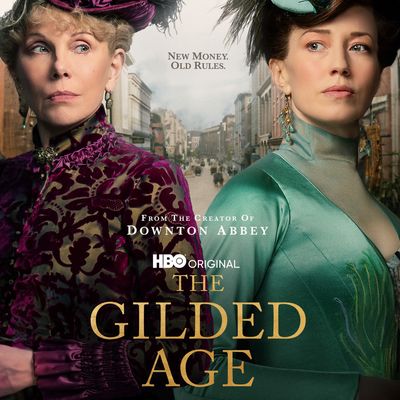
What happens when you stop treating your career like a straight line and start trusting where your artistry actually takes you? This week, Jennifer sits down with writer, producer, and "The Gilded Age" co-showrunner and executive producer, Sonja Warfield, to talk about a creative career that has spanned comedy, drama, development, and showrunning... Read More
From the show: Empowered Artist Collective Podcast - for actors, singers, dancers, writers, creators and performers
Featured Shows
About
What happens when you stop treating your career like a straight line and start trusting where your artistry actually takes you? This week, Jennifer sits down with writer, producer, and "The Gilded Age" co-showrunner and executive producer, Sonja Warfield, to talk about a creative career that has spanned comedy, drama, development, and showrunning. Sonja shares how improv led her to writing, the path to her first television writing job on "Will & Grace," what a showrunner actually does, and why so much of building a lasting career comes down to developing your voice and staying open to where it leads. They also get candid about the projects that never get made, prioritizing life outside of the work, separating your identity from your job title, and learning not to attach yourself to outcomes. With takeaways about kindness, flexibility, and embracing the pivot, this episode is a reminder that there is no color-by-numbers version of an artistic career and sometimes the unexpected path is the whole point.
Sonja Warfield is a television writer/producer and author whose credits include her work on the Emmy Award-winning NBC sitcom Will & Grace as well as BET’s hit comedy The Game. Currently, she’s the Emmy-nominated Executive Producer and Co-Showrunner for the HBO’s highly awarded drama, The Gilded Age. Over the course of her 20+ year career, Sonja’s also earned credits from a diverse range of television shows including Disney Channel’s popular Liv and Maddie; BET’s Zoe Ever After, which featured pop star Brandy; the animated series She-Ra for Dreamworks/Netflix, where she also penned an original song; and the ABC comedy Jake in Progress. She’s developed and written pilots/projects for ABC, NBC, Netflix, Nickelodeon, Lifetime, Universal TV, Sony Pictures Television and HBO. She is currently adapting the novel, The Davenports, in partnership with Susan Fales-Hill for Alloy Entertainment, WBTV and Amazon Prime, which they will Executive Produce.In addition to television and film, Ms. Warfield is author of the entertaining, empowering and inspiring book Get Your Butt Off My Couch (And Your Hand Outta My Wallet), a woman’s guide to getting rid of her deadbeat husband, boyfriend or boo-thing. Sonja and her book have been featured on numerous radio and television programs including The Dr. Phil Show. Ms. Warfield has a B.A. in Cinema/Television-Critical Studies from the University of Southern California where she has taught television writing. She is represented by Anonymous Content.
Download the FREE Monologue Selection Toolkit: www.jenniferapple.net/freebie
Want to coach with Jennifer? Schedule a session here!
Learn more about Jennifer Apple: www.jenniferapple.net
Jennifer Apple’s IG: @JenniferApple_
EAC IG: @EmpoweredArtistCollective
EAC TikTok: @EmpowerArtistCollective
Learn more: https://www.empoweredartistcollective.com/
Sign up for our newsletter: https://www.empoweredartistcollective.com/newslettersignup
Check Out Our Merch: https://empoweredartistcollective.threadless.com
Any thoughts you'd like to share? Email us at EmpoweredArtistCollective@gmail.com
Transcript
This transcript was automatically generated and might contain errors.
[0:00] Sonja Warfield: Hi, my name is Sonja Warfield, and this is the Empowered Artist Collective Podcast.
[0:08] Jennifer Apple: Hello, welcome to the Empowered Artist Collective Podcast. I'm your host, Jennifer Apple, actor, coach, monologue whisperer, writer, dog mom, and the creator of the Empowered Artist Framework. And I believe there's another way to build a creative, sustainable life in the arts that doesn't involve losing yourself. I am so glad you're here. In this episode, I sat down with the Gilded Age co-showrunner and executive producer Sonja Warfield. Sonja takes us from improv to her first television writing job on Will & Grace, through writer's rooms, development, producing, and ultimately showrunning. We break down the role of a showrunner and their job of holding the larger vision of an entire season, working with actors and directors, and how much of this career is learned simply by being in the rooms, watching, listening, and doing it.
We also get into everything that happens between the credits, the projects that never get made, choosing life and motherhood alongside career, not attaching yourself to outcomes, and remembering that titles are rented. This episode is such a beautiful reminder that there is no color-by-numbers version of an artistic career, and staying open to the pivot might just lead you to the next best thing. This episode is powered by Welcome to TimesSquare.com, the billboard where you can be a star for a day. Enjoy. Sonja Warfield, welcome to the space.
[1:21] Sonja Warfield: Hi, thank you so much for having me.
[1:23] Jennifer Apple: For anybody who does not know you, who are you today?
[1:26] Sonja Warfield: Well, today, I am in the year of our Lord 2026. Yes, I am a mother, and a daughter, and a sister, and a friend. It's so fun for me with that question, because people come in with all sorts of hats that they are owning in real time, and obviously we're here to eventually talk about artistry stuff, but for me, I think it's really important to be people first. What are we doing if we're not humans? I'm curious for you, is it the kind of thing that you wake up in the morning and you're like, okay, these are the things that I'm feeling connected to, or is it more like, okay, if I take a second and I'm reflecting, this is now I'm thinking more in terms of my interpersonal relationships today versus career hat?
[2:09] Sonja Warfield: Well, when I wake up and I'm in production on the show that I'm a co-showrunner, executive producer, writer of right now with the Gilded Age on HBO, I just am thinking, where am I going today? What set am I going to today? I, someone else said this, but titles are rented, right? So, I never wake up in the morning and think of myself in relation to the job that I'm doing or the project that I'm on, but I wake up as sometimes my full self, depending on how many hours of sleep that I got, and sometimes as a sliver of that. And this sounds cliché, and I do really try to lead with kindness because we never know what anyone else is facing or gone through, or going through, walking through. So, I don't necessarily, yeah, I don't think about my title or whatever title I am because, again, it's always shifting.
And I grew up with a famous father. And so, I think I've been on an identity search for a very long time, longer than most people, because I was always Paul Warfield's daughter. And so, for me, saying I'm Sonja Warfield, yes, I still am proudly Paul Warfield's daughter. I am also my son's mother. I'm also Kelly and Bernie's best friend. I am also a niece. But those are the things that a child of God, those are the things that you can't take away from me. But the title could go to whatever the job title is. Oof, who knows? Hollywood.
[4:14] Jennifer Apple: Yeah, I think that's such a beautiful framing that I know, at least in this space, feels very in alignment with arguably what I believe to be true about artists generally. It's like there's a real, I think, identity-binding melding that often happens with many folks, certainly in the performing space, of their worth and their identity being so connected to the job and the career. That's a tough space to be.
[4:40] Sonja Warfield: Yeah, very hard. And so, to pull that back and kind of just be like, no, what are the things that I am, regardless of the work, and really always going back to that as the root of who you are to start the work, whatever and however the work begins and comes to you, I think is so healthy and important. And I imagine, I'm curious for you, as you have created such an incredibly vast and wonderful career, which we'll get to, how the identity part has kind of guided the work that you have done and created. Has that been something for you that you're like, okay, this is what I'm drawn to as a person in this discovery of myself, and therefore now I'm going to write this thing, create this thing, produce this thing? Or is it now at this point, people are like, oh, you're really good at this. We know you're good at this. We're approaching you. How does that go? The beginning or the end?
[5:32] Sonja Warfield: It's a bit of both. I would certainly say, as my story, my human story evolves, the story that I am living today is vastly different from the story that I was living 20 years ago or 10 years ago or 15 years ago. And so as my story evolves and as I get to know, I think myself even better and in different ways and in different parts of my life and age and seasons, my work will be reflected in that. What's interesting about The Gilded Age is that it is set in the 1880s, but it is both timely and timeless in terms of the stories that we tell, these human stories. And I have always, my voice, my writing voice, and I think because I used to act some mostly improv in terms of acting, there was always the comedy and kind of the tragedy, and everything was very character-driven, and there was always a wit underneath it.
And so my voice fits that world and that voice, and I don't think that has ever really changed even in terms of even the first show that I ever wrote for, which was Will and Grace. And Jimmy Burroughs just recently passed away, and I have the privilege and honor of saying that the first thing that I ever wrote for television was directed by the great Jimmy Burroughs. And even Will and Grace, it had those human moments. It had great broad comedy, witty comedy, smart, deft comedy, and also humanity underneath that. So that's who I am, that's what I hopefully reflect in all of my work. And of course, as I go through different seasons in my life, I think just perhaps the angles or just the view might change a little bit.
[7:57] Jennifer Apple: Well, let's dial back a little bit. How did we get to this point? And we can talk abstract, you can talk more specific, but in terms of the various hats that you wear, the writing hat, the show running hat, the producing hat, I mean, there's so many of them. How did they get to be this alchemy? Where did it all begin?
[8:15] Sonja Warfield: Well, first, let me just kind of break it down for you, because if you're not in the industry, and a lot of people ask me this, and they ask about producing and whatever, here's the thing. So I am in a union, the Writers Guild, and when you first get onto a show, your very first job, you are a staff writer. And then you move up to, they give you a title called story editor, and then you move up to a title called executive story editor, and then it's co-producer, and producer, and supervising producer, and co-executive producer, and executive producer, right? And so these are just titles. At the essence of all of these is writing. If you are in the Writers Guild, and if you are writing on a show.
So when I started off as a staff writer, I wasn't, well, I wasn't responsible for, we have a line producer who does logistics, and coordinates, and budget, and all of that. They're line producers for all shows. And as you kind of go up in the ranks, the showrunner might ask you to do more different jobs. So the showrunner might delegate to somebody who is a producer. I want you on set today. We're going to be in this room. And the showrunner might delegate to me. I remember, I think, when I was on Jake and Progress, I was just, I think, an executive story editor, and I was asked, okay, we want, can you take the room on today? Can you help keep the writers room going? And on other shows, I've been asked, and this is all in addition to your writing duties, can you write the outlines today?
I mean, it just kind of depends. When I first got on Will and Grace, it was, you know, the executive producers knew beforehand where the season was going. So that's, as a showrunner, executive producer, that's your job. Your job is to know what's happening, arc out the season from beginning, middle, and end. And then, and you have a part in casting. And, you know, I'm looking at ball gowns to make sure that that works for the story that we're telling. And, you know, I work in close coordination with our line producers about some logistical things. I don't know the nitty gritty details. I'm not scheduling actors, and we have, on our show, like sometimes over 30 actors. That's a lot. I am, God love them and bless all of them who do that.
Yeah, no, that's a skill that I don't think I'd have for the organization of a spreadsheet in the back end and the timing and the logistics. It's incredible. My brain doesn't work that way. So, but if you need me to write some kind of story or a scene or something, bring it on.
[11:06] Jennifer Apple: Yeah. So how did you know that this was the world? Like, how did you know to be like, all right, or I guess, predating The Will and Grace that job? Like, how did that even begin? And then I imagine it was the snowball of okay, now you were in a writer's room. And now you get to hopefully be in other writers rooms. And then the progression happens. But I guess before The Will and Grace, and then once you're in that, how do you then start to, how did you then start to move up the rankings throughout?
[11:39] Sonja Warfield: Well, you move up the rankings by keep, you know, getting staffed and then hopefully get promoted every year, as you learn more and grow more. But prior to Will and Grace, I mean, prior to sort of anything, I started off as an athlete. I was a gymnast.
[11:57] Sonja Warfield: Love. But I have these, my knees are, you know, leave much to be desired. I am also hyperflexible. And so my knees, like your listeners might discuss them, but my knees used to come out of the socket.
[12:16] Jennifer Apple: Wild.
[12:16] Sonja Warfield: Yeah. And so I back then I had to just stop gymnastics altogether. My mom kind of didn't know what to do with me. And so she said, Oh, I'll send her to theater camp. And I loved theater and singing. And I was in, you know, choir, and I did a lot of performing. The issue that I had growing up in the 80s was there was not colorblind Hamilton casting. And so I found myself never getting the lead roles. Now once I was cast, and this was extremely edgy, because I went to this private all girls school, very buttoned up classical education.
[12:55] Sonja Warfield: Agee for theater directors she my senior year of high school cast me as, uh, Chris Kringle or Santa Claus, whatever, in Miracle on 34th Street. Okay, there's a black Santa Claus. Boom. Yeah, hold on to your hat. Anyway, so but otherwise I just sort of got these lesser roles. And when I was in middle school, I think it was middle school, they brought in the director of the Cleveland School of the Arts and she taught us improv, and that broke my world open because I could play all the parts. Yeah, and what I didn't really understand about improv was that was writing. But I'm from Cleveland, Ohio, and when we would watch, when you know, I would watch with my brother or whomever the credits of all the TV shows, I didn't know what any of those jobs were or don't know.
Yeah, even myself growing up. I'm like, oh, yeah, there's just like 8,000. Why are there 8,000 people? What are they all doing? Yeah, it takes, I mean, it takes a village to make TV and films, so it's an entire endeavor. And so I sort of didn't know, and then I was doing college touring. I was sort of learning more and I thought, okay, well, I think I want to be behind the scenes somehow. And then I should back up a little bit that my parents both worked in television. So my mom had a talk show, a local talk show when I was a kid. So I had been on TV sets at WKYC, I think in Cleveland and the NBC affiliate. I just like grew up there, you know? My dad did sports broadcasting after he played football.
And, um, so I knew that that world was very familiar. And, uh, I started school at Ithaca College in film and television. Then I transferred to USC to the School of Cinematic, it's now called the School of Cinematic Arts. And I still sort of wasn't sure what I wanted to, I was doing, I was taking film theory, I was taking film production, which was arduous and I didn't love it. And I had taken a writing class at Ithaca, and then I took a couple of writing classes at USC that I loved. There was a television academy internship program that one could apply to. And so my brother plays baseball, or he played baseball, and he played baseball for San Diego State. I find baseball boring. My brother was playing against USC.
I went to his game to support him, and I took a notebook and I wrote a Seinfeld spec for the entire, wow, game. I mean, it's a long enough game that I think, yeah, you can, but by hand is, well, I mean, yeah, I so I'm embellishing, but I knew I wrote, I knew the whole story. Yeah, I knew what was everything that was going to happen and then went and wrote it. And I was a finalist and I started having all these meetings with showrunners. Wow. Um, to do this internship and I got an offer. I was still in college, but when I graduated, I got an offer from the person who was running Star Trek: Deep Space Nine. Wow, to come on as like there, it was, I'd be a writer, but it was paid through somehow, I think it was paid through the guild, and so it was only guaranteed for six weeks or eight weeks or something. And I did not take it.
[16:23] Sonja Warfield: Okay. Yeah, because first of all, I am not into science fiction. Yeah, I did not watch Deep Space Nine. And because I also had an offer for like a regular job. It was, that was still in television. It was sort of adjacent in ABC on-air promotions. Okay, and that was like a job benefits salary, all of that. Okay. And my mom, who's the pragmatist, said you need to take that job. My dad, who's the dreamer, said take the other job on Star Trek. And I listened to my mom because she kind of controlled the purse strings. And I took the sort of safer bet, but it was fine. Everything happens for a reason. Yeah, and that eventually then led you, I imagine you were still writing. You still had...
[17:15] Sonja Warfield: I was still writing. I was still pursuing writing. I had lots of specs. And back then you, and when I was in my 20s, I was always going out, always meeting people, and I had a friend of a friend who was, he was an aspiring writer, but he was maybe a little bit ahead of me. And my friend Ally said, you've got to meet, I want you to talk to this guy. And so I talked to him, and he told me about this class that still exists called Writer's Boot Camp. Mm-hmm. And Jeff Gordon, I think I'm pretty sure still running it because I talked, I had a talk there a couple years ago, I think. And that class really taught me structure in a way that like I still use now. And I mean, and I also attended the University of Southern California.
I took writing classes there, and I just kept writing because I was in, I was living in Los Angeles and my then ex-husband was living in Los Angeles. And so everybody's kind of in the business. It's a company town. Yeah, which can't make to connect, make it a little bit all honestly. Um, and so I, you know, we had contacts of people who had just gotten out of the William Morris mailroom and were starting, you know, their own management companies and all of that. So I kept talking to people and I was sending them, yeah, my scripts and I was getting like, I was getting meetings. I got, I remember I was being considered for the show. It was, um, Once and Again by the people who created Thirtysomething, which I loved.
And I kept kind of getting closer and having meetings. I had a meeting about some movie that was supposed to be starring Lisa Bonet, and it was like, but I just wasn't getting things. And, um, and then I had a producer friend. She was, uh, in film who was friends with a writer, writer slash producer on Will and Grace, and they were looking for a freelance person. And this producer friend really wanted to be a writer, but she wasn't really writing, and she didn't really write comedy. And so the Will and Grace person called her, and she recommended me. I had just had my son. He was 10 months old or something. And, but this is about preparation meets opportunity. This is where the luck thing comes in.
And I had this idea for a pilot that I started writing when he was an infant, and I had finished it, and it was an hour dramedy pilot, and it had like some hard jokes in there. And, but I also had a screenplay, a romantic comedy that had been optioned and, you know, people kind of circling around it. The ironic thing is that at the time the screenplay, the main character was 30 years old. Okay. And there were actresses who turned it down because they didn't want to play a 30-year-old who were still in their 20s, mind you. Like, take me back. I'll do it. That's the whole thing. No, I know. That's the whole thing. Like, I, yeah, like I had an actress once turn down a pilot of mine because she didn't want to play a mother because she thought that would typecast her.
Wow. Now, less than a year later, the lady had a child in real life. So I'm thinking, okay. Yeah. Anyway, so my friend recommended me for this potential job on Will and Grace. This was in 2000. My son was, it was 2003, so my son wasn't quite a year old. And so it's kind of before you would really email scripts. And I want to say like they called on, you know, I found out about on a Thursday. I had a messenger send my scripts. And then they called me on a Tuesday, and I met with them in person, and they hired me in the room. Wow. And they said, we, you know, we want you to, wow, based off of my work and meeting me. Amazing. And so I wrote, I got to write this episode. Harry Connick Jr. was in it, who was just lovely.
And, um, yeah, and then, then they hired me, then they hired me to come on staff for the following season. So, wow, it's terrific. It's amazing. And I love naming the fact that like, you know, luck, opportunity, time and place, relationships. I think, you know, it's been such a theme that I want to continue putting into the ether because it really is all of those things. And to continue naming that there isn't the one way to have any of these careers. It's not, again, you go to law school and become a lawyer. It's just not that. And so I think it's really always helpful to be the reminder for folks of like continue your hustle, continue your work, continue being a kind human being, and the thing that is meant for you won't pass you by, and it'll happen the way in the time that it's supposed to, even when you don't think it can or should because you just had a kid, right?
Or whatever. I was literally watching Sesame Street when I got the phone call. Wild. Yeah, it's when you least expect it or when you think it shouldn't happen. And I know that from my own lived experience. It's like whenever I leave town, I get the best opportunity for auditions. And it's like, wait, I have to leave every time to come back, and it keeps pulling like, okay, I needed to leave because I'm like over it, needed a break, whatever. Yeah, and that's when all the good, it's just every single time these things happen. Um, and just trying to like trust the universe a little bit, not even like a woo-woo way, just in the way that the world kind of operates. Absolutely.
[22:57] Sonja Warfield: So then flashing forward to, you know, you again, like worn so many different hats. I'm curious how the show running came into play. Certainly, obviously for Gilded Age, Julian Fellowes created the Gilded Age, and I was developing something for HBO, another project, and they wanted someone to come on board with Julian. Um, they wanted an American voice because he's not, you know, he's very English. Yeah, and, um, which I love about him, and I love England, and I've always loved England. My son was conceived in England because I lived there for a short time. And, um, and now I get to go back. Uh, so Julian created Gilded Age. I came on board first season and, um, did some rewriting and writing, and we really fleshed out, um, the character played by Dene Benton, Peggy, Peggy Scott's character more.
And then second season, I got to start actually writing scripts with him. So amazing. And so how did that transition for you work in terms of the skill set? I'm curious. It's like, obviously you've been on sets for years at this point in various writing capacities up the rankings. Yes, to wear a different, and again, these are all just back to the labels of it all, but to wear the hat of showrunner, did that feel like a completely different skill set? Was it, I had to learn certain things on the job? Was it, oh, I've seen so many people do it all these sorts of ways, and now I kind of have an idea of what I want to do, and now it's just a matter of me doing it? Like, do you find it in real time?
Like, how did that all happen? I think it's all of the above. I think, you know, going back to when I, like in 2006, I was on the show, and it was a very short-lived show with starring John Stamos, and we had a small writing team. And so the showrunner, um, Jeff Greenstein, who was running the show, he didn't create the show. Austin Winsberg created it, would allow me to sort of try on and see behind the scenes. I mean, he's the person, Jeff Greenstein hired me on Will and Grace. So I had, he was, you know, kind of a mentor of mine, and I had been watching him work and see, you know, you get to see how the show runs because the, in the writers' room, the showrunners are in the writers' room with you.
So even though I don't have to see, like that, you know, get, I don't need to look at the blueprint for that set or whatever, or production design, I can, if it's not my episode, maybe I wouldn't, but I did write, and I, you know, and I did sit in on editing.
[25:50] Sonja Warfield: For Jake and Progress, this is back when people would come in for real live casting sessions. I did sit in on casting sessions and did get to have a say in that. What did I think of this person versus that person for the role? And I have been sitting on network meetings because we used to do those all in person. So after the table read, the network would come. Every week on the live show, when we did Will and Grace or some other shows that I've worked for, you have the network run through. So I'm there as part of the notes. But I've been doing this, I was kind of in the background and learning since I was in my mid-20s because I was a showrunner's assistant for Peter Noah, who I think he was last on the show.
And so I've understood many facets of this job because I've seen it for so many years. I think I'm naming that because if somebody's listening to this and they're like, wait, I think I didn't even really know, but I think I know that this might be something that I'm interested in. It's like, how does one develop their skill set for it? Or how does one get to the point that they can be putting themselves in the position to be like, I want to be said showrunner? It's like, do you have to? I mean, again, there's no one way and that's what I'm trying to put into the ether of like, if you go through the writing path, if you go through the producing path, if you go through the creating path, how does one know how to get there? How does one potentially get there? What is the path of least resistance? Is there one? I don't think there is one.
[27:40] Sonja Warfield: Yeah. Like, what is there to tell somebody about that particular job or how to potentially have the skill set required for it, barring the like, you must be in a room and seeing it firsthand? Well, you don't have to. I think there are many ways to get to Oz. So if one creates a show and that show has your very specific voice and point of view, you'll have a seat at the table, whether a network or a stream or whatever is going to say, we're going to let you run. This is another question. And the person who created that show in that world is probably, well, listen, they may or may not be equipped to have conversations with actors and directors about executing their vision. And that's a big part of the job that I do think you learn on the job.
And it's really about understanding and knowing the work, the words on the page and the script and the narrative that you're telling. And so I definitely got a lot of on the job experience in terms of being on the set of the Gilded Age. And I was that person, you know, the only writer. And so the actors came to me and we discussed lines and they text me or they call me or I call them and we have this rapport. So there's part of that piece working directly with the actors and the director and even, you know, sometimes the production designer and the costumer. That is work that as a lower level writer, you don't necessarily get to do. But as you move up the ranks, you get to do and I will posit if you created the show, they will probably want you there to do that because it's your vision, it's your voice.
You know, you get to execute it a certain way. Now whether you understand the X's and O's of budgeting and show running and all of that might be a question. So they might bring on somebody to sort of help lead the way. But there are many, there are many ways to get to all those.
[30:14] Sonja Warfield: Can we break down what a showrunner does? You kind of just did in some ways of like all these different, you know, interactions and the way things have to operate together. But like at base, depending on the set, obviously there's different levels of more or less of the one thing. But at base, like what is a showrunner's responsibility? Well, I think it is everything, right? Or I guess maybe let's name it like how is it different than say a director on a set? Because it's different, partly it's different because as the showrunner, you are looking at the whole season, right? As a director, you may have one episode or two episodes that you're directing and that's kind of it for you. As the showrunner and or the creator of the show, you are continuing this narrative, this world, the specific tone of the show, this voice.
Like I would say something about Gilded Age that some people don't quite get right is that it's witty, and it's humorous, but we are not pratfall, sketch like comedy. And so there's a balance with the wit. And with actors too, I mean, I've seen acting reels where I've said, no, because this person's going to play it as if it were a sketch, and that's not going to work. There's a balance. And so as the showrunner, I get to convey that, the intention behind the words, behind the script, the story that we're telling over the whole season. So if a director is just directing episode five, but there's something that happens in episode five that impacts the whole rest of this character arc, I've got to make sure that director understands this is what we are planting here in episode five, and we're going to pay it off in episode six or seven or eight. Then they might not know that.
[32:30] Sonja Warfield: We had a table read a couple years ago, I don't know when now. And Carrie Coon had a question about why her character did not stand up for, it was Aurora Fane, so Kelly O'Hara's character, because in the past, that was a character who helped get her into society and helped her get her footing. And I had to explain to Carrie, because she didn't know that what was coming up later in the season was, oh, no, she's going to stand up for her and all women, and especially divorced women and introduce them into society in this major way. And so this is the moment where she sees that Aurora is being mistreated, and it sparks something in her brain, but it's not the moment where she takes action, it builds. So the showrunner really is the person who talks to the actor, talks to the production designer, the costumer, this is the intention behind it all, and then you get to execute.
[33:43] Lauren Ruffin: It's helpful to name the continuity part of it and also the through line part, that there really is an overarching way of thinking about completeness, even if you don't know the specific details, because it's being developed in real time, but there is about thinking about the whole picture that allows the people then in the moment to do their job really well and successfully, which I think is really beautiful and obviously why a position like this exists. I am curious then for you in this particular season of your life, in your career, are you enjoying this more, less? Are you craving other things? I know you're now developing this new series as well, based off of this young adult novel. I'm curious for you, the transition, the balance, this new season.
[34:37] Sonja Warfield: So I actually really love YA novels, and it's interesting because I don't read a lot of adult fiction, but I read nonfiction. I love nonfiction. Give me a memoir, I'll devour it. But I like YA fiction, and so I'm really excited and happy. One of the things that we've been able to do at Gilded Age is actually expose the country and the world to the Black elites who did exist, and they did exist close to post-Civil War. Was it 2020 when people were just finding out about the Tulsa, Oklahoma massacre? There were other massacres that existed. John Singleton did a film, I think, called Rosewood about a place in Florida. I feel like the feedback that I get when I do press, and even from people who find out about my role on Gilded Age, is we didn't know that there was a Black elite back then.
This is new, right? There's nothing new under the sun, but it's new because that history has really been an erasure, intentional erasure. We announced that we have Dennis Hayspert this coming season, season four. I'm not going to tell you who he plays or anything. And one of the things that he said was when his agent first came to him about doing a show it's Black people and it's set in the 1880s, he thought, I don't want to go back there. I don't want to go back to that dark whatever and play that role. And then they said, well, this is different. Watch the show. And then he watched the show and his eyes were widened because he thought, this is a real character who I can play that actually has humanity and dignity.
And I think in the past, those stories, first of all, they weren't told, but if there were any Black characters, they weren't told from possibly the white gaze and also the patriarchal gaze. And what is wonderful is that, first of all, Julian is English and he is not American. So he does not carry the baggage of this country. And I think the endemic bigotry and those stereotypes and the racial caste system. And so it's really been this great adventure and partnership. I'm so grateful for him for creating this world. So we all get to play in it. And it has also been an education because we have as our co-executive producer, who's also a historical consultant, Dr. Eric Dunbar, who has a PhD in American history.
And her specialty is, I believe, Black history and women's history. And so she's telling us in real time this history that I took American history in college, things I didn't even know. So it's been an education. It's an embarrassment of riches with the actors that I get to work with and the amount of talent and professionalism that they bring and also curiosity.
[38:35] Sonja Warfield: Yeah. Do you find that that then has led you to the Davenport's being the next spark of creativity? Do you feel like there was
[39:16] Jennifer Apple: We were kind of talking about this before we clicked play. The amount of things that you have written or created that never have seen the light of day or were turned down. I'm curious to navigate that. I want to hear more about that. I think it's something that people don't want to talk about quite often. They want to only talk about their successes or the things that worked. I think it's worth naming that more often than not, most of what we do doesn't quote-unquote work in the way that we maybe deem quote-unquote successful, all the words that are put upon us. I'd love to talk about that. I'd love to talk about what it is to have something that you love and care about, share it with people and then not have it be received well, share it and then there is interest and then it dies.
What is that? How do you navigate it? How do you continue getting up to do it again? What is that? You don't get attached to outcomes. Also, I'm a creator, so I know that, well you may not like this, but I still like what I wrote and I can write something else. This is not the only thing in life I'm ever going to create. I cannot even say that this on purpose. Yes, at some point I wanted to have my own show, all of that. I was a client at CAA. There was an executive at HBO that I kind of knew. My agent set up this meeting for possible development. I went in with no real ideas, but sort of some areas. I talked about two different areas and one of them was one that I had worked out more. I left that meeting and my agent called me and he said, congratulations. I said, for what? He said, you just sold that show. And I said, which one? And that's a true story.
[41:01] Sonja Warfield: Wow. And it wasn't the one that you really loved?
[41:03] Jennifer Apple: No, it was the other one. And you had to go through with it.
[41:06] Sonja Warfield: Yeah, but that's fine because it was a discovery. So, essentially what she bought was this journal idea, but it was this world. And it was a world that HBO was interested in exploring. And so, it just sort of lined up with what their agenda was. And it was a world that I knew very well, which was behind the scenes of professional sports. And so, probably I thought less about that idea because it is my world that I've grown up in. And so, then it was hilarious. So, it was like reverse engineering the entire thing, which is how I really build story anyway when I'm writing. I always think about the end and then reverse engineer it. So, yeah, it was this hilarious thing. And I wrote that pilot, and then I was staffed on a show.
And so, at that time, in TV land, they didn't want you developing a show while you were staffed on a show because they thought all your attention will go towards development. And they wanted to essentially somewhat own you. And so, it's different now because whatever. And so, I had to just make a promise that I would spend my time on the show and I would let the development process take its time with HBO so I could do the show on ABC. And the show on ABC gets canceled. And I'm a divorced mom at this point. And that pilot at HBO is in development for a couple of years. Nothing happens. But I do write the pilot. And so, then it can be used as a writing sample. And so, then it gets in the hands of someone who had a deal with Sony.
And they like it. And then they want me to develop for them. And then I go. And meanwhile, I'm being mom. That was my main focus. So, I'm taking my son. My son at one point was on three basketball teams. Two of them were travel teams. So, I'm doing mom stuff. And then again, I sell another pilot. And I had put more thought into this one. And I had the whole pitch. And when I sold the pilot, I thought, I can do this. And then I can still be a mom and be present for my son. Because I'm not in a writer's room however many hours a day on a set or on a show or on the other side of town. And so, I started just... Development for me actually was selfish in terms of wanting to be around my kid.
[44:55] Jennifer Apple: I don't think that's selfish as much as it's prioritizing in some way.
[44:58] Sonja Warfield: Yes. I absolutely prioritized him. And I will never regret a moment of that. But what I'm saying is in terms of like, I think I at one point made a conscious decision, which was problematic in my career later when I needed to get a job in staffing. I'd been out of the staffing realm for that world for so long and I didn't have as many contacts. But I decided to make this decision. I mean, it was for myself too, because then I could give more to him. Because I could drop him off at school and I could go to Pilates in the morning. And then I could write a little bit and then I could pick him up and I could make dinner and write if I wanted to. That's how development got for me. Development became such a game that I remember there was a pilot that I wrote for NBC and they'd given me so many notes.
And there was like two layers of producers. And the one producer who's not even in the business anymore, she said to me, I feel like we've given you too many notes at this point, which I thought, wow, well, that's very reflective. I never thought I would hear that from an executive. And so she said, I think you need to go back and think about why you were writing this in the first place. And I didn't say this to her, but I thought the check cleared. And that's not a great place to be as a creator. So I will say that I was playing that game, development game, so that I could have this other kind of life.
[47:04] Jennifer Apple: Yeah. For anybody who is wanting to take their pieces and get in these rooms, and certainly the world that we live in is very different than pre-pandemic, pre-strikes, pre-all the things, pre-technology, I don't know. How would you suggest folks either continue developing their work, start to have these meetings, start to pitch themselves? Is there something that they must have in order to make this happen? Or is it like just continue pursuing kindness and relationships and sharing your stuff when you can?
[47:25] Sonja Warfield: I think all of those things, and you have to have a really great calling card script or book or short story or something that really shows that you have the singular point of view and voice and may be bringing something new. And I think that is what helped me get into the rooms that I got into and get read, is that singular voice, whether you're telling whatever genre you work in or whatever. But that is what opened the doors for me, ultimately. That was the first door. And then of course, I think, yes, of course, being kind always pays off.
[48:15] Jennifer Apple: Yeah. Is there anything that I would be remissed to not have asked you in this space? I always say this, and it's interesting because before I think this went on, we were talking about pivoting a little bit. And I always say be open to anything and everything. And pivoting actually, be open to pivoting because you just don't know what, this is not a color by numbers type of career. Artistry is not, that's not what it is. And you get to have the courage to be an artist, pursue your dreams and be open to wherever it takes you. Because the pivoting could actually take you to something that could lead you to the next big thing. You just don't know. So that's what is beautiful about it. And that's part of improv, say yes to the information.
Yes and. I'm really, really grateful that you were in this space and that you shared the way that you did. I'm still endlessly fascinated by all of the rooms and the doors and the paths and the, I wouldn't even call them pivots, but the transitions in the seasons of your career and how they've all led to where it currently is and will continue to lead to where it goes. And I think in some ways, in many ways, you're like a testament to like what it is to be an artist in the ability to be flexible and the saying yes and the being curious enough to adapt and to also say no. And I'm just really grateful to know that there are folks who are being creative in this way. Just because I feel for myself that that is the kind of industry in the world that I want to be a part of, where we all are able to prioritize ourselves and are the people that we love while simultaneously recognizing that we are artists and it can continue adapting and moving and shifting. So thank you for sharing in this way.
[50:09] Sonja Warfield: Thank you for having me.
[50:11] Jennifer Apple: Yeah.
[50:11] Sonja Warfield: I said at the beginning that I was hyper flexible and I think that's what everybody needs to be.
[50:16] Jennifer Apple: Yeah. No, it's true. It's really, really true. For anybody who wants to stay in touch or to learn more or to potentially reach out, where within your boundaries is it best for people to find you?
[50:26] Sonja Warfield: Within my boundaries, it's just best to find me. I have a website that I do update that sometimes and I'm wrapped by anonymous content and those are the best ways to find me.
[50:41] Jennifer Apple: Amazing. Thank you so much for being in the space.
[50:44] Sonja Warfield: Thank you for having me. It's an honor and a pleasure.
[50:46] Jennifer Apple: Yeah. I hope this episode empowered you to take one small step forward. Make sure you're subscribed to never miss out and while you're at it, kindly leave us a review. It's one of the best ways to help other artists find the podcast and join in on the conversations. Be sure to tag @EmpoweredArtistCollective and @JenniferApple underscore so we can see what's landing for you and keep the conversation going. As always, thank you for being here. Thank you for listening and thank you for being a part of this incredible community. Remember, whether it's a small shift or a big breakthrough, every step forward counts. Keep creating and keep thriving. I'm Jennifer Apple. Until next time.
© Broadway Podcast Network, All Rights Reserved