

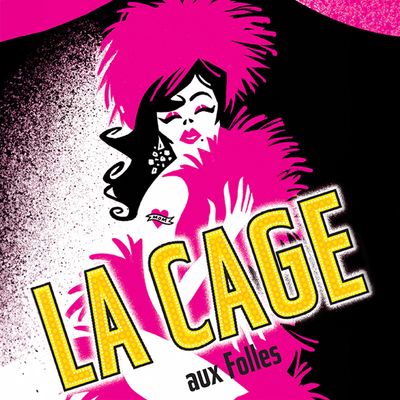
LA CAGE AUX FOLLES. COMPOSER: Jerry Herman. LYRICIST: Jerry Herman. BOOK: Harvey Fierstein. SOURCE: Jean Poriot’s play La Cage Aux Folles (1973) DIRECTOR: Arthur Laurents. CHOREOGRAPHER: Scott Salmon... Read More
From the show: Fifty Key Stage Musicals: The Podcast
Guests

Featured Shows
About
LA CAGE AUX FOLLES
COMPOSER: Jerry Herman
LYRICIST: Jerry Herman
BOOK: Harvey Fierstein
SOURCE: Jean Poriot’s play La Cage Aux Folles (1973)
DIRECTOR: Arthur Laurents
CHOREOGRAPHER: Scott Salmon
PRINCIPLE CAST: Gene Barry (Georges), George Hearn (Albin), John Weiner (Jean-Michel)
OPENING DATE: Aug 21, 1983
CLOSING DATE: Nov 15, 1987
PERFORMANCES: 1,761
SYNOPSIS: La Cage Aux Folles is a drag club owned by George and Albin, two men who have been together for twenty years. When Georges’ son Jean-Michel arrives and announces he is engaged to the daughter of a homophobic politician, Georges and Albin must try to decide how they will deal with their son’s intolerance.
Comparing early responses to Queer representation in film and cinema from French and American audiences, Robert W. Schneider sets the scene for the opening of La Cage Aux Folles, Jerry Herman and Harvey Fierstein’s musical adaptation of a French farce featuring the first leading homosexual couple for the Broadway musical. Director Arthur Laurents was staunch in his desire that the show refrain from seeming overtly political, desiring instead to present an old-fashioned musical which featured a gay love story. This chapter details the positive impact La Cage Aux Folles had on LGBTQIA+ representation worldwide, it also touches on how the AIDS epidemic of the 1980s and 1990s dampered the optimistic tone set by the musical.
Robert W. Schneider holds academic appointments at Penn State University, New York Film Academy, and Mount Union University, as well as serving as the Artistic Director for The J2 Spotlight Musical Theater Company and as an original programming producer at Feinstein’s/54 Below in New York City. He is the host of the podcasts Behind The Curtain: Broadway’s Living Legends, Gay Card Revoked, and This Was A Thing. For the past fifteen years Robert has been one of the most prolific leaders of online education in the arts. He is a proud member of SDC, AEA, and AGVA.
SOURCES
La Cage Aux Folles by Harvey Fierstein and Jerry Herman, published by Samuel French (2014)
La Cage Aux Folles, Original Cast Recording. RCA Records (1983)
Showtune: A Memoir by Jerry Herman, published by Dutton (1996)
Mainly on Directing by Arthur Laurents, Published by Knopf (2009)
Transcript
This transcript was automatically generated and might contain errors.
[0:16] Andrew Child: Hi, I'm Andrew Child, and welcome to Fifty Key Stage Musicals: The Podcast, a companion piece to the Routledge Press publication Fifty Key Stage Musicals, which is available for purchase by going to Routledge.com or clicking the link below in today's show description.
[0:33] Andrew Child: Today's episode focuses on chapter 32, La Cage Aux Folles.
[0:38] Andrew Child: And with us today is the author of that chapter, Professor Robert W. Schneider.
[0:43] Andrew Child: Professor Schneider holds academic appointments at Penn State University, New York Film Academy, and the University of Mount Union.
[0:52] Andrew Child: He is the artistic director of the J2 Spotlight Musical Theater Company, original programming producer at Feinstein's/54 Below, as well as the host of the podcasts Behind the Curtain: Broadway's Living Legends, Gay Card Revoked, and This Was a Thing.
[1:09] Andrew Child: He is also the co-author of Fifty Key Stage Musicals. Hey Rob, how's it going today?
[1:16] Robert W. Schneider: I'm doing great. How about yourself?
[1:18] Andrew Child: I am doing well, thank you.
[1:21] Andrew Child: So we're gonna be talking about La Cage Aux Folles.
[1:23] Robert W. Schneider: Yes, we are.
[1:24] Andrew Child: The poster's right on my wall. I don't know if you can see it, but it's right there.
[1:28] Robert W. Schneider: Right there.
[1:29] Andrew Child: I see it. Wow.
[1:30] Robert W. Schneider: There you go.
[1:31] Andrew Child: So we know you're a true diehard fan.
[1:33] Robert W. Schneider: I am, I got a poster.
[1:35] Andrew Child: You got it.
[1:36] Robert W. Schneider: The poster and everything.
[1:37] Andrew Child: You got it behind you in your little Zoom setup here. Beautiful.
[1:40] Robert W. Schneider: Yes, thank you.
[1:42] Andrew Child: Wow. So I love the show, yeah. Talk to us. You got the poster on your wall. Why does it get a whole chapter in this book? What makes La Cage Aux Folles a key musical?
[1:50] Robert W. Schneider: Besides that, it was the first musical I ever saw on Broadway.
[1:55] Andrew Child: Oh, really?
[1:56] Robert W. Schneider: Yeah, that's my personal journey with it. In terms of why we study it, it's the first musical that has a gay couple at the center of the story. We'd had other gay characters every once in a blue moon prior to this, but this is the first gay relationship on a Broadway stage.
[2:20] Andrew Child: Okay.
[2:21] Robert W. Schneider: We'd had other productions off-Broadway, like Boy Meets Boy, and you know, superfluous gay characters and things like, well, not superfluous, I shouldn't say that, but periphery characters in things like Applause and Lady in the Dark. But this is the first time we're seeing queerness as the major central focal point of a Broadway musical.
[2:42] Andrew Child: And so in the chapter, you talk obviously a lot about what it meant to fight to put this story on a Broadway stage, what it meant to keep this show running on a Broadway stage, also to have it try out in Boston. Do you want to just summarize for listeners who haven't gotten a chance to read through the book yet? What did that actually look like?
[3:06] Robert W. Schneider: Sure. SOURCES La Cage Aux FOLLES was based on a very popular French play by Jean Poiret. If you've seen The Birdcage, then you've seen La Cage Aux Folles, which was a farce. It was a farce where it's literally You Can't Take It With You. It's Auntie Mame just with a gay couple, which is a classic trope, where a conservative family meets a liberal family. That's the trope, right? But in this case, the liberal family is a gay family. It's two men who are raising a 20-year-old son, and the 20-year-old son has come home to say, "Hey, listen, I'm getting married." Oh, and by the way, the parents are incredibly conservative and are incredibly homophobic, and then hilarity ensues, which it did in the farce.
In the farce, there's nothing sentimental about it. It's a big, silly, fun farce, the same way You Can't Take It With You or The Man Who Came to Dinner is. It got turned into a movie in the late '70s, and that foreign film, because it was an Italian-French co-production, was a huge international hit.
[4:14] Robert W. Schneider: Which is crazy because when you watch it, it's like your mouths don't line up with what you're saying. Because that word co-production is super generous. It was like an Italian-French clusterfuck, you know.
[4:29] Robert W. Schneider: Yes, it was that from the original French version, Michel Serrault, who played the Albin character, he did it in French, and he speaks French in the movie. And then Ugo Tognazzi, who's sort of like our equivalent, like a Harrison Ford or Liam Neeson type, he's Italian, and he's speaking Italian, but they've dubbed him in French. It is an interesting experience. However, though, the movie was a huge international success. And once again, it's one of the first times we're seeing queerness being put front and center. It's funny. There is a heart to the movie, and that's what inspired Jerry Herman to write; he wanted to write the score of it. He looked at it and he said, "This is a musical. This is a musical.
These characters should be singing." The problem is he got to the rights too late, and producer Alan Carr, who gave us not only Grease, the movie, but also the incredible 1989 Oscar ceremony. And if you've never seen that, people take a look at it. Alan Carr was huge at that time, and he got the rights to the movie, and he told Jerry Herman, "I'm sorry, I've already got another team on it." And the team was Mike Nichols, who was gonna direct it at the time, Tommy Tune was gonna choreograph, Maury Yeston was writing the score, and Jay Preston Allen was writing the book.
[5:54] Robert W. Schneider: Wow. These are big names. I mean, these are heavy hitters. Yeah, and then over time, all of those original creative teams just sort of went away. And nobody, you know, and it's like, like I say in the chapter, it's like a Rashomon quality of why did they all leave? Some because of money, some because producers were like, "We need gay, you know, we actually need people that are gay to be on the team." So Arthur Laurents took over direction, Harvey Fierstein, fresh off Torch Song Trilogy, did the book, and Jerry Herman did the score, and all three gay men. And I think you'll probably agree, it makes a huge difference going from that movie to this musical that have these heartfelt ballads, these beautiful moments that just if I talk about them, I'm gonna get choked up and start crying. They're so stunning and beautiful. I don't think that a straight creative team, a totally heterosexual creative team, could have done this, at least not at that time.
[6:53] Andrew Child: No, definitely not at that time. But I think what's really important is, and it's the thing that calls La Cage Aux Folles into criticism today, is that Arthur Laurents's main drive on this show was he said, "Listen, yes, it's about gay people, but it's about family first and foremost. It always has to be about family and entertaining the audience. It just happens to be this family is, if there's a quote-unquote problem with the family or what makes them eccentric, it's their sexuality. But at the end of the day, it's got to be entertaining." And because he went in with the idea of "let's entertain the audience," he was able to educate them at the same time.
[7:33] Robert W. Schneider: I agree with you. I mean, I don't want to. I mean, I have lots of straight friends who are incredible allies, but I do agree with you. I think having straight people on creating a homosexual, a gay love story, I think, yes, I think some things would have been missed. I really do.
[7:49] Andrew Child: Well, and I think the proof of that, and I'll say that again, let's just say we're talking about contemporarily to this, you know. I think the proof of that is, you're right, the La Cage movie, that international sensation, there is some heart to that. La Cage 2 and La Cage 3 are just nonsense. Like drivel, it's just like, "Haha, oh man married that man, and now they are fleeing because they're like in the witness protection program." You know, oh yes. It's fun and I love it, but there's absolutely no heart, there's no backbone. I feel like that comes in with Harvey Fierstein fresh off of Torch Song Trilogy.
[8:33] Robert W. Schneider: Yeah, and I think in the movie version, now this is also interesting that when they got the rights to La Cage, they did not have the rights to the movie. They had the rights to the play. So things that were introduced in the movie they could not use. So, like the mother, the actual mother who shows up, okay, they couldn't use her because she wasn't in the play; she was only in the movie. It's sort of like the Applause/All About Eve thing, which was the musical Applause only had the story that All About Eve was based on. They didn't have the movie.
[9:12] Andrew Child: Okay.
[9:12] Robert W. Schneider: So why was I'm just mentioning every single gay totem for myself right now and so then we'll go back. I'm sorry, you were saying, I'm so sorry.
[9:30] Andrew Child: We were talking about how this creative team was able to bring so much heart to this, and I think—
[9:30] Robert W. Schneider: Oh yes, yes.
[9:37] Robert W. Schneider: There's two moments in the movie that I find really fascinating that they can't put in the musical, and it makes me sad. Well, one they kind of do, one they don't. The one that's not in the musical at all is the beautiful scene where Albin has found out that he's not allowed to meet the family, and so he goes to the train station by himself, and Renato comes and he sits down next to him, and he has this beautiful monologue about, "I have the most gorgeous cemetery plot," and it over and it's so beautiful and it's so wonderful. "And your cemetery plot, which is like 20 miles away, is a piece of shit. But I sold my really nice one because I just want to be with you for the rest of my life." It is so beautiful, and if you're a fan of The Birdcage, it's the same scene where they're all at the bus stop waiting. That to me, I was always like, "Why is that not in La Cage? Why is that not in the musical?" I'm assuming because it's in the movie, they don't have the rights to do that.
[10:39] Andrew Child: Right.
[10:40] Robert W. Schneider: But the thing I find really fascinating about the movie being adapted to a musical is the "I Am What I Am" song that Albin sings is actually, in my opinion, some lines that Renato has in the La Cage movie. Because in the movie, he says to his son, he's like, "Yeah, I'm old, yeah, I'm gay, yeah, I wear makeup, but I know who I am." And it took me a long time to get this way, and I'm not changing. And I find it interesting, I understand why, but I find it interesting that they basically took the essence of that speech in the movie and gave it to the other character to sing.
[11:26] Robert W. Schneider: It makes sense, it makes sense. But I always found that very interesting in the transition over. And let's talk about that song. Let's talk about an iconic anthem of, you know, as I understand it, it was written as a scene. Harvey Fierstein wrote the scene where Albin tells Georges off, and Jerry Herman said, one of the lines was "I am what I am," and Jerry Herman said, "I had to have that. I have to have that." That's the song, and crafted one of the most beautiful theatrical moments in which this character who's been bullied and pushed around and thought less of for an entire act finally just stands up on their feet and says, "If you don't like who I am, then you leave, I don't leave. You change, I don't change."
And I think for the gay community who had for so long in media been looked at as a punchline, not sympathetically, as a laugh, to give that dignity, I think spoke volumes. Then to have it in the middle of the AIDS crisis, where not only are they jokes, now they're pariahs because remember at that time it was, "Oh God, there's a gay person. If they look at me, I'm gonna get this." You know, a lot of theaters, I think in the West End, some of them laid plastic down on the seats because there was a fear from patrons that they would get AIDS by sitting on seats the gay people had sat in. And people didn't want to sit too close to the stage because there was a fear that the AIDS would come across the footlights and infect people in the audience.
And we laugh now, not laugh now, but we would now go, "Are you really serious?" It's absolutely serious, absolutely serious. So to give our community an anthem at a time when we're getting bullied on both sides, it will never be underestimated what that song gave the community. Even though in the original cast, it's of course being sung by a famously straight man.
[13:48] Robert W. Schneider: That was one of the, you know, I got a chance to talk to the original casting director of La Cage, Stuart Howard. I said to him, "Who else was up for these two roles of these gay men?" And he named a bunch of people like Richard Kiley and John McMartin and, you know, Gene Barry, George Hearn, that ended up getting it. And I said, "How come you didn't consider any gay actors to play the role?" And he said, "I'm gonna be honest with you. Can you tell me what openly gay actors were in 1983?" Right? And he was absolutely correct. He said the one person that it came down to was George Hearn and it was Charles Pierce. And if our listeners don't know who Charles Pierce is, he was a very famous, he called himself a male actress.
He was basically a female impersonator. And it was between him or George Hearn. Now, while he never did any public stories about being out until much later in his life, that would have been close enough. But I think Stuart Howard is absolutely right, which is there's no, I don't know what openly gay actors were available. It's not like today, thank God. But by having a story like La Cage on stage, even though it's being played by two heterosexual actors, it's at least allowing the gay people to see, "Oh my gosh, I'm being, my character at least is being represented on stage," and families that were maybe homophobic to go in to see it and go, "Oh, I see what's going on now."
[15:31] Robert W. Schneider: A personal story, yeah. When we saw La Cage, I was four years old maybe when my parents took me to see it, and we went with my grandfather who was a Marine, always had a cigar in his mouth, very tough. And this is a true story. He came to see the show, and after the opening number where the guys took their wigs off and they revealed in the opening number that they were men, he just got up and walked to the back of the theater. At the end of the show, unbeknownst to us, he had watched the entire show and was in the back of the audience crying, moved by what he eventually saw. And I remember afterwards there was a shift in him. He never used the F-word again after that.
[16:24] Andrew Child: Wow.
[16:25] Robert W. Schneider: And yeah, so I think that's important. I think that's important. And I know, like I said, a lot of the criticism about La Cage now, the original production, is it didn't do enough. Okay. And why were these two straight guys playing the gay guys? Well, one, you have to sell Broadway tickets. These guys sold tickets, number one. And number two, I think it's important that the story at this time got out there, regardless of who was telling the story. I think it was important that the story got out there, which now allows us to have the conversation of now who gets to tell the story.
[17:03] Andrew Child: Right. And now do you think, because I might go either way on this one, but do you feel like these are roles that moving forward should always be played by gay men?
[17:15] Robert W. Schneider: I don't. I'm a gay man. I'm a proud gay man. But at the end of the day, my feeling is what gets our story out there? What gets our story out there? Will and Grace, for my generation, I can only speak for my generation, did more, I think, to let people of my generation know that being gay wasn't weird, that being gay was normal. I don't give two shits who Eric McCormick goes home and sleeps with. All I know is that somebody saw a gay character and they said, "It's not weird, it's not strange." And that's just my opinion. Because I think when we go down that, it goes into a really slippery slope. Because then I'm gonna say, "Well, isn't it a two-way street? Does that mean gay people can't play straight characters?"
Which was the speaking of Will and Grace, the criticism of Sean Hayes doing Promises, Promises that he wasn't passing, you know? I mean, listen, I first of all, I saw Promises, Promises. Trust me, that was not the problem with the show. He was lovely. I don't know, that was not the problem with that show. That's just my opinion. And I am also older, so I think there's a whole new understanding that I need to. I'm all, I understand where people are coming from. I'm just saying that for me, it does not bother me. I was not bothered that James Corden was a straight man playing a gay man in The Prom. I was bothered by many other things; that was not one of those.
[18:58] Andrew Child: I was gonna say that wasn't the problem. That to me, that was Corden in The Prom. That is, to me, that hit because I think at that point we just go down a slippery slope. And to me, because to me it's like an ultimatum. Well, the question is if we can't have a gay person do this, do we just not tell a story at all? And for me, I'm like, I think it's more important that the story is told. Would I love it that it was an all-queer creative team and all-queer actors? Of course I would. Of course I would. But I'm also, I also understand the situation, and I know the future generations will change that.
[19:35] Robert W. Schneider: Well, and then, you know, we're jumping ahead in time, but I can't imagine, I don't want to hear any criticism of The Birdcage, the movie. I can't imagine anyone doing those two roles other than who is casting it, but Robin Williams and Nathan Lane, you know, one of them being a gay man is just so perfect.
[20:01] Andrew Child: Oh, absolutely.
[20:03] Robert W. Schneider: Absolutely. And same, you know, same thing. It's like I don't care that Robin Williams is a straight individual. I don't care. He's telling our story, and he's one of the biggest fucking movie stars. And people are gonna go see the movie because he's a movie star. And not only that, he happens to fall in that Venn diagram where, yeah, he's a big movie star. He's also a really great performer.
[20:27] Andrew Child: Absolutely.
[20:28] Robert W. Schneider: He does that role, and that scene you were just talking about from the original movie is so beautiful with the two of them. He and Mike Nichols also, I don't know how he identified because, yeah, I don't want to get into that. But Mike, yeah, but Mike Nichols directs it beautifully, directs it beautifully. So I think going back to La Cage, I think that it's very important that the idea that the stories are being told. Let's get the stories out there, and then we'll figure out later on who's gonna tell it the next time. That's just my opinion. And I know there's lots of people who disagree, but I can only speak from my personal experience.
[21:12] Andrew Child: So, and this is a show that has come back to Broadway several times. It's gotten, every time it comes back, it wins Best Musical.
[21:20] Robert W. Schneider: It does, yeah.
[21:21] Andrew Child: I mean, sorry, Best Revival, Best Revival.
[21:24] Robert W. Schneider: Get a great track record. Have you gotten to go back since?
[21:25] Andrew Child: Oh yes, I did.
[21:30] Robert W. Schneider: Okay.
[21:30] Andrew Child: Oh, I saw the first night Robert Goulet was in for the Jerry Zaks production, which unfortunately was not very good. And I love Jerry Zaks, but it was just not a good production. And I saw the first night that Robert Goulet was in it, and it was incredible because he had no idea what was going on, but then he opened his mouth to sing "Song on the Sand."
[21:55] Robert W. Schneider: Oh, and you were like, "I can die happy now."
[21:58] Andrew Child: See, I told you there's some songs in this that it's like just say the title, I'm gonna start crying. This is a great score, so sentimental, so beautiful. That was really beautiful, and then I saw the one that Kelsey Grammer and Douglas Hodge did. That to me, I think was the best production of La Cage I ever saw because they finally, there were so many, I'm gonna be honest with you, it's not the most effective dramaturgically, the show, I don't think. But I think they were able to get a lot of nice things in that particular production.
[22:41] Andrew Child: I'm like, why is the club so it in in the Broadway productions that I've seen before Douglas Hodge?
[22:47] Robert W. Schneider: No, who did it?
[22:48] Andrew Child: Didn't uh Terry Terry Johnson, I think, directed it.
[22:51] Robert W. Schneider: Terry Johnson, I think, directed it.
[22:53] Andrew Child: The club is always like some multi-million dollar extravaganza, and I was like, isn't it some like tiny little club?
[23:00] Robert W. Schneider: Yeah.
[23:01] Andrew Child: And he they got that, they got that brilliantly.
[23:05] Robert W. Schneider: And I'm gonna brag because no offense to Douglas Hodges, but I saw that production on tour when um Christopher Sieber was doing it.
[23:14] Andrew Child: Yeah.
[23:15] Robert W. Schneider: Oh my lord.
[23:16] Andrew Child: Oh my lord.
[23:18] Robert W. Schneider: Incredible, incredible.
[23:20] Andrew Child: Love the production, but Christopher Sieber, brilliant in that.
[23:24] Robert W. Schneider: Oh my god, yes.
[23:25] Andrew Child: And they they were the ones there was a couple of things about the revival I really appreciated, which was one, they said it's a CD club.
[23:31] Robert W. Schneider: Because that was the other thing I could never figure out, which I was like, if the if the father-in-law is the guy who wants to close down all these gay clubs, and La Cage is as big as it is, doesn't he know who owns it?
[23:45] Andrew Child: Like, wouldn't he know who owns this when he that was always something that bothered me?
[23:49] Robert W. Schneider: And what I loved was that in the revival, it was this tiny little seedy campy club.
[23:55] Andrew Child: And you actually believed Douglas Hodge was a drag queen.
[23:59] Robert W. Schneider: Now I love George Hearn.
[24:01] Andrew Child: I love George Hearn more than anything because I think he's so freaking talented.
[24:06] Robert W. Schneider: But he doesn't look like the star of the drag club in the Riviera.
[24:11] Andrew Child: Um I heard a very good story, and I'm gonna repeat it if I can.
[24:14] Robert W. Schneider: If it's too anecdotal, please stop me.
[24:16] Andrew Child: Okay.
[24:17] Robert W. Schneider: Um George, uh they were doing a 10 year tour of La Cage, and it was gonna be Gene Barry, who created the role originally, and Leroy Reims, um who played who was coming in to play Albin, who was promised to do it before it closed, whatever, whatever.
[24:34] Andrew Child: So when he sings La Cage, Leroy, he stops the number, and he worked this out with Jerry Herman, and he does various impersonations.
[24:43] Robert W. Schneider: He does like Mae West, and he did Carol Channing, and he did Tallulah Bankhead.
[24:47] Andrew Child: And Jerry Hearn was like, Yeah, this is great.
[24:49] Robert W. Schneider: Now he knew, Leroy, that Gene Barry and George Hearn didn't get along with each other.
[24:56] Andrew Child: Um so Leroy was like, I'm so nervous to show this to Gene Barry because he's gonna get angry.
[25:03] Robert W. Schneider: He's gonna, he's gonna be like, What, you know, George got all the great notices because it was the showy role.
[25:10] Andrew Child: Now this guy's stealing my thunder by doing fucking impressions.
[25:13] Robert W. Schneider: Right.
[25:13] Andrew Child: So he kept delaying and delaying and delaying and not doing it.
[25:16] Robert W. Schneider: And then finally at a run through, he had to do it.
[25:18] Andrew Child: And Gene Barry's sitting there, and he does the number, he does La Cage aux FOLLES with the impressions, and at the end, Gene Barry stands up and goes, That's it.
[25:28] Robert W. Schneider: He goes, that's it.
[25:30] Andrew Child: He goes with George, you'd never believed he was a drag queen.
[25:34] Robert W. Schneider: He goes, with George, he looked like a guy in a dress.
[25:37] Andrew Child: He goes, he never once understood what drag was supposed to be.
[25:41] Robert W. Schneider: He goes, now this makes sense, why this guy is so successful.
[25:46] Andrew Child: And I love that because it's actually true.
[25:50] Robert W. Schneider: Right.
[25:50] Andrew Child: Which is, you know, God bless George Hearn.
[25:53] Robert W. Schneider: You look at him and you're like, you're the most famous drag queen on the Riviera.
[25:57] Andrew Child: Sweeney Todd, what are you doing?
[26:00] Robert W. Schneider: Exactly, exactly.
[26:01] Andrew Child: And listen, I've seen, I saw it at Lincoln Center.
[26:05] Robert W. Schneider: I saw the archive at Lincoln Center.
[26:06] Andrew Child: And George Hearn is fabulous in it.
[26:08] Robert W. Schneider: He really is.
[26:09] Andrew Child: I'm sure he is.
[26:10] Robert W. Schneider: But that element that makes this that's hard, which is, you know, it's that buildup.
[26:15] Andrew Child: You've built up this character that he's a star at the Riviera.
[26:19] Robert W. Schneider: And that's all you hear about.
[26:21] Andrew Child: So when he performs, you've got to believe.
[26:23] Robert W. Schneider: You've got to see it.
[26:24] Andrew Child: And unfortunately, with George Hearn, who really couldn't dance, he does.
[26:28] Robert W. Schneider: It's he looks like a guy in a dress.
[26:30] Andrew Child: And it's not, it's not a it's it's and this brings us back to the conversation we were having before.
[26:36] Robert W. Schneider: You know, ethics aside, should these roles be played by gay men or should they not?
[26:42] Andrew Child: Artistically, obviously, we gain something when the actor taking on this role is familiar with drag, is familiar with performing camp, is familiar with female impersonation, you know, is familiar with the culture.
[26:57] Robert W. Schneider: So it's at another level there.
[26:59] Andrew Child: Yes, Gary Beach had that, Leroy Reims had that.
[27:02] Robert W. Schneider: I don't know Douglas Hodge, so I can't I don't I can't say anything.
[27:07] Andrew Child: But he had Douglas Hodge had it.
[27:10] Robert W. Schneider: Well, British, that's different.
[27:13] Andrew Child: Like training over there, you know, like that.
[27:15] Robert W. Schneider: We can't compete with that, you know.
[27:17] Andrew Child: And listen since he was 12.
[27:19] Robert W. Schneider: You know, and I I also understand from a 1983 point of view why they might say, let's remind it that everyone that it's a guy in a dress, so that way it doesn't, you know, people don't go, boy, he's doing this all.
[27:33] Andrew Child: You know, that that's sort of homophobia.
[27:35] Robert W. Schneider: Hmm.
[27:37] Andrew Child: You know what I mean?
[27:38] Robert W. Schneider: No, it it makes sense, it all tracks.
[27:41] Andrew Child: I just I just feel like we're coming back to, you know, we both said, yeah, we're okay with straight men playing this role, and now we're hitting on like a different facet of yeah, but you know, straight man playing this role.
[27:53] Robert W. Schneider: If they can make me believe that they're the star of this drag show in the Riviera, great, great.
[28:01] Andrew Child: You but you have to make me believe it.
[28:04] Robert W. Schneider: You have to make me believe it.
[28:05] Andrew Child: I don't care what you do in your personal when you go home, and I but I gotta believe this.
[28:05] Robert W. Schneider: I gotta believe this.
[28:13] Andrew Child: Which I guess we do with Eric McCormack in Will and Grace.
[28:17] Robert W. Schneider: Yeah, you I for me, I go, oh yeah, it's a gay, it's a it's a game.
[28:21] Andrew Child: I'm gonna be this might this might be a hot take.
[28:24] Robert W. Schneider: I believe Sean Hayes was in love with Kristen Chenoweth when I saw Promises, Promises.
[28:28] Andrew Child: Like I don't give it like Did you believe her back?
[28:31] Robert W. Schneider: Did you believe she was in love with Sean Hayes?
[28:33] Andrew Child: God bless her.
[28:34] Robert W. Schneider: Yes, I she first she's so talented.
[28:36] Andrew Child: She's so talented.
[28:37] Robert W. Schneider: That was one of those situations where like they were trying to beef up a role for s uh and it just threw the balance of the story off because like you don't know why you're beefing that role up.
[28:47] Andrew Child: I don't know.
[28:48] Robert W. Schneider: And I I that's a whole other conversation.
[28:50] Andrew Child: Well, yeah, we'll do that another episode.
[28:52] Robert W. Schneider: Yeah.
[28:53] Andrew Child: But yes, so that's so for me, that's that's why La Cage is important.
[28:59] Robert W. Schneider: That's it's a long answer to a short question.
[29:02] Andrew Child: So where do we think what's the future for La Cage?
[29:06] Robert W. Schneider: Do we think it has legs to stand on to keep getting revived?
[29:11] Andrew Child: Do we have performers we want to keep seeing in these roles, or do we think it had its its run's course?
[29:18] Robert W. Schneider: We had a grand old time.
[29:19] Andrew Child: We'll see these songs in little reviews.
[29:22] Robert W. Schneider: I you know, this is a really great question because I'll be honest with you.
[29:30] Andrew Child: I think if they were gonna announce this show tomorrow and it was actors that were not queer in the lead roles, I think that would be a big problem.
[29:39] Robert W. Schneider: I think that the community would not be appreciative of that.
[29:43] Andrew Child: And I think that it would be about the shows around it, that we've got some other things happening, some hot button things that it would be really hard to say, let's just look at La Cage when we have these other tangibly bad casting choices um happening across the Broadway season.
[30:06] Robert W. Schneider: I also would love to see when it comes when it comes.
[30:09] Andrew Child: I think it will come back.
[30:10] Robert W. Schneider: I think it will come back.
[30:11] Andrew Child: I would love to see when it comes back that the two leads uh I mean the whole show ideally, but the two leads are actors of color.
[30:18] Robert W. Schneider: Um, because we've never had that.
[30:21] Andrew Child: It's always been white actors in those two leads.
[30:24] Robert W. Schneider: Interesting.
[30:25] Andrew Child: And somebody had mentioned recently, they said, Wouldn't you love to see Billy Porter and Brian Stokes Mitchell do it?
[30:32] Robert W. Schneider: And you know, Brian is straight, but I I would still be very happy.
[30:36] Andrew Child: I think that's yeah, I think Billy Porter would be a fabulous choice.
[30:39] Robert W. Schneider: So yeah, I think if the show can change with the times, I think, oh, that was another point that I thought was really.
[30:47] Andrew Child: I mean, I think the issue.
[30:48] Robert W. Schneider: Sorry, I have a lot of feelings about the show.
[30:49] Andrew Child: I think that one of the issues that people have with the show is that one, it's it's a little too quote unquote safe.
[30:58] Robert W. Schneider: Okay, you know.
[30:59] Andrew Child: One, it's almost Dear Evan Hansen quality, which is the kid who's the asshole gets what he wants at the end.
[31:08] Robert W. Schneider: This kid comes in, this kid comes in and says, Ma, you know, dad and dad, or he calls her mom, he calls them mom, mom and dad.
[31:14] Andrew Child: I want you to go hide who you are, and they go, okay.
[31:18] Robert W. Schneider: And then he puts them all through all this crap, and at the end, he still gets the girl.
[31:22] Andrew Child: It doesn't work.
[31:22] Robert W. Schneider: So, like he doesn't get punished.
[31:24] Andrew Child: I mean, he realizes he was acting like an asshole, but there's no sort of like but is that permissible here?
[31:33] Robert W. Schneider: Because like you said, this is you can't take it with you.
[31:37] Andrew Child: This is like the oldest story in the book.
[31:39] Robert W. Schneider: It's like we're absolutely here to see someone get punished, we're here to see conservative versus liberal versus progressive.
[31:47] Andrew Child: Absolutely fight.
[31:48] Robert W. Schneider: Yes, absolutely.
[31:50] Andrew Child: And the other thing that I thought the last revival did, which I was like, thank God somebody like drop like figured this out.
[31:57] Robert W. Schneider: Because I don't think well, I I don't want to get I won't I want to talk about Arthur Laurents's direction.
[32:02] Andrew Child: Okay, that's fine.
[32:04] Robert W. Schneider: There's a scene where they're at the cafe.
[32:07] Andrew Child: This is before Song on the Sand.
[32:09] Robert W. Schneider: It's an outdoor cafe.
[32:11] Andrew Child: And George touches Albin's hand, and Albin says, please don't work, you know, we're in public.
[32:16] Robert W. Schneider: People are gonna see us.
[32:18] Andrew Child: And so you go, oh, there must be people that are homophobic in this community.
[32:22] Robert W. Schneider: Everyone in this community welcomes them and is like, George Albin, how are you?
[32:28] Andrew Child: And I'm like, why is what's the problem?
[32:31] Robert W. Schneider: Why is he saying there's homophobia?
[32:33] Andrew Child: No one's treating them any differently.
[32:36] Robert W. Schneider: And in the revival, there was really smart without adding any lines of dialogue.
[32:41] Andrew Child: There was a guy sitting upstage at the cafe who saw George put his hand on Albin, and you could tell the guy was like, the fuck is that?
[32:52] Robert W. Schneider: Why are two guys touching each other?
[32:55] Andrew Child: And then Albin said, George, don't we're in public.
[32:58] Robert W. Schneider: And I was like, oh, now it makes sense.
[32:58] Andrew Child: Now it makes sense that the that because what they crafted originally was a community of like happy villagers where everyone was like, We love you.
[33:11] Robert W. Schneider: And now, but now to bring in this idea of this guy being like, I don't know why why are the guys touching each other?
[33:16] Andrew Child: Now it makes sense.
[33:18] Robert W. Schneider: Okay.
[33:18] Andrew Child: So I would love to see maybe a little bit more of that in future productions.
[33:23] Robert W. Schneider: I think there's still a life to it.
[33:25] Andrew Child: I mean, it's very it's, you know, is it as progressive as other queer stories we've had since?
[33:31] Robert W. Schneider: No.
[33:31] Andrew Child: But is it heartwarming and friend?
[33:34] Robert W. Schneider: And also that isn't that part of like our queerness, which is to be like we just want to be seen in a normal light the same way other characters are seen.
[33:43] Andrew Child: It's a family going through a problem.
[33:46] Robert W. Schneider: Right.
[33:46] Andrew Child: It's a family, and all families go through problems, whether they're gay or straight.
[33:51] Robert W. Schneider: So to me, I'm like, I yeah, I I think it will last.
[33:54] Andrew Child: I would be surprised though if the next revival did not, you know, feature actors of color as the leads, because I think that's what's gonna have to bring it back.
[34:03] Robert W. Schneider: Interesting. Well, and I also think, um, you know, I had this was in Boston, um, and I won't say what theater it was, but reach out to me and a couple other people. They were like, we're having auditions for um this play with, you know, cis gay male characters, and we really need to beef up cis gay men auditioning. And they were asking me to like distribute it and a couple other people I know to distribute to like the queer community. And I kind of wanted to just be like, what the hell? What do you mean? I can't throw a rock in a theater and hit like straight men. Like, what are you talking about? You can't find them. You can't now we have the opposite issue. Who, if we wanted to cast two straight actors in this, who would you go to?
Where are they? Right? Nowhere. I can't find them. We drove them out. We don't have that issue anymore. So it is interesting when that guys, we're sorry. Right, right. When, you know, that that's not a demographic that we're short on.
[35:11] Andrew Child: So I think it's very possible to cast this with an all-queer cast.
[35:16] Robert W. Schneider: Oh, absolutely. Because now we have actors that are not afraid anymore to hide their queerness. I mean, I found it so moving that the boys in the band revival featured all out actors.
[35:32] Andrew Child: That awesome, yeah. I mean, you know, and I think things like and you can say what you want about I know people have strong feelings, but people like Ryan Murphy that are continuing to show queer stories and show them in specific lights. I think that's great. I mean, and uh I would be interested honestly to see a La Cage where it's two women as the leads.
[35:52] Robert W. Schneider: And you know what? I was just gonna say, if Ryan Murphy gets his little hands on this, you're gonna have Kathy Bates and Patti LuPone doing La Cage.
[35:59] Andrew Child: So fine with me.
[36:01] Robert W. Schneider: Me too. With me. Me too. I'll be there with bells on. Um, but no, I think yes, I think that's because of the timelessness of the story, which is about family in crisis, that to me, I think will always, you know.
[36:16] Andrew Child: Mm-hmm.
[36:17] Robert W. Schneider: I mean, I think there are some shows that are more progressive, like I said, for queer stories that will not get done as much because I think at some point they're gonna seem really dated. And La Cage I don't think La Cage will come off as dated as some other pieces.
[36:33] Andrew Child: Well, because it wasn't not only was it not aiming, like you said, to be progressive, it wasn't really even aiming to be cutting edge, you know, it was just aiming to have a good time and be real, to be sentimental. And enough people liked it to make it win over Sunday in the Park with George.
[36:51] Robert W. Schneider: Oh gosh. Let's talk about that.
[36:53] Andrew Child: It's what do you want to talk about?
[36:56] Robert W. Schneider: I just think it was the correct decision, you know, let them have the Pulitzer, but you know.
[37:02] Andrew Child: Listen, I agree wholeheartedly. Act one of Sunday is lovely. And then you're like, what the hell's happening in act two? Once that laser starts going, you're like, oh, I get it. They're gonna win a Pulitzer. Okay. But I'm out. I'm out. Get me back. I need to turn.
[37:19] Robert W. Schneider: I know when we were putting the list together, people were like, I can't believe Sunday’s not in here, but La Cage is. And I was like, can you tell me what Sunday opened the doors to? Except the exit.
[37:33] Andrew Child: Hey, that laser thing is cool.
[37:35] Robert W. Schneider: That laser thing is cool. I think you can have both. I think you can have both. I think you can have that's what theater is. It doesn't have to all be Sondheim, it doesn't have to all be Jerry Herman. You can absolutely have both.
[37:49] Andrew Child: But I think it also is a pretty huge validation that La Cage, which is a gay musical, uh got the commercial Broadway seal of approval, regardless of our feelings at the Tony Awards. It still had enough people say, Yes, this is you got our approval.
[38:06] Robert W. Schneider: Right. And I think it would have had a much longer I mean, and you know, I've talked to about this with some people on the original company. Had AIDS not gotten as intense as it did, it probably would have had a much longer run. It was supposed to move theaters and keep going, but uh there was such a dip because of AIDS.
[38:26] Andrew Child: Okay.
[38:27] Robert W. Schneider: People were like, you know, and people just even though La Cage is one of the last gay musicals not to have AIDS or HIV as a part of it for such a long time, because right after that we got Falsettos, then Rent, you know, it's it was a steady stream of that. So this is that nice little pocket where there's gay liberation, but there's also no gay plague.
[38:53] Andrew Child: I also I wonder because of that, when we study queer drama in an academic sense, you know, if we're progressing, you know, if we start with Oscar Wilde and we go up to, you know, whatever is the cutting edge is the most progressive. Um do you think, and it's okay if not, is La Cage in that study? Is it in that curriculum in that syllabus, or is it off to the side doing its own thing?
[39:26] Robert W. Schneider: It depends, I think, on what you're trying to get across to the person you're teaching. If for me, I'll be honest with you, if somebody said you have to put a musical in here, I would probably pick Falsettos.
[43:35] Robert W. Schneider: Yeah. But obviously, in the movie, they can oh in the mount, you know.
[43:35] Andrew Child: Okay.
[43:35] Robert W. Schneider: Because I think Falsettos is stronger dramaturgically, and I think it not only it goes act one has there's no AIDS, so it shows you what that little pocket was like of liberation, and then act two deals with the plague. And so I think to me, that's a more effective story. Because it it's it's so intertwined with queerness. And like I said, La Cage, yes, they're gay men, it could literally be, like I said, You Can't Take It With You, eccentric artists. You know, it's not, it's not the queerness could actually be swapped out for different things, and you would still have the same story. You can't do that with Falsettos. You can't say, well, they're not queer anymore. Right, that's true. You know, and we'll make them something else. That you can't do that. It's like a house of cards. So I don't think La Cage is on that particular list of reading. But certainly changes the trajectory of Harvey Fierstein's career.
[43:35] Andrew Child: Um, God, yes.
[43:35] Robert W. Schneider: Oh, yeah. I mean, because first of all, Torch Song Trilogy is brilliant. But it'll not syllabus, you know, that's what I'm saying.
[43:35] Andrew Child: Oh, absolutely. Absolutely.
[43:35] Robert W. Schneider: But it allowed, you know, and he was very young at the time, but it also gave him a stamp of commercial approval. Because Torch Song had gone, I think from La Mama over a number of years. So to be brought in to be the book writer of a big splashy multi-million dollar Broadway musical, Jerry Herman, Arthur Laurents, that gives him a huge stamp of commercial approval.
[43:35] Andrew Child: Which stamp of commercial approval feels like that's his business card now, right?
[43:35] Robert W. Schneider: Absolut yeah, absolutely. You know, it's so funny because in um uh that PBS the American Musical series uh from the years ago that Julie Andrews hosted, he's interviewed and he talks about La Cage and he says, Listen, La Cage isn't the first gay musical, but it's the first one that made money, and that's and that's why it's important. And it's true.
[43:35] Andrew Child: That is true.
[43:35] Robert W. Schneider: It's true, yeah. But this, I mean, Torch Song yes gave him the seal of approval, but this is from the ground up commercial. It's not at La Mama. You know what I mean? It automatically puts him in a high level. Talk about you want a CD club. I bet they could have given you one. I bet they could have pulled it out.
[43:35] Andrew Child: Absolutely. I mean, that to me is like the La Cage that I like, where it's a Cedier nightclub, it's a little campy. Um that's what that would have been when it's like 90 guys like coming down trapezes and going down fire poles, which is what like the original had. You're like, huh? Like how much dramaturgically, I just go, doesn't this guy, the father-in-law, doesn't he know? This is the biggest club on the Riviera. Like, how does he not know who runs it, who owns it? Right. And then he's surprised when he comes in. He's like, Oh, I didn't know this was I don't know.
[43:35] Andrew Child: So I I I like the I'd like to see what the next revival looks like.
[43:35] Robert W. Schneider: Yeah, and do you have any further like is there anything you haven't seen yet in a production of La Cage that you would be eager to see in a new revival?
[43:35] Andrew Child: I you know, they hinted at it in the last one. I'd like to see more of it. What exactly, what is the threat? What is what is the threat? Why do these guys have to hide? What goes on in this right now? I can't tell. Right now it looks like everything's fine. And also, what's really hard is you don't meet your the antagonist until halfway through act two. Which is you don't meet the father-in-law until halfway through act two. So, like, how do you get that sense of what his homophobia is going to be like towards the beginning of the show? Does that make sense?
[43:41] Andrew Child: Yeah, and and in the movie, he get if you remember when the guy picks on him at the bar, uh beats him up. He beats him up. And we laugh because it's a funny joke you know, it's a funny smash cut from you know him looking at the tall guy and then him laying with an ice pack. But at the end of the day, he got beat up because he was gay right like that's that's what's going on here like do we and maybe you know maybe there was a feeling in the original production I don't know I never talked to Arthur Lawrence about it but maybe there was a feeling in the original production that if they bring in too much of that it's gonna make it quote unquote political or it's gonna take the audience out of it you know so I don't know I like I said I know it gets criticism today but I still think it was it's such a valuable valuable step forward for the queer community absolutely yeah absolutely well thank you so much for joining us today thank you for having me thank you please listeners make sure to purchase a copy of 50 key stage musicals by visiting routledge.com or by clicking in today's show description if you want to learn more about La Cage please also review the links in the below description I am Andrew Child and thank you for listening to 50 key stage musicals the podcast hey world I am
© Broadway Podcast Network, All Rights Reserved