

IN THE HEIGHTS. COMPOSER: Lin-Manuel Miranda. LYRICIST: Lin-Manuel Miranda. BOOK: Quiara Alegria Hudes. DIRECTOR: Thomas Kail. CHOREOGRAPHER: Andy Blankenbuehler. PRINCIPLE CAST: Robin De Jesus (Sonny), Mandy Gonzalez (Nina), Lin-Manuel Miranda (Usnavi), OPENING DATE: Mar 09, 2008... Read More
From the show: Fifty Key Stage Musicals: The Podcast
Featured Shows
About
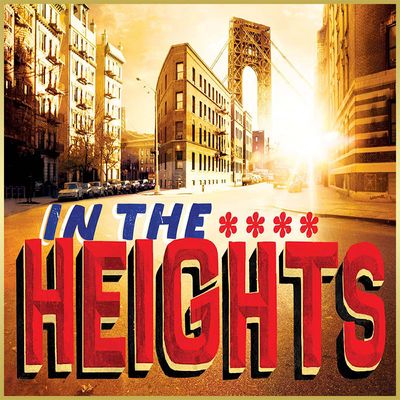
IN THE HEIGHTS
COMPOSER: Lin-Manuel Miranda
LYRICIST: Lin-Manuel Miranda
BOOK: Quiara Alegria Hudes
DIRECTOR: Thomas Kail
CHOREOGRAPHER: Andy Blankenbuehler
PRINCIPLE CAST: Robin De Jesus (Sonny), Mandy Gonzalez (Nina), Lin-Manuel Miranda (Usnavi),
OPENING DATE: Mar 09, 2008
CLOSING DATE: Jan 09, 2011
PERFORMANCES: 1,184
SYNOPSIS: Washington Heights, New York is the diverse environment that holds an eclectic group of citizens. Usnavi, the show’s narrator and bodega manager, observes the lives of his neighbors as they begin to forge new paths in and out of the barrio.
In the Heights was the first Broadway musical to rely on rap as its primary mode of storytelling. Composer Lin Manuel Miranda first began developing the show while a student at Wesleyan University with a desire to share his perspective as a child of immigrants and emphasize a universal desire to find belonging. Devon Hunt traces In the Heights’ seven year development process, collaborators Thomas Kail and Quiara Alegría Hudes, and outlines the significant cultural influences which informed the work. The musical is significant as a Latinx-authored, authentic telling of Latinx immigrant stories and its success laid the groundwork for Miranda’s later artistic accomplishments.
Devon Hunt is an Assistant Professor of Theatre at Oklahoma State University. His areas of research include secondary musical theatre educator training and Black contributions to early 20th-century musical theatre. Selected regional acting credits: She Loves Me (SDSU), A Chorus Line (Welk Resorts Theatre), The Producers (Moonlight Amphitheatre), and the world premiere of The Tale of Despereaux (The Old Globe/PigPen Theatre). Devon holds an MFA in Musical Theatre from SDSU and an MM in piano performance from the University of Maryland. He is an Equity Membership Candidate and a proud member of the Musical Theatre Educators’ Alliance.
SOURCES
In The Heights by Quiara Alegria Hudes and Lin Manuel Miranda, published by Applause Libretto Library (2013)
In The Heights, Original Cast Recording. Ghostlight Records (2008)
Transcript
This transcript was automatically generated and might contain errors.
[0:08] Robert W. Schneider: Hi, I'm Robert W. Schneider, and welcome to Fifty Key Stage Musicals: The Podcast, a companion piece to the Routledge Press publication, Fifty Key Stage Musicals, which is available for purchase by going to Routledge.com or clicking the link below in today's show description.
[0:24] Robert W. Schneider: Today's episode focuses on chapter 46, the 2008 production of In the Heights. And with us today is the author of that chapter, Professor Devon Hunt of Oklahoma State University. Professor Hunt's areas of research include secondary musical theater education training and Black contributions to early 20th-century musical theater. He holds an MFA in musical theater from SDSU and an MM in piano performance from the University of Maryland. Professor Hunt, I'm so happy that you're joining us today.
[1:51] Devon Hunt: How was rap music used in Bringing the Noise, Bringing the Funk as opposed to In the Heights?
[1:56] Devon Hunt: It was so in Bringing the Noise, Bringing the Funk, the primary narrative vehicle was tap. It was a story of the Black experience in America from the beginnings of slavery through the current day, using tap as the primary narrative device. And so the use of rap and hip hop was kind of to set the world or to create the environment. Um, but it because it was more of a dance show, rap wasn't used in the same way that we think of music and lyrics being used in traditional Broadway musical to further plot and tell story.
[2:42] Robert W. Schneider: When did rap music, um, as popular music start entering the national consciousness? Or what are the origins of rap history, I should say?
[2:48] Devon Hunt: I think it goes back to a big explosion in the late 80s, early 90s, uh, with, you know, artists like N.W.A. and Notorious B.I.G., uh, Tupac, some of the original creators of rap and those who brought rap to the forefront. But in the same way that musical theater kind of looked down on rock and roll in the 50s and 60s, I think a very similar thing happened with musical theater in the 90s and early 2000s. And it seems that up until recently, Broadway had a tendency to be a little bit behind pop culture in how music got introduced into the art form. And so when it, you know, in the late 50s, early 60s with this huge rise in rock and roll in pop culture, the Broadway establishment definitely pushed back against that and sort of dug in and held on to the traditional golden age musical theater sound.
And I think it wasn't until it with rap, I think it was also just an issue of the folks who were writing shows that were getting put up on Broadway weren't from that world and hadn't lived that experience, so they couldn't use that particular art form in an honest way to tell the stories because that wasn't a part of their experience.
[4:42] Robert W. Schneider: And you said until recently you feel that Broadway musical theater has been behind the times. What has changed recently that maybe is starting to catch up to the industry or the industry is catching up to it?
[4:55] Devon Hunt: Yeah, so I think you look at the explosion of jukebox musicals and that has really helped to kind of drive Broadway forward into being more contemporary because you have shows that are now drawing on current pop culture and current artists drawing on their catalog of work to create shows that have a bigger guarantee of success. I think one of the driving factors of that is just how expensive it's gotten to produce a Broadway musical. You know, when Oklahoma opened in 1943, it cost $100,000 to put it up. And they did it with something I think like 25 or 30 backers. You know, that's not something you can do today. You know, shows go up. If you're lucky, five, ten million, fifteen, twenty million, you know, some of the most expensive shows have been up in the, you know, 70, 80, 90 million dollar range.
And so a producer wants to know that their 20 million dollar investment is going to make a return on that investment. And so they begin looking for ways to guarantee or to at least increase the chances of success. And drawing on a catalog of music that already exists gives you a preexisting fan base, right? You have ABBA fans who will go to every production of Mamma Mia! they can because they love the music of ABBA. You know, you have Elvis fans who are going to be more likely to go to All Shook Up. And so that has helped drive musical theater forward into currency or relevance because they're looking to reach audiences who are less interested in what came before and are more interested in what's happening now.
[7:02] Robert W. Schneider: And why do you think In the Heights, using the same sort of style of music, was able to break through and have such a lasting success?
[7:13] Devon Hunt: It broke through. I think part of it was the novelty. Part of it was Lin-Manuel's sheer brilliance in terms of his lyrical gymnastics and lyric gymnastics. And it reached an audience in the Latinx community that had not really seen themselves represented well in musical theater up until this point.
[7:50] Robert W. Schneider: And prior to this show, can you talk a little bit about what that representation looked like on stage?
[7:57] Devon Hunt: Yeah, so, uh, you know, people of the Latinx community have always had a presence on the musical theater stage, even from the days of vaudeville. Uh, you know, vaudeville was an opportunity for a lot of performers of color from the Latinx community, from the Black community, to make a living and to kind of break into the world of performance. But often they were forced to play harmful stereotypes. You know, you think when you think of Black performers wearing blackface and doing minstrel shows, in the same way, Latinx performers also had to lean into the kind of stereotypes that would sell to these overwhelmingly white audiences. And, but you do what you can to make a living, and that's how you get by.
And, you know, up until really West Side Story, uh, West Side Story was the first show that had more of a focus or more it took more of a view through a Latinx perspective, right? You had the, you know, the Jets and the Sharks were seen as kind of, you know, equal competitors in the story, and you got to see the story through the eyes of the Puerto Ricans who were struggling to find a home and make a place for themselves in New York City. But that production still, you know, it was a step forward, but it was still the 50s, and so comes with its own set of problems. You know, there were stories of actors darkening their faces, um, casting white actors to play people who were supposed to be Puerto Rican.
And I mean, that's, you know, that's something that's plagued that show in countless productions. You know, I have friends who have no Hispanic origins who are now embarrassed to say, yeah, I played a Shark, you know, I played Maria, I played whoever, and I had no business playing that. And you know, that's I think a testament to just how far our social consciousness has shifted. But you know, so in addition to the issues of casting, you know, I think, uh, Lin-Manuel says it best, you know, something that struck him about West Side Story, and then later The Capeman, which was a more contemporary show, also focusing on, you know, uh, Latinx lead people, you were still looking at, I think he says, you know, still knife-wielding maniacs.
And so the portrayal was still harmful, and I think that's one of the reasons that he decided he wanted to write a show that was basically a love letter to the experience he had growing up around Washington Heights and the positive experiences he had being a part of the Latinx community.
[11:17] Robert W. Schneider: And would you tell us a little bit about Mr. Miranda's youth and then his educational training and how he fell in love with the world of musical theater?
[11:26] Devon Hunt: Absolutely. So he got into musical theater early on. Um, he talks about doing productions, you know, when he was in elementary school and middle school. Um, and you know, one of he talks about one of his most infamous roles is when he was, you know, cast as Conrad Birdie in Bye Bye Birdie, I think in sixth grade.
[11:49] Devon Hunt: And so he was always interested in musical theater, and you know, he says that he knew he didn't dance well enough to be a Bernardo, you know, to be in a show like Chorus Line, um, to be Paul in Chorus Line. And so he thought, I guess I will have to write something that I can be in. Um, and so at Wesleyan University, you know, studying musical theater, he just started writing this show that he thought represented him. And ended up being a huge success. Um, it sold out their student theater, uh, only ran for one weekend, April of 2000, I believe, and just made this huge splash. Um, and I think showed him that he had the chops to do this. One of the things I was so uh taken with in your chapter was that when he went to Wesleyan uh for the first time he was really looking at people who had similar experiences as him. Can you talk a little bit about that?
[13:03] Devon Hunt: Yeah, so uh when he went to Wesleyan, he you know, he is uh first generation American, you know, his parents are Puerto Rican, and you know, his father like is like they they came from Puerto Rico, and so he was the first generation here, and and he ran into other first generation Americans and discovered that they had very similar struggles and very similar issues they had to deal with coming from one being raised in one culture and living in a broader culture that was completely different, and trying to figure out where they fit, what traditions would they keep from their heritage, what new traditions would they form as members of a new culture? And I think as he realized other people have this story, he started to realize this could be a story worth telling because I'm not alone in this experience.
[14:22] Robert W. Schneider: Now, like a lot of college shows, they can just happen at the college and then not have a life after that. How did In the Heights go from college to Broadway?
[14:33] Devon Hunt: Kevin McCollum just happened to attend a reading of In the Heights that was done by these two, these two guys that Lynn Manuel had known from college, um, one of which was Tommy Kail, who would, you know, go on to be a huge part of Lynn Manuel's creative teams. Uh they were putting up uh a reading, and Kevin McCullum attended, who was uh Jeffrey Sellers' partner and also a co-producer of Rent, and he saw it and he recognized there's something special about this show. And so he brought on Jeffrey Seller, um, and they helped really get the ball rolling to point this show towards Broadway.
[15:24] Robert W. Schneider: And one of the things that I believe they did was to bring on a new book writer. Is that correct?
[15:30] Devon Hunt: Yes. Uh I think Lynn Manuel realized very early on that his gift lay in lyric writing and not so much in book writing. And so they brought on Quiara Alegría Hudes to write the book, and she was a Philadelphia native. She had just put up her own workshop show called Elliot: A Soldier's Fugue, and it was set in North Philly in a community that was very similar to the community in Washington Heights. And so they felt that she would have the right kind of perspective to write the book. And so she and Lynn Manuel sat down and she recalls that they talked about, you know, dads and abuelas and oral histories of the island and found a sense of shared identity and shared community. And so they felt that she would be the right person to write the book for this show.
[16:35] Robert W. Schneider: And one of the things that I've noticed in some of the reviews, and you point this out in your chapter, is that she doesn't get the same praise in reviews that uh Mr. Miranda does. Is there a reason for that?
[16:50] Devon Hunt: Yeah, I think it's a it's a kind of complicated and and layered reason. On the surface, a lot of the criticism with her book was that it was it dealt in clichés and it dealt in kind of tired tropes, and it was an I think one review called it an airbrushed version of Washington Heights, which you know, I think that that criticism may be valid, but this show was intended to be the antithesis of the kind of Latino characters portrayed in West Side Story, the kind of you know, Latino characters portrayed in The Cape Man, which is about like a uh knife murderer, right? And so it was a way for them to say, we are more than gangsters and killers and drug dealers, right? And so it was a love letter to the kind of warm and strong communities that they grew up in.
And so, yeah, you know, it's they're not gonna touch on the fact that no, Washington Heights was not perfect, like, yes, there was crime, yes, there were things going on there, but that wasn't the purpose of the story. And you know, I'm I'm not sure anybody was reviewing West Side Story or Cape Man and going, well, you know, this book is alright, but it really pedals in tropes of Latino characters being whatever harmful tropes, right? But as soon as somebody was like, I'm gonna write something that's just really highlighting the positive aspects of this community, then suddenly the critics come out to say, Oh, these are tired tropes, oh, this is just fluff, this is whatever. Um I I think it's it's laid there are layers of implicit bias in the reviews and who was writing the reviews.
Um, but it's you know, it's it's impossible to deny the deny that it still ended up being a and still is an incredibly powerful story, um, and a beautiful representation for a host of different Latinx cultures that I think has not had that same kind of positive representation on the Broadway stage.
[19:28] Robert W. Schneider: And I that was actually one of the things I was gonna ask you was did you feel that because there were so many of these white critics who had this pejorative idea or view of what Washington Heights is when they see it presented in a positive light, it's sort of sent off their rewiring a little bit.
[19:47] Devon Hunt: Yeah, I you know, the funny thing is it doesn't matter what the critics said, the book was still Tony nominated.
[19:55] Robert W. Schneider: Exactly.
[19:56] Devon Hunt: So um I think that that alone and you know that's a separate discussion we could have about what gets Tony nominated and who is nominating things for Tony's, but it was still recognized for the quality of its work. You know, actually for our listeners, because we're recording this in uh 2021, um, right? 2021 is that where we are in October.
[20:21] Robert W. Schneider: I think so, yeah.
[20:22] Devon Hunt: In October of 2021, and we've just had the Tony Awards. Would you be willing to talk a little bit more about that point? Who who is nominating and and do we see that changing at some point down the line?
[20:34] Devon Hunt: Yeah, I you know, I think we've had to ask a lot of hard questions about our industry over the last year and a half as we have been shut down and we have unearthed a lot of really harmful practices, and there's a push towards equity in Broadway in musical theater, which I think is fantastic. And the challenge is that you know, a lot of people are starting with equity kind of from the bottom. You know, we need to make sure we're casting in certain ways and we have representation among the actors, which is great, but that's ground floor because who is casting the shows matters, who is directing the shows matters, who is on the executive boards and you know, in the C suites for these theaters matters.
And so, you know, we have we've made a lot of great strides. I think we really have to look at who sits in the seats of power. And historically, that has over the the people who have been in the seats of power have been overwhelmingly white and overwhelmingly male. Um, you know, and there are even when it comes to directors, um, you know, Susan Stroman, who's one of the most well-respected Broadway director choreographers, talks about how she had to have basically she she part of how she got where she was is she had to have men opening doors for her. Um so there's there's still work to be done.
[22:31] Robert W. Schneider: And when you look at, I mean, it's you know, it's not just the Tonys, you can look at the Oscars. The Oscars have come under fire for who is nominating and who gets nominated. Um I think we need to continue to have conversations about who's in power and how to create equity from the top down and not just from the bottom up.
[22:56] Devon Hunt: And you are a teacher, um, you have students. There are students that are listening to this podcast, and there'll be teachers listening to this podcast. What words of advice do you have for them? Um if they say to you, I don't know how to do this, I don't know how to change something from the top down.
[23:20] Devon Hunt: Teachers are at some level the top, you know.
[23:24] Devon Hunt: There or they are they are the top over someone else.
[23:29] Devon Hunt: You have students, you you are directing productions or music directing productions or teaching technical artists, uh, you know, and so the the change change, of course, can happen from the bottom, people pushing for change and challenging structures of power.
[23:49] Devon Hunt: But for those of us closer towards the top, it becomes a matter of how can I open doors for people underneath me.
[24:02] Devon Hunt: As a teacher, maybe that becomes, you know, I'm I'm a college professor, and a big part of what we do is recruitment, right? We're trying to convince high school students that you should come here because this is a good program for you.
[24:27] Devon Hunt: We don't have a diverse pool.
[24:29] Devon Hunt: Um, and some people can use that as the excuse to be like, well, we tried, like, but they're not just coming in.
[24:38] Devon Hunt: But you have to go find them.
[24:41] Devon Hunt: There's musical theater requires such a high level of training that the inequities can start very early on.
[24:51] Devon Hunt: If you're not at a high school that does musicals, if you don't have access to dance instruction or voice instruction or acting instruction, uh, whether it's a matter of location or a matter of finances, you get to college and you're already behind.
[25:11] Devon Hunt: If you're a student of color who maybe had one drama teacher in high school who tried to scrape together like, you know, a couple of shows here and there on a low budget or whatever, and you're now auditioning against a student who has come from a family of means who has had who has been in this lesson since they were eight, has been in dance lessons since they were eight, you know, has been able to like go to New York and do summer programs or whatever, it's it puts you at a severe disadvantage.
[25:41] Devon Hunt: And so I think the, and that's why one of my areas of research is how are we, how can we better train secondary educators?
[25:51] Devon Hunt: Um, how can we give them the tools to better prepare the students where they are so that when they get to the university level, they have the kind of skills to compete.
[26:03] Devon Hunt: But I think also as a college professor and a recruiter, I have to be able to look at a student and see potential and recognize someone who is, you know, to use the colloquialism, a diamond in the rough, right?
[26:03] Devon Hunt: To be able to see a student and say, this student is incredibly talented and all they need is the training.
[26:30] Devon Hunt: Um, and so it's it's really about a shift in perspective and a willingness to go out to not just say, well, we're gonna like advertise and hope they come, right?
[26:42] Devon Hunt: It's about going out and finding, like actually doing the work to balance the inequities.
[26:50] Devon Hunt: Uh, because you can't you can't expect the people who are suffering the disadvantage from inequity to then do the extra work to overcome the hurdles to get to you.
[27:03] Devon Hunt: You have to step down from your or you know, reach across from your place of privilege to give them a step, the same kind of step up that somebody else was able to have by product of birth or race or financial status or what have you.
[27:21] Robert W. Schneider: Thank you for sharing that.
[27:22] Robert W. Schneider: Thank you for sharing that.
[27:23] Robert W. Schneider: I know it feels maybe a little bit off topic from In the Heights, but I think it all blends perfectly.
[27:29] Robert W. Schneider: Um can you tell us a little bit about the composition of Mr. Miranda's score?
[27:35] Robert W. Schneider: Because I know that your expertise also lays in music and composition.
[27:40] Robert W. Schneider: Um can you tell us a little bit about the the composition of this particular show?
[27:46] Devon Hunt: Absolutely.
[27:47] Devon Hunt: So what he did was to take the the two big musical worlds of his childhood and mash them together.
[27:59] Devon Hunt: And that's one of the reasons I love this score so much.
[28:03] Devon Hunt: And I'm also love the work that he did in Hamilton, but there's there's something really beautiful about the way he took the the traditional Latin music sound of like salsa and merengue and bachata and you know reggaeton and combined it with the hip hop rap music that he was also hearing.
[28:32] Devon Hunt: It's like, you know, he took he took the Latin music he heard at home and the hip-hop music he heard on the street and just kind of like threw them all in a pot and mixed it together, and it creates, I think, a very authentic sound of Washington Heights, and it also, you know, there aren't a whole lot of shows that utilize Latin music that heavily.
[29:25] Devon Hunt: It's this really great blend of both of them.
[29:28] Devon Hunt: And you know, I think of a number like the club scene opens with these like screaming, wailing salsa trumpets and very salsa sound, and then over top of the salsa music, he's he's rapping about, you know, like being in the club and like being with Vanessa.
[29:47] Devon Hunt: But it's it's a very cool blend.
[29:51] Devon Hunt: Um, and it's a something that I think could only be accomplished by somebody who had grown up with a foot in both of those worlds, and so it becomes a love letter not only to the hip hop of the you know 90s and 2000s, but also the kind of Latin pop, the the Mark Anthony, the that world of music as well.
[30:16] Robert W. Schneider: Would you talk a little bit about the orchestration and instrumentation that's used in this show?
[30:21] Devon Hunt: Yeah, so it's he uses a lot of the traditional the traditional instruments that show up in Latin music, you know, the claves and the guiro, um, and you know, making making his trumpets play way up in the stratosphere.
[30:40] Devon Hunt: Um, which, you know, every time I hear that opening, just like wailing high trumpet in the club, it's just it's so fan, like it still gives me chills.
[30:49] Devon Hunt: Um and then on top of that, then he he lays in the kind of heavy driving, you know, four beat sound of of hip hop.
[31:01] Devon Hunt: Um, and so it creates a very unique blend.
[31:05] Devon Hunt: And you know, then it's when like when does he lean more into the traditional Latin side of things and when does he lean more into the hip hop side of things?
[31:15] Devon Hunt: And I think that plays in into an aspect of the storytelling as well.
[31:21] Robert W. Schneider: And for you, um, can you remember your first impressions of when you saw it live for the first time?
[31:30] Devon Hunt: So I uh unfortunately have never had the chance to see it live.
[31:35] Devon Hunt: Um listening to it for the first time.
[31:39] Devon Hunt: Yeah, listening to it.
[31:41] Devon Hunt: Um so it's I mean, right from the very top of the show, he lets you know that he's gonna put these two worlds together.
[31:52] Devon Hunt: Um because it starts with the claves, which have this kind of like high, like it's they're two wood blocks basically that you tap together, and it creates a very like tink, tink, tink, tink, tink.
[32:06] Devon Hunt: And it starts with a very classic traditional salsa rhythm.
[32:11] Devon Hunt: Um, this beep, beep, bop, bop, bop, bop, bop, bop, bop, bop.
[32:16] Devon Hunt: And so you go, okay, like we are in the world of Latin music, right?
[32:19] Devon Hunt: And then he walks out and he starts rapping, right?
[32:21] Devon Hunt: Lights up on Washington Heights up at the break of day, I wake up and I got this little punk I gotta chase away.
[32:26] Devon Hunt: Um, and it's immediately like, whoa, like, what what? What that's whoa, that's so cool, right?
[32:33] Devon Hunt: And then to use the kind of the the driving four-beat patterns of hip hop on top of like the salsa, like boo-doo doo-doo-doop-boot-do-do-do.
[32:43] Devon Hunt: Um, I was just like, I was I was really blown away.
[32:51] Devon Hunt: And I had I had listened to Hamilton first, and so I was familiar with him as the guy who wrote Hamilton.
[32:58] Devon Hunt: Um, but you know, uh salsa and Latin music has also been something that's that's been very special to me.
[33:05] Devon Hunt: Um I was a ballroom dance instructor for a couple of years, and I've been, you know, a a ballroom dancer and Latin dancer as well.
[33:14] Devon Hunt: And so to discover that this guy who did this amazing brilliant thing with with hip hop and rap in Hamilton, like also wrote this show where he brought in like his Latino heritage, um, it's just absolutely mind-blowing.
[33:29] Robert W. Schneider: And, you know, we've talked so much about the popular music that was influencing Mr. Miranda, but he's an unabashed fan of musical theater as well.
[33:39] Robert W. Schneider: Are there any elements of quote unquote traditional musical theater that you see popping up in this particular show or that he's alluded to in any sort of interview or discussion about the show?
[33:50] Devon Hunt: Yeah, and you know, I think one of the one of the reviews talked about his combination of hip hop and Latin, and also I think the quote is something like good old-fashioned Broadway schmaltz.
[34:02] Devon Hunt: Um you know, he you can tell he knows his his Broadway history and canon because he throws in little references to things.
[34:14] Devon Hunt: He he throws in a quote from the A-Train, um, he throws in a quote from Cole Porter, um, he, you know, it's it's I think a little more subtle than, oh, look, he's using this instrumentation or whatever to make it like this is not the producer's and you know, a love letter to Golden Age Broadway.
[34:36] Devon Hunt: Like, this is a this is a very different show.
[34:38] Devon Hunt: But in the way he tells, he he uses lyrics to drive his storytelling, uh, very much reminds me of the way that Richard Rogers really kind of pioneered and and drove uh well, Richard Rogers with the music, but especially uh Hammerstein with the way he wrote, uh, he was one of the earliest to start writing very colloquial speech sounding lyrics, which helped create seamless transition from scene into song because the characters suddenly didn't jump into this world of heightened speech.
[35:21] Devon Hunt: It was like they were still talking, but now they were singing. And I think what Lin-Manuel does with rap, it can flow so seamlessly, right? Because you can be talking, and then you just drop into rhythm and you drop into rhyme, and you're rapping, and the music comes in, and suddenly you have this seamless transition into the elevated world of music. And so his training is very clear in how tightly crafted his work is.
[36:12] Devon Hunt: Yeah, so because of the very heavy rap and hip hop influence in In the Heights, it kind of got labeled as the rap musical, quote unquote. And Jeffrey Seller has talked about how he feels that that hurt its longevity and hurt its run and hurt its sales because there were some people who looked at the label of the rap musical and kind of discounted it because they felt that, oh, that's not a genre that I enjoy, or what have you. And so when they were marketing for Hamilton, which you could argue is a much more unabashedly hip-hop musical, they were very careful to keep that out of the branding. Because yes, it uses rap primarily as a major narrative device, but that's not the only thing there, right?
It draws from a much wider pool of influence. And so they didn't want to fall into that same trap of the show getting pigeonholed and that driving certain segments of audiences away. And In the Heights ran for about three years or so, so by no means whatsoever a disappointment. Uh, it had a lot of longevity to it. So do you feel that's an accurate idea that Mr. Seller has?
[37:57] Devon Hunt: Well, I think it speaks to his belief in the show that he would say a run of three years, a run of nearly 1200 performances did not do it justice. I think that, and you know, this is coming from somebody who has been in the business who has put up other major shows that shows you just how highly he respected not only the show, but Lin-Manuel as an artist. And Jeffrey Seller would go on to say that when Lin-Manuel pitched him the idea of Hamilton, he said basically, when you have someone as brilliant as Lin who says, I have this idea, like you don't say no to him. And I mean, we see how it, you know, smashed so many records and was such a big splash on the Broadway scene when it did come out. What do you think In the Heights has opened the door to in terms of other musical theater pieces or other writers that might be emerging onto the scene?
[39:02] Devon Hunt: I think it really opened the door for other writers, performers of Latino heritage to own that unabashedly. You know, one of the moments, I mean, there are many moments I love in this show, but when you know, in the song Carnaval del Barrio, when they start bringing out the flags of the countries they're from, you know, um, and the what they're saying in Spanish is basically like this, you know, esa la bandera, la bandera dominicana. This is like this is this is the Dominican flag, right? This is the Puerto Rican flag, this is the Mexican flag, and the way they celebrate their heritage. I don't know if that's something that had been done on the Broadway stage before In the Heights, and I think it opened the door for other artists to also be proud and unabashedly Latino on the stage and to let that influence their work and their storytelling. And it also I think established that if you know what you're doing, you can make a really successful musical that uses rap to tell its story.
[40:33] Devon Hunt: Have you gotten a chance to see the movie yet? Because in the year that we're talking, a movie version of this musical has come out and has been adapted for the screen. Have you had a chance to see it yet?
[40:46] Devon Hunt: Yes, I was able to see it. Um, thoughts on the film? It was really beautiful. I knowing the show as well as I do. It's impossible to not judge one against the other. Of course. And, you know, I think the show I think has more power in its storytelling, and there are elements, certain subplots that were taken out, swapped for other things, which, you know, I understand because we're talking about a show from 2009 and it's 2021. And so, in an effort to kind of maintain relevance, it would make sense that they might be speaking to different issues. Um, I think had I did I not know the Broadway show? I mean, as it was, I loved the movie. Like the it was just so beautiful, and I'm a sucker for like wide dance shots where you have like, you know, a hundred people dancing in frame on this wide shot and they're all doing the same thing.
And the way it celebrated some of the traditional Latin styles of dance, I thought was really beautiful. And the way they told that story as well. And, you know, just knowing the show, there were some things I was like, when when when are you, no, you have to like you have this has to happen. When's it gonna happen? Why hasn't it happened yet? Um, I think some of the changes made some of the what are supposed to be the more powerful or poignant or kind of tear jerking moments lose some of their power. But again, these are things that I know because I know the show so well. And so if I were coming into it with fresh eyes, I think I would have been just completely blown away. And regardless of the kind of nitpicky things I have, you know, I take issue with with the movie, getting to put a show like that on film gives it such a wider reach, which I think is so fantastic.
[43:14] Devon Hunt: You know, I think back to the Rogers and Hammerstein Cinderella TV production, which, you know, it was a one night event, something like 14 million people tuned in. And just because I was curious, I did the math on how many people would have seen a Rogers and Hammerstein show in New York. Like I looked at the number of shows they ran, the you know, number of seats in the theater, and just you know, did the math. More people in the one night that Cinderella aired, more people saw a Rogers and Hammerstein show than all the people who had come to see to sit in the theater in New York, all of the rest of them put together. More people saw Cinderella than all of the rest of the Rogers and Hammerstein shows live in the theater.
And so I think that shows the power of film and television to create a broad reach and to engage audiences who might not be able to get to New York or might not be able to get to whatever local regional theater, whether it's a matter of proximity or a matter of finances. Um, I mean that's a whole separate conversation we could have about Broadway and accessibility. But a show like this being turned into a movie allows, you know, anyone who can make it to a movie theater to see it, or anyone who has, you know, when it first came out had access to HBO Max, or now, you know, I rented it the other day off of Amazon Prime Video, and you know, it's on you can get it like through Redbox, and you can get it through like other streamings like Apple TV Plus.
And so it's opened the door for so many more people to experience it and maybe to get interested and to get curious about musical theater and go looking. And so, you know, I yes, movie adaptation should be done well. And I know a lot of people, there was a lot of talk about how it had it had an opening weekend that they weren't hoping for and it wasn't great. Um, but also interestingly enough, it's not the first movie musical to have underperformed in its first weekend and gone out to do very well. La La Land didn't do great its opening weekend. Uh, Greatest Showman didn't do well its opening weekend. Um, but people love them and people rent them and people see them. And so it's I am all for things that open the door for people to experience musical theater, especially when it's so well done as this movie was.
[46:10] Robert W. Schneider: Professor Hunt, thank you so much for joining us today. It's been an absolute pleasure getting to talk to you. Um, friends, please make sure to purchase a copy of Fifty Key Stage Musicals by visiting Routledge.com or by clicking in today's show description. If you want to learn more about In the Heights, please also review the links in the below description. I'm Robert W. Schneider, and thank you for listening to Fifty Key Stage Musicals, the podcast. Bye-bye.
© Broadway Podcast Network, All Rights Reserved