

COMMUNAL TABLE: Have you ever had to share a table in a café with the wrong people? On one summer afternoon in June, the day of the summer solstice, three characters end up at the same café table... Read More
From the show: Gather by the Ghost Light
Guests
About
COMMUNAL TABLE: Have you ever had to share a table in a café with the wrong people? On one summer afternoon in June, the day of the summer solstice, three characters end up at the same café table. Minna enjoys eavesdropping, but this time is different — this guy is getting so many things wrong, she may just need to interrupt. Gary loves meeting new people, but it looks like his latest flirtation is getting sabotaged. Allie has come here for some peace but she’s unlikely to find any here.
Written by Jenny Lyn Bader
Directed by Jonathan Cook
Performed by Elizabeth D. Moore as "Allie", Shelby Lauren Smith as "Minna", & Mickey Lay as "Gary".
Intro/Outro music: JK/47
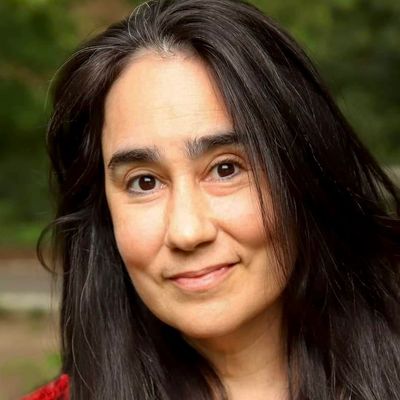
About the writer: Jenny Lyn Bader is a playwright living in New York City. Her plays include Mrs. Stern Wanders the Prussian State Library (Luna Stage) ("powerful and timely!"—Voice of America), Equally Divine (Theatre at the 14th St. Y), In Flight (Turn to Flesh Productions), and None of the Above (New Georges). One-acts include Worldness (Humana Festival of New American Plays), Miss America (NY Int’l Fringe Festival/”Best of Fringe” selection), Anniversary Season (Mona Bismarck Center, Paris), and My First Time (Voting Writes). A Harvard graduate, she has received the “Best Documentary One-Woman Show” Award (United Solo Fest); Athena Playwriting Fellowship; and the O’Neill Center’s Edith Oliver Award for a playwright who has, in the spirit of the late New Yorker critic, “a caustic wit that deflates the ego but does not unduly damage the human spirit.” For This Is Not a Theatre Company, she wrote Tree Confessions (w/ Kathleen Chalfant), which has streamed on five continents; International Local: 7 (Subway Plays app); co-authored Café Play (Cornelia St. Café) and Play in Your Bathtub 2.0, and wrote Guru of Touch (Edinburgh Festival Fringe). Her work has been published by Dramatists Play Service, Smith + Kraus, Applause, Vintage, W.W. Norton, The Lincoln Center Theater Review, Plays International + Europe, and The New York Times, where she served as a frequent contributor to the "Week in Review.” She has written commissioned scripts for Laura Ziskin Productions/WB Network, NBC Studios/NBC, and HBO, where she developed a pilot with Billy Crystal. A Harvard graduate, she has been a frequent contributor to the NY Times "Week in Review" and a Lark playwriting fellow, nominated by Wendy Wasserstein. She belongs to the Dramatists Guild, the Authors Guild, the League of Professional Theatre Women, and Honor Roll.
Gather by the Ghost Light merch available at Home | Gather by the Ghost Light (bigcartel.com)
If you would like to further support this podcast, please visit Gather by the Ghost Light is increasing public knowledge of emerging writers and actors (buymeacoffee.com)
If you are associated with a theatre and would like to perform this play, please send an email to info@gatherbytheghostlight.com to get connected with the playwright.
If you enjoy this podcast, please please please leave a rating on your preferred podcast app!
Transcript
This transcript was automatically generated and might contain errors.
[0:00] Jenny Lyn Bader: Hi, I'm Jenny Lyn Bader. I'm so grateful that Gather by the Ghost Light is keeping the tradition of radio theater alive and well. And here's their production of my play, COMMUNAL TABLE.
[0:24] Jonathan Cook: All right, welcome back to Gather by the Ghost Light. Original stories for Radio Theater. I'm Jonathan Cook, your host, producer, and sometimes voice actor on this thing. And man, what a year it's been so far. My small reading team and I, we have been busy, just really busy reading through over 700 script submissions to our upcoming Off-Broad Street Short Play Festival. And I'm happy to say that likely within the next two weeks, we will be able to announce the eight selected plays that we will be producing in the festival. But look, I wish we could choose more than eight plays. I really do, because we read so many great scripts. There were so many great submissions, and trimming it down to only eight plays that our team collectively feels are the best for the festival has been a very difficult task.
And I've been on both sides of it. I have been the writer submitting my script out to theaters, doing festivals just like this. And now I kind of see their view and see how hard it is to make those final selections after reading so many great scripts. But everyone that did submit, thank you all so much for sharing your work with us. The Off Broad Street Short Play Festival will be taking place at Le Chad Noir Theater in Augusta, Georgia in April. Now, Le Chad Noir Theater, you guys have heard me talk about this theater before. We did our first live event there back in October when we recorded the Play Kingdom. Our upcoming short play festival will take place there. And we also have several other events being planned this year that will also be happening at Le Chad Noir Theatre.
But let me tell you about the play they are currently producing. It's called None of the Above and was written by Ginny Lyn Bader. It's a play about a sophisticated private school teenager who answers the door one day expecting her drug dealer, and instead she finds her SAT tutor. And of course, they clash along the way, but also they come to an understanding. It's a comedy about privilege, probability, and getting into Princeton. Opening night for None of the Above will be on February 9th at La Chad Noir Theater in Augusta, Georgia, and it runs for two weekends. So go check that out if you're in the area. And coincidentally, today's story, right here on Gather by the Ghost Light, not only features the two lead actors you'll see in the play, None of the Above, but it was also written by the same author, Ginny Lyn Bader.
Miss Bader is an award-winning playwright currently residing in New York City, and today you're going to hear her play called COMMUNAL TABLE. Have you ever had to share a table in a cafe with the wrong people? Well, you are about to meet three characters who end up at the same table on a summer afternoon in June. The day of the summer solstice. Now, gather around the ghost light, sit back and enjoy. This is COMMUNAL TABLE, written by Ginny Lyn Bader. And be sure to stick around after the story to hear an interview with the writer and the voice actors.
[3:26] Shelby Lauren Smith: Unbelievable. When you ordered your drink, did they ask you any questions about it?
[3:35] Mickey Lay: No.
[3:35] Shelby Lauren Smith: Good. Are you okay?
[3:38] Mickey Lay: Oh yeah, fine. When this place first opened, they used to know my drink. Remember the days when you come into a cafe and they know your drink? Not that long ago. You're probably a little young, but I remember. They know my drink, which size, which sweeteners, they know that I want ice, even in the winter. It's odd, but I drink iced drinks all year round.
[3:57] Shelby Lauren Smith: Oh, you're kidding, eh?
[3:58] Mickey Lay: There's so much staff turnover now. No one knows my drink here anymore. It's not like I expect anything like that. But today when I order my medium iced latte, the barista asked me. She's not the first one to ask me. She said, do you want skim? Come on. As if skim is something to want, as if less is more. Skim used to be a special request, like cinnamon sugar or extra foam. It was extra, but now it's the norm. The staff here thinks all of us want it, as if we're all on one gigantic diet, and what I want to know is when did skim become the default?
[4:26] Shelby Lauren Smith: The default? You mean like the default setting on a computer?
[4:29] Mickey Lay: Yeah, that's exactly what I mean. It's like you can't leave the house without someone asking if you want skim.
[4:34] Shelby Lauren Smith: Ugh. It's just gonna be one of those days, isn't it?
[4:38] Mickey Lay: I hope not. I just really want a peaceful day.
[4:41] Shelby Lauren Smith: You're nice.
[4:42] Mickey Lay: Thanks. Now you're thanking me for your being nice. That's ridiculous. I bet you were well brought up and all you want is a peaceful day, but you sat at the communal table.
[4:52] Shelby Lauren Smith: You really have faith in your fellow humans.
[4:55] Mickey Lay: There weren't any other seats available. I try to be like you. And I can be for a while. I can be so freaking polite. But then, as things build up over time, I reach a limit. Do you ever reach a limit? You don't, do you? You just keep it together.
[4:57] Shelby Lauren Smith: I try.
[5:12] Mickey Lay: I try to, but then several thousand baristas asked me if I want skim, and then one afternoon. Poof. You know what? Now that we've had this conversation, I'm gonna be better. Not let stuff get to me. Someone like you is a good role model for someone like me.
[5:27] Shelby Lauren Smith: Thank you.
[5:28] Mickey Lay: You're welcome. Why do I care so much? Why do I feel so offended on behalf of a few percent fat?
[5:35] Shelby Lauren Smith: Did I scare you? I didn't mean to, sorry about that.
[5:39] Mickey Lay: It's okay. Spit a little on your chin there.
[5:41] Shelby Lauren Smith: Yeah. I'm just thinking about this skim thing and wondering if it's because people don't understand whole milk. They think whole means 100% fat, but do you know what percent fat is actually in whole milk?
[5:50] Mickey Lay: Yes.
[5:51] Shelby Lauren Smith: You do? It's 3.25%.
[5:54] Mickey Lay: Wow. Are you a nutritionist or something?
[5:57] Shelby Lauren Smith: No, I just have a good head for numbers.
[6:00] Mickey Lay: Really? I was gonna say I heard it was between three and four, but 3.25? You are good.
[6:06] Shelby Lauren Smith: Yeah, that's the figure for the mean percentage by weight. I don't even know where I read that. Numbers just stick with me. When I read them a couple of times or once. Unfortunately, when I read a number, I don't forget it.
[6:21] Mickey Lay: Why would that be unfortunate?
[6:23] Shelby Lauren Smith: A lot of numbers are depressing.
[6:25] Mickey Lay: So they make me sad. I guess even the great stuff has a downside.
[6:30] Shelby Lauren Smith: Wow. If numbers stuck with me like that, I'd be, I don't know, making lots of money on the stock market or something.
[6:38] Mickey Lay: I remember a number here and there. If it's important, but most numbers don't do that. Stick with me. Other things stick.
[6:45] Shelby Lauren Smith: I'm not an idiot. Ideas stick with me. Actually, some of them refuse to go away. I don't only mean ideas about milk fat, though little things like that can sometimes set me off. It's usually more ideas about the cosmos. The ideas that can really recalibrate your reality.
[7:02] Mickey Lay: Right. And but don't even get me started on.
[7:04] Shelby Lauren Smith: I can't believe it's not butter. You know why? Because I can definitely believe it's not butter. That stuff is disgusting. Have you ever tried it? There is no way it's butter. So why would someone not believe it?
[7:15] Mickey Lay: Yeah. I can't tell whether you agree with me or whether you're just really the politest person I've ever met.
[7:21] Shelby Lauren Smith: Or both.
[7:22] Mickey Lay: Or both. Touche. Nice meeting you. I'll let you get back to whatever it is you're doing.
[7:30] Shelby Lauren Smith: Have a good one.
[7:31] Mickey Lay: You too. Beautiful day.
[7:35] Shelby Lauren Smith: Finally. It looks so good. Is that whipped cream?
[7:40] Mickey Lay: Yeah, this is the frozen hot chocolate with whipped cream.
[7:43] Shelby Lauren Smith: Just what I was wondering. Thank you.
[7:49] Mickey Lay: Hey, do you know him?
[7:51] Shelby Lauren Smith: Never seen him before in my life.
[7:53] Mickey Lay: You think he really can't identify whipped cream?
[7:56] Shelby Lauren Smith: He just wanted to know what I was having.
[7:59] Mickey Lay: What do you mean, mm?
[8:01] Shelby Lauren Smith: Just nothing.
[8:04] Mickey Lay: Yours looks so good.
[8:05] Shelby Lauren Smith: I got one too. Do you mind if I sit here?
[8:08] Mickey Lay: Go ahead, it's a communal table.
[8:13] Shelby Lauren Smith: Uh Siri, will you text Ivar that we're confirmed for four o'clock tomorrow?
[8:17] Mickey Lay: I have multiple results for either.
[8:20] Shelby Lauren Smith: Uh cell number.
[8:21] Mickey Lay: Thanks. Sorry about that. If you don't do something when you remember and you forget.
[8:26] Shelby Lauren Smith: I know how it is. Is this your newspaper?
[8:29] Mickey Lay: It's hers.
[8:30] Shelby Lauren Smith: Mind if I uh look at the front section?
[8:32] Mickey Lay: Go ahead.
[8:33] Shelby Lauren Smith: Thanks. Can you believe seven-year-olds are being recruited as soldiers in Yemen?
[8:40] Mickey Lay: I know. It's awful. The United Nations estimated that 10,000 people were killed there in the last two years, but they were off by a factor 6.
[8:49] Shelby Lauren Smith: It's actually 60,223. Are those figures in this article?
[8:54] Mickey Lay: No. I read it last week. And then there's so much that's happening right now that I can't believe. That's why I need so much chocolate.
[9:03] Shelby Lauren Smith: Oh yeah? How much?
[9:05] Mickey Lay: I'm here at least twice a day.
[9:07] Shelby Lauren Smith: I can't believe you just told him that. So this is where you hang out?
[9:11] Mickey Lay: It's where I caffeinate. Excuse me, that's a client email I have to deal with right away.
[9:16] Shelby Lauren Smith: Good. Just ignore him.
[9:19] Mickey Lay: Sorry about that. Now she's apologizing?
[9:22] Shelby Lauren Smith: Oh, if you need to work, just ignore me.
[9:24] Mickey Lay: No, there was just something a little urgent, but fine now. Well, what do you do?
[9:28] Shelby Lauren Smith: I'm a day trader.
[9:29] Mickey Lay: You must be very quick.
[9:31] Shelby Lauren Smith: Oh, if you're a day trader, you don't want to be someone who misses anything.
[9:35] Mickey Lay: Wow. I was very serious the way you said that. I got chills. You must scare the hell out of people you trade with.
[9:44] Shelby Lauren Smith: So how does it work? You just buy and sell during the day, but you don't hold anything overnight?
[9:50] Mickey Lay: Have I got that right?
[9:52] Shelby Lauren Smith: That's it. Wouldn't you want to? Sometimes hold something overnight?
[9:58] Mickey Lay: Oh my god, really? You're talking about a more traditional kind of investing, where you assess the fundamental underlying value of the equities.
[10:06] Shelby Lauren Smith: Hmm. I don't make those kind of judgments. I look for little discrepancies and valuation that crop up minute by minute.
[10:13] Mickey Lay: Wow. Your time must be so important to you.
[10:17] Shelby Lauren Smith: Sure it is, buddy. Of course. I savor every moment, don't you?
[10:22] Mickey Lay: Yeah, but uh the market's closed. This must be your calm time of day, right?
[10:27] Shelby Lauren Smith: Well, it's closed here, but Singapore opens in a few hours, so I just had to get back to them about that. But yes, there's a little lull in between, so.
[10:36] Mickey Lay: Chocolate. You know, chocolate's very good for you.
[10:40] Shelby Lauren Smith: It better be. I need a lot of it to function. Remember the famous story about how red wine was good for you on 60 Minutes? You know, 22 million households watched it, and red wine sales went up 44%. I think chocolate is gonna be next. I mean, first they learn it's an antioxidant, then that it enhances mood. I feel like next there's gonna be an official study on a news show. It's inevitable.
[11:03] Mickey Lay: So here's my idea for you. Giving it to you for free because I like you. You should invest in chocolate companies.
[11:11] Shelby Lauren Smith: Thanks, but I don't do that kind of long-term value investing. I'm a day trader.
[11:15] Mickey Lay: So you don't care about value?
[11:17] Shelby Lauren Smith: Of course I do. It's the most important thing there is. Worth is it's worthless. Value is much deeper, much more important. It's what you want to look for in a stable company, a stable government, a stable human being.
[11:33] Mickey Lay: But why wouldn't you invest in it?
[11:35] Shelby Lauren Smith: Because it's difficult to assess right away. It's not as predictable unless you're talking in the very long term. If you're looking for a way to increase your earnings every day, I find financial instruments are more reliable in the very short term.
[11:51] Mickey Lay: Excuse me.
[11:52] Shelby Lauren Smith: Singapore calling?
[11:54] Mickey Lay: Sh one sec. Dude, take a hint.
[11:56] Shelby Lauren Smith: Oh, yes. Now, you might think that because I have these great ideas about the market that I'm an investor too, but oh, I can tell you're not. Real investors don't come up to me in cafes with ideas about places I should invest.
[12:10] Mickey Lay: Right.
[12:14] Shelby Lauren Smith: Oh, you think they filter the water here? You know, I've wondered that.
[12:19] Mickey Lay: Hope so. I wouldn't be very hard for them to put the water through one of those pitchers that removes all the particles.
[12:25] Shelby Lauren Smith: You can also do that under the sink. I have an attachment under my sink.
[12:29] Mickey Lay: You're kidding. I used to have a filter attachment outside of my faucet, but under the sink. I never heard of that. That's fascinating.
[12:35] Shelby Lauren Smith: Oh, give me a break. Is that the latest thing?
[12:39] Mickey Lay: I don't think so. My mom had one at least ten years ago.
[12:42] Shelby Lauren Smith: I can't take this. Where is my phosphor puzzle?
[12:45] Mickey Lay: Do you enjoying the summer so far?
[12:47] Shelby Lauren Smith: Oh yeah. June is my favorite month.
[12:49] Mickey Lay: Why is that?
[12:50] Shelby Lauren Smith: I don't know. I like everything about it. I get along well with my father, and there's Father's Day. I like weddings, and they're often weddings.
[13:00] Mickey Lay: You forgot Flag Day.
[13:01] Shelby Lauren Smith: Flag Day.
[13:03] Mickey Lay: That's cute. I would never forget about it. I like to celebrate that one.
[13:07] Shelby Lauren Smith: Really? And what I also love is today.
[13:10] Mickey Lay: Summer solstice. You know the way the sun suddenly gets going. Which gives us that summer solstice. Which is why, of course, it's the longest month.
[13:18] Shelby Lauren Smith: Oh stop. It is not the longest month.
[13:20] Mickey Lay: What? You don't have to talk to him.
[13:22] Shelby Lauren Smith: I know that. I'm sorry, I just can't anymore. I said nothing when you pretended not to know what whipped cream was.
[13:27] Shelby Lauren Smith: It's not exactly. I said nothing when you obnoxiously sent a text that you could have typed by speaking to your watch to show her to show all of us that you have the very latest model of that watch.
[13:36] Mickey Lay: What?
[13:37] Shelby Lauren Smith: It's a small screen. I always talk to you. I allowed you a section of my newspaper, and I listened while you used the horrors happening in the world to further your personal agenda.
[13:44] Mickey Lay: Hey, that's when you basically got her to give you her schedule, I said nothing.
[13:48] Shelby Lauren Smith: And not fair. I know she's here twice a day.
[13:50] Mickey Lay: I have no idea.
[13:50] Shelby Lauren Smith: But I can't remain silent any longer in the face of the worst pickup lines I have ever heard.
[13:55] Mickey Lay: They're not pickup lines. I'm just being...
[13:56] Shelby Lauren Smith: Because your latest ones are not only bad, they're entirely wrong. June is not the longest month.
[14:00] Mickey Lay: It's actually one of the shorter months.
[14:03] Shelby Lauren Smith: It contains the longest day.
[14:04] Mickey Lay: That's what I mean?
[14:05] Shelby Lauren Smith: I'll tell you what you meant. The longest day of the year takes place in June.
[14:09] Mickey Lay: On June 21st, in this part of the world, today, it's known as the summer solstice.
[14:13] Shelby Lauren Smith: You know why they call it that? Not because the sun gets going.
[14:17] Mickey Lay: Solstice.
[14:18] Shelby Lauren Smith: It's from the Latin solstium, which means the sun.
[14:22] Mickey Lay: Stand still.
[14:23] Shelby Lauren Smith: It stops moving, which is the opposite of getting going.
[14:26] Mickey Lay: You're being a little bit literal.
[14:28] Shelby Lauren Smith: Astronomy?
[14:28] Mickey Lay: It's literal.
[14:29] Shelby Lauren Smith: I just mean the sun was doing its thing. You can't go around spreading misinformation like that.
[14:33] Mickey Lay: This is the day the North Pole points directly at the sun.
[14:36] Shelby Lauren Smith: 23 degrees north latitude, so the noon sun appears at its highest point of the year, nearly directly overhead.
[14:42] Mickey Lay: I noticed that today that the sun was really high.
[14:44] Shelby Lauren Smith: Very good. That's how summer begins. That angle is what makes this the longest day of the year.
[14:49] Mickey Lay: Oh yeah. It's funny, I can think of another reason today feels like the longest day of the year.
[14:54] Shelby Lauren Smith: It's important not to confuse things. Did you know that on Venus, a day is longer than a year?
[14:58] Mickey Lay: No.
[14:59] Shelby Lauren Smith: So many people get that wrong.
[15:00] Mickey Lay: How can a day be longer than a year?
[15:02] Shelby Lauren Smith: Because a day means one spin around the axis, while a year means one orbit around the sun.
[15:07] Mickey Lay: Look. See these two napkins?
[15:11] Shelby Lauren Smith: So Earth is doing this, while Venus is doing that.
[15:15] Mickey Lay: What are you? Some kind of astronomer?
[15:17] Shelby Lauren Smith: I work at the planetarium.
[15:19] Mickey Lay: I love the planetarium.
[15:20] Shelby Lauren Smith: You know, I never would have guessed that.
[15:22] Mickey Lay: But that doesn't give you the right to interrupt. It was so rude.
[15:23] Shelby Lauren Smith: You were rude to the universe.
[15:26] Mickey Lay: I was having a private conversation.
[15:27] Shelby Lauren Smith: At a communal table, while misrepresenting the cosmos.
[15:31] Mickey Lay: She's right. You were really imprecise.
[15:33] Shelby Lauren Smith: I should go.
[15:34] Mickey Lay: You're very sensible.
[15:35] Shelby Lauren Smith: And he's right. You are rude.
[15:36] Mickey Lay: And have been since you sat at my table and put your newspaper sections all over it.
[15:42] Shelby Lauren Smith: Don't you see it's insulting that you thought you had to help me? Do you think I'm incapable of protecting myself?
[15:48] Mickey Lay: That no one's ever hit on me in a cafe before? Do you think because I'm kind and responsive that I'm going to be emotionally manipulated by some guy I just met?
[15:57] Shelby Lauren Smith: That because he's flirting, we can't have a civil conversation? That because he mentioned the tragic child soldier situation to me, that I'm going to be thinking I must follow this man to the ends of the earth because he cares about child soldiers?
[16:09] Mickey Lay: Have you considered that you shouldn't make so many assumptions about a person you don't know? That we all should not make assumptions about people we don't know?
[16:17] Shelby Lauren Smith: Just because we happen to be sharing a table with them? I really don't know why they make people share tables. We're not wired for it.
[16:24] Mickey Lay: If you'll excuse me, I'm going to find a non-communal place to sit at where I can check in on my markets and drink my frozen hot chocolate in peace.
[16:36] Shelby Lauren Smith: That's my newspaper.
[16:38] Mickey Lay: Hey, wait up.
[16:48] Shelby Lauren Smith: She slammed the door on my nose.
[16:51] Mickey Lay: I hope you're happy.
[16:53] Shelby Lauren Smith: No, it's just funny.
[16:55] Mickey Lay: Maybe a little funny.
[16:57] Shelby Lauren Smith: Not what I was expecting.
[17:00] Mickey Lay: You were so harsh, I thought.
[17:02] Shelby Lauren Smith: Wait, what's your name?
[17:03] Mickey Lay: Minna.
[17:04] Shelby Lauren Smith: Minna. Nice name.
[17:06] Mickey Lay: I'm Gary. I thought I should bring this woman Minna around with me. Then when I try to meet a woman, Minna can yell at me at just the right moment.
[17:14] Shelby Lauren Smith: Then the woman will have to come to my defense and take me into her arms.
[17:18] Mickey Lay: Not you, the woman, I mean.
[17:20] Shelby Lauren Smith: As if I'm not a woman?
[17:21] Mickey Lay: No, of course you are. I'm just imagining a theoretical woman who's open to meeting people.
[17:27] Shelby Lauren Smith: Right. And then you could become my wingwoman.
[17:31] Mickey Lay: I couldn't do that, because I'd have to listen to you say those same lines all the time.
[17:35] Shelby Lauren Smith: I would never repeat lines.
[17:37] Mickey Lay: Really? Those were made up specifically for her?
[17:40] Shelby Lauren Smith: Of course. I mean, if a line was really good, like Soul Stadium, wow.
[17:47] Mickey Lay: Thanks for that one. I'm gonna have to keep that one for a rainy day.
[17:51] Shelby Lauren Smith: Or rather, a really sunny day. Guess I can only use that one on June 21st.
[17:57] Mickey Lay: Maybe next year.
[17:58] Shelby Lauren Smith: Oh Jesus, I gave you a line. I'm gonna be sick.
[18:00] Mickey Lay: Why?
[18:02] Shelby Lauren Smith: I'm not that bad. She was very happy talking to me.
[18:06] Mickey Lay: I said what I thought she would like, and she did.
[18:09] Shelby Lauren Smith: Till you came along.
[18:10] Mickey Lay: So how do you customize these? I mean, what would you say to me rather than to her?
[18:15] Shelby Lauren Smith: You? I would never try to pick you up. You're a very hostile person.
[18:20] Mickey Lay: Good. But I'd love you to tell me more about the universe.
[18:24] Shelby Lauren Smith: Oh no, no, and no.
[18:26] Mickey Lay: No, really. Of everything that's happened this afternoon, that was the most interesting part. When you explained the universe in a way that I'd never understood it.
[18:34] Shelby Lauren Smith: It was fascinating.
[18:35] Mickey Lay: Fascinating? Where have I heard that before?
[18:39] Shelby Lauren Smith: Oh, it must have been where you were talking about the under-the-sink water filter. Tell me. Is the universe more fascinating than the under-sink water filter?
[18:48] Mickey Lay: A lot more fascinating. Though they're similar. The universe is similar to an under-sink water filter, in the same sense that they're both bullshit.
[18:58] Shelby Lauren Smith: No, it's because the hidden element, the part the parts you can't see, are the parts we most need to understand. We're all wearing blinders, aren't we? All not seeing that all we can see is the Earth way of thinking. Stuck with the mindset of one particular planet.
[19:14] Mickey Lay: We live in a universe, but we know only one world of it. When you were doing the demonstration with the crumpled up napkins, I thought we take so much for granted. We think it's so obvious a day is shorter than a year. We think of that, the default.
[19:30] Shelby Lauren Smith: You mean like the default setting of a computer?
[19:32] Mickey Lay: Yes, yes. That's what I mean. But then there's this other planet where a year can last longer than a day, completely challenging the way we think about time.
[19:41] Shelby Lauren Smith: Yes. Now, don't get me wrong. I don't usually like to have a default setting changed.
[19:43] Mickey Lay: Oh, me neither. Like how taxis used to be default quiet, but now they can't be because taxi TV is...
[20:21] Shelby Lauren Smith: Yes, but with default beverages, the one that really gets to me is Skim.
[20:25] Mickey Lay: Oh my god, yes. When did Skim become the default?
[20:28] Shelby Lauren Smith: I know! Why, when you order a cappuccino, do they ask if you want skim? Don't you think I would have mentioned that up front?
[20:34] Mickey Lay: Right? So, yeah, I like most of the defaults we have. I get disoriented when they keep changing. But then there are others I wish would change.
[20:42] Shelby Lauren Smith: Oh, me too! The organ donation box on the driver's license, if it were just automatically checked, that the checkbox were the default. And you would have to uncheck it if you didn't want to donate. Think of how many lives would be saved.
[20:54] Mickey Lay: Then thinking about time. Time is so important to think about.
[20:57] Shelby Lauren Smith: Yes, and we've divided it up in such a specific way. Set the clocks back, we set them forward, we have favorite months. We come in here between four and five.
[21:05] Mickey Lay: Yeah, we decide to make up our own hours or waste time or divide it up into little pieces, like the day trader we were just talking to. And she has a job where she has to decide whether to buy or sell every second.
[21:15] Shelby Lauren Smith: We spent our whole lives in relationship to time, and we don't realize how planet-specific that is.
[21:20] Mickey Lay: How could we? Most people don't even look at other planets and what might be going on there.
[21:24] Shelby Lauren Smith: Just thinking about a planet where a day is longer than a year makes you question all of your assumptions. Makes you think about the height of the sun and the tilt of the earth in relation to your day, in relation to all of your days.
[21:35] Mickey Lay: I want that context, that bigger conversation.
[21:38] Shelby Lauren Smith: You're talking about the grand scheme. Sure, I'm very fond of all the little conversations we have in passing. I love water filtration and number crunching and chocolate. There are so many good conversations to be had.
[21:50] Mickey Lay: But they all pale in comparison to the deepest conversation and the grand scheme of the universe. Because it's vast and humbling in its scope, puts everything in perspective.
[22:00] Shelby Lauren Smith: Do you think the people on other planets are amazed by how time works on Earth?
[22:04] Mickey Lay: If there's intelligent life out there, of course they're having this conversation.
[22:08] Shelby Lauren Smith: They'd have to be. Thinking about how the angles of light and air, the relationship of planetary systems to one another, it impacts your own reality. It's the key conversation. It changes the way we have all the other conversations.
[22:21] Mickey Lay: I hate to say it, but I agree with you.
[22:23] Shelby Lauren Smith: That's why I had to interrupt. Your mischaracterization of the solstice was a violation of that.
[22:28] Mickey Lay: Of course it was. I shouldn't have interrupted, but I'm glad you see my point.
[22:32] Shelby Lauren Smith: Nice talking to you.
[22:35] Mickey Lay: So can you explain again how Venus works?
[22:39] Shelby Lauren Smith: You really want to know how Venus works.
[22:41] Mickey Lay: I'm getting the basic gist, but I'd like to understand it better.
[22:44] Shelby Lauren Smith: You mean explain again with a crumpled up napkin?
[22:47] Mickey Lay: Actually, I own a dog, so I happen to have a rubber ball.
[22:51] Shelby Lauren Smith: To play fetch with?
[22:53] Mickey Lay: On most days. He likes fetch, and on most days after our evening walks, we play fetch with this ball.
[22:58] Shelby Lauren Smith: But today, the longest day of the year, when the sun comes to a complete standstill at a 23.5 degree angle, this can be a planet.
[23:12] Jonathan Cook: That was COMMUNAL TABLE, written by Jenny Lyn Bader. It was performed by Elizabeth D. Moore as Allie, Shelby Lauren Smith as Minna, and Mickey Lay as Gary. With me now is the writer of the story you just heard. She's a playwright living in New York. She's a Harvard graduate with plays that have been published by Dramatists Play Service, Smith and Kraus, Applause, Vintage, among others. She's also served as a frequent contributor to the weekend review for the New York Times. Ladies and gentlemen, this is Jenny Lyn Bader.
[23:43] Jenny Lyn Bader: How are you?
[23:45] Jonathan Cook: Doing very well. How are you?
[23:47] Jenny Lyn Bader: Doing good, doing good. And also with us are two actors that everyone just heard their voices in your play COMMUNAL TABLE. We have Mickey Lay, who played Gary, and Shelby Lauren Smith, who played Minna. How's it going, guys?
[24:02] Mickey Lay: Hi.
[24:02] Shelby Lauren Smith: Thanks for joining us.
[24:05] Jonathan Cook: So Jenny Lyn, you have a very impressive resume and a background, and I know my intro didn't even scratch the surface of all your accomplishments. Could you, in your own words, give us a little background of your how you got into theater, how you got into writing, just a little bit of everything about you, your synopsis. Let's say that.
[24:27] Jenny Lyn Bader: Oh boy, synopses, you know, take me longer to write than plays, especially if they're really short. So I don't know if you want me to do that, but basically, I actually started out right after college. I was directing a little bit, and I was sort of looking for a play to direct that I couldn't find. And I was also doing a lot of other jobs where I was freelancing for magazines, and I was writing a humor book, and I was writing somebody's newsletter, and I was play reading at a theater, and one day I looked at everything I was doing and said, "What's wrong with this picture? You write everything but plays, you read nothing but plays, and you're looking for a play to direct and can't find it. Maybe you should write a play." So that's how I kind of wrote my first play. And things kind of snowballed from there.
[25:30] Jonathan Cook: Okay. And how old were you when you wrote your first play? Was it high school, college, or were you older?
[25:35] Jenny Lyn Bader: Well, my very first play was written in high school. It was at a summer camp, and I was a theater junior counselor, and I wrote a play and directed it there at Bucks Rock Creative and Performing Arts Camp. The junior counselors are supposed to assist and direct the main stage plays. We were not necessarily supposed to be writing our own plays. Sometimes the junior counselor would direct, usually they would direct one play, but they wouldn't usually also write it. So we kind of went rogue and did that for a couple of years. So I did have some experience writing plays in both high school and college, but yeah, professionally afterward.
[26:17] Jonathan Cook: And since then, you've written a ton of plays. You've written full-length plays, short plays. We have something really cool going on in town right now. Le Chad Noir Theater here in Augusta, Georgia. They are currently in rehearsals for your full-length play, None of the Above.
[26:32] Jenny Lyn Bader: Oh wow, and look, someone brought the acting edition.
[26:34] Jonathan Cook: Thank you. Yeah, coincidentally, the two actors with us right now are the ones performing on stage. So not only did the audience hear them voice act in your play COMMUNAL TABLE, but if you want to come see the play in Augusta, Georgia, and it opens in mid-February, these two actors are gonna be the ones on stage performing in None of the Above.
[26:53] Jenny Lyn Bader: And I just thought that was really cool to kind of pull them in for this audio play performance as well. They are getting the full experience of doing my work. Exactly. And for "COMMUNAL TABLE," I think you know what I love most about that script, I just love the defined characterization. The characters have a lot of high dynamic range because you have, you know, you have Allie who's just there for chill and get some peace, and then Minna comes along and just complaining about stuff, and then Gary shows up and it just makes it friendly conversation, a little flirty, but not the toxic macho type flirty. And so you have these three characters, different motivations. And I'm curious, as the writer, are you someone that has sat at a communal table and eavesdropped and people watched? Have you had this type of experience or situation before?
[27:42] Jenny Lyn Bader: Well, of course, I absolutely love eavesdropping. I mean, I don't think you'll find a writer who doesn't love eavesdropping. It's a kind of great source of, you know, ideas and just inspiration and being in the world. I definitely also like to sit at my own table. So, you know, I like to be at a table near someone's table. So I find the idea of the communal table a sort of a little extra terrifying, and that was something I definitely, you know, wanted to explore a little bit. I'm also really interested in the way people change when they're around other people. And you know, I feel like there's a whole history of, you know, the idea of trait psychology that, you know, characters have certain fixed traits and we behave according to those traits.
And then there was a psychologist, Walter Michelle, who came along and said, "Actually, you know, people behave differently, not based on fixed traits, but sort of more based on situations and circumstances and things that surround them." And I think that's just that can not, it's not for everybody. I mean, I think that some people are really much more fixed, and some people are much more mutable and changeable when they're with other people, and some people really are less likely to let, you know, others transform their personality and others are very transformative and change from person to person. So, but meanwhile, playwriting hasn't always caught up with that, you know. So I feel like when I'm watching theater, I'm often watching sort of people with fixed traits behaving a certain way.
And I'm interested in creating theater where people are, you know, sometimes fixed, but sometimes they really get affected and they, you know, if they're flirting, they talk a little bit differently. And if they're eavesdropping, they're acting a little bit differently. And how all of these people sort of have to cope with each other. Why can't we all just get along? Because apparently, you know, a lot of the time people can't. But you know, all these questions were just kind of bubbling over for me in this play.
[29:40] Jenny Lyn Bader: Yeah, and then I love the little twist at the end where the two characters that you didn't think would really connect at the end, they kind of do connect. And I just thought that was a nice little touch at the end. So since we have our actors here that perform these characters, Mickey, let's get your thoughts. When I sent you this script and I told you about this other play that this author wrote that you're performing in, "None of the Above," when you read this script, what were your thoughts on it and your preparation for this and any character notes that you made along the way when prepping for recording day?
[30:16] Mickey Lay: Um, well, one of the things I read because I had already read "None of the Above" prior to reading this and prep for the show, but it was interesting to me, and Ms. Bader, this might be something that like I'm just not steeped well enough in scripts for. But it's interesting to me. I find that outside of the musical theater space, you don't really see a lot of the rom-com genre, you know, unless it's attached to something big, but some big fluffy musical. So it's interesting to see a nice kind of even-headed rom-com in just kind of a straight play. As far as characters on "COMMUNAL TABLE," I will say that when I first read them though, I was like, this guy just oozes toxic positivity. I hate it.
[30:54] Shelby Lauren Smith: So for Shelby, you were Minna, complaining about skim milk and all the other things she complains about. What were your thoughts on the script when you first read it and how you prepared for that character coming in to record?
[31:10] Shelby Lauren Smith: Yeah, well, one of the things I thought was like there's a very, like, you have the style of writing that's really, really cool and very true to just human nature, which I really love. The second thought I had was, oh my gosh, she's so different from Jamie, who I'm playing in "None of the Above." I was like, I have to switch character gears because we're in full reign of this show right now. But yeah, it just kind of changing it a little bit, but still having that bite that she has. And a fun little fact, we actually have a cameo by the writer. She plays the voice of Siri on the phone when you talk to your watch.
[31:48] Mickey Lay: How cool!
[31:51] Shelby Lauren Smith: I was very appreciative to be cast in the role of Circle. It turned out great. I loved it. So "None of the Above," kind of interested in the history of this play, because it premiered in New York City at the New Ohio Theater in 2003.
[32:07] Jenny Lyn Bader: Yes, yes, and Allison Pill was in it.
[32:09] Mickey Lay: Yes, I read that. That's awesome.
[32:11] Jenny Lyn Bader: That was before many people even knew who she was at the time, I believe, right?
[32:14] Mickey Lay: Yeah, it was her first play in New York.
[32:17] Jenny Lyn Bader: Awesome. That is great. So from 2003 and it got published in 2009. What kind of traction did it have?
[32:26] Jenny Lyn Bader: Well, that's a really interesting question. It actually had a second production in New York in 2007 that Halle Pfeiffer was in. So it had this amazing production in 2003, and actually Dramatists Play Service did cover it. There was somebody from Dramatists Play Service there, and I think maybe two people from Dramatists Play Service there, but I didn't really, you know, I don't think the play was officially submitted to them yet at that point. And then the play was done again, and then I think they also came to see that one, and then at a certain point I started to say, well, you know, at what point do we follow up with Dramatists Play Service? And at its end, it wasn't until 2008 that my agent actually made the submission official. But before that, it was published in an anthology by Vintage. So it was a little bit out in the world and then the acting edition didn't happen until a little bit later.
[33:43] Mickey Lay: So the final version of that that people are seeing performed today, is that the same as it was in 2003 or has it evolved any for the times or anything?
[33:53] Jenny Lyn Bader: Well, it's funny because when it was published in 2000, I want to say 2005 or four by Vintage, that was the original scoring system with the two with the when it was 1600. And then by the time the acting edition came out, they had changed the SAT and added a section so it was 2400 was the perfect score. And then it was changed back. And so I don't know how you guys are doing it. I think there's obviously a...
[34:20] Mickey Lay: Yeah, yeah, we're so...
[34:22] Jenny Lyn Bader: So we did, it was a little bit through me for a loop a little bit because before I actually got the acting edition of the show after we decided on the show we were doing the show, but before I had gotten kind of my actors edition, I just looked up whatever version I could download and it was a much older version. I was like, I was sitting there going, oh, I'm not gonna look good in 90s clothes, this is gonna be bad. But no, we are doing the updated version of it. I don't think, I think though like most of the writing in this show isn't really period specific. I think there are most of the references even made in there to celebrity and things are people that everybody still knows today. It's not gonna catch anybody out.
So, I mean, yeah, I think it's really more of, I think Chris would be better to speak on this if he were here, but kind of in the set dressing and the way we're making everything look is really where I think the time period is really going to be displayed.
[35:16] Mickey Lay: So you are doing it as a slight period piece set a few years ago.
[35:20] Jenny Lyn Bader: I think more we are present day.
[35:22] Mickey Lay: Yeah, it's more like as present day as we can get it.
[35:25] Jenny Lyn Bader: Excellent. Well, I mean, it's funny because they kept changing, they kept changing the test, they would change how many sections there were, they would change how you get the score, you know, there used to be a thing with the printer and there used to be a thing with the envelope that came in the mail and then now it's, you know, you can get it online. And I did some updates this summer. There was a production in Colorado where the, you know, marijuana has now been legalized and so it was no longer illicit to be selling marijuana. And so they said, can we change it to cocaine? And I said, no thank you, you know, I don't want Jamie to be a cocaine dealer. And so I said, I said you can change it to pharmaceutical drugs, which I thought was more plausible for, you know, this social media, because all the, you know, private schools these days there's some stuff going on with people stealing their parents' pharmaceutical drugs and stuff.
So I did do a few updates, you know, for that. We also changed the Donald Trump joke because we felt it was a little bit... We did change the name of Donald Trump, I think we... Elon Musk, yeah, we changed it to Elon Musk, I think that's what we did.
[35:26] Mickey Lay: That's so crazy.
[35:26] Jenny Lyn Bader: But as far as the marijuana reference, like, well, we're still in Georgia so it still works.
[35:26] Mickey Lay: Yeah, as long as the marijuana works, I think it's funny.
[36:52] Jenny Lyn Bader: I mean, yeah, we're having a great... It is fun to kind of play with because especially with any two-person show, but your dialogue can shift tones very quickly. And it's fun to play with that because especially when you've only got two people on stage, if you're sitting just monotone for like more than like a minute or two, like everybody's getting bored. You gotta be able to change it up. So it is really fun to have something where you don't have to work too hard to be dynamic. It's kind of just in the writing there for you. You need to follow along. I think one of the questions I had, because it's really interesting when you start looking into situations of addiction, kind of in the cliché is you always start seeing hardcore substance addiction.
So I guess what was the impetus for you to take an addiction like gambling? Because at least on my end, like I see Clark as somebody who, like he very vocally has an issue that he's found himself in because of his gambling problem, but he also is kind of gambling on Shelby a little bit, as much as he says she's not. So I guess what was the impetus? Because I think kind of the go-to or what you see a lot when people are really trying to depict that kind of dark past is more of like a hard substance abuse or something like that.
[38:05] Jenny Lyn Bader: Well, I just wanted him to, you know, I mean, he's a mathematical genius and kind of a savant. And so I could just imagine him kind of easily, you know, falling into that trap because what he's actually doing with his life, you know, getting a PhD in linguistics is so not lucrative. And, you know, it's another kind of great and stimulating use of his brain, but it's, you know, kind of setting him back a lot in terms of, you know, the financial side. And it's, he's getting this costly graduate degree and, you know, he has all these expenses that we learn about. So yeah, I just thought it was a really interesting kind of addiction for someone who's already so addicted to numbers.
[38:56] Mickey Lay: No, it's interesting to think because it made me think about different things like even at one point I know we start doing like with the index cards going over things and when we originally started talking about it, I was like, all right, well I'll go get some playing cards and I'll learn some tricks. And I was like, wait no I wouldn't do it with playing cards, I'd do it with index cards because she later has a thing where like I won't even touch the playing cards so she has to convince me to do it. So like it raises some interesting questions when you start thinking about just the little idiosyncrasies in their communication of what they're doing when they're going through all this. And I think also sometimes people try to get out of being in certain addictions and they end up in other ones, you know, so you obviously grew up in this dysfunctional household and there may have been drinking or whatever.
So that's not, you know, but there wasn't a lot of card playing so it didn't maybe occur to you. Have you ever gotten backlash for the age difference between Jamie and Clark of the 17 and graduate school?
[39:52] Jenny Lyn Bader: Well, that's why I actually wrote in the published version that he should be, you know, 20 or 21. I mean obviously, you know, what I kind of wanted to do was have a situation where everything was forbidden, you know, and then all the forbidden things kind of one by one go away and, you know, the age difference is really big, but then she graduates and then it's really only a three or four year age difference.
[40:24] Jenny Lyn Bader: And he's her teacher, but then at the end, you know, he's not her teacher, and you know, all of the um, and she's so kind of um, yeah. I mean, I don't tell you guys how to do the play, but you know, you know, the dynamic between them, you know, changes over over time and it becomes a much more, you know, equal dynamic. But yes, I have definitely had backlash where it was cast with somebody who looked 12, you know, and like not in a production, but in a reading, someone, you know, they said to me, Do you want this girl who looks really young, or do you want this older girl? And it was like very clear to me in you know, retrospect that I I had not not having met either girl, like I totally picked wrong because I picked the one who looked much younger, and then she looked so young that people were like, oh my God, it's whatever.
But that's not, you know, you know, I I'm I'm I'm not trying to be, you know, scandalous and you know, talk about a you know, it it I think it should be a kind of fun romantic comedy. And that's actually not how I began writing the play.
[41:30] Jenny Lyn Bader: I didn't think it was a romantic comedy, and I didn't think they were gonna get together. Well no, I think it's I think even the romantic side of it, it's very subtle. Um, and I think just in kind of the way that that you play it. Um now we're kind of doing it and that we're obviously playing into the romantic comedy side of it, but I think if we weren't leaning into that, there are possibilities where you could just make it very slight. Um we were actually discussing where we're like, we've got to do this enough to show it, otherwise we're gonna reach the end of the play and people are gonna go, what? Yeah, there's a romance, what's going on? Because it is so subtly done. Like if you if you just kind of skimp over it, you can miss it entirely.
[42:09] Shelby Lauren Smith: Right. Yeah, the stuff we're adding that's making it romantic. Like we're making like little moments in there. Yeah, it's making it so because without it, it would be like, okay, they could be friends, you know. Like they're that's there's because there's obviously a lot of camaraderie there, and as they go through, they're building this rapport and they're getting to know each other and kind of firing back on on one another. Um, but you really yeah, we've been trying to build like the cutesy little moments in there to kind of show like oh, there is some kind of feeling there. These are these aren't aren't just people who like have grown a mentorship or anything. Um, but I think it's nice too to not also like hammer hammer things like that over an audience's head, yeah, to really let them start picking up on those little cues because it's subtle.
[42:49] Jenny Lyn Bader: Yeah, it's it's fun to be able to play with those things rather than just happen to I don't know, speak everything out. Yeah, the subtext doesn't need to always be out loud, is I think that's what I'm trying to say.
[43:02] Shelby Lauren Smith: Yeah, exactly. I think keeping it subtle throughout. I don't know, a little bit of foreshadowing, but not too much. That no, there is something there, like you said, a connection.
[43:10] Jonathan Cook: So Ginny Lynn, um what other works do you have published out there? I know you got the Bader's Dozen, that's like a dozen of your uh of your short plays, which I read through all those, they're all fantastic.
[43:21] Jenny Lyn Bader: Oh my gosh, thank you. Well, you are obviously very uh knowledgeable about short plays, so that's very meaningful. Uh I have a another uh full length that's um that's published by Next Stage Press, and it's called In Flight, and it's a comedy in verse. It's written in it's it's also a romantic comedy, and it's in rhymed couplets. So uh, but it's it's the first verse play set at the offices of an in-flight airline magazine, so also a little bit retro and fun. Uh so I have a um recent play that I co-authored with my friend Martine Sainville uh called Strange Happenings at the School Library.
[44:09] Jenny Lyn Bader: And it's about a librarian who moves into a library during COVID and what happens there. And it is um sort of can be done with a very, very large cast or a very small cast, uh depending. And that's also published by Nextage Press. And then I have about 20 short plays that are published sort of in the world. Baders Dozen is just something that's on New Play Exchange, and I I just put it together for a friend of mine who wanted to read all of my most kind of simply producible plays. The ones, you know, they were doing something in a cabaret space, and they wanted to know what plays of yours can I do that I don't really need a lot of set pieces, and I don't need this, and I don't need that. And I have some cycles.
[44:55] Jenny Lyn Bader: I have some short plays, cycles, but I didn't have any kind of group of plays that was like that, you know. So um, so I have a cycle that's been done a few times called Out of Mind, six short plays with some of the people missing, and that's all about invisible characters. And um I have another uh cycle that's called The Age of Trump that's all kind of plays about politics. And uh I I've had a cycle called Emotionally Correct that's that's a um that's three short plays that are sort of you know connected by that theme.
[45:35] Jonathan Cook: Are you working on anything right now? Do you have any ideas? Are you more of like an outline person, or do you just like dive into writing without outlining anything and just hope the characters?
[45:44] Jenny Lyn Bader: I am not an outline person. I mean, man, I wish I were an outline person. I I've tried I've occasionally, occasionally I know the ending, but often I'm figuring it out. And that's actually kind of an advantage if in if you write uh romantic comedy, because then you have, you know, you get it, you can be as surprised as the audiences uh by what happens. Um I have a his I have some historical plays. I have a historical drama that was uh performed that was premiered this summer called Petticoat Government about Edith Wilson, the woman who ran the White House.
[46:23] Jenny Lyn Bader: Uh and the and the fun of historical plays is that you know uh, you know, you do know what's gonna happen. This is it's already happened. Uh I have a play about the arrest of Hannah Arendt in 1933 Berlin that uh was done a couple of years ago. It was gonna be pre-pandemic and and now it's gonna be uh done in New York next fall. Um and that is that's something that I'm working on now.
[46:51] Jenny Lyn Bader: And uh I have um a play called Tree Confessions, which is an audio piece, and it was recorded by the wonderful Broadway actress Kathleen Shelfont, and it's a play that's self-scheduled that you can listen to anywhere, um, where a tree basically starts talking to you. So it's a monologue from the point of view of a tree. And that play has been uh translated into Spanish. It's being done in Argentina next week in a botanical garden. It's um just been translated into Italian.
[47:25] Jenny Lyn Bader: And um, I wrote it for a site-specific uh company called This Is Not a Theater Company, where they do sort of plays in unexpected places. So, but sometimes they'll do it in a physical place, and sometimes they'll say, look, you can do this at home. So uh you can do this in your own backyard by your own tree. And that's kind of that's kind of fun, the advent of self-scheduled theater. But you know, it's also really fun to be with people in a room.
[47:52] Jonathan Cook: But uh other than none of the above uh going on here in Augusta, Georgia, what what else do you have coming up that people can go check out and see your work?
[48:00] Jenny Lyn Bader: Well, uh the I have some a few different things coming up in Argentina, if anyone's in Argentina. And uh I have uh coming to Off Broadway, this play, um, Mrs. Sternwanders, the Prussian State Library. I'm I I may be shortening the title by the time it comes to Off Broadway in the fall, uh because when people were were calling the box office New Jersey, they couldn't always remember the whole title. So this I understand, I understood this is a problem, but it's uh it's a play about the arrest of the great thinker Hannah Arendt in uh 1933 Berlin, and it's inspired by a few lines in an interview that she once gave where she talked about coming in and being accused of collecting horror propaganda, which, you know, anti-Semitic cartoons, which would have been a capital crime at that time.
[48:57] Jenny Lyn Bader: She would have been possibly executed. And she said, I was arrested by a young man with an open face, kind young man with an open face. It was his first uh week in this new job. He had just been promoted from the criminal police to the political police. He didn't really know what to do with me. And I told him a tall story. And I made friends with him.
[49:24] Jenny Lyn Bader: And so we don't know what the tall story was, but I have decided to figure that out. I like it. That's a cool concept. I like it. It's, I mean, it's it's a kind of an incredible setup because here is the guy who is, you know, he's his first week. Can you imagine your first week in a new job? You've never done a political interrogation, only, you know, violent criminals and stuff. And here's this young woman. She happens to be the greatest thinker of the 20th century, and you have to interrogate her, you know.
[49:54] Jenny Lyn Bader: And here she is trying to figure out do I befriend this person? Do I trust this person? And uh, and then there's a third character I also brought in, who is not, who is is kind of mentioned later in the in the interview. Um, because it she mentions that the the Zionists send a lawyer to defend her, which and then I thought to myself, well, wouldn't that be terrible if you had just convinced your interrogator you weren't working for the Zionists? And then they send you a lawyer who shows up.
[50:29] Jenny Lyn Bader: So things could get really complicated there. So it is a it is a three-character play inspired by real events. And then um, I'm writing something for the uh launch in May of a new stat sculpture in uh Lexington, Massachusetts, um, where the sort of American revolution is memorialized, you know, on um where the first battle was, but they've so far only had statues of men, and there's this sculpture of all these women, some of whom were involved in the revolution or in other things in American history.
[51:09] Jenny Lyn Bader: And that um that sculpture is gonna have some things to say soon. So that's that's in progress for the spring. And um, and then I have some stuff online that people can check out.
[51:26] Jonathan Cook: Nice. And speaking of online, so where is the best place for people to find you and stalk you and all that stuff to follow up and see what you're up to?
[51:34] Jenny Lyn Bader: Oh, well, they can stalk me on um LinkedIn, on uh my website, Jenny Lyn Bader.com, on Twitter X. Yeah, I'm not much of an Instagrammer. I mean, I really should be because everybody's on it, but I'm just I'm I'm more into words than pictures. What can I say?
[51:51] Jonathan Cook: No. All right. Well, uh Shelby and Mickey, thank you for uh joining us and sharing your thoughts and your words and your voices. Always great to have you.
[51:52] Shelby Lauren Smith: Thank you.
[52:01] Jonathan Cook: Have a good one. And uh everyone out there listening, Augusta, Georgia, come see none of the above. It opens February 9th at Le Chate Noir Theater. Uh come check it out. Great script, great actors, awesome director behind it. Jenny Lynn, keep creating, keep writing and doing all that cool stuff you do.
[52:18] Jenny Lyn Bader: And I it was great meeting you. And I just I really hope that we can collaborate again in the future.
[52:25] Jenny Lyn Bader: I would love that. Thank you so much for having me be part of Gather by the Ghost Light. It's so great to meet all of you.
[52:30] Jonathan Cook: Thank you all for listening. And if you are associated with a theater and you would like to produce the play you heard today on your stage, send an email to info at gather by the ghostlight.com or contact the playwright directly at her website, Jenny Lyn Bader.com. If you'd like to have some cool Gather by the Ghost Light merchandise, t-shirts are available in the merchandise link in the show notes, and you can also find the Gather by the Ghostlight annual companion books available at Amazon.
[52:56] Jonathan Cook: Intro and outro music, as always, is provided by artist JK47. And if you enjoy this podcast, maybe you're a longtime listener, or maybe this is the first episode you've ever heard. Let us know. Please leave us a rating or a review in all the places that you can, and be sure to follow Gather by the Ghost Light on social media to stay up to date on new episodes.
[53:17] Jonathan Cook: I'm Jonathan Cook, and as always, stay safe, and I'll see you next time we gather by the ghostlights.
© Broadway Podcast Network, All Rights Reserved