

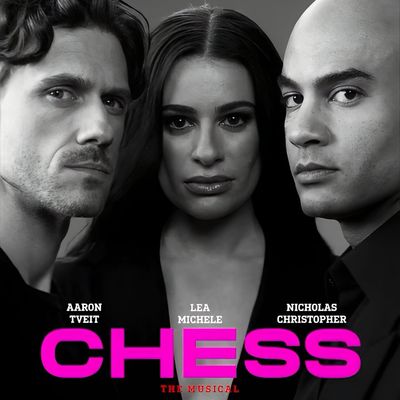
Tim recalls the ups and mainly downs of Chess on the great White Way in 1988. He was abandoned in a remote lay-by, Inspiring a film starring Bob Geldof, and lost a packet when the show closed after eight weeks. But a couple of great new songs were added to the already very popular score... Read More
From the show: Get Onto My Cloud: The Tim Rice Podcast
Featured Shows
About
Tim recalls the ups and mainly downs of Chess on the great White Way in 1988. He was abandoned in a remote lay-by, Inspiring a film starring Bob Geldof, and lost a packet when the show closed after eight weeks. But a couple of great new songs were added to the already very popular score.
Transcript
This transcript was automatically generated and might contain errors.
[0:00] Tim Rice: Hello, this is Tim Rice, and this is episode 45 of my podcast Get Onto My Cloud. The introduction of Chess the Musical internationally via vinyl, cassette, and CD could hardly have gone better. But our ultimate aim had always been to create a theatrical presentation of chess. When I first listened back to the complete finished recording, still available, I hasten to add, I could not have been happier. I felt the same way about it as I had about both original studio albums of Jesus Christ Superstar and Evita, and they both translated well onto stage and indeed film. Our initial launch of chess was via a concert tour of five European cities in five days: London, Paris, Amsterdam, Hamburg, and Stockholm in October 1984.
We toured with the full forces from the record, including the Ambrosian Singers and the London Symphony Orchestra, plus, of course, all the soloists, notably Elaine Page, Murray Head, and Tommy Shorbey, and of course the writers. Me, Bjorn Ulvaeus, and Benny Andersson. This massive conglomeration was somehow shipped from city to city for five consecutive nights without major disaster. And the show was received ecstatically, notably in the hometowns of the three creators. So all looked set fair for the West End, where we decided to present the first stage version of chess. Basically, we cocked this up pretty impressively. If I ever get round to writing part two of my not particularly long-awaited memoirs, I'll be able to fill several chapters with our staggering incompetence, overconfidence, and sheer bad luck, all of which contributed to disappointing stage presentations of chess in both the West End and on Broadway, even though the London version was technically a hit, running for nearly three years and earning its investors a modest profit. Broadway investors, which annoyingly included me, were, however, taken to the cleaners.
[2:24] Tim Rice: In the end, we wound up with the New York-based Schubert organization, Broadway Giants, leading the production team, and with their first choice director, the hugely celebrated, on Broadway anyway, Michael Bennett, he was at the helm. Bennett was a gifted, multi-Tony-winning choreographer, Promises, Promises, the Burt Bacharach Hal David musical, and Sondheim's Follies and Company, all choreographed by Bennett. And he moved into big-time directing as well, with his triumphant Chorus Line, which won every award in the book, including the 1976 Pulitzer Prize. He was undoubtedly a great name to have in the chess mix. To be honest, I was never sure that he was totally convinced that chess was his cup of tea, but the many artistic meetings I had with him, mainly about the storyline, were always stimulating and taught me a great deal about the American approach to musicals.
He was an entertaining host and always ready to have as good a time as possible, maybe even too good a time, during the pre-production period. But he was a little concerned about opening the show away from home in the UK with British stars and unfamiliar theatrical trappings. Chorus Line had run in London for three years, picking up yet more best musical awards, but I know he'd have been happier starting chess on his home patch. Be all that as it may, after the show had been cast, a West End Theatre, The Prince Edward booked, tickets on sale, sets built, rehearsals about to begin. Michael withdrew from the production in early 1986. Sad to say he was ill, and even sadder to say, he died a year later.
[4:07] Tim Rice: Trevor Nunn stepped into the breach, and against heavy odds, working with cast, crew and production values and sets he had not chosen, Trevor managed to salvage the show, which opened to genuinely mixed reviews, ranging from very good to pretty grim. The first night was in May 1986, and it ran for almost three years, technically a hit. One of the many errors we made at the time was not to make a fresh recording of the stage show, but as the three leads, Elaine, Murray and Tommy, would have been reprising 90% of their work on the studio album, it was felt surplus to requirements. From this distance, it seems a pity that we don't have an official memento of the show, although plenty of bootlegs exist.
Because chess was not a bone of Five Day smash in London, the enthusiasm to take it to Broadway evaporated. American investors who'd hitherto been desperate to back the show on the strength of the album suddenly dematerialized, and for quite a while it looked like it wouldn't get to New York at all. I remember being rather unconcerned by this. But Trevor Nunn in particular was determined it would get to Broadway, and the overall feeling from what was left of the artistic and production team was that if it did, it would need a major overhaul. This it got in spades, primarily because of the introduction of dialogue, a spoken book to support the songs, and drastic changes to the storyline. The added script was written by New York playwright Richard Nelson, and its main effect was to make the show far too long.
[5:38] Tim Rice: Other drastic changes had the play now being set in what was then the present time, 1988, so the menace of the Cold War was seriously compromised. Perestroika and Glasnost were the political buzzwords of the moment, and the importance of a game of chess between the US and the USSR was nothing like as relevant to political point scoring as it had been ten years earlier at the height of the Cold War, the time in which the show was originally set. Other fairly drastic alterations included the ditching of Murano as the venue for Act 1, replaced by Bangkok, which had to date been Act II, with a new Act II taking place in Budapest. Are you still with me? Oh yes, at the end of the piece, the Americans won the World Chess Championship, not the Russians.
All in all, a fairly hefty bunch of alterations. Nonetheless, the show, reluctantly largely financed by its authors, thus breaking the golden rule, never put your own money into your own show, the show got to Broadway. It ran for just eight weeks. It was panned by most of the influential critics, although that in itself need not have been fatal, as Evita had come through just as much abuse to become a ward a winning hit, Ditto Phantom of the Opera. The chief drama critic of the New York Times, Frank Rich, was notably rude, describing it as three hours of characters yelling at each other to rock music, which seemed to me a trifle unjustified. And in those days, the New York Times wasn't even anti-British.
[7:16] Tim Rice: But the show, despite a formidable cast led by Judy Kuhn, was beyond doubt not what we dreamed of, and so far removed from my original tale that I was almost relieved when the Schubert organization threw in the towel. However, there were one or two pluses from our brief visit to the Imperial Theatre Broadway in the spring of 1988, just in time not to win any Tony Awards. A lot of the new material we wrote for Broadway, mine mainly under the kosh in my hotel room, was frankly wasted effort. But you never truly know what will work until it's up there on stage for about half an hour in the case of some of the new bits. And one or two of the new pieces did work, notably a song entitled Someone Else's Story, which Judy Kuhn's Florence sang beautifully every night for just eight weeks.
[8:21] ♪ Musical number: "Someone Else's Story" — performed by Judy Kuhn ♪
[11:34] Tim Rice: Judy Kuhn and Someone Else's Story.
[11:37] Tim Rice: The song worked so well and was clearly up to the standard of the other non-yelled rock numbers, such as "Heaven Help My Heart," "I Know Him So Well," and "Where I Want to Be," that it's been retained for subsequent chess productions around the world, of which I'm glad to say there have been many.
[11:53] Tim Rice: I've had the great pleasure of working with the marvelous Judy Kuhn again, notably when she took her leading role as Mikal in the Oratorio "King David" that I wrote with Alan Menken. And I'm relieved and not at all surprised that her post-Chess career has gone from strength to strength. She and the American cast were always marvelously supportive of the show and actually staged a benefit concert version of the work at Carnegie Hall, primarily for their fellow actors.
[12:19] Tim Rice: Some months after the show closed, which apparently was a huge success. I wish I'd gone, but I was still licking my wounds in England when it took place. But there have been an awful lot of Chess productions in the last 33 years, and I dare say quite a few more in the works. Right now, in early 2021, it's been running in Moscow for several months.
[12:39] Tim Rice: I assume socially distantly. Another song that made its debut within the Chess score on Broadway was a short scene near the top of the show between Florence, Judy Kuhn, and Freddie, Philip Kasnoff, entitled "How Many Women." This track was chosen by Professor Louise Richardson in 2016, when she was a guest on BBC Radio's famous and ever-running "Desert Island Discs," choosing the eight pieces of music she would take with her when marooned alone on a desert island.
[13:08] Tim Rice: I owe Professor Richardson a debt of gratitude, as she reminded me that not all the Broadway changes were a mistake. She said it was a wonderful musical and felt that this song spoke to talented women who sometimes wind up with men they shouldn't have, men who underappreciated them. Here is that extract taken from the Broadway cast album.
[13:35] ♪ Musical number: "How Many Women" — performed by Judy Kuhn and Philip Kasnoff ♪
[15:05] Tim Rice: I even had transport problems during the pre-production work on Chess in America. Michael Bennett had a house out in the Hamptons on Long Island, roughly an hour and a half from New York. And he kindly invited me out for a couple of days to work on the show, and the Schubert organization laid on a limo plus driver to take me out there. It was a scorcher of a day, with an afternoon temperature pushing 100 Fahrenheit, of course. I relaxed in the spacious back of the car with a cold drink and the New York Times, a newspaper I was still happily subscribing to.
[15:38] Tim Rice: After about an hour, the driver, a lovely bloke called Hank, lowered the darkened windows separating our two compartments and asked me if I knew where Mr. Bennett lived. Feeling that possession of that information was perhaps more his responsibility than mine, I politely replied that I hadn't a clue. So, it's still being the era when mobile phones were primitive and certainly weren't working where we were, Hank wound up the darkened window between us and pulled off the freeway into a lay-by that contained nothing but a payphone.
[16:10] Tim Rice: He got out and made a call. I decided, not knowing how much longer the journey was to be, that this was an opportunity to have a quick visit to the restroom, which in this case was a nearby clump of trees. While relieving myself amid the foliage, I read a very interesting sign about Native American history, which apparently had many historical links with this part of Long Island, which might have delayed my return to the vehicle by half a minute.
[16:34] Tim Rice: As I wandered back to the car, I saw Hank getting back in, and as I almost reached the vehicle, he shot off. I realized why he hadn't opened the door for me. He hadn't realized I'd left the car. I certainly couldn't care less about having doors opened for me, but I was slightly put out by being abandoned on the hottest day of the year with no jacket, headgear, cash, ID, or sunglasses, not knowing where I was, nor indeed where I was going. I just had to hope that Hank would realize pretty soon that his day's work might not be considered a success if he turned up at Bennett's house without his cargo.
[17:08] Tim Rice: I trudged back to the comparative shelter of the Native American clump. Cars shot by in both directions on the freeway, but none needed a phone or a pee. Anyway, surely Hank will be back in five or ten minutes, although, of course, he had cut himself off physically and sonically from his passenger in the back of the limo, quite rightly respecting my privacy, of which right now I had rather too much. He did return 40 minutes later.
[17:35] Tim Rice: We were 20 minutes from Michael Bennett's house, and when Hank got there the first time, Michael was slightly surprised that I'd made no effort to get out of the car to greet him. Hank suggested that I was asleep, but of course, when Michael opened the door, he just saw my jacket, a cold drink, and the New York Times. Apparently, Hank then simply said, "I think I know where he is," and set off again without further explanation. Forty minutes later, Hank made it back into Bennett HQ the second time. This time with his client.
[18:05] Tim Rice: A happy ending which we all found highly amusing, notably my family back at home. In fact, my son Donald, then only 10 years old, based a short film he directed in 2007, entitled "I Am Bob," on this incident, with Bob Geldof playing himself as the abandoned passenger. The venue was shifted from Long Island to a remote hotel in the north of England and involved Bob having to take part in a Bob Geldof look-alike competition in order to fund replacement transport. He came second. I recommend "I Am Bob" highly.
[18:41] Tim Rice: There's a lot more I could say about Chess on Broadway, and indeed will do. But the 40 minutes in that fire pit of a lay-by remained etched in my memory as a very funny oke, and yet symbolizing the overall cock-up cycle of the entire venture. I hope I'm around long enough to witness the creation of a definitive version of Chess, although there's something to be said for so many directors over the years, adding and subtracting more or less at will.
[19:07] Tim Rice: It certainly makes for an unpredictable evening at times, and whatever the quality is, it's hardly ever boring, as even the guys who wrote it have to concentrate to get the plot. But time and time again, it's been straightforward concert versions that have truly delivered the goods. I, perhaps arrogantly, feel that the original album was the best narrative we've yet achieved. And when that is sung unaltered by an assembled multitude of soloists, choir, and orchestra, it usually hits the mark.
[19:34] Tim Rice: As long as someone else's story's in there, too. A final note about not investing in your own shows. Most writers are quite happy to work for a considerable length of time without any reward. And if their show fails, at least they haven't lost money, even though their income would have been zero or near zero. You need other people to invest in your work, not because you're too mean to put up the cash yourself, but to be confident that someone else besides you can see value in your creation.
[20:03] Tim Rice: If you can't find anyone who rates it, this is a message, a warning. And for goodness sake, don't sink your own cash into it, as you don't want to work for X years at a loss. But circumstances often make this rule hard to obey, as I found out with Chess on Broadway. I'm not looking for sympathy. To end on a chirpy note, here's the star of Donald's movie "I Am Bob," with one of the best recordings Bob made with his fine band, The Boomtown Rats.
[20:40] Tim Rice: Sounds like everywhere I go, yeah, everywhere I see the forms. And no one did do your one while you're sleeping with your horse. Sure, birds with this theory. It's like a Lincoln Manosaurus. Sixty shades are red. Heroes go and cheap these days. Place and bullet in the head. Septica. Suffer in the scream and see. Sounds like death. Everywhere alcohol, yeah, everywhere I see the black and blue uniforms, police and freeze. Take out the leader of a card. Let me stand aside you. I watch it back. Strikers of the soldiers, so I know that you make too many questions and answers too. Septic Sephora in the scream and see. Sounds like dumb. Everywhere alcohol, yeah, everywhere I see the black and blue uniforms, police and freeze.
The purple and the pinstripe. They mutely shake their heads, silent shrinking values, violence worse than they condemn. Stab you in the back, yeah, laughing in your face. Glad to see the place again. It's a fitting of the change. Septical suffering the scream and see. Sounds like dumb. Everywhere alcohol, yeah, everywhere I see the black and blue uniforms, police and breeze. Freeze, freeze. That was episode forty-five of my podcast, Get Onto My Cloud, written and presented by me, Tim Rice, and produced by him, Peter Hobbes.
© Broadway Podcast Network, All Rights Reserved