

How to follow Jesus Christ Superstar? After failing to make headway working on a musical with Andrew Lloyd Webber based on PG Wodehouse’s immortal Jeeves and Bertie Wooster, Tim came up with the insane idea of a musical about the wife of an Argentine dictator... Read More
From the show: Get Onto My Cloud: The Tim Rice Podcast
Featured Shows
About
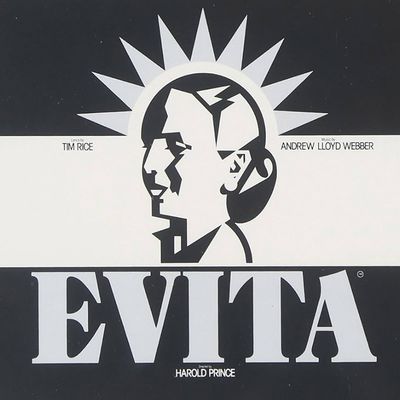
How to follow Jesus Christ Superstar? After failing to make headway working on a musical with Andrew Lloyd Webber based on PG Wodehouse’s immortal Jeeves and Bertie Wooster, Tim came up with the insane idea of a musical about the wife of an Argentine dictator. Before Evita became a stage show, it was a record. This episode of Get Onto My Cloud tells the story of that recording in the long hot British summer of 1976 featuring some out-takes and lesser known songs from the score, plus the original version of what became Don’t Cry For Me Argentina.
Transcript
This transcript was automatically generated and might contain errors.
[0:00] Tim Rice: Hello, this is Tim Rice.
[0:02] Tim Rice: Welcome to episode 12 of my podcast, Get Onto My Cloud.
[0:15] Tim Rice: After the great and frankly unexpected success of Jesus Christ Superstar, which began with the studio album that Andrew Lloyd Webber and I had recorded in 1970 and led in due course to stage productions all over the world and a movie directed by Norman Jewison in 1973, we were faced with the problem of a follow-up.
[0:36] Tim Rice: It seemed to me that whatever we did was unlikely to top the success of Superstar, not the worst problem in the world to have, but still a slightly intimidating one.
[0:46] Tim Rice: Our first cunning plan was to write something that was totally unlike Superstar.
[0:51] Tim Rice: And as we were both huge PG Wodehouse fans, particularly of the Jeeves books, we quickly became very excited and enthusiastic about the possibility of adapting Wodehouse's immortal characters, Jeeves and Bertie Wooster, for a conventional stage musical, from which rock music would be almost totally absent.
[1:11] Tim Rice: However, once we got down to the nitty-gritty of actually writing the show, my confidence and enthusiasm began to wane.
[1:18] Tim Rice: It seemed to me that after writing the first two or three songs, that my lyrics, albeit competent and not totally without humor, were not a patch on the wit and wisdom of the Jeeves books.
[1:28] Tim Rice: In short, I was making Wodehouse less funny.
[1:32] Tim Rice: Andrew's contribution, tune-wise, was very strong, but he was, of course, not in direct competition with the master, and he remained convinced the show could work.
[1:42] Tim Rice: Half convinced that I was making the greatest mistake of all time, I decided to abandon Jeeves.
[1:48] Tim Rice: Andrew decided to continue with Alan Ayckbourn, one of Britain's greatest playwrights, writing both book and lyrics.
[1:56] Tim Rice: By this time, I was three-quarters convinced that I'd made the greatest mistake of all time and virtually a hundred percent certain I had when David Hemmings was signed for the lead role of Bertie Wooster.
[2:06] Tim Rice: Other significant theatrical names were involved, and after an out-of-town tryout in Bristol, which I attended, Jeeves opened in London in April 1975.
[2:17] Tim Rice: It closed in May 1975.
[2:21] Tim Rice: Meanwhile, I'd had what I felt was a better idea for another show.
[2:25] Tim Rice: A few months before Jeeves West End to Mies, I happened to hear the tail end of a radio documentary about Eva Perón as part of a series called Legends of Our Time, or something like that.
[2:38] Tim Rice: I did not know anything about Eva Perón other than the fact that she was Argentinian, glamorous, and dead, and that she was known as Evita.
[2:47] Tim Rice: Even this was probably more than 99% of the British population knew about her at the time.
[2:53] Tim Rice: I remembered her from my childhood stamp collecting days, her image on Argentina's stamps having always been one of my favorites, and I vaguely remember reading and feeling very sorry about her death way back in 1952.
[3:07] Tim Rice: I assure you this is true, for I was well into newspapers by the time I was seven.
[3:11] Tim Rice: Precocious brat.
[3:13] Tim Rice: What also intrigued me about this radio program was that it was announced at the end of the show that the following week's legend would be James Dean.
[3:21] Tim Rice: Now I did know a lot about the eternally fascinating James Dean, and immediately thought that if Eva Perón was in his league, then I wanted to know more about her too.
[3:31] Tim Rice: I managed to get a copy of the full Evita program from the BBC the following week, and I was hooked.
[3:38] Tim Rice: Post Jeeves, Andrew was now keen to have a crack at my bonkers idea of an Eva Perón musical.
[3:44] Tim Rice: So in the last half of 1975, we spent hours and hours in each other's company and houses, mainly his house, working together.
[3:52] Tim Rice: As we had done with Superstar, the format was plot, which I'd already done, music, lyrics in that order.
[3:59] Tim Rice: And the most important decision we made, following on from our Superstar experience, was to make a studio album of the show before any stage show.
[4:07] Tim Rice: We had, of course, only made the Superstar record first because no one wanted to stage the work.
[4:12] Tim Rice: I'm sure we could have got Evita staged without an album, but we wanted to repeat the formula, get the songs, the score, and above all the story right before introducing other creative aspects and other contributors to the project.
[4:26] Tim Rice: Most people who heard about the Evita project thought Eva Perón was a ludicrous idea for a show and said it couldn't work because nobody knew anything about Eva Perón.
[4:34] Tim Rice: An exact reverse of the forecast for our previous show's prospects, which was that it would fail because the story of Jesus was too well known.
[4:44] Tim Rice: We ploughed on, and Andrew came up with magnificent melody after magnificent melody, none more striking than the song which eventually became known as Don't Cry for Me Argentina.
[4:53] Tim Rice: The first words I wrote to this tune were for our character Che Guevara, Oh, What a Circus.
[4:59] Tim Rice: The second lot of words I wrote for this tune were at Eva's funeral, in which the well-known titled line was first heard, which made sense.
[5:08] Tim Rice: When I came to write the third and most important set of lyrics for this cracking tune, to be sung by Eva from the balcony of the Casa Rosada to her thousands of adoring fans, the scene Andrew said he always wanted to be a political over the rainbow.
[5:22] Tim Rice: I didn't at first think the line Don't Cry for Me, Argentina, would make sense.
[5:26] Tim Rice: Eva in this scene is at the top of her game, and nobody had any reason to feel sorry for her.
[5:31] Tim Rice: But in fact, bearing in mind the song was written as an insincere political speech, the line works perfectly.
[5:36] Tim Rice: For Eva to ask for sympathy when she's in effect running the country and is bedecked with diamonds, is on the face of it ridiculous.
[5:45] Tim Rice: But she was a brilliant politician, identifying cynically with her descamisados, who lapped it up.
[5:52] Tim Rice: This is not the final version, although sung perfectly by Julie Covington.
[5:57] Tim Rice: See if you can spot any unfamiliar bits.
[9:13] ♪ Musical number: "Don't Cry for Me Argentina" — performed by Julie Covington ♪
[10:38] Tim Rice: We seriously considered calling it It's Only Your Lover Returning.
[10:42] Tim Rice: Or perhaps even worse, all through my crazy and wild days.
[10:47] Tim Rice: Although those were the only words that differed from the final version of the song, changing the title to Don't Cry for Me, Argentina changed it entirely.
[10:56] Tim Rice: I do not think it would have become such a popular song with either of those two very unmemorable titles.
[11:03] Tim Rice: I like to think it emphasizes how important a lyric is to bring out the very best in a tune, however strong the tune.
[11:10] Tim Rice: The first album of Evita was recorded in Olympic Studios in Barnes, Southwest London, where we'd recorded Superstar six years previously.
[11:19] Tim Rice: The British summer of 1976 is one of the hottest in living memory, which passed by without any dire predictions about global warming.
[11:27] Tim Rice: We were grateful to be spending a good deal of it in an air-conditioned workplace.
[11:32] Tim Rice: We managed to assemble a very strong cast of singers for the recording.
[11:36] Tim Rice: We hadn't even got to the stage of making a list of potential Avas when we caught an episode of a TV series entitled Rock Follies, The Seamy Tale of a Trio of Aspiring Rock Chicks, played by Julie Covington, Charlotte Cornwell, and Rula Lenska.
[11:52] Tim Rice: The series became a big hit, by which time we'd approached Julie for our project.
[11:57] Tim Rice: We remembered her making her mark as part of the West End musical Godspell.
[12:01] Tim Rice: Rock Follies showed she could certainly hold a contemporary tune with power and conviction.
[12:07] Tim Rice: When she first heard the story and some of the songs that her character would sing, she was immediately intrigued.
[12:13] Tim Rice: Eva's struggle was something she could readily interpret, and she thought the songs were great.
[12:18] Tim Rice: She probably thought it was a highly uncommercial idea for a show, and therefore became even more interested.
[12:24] Tim Rice: When she first began to sing the songs, first around Andrew's piano and then in the studio, we knew we could not have chosen better.
[12:31] Tim Rice: Our first choice for Peron was Paul Jones. By 1976, an established West End actor, but still in fine voice as he had been when fronting Manfred Mann, still singing the blues whenever possible. Paul accepted the part of the project's Dennis Thatcher, sort of, with alacrity. The other principal role, that of our narrator, stroke commentator Che, not billed as Guevara at this point, but we strongly implied he was that Che, proved harder to cast. After several false starts, we eventually turned to an unknown Irishman named Colm Wilkinson. Colm had recently played Judas in the West End superstar, still going strong in the Palace Theatre. When he came in to wrap his tonsils around one or two of Evita's numbers, it only took a couple of verses to know he was our man.
Colm has since found lasting fame and stardom through Les Misérables. In my research into Che Guevara's life, a subject on which I was almost as ignorant as the millions of students who had pinned his picture onto their walls during the previous ten years, I discovered that in his own student days he'd attempted to market it as an insecticide. Delighted to find that he briefly exposed capitalist leanings, I decided to incorporate this strange ambition into the show, enabling us to suggest that Che and Eva were really cut from the same grasping cloth, implying he'd only become a revolutionary after failing to make a million. This mischievous viewpoint was referred to at odd points during the album, but disappeared at the request of just about everyone in subsequent versions.
The first time it crops up is in "The Ladies Got Potential," a number dealing simultaneously with Peron's career to date, the state of Argentina's politics in the early 1940s, Che's fly-killing ambitions, and Eva's moves in Peron's direction. I have not written many other lyrics with quite so broad a remit. Much of this would pass a listener by on one hearing, but if followed with a lyric sheet, they're not too incomprehensible. There are also one or two good lines that I was sorry to lose when it came to the stage shows, such as the description of Eva as the greatest social climber since Cinderella, and of Peron's early army days as a frustrated ski instructor. Sure, a Peron could ski, but who needs a snowman?
Che introduced Peron's political faction, the GOU, Government Order Unity with the couplet. They thought that Hitler had the war as good as one. They were slightly to the right of Attila the Hun. It's probably better if you hear these words sung by Colm Wilkinson. So here he is with "The Ladies Got Potential," with Paul Jones as Peron making an appearance loudly announcing the GOU's murky fascist program.
[14:06] ♪ Musical number: "The Ladies Got Potential" — performed by Colm Wilkinson and Paul Jones ♪
[20:39] Tim Rice: To end this initial look back at the 1976 double LP or double cassette recording, which made the top of the charts in the UK and did great business almost everywhere else in the world, bar the United States, here's one of my favorites from the platter. The song sung by Peron's mistress after her brutal ejection from his apartment by her replacement, Evita. "Another Suitcase in Another Hall" was a song that we thought had most potential to be a hit single out of context from the show. It was a hit, and Barbara Dixon sang it perfectly, but in the end, it was dwarfed sales-wise by Julie Covington's single of "Don't Cry for Me, Argentina," which topped the charts nearly everywhere, except in the United States. But I don't think it was dwarfed artistically. Here's Barbara.
[21:02] ♪ Musical number: "Another Suitcase in Another Hall" — performed by Barbara Dixon ♪
[24:41] Tim Rice: Written and presented by Tim Rice and produced by Peter Hobbes.
© Broadway Podcast Network, All Rights Reserved