

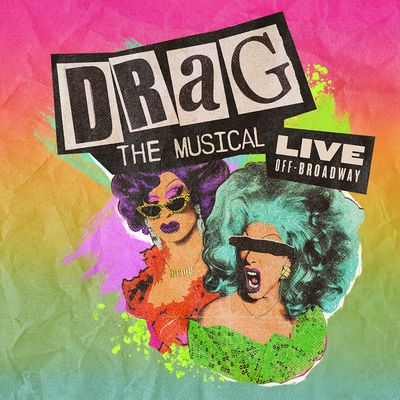
Are you on team Fish Tank or team Cat House??? Get into the beef between two Drag clubs in the wildly entertaining off-Broadway show, Drag The Musical. Today on GOOD SHOW!, Sarah chats with the director/ choreographer, Spencer Liff... Read More
From the show: GOOD SHOW! with Sarah Goodman
Featured Shows
About
Are you on team Fish Tank or team Cat House??? Get into the beef between two Drag clubs in the wildly entertaining off-Broadway show, Drag The Musical. Today on GOOD SHOW!, Sarah chats with the director/ choreographer, Spencer Liff. Dive into the Fish Tank and listen to Sarah and Spencer talk about collaborating with designers, Spencer's beginnings as a child actor, and his love of drag culture. Then they get feisty in the Cat House and talk about the exciting diversity in the cast, Liza Minnelli, and more! Sarah decides "How Queer Is It?" with the newly revamped GOOD SHOW! Queer Scale.
Spencer Liff is an award winning Director and Choreographer with work frequently seen on both the stage and screen. He has earned two Emmy Nominations for Outstanding Choreography for his work on the hit FOX TV series "So You Think You Can Dance."
Films include the upcoming Legendary Pictures feature film The Toxic Avenger, Steppin' Into The Holiday starring Mario Lopez, and Stephen Karam's Speech and Debate. Past Broadway credits include Head Over Heels, with music by the Go-Go's, The Lincoln Center revival of the groundbreaking musical Falsetto's, Tony Award-Winning revival of Hedwig And The Angry Inch starring Neil Patrick Harris, and the critically acclaimed Tony Nominated revival of Spring Awakening.
Connect with Spencer Liff
Instagram: @spencerliff
Connect with GOOD SHOW!
Instagram: @goodshowpodcast
Tik Tok: @goodshowpodcast
Transcript
This transcript was automatically generated and might contain errors.
[0:14] Sarah Goodman: Hi, I'm Sarah. I'm a sound designer and professional lesbian theater geek. I'm a huge fan of all things theater, Broadway, cabaret, and pop culture. I've got tattoos of Bernadette Peters and Liza Minnelli. In my podcast, I'm looking at theater through a queer lens and discussing the intersection between the craft and the LGBTQ community, aka me, my friends, and family. Today's episode is all about Drag the Musical, and my special guest is director-choreographer Spencer Liff.
[0:46] Sarah Goodman: Emmy Award-nominated director and choreographer Spencer Liff is bringing Drag the Musical to new world stages. Spencer's showbiz journey is truly remarkable. He got his start at the age of seven on the national tour of the Will Rogers Follies, making his Broadway debut at age 11 in Big the Musical, and was living independently in New York City by age 13 when he purchased his own apartment on the Upper West Side. After performing in five Broadway shows, he transitioned to choreography and did four more shows, including the Tony-winning revival of Hedwig. His time on So You Think You Can Dance has led to two Emmy Award nominations and gave him the confidence to make the leap from choreography to directing.
Earlier this year, Spencer directed and choreographed the immersive stage adaptation of Reefer Madness in LA, where it's been a huge hit with audiences and celebrities alike. He's just moved back to New York City and is ready to make his mark as a director. I absolutely loved Drag the Musical. I thought it was incredibly entertaining. Those drag queens are singing down. It is so much fun. It's heartwarming. It is so sweet. I hope you all enjoy my conversation with Spencer Liff.
[2:02] Sarah Goodman: Okay, please welcome to Good Show, Spencer Liff. Thank you so much for joining us.
[2:07] Spencer Liff: Thank you for having me.
[2:08] Sarah Goodman: Hi. How did you get involved with this show to begin with?
[2:12] Spencer Liff: I met the writers. It's co-created by Alaska and a guy named Tomas Costanza and Ashley Gordon. And the two of them are like the drag whisperers of music. And they produce like every major drag queen's album over like 10 years. And it was Alaska that said to them, I think we should write a musical. And they all sort of shared that. But they, you know, it's their first go at it. And my agent put me with Tomas to actually work on another piece that we were writing about the LA dance scene and like the dance studio scene. And we just were deep in that. And he handed me the script of Drag to say this is something else I'm working on, just so you can get to know our style. And I read the script and I was like, this is absolutely my show. I love so much about this. And I knew that it was gonna end up. I knew that we were gonna end up here. And that was probably six years ago.
[3:00] Spencer Liff: Wow. So I've been involved in the show for a very long time. We wrote it and worked on it during the pandemic. And then as soon as we were able to, we did our first workshop in LA and then did our runs after that. So they say the seven-year thing for a new musical, and that's like exactly kind of where it's hitting at. And so many years invested to get to this stage.
[3:20] Sarah Goodman: Wow, that's amazing. Six years in the making. And now it is playing at New World Stages off Broadway. In a really cool, the set is really cool the way they've set it up. It's almost kind of immersive, the way the set is designed when you go see the show in person.
[3:37] Spencer Liff: I like doing immersive work, and actually, I had a fully immersive version of Reefer Madness that's been running in LA for several months now, where it was just an open club space, and I set up runways and stages throughout the whole venue. But one of the things that we had at the bar in LA at the Bourbon Room was, you know, runways, and I used the whole space and the actual bar at the back of the bar was where we played the bar scenes that the show takes place at two different bars. So it sort of felt like the show was taking place where it did. And what we loved about that was the cabaret tables and the fact that audiences were like immersed within the front runways. And one of the things that I just insisted on when we came here was that we rip out the first couple rows of seats and that we were able to create that vibe so that whether you were sitting down there or not, you could sort of you could at least feel part of that.
And the set is really, really cool and unbelievable and utilizes like the most advanced technology and projection design. And it's sort of like it's deceivingly simple because it's one stationary set and we use very, very small amount of props and things, but I don't think you're wanting for it, you know. I don't think you want for anything because you get transported into this beautiful world. It's been fun, like I said, after doing the show with almost nothing in a bar to now having like the most beautiful set.
[4:53] Spencer Liff: Yeah, the set is incredible and it's projection mapped all over the entire set, and it does some incredible stuff during the show. What is it like collaborating with like the video designers and the lighting designer in your choreography? Because there are some moments in the show where the chore and the projection design are kind of playing together, or there's a number where some of the dancers have actual lights in their hands that are changing color. And I'm sure that has to be a process between you and the designers. So what is that like? What is that like collaborating with them?
[5:27] Spencer Liff: Well, I was very lucky because I got to, you know, I got to have my besties hired as the designers on this because they're the top in their field and we've sort of come up together. You know, the set designer Jason Sherwood and I did our first musical together 10 years ago. And the projection designer Aaron Ryan has been a friend for 15 years. And we've all like grown together. And now Aaron is the, you know, biggest projection designer on Broadway. And so when I got this opportunity, I was like, oh my God, I get to do this with my friends who I know are so talented. And they all got to see the show in LA before we had all those elements. And in a normal out-of-town tryout, you would have to sort of commit to a set design and stuff already.
But what I got to do was learn exactly what I needed and wanted and sort of fantasize about it in my head for years before I actually had to commit. So I was able to then say to Jason and Aaron, like, these are all the moments I've been waiting for and dreaming up. And, you know, we just worked all summer to sync that stuff up. And, you know, when you saw it where we were at last week was just like literally a small amount of stuff that had been able to put in because we had a very fast tech process. So, you know, it's more and more is coming about. And it is because I came from a choreography background and I came from So You Think You Can Dance as a TV show. And on that show as a choreographer, you are in charge of your lighting design, your costumes, your like every element of it you have to pitch and put forward to the producers.
So it trained me how to be a director before I knew that I was, you know, before I was having to make those choices as a director. So when I make up choreography, when I see moments in my head, I'm like, I know exactly what the color palette should be. I know what everything around it should do to help the eye see the moment. So I'm able to just really clearly explain that to my designers and show them visuals and say this is the mood board for what this moment is. And I think they're grateful too because if I can tell them exactly what I want, then they can deliver it.
[7:14] Sarah Goodman: Yeah, that's so cool that you really get to have that vision when you're creating your work. So you mentioned that you worked on So You Think You Can Dance. What are the differences for you working on TV versus working in theater?
[7:28] Spencer Liff: I love them both so much. And I mean, the biggest difference is that I can tell exactly what I want the eye to see through a lens. And that I love having that control. You can use the camera as a character and you can point, you know, you can point to exactly what you want and you can create around it. And, you know, people like Fossey did that so, so well. And he did stage and film work. But I think that because I've worked for 10 years first on that TV show and mostly, you know, on TV shows in Los Angeles, now when I do stage picture stuff, I see it that specifically. It's much harder to get the audience in a full stage to look exactly where you want them to look. You have to try a lot harder because you don't have the control.
You then also you get like you work on a show for a couple months and then it lives forever. You work on a TV show for a couple days, and these, you know, you get a million takes on it, but the exact same thing lives forever. Your show, you know that like you're taking into account what can people do eight times a week, what's gonna sustain multiple different characters that come in and play this. So if you know, like I want it to be, I want it to be really specific to my original actors, but I am already thinking ahead to what happens in a year from now when I have replacements in the show, what is this gonna feel like? And so it's just like different brain, you know, different brain waves of like sustaining a piece of theater for what hopefully is a very long time.
They're both surprisingly different mediums, I would say, for us it using the same skill set. And I have been very grateful and lucky that my career has allowed me to go back and work within New York and LA and satisfy both sides of the brain.
[9:04] Sarah Goodman: That's cool. What was your background like before you became a choreographer?
[9:09] Spencer Liff: Oh, I was a kid actor to the core. I started when I was six years old. I got my equity card. I was on the first national tour of Will Rogers Follies. So Tommy Toon gave me my first job. And I will hands down say that like being in rehearsal with him, watching him stand in front of that staircase full of 30 beautiful chorus girls and tell them exactly what to do. And I was in the wings, and I'm like, oh, this is so what I'm gonna do when I grow up. And I love that show. And then my first Broadway show was Big the Musical, which is in Strawman as a choreographer who was also like an unbelievably strong influence on like how I wanted to tell stories and use props. And I worked my whole life as an actor.
And then I had a young adult Broadway career where I did five Broadway shows as an adult, original musicals and began being an associate choreographer with, you know, Rob Ashford mostly and worked with everybody, Kathleen Marshall and Warren Carlyle and Sergio and you know, all the big names at that time and learned as much as I could from all of them. But my career took a sharp turn getting on So You Think You Can Dance. I was 23 years old. It was really my first big choreography job. I auditioned by having a meeting and submitting a tape that I self-produced of like what kind of work I wanted to do on the show. And they called me up and they said, You're gonna be on this week's episode, you're gonna fly to LA tomorrow, and you start rehearsal. And it was unbelievable.
[10:28] Spencer Liff: It was. And I did one week of that and then Dancing with the Stars called the next week, and they said, We want you to do a number. So within like one week of my big professional choreography career, I'd been on So You Think You Can Dance and Dancing with the Stars. And it just launched, you know, after a lifetime of preparing for that moment, I got the chance and that was my background. And I always knew that directing was going to come in time. And, you know, made the choice several years ago to go back into the regional theater world and start directing, you know, to prepare myself for the moment that I could have this New York debut as a director choreographer.
[10:47] Spencer Liff: What a whirlwind.
[11:01] Sarah Goodman: What has been your experience in being connected to the world of drag?
[11:05] Spencer Liff: I mean, I grew up in New York for the most part. So I, you know, I was very aware of drag culture in New York City and grew up with, you know, knowing actors and male ensemble members that did drag, and of course, being familiar with all of the drag musicals that happened. My first Broadway show as a choreographer was Hedwig. So that was like had a huge drag background with that and was in charge of getting all of our headwigs into heels and getting them, you know, prepared for that. So we did a ton of research back then just about drag culture so that we could bring some authenticity to that show. And then it's just sort of followed me around, even in like I do these British pantos that we did with the Lithgow family.
And Panto was such a huge thing in the UK. And drag has always been in Pantos. And it's, you know, it's always like the evil villain character or, you know, the dame is a drag actor. So I've sort of had it from the theatrical background and then, you know, the authentic club scene in New York. I was going to the tunnel in the limelight when I was a teenager, much younger than I should have, but I knew all those local drag performers, and that was before Drag Race. And it was a hard life for them, but they loved it. And, you know, I would watch the drag performances just on the floor of the tunnel and see them do all their tricks and stunts and the lip sync and the gags and the wig snatching and the splits and all that stuff.
And so it just, it was something that I felt very comfortable with. And now, of course, I have the biggest drag names in the world that are helping and guiding and influencing like this is what the culture is. And we're trying to represent it as authentically as possible within the context of like we are not a drag show, we are a musical that has drag queens in it.
[12:44] Sarah Goodman: Yeah. And to that point, I knew that I was going to see a musical. It is called Drag the Musical. But when I was going in, I wasn't sure what to expect. You know, I've seen a million drag shows. I grew up going to gay bars in Chicago and seeing lots of drag shows there. I love Drag Race, you know. But you're right. This is not a drag show. This is an old-fashioned book musical. And the book is so delightful and heartwarming. I was blown away with how beautiful the story is. I think that's something really, really special about this piece. I would love to hear your take on how this particular storyline is affecting queer representation on stage because it's so much more than just drag performers. So I'd love to hear what you think about how you're bringing that representation to the stage.
[13:31] Spencer Liff: Yeah. So it's a complicated puzzle piece because we are fitting a lot of elements in. And you're asking the audience to like laugh their asses off and then feel incredibly deeply for a rough brother relationship that so many of us identify with.
[13:47] Spencer Liff: And then to watch a young, a young boy on stage who is so vulnerable telling his story about what it was like to want to dress up and enclose outside the gender norm and feel from his father that that's wrong, being now around this world of drag queens and exploring that and getting to have this whimsical fantasy number that I've gotten to create for him about what it what it would feel like to completely just be yourself and dress, you know, however makes you feel like a star inside and and the audience is sort of taken on that journey and they're not expecting it.
[14:22] Spencer Liff: It's what's fun about being at this point in previews is people are coming in and they don't know what they're getting themselves into. And I even have you know friends that sit down and they're like, So are they singing live? Is their original songs? Is there a story? And I just I'm like, just wait, just sit and watch. And I think that the puts us in an advantage because it's so much more than a drag show or and it's no no shade, like it's not RuPaul's drag race live in Las Vegas, which is a big spectacle show. But like I'm assuming that most people are coming and thinking that. And so they will be they'll be pleasantly surprised. Um it's a really tricky thing to do tonally because we are pushing to so many places and asking the audience to go on this roller coaster from one scene to the next.
And I think that's a lot of what we're working at in previews, is just how I can like smoothly guide them on this roller coaster to make them feel these extreme emotions, but feel very safe within our world.
[15:13] Spencer Liff: We've got an AF queen, which means assigned female at birth. And so it's she's a female drag queen, which is something that a lot of people have not heard of, but it's a very real thing in the culture. So getting to put a character that that people don't even know what that term is on stage means a lot for representation. Yeah. I was the choreographer of Head Over Heels, which had peppermint. She was the first trans uh person that was starring in the Broadway show. We were the first show to ever use they them pronouns, and that was in 2018. And people were like, they thought we made it up. That was the first show that had they them pronouns. No one had ever heard that before. It was it was shocking to people, and they were like, What is this? And I mean, that show was like ahead of it, it was really ahead of its time, but just by like an instant.
[15:56] Spencer Liff: Yeah. And so I love being able to put work out there that that is pushing the boundaries. And what was so surprising, and again, like we we have this beautiful young, you know, younger boy storyline that is so genuine and is so relatable. Like he's a young boy that's lost his mother and is raised by his single dad, who is estranged from his drag queen brother, and and yet his boy he can see wants to dress up in in women's clothes, and he is trying to deal with that. And you know, they they get thrust together from outer circumstances and they sort of have to mend their ways. And of course, the drag queen brother is exactly what that young boy needs to know that it's okay to be himself.
[16:38] Spencer Liff: And what we have is a lot of parents that are bringing their kids to the show that are that young boy. Even on our matinee, we had a young boy who came dressed up as Brendan in his costume. And like Florida. And we had a lot of kids that were coming in LA with their parents to this bar to see the show. And the parents were saying, like, this has given me so much clarity and so much hope that like allowing my kid to be themselves is the right choice, and seeing that represented on stage is so important. There, there is nothing more effective than representation. And it's so hard to be a parent that has a child that is different. And the people that put it out there, like my I love little boss baby Brody on Instagram.
If you follow him, yeah, the dancer. A young boy who's a dancer and will wants to put on a dress and dance around, and his parents put that out there, and he is so inspiring to so many people, and they have to fight off so much hate for it. And it takes bravery to do that.
[17:39] Spencer Liff: Yeah. So those parents that can bring their kid to the show and know that what they're doing is is the right thing for their kid, in my opinion. And it's all, you know, it's our opinions, but that's that's I was that little, I was that little boy. When I was backstage at the Will Rogers Follies, I was putting on those girls' headdresses and having the time of my life. And I was surrounded by people, including a parenting team that knew that's just who I was, and they had to support it. That was that was in the 90s. It was a different time. And we're certainly not done needing to lay the groundwork for this to be a little bit more normalized. But it makes all of the fun, wacky campy antics of our show. Like we're allowed to do all of that because we also have so much heart. And I know in my heart that we can change and open minds at hearts and we can help families. So that seems like a big thing to say, but I but I I know that's the path we're on.
[18:31] Sarah Goodman: I think that's absolutely true. And I think it it is, and it will continue to do so because when I saw the show, the scenes about Brendan's character, I was in tears. I was in absolute tears during his solo song. It's a really beautiful story to see Brendan's character form this relationship with his uncle and sort of be able to find himself. Ugh, we gotta take a break here so I can go get my tissues. We'll be right back.
[19:05] Spencer Liff: Every time I ask people after, I say, What was your favorite number? What was your favorite part? It's like it's all just all over the map, which makes me happy because I'm like, it's all relating and connecting to somebody in some way. They all have a character that they're like, that's me, that's my story. I feel, you know, and I think that's why um we can be a big, we can be a big hit. And we can take a queer art form and and make it a commercial show that can cross over to like so many different, it's so many different kinds of people. It was important to us. The team, the writing team is very, very diverse. We Tomas is a straight man from Long Island. Alaska's a drag queen. Ashley Gordon is is a female who is, you know, close to our AFAB queen. And I'm gaming. And so we've sort of got every everybody covered. And we always check in with each other to make sure that we're balancing our own energy in the show so that like it's not just for one group.
[19:58] Spencer Liff: Yeah. And there is a really beautiful diversity in the cast, not only gender, but also race, body type, age. It's it's really cool. It's very refreshing also to see a musical that has so many different types of people in it that are all getting their moments to shine and being able to relate to different audience members. And so nice to hear you say to say that it's the goal, it was our goal in casting. You know, you really have to step back and make sure that we've that that there's a spot for everybody in the show. And we've been lucky because we've had a lot of these actors with us, these huge drag queens who came to LA and for no money did the show in a bar with us because they knew it was good and they knew that one day we would get here and sort of you know have so many of them make that journey with us here. Uh, it feels like we were absolutely family, and that that is great to see.
[20:49] Spencer Liff: And there's drag queens that are going to blow people away because they don't know that they can sing live and they don't know they can be that funny and they don't they don't know so many things about them. So I get to sit back and just be so proud of what they're doing on stage because they're gonna have, they're all gonna have their moment from this show. Yeah, and that's another beautiful thing about the show is that it's really kind of an ensemble piece. There are sort of the two main characters that are the drag queens who own the respective clubs and they're kind of beefing, but there are a whole lot of other characters and they all kind of get their little moments to shine, they all get their little numbers, and they all will weave together so well in this just super fun show. I can't gush enough about it because I just loved it.
[21:30] Spencer Liff: It's our day off our meeting, you know. It's thank you for thank you for letting me know that we're on the right path. You know, it is uh like I said, it's it's been great to do this with with so many old friends, Nick Adams, who plays Alexis Gilmore. We have known each other for over 15 years. We were ensemble guys together, and to have come this far and like to see him now be the star of the show, and I'm directing and choreographing the show. We were at the press day yesterday taking pictures together, and we were just like, you're just like, oh my god, we've stuck it out and we've earned this, and we've, you know, we've worked really hard to get to this point, and now we get to do it together. It makes you really special.
[22:04] Sarah Goodman: That's so cool. I'm curious, as a person who is a sound designer, what your choices were with the band.
[22:11] Spencer Liff: So the band is like on stage, but they're not always incorporated. Uh, there's like this really cool garage door that kind of opens and closes. So, what was your decision choosing how to incorporate the band? Well, it's it's a rock show, so it was no question that I wanted the band present in the show. And I that is definitely like some lineage of headway represented in this show, just because I know how well it can work to have a band there feeding the energy, and you want to see them playing and you want to feel that music.
[22:40] Spencer Liff: And it's actually one of the elements that like we're finding more and more moments to incorporate them. I said tech is was so fast and I had to get so many things up, but now we've we're beginning to layer in more and more like what what where can I put them on stage? And there's just this like this fantasy, like they just exist. Does is this band real? No, but they're there, and we like we're able to in so many ways. We can subtly we break the fourth wall, and we're very self-aware of things, and we you know make jokes about being able to world stages and things, and they work, it works very well. And we reference the band sometimes.
[23:12] Spencer Liff: But you know, I it's totally uh I've gotten to us a place to a place where we're allowed to do that. One of the the great ideas from the set designer is that they would be a garage band. They literally are in a garage with this fabulous door, and it goes up and down so that in more intense book scenes, like I can make them go away and they don't feel so exposed. But then when we're in rock numbers, they that that door opens and they sort of spill out onto the stage and they're fabulous and they're cool. And they're they're um uh everyone but our drummer was with us in LA and again marked it. They all flew to New York, moved here. Wow on an off-draw we contract just because they wanted to to still be part of the show. I want to continue to like to incorporate them more. It's in the DNA of the show. It's a it's a rock musical, and we want to pay homage to the great shows like Hedwig and Rocky Horror and what we strive and hope that we can be someday.
[24:00] Spencer Liff: And the sound design is tricky because it's it's again it's like in a rock show, you want the music just shaking, you want it so loud and you want to hear everything. But because we're a book musical, like you also have to hear the lyrics, right? The lyrics are telling our story and they're fun, they're they're fast. And and so in previews, of course, it's a balance of like getting all of that correct, and like how far can we push the music without like you know, how how much farther do the vocals have to sit on top of of the band so that we can hear things? And Joe Levy is uh is a breakdown designer, and he started in in a great place, and we're just we're getting better and better every night because like I'm a super visual person.
Everything that I know how to do well is it's lights and its projections and it's costumes and it's choreo, and I'm not nearly as technical of a sound person, but I absolutely have know and admit that like sound is the most important element of any musical.
[24:49] Spencer Liff: And if you don't have it right, you don't have a show. So I've had to put a lot of trust in our sound designer to to know what he's doing because I can't, I don't know how technically like what to do to say what I want. And that's in the same ways that I can describe that in other elements.
[25:04] Sarah Goodman: Interesting.
[25:05] Sarah Goodman: Yeah, I I thought it sounded great. It's a really rockin' show. It's nice to have the bandy so loud. I mean, one thing that's great about New World is like the theaters are designed so well. It's wide and it's not that far, it's not that deep. So you really you feel like you're close and you're part of it.
[25:19] Spencer Liff: I've no set kind of everywhere, including down in what we call our fabricing.
[25:22] Sarah Goodman: Yeah, is really fun to sit down there.
[25:25] Spencer Liff: Like you are lit, you are in the show. You are inside of the stage. And so it's happening sort of all around you. And I'd love to have that experience, and I think people will. And but if you want to sort of see the beauty of the whole picture, you would want to sit a little bit farther back. And same thing when you sit up in the balcony, you really can see everything and every little detail that stretches to the end of the set with the projections and and it looks really cool from from all those angles.
[25:49] Spencer Liff: So I it's I'm happy to know that like uh, you know, wherever anybody's at, they're gonna get a good, they're gonna get a good show.
[25:54] Sarah Goodman: Yeah, absolutely.
[25:55] Sarah Goodman: That room is is designed really well. And the the way the set is shaped, you could sit anywhere, I think, and and have a great vantage point of the show.
[26:03] Spencer Liff: And yeah, we like IMAX vibes like that.
[26:05] Spencer Liff: Yeah, yeah, like that curvature thing.
[26:08] Spencer Liff: Sort of it like wraps around the, you know, around the side of the theater.
[26:12] Sarah Goodman: Yeah, and the design is so cool.
[26:14] Sarah Goodman: It incorporates so many elements of pop culture and little touch, still little little nods to things that are mentioned in the show.
[26:23] Spencer Liff: And like if you look around, there's just like so much to take in.
[26:26] Spencer Liff: There's so much character, and there's so much like just so much depth and development and in all of the elements of it. It's it's really amazing.
[26:34] Spencer Liff: Easter eggs, we call them.
[26:41] Spencer Liff: You know, icons. And so we've we had a very long list of them all and went through with our set designer and just played to their little faces and their little things all over the place.
[26:50] Sarah Goodman: Yes.
[26:50] Sarah Goodman: And one other queer icon that is now a huge part of the show is Liza Minnelli, who has come on as a co-pro.
[26:57] Spencer Liff: Wow, Liza Minnelli is producing this show. That is incredible.
[27:01] Spencer Liff: Also, uh little Easter egg. There's a moment in the show where you can hear Liza. How did all that come to be? What's funny is that we we've actually had several Liza Minnelli references in the show from the beginning. As we would. I mean, she is there.
[27:30] Spencer Liff: And everybody was just like, I want to know the lay of the land at the very beginning. So we were like, we need to write an epilogue. And we had, you know, the feeling of like, what's our Bridgerton voice, or what is our like, what's what is gonna guide the audience from the very start and say, like, this is the world, this is what you're about to see, buckle up. And we were throwing around names of like the most iconic gay, queer voices, or you know, that we could do this. And Liza, of course, came up and seemed like absolutely impossible that we would ever even close enough to ask her. But our amazing team at WME was like, I know Liza's manager, and so we reached out and we sent her, you know, some materials, and we got a response right away, and it said she's super into this and she's considering it and let us think about it.
And then she came back and she said she would like to do a little bit more. Can you can you write more for her? And we're like, she really wants to do this. Yeah. Who says no to Liza? And then and then came back and you know, and was like, can we? She wants an archives from LA and she wants the screen or like and and then she was like, she's interested in producing. And like, and this just was like, all of us didn't believe it. We're like, are we feeling like you're taking me? Yeah. And then she came back and she was like, Liza's wants to be a full-on executive producer. She absolutely loves the show. She watched things she, you know, and she's gonna go and record all the stuff for the uh for the vocals tomorrow.
And all of a sudden it was done. And we we spaced in us, you know, we had a uh a meeting with her about what we wanted from the vocals and sent her a bunch of alts and options and things. And we got a like 25 minute long uh recording session of her doing, giving us a million versions of the text, and we we were able to the next day get it in the show and announce her. Uh so yeah, Eliza Manoli is is an executive producer of Drag the Musical, and I think that's I think it's pretty cool.
[29:23] Sarah Goodman: It's so cool. I mean, it is the epitome of cool. I I can't when I heard the news, I was flabbergasted and so excited because it was like just a few days before I got to see the show. So I was like, wow, you know, getting a stamp of approval from Liza, like you can't get more iconic than that.
[29:40] Spencer Liff: You really can't. And you know, again, it's like it's it is it's a stamp of approval from you know, from something that's so true, like she's so traditional and rooted in like absolutely, you know, real theater roots, which I I think in the long run, people will be like, oh, she's she knew she saw this and she knew we were like it's a really good traditional musical that happens have a lot of queer representation. And what she said when she came back is she's just she's like I've always been an advocate for the queer community. And I think this is really special, and I think it's really important, and I want to be part of it. That that validation hearing that from her was such a boost of confidence for us going into our first week of previews that we were on the right path.
[30:18] Sarah Goodman: Oh my god, Liza Minnelli herself. Wow. Listeners, you gotta know that my two favorite divas of all time are Liza Minnelli and Bernadette Peters. So this really meant a lot to me personally. And we'll be right back after this.
[30:35] Sarah Goodman: And we're back with Spencer Liff talking about Drag the Musical and the amazing concept album that they sell in the lobby along with other incredible merch. I called it a cast album, but I meant to say concept album. My apologies. So another thing I thought was really interesting and unique about this show is that there's already a cast album available, which I love. I think it's so important for people to have access to the IP of a musical that they want to get into because you gotta build the fandom somewhere. But this show has great merch. It's got a vinyl LP, there's like a CD, the music's on Spotify. I listened to it immediately the next day because I loved the songs and they were stuck in my head.
Also, when we came into the theater, everybody got a pin that was either for the fish tank or the cat house, which is so much fun. It kind of makes you feel like you're a little bit of a part of it. Have you been in any of those discussions about how the show was going to approach merch and that kind of part of the show that's not necessarily the show part, but it really helps sell the material?
[31:38] Spencer Liff: Yeah, your your show is the it the in extension so far beyond what you do in the theater, and yes your branding and what you're able to offer fans that that want to be part of your show is is so important. This whole show started as a concept album. I mean before we ever had a production we dropped the the album like the the week of our very first workshop in LA which is right around it was the week of pride in Los Angeles of 22 I believe but a because like I said these writers had a connection to so many famous drag artists and you know you know famous comedians and stuff that they had worked with and Alaska knows everybody our our album is stacked with like huge drag names for Armberg Queen and Monet Exchange and Ginger Minge and and then Margaret Show and Fortune Famster and like like you know there's a lot of people on the album and I'm hoping that you know at some point in time all those people will come into the stage show.
The album that we have out because it's the concept album like probably half that music has been now cut from the show and there's so many new amazing songs that have been added to the show. And we of course will do like the New York edition album at some point and we've been able to put out some singles along the way that were not part of the original album like the song It's a drag and like Joey's song uh straight man came out and there's a couple new pieces that were added that were were now trying to figure out you know it's complicated with equity and putting out cast albums and all that was done before we were anywhere near being an equity Broadway show. It is great to have some of that there is some good stuff on the early album that I'm like oh my God that is so not part of our show anymore.
But our I love our logo so much our two pieces of our color palette and I will say like that stuff was the very that was our first pass. I've never been part of a show that so right on the first go. Wow. And there's a there's a company called uh PEG that reps a lot of Drag Queens, and they they are really number one in the game for merch. They have all those queens that have makeup lines in all their merch, just they understood that and they helped guide us into just having things that we knew people would want. They were instrumental in that. And I am very confident with our merch. I think our logo just like jumps off the page. And it's so important for a show like to have to have that and for one image to make you be like, oh, that looks cool. I want to go see that. That was sort of locked in a while ago, and we've all been in love with it, and we could imagine changing it.
[33:53] Sarah Goodman: Okay, I have just a couple more questions for you. My podcast is called Good Show. And what do you think makes a good show from a theater standpoint?
[34:06] Spencer Liff: I I think music is the most if you're doing a musical, like your music is so important. Like, you know, I've never you're not gonna be successful about that. Because there's there's a lot of shows that have had great music that don't maybe have as good of a books, have still sort of you know made their way. Yeah. But I think you know, so good music. Me obviously, like, I want really beautiful stagecraft. I want the stage to move in a gorgeous way. I want to to know that the creator sort of thought outside the box and and is you know, is is pushing the envelope with like how even just to move a piece of furniture on and off stage, because that stuff is super important. And when it's done in a clunky way, like I think even a not, you know, educated audience member like feels it and knows it and as opposed to you know how how you can move all those things around.
But the most important thing is that is that I think you'd be moved. Why do we go to the theater? Like, you want to feel something, you want to go in there and you want your emotions to be pushed, whether it is like to the highest highs of laughing or just to be, you know, to be gutted in some way. But if you leave the show and you can't stop thinking about it and it saves you the next day, like that's what we pay our money for. If you want to go back and feel something again or experience something again, obviously you've got a great show.
[35:19] Sarah Goodman: Awesome. Yeah, I'm definitely gonna be seeing it again. I loved it. What has been your favorite thing about working on this show? And what are you the most proud of about this show?
[35:30] Spencer Liff: I think that there's so there's so much in my DNA in the show, like in every single element. And I love fashion so much. It's a huge part of my life. Everything in my world is vintage. And so in LA, like while we had Marco Marco doing the drag queens, like I designed the costumes for everybody else in the show. And it was all incredible vintage pieces that I'd source. And so it's like I've got pieces of me throughout, and there's so much of my personal story now that has ended up in the show. You know, my relationship with my brother is very well represented on stage, as is like Alaska's, but we realize like so many queer people have really rough relationships with their siblings. And so, or just queer or not, people have those those rough relationships that need that need to be, you know, finesse and need to go through these these rough patches and where things need to be said to each other that you've been holding inside for a long time.
But so between that and and the beautiful storyline with Brendan, like I can just look at this and I know this is the kind of show I want to put in the world. And you don't get to align really the kind of art you want to do all the time with who you are as like a commercial working choreographer or director. Yeah. I've you know, I've been very lucky in my Broadway career as a choreographer, every show that I've done on Broadway, Headwig, the Revivalist, Bring Awakening, Falsettos, Head Over Heels, they were all shows that I that had a lot of queer representation in them and that also were were deep and and and cool and out of the box. And I want to continue on that path. So for my first foray onto the scene here as a director, like I couldn't think of a better show that that represents who I want to be as an artist.
[37:07] Spencer Liff: Drag the musical, everybody. We are an open-ended run in New World Stages. Come check us out and support. I can say that I think you're gonna leave very happy that you spend an evening with us.
[37:16] Sarah Goodman: I think that's absolutely true. I second that. Everybody go see Drag the Musical at New World Stages. It's a fun time. Thank you so much, Spencer, for joining me today.
[37:29] Sarah Goodman: Thanks again to Spencer Liff for joining me on this episode of Good Show. And now it's time for everyone's favorite segment, How Queer Is It? Where I rate the level of queerness of this show on the good show queer scale. Now I've revamped the queer scale.
[37:48] Sarah Goodman: Okay. So today's a very special episode. I've decided to rewrite some of the categories because I've noticed a lot of shows are getting the same rating on the queer scale. So we've decided to do a little update. Okay. Here it goes. Lowest low-key level on the queer scale is Fruity, aka Pete Buttigieg, right? So we've combined the two lowest categories into the same level. Okay. So Fruity, aka Pete Buttig.
[38:16] Sarah Goodman: Second level is Love is Love. That's a very palatable, very sweet and friendly version of queerness that's very much giving corporate pride logo. Then we've got Hella Gay. All right. This is where we're starting to really incorporate a lot of queerness into the story. And then beyond Hella Gay, we now have a new category, Slay for Days. Okay. This is like the queerness is really sticking with you. It's really integral to the story. And then we have queer as fuck, aka queer as in fuck fascism. And then the final category I've added, which is really just a challenge for theater to become queerer and queerer. Is um are we gonna get in trouble for this? Dimes are getting a little weird, right? So the final category, the queerest of them all.
Are we gonna get in trouble for this? I really want to see more theater like this. So this is my challenge for the upcoming 24-25 season. I hope that I see some shows where when I walk out the door, I think, are we gonna get in trouble for this? And I'm gonna have a smile on my face when I say that, right?
[39:25] Sarah Goodman: So drag the musical is Slay for Days, right? It's slays for days. I was thinking about Alaska. I was thinking about Jan. I was thinking about all of these incredible queens, Lux Noir London, just singing, dancing, acting, making me tee hee he all night. I really loved it. It was so much fun. It's so campy and silly, it's so heartwarming and sweet. It made me cry, y'all. I was crying during little Brendan's solo moment. You've gotta check this show out. It's at New World Stages. It is absolutely so much fun, full of surprises, full of glitter, full of wigs. It's slays for days, okay? Check it out. It's a really good show.
[40:22] Sarah Goodman: Thanks for listening to Good Show. Please subscribe and follow Good Show on Instagram and TikTok at Good Show Podcast and become part of my Showbiz Chosen Family. You can find Good Show on the Broadway Podcast Network at bpn.fm slash good show and everywhere podcasts are available.
© Broadway Podcast Network, All Rights Reserved