

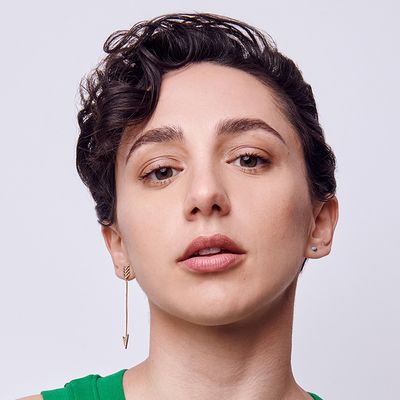
It's time to VOTE, AMERICA! Lauren Patten is here to represent Broadway for Harris. We are talking about why you should vote for Kamala Harris, important issues in the campaign, the connection between the theatre community and politics, and how you can get involved... Read More
From the show: GOOD SHOW! with Sarah Goodman
Guests
Featured Shows
About
It's time to VOTE, AMERICA! Lauren Patten is here to represent Broadway for Harris. We are talking about why you should vote for Kamala Harris, important issues in the campaign, the connection between the theatre community and politics, and how you can get involved.
Recorded October 24th, 2024
Broadway for Harris is a volunteer coalition of Broadway fans and industry professionals united to elect Vice President Kamala Harris, Governor Tim Walz, and down-ballot Democrats this November.
Lauren Patten (she/her) was the breakout star of the musical Jagged Little Pill, for which she won the Tony Award for Best Featured Actress in a Musical, as well as the Grammy, Drama Desk, and Outer Critics Circle awards. Other stage credits include Fun Home on Broadway, the off-Broadway smash The Wolves (Playwright’s Realm), Days of Rage (Second Stage Theater), and the original L.A. production of Deaf West Theatre’s revival of Spring Awakening. She most recently starred in the world premiere production of the new musical The Lonely Few at Geffen Playhouse. On television, Lauren can currently be seen in the new Hulu series Death and Other Details, as well as Blue Bloods (CBS), The Good Fight (Paramount+), and Succession (HBO). Lauren and her band released an EP, covers, in March.
Follow Lauren Patten
Instagram @pattenlauren
Connect with GOOD SHOW!
Instagram: @goodshowpodcast
Tik Tok: @goodshowpodcast
Transcript
This transcript was automatically generated and might contain errors.
[0:13] Sarah Goodman: Hey everybody, welcome back to Good Show. This is Sarah Goodman. Today is a very special bonus episode all about Broadway for Harris, and we are talking to Lauren Patten, the Tony Award-winning actor from Jagged Little Pill, Fun Home, The Lonely Few, and film and television credits like Hulu's Death and Other Details, Blue Bloods, The Good Fight, Succession. Lauren is incredible. You can find her everywhere. But today we are talking specifically about Broadway for Harris. We're talking about the upcoming presidential election, which is just days away. So do you have a voting plan? Are you ready to vote? Are you voting for Kamala Harris? I hope so. Are you excited? Do you feel hopeful? Listen, we've gotta get it together.
So get into it. Check out this interview with Lauren Patten. We talked a lot about politics, about the theater community, and about how you can get involved with the campaign. So enjoy the episode. Today, my guest is Tony Award-winning Lauren Patten, known for Jagged Little Pill, Fun Home, The Lonely Few, and some really incredible film and TV credits. Lauren, thank you so much for being here with me.
[1:24] Lauren Patten: Thanks for having me.
[1:26] Sarah Goodman: Now, you have a fabulous career representing so many incredible roles, queer roles on stage. I saw The Lonely Few just a few months back. It was phenomenal. So good. You were so good in it. Such an authentic story, so beautiful. I love a love story, especially if it's got like a happy ending, which is always.
[1:45] Lauren Patten: I know.
[1:46] Sarah Goodman: No one died.
[1:47] Lauren Patten: Neither died.
[1:48] Sarah Goodman: Isn't that exciting? Exciting when the lesbians don't die. We love that. But today we're not here to talk all about you, even though I could talk about you all day. We're here to talk about Kamala Harris and Broadway for Harris. So the election is just days and days away now. It's getting closer and closer. Today's October 23rd, 24th. So the countdown is coming. New York voting starts in a few days. Talk to me about how you got involved with Broadway for Harris.
[2:18] Lauren Patten: Well, I mean, I know several of the people who put it together. And I would say that something that I've been really excited to use my platform for for years now is to encourage people to vote and to get involved in politics at every level, not just the presidential election, but also being present in their local politics and knowing who their senators are, who their representatives in the House are, but also for state, you know, statewide state senate, mayor, city council here in New York. I just think it's really important to be engaged and involved in our politics at all levels because that's where we are able to build power.
[3:08] Sarah Goodman: Yeah, absolutely. So when all of this was coming together, who was sort of spearheading the organization of Broadway for Harris? And there's been so many cool events and volunteer opportunities and things, like how has that all come together?
[3:28] Lauren Patten: Well, I got involved through Rachel Sussman, who's an awesome producer, also a queer woman. So she has definitely been helping spearhead and in the leadership. She's the producer of SUFS, which is, of course, a very politically minded show. Love Rachel. Rachel was one of my professors in grad school.
[3:49] Sarah Goodman: Oh my God, that's so amazing.
[3:51] Lauren Patten: Yeah, Rachel's awesome. But yeah, there's a lot of incredible people, especially incredible women who are all organizing through Broadway for Harris.
[4:01] Sarah Goodman: So, what are some of the events that they have already done? And what are some things that are still coming up?
[4:08] Lauren Patten: Well, coming up, something that's really exciting that I'm part of as well is this upcoming Monday on October 28th, there's going to be a benefit concert at Town Hall for the Harris campaign. And it's basically a live performance of this song cycle and album that's written by an amazing composer, Carmel Dean. And it's called Well Behaved Women, the musical. And it's basically a song cycle of songs about amazing women throughout history. And I was very privileged to be able to sing on that album for this song that represents Billie Jean King, who's the famous tennis player.
[4:48] Sarah Goodman: Yeah.
[4:48] Lauren Patten: So we're doing that at Town Hall. There are still tickets. So if you're listening to this podcast before Monday, the 28th, it's an amazing night. There's tickets, you know, as low as $50. So it's not inaccessible to get there. And your ticket goes to benefit the Harris campaign. And it's like an unbelievable lineup of badass Broadway women. So I'm super excited to be part of that. But yeah, Broadway for Harris has had so many different events, whether it's performances or pairing with shows and stuff. But what I've been involved in that has felt really great is the phone banking and canvassing that Broadway for Harris has been helping to partner with organizations like Knock for Democracy and Queers for Kamala, these organizations that have come together to mobilize people, mobilize people in New York, people who are theater fans to do some phone banking and canvassing together in a supportive environment.
[5:43] Sarah Goodman: That's really cool. Talk to me about what you think is important about the intersection between politics and theater. You know, there is political theater, there's theater that has political content, but also politics is kind of theater, right? I mean, they're out there playing a role, they're selling themselves, they're acting, like putting it on. So talk to me about what you think about sort of that intersection between theater and politics and the theater community.
[6:09] Lauren Patten: Well, I think that I mean, I think you hit the nail on the head that politics is theater in a lot of ways. And I think, in my opinion, a clear-eyed way to look at politics is that it is really about narrative. And that's how people respond. It's how people get inspired to vote is through narrative. And there's of course some cynical stuff to that, some a cynical side to that, but there's also a really positive side to that in that narrative is what people relate to. It's how people get emotionally involved. And it's why politicians who are successful have crafted a narrative that speaks to what type of country they want to see, what kind of country they want to fight for. And obviously, that's very connected to the practice of theater making.
And I think that ultimately how I see them being very connected is the power of storytelling. And ultimately, I think theater is one of, if not the most powerful form of storytelling because it's live and we're all in the same room together and it's not edited and it's not, yeah, there's nothing that is separating you from the audience really, because really because you're all in the same room. But yeah, the ability for storytelling to change people's hearts and minds, I think is really how theater, even if it's not explicitly political, ultimately is political.
[7:49] Lauren Patten: Yeah, and I just think getting the theater community galvanized to be involved in politics, usually people who are really fans of theater or engaged in wanting to go see shows in whatever capacity, they're people who respond to storytelling and understand the importance and the value of storytelling in our society, and usually that comes with empathy for people who may have different experiences, different identities, different lives than you need. And I think that to me, that's like the primary reason to get involved in politics is yes, there are things that are affecting every single person in this country as far as you know what you should be fighting for for yourselves, for your politicians to care about and pass legislation that takes care of you.
But ultimately it's also about empathy for the multitude of people living in this country who may have different hardships, different barriers than you do. But you know, through the practice of empathy, hopefully we can all care about making sure those people have the things that they need to, even if it doesn't directly affect us.
[9:03] Sarah Goodman: Absolutely. And I think empathy and storytelling are sort of what I think are so important about having queer stories on stage. Not just telling queer stories, but having queer representation on stage makes a really big difference in how people receive that. I think about how I saw Some Like It Hot a couple years ago. I could kind of feel people in the audience sort of having that light bulb moment, like, oh, maybe I kind of understand this now. Like maybe I kind of get it a little more, you know, especially like some older people in the crowd. I could tell that they were sort of like having a realization because if you fall in love with the character, and they're like you said, you're in the same room, you're breathing the same air, you're right in front of this person, like it can really change hearts and minds.
[9:49] Lauren Patten: Yes, absolutely. And I think, you know, that's a great that shows a great example of something too that's a property that's a movie that people already know, and perhaps plays to, you know, not necessarily my generation. And so you're getting people in there who maybe love the movie or know the movie. And, you know, through the changes that they made in the story, and then of course, Jay Harris and Gee's amazing performance. Okay, congratulations. Yeah, you have an opportunity to kind of subvert people's expectations and yes, give them that light bulb moment where maybe those are people who are not expecting to have their perspective changed around, you know, how they might view a queer trans person's life. And, you know, that is a very, very powerful possibility for theater making.
[10:42] Sarah Goodman: Yeah. In the queer shows that you have been a part of Fun Home, Lonely Few, Jagged Little Pill, have you felt like those shows were particularly political?
[10:52] Lauren Patten: Yes, to varying degrees. I would say that probably Jagged was the most explicitly political. There were a lot of moments in that show. You know, I'm thinking in particular, in the opening number, All I Really Want. There is a moment that, you know, in the directorial and design choices, there is a moment when the character of Frankie saying, why are you so petrified of silence here? Can you handle this? And the music cuts out, and there was a projection that came up, basically that represented a protest around gun control and what the lack of gun control is doing for our children going to schools and shootings. So that, you know, that show had moments that were, you know, there was also an entire number, the number No that, yes, oh my god, I was like, is that what the number is actually called? It is called No.
[11:54] Sarah Goodman: Okay.
[11:54] Lauren Patten: That was a rally and a protest rally for the rights of folks who have been assaulted. And so, you know, that was a show that was very explicitly political, in many, many ways on a number of issues. Fun Home and Lonely Few, I would say, are shows that are not necessarily explicitly political in that they are not textually calling out political issues. However, it is inherently political to be telling the stories of marginalized communities. Like that is just inherently political. And you know, in the case of Fun Home, Fun Home was running on Broadway when gay marriage was legalized federally, which was a huge political moment. The night after that news hit, you know, after the curtain call, Beth Malone ran around the stage with a pride flag on her back, like a cape, you know.
[13:01] Lauren Patten: Um, and Fun Home was also running on Broadway during the time of the Pulse shooting in Florida. And the company of Fun Home actually went down to Florida and did a concert version of Fun Home during that time. So, you know, there's clear ways in which telling a story like Fun Home was just inherently political, whether or not the text was engaging with, you know, explicitly talking about queer rights. So let's pivot to talking more a little bit about Kamala Harris specifically. So, um, what is it about Kamala Harris that makes you want to endorse her? And what is it about her that gets you excited for the election? Um, tell me a little bit about that, and then I want to talk to you about um what it's been like doing the phone banking and stuff like that.
[13:53] Lauren Patten: Yeah, I mean, I think that truthfully, I will be very, very candid with you in that, um, you know, when I think about when we were in the primaries in 2020, um, and Harris was part of those primaries, you know, she was not um my vote. My vote at that time was Elizabeth Warren, um, who was my, that was my girl. That was who I was really, really behind. And, you know, but I will say that when the nomination shifted, and um Harris, you know, it became clear that she was becoming the Democratic nominee. Um I realized that I felt like a degree of hope that I didn't even realize had gone away. Um wait, just pause for a moment because that was so that was so spot on. You said say it again.
[14:47] Lauren Patten: That I felt hope to a level like a level that I just I hadn't even really realized that I had lost my hope until I felt it again. Um and you know, I think that I was a person who had sort of quietly resigned myself to the likelihood of losing the election. Um so when I felt that hope come back, and something that I really will say, I was incredibly heartened by her choice of a running mate with Tim Walz. Um I've also been really heartened by um like the joy that she's brought back into the campaign and into her campaign that I think um has been a really positive light in it, because of course we're dealing with a really, really heavy moment and a lot of fear and uncertainty and um discussions of basically our democracy being at stake, which is very true and very um intense, but I really appreciated um watching her like I don't know, like get on board with brat memes.
[16:03] Lauren Patten: Like there's just stuff about it where I was like, you know what, thank you for bringing joy back into this process.
[16:11] Sarah Goodman: Yeah, not everything has to be a living nightmare, maybe.
[16:14] Lauren Patten: Yeah, exactly. And you know, fundamentally why, you know, she and Tim Walz have my vote is that I just um I view voting as um two things. Uh first and foremost, I view voting as a privilege. Um, there you know, are many people, many groups of people in this country who have only been able to vote for you know decades, and that is not to be forgotten. And also there are many, many people around the world who um continue to strive, organize, and in some cases die for the right to vote. Um, and even are organizing and and desperately trying to get their vote um to actually be counted.
[17:05] Lauren Patten: I don't know, you know, if anybody listening has followed what's going on with elections in Venezuela. That's a really good example of um the kind of privilege of voting and and and having some trust that your vote will actually be accurately counted. Um so to me, I view living in a country like this and the ability to vote as a privilege that um I must uh engage with personally. That is how I view it. Um beyond that, I view voting as a tool.
[17:40] Lauren Patten: And I think that part of my perhaps changes in political consciousness since, you know, getting a little older and also viewing a Trump presidency and the really big changes in our um, you know, just political realities over the last let's say decade, you know, how I maybe felt um doing phone banking and organizing for the first Obama campaign when I was 16. I feel differently now, you know. And uh I'm not necessarily saying that's for me, like a candidate has to make me feel super warm and fuzzy and inspired.
[18:25] Lauren Patten: Um I'm looking for which candidate of the candidates that we have do I feel um cares about our democracy as a democracy. Uh, do I feel there is a possibility to continue organizing and building community power to fight for the many ills, you know, of this country to be righted. And that's really ultimately how I view my vote. In some ways, it can be viewed as a form of harm reduction, is how I've heard some people talk about it.
[18:58] Lauren Patten: And so to me, there is a very, very, very clear distinction between a Harris administration and a Trump administration. Like they just um are not similar in any way. Uh, and so to me, it's like uh a very, very clear, obvious choice for a Harris administration, and that's why I am going to be at the polls on the first day of early voting to cast my vote for it.
[19:24] Sarah Goodman: Me too, which I believe is Saturday, the 26th.
[19:27] Lauren Patten: Yes.
[19:27] Sarah Goodman: Yeah.
[19:28] Lauren Patten: You can't wait. And to also vote down ballot, which is incredibly important. And especially if anybody is listening to this who lives um in New York, New York City. There are ballot proposals that are on the ballot for this year. It's extremely important to vote for those and um to educate yourself around those. There's a ballot proposal number one is um a great proposal that you should vote yes on to enshrine some constitutional rights for New York, but also ballots, proposals two through six are some interesting, sneaky ones that from the mayor, very sneaky stuff from the mayor, Eric Adams, who you've been indicted, correct is low-key being indicted of corruption and really fun ballot proposals where he's trying to like take away checks and balances and just give more power to the mayor.
[20:16] Lauren Patten: So, you know, we're talking about, of course, we're talking about obviously we're talking about Broadway for Harris, we're talking about the Harris administration and voting for the presidential election, but like it's so so important to vote for everything on your ballot all the way down.
[20:30] Sarah Goodman: Exactly. It's all connected and honestly, like the major changes come from local government and they go up.
[20:36] Lauren Patten: It's kind of the opposite of what people might think. It doesn't come top down the way that we see political change and radical change really comes from grassroots communities, comes from state representatives. The states are the ones who are rolling out laws nonstop. So truly get out there and vote on your local stuff. It's super super important.
[20:57] Sarah Goodman: Yes. So how has the response been? What kind of conversations are you having with phone banking? Are you feeling like is there some optimism? Has there been pushback? Do you feel like anyone's been convinced? Are you feeling hopeful as we're getting really down to the wire? What has been your experience with the phone banking and the sort of litmus test of who you're speaking to?
[21:20] Lauren Patten: You know, I'll say that I think it's been all across the board. I've had some incredibly inspiring conversations with people who are like, you know, I was phone banking with Knock for Democracy in Arizona last night, talked to several people who had already sent in their mail-in ballots and it was Democrats down the ballot, you know, real and talking to their friends and family, making sure they vote. I mean, really engage Democratic voters. You know, I've also talked to people who uh are staunch voting for, you know, the Republican ticket.
[21:53] Lauren Patten: Um, I've talked to people who are undecided or are unsure if they want to vote, feel very disillusioned. Um, you know, it's it's really all over the place, is what I will say. And so far I've been engaging in Pennsylvania and Arizona. I have some phone banking stuff coming up in Ohio. Um, I'm gonna be going back to Pennsylvania on November 2nd to be doing some canvassing. So more to be revealed.
[22:18] Lauren Patten: But what I will say why I generally find phone banking to be so hopeful, even if I've just had conversations that, you know, you're gonna have conversations that don't feel good, whether you're canvassing or phone banking. I will say canvassing I actually find easier because people are, you know, pretty reticent to slam a door in your face. You can get a little bit more meanness on the phone. You can get like sure and getting a hundred of these calls, which like Lord, God bless you, people who live in swing states because I know it. I know they're getting hundreds of calls, and it has to be so annoying.
[22:52] Sarah Goodman: Yeah.
[22:52] Lauren Patten: Um, you know, we don't deal with it in New York. Nobody's really calling me because they're like, you're right, right?
[22:57] Sarah Goodman: Okay.
[22:58] Lauren Patten: Yeah. Um, I'm getting a lot of texts. That's sort of yeah, I get a lot of random comparment I'm getting is texts.
[23:04] Sarah Goodman: Right.
[23:04] Lauren Patten: Right. So, you know, what I will say though, is especially right now, it's so divisive. Being on social media is horrifying a lot of the time. And and just what you hear when you're if you, you know, I don't do a whole lot of this, but if you listen to pundits, if you watch CNN, if you watch Fox News, whatever the hell you watch. You know what I mean? Like it's very divisive and very intense rhetoric.
[23:34] Lauren Patten: And there is something that I find very healing about talking to people as a one-on-one person because I did have conversations in Pennsylvania with people who were planning on voting for Trump, that at least we had a conversation with respect and where we were able to see that we actually didn't disagree fundamentally on some of these issues. We just disagreed about the person who was going to perhaps solve them.
[24:07] Lauren Patten: And I don't know that I changed anybody's mind necessarily, but I found it, you know, I did walk away from conversations where we both thanked each other for, you know, it was really nice to talk and like thank you for actually engaging with me. Because I think that a lot of, you know, you might really struggle very understandably to talk to, let's say you have like an aunt or an uncle who's really vote, you know, staunchly voting for Trump or whatever.
[24:35] Lauren Patten: Um, I can't have those conversations with people. Thankfully, I don't have a whole lot of my people in in my life who I would say are like MAGA type of people. I don't have people who are close to me, you know, which is a blessing. But like if I think about trying to engage with a person who I was related to or close to, it would be really hard. It would be really, really hard because I would get very emotional.
[24:55] Sarah Goodman: Yeah.
[24:58] Lauren Patten: Um, but I'm when you have the distance of it not being a like a person that you don't know, you're never gonna speak to again.
[25:06] Sarah Goodman: Right.
[25:07] Lauren Patten: They're not even in your town, right? They're not even in your life. Yeah, like you can have some separation where you can lead with some openness and curiosity. And I found that I had conversations where we both at least at least shifted our perspective of how far apart we all are. Um when you lead with conversations asking, you know, what's important to you, this election? Why are you voting? What do you care about? What do you want to see different? Um, you know, and that to me is healing because I mean, I've talked with people where I'm like, wow, this person has really, really um absorbed a lot of right-wing propaganda.
[25:53] Lauren Patten: You know, and but when they talk about what they care about, I care about that too. And we've gotten pretty far apart as to how we feel the solution, you know, like what the solution might be. But at our core, we actually um aren't like miles and miles apart of what we view as important for the country or important during this election. And I just find that to be a kind of healing balm to um the like really hateful rhetoric that we have to um absorb a lot of the time in other, you know, not one-on-one conversations.
[26:33] Sarah Goodman: And so why is it important to you personally? What are your what are your let's say two or three things about this campaign that make you really want to vote and specifically what is making you vote for Harris?
[26:47] Lauren Patten: Yeah. I mean I would say that the most important thing to me is um anti-fascism. Yeah. It's like it's a big one. Um you know I just not be fascists. How about that? How about let's not fall into terrifying fascism in America. I think that's important. And um you know you can have massive massive issues with different aspects of um the Harris administration or the potential of it. But fundamentally I trust that they um you know want our votes to be counted accurately and want to continue to maintain a democracy with a system of checks and balances, which is really important to me as a person living in this country. So that's like number one why I'm engaged in voting.
[27:35] Sarah Goodman: Yeah.
[27:35] Lauren Patten: And then I'm also incredibly engaged um with the notion of uh the freedom of of our bodily autonomy which um you know affects us in so many ways it affects us of course we're thinking about um with abortion rights um you know the freedom to do with our body what we choose in that arena that also affects um other reproductive health issues contraception, access to IVF um bodily autonomy and the freedom to uh also do with our bodies what we choose uh for gender affirming care. That's a huge case that's about to be up for the at the Supreme Court. Um, I believe it's United States versus Scumetti is what it's called. And it's being argued by um the first openly trans lawyer to ever argue at the Supreme Court, Chase Strangio.
[28:24] Sarah Goodman: That's incredible.
[28:25] Lauren Patten: Um yes. So there's like that, you know, there that affects all Americans of all genders, including men. It affects cis men too, whether or not they think it does, it does because it yeah, it affects our ability to have individual choice around the care of our bodies, whatever that may look like. And that is and we've already seen what happens when that gets um challenged. Well, of course, with the the loss of federal protections for abortion. Um, but it's a quite a slippery slope that um affects, like I said, Americans of all genders in many, many ways. So that those absolutely those are really the two the two big ones that I'm uh voting for. I mean, you know, the list goes on and on and on, but that is uh probably the two things that are top of mind for me right now.
[29:18] Sarah Goodman: Yeah, absolutely. I completely agree. And to your point, you know, the Supreme Court, another really important thing that people tend to forget. People get wrapped up in this and that and this and that, and they don't realize that, you know, we're stuck with those justices that we got during the Trump administration forever. We're stuck with them now. And it's gonna be a huge overhaul in order to change anything about that. It's going to be an uphill battle. Very uphill battle.
[29:48] Lauren Patten: And there's I I believe the the likelihood of two new justice appointments for this, you know, during this upcoming four-year presidential term is what's um on the table. And um we're already seeing the consequences of what Trump was able to do in his four years as far as nominating justices. And it will only get exponentially worse if he's able to really stack the court. Um, you know, and I and I think also, you know, right now with the with the Biden Harris administration and what will be carried over with the Harris Walls administration, uh, the case that I mentioned um that's coming to the Supreme Court around um, this is for gender affirming care for trans children, um that's being argued by the ACLU, but it's also being argued by the United States by the federal government.
[30:40] Sarah Goodman: And you know, the what's happening with that case right now is that it's not the ACLU fighting against the federal government, it's fighting against a state. And the the federal government is taking the side of the ACLU and therefore taking the side of gender affirming care for trans kids and for trans people across the country, and for our bodily autonomy rights as as uh uh uh Americans as a whole. So, you know, that's the also the type of distinction that we're talking about is that this um as uh Chase, the the ACLU lawyer has said, um, they're seeing the this administration fight for bodily autonomy and for trans people in a way that they have not seen a government fight for for that group of folks ever in their career.
[31:26] Lauren Patten: So, you know, if the Harris Walls administration is not our next administration, it's, you know, it's the difference between the United States government being on the side of that type of um case, that type of argument and that type of legislation and protections for people, or you know, what would likely happen is that then it's the ACLU fighting the United States federal government, um, which would probably take the other side.
[31:55] Sarah Goodman: When I have conversations um while canvassing or phone baking with conservative people, um historically, you know, a lot of like what conservative movements are is like less government, right?
[32:08] Lauren Patten: Mm-hmm.
[32:08] Sarah Goodman: Less government involvement. I don't want the government telling me what to do, right?
[32:12] Lauren Patten: Yeah.
[32:13] Sarah Goodman: And so um, and they'll pull that out for say gun control. They'll pull that out for taxes or for different, you know, aspects of economic um policies, right?
[32:27] Lauren Patten: Sure.
[32:28] Sarah Goodman: So when up when I ask a person like, what are your values actually? And a big one that comes up is like freedom, freedom. I want to be free to do what I want with my life, with my family, and you know, et cetera, et cetera. And that is at its core what is happening with these issues of abortion care, gender affirming care, yes, um, contraceptive care, and reproductive health. It's like this is actually a um fundamental value of keeping government out of our decision making about our bodies and our and our children's bodies as well, um, and our family.
[33:09] Lauren Patten: So that's like been part of conversations where ultimately when you talk about the value, I'm like, oh, we think the same thing that we should have freedom from the government telling us what to do in our life, and in this case with our body. Um, you know, but of course, uh, propaganda is very strong around stoking fear and um fear and misinformation and anger around people living their life.
[33:38] Sarah Goodman: Right.
[33:38] Lauren Patten: Um and a tool of fascism is othering people so that you can unite everyone in fear against some fake danger.
[33:48] Sarah Goodman: Mm-hmm.
[33:49] Lauren Patten: Very, very fake danger.
[33:51] Sarah Goodman: Fake danger.
[33:54] Lauren Patten: Yes. Tell our listeners how they can get involved in these last couple, this last week or so before the election. What can they do if they want to help?
[34:04] Lauren Patten: Oh my God, you can do so much. Don't at all think that it is too late because there's still so much time. Um, you know, if you want to come to the co concert at town hall and see, I mean, I think it's like 15 awesome, incredible badass Broadway women singing their lineup is what I'm insane. I'm having the biggest FOMO. I'm going to see Bernadette Peters that night, so I can't go.
[34:29] Sarah Goodman: Okay, but like so excited to see Bernadette.
[34:32] Lauren Patten: Yeah. I mean, I've never seen her in my life. That's the first excuse I've heard to not come to the concert that I'm like, well, I understand. I'm going to Carney Hall to see Bernadette.
[34:41] Sarah Goodman: But otherwise, I'd be there at town hall.
[34:44] Lauren Patten: I totally get it. But listen, if you can come to town hall, you're donating the campaign, and you're not just doing it from home and sending off the donation, but you're also getting a sick concert out of it.
[34:53] Sarah Goodman: Yeah.
[34:54] Lauren Patten: So we should come to town hall. But as far as like actions that you can take, you know, of course, you can still get involved in phone banking and canvassing. Um, you know, if you're based um on the East Coast, you can come can't canvas in Pennsylvania. Um, a little fun fact is that Pennsylvania is where both campaigns are spending the most money. Um, aka it is what they're considering the state that's the election will hinge on. It's the battleground. So if you live on the East Coast, you're like really, really in a position to canvas in a place that um will be decided by like a handful of votes, and you can really make a difference by doing that.
[35:33] Lauren Patten: Phone banking you can do from anywhere, and I promise it is not as scary as it seems to be. Um, so those are great ways to get involved. And then honestly, um, beyond that, if you can just talk to people in your life, family, friends, colleagues, um, and make sure that they vote. Those one-on-one conversations, you know, we think that we don't have a lot of influence, or oh, I don't think I really know anybody. But, you know, for instance, my partner has been talking um to colleagues at their workplace, and you'd be surprised, yeah, all these people live in New York, but people are registered in swing states.
[36:13] Sarah Goodman: So you might think, oh, this person lives in New York, whatever, it doesn't really matter.
[36:17] Lauren Patten: And then you come and you find out that they're actually they moved from Ohio a couple of years ago and they're still registered in Ohio and can do an absentee ballot. So having those personal conversations um is a really, really great way to get out the vote and get out the vote in surprisingly important ways that you might not immediately think.
[36:35] Sarah Goodman: Yeah, absolutely. I love that. And really just connecting with people at its core is what it's all about, right? Like and I think that's such a beautiful thing about Broadway for Harris in particular is that the theater community is one of the best things about theater to me is the community aspect and the fact that human beings come together to collaborate, to tell stories, to connect with other people, and to share the human experience. And so I think that's really something beautiful that they've gotten involved so heavily in this in this very, very, very important campaign.
[37:08] Lauren Patten: Agreed.
[37:09] Sarah Goodman: So agreed. Well, thank you so much for your time. Thanks for being involved in Broadway for Harris. I hope the concert goes so well.
[37:17] Lauren Patten: Thank you. I appreciate it. I'm super excited about it, and thanks for having me.
[37:20] Sarah Goodman: Yeah, thank you so much for joining me on Good Show. Thanks again to Lauren Patten for joining me today on Good Show. Y'all, get out there and vote. It's so important. This election is really a pivotal moment in our history as Americans. We need to protect our rights. We need to make sure that we're taking care of our communities. We need to protect our right to bodily autonomy. We need to protect queer people, trans people, marginalized groups, people of color. We need to make sure that we're moving into the future with a progressive agenda and not slipping into fascism. I haven't lost hope yet, and I hope you haven't either. Keep your heads up, keep your spirits up. Let's all get out there and vote. And I hope we see that our next president of the United States will be Kamala Harris. All right, everybody. Thanks for joining me. Have a great day. Love ya.
© Broadway Podcast Network, All Rights Reserved