

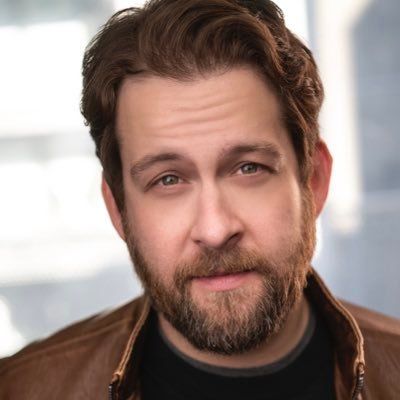
Hows this for a resume? Sunday in the Park with George, Beautiful, She Loves Me, Les Mis, School of Rock, and a little tribal musical called Hair. Andrew Kober has carved a career for himself in shows every theater kid would kill for... Read More
From the show: Guys Who Like Musicals
Guests
Featured Shows

About
Hows this for a resume? Sunday in the Park with George, Beautiful, She Loves Me, Les Mis, School of Rock, and a little tribal musical called Hair. Andrew Kober has carved a career for himself in shows every theater kid would kill for. He graduated from Carnegie Mellon and quickly established himself as one of Broadway’s most reliable, most inventive actors. Alex Finke guest stars this week (YES!!) We talk about carving a lane for yourself, not being an asshole, and how, sometimes, the audition is the best part. Also.. if you haven’t seen the Asher and Daddy show ... it’s an absolute MUST on Andrew’s Instagram.
Transcript
This transcript was automatically generated and might contain errors.
[0:00] Dan Tracy: So an actor is saying his lines, and then out of nowhere, he just starts singing.
[0:07] Joe Carroll: Boxing Simony.
[0:15] Dan Tracy: Don't cry for me.
[0:23] Joe Carroll: It's working.
[0:25] Dan Tracy: Okay.
[0:26] Joe Carroll: I swear it's working.
[0:28] Dan Tracy: Are you recording now, Joe?
[0:30] Joe Carroll: Dan, I swear!
[0:31] Dan Tracy: Did you press record, Joe?
[0:32] Joe Carroll: I did.
[0:33] Dan Tracy: It happened again.
[0:36] Joe Carroll: Oh.
[0:37] Dan Tracy: I'm sorry.
[0:38] Joe Carroll: Well, we had a great intro for you guys that we filmed.
[0:43] Dan Tracy: Well.
[0:43] Joe Carroll: We filmed it?
[0:44] Dan Tracy: We okay.
[0:46] Joe Carroll: Okay.
[0:47] Dan Tracy: We had a great intro.
[0:50] Joe Carroll: Happy birthday to Joe.
[0:54] Dan Tracy: Guys, we lost the first intro that we did.
[0:58] Joe Carroll: So here we are in the second intro.
[1:00] Dan Tracy: Welcome to Guys Who Like Musicals.
[1:01] Joe Carroll: Welcome to Guys Who Like Musicals.
[1:02] Dan Tracy: It's Joe's birthday.
[1:04] Joe Carroll: It's my birthday.
[1:05] Dan Tracy: And I didn't forget.
[1:06] Joe Carroll: You didn't forget.
[1:07] Dan Tracy: This feels like Groundhog Day.
[1:09] Joe Carroll: Well, because we did it once, and Garage Man ate the recording.
[1:13] Dan Tracy: Sure.
[1:14] Joe Carroll: So it's not their fault.
[1:17] Dan Tracy: It's my fault, and I'm sorry.
[1:19] Joe Carroll: Uh Dan, I love you. Um, thank you for we're gonna redo this. We are talking to Andrew Kober this week.
[1:27] Dan Tracy: Yes, we are.
[1:29] Joe Carroll: It was an awesome conversation. Um most recently, uh Andrew did the uh sort of out-of-town try-out, uh, if you will, of Unmasked, which was an Andrew Lloyd Webber review, sort of Andrew Lloyd Webber's greatest hits, uh, with my wife Alex.
[1:46] Dan Tracy: Uh they also did La Miz together, so I've known Andrew for quite a while, and it was really fun to talk to him.
[1:52] Joe Carroll: He's incredibly funny. Uh we we call him uh Broadway's blue-collar um actor.
[1:59] Dan Tracy: He's sort of self-proclaimed as you know, he somebody was he said somebody else said that, right?
[2:05] Joe Carroll: During the episode.
[2:06] Dan Tracy: It wasn't him.
[2:07] Joe Carroll: He didn't call himself that. Somebody else called him that.
[2:09] Dan Tracy: Yeah.
[2:11] Joe Carroll: But he's done a million things. You know, he's been a replacement. He's been an understudy. He's been a lead. He uh most recently did Beautiful on Broadway.
[2:18] Dan Tracy: He was a replacement for Don Kirschner. He did School of Rock. He did Sunday in the Park with George. The very critically acclaimed revival of She Loves Me, Le Miz, as I mentioned.
[2:28] Joe Carroll: That's where uh Alex and he met. And then we nerd out for about half the episode uh about the revival of Hair, which was his Broadway debut.
[2:38] Dan Tracy: And um he uh it's a crazy story, actually. Like going through the way that he was cast as a non-equity actor and how that whole thing just came up to the park.
[2:48] Joe Carroll: He was 25 years old and he gets cast in this role. I've just I was so amazed by the amount of uh like wisdom and self-awareness he had. I mean, I know he's yeah, he's been around now for a while, but he's had these periods of unemployment, which you know always feels important to pay attention to, like that it's not all bells and whistles and beauty, and he really knows who he is.
[3:11] Dan Tracy: I think frankly, like the dude's about to be in the prime of his career, and he knows it in a way, but like has also done like eight Broadway shows, clearly.
[3:20] Joe Carroll: Beautiful voice. He's got some great videos of him singing with Ramin Karimloo on YouTube, which I have binged on before.
[3:27] Dan Tracy: Absolutely.
[3:28] Joe Carroll: Just uh and also great podcast voice.
[3:28] Dan Tracy: Great podcast voice.
[3:33] Joe Carroll: Yeah, great social media content. Uh one of these guys that I love because he's the good of social media. He's awesome on Twitter, he's awesome on Instagram. If you don't know the Asher and Daddy show, check it out on his Instagram.
[3:44] Dan Tracy: Um, his son is so cute.
[3:46] Joe Carroll: His son is Asher, by the way. Um, and uh, you know, it was just it was awesome to talk to him. You know, he Dan, like you said, he's very he's very self-aware, and you know, he's a great example. Like, listen, if you think you're coming into this career thinking that you might look older than you are at 25, Andrew Kober's the guy who uh you should follow because he'll show you how it's done.
[4:09] Dan Tracy: He like, you know, he's he's carved in a niche for himself, and I just think he's uh he's gonna continue to have a remarkable career and and and uh you know did not come out of Carnegie Mellon, as uh that's where he went for undergrad. He didn't come out of Carnegie Mellon looking like Patrick Wilson or Corey Cott or whatever, you know, like you know, he totally paved his own way, which I think is totally totally awesome, and and uh we get into his whole career and all of his shows and a lot of nerding out about Hair.
[4:37] Joe Carroll: And honestly, Dan, I think this intro was even better than the first one.
[4:40] Dan Tracy: I think so too, and definitely half as long.
[4:42] Joe Carroll: So you're welcome, audience.
[4:44] Dan Tracy: I think it is uh because my family wants to have dinner and uh and also we didn't talk as much about my birthday, so I think that's okay, but also like if you want to shoot me a DM on Instagram tomorrow, this is my birthday.
[4:58] Joe Carroll: Yeah, do it.
[4:59] Dan Tracy: It's his birthday.
[5:00] Joe Carroll: Happy birthday, Joe.
[5:00] Dan Tracy: Here's Andrew Kober.
[5:03] Joe Carroll: Anything else, Danny?
[5:22] Andrew Kober: Hey, hey, what's up?
[5:30] Joe Carroll: How's it going?
[5:31] Andrew Kober: I'm fine. I've been on a couple of podcasts in my day, but I've never been pushed uh for a liquor store run. I've never been told we gotta start late so I can run to the liquor store.
[5:42] Joe Carroll: You know, and professionalism is the top on uh on our priority list.
[5:47] Andrew Kober: I'm so impressed by that.
[5:49] Joe Carroll: It truly is, and I appreciated what you said, Dan. Um for those of you listening. Now uh I I had to push the interview 15 minutes because my in-laws asked us to go on a liquor run because it is the coronavirus and we need as much liquor uh and beer in the house as possible.
[6:05] Andrew Kober: So hey, cheers.
[6:07] Joe Carroll: Yeah, cheers. You know.
[6:10] Andrew Kober: I think you should get Dan, you want to get a drink and yeah, why don't you guys uh start we'll talk.
[6:15] Joe Carroll: We'll start without you.
[6:17] Andrew Kober: I'll be right back.
[6:18] Joe Carroll: Great, perfect.
[6:19] Andrew Kober: Okay, great. Uh so Dan's gonna grab a drink. I just cheersed Andrew with an Oberon, uh, which is my favorite beer from Kalamazoo. Andrew, how are you, Kober?
[6:26] Andrew Kober: I'm terrific. Uh I mean that's that's terrific as anyone can be right now given the circumstances. Uh I'm okay. How are you?
[6:33] Joe Carroll: I'm all right. I'm all right. Family's okay.
[6:35] Andrew Kober: Yeah, we're all uh good and safe and hunkered down, you know.
[6:39] Joe Carroll: Yeah, totally. How are you guys? You guys holding up okay?
[6:42] Andrew Kober: We're okay, yeah. We're in Ohio um with my in-laws. Um and uh really one of the reasons I think the main reason I know you is through my lovely wife Alice.
[6:51] Joe Carroll: Boy, am I a fan.
[6:53] Andrew Kober: Um and I told her she needs to jump in at some point. So she's gonna come she's gonna come ripping in here at some point to talk about the Andrew Lloyd Webber uh review that you guys just did at Paper Mill Playhouse this past uh this past spring, uh or uh in winter.
[7:06] Joe Carroll: So we'll get to that eventually. Um but I I love what I'm looking at behind you is just about every show that I've ever seen.
[7:13] Andrew Kober: So if I didn't know what you've done in the past that's what this is my podcast room I just like to keep this is your podcast so people can I can brag without bragging so you can say I've been I've been in Beautiful and Les Miz and Hair and She Loves Me and Sunday in the Park with George.
[7:27] Joe Carroll: Yeah, School of Rock is just out of frame.
[7:30] Andrew Kober: That's just that's amazing.
[7:31] Joe Carroll: It's amazing.
[7:32] Andrew Kober: I try to isolate it to I mean look I saw I've got the sign poster you know a lot of actors get sign posters when they were in a show and whatever and I tried to isolate it to the smallest room in my house which is summer office.
[7:44] Joe Carroll: And I was successful in that except it I didn't anticipate a pandemic during which most of my interactions would be on Zoom.
[7:51] Andrew Kober: And so it's just it's sort of like a braggy backdrop now for everything else that I do.
[7:58] Joe Carroll: No I like that I I like that and um you know I think it's we have that the signed posters too and we have that in our house that like you don't want to be too like hey here's every show I've ever done exactly but you also you want an like you want that memento. It's a very cool thing.
[8:10] Andrew Kober: Yeah and I've I've had a deal running with my mother uh for a long time that whenever I'm in a show if I get two signed posters one for me one for her she'll have them really nicely framed.
[8:21] Joe Carroll: And uh so she's been going to the same framer for you know I don't know twelve years since I my first Broadway show and he just figured out that I was an actor in these shows.
[8:30] Andrew Kober: She thought she was just a really big fan.
[8:33] Joe Carroll: Which is you know I get it that's nice.
[8:35] Andrew Kober: But uh no it turns out that I'm I I am the common thread through these things.
[8:40] Joe Carroll: Well and uh looking at them I i it's kind of an actor's dream. Anybody, anybody who loves musical theater, you got Steven Sondheim, you have one of the best jukebox rock and roll musicals, you have Hair, which changed the face of musical theater, and you have basically every musical theater nerd's favorite show on Earth, Les Miz.
[9:02] Andrew Kober: Yeah.
[9:02] Joe Carroll: Like your your career thus far has been unbelievably varied. I mean, this is a dumb question, but are you proud of it?
[9:10] Andrew Kober: You know, I that's no. I'm ashamed when I look back. Uh sure. I think really when I uh I I joke sometimes that uh I my career trajectory has sort of followed exactly what the 12-year-old version of me would have wanted it to be.
[9:25] Joe Carroll: Uh I'm just sort of like checking off that kid's dreams um in a way that is really satisfying.
[9:32] Andrew Kober: Um so it's uh yeah, it's cool. I mean, you know, to get to to have like a Weber and a Sondheim and a blue blue and Schoenberg on my wall is pretty good.
[9:42] Joe Carroll: Um and to get to work with those guys, especially because I grew up kind of idolizing their shows, to get to do revivals and to work in person with those kind of icons is uh was an exciting thing.
[9:54] Andrew Kober: Yeah.
[9:54] Joe Carroll: Yeah, and I just we'll we'll we'll jump all around because I have I have all these sorts of questions for you, and I know Dan does as well. But one of the things, and I mentioned this over text this afternoon, I have about a hundred questions just relating to the Broadway production of Hair.
[10:08] Andrew Kober: Yeah.
[10:09] Joe Carroll: Um in my top five ever was you know, a theatrical experiences of my life was seeing that revival of Hair at the you know, um oh not now it just blanked.
[10:25] Andrew Kober: The Hirschfeld.
[10:26] Joe Carroll: Yeah, seeing it at the Hirschfeld. And I want to just go back because I I desperately wish that it was happening now, and I desperately wish that I could be a part of it.
[10:34] Andrew Kober: Um, what was that experience like?
[10:36] Joe Carroll: You know, take me through what it was like to be in a hippie commune.
[10:41] Andrew Kober: Yeah. You know, we sort of got very lucky um because almost all of us that ended up doing the show on Broadway were not cast in a Broadway production of Hair. We were all cast in a two-week run in Central Park two years before that.
[10:59] Joe Carroll: And they just kept on asking us all back.
[11:02] Andrew Kober: Um, and we joked that you know, if we had auditioned for a Broadway production of Hair, we never would have booked it. We were just the the best that they could get for a two-week no money gig in at the Delacourt.
[11:12] Joe Carroll: Um so we, I think like 22 or 23 of the 26 of us that were there on opening night had been with the show for like two and a half years by that point.
[11:21] Andrew Kober: Um so it was an amazing experience, as you would expect.
[11:26] Joe Carroll: And it also was sort of um tricky because for almost all of us, it was our Broadway debut. There were a ton of Broadway debuts in that show, including mine, and it set a really um unattainable precedent for what uh what a performance experience could be like.
[11:45] Andrew Kober: Um, you know, there's like sort of like a hot young show at any given point. There's always like a hot young show.
[11:51] Joe Carroll: And uh even when I was young, I didn't feel young, but we were somehow in the hot young show, and like we won the Tony and we had all the fancy people come and see us, and we it was like, you know, then we transferred to the West End, which was wild.
[12:04] Andrew Kober: And like it things kept on happening that just don't happen. Plus the show was fun and creatively fulfilling.
[12:11] Joe Carroll: Plus it was critically and popularly successful. And it it was just um sort of an embarrassment of riches and uh really set a a dangerously high bar for the rest of our our careers.
[12:24] Andrew Kober: Totally. We we got a chance to interview Gavin Creel and uh just you know the meanest dude on Broadway.
[12:32] Joe Carroll: He's just unpleasant.
[12:33] Andrew Kober: Like no one would argue that he's not talented. He's good, he's a good actor, he's a good singer, but he's he's a rough guy to be around.
[12:40] Joe Carroll: Yeah, yeah.
[12:41] Andrew Kober: And he said that Heaven would be um going, you know, he he goes through the pearly gates and it's uh it's everybody at the Hirschfeld to do uh just doing Hair like on repeat.
[12:51] Joe Carroll: Yeah, it was pretty good.
[12:53] Andrew Kober: And I mean, I was even at the time, I was I played the like the father and the uh Mead, yeah.
[13:00] Joe Carroll: Yeah, and so I I had a more kind of like straight-laced role, and certainly among that cast, I was one of the most straight-laced people in it.
[13:07] Andrew Kober: Even like now I'm finding out stuff that was happening backstage with the show that I was like, really? You did? I can't I couldn't believe it.
[13:15] Joe Carroll: Um, but it was uh it really was. It was kind of magical.
[13:22] Andrew Kober: And I I met the uh lady who's now my wife during rehearsals for Hair, and I remember thinking, I'm really you know it was clear we were falling in love, and I remember thinking this is not fair to this woman because my life isn't really like this, and my friends aren't really like this is this is the apex of what has been, and I imagine the epics of what will be to come for some time.
[13:45] Joe Carroll: Uh and so for her to see this as the introduction to what my life is about is totally unfair.
[13:50] Andrew Kober: It's gonna be all downhill.
[13:52] Joe Carroll: Yeah, but I try I tricked her real good, and uh she's still here.
[13:57] Andrew Kober: That's that's amazing.
[13:58] Joe Carroll: And it felt it just that show felt fearless to me. And also, like, you know, for if anyone hasn't seen Hair, Margaret Mead is not um I don't I want to say, I want to not what's a good word for this? Um let's just say you're out there.
[14:12] Andrew Kober: Sure.
[14:15] Joe Carroll: Okay. You know, like meaning you're you're kind of out there. And and I just wonder, like, as you approach something and you have to almost put your you know, put fear at the door a little bit. Like, did it feel like you were just I don't know. Did feel did you feel fearless creating it?
[14:31] Andrew Kober: Or like did that just come? Yeah, I think we were all hair itself is such a strange beast. Like on the page, it's really a bizarre piece. Yeah, and so if you're even gonna try to do it, I think you have to sort of be willing to throw a little bit of caution to the wind and just sort of give yourself over to whatever the hell it is. Um you know, any night where you're gonna earnestly sing the words glitty glup gloopy, you've gotta be ready for like anything to happen. Uh so totally when they say to me, you 25-year-old Andrew Kober are gonna play an older woman for a part of the show, and then you're gonna reveal yourself to be a man in your tiny whiteys. And so, okay, great, fine. I was just happy someone was giving me the ball, you know.
Like when you're young and hungry, you just want the ball. And uh I for the most part, I at least in my experience, you'll do whatever you're told to do with it. If you think you can do it well, and if someone who you respect thinks you can do it well, then you'll do it well, usually. Um so I really had no hesitation about like the subject matter or about the tone of the show or my gig in it. The one really scary thing was when we moved to Broadway, we got understudies for the first time. And yeah, Josh Layman, I don't know if you know Josh at all, but he's this incredibly gifted comedic actor. He was my cover, and I met him on day one of rehearsal. I went, Oh, I can't call out. Like this guy is too good.
He's too funny. I am terrified of him. Uh and it wasn't it was like a year into the run that I finally went on a vacation because I just was like, I'm gonna lose the respect of my company, I'm gonna lose the respect of audiences of Broadway. I he's too good. Uh because he got cast in a Broadway show, you know what I mean? Which I didn't. I just kept on getting brought along. And he is good, and our careers have gone down very different paths, and we're very good friends still. But uh I was so scared of his talent. But you're so young to be making such a uh featured debut at 25 playing this role that probably they didn't guess was gonna be a 25-year-old. What what what was the thing that made you confident to walk in that room and own that audition?
Did you have to be in your tidy whiteys in the audition? Or did you just no? I mean, so much of its luck, right? Like a luck and circumstance. I this there's I haven't yet figured out how to tell this story without sounding a little bit shitty. I it it's I uh saw that hair was happening. I didn't really know the show that well, but I knew it was a rock show, and I thought of myself as a rock singer, and my agents couldn't get me an appointment for it. My my former agents, not my current agents. I said, and they couldn't give me an appointment. So I said, okay, I'm gonna go to an EPA, and I had never been to one, and I haven't been to one since. And I went to that EPA and uh Heidi Griffith, who's the casting associate at the public, saw me, and she said uh later that I did not do a great job, but that I seemed kind of cool, and she thought they would give me a chance.
And so she called me back and got and like got the note through my agents that I should do a different song. I think I sang Billy Joel at the first thing, which totally isn't really right. Yeah, yeah. Um, and I came back and uh sang for Diane Paulus, uh the director, and for the rest of the team. And lucky for me, the her associate that summer was a guy named Dan Ragazzi, who was a graduate director at Carnegie Mellon when I was an undergrad actor. And I was called back for Claude's dad, and he had seen me do a female role in like a black box show at Carnegie Mellon. No kidding. And it was it was like a little funny. I was a little funny, and I did my dad's thing, and I left and they asked me to wait in the hall.
And apparently Dan said, you know, he could do this other thing. And I think at that point, because it was a big cast and it wasn't all equity contracts. I think I was like saving them an equity contract. I think I was an I was an equity actor who could pick up these two featured gigs and do like a good enough job at both of them that they could use another equity contract somewhere else. I I think it was just like kind of lucky pragmatism in my court. Totally. Um and then, you know, it would have been rude of them to fire me and keep everybody else, so I got to hang around. No, but that's amazing. And also I love it. If you those of you who don't know what an EPA is, it's it's the massive cattle calls.
Yeah. Yeah, and and uh they can be super in sort of overwhelming and intimidating so much that people won't even go if you're like you see something that's going on, you're like, oh my gosh, there's 500 people that are gonna show up for this thing. But but when you really feel like you aligned with a project um and you go, it can really work out. Yeah, the sort of the prevailing wisdom is that, well, if I have an agent, I don't have to go to those things. And and I think that's uh I think a lot of some agents fall into the trap. Some agents will say don't go. Yeah, my agents were really baffled to have to call me with a callback for the show they couldn't get me an audition for in the first place.
I'm sure um yeah and so I I you know I the lesson there is obviously if you think you're right for something you've got to fight to get in for it right um i think i was just sort of unemployed and and needed something to do and it sounded like a cool gig it it wasn't it really wasn't a a passion project for me when I auditioned for it in the first place it was just I bet I could do this um and it worked out uh in ways that I you know really couldn't have anticipated don't you sometimes miss that like 24 25 year old like blind sort of like the blind fearlessness really to just be like you know what I'm not I'm just gonna do this because I'm gonna do this as opposed to like having you know we've all lived a little bit too long now to be like you know we talk ourselves out of stuff and I see I admire it because I feel like I was the opposite I spent 23 to 27 28 really saying I don't know they're gonna cast somebody older.
I don't know if I can do this like see that was the biggest lesson of hair people around you know oh yeah well that's that's always been exactly what you're saying is the thing that I learned because of hair which was a I I try to encourage young actors not to get too wrapped up in in worrying about their type because ultimately it's not up to you at all. Like I I have gotten gigs that I never would have cast myself in and I have not gotten gigs that I think I was right down the middle perfect choice for. Yeah. And totally ultimately I think the lesson is it you are not the arbiter of what you're right for. Uh it's not up to you. You you have this set of skills, and how they're used is and this is challenging to accept, really ultimately often not your choice.
You know, you you can do the things that you can do, and and whether or not you're right for a certain role isn't up to you at all. Um so I I have gotten much better about not saying no to a gig because I think I can't do it or because I'm not right for it. I mean, there are you know, there are of course auditions I pass on because you know it it's in Saskatchewan for $30 a week for that. Like, you know, there are gigs that I pass on, right? But although actually the funny thing is that I think Hades Town started in Edmonton. Oh, yeah, sure. But like, you know, cool. Yeah. I found out way after they won a bunch of Tonies that I had passed on an audition for Great Comet when it was at the Ars Nova, and I found that like douchey email from young me to my agents being like, this doesn't have any legs, I don't think this is right for me.
I'm not interested in this thing. And then like fast forward to it's a huge Broadway hit, and I can't get I can't get seen to save my life. Right. Um it all just drives home the point that like it's not up to you. You don't get to pick the route that you're like. So do you have any other I mean, this is again a bad question, but uh the any other experiences with that, like you know, that feeling of alignment, you're here you hear about something, you you know, something's floating around in the ether job wise that you're like, hey, I gotta I I gotta get in for this thing. This totally aligns with me. Um, you know, honestly, not in the same way that hair clicked. I think that was the magic thing.
And uh I I really do believe I'm not a very like um crunchy granola, like the universe has its path for me kind of way. I'm not like I'm not that guy generally. You know, I try to do good and hope the good will uh come back to me. But that's pretty granola. Yeah, but I think it'll come back because I'm doing it, you know what I mean? Like I don't think I don't have a vision where it's not just gonna happen. Yeah, like I'm I'm doing the work. It's like my new the thing I was on a very high horse about recently was I'm sick of um uh well, you know, he means well. That's nothing. It's nothing to mean well. I think you have to do well. You can sit at home and mean well all day, and it doesn't do anyone, including yourself, any good.
Because usually you're saying that about someone who's not who's not doing well, yeah. Somebody who's like actually like doing terrible things, yeah. Like, oh, but he doesn't know he's doing terrible things. It's like exactly. Everyone means well. Right, true. It's just a question of how how does that manifest itself to you know in your actions. So anyway, no, I uh uh the problem with hair uh was it set this expectation that work should be um a hundred percent creatively fulfilling, it should it should give you colleagues that are become your family instantly. Right. And it should be critically successful and it should be financially uh satisfying. And um literally check all the boxes, all the boxes, and uh it's never been all of those things again, right?
And I don't expect it to be at this point. I did then, but I I nothing is ever quite lined up and all and a part of it was the magic of it's your first big thing. You know, the first big thing is a shiny thing, no matter what it is, I think. Totally. Um and you know, of course it wasn't always easy. It's still we did it for a year in New York and then six months in London, and in London, they didn't care for us at all. Um boy, were we not well received there. I didn't realize that. Maybe it was that kind of a stuffy British thing. I don't know. I mean, we're our reviews weren't that good. I I I can't say that it was any kind of I I really don't know. They just didn't seem to like the show. I think it's not sort of while America was doing hippies, the UK was doing mod and that kind of thing.
So I think it's not right as much a part of the cultural identity as it is here. I also think there may have been a little bit of a pushback that they brought 26 Americans over to do a musical on the West East. Yeah, uh, which I totally understand. Right. Um anyway, we went there and it was not a huge hit, and that was a nice kind of wake up for us that you know we're not always the golden children of the musical theater, and that's okay. Um, after that, like I my next Broadway show after that, which was like three years later, was Le Miz, where I met the lovely Alex Finke. Yeah, and Le Miz was exciting because it was Le Miz and it's everyone's favorite, and it's great. And I did it for like two and a half years, and at a certain point, especially in a two and a half year run of a show, it's it becomes a gig.
And you try to do it as well as you can, but it's there, you know, the it's a job, it's a job. You're going to work because you want to feed your family, right? You know, it's and it's it's a great job to have. Uh like I don't want to sound ungrateful because I was grateful every minute of it. Of course, but I started doing calculus like during the holidays that I had 26 full costume changes in that show. And I started doing math on like a 10 show holiday week with a you know a six show weekend that like if I just do this costume change, I'm making about five bucks for this costume change. So would you change your clothes for five bucks? Yeah, probably. And so you come up with ways of just kind of getting yourself through it, and that's two years into a run, it's a gig.
And especially if you're in the ensemble like I was, I didn't have a huge creative outlet in that show. I was happy to be telling the story, and I loved my cast and I loved working, but nothing has felt quite like that first thing. And I expect it won't. That's fine.
[26:42] Dan Tracy: Yeah, but I do think I I totally agree. I mean, my Broadway debut was once.
[26:46] Andrew Kober: Yeah, oh boy, these once people.
[26:48] Dan Tracy: You know, you once people.
[26:49] Andrew Kober: Sorry.
[26:50] Dan Tracy: Sorry.
[26:51] Andrew Kober: How do you listen?
[26:51] Dan Tracy: How do you know someone was in the cast of once?
[26:54] Andrew Kober: Tell you every five minutes.
[26:55] Dan Tracy: Right.
[26:56] Andrew Kober: Yeah.
[26:57] Dan Tracy: God, you once people love talking about once.
[27:00] Andrew Kober: I'm sorry.
[27:01] Dan Tracy: This isn't about me.
[27:02] Andrew Kober: But to make it.
[27:05] Dan Tracy: I mean, it was it was all of those things.
[27:07] Andrew Kober: It checked all the boxes, you know.
[27:08] Dan Tracy: And so how you know, you but then you have to move to things and realize that it is a gig.
[27:12] Andrew Kober: And sometimes you take things for different reasons.
[27:14] Dan Tracy: And you know, but I also feel like I'm chasing, you know, I know what that was like, and now I'm chasing it.
[27:19] Andrew Kober: Yeah.
[27:20] Dan Tracy: Like there it does exist.
[27:21] Andrew Kober: Sure.
[27:21] Dan Tracy: It's not just a flash in the pan, it will happen again.
[27:24] Andrew Kober: Um, you know, and so I promise you, you'll get another hair.
[27:24] Dan Tracy: I promise.
[27:27] Andrew Kober: Oh, sure.
[27:28] Andrew Kober: I mean, look, I've I've I have uh loved something and oftentimes many things about every job I've ever done.
[27:35] Andrew Kober: I mean, there's you know, there's there's never a gig I've done that I've regretted doing, even the ones that are rough to get through or that I think don't quite reach their full potential, or I don't feel like I was especially effectively utilized in, whether that was external or internal.
[27:49] Andrew Kober: I I think there's a lesson, there's always some kind of growth that can hopefully come out of that.
[27:55] Andrew Kober: Um I've never regretted any move I've made, even the ones that are just very purely commercial gigs I need to pay my bills.
[28:02] Dan Tracy: Totally, you know, there's always an opportunity for growth, hopefully um yeah it does feel like like Sunday in the park may have come out of nowhere.
[28:10] Andrew Kober: Did that did that kind of like just because everybody that I knew who was in that cast was kind of like um so we're doing Sunday in the park with George now yeah that was a weird I was like what like where did that come from and why is Jake Gyllenhaal so handsome and sing so boys he handsome and nice and hard working it's just kind of like leave something for the I know it's really annoying.
[28:10] Andrew Kober: Sunday in the park with George so they did it at City Center I was not in it.
[28:37] Andrew Kober: I think I heard they were doing it and I made a phone call to say can I be in that please and they said oh no I said okay and so that's fine I went about my life right and then uh I got a phone call I was I remember I was walking down Broadway in the West 60s somewhere and my agent called and said they they want you to be the offstage standby for the Broadway transfer of Sunday in the park with George it starts on Tuesday I said okay and I because I I had understudied before um I had never been an offstage cover uh so that was a new experience but I figured like you know it's there's a couple like that and like she loves me I was in about seven minutes of she loves me but but she loves me and Sunday were both felt like musical theater fantasy camp like it's just right it's just going to grad school you know it's it's the the cast that were assembled and material that that we were doing every night is unparalleled.
[29:39] Andrew Kober: You can't beat it so to get to show up every night and do Sunday in the Park with George with Jake and Annaly and like even look at the like the the bench like the supporting actors are Brooks Eshmanskis and like Philip Boykin and and Liz McCartney and and Robert Shawn Leonard and Aaron Davy like that cast was bonkers Ashley Park and Jenny Barber like giving the funniest performances in the world.
[30:04] Joe Carroll: Hi Alex Fink.
[30:05] Andrew Kober: I'm your biggest fan.
[30:07] Joe Carroll: I really love Alex Finke.
[30:09] Andrew Kober: She's the whole reason I did this. Truly.
[30:13] Joe Carroll: Alex Finke was our first guest.
[30:15] Andrew Kober: Really? You could do worse.
[30:17] Joe Carroll: Hi, Alex.
[30:18] Alex Finke: Lucky us.
[30:19] Andrew Kober: Hi Andrew.
[30:20] Alex Finke: It's nice to see you.
[30:21] Andrew Kober: It's nice to see your face.
[30:22] Alex Finke: Happy quarantine to you.
[30:23] Andrew Kober: Happy court.
[30:24] Joe Carroll: How do you guys know each other?
[30:26] Alex Finke: Well Andrew?
[30:27] Andrew Kober: I don't remember. I was drunk. I don't know.
[30:31] Alex Finke: We met at the end of the day.
[30:32] Andrew Kober: I know, I was just talking about this.
[30:35] Alex Finke: Were you?
[30:36] Andrew Kober: And I was a fan instantly.
[30:39] Alex Finke: I was a fan of you instantly.
[30:41] Andrew Kober: You kept me sane through that whole.
[30:42] Joe Carroll: We were just talking about the unique challenges of Blade.
[30:45] Andrew Kober: You were there for six months.
[30:46] Alex Finke: Yeah, I was there.
[30:47] Andrew Kober: I was there, but the first six months, you really helped me.
[30:49] Alex Finke: Yeah, well, that's what I'm here for. Trying to make it easier for the people.
[30:53] Joe Carroll: How are you doing?
[30:54] Alex Finke: You're the best.
[30:55] Andrew Kober: I'm good.
[30:55] Alex Finke: I visio. I'm just saying hi. But I'm gonna leave now.
[30:58] Joe Carroll: No, you're not gonna, you're not gonna leave yet because we're gonna jump to uh what you guys just finished doing, which was uh the uh unmasked um Andrew led Weber review at Paper Move for the house this past uh this past uh winter.
[31:12] Andrew Kober: Um so you you were reunited, and I feel so good.
[31:16] Joe Carroll: Wow. So give give me the give me the unmasked Alex Finke. Give me the unmasked um give me unmasked in three words.
[31:23] Alex Finke: Thanks, Andrew Cobra.
[31:27] Andrew Kober: So I I booked Unmasked and uh Alex and I have the same agent. And when the offer came in, our agent said to me, and it's gonna be good. We have like a bunch of clients in it, including X, Y, and Z. And he didn't know that Alex and I know each other, he'd forgotten, I guess. And I was so I mean, we hadn't talked in years, right?
[31:48] Alex Finke: No, not really.
[31:49] Andrew Kober: No, this we like reconnected. And when I when you told me your name, I scrambled to find your phone number, and I did, and I texted you right away, and I was so excited. There were a couple other people I knew that were involved, and and uh that was fine, but I think I was your only friend on day one.
[32:04] Alex Finke: Maybe also your only friend at closer.
[32:09] Andrew Kober: That can't be true.
[32:10] Alex Finke: It's Alex Finke we're talking about.
[32:12] Andrew Kober: Yeah, it's true, it's probably Alex Finke.
[32:14] Alex Finke: Oh damn.
[32:15] Andrew Kober: Okay, I'm gonna leave your interview now, but I love you.
[32:17] Alex Finke: I love you too.
[32:19] Andrew Kober: Bye, bye, Dan.
[32:20] Joe Carroll: I I also love you.
[32:21] Andrew Kober: Okay.
[32:25] Andrew Kober: Just just a just a drop-in, just a casual drop-in.
[32:29] Joe Carroll: That's what you dream.
[32:30] Andrew Kober: I'm excited because the air doesn't come into this room.
[32:33] Joe Carroll: It's okay.
[32:34] Andrew Kober: It's great to see Alex.
[32:37] Joe Carroll: No, she loves you, and she, you know, that is that's one of those things when you talk about the people you meet on shows. And so often I think you know, people are like, We're a family and we're gonna be friends forever. And sometimes that really does happen.
[32:46] Andrew Kober: Yeah, sometimes it's cool.
[32:49] Joe Carroll: I'll tell you what, the the hair, uh but this one the hair text thread. Oh, Alex is the greatest in the history of the world. The hair tax thread has been going wild during this uh self-isolation period. It's I mean, you know, we're uh we all are in each other's lives, but it ebbs and flows and whatever. But we all of us are talking every day, we're zooming, like 20 of us twice a week.
[33:09] Andrew Kober: It's like oh that's we it's those long relationships, it's the people you really love and really trust and can really be a little bit raw and scared with if you need to. Those are the relationships that are I find myself kind of leaning on right now.
[33:23] Alex Finke: Totally, and I know that w when you guys were making Unmasked, it was it was making something that truly has never been, you know, you were making it from scratch. And there's a lot of growing pains that come with making anything new, even if all of the music existed. So basically what Unmasked was was this review of Andrew Ludweber's music. And so it was stuff from all of his shows. And it and it there were growing pains. And so I felt like she would come home and just be like, you know, thank God for for Andrew. And you know, because it was a tough process.
[33:54] Andrew Kober: Yeah it was not an easy process. It was a unique process because it's the material all sort of existed, but it was still making something new with parts that were already sort of there.
[34:07] Alex Finke: Yeah.
[34:07] Andrew Kober: And uh it was not easy a lot of the time and uh there were a lot of uh creative voices in the room and a lot of oversight from a lot of people and yeah the good the bad the ugly but uh yeah Alex and I always knew that we could kind of lean on each other which was a huge help I think for both of us.
[34:25] Joe Carroll: Yeah totally um so back to um to to Sunday for a second because I know that that kind of kinda kind of came out of nowhere and you got yeah it really just fell on my lap because it's the only time I've ever just like been offered a Broadway show. That's never happened to me.
[34:39] Andrew Kober: And uh it was magic it was uh and there were days there that were like you know you'd you'd walk in at 10 and say oh so James and Steve are coming by at one and we're just gonna work a couple of scenes and you just go okay sure. You know what what the hell do you okay?
[35:00] Joe Carroll: Right.
[35:00] Andrew Kober: Um were there any like Sandheimy bits that you'll you'll remember for for a lifetime because I just the guy the guy is in his 90s, he's not going to be here forever. And you got to work with him.
[35:11] Alex Finke: I mean he's like you've met him, I'm sure, right?
[35:15] Andrew Kober: Yeah, we did it. We did I got to do a reading with him. Um that Alex, I mean, I my wife is brilliant and she is good friends and uh knows and uh Alex Gemignani really well. And so Alex Gemini calls her and says, Hey, we're doing a reading of Sondheim's new show. Alex, yeah, Alex, would you like to be in it? She says, Of course. He says, Oh yeah, you're also married to Joe. Maybe he wants to do it too. I'm dead serious. This is how it is. I'm not just being faux modest. And he was like, That would sound great. So we got to go and play opposite each other for a week. That's pretty good.
[35:50] Andrew Kober: Um and meet him. It was really remarkable. He's um but uh but yeah. He's remarkably uh vital and uh I I mean you you know he he looked I don't know if he looks 90, but he looks like an older guy. Yeah, but then you get him talking and it's like uh he might as well be 40. I mean, like he's just incredibly agile with his language and so quick and bright.
[36:16] Andrew Kober: He said so the first time I really got the balls to like talk to him is after our Zitz probe we had like uh an open bar thing at a bar. They went down at a bar and we went to a bar. And I was still a little bit nervous because I was, you know, the it's weird being the off-stage standby, and so I I didn't really have the bond with everybody that uh I would have if I were in the onstage cast, and certainly not with Steve Sondheim. Um and so I found myself, I was like, Oh, I'm gonna go uh look, there's a plate of cheese cubes. I like cheese cubes. So I went over to the cheese cubes and it was like over in the corner. And I got stuck in the corner with the cheese cubes between the the bar on one side, the table of cheese on the other, and the two people blocking me with their backs to each other were Jake Jill and Hall and Steve Sandheim.
[37:03] Alex Finke: And yeah, just a normal Friday night.
[37:07] Andrew Kober: Any Friday night. Yeah. And I knew Jake a little. I knew Jake well enough to strike up a conversation with him, but he was talking to someone who looked important who I didn't know who it was. And so I went, Well, my only way out is to talk to Sondheim. And he was picking at the bell peppers. And I didn't want to get stuck there. So I said, hello. And I introduced myself, and he was very uh kind. And I said, uh, he he said something about actors, and I was nervous, and when I'm nervous, I make jokes. And so I made a joke. It wasn't a real joke, but I said something about how you know actors are terrible, we're all the worst. And he said, you know, I've I've heard people say that, people say that, but um actors all seem to think I'm pretty great.
So they've all uh been pretty kind to me over the years. So that's a fair point. Uh they do all seem to think that. Um I just I just kept talking. Turns out that he knew my great uncle a little bit, and so we got to talk about that because he was married, he was a writer actually, uh Broadway of Broadway plays and a couple of musicals. He was married to Lillian Hellman, and uh so we he knew Arthur Cober, so we got to talk about that a little bit, and then I'd really just avoided him for the rest of the run because I was too, I just don't I don't want to say something stupid, you know.
[38:23] Alex Finke: Yeah, yeah.
[38:24] Andrew Kober: What are you gonna say? What is there to say? What is there to say? What am I gonna bring to the table?
[38:28] Alex Finke: Yeah, right.
[38:28] Andrew Kober: You'd be like, I really like into the woods.
[38:30] Alex Finke: Right.
[38:31] Andrew Kober: It's like it's like, no, man, and what a relief to him, I'm sure that would be.
[38:34] Alex Finke: Yeah, right, right, right.
[38:35] Andrew Kober: So he, you know, he was incredibly sweet, and I I came up with what I thought was a pretty clever uh opening night gift, and I sent him one. And uh he sent me a very it's his thing. He like sends hand typed letters to thank you notes. And he has sent a very kind uh hand typed thank you note, which is still in my house. And he had us uh he made puzzles like uh puzzles. He's I guess is really what a fascinating guy, right? Uh but you know, at a certain point you get used to just like, oh Steve's coming in today. Okay. I'm still not gonna talk to him, but like he's over there, and that's okay.
[39:14] Andrew Kober: But you know, because that Zitzprobe days, that score is so iconic. It's uh to me, it's one of the best. Certainly actually what were the kinds of what were the kinds of things that he was bringing to the table when he was there.
[39:26] Andrew Kober: He had a lot of uh I mean he honestly not a lot, he had a few incredibly specific notes, and like what they were mostly about orchestration stuff, they were mostly about like letting the oboe on that one line really kind of come out a little bit more, you know. He he didn't have a lot to say, but he was so uh surgically precise with every little note or every little thought that he had. Um Lapine, too, who I've now worked with a couple of times, like they they just you know, it's a unique experience doing a revival. I've done four of them on Broadway. It's a it's a it's a unique animal to know that, especially with the writers in the room, to know that like they did it, they got it right, and now we're sort of gonna do our take.
And no one's interested in our take. We we're we just wanna, you know, we we just want to serve the piece as well as we can. And he just knows what works, he knows what's important, he's not precious. I didn't find him to be very precious about the material. Um it was a pretty good uh pretty good working experience, to be perfectly honest.
[40:35] Joe Carroll: That's so cool.
[40:36] Andrew Kober: That's so cool.
[40:38] Joe Carroll: Steve.
[40:39] Andrew Kober: Um so Steve.
[40:40] Joe Carroll: And it's fun to just have some Steve stories.
[40:45] Andrew Kober: Totally, totally. I I just I love that. Um and then as we just kind of you know, ping pong around through the the career and the life of Andrew Cobra. I want to get to Carnegie Mellon and I want to get to young Andrew, and I want to get to like, you know, all of that stuff. But but the over hanging over your left shoulder is a beautiful poster. Um, and uh I saw you Alex and I were walking on the street. We're like walking down 40 street outside of that chicken fingers place.
[41:07] Alex Finke: Stickies.
[41:11] Andrew Kober: Yeah, this is like a chicken finger stickies. I love it.
[41:14] Joe Carroll: Oh man, stickies.
[41:15] Andrew Kober: Yeah, I'm gonna run straight to stickies when when this is about stickies is delivering in in the pandemic.
[41:22] Joe Carroll: No kidding because anybody's in New York and I haven't ordered there yet, but okay.
[41:28] Andrew Kober: I'm obsessed with that. So we're staying we're walking, Alex and I are walking now 43rd Street, and you're standing outside of Stickies slash the Steven Sondheim Theater, and we're like, what are you doing here? And you're like, oh, I'm a beautiful now.
[41:39] Andrew Kober: Yeah. And it was like it was like, of course Andrew Cobra is is isn't beautiful now. Uh and that was another one that feels like it kind of came out of the street.
[41:49] Joe Carroll: Yeah, I don't know. I look, my philosophy has always been um I I'm not I don't think I'm ever gonna be the most talented guy that auditions for any role. I I don't think I'm gonna be the best singer or the best actor, the best looking, or whatever. Um, I think only one person can be the most talented one, and it's probably all Dr. McDonald. I don't know, someone someone is the most talented. The rest of us are less talented than that one person. I I think that I am uh easy to work with and I try hard. And because of that, I think I work uh more than my fair share if you were just judging by talent. You know what I mean? I think that I uh yeah, I think that if you were to call anybody on my resume, they would say, Oh, I had a really great time working with him. He was always on time, he he knew his lines, he knew his music. You know what I mean? Like I I do my job well.
[42:47] Joe Carroll: Thank you for listening to our show. As always, you can check us out on Instagram at Guide to Like Musicals or on Twitter at musical guides. And we just started a Patreon page, which is the best way for you to support our show. If you love our show, check it out. There's tons of cool opportunities for listeners on there. So check it out. Thank you so much. Love you.
[43:16] Andrew Kober: I was talking about beautiful.
[43:17] Joe Carroll: No, and and I was talking about being a nice guy.
[43:18] Andrew Kober: You were talking about being a nice guy, which which I think is just like the most important thing and the best piece of advice that I have ever gotten, which is just don't be an asshole, you know.
[43:28] Joe Carroll: And yeah.
[43:29] Andrew Kober: I know there are some people who are, I guess there are some people who are successful and shitty.
[43:35] Joe Carroll: Yeah, but I don't I've never worked with any of them.
[43:37] Andrew Kober: I think the people that stick around are the people that people like working with.
[43:40] Joe Carroll: Absolutely.
[43:41] Andrew Kober: Unless you're the most famous person in the room.
[43:44] Joe Carroll: Yeah.
[43:45] Andrew Kober: I think, and even then, I think you have to kind of become shitty.
[43:47] Joe Carroll: I don't think you start out as a as a bad thing.
[43:49] Andrew Kober: Definitely not with a great day and age.
[43:52] Joe Carroll: Yeah.
[43:52] Andrew Kober: I mean, because you'll never get to be incredibly successful unless you are already pretty easy to work with and fun to be around.
[43:58] Joe Carroll: 100%.
[43:59] Andrew Kober: Are you wearing two different pairs of headphones?
[44:01] Joe Carroll: I am.
[44:02] Andrew Kober: Dan, yes, he's got it.
[44:03] Joe Carroll: He's got some he's got some audience.
[44:06] Andrew Kober: These headphones are for the computer, and these headphones are for the recorder.
[44:11] Andrew Kober: So I'm actually recording this microphone to my external recorder instead of recording into the computer.
[44:16] Joe Carroll: That's terrific.
[44:16] Andrew Kober: That's terrifying.
[44:17] Joe Carroll: Extra step.
[44:17] Andrew Kober: We're trying, we're trying to get the get the um the quality of this show up a little bit because sure I'm garbage at it, and Dan is really good at it.
[44:25] Joe Carroll: So I had a podcast for a second.
[44:28] Andrew Kober: Did you?
[44:28] Joe Carroll: Yeah.
[44:29] Andrew Kober: Yeah.
[44:29] Joe Carroll: It was called the Andrew Cobra Show.
[44:31] Andrew Kober: We released one episode.
[44:33] Joe Carroll: And I was so proud of it.
[44:36] Andrew Kober: And uh it just nothing.
[44:38] Joe Carroll: I feel like you would have a great podcast.
[44:40] Andrew Kober: Because it is it's a lot of like consistent work, which is diff like difficult.
[44:44] Joe Carroll: It's not too many hours a week, but it's hard.
[44:46] Andrew Kober: Your Twitter is killer.
[44:47] Joe Carroll: I mean, oh that's nice.
[44:49] Andrew Kober: Well, I was gonna add to that and your Instagram because the Asher Daddy show, the Asher Daddy show is is Instagram gold.
[44:56] Andrew Kober: Well, this is sort of ties into the beautiful thing, honestly. Is like the thing I like doing even more than acting, I like I like just kind of being myself and and uh talking.
[45:05] Joe Carroll: Right.
[45:06] Andrew Kober: I'm I'm a good talker and I like it.
[45:08] Andrew Kober: And uh I think that it when I was growing up, if you would ask me what I want to be when I grow up, I would have said Regis.
[45:14] Andrew Kober: I wanted to like to be Regis or letterman.
[45:17] Joe Carroll: Right.
[45:18] Andrew Kober: Yeah, and I just thought like that's that's the mold.
[45:20] Andrew Kober: That's the thing that I kind of want to do.
[45:23] Andrew Kober: And so I started this podcast, which was very much in that vein.
[45:29] Andrew Kober: Like I did a monologue and then I had a guest and a musical guest.
[45:32] Andrew Kober: And it was uh it was great, but it was more work than I think I knowingly signed up for, and I wasn't I was kind of lazy.
[45:41] Andrew Kober: I'm generally I'm lazy kind of by nature.
[45:43] Joe Carroll: Yeah, same.
[45:44] Andrew Kober: And so I I let it fall by the wayside because I didn't have a good partner who worked hard.
[45:48] Joe Carroll: No we literally we are the yin and yang to each other's laziness.
[45:51] Andrew Kober: So hopefully when we're working in in in the best symbiotic relationship one of us is lazy and the other one is like hey we gotta work now and then it flips.
[45:58] Joe Carroll: Yeah right so like I I I couldn't do it by myself sometimes we catch a flow we've been on a flow the last like two weeks which has been really nice where we've both just been well everything's upended right now yeah yeah but it's yeah yeah well it was it was really I was really happy with it my my first show was I did a long interview with Alex Brightman and then I did um an interview and a performance with Jason Robert Brown and I wow I know it was really great that's unbelievable.
[46:23] Andrew Kober: I know and I recorded an interview for a second podcast and I I had Janine Tassori book to be my musical guest for the second episode.
[46:31] Joe Carroll: Whoa and like the very slightest scheduling obstacle came into my way and I went well it's not meant to be and it like I just let it all fall apart immediately like it was like ah I can't do Tuesday how about next Thursday I was like I'll be in touch and then I just was like this is too hard.
[46:48] Joe Carroll: Yeah I can't be bothered listen I get it I get it.
[46:52] Andrew Kober: Um but back to back to Twitter and Instagram because I as as you know the the walls are kind of thin in my in-laws house where I'm sitting and I just said that the Asher and Daddy show is one of my favorite things and my and Alex just texted me and said in all caps the Asher and Daddy show is my favorite thing.
[47:05] Joe Carroll: So nice like you know Twitter, Instagram your your voice and all that stuff is that something that you've you know been able to develop yeah, it's dicey, isn't it?
[47:17] Andrew Kober: I don't know. I'm a huge, I'm a huge bull.
[47:20] Andrew Kober: I love social media and what it can bring for you, and Joe's a bear.
[47:23] Joe Carroll: Yeah.
[47:23] Andrew Kober: Not a huge fan of the five.
[47:25] Joe Carroll: I'm sort of yeah.
[47:26] Andrew Kober: I vacillate in between.
[47:27] Andrew Kober: I um I've I I quit Facebook about a year ago.
[47:32] Andrew Kober: Which I has been really good for me.
[47:34] Andrew Kober: Yeah.
[47:34] Andrew Kober: Um at the start of the pandemic, I uninstalled Twitter from my phone, but I still still go like on my phone to Twitter.com.
[47:44] Andrew Kober: The difference being I want it to be a much more deliberate choice.
[47:47] Joe Carroll: Totally.
[47:47] Andrew Kober: Than as opposed to like a default thing that I do when my eyes aren't doing else.
[47:52] Andrew Kober: It's not just like it's not just like click, click, click.
[47:54] Joe Carroll: Yeah, and then you're there.
[47:57] Andrew Kober: Totally.
[47:57] Andrew Kober: Yeah, exactly.
[47:58] Andrew Kober: I want to I want to take some more steps to be there, and I want it to be a little harder to use.
[48:02] Joe Carroll: Yeah, to like not keep me there for as long.
[48:05] Andrew Kober: You know what I mean?
[48:06] Joe Carroll: Yeah.
[48:06] Andrew Kober: Um, so I uh yeah, I don't know.
[48:08] Andrew Kober: I I've got a lot of followers on Twitter mostly because I think of uh the fact that some of my friends are are famous, and I've done things with some of my famous friends, like um Ramin Caramlu, who played uh Jean Beljean and Arle Miz, he and I uh did a lot of episodes of his Broadway.com vlog together, and that that spurred up a lot of followers, right?
[48:30] Andrew Kober: And then I I did a lot of social media stuff with like Laura Binanti during She Loves Me and a few things with Jake during Sunday.
[48:37] Andrew Kober: You know, I've got I've got some famous friends which have been uh instrumental and creating sort of a Twitter following for me.
[48:44] Andrew Kober: I I know they're not there for me, they're there hoping I do something with one of my more famous friends.
[48:49] Joe Carroll: Yeah.
[48:50] Andrew Kober: That's fine.
[48:50] Andrew Kober: I don't care.
[48:51] Andrew Kober: But in doing so, like you're really good at it.
[48:53] Joe Carroll: Yeah, in doing so, they find out who you are and what you have to say.
[48:58] Andrew Kober: I think they would unfollow you.
[49:00] Joe Carroll: Oh, they could.
[49:01] Andrew Kober: Some of them do.
[49:02] Joe Carroll: That's fine.
[49:02] Andrew Kober: I've sort of plateaued, and I I don't need I don't need any followers, it doesn't matter.
[49:07] Andrew Kober: I I I'm happy with the amount I have.
[49:09] Andrew Kober: I like having that little blue check.
[49:10] Andrew Kober: That is a that is a perverse sense of pride in my life.
[49:13] Joe Carroll: Verified.
[49:14] Andrew Kober: Yeah, I'm not I'm not proud of how but I mostly I like Twitter lately to sometimes I I'll just get the knee, you know.
[49:27] Andrew Kober: I think there's like a primal thing in me that like if I was a caveman, I would go and start a fight with a caveman.
[49:33] Andrew Kober: Um there's like a th a part of me that just wants to kind of pick a fight.
[49:37] Joe Carroll: And I'm not an argumentative person.
[49:39] Andrew Kober: I'm certainly not a physically aggressive person.
[49:42] Andrew Kober: I I try to shy away from conflict at any opportunity.
[49:45] Andrew Kober: I've eaten a lot of meals that I didn't order just because I didn't want to mention it.
[49:49] Joe Carroll: Right.
[49:50] Andrew Kober: But for some reason, like I don't mind getting into it with someone on Twitter.
[49:55] Joe Carroll: Yeah.
[49:56] Andrew Kober: Um I do have a little bit of like my wife who used to be a the social media director for MSNBC, so she like knows what she's talking about.
[50:06] Andrew Kober: Yeah, she'll be like, you can't win.
[50:08] Andrew Kober: There's no winning.
[50:09] Andrew Kober: Like that's not something you won't change minds.
[50:12] Joe Carroll: Yeah.
[50:12] Andrew Kober: Yeah.
[50:13] Andrew Kober: And I go, but maybe I can.
[50:15] Joe Carroll: Right.
[50:15] Andrew Kober: You know, I mean I still think maybe.
[50:18] Andrew Kober: Yeah.
[50:18] Andrew Kober: Uh and I can't help myself.
[50:19] Andrew Kober: So that's that's what I'm on Twitter for.
[50:21] Andrew Kober: Instagram on because uh a lot of my friends have kids and cute dogs.
[50:24] Joe Carroll: Totally.
[50:25] Andrew Kober: And I have both of those things and I like showing them off too.
[50:28] Joe Carroll: You have a very cute, you have a very cute kid.
[50:31] Andrew Kober: I have a cute kid, and we have this show that we do called the Asher Daddy Show, which is uh me and my four-year-old son.
[50:36] Andrew Kober: We would do a lot more, but my co-host is a total diva and like doesn't want to perform.
[50:43] Andrew Kober: You can't lock him down, you can't like he's got a really difficult writer to work with, you know, contract is just too expensive.
[50:50] Joe Carroll: Yeah, his agent's a lot better than mine.
[50:52] Andrew Kober: Totally.
[50:53] Andrew Kober: And he's uh he's he I mean, luckily I really like him and he's really cute.
[50:57] Andrew Kober: We get along.
[50:58] Joe Carroll: Yeah.
[50:59] Andrew Kober: But it's it's been uh new thing now because now I'm a full-time stay at home parent slash homeschool teacher, which I I'm hesitant to use that as a phrase because he's in pre-K, so it's like mostly letters and colors.
[51:11] Joe Carroll: But yeah, yeah.
[51:12] Andrew Kober: You know, that's I'm it's my wife's job is uh honestly essential to our family's stability at this point.
[51:22] Andrew Kober: And so uh she's and uh also it's one that she's able to do remotely.
[51:26] Andrew Kober: And so she works here in this chair uh, you know, eight or nine hours a day, and it that's me alone with with my son.
[51:33] Joe Carroll: Totally.
[51:33] Joe Carroll: Totally.
[51:34] Andrew Kober: Well, and just to plug for that, your wife she still works for the Skim.
[51:36] Andrew Kober: Yeah.
[51:37] Andrew Kober: Yeah, which is just the coolest um it, you know, daily daily news blast.
[51:41] Joe Carroll: Um Yeah, she's a real uh smarty pants and it's annoying to me.
[51:45] Andrew Kober: Yeah.
[51:46] Andrew Kober: Uh she's she uh I don't know, she worked in M S N B C for ten years.
[51:51] Andrew Kober: She was working at M SNBC when I I met her and she was the digital director when she left the network.
[51:55] Andrew Kober: Now she's the VP of content for the Skim.
[51:58] Andrew Kober: She's just just like incredibly um driven and intelligent and accomplished woman who uh just has horrible judgment as far as who she should spend time with.
[52:13] Andrew Kober: Uh it's her one flaw, and it's one that I've uh happily monopolized on for years.
[52:18] Joe Carroll: Totally.
[52:19] Andrew Kober: Totally.
[52:20] Joe Carroll: I love it.
[52:20] Joe Carroll: Um, Dan, if you're cool, I'd love to jump jump back in time.
[52:24] Joe Carroll: Um, you know, because I really want to know, uh Andrew, like how you got into all this nonsense into the musical theater world, you know, what what brought you to college and and you know, how did Carnegie come up?
[52:35] Andrew Kober: And were you were you were you an acting major at Carnegie or musical theater?
[52:38] Andrew Kober: I was okay.
[52:39] Andrew Kober: I was an acting major.
[52:40] Andrew Kober: Try as I might.
[52:40] Andrew Kober: The musical theater program did not want me.
[52:42] Joe Carroll: Well, you sing like a dream.
[52:44] Andrew Kober: Oh god, are you sweet?
[52:45] Andrew Kober: Sure.
[52:45] Andrew Kober: I've shown them now.
[52:47] Andrew Kober: Uh so I uh I my sixth grade girlfriend, uh Lauren felt that we were not spending enough time together, and so she insisted that I join her extracurricular activity, which was the drama club, and I did, and I got a bigger part than her, and she broke up with it.
[53:06] Joe Carroll: Outstanding.
[53:07] Andrew Kober: It's okay.
[53:08] Andrew Kober: And so we're still in touch a little bit.
[53:11] Andrew Kober: And uh so uh I started doing plays.
[53:13] Andrew Kober: I was kind of um I I was a good singer uh naturally and I was funny naturally, and um, so I kind of rode that for a while.
[53:21] Andrew Kober: I started doing a lot of um shows at the local youth theater and community theater and whatever.
[53:26] Andrew Kober: And my guidance counselor who's like, you know, there are those people in your life that you're just so lucky to have run into.
[53:33] Andrew Kober: And it's it's not even necessarily such a the magnitude of their presence is so big, but they just drop up in at the right moment that just changes the wind enough to change everything.
[53:48] Andrew Kober: And he my guidance counselor to whom I was randomly assigned by letter of my last name, happened to also be the show choir director and said, you know, Carnegie Mellon does a thing during the summer called pre-college, where you can go for six weeks and you can try out what the conservatory kind of experience is like and see if that is the right fit for you.
[54:08] Joe Carroll: Yeah.
[54:08] Andrew Kober: Um so I said, okay, and so I went to the summer after my junior year of high school, I went to Carnegie Mellon for a six-week pre-college program and uh for in musical theater, and I really loved it.
[54:18] Andrew Kober: And at the end of the summer, they do these mock auditions, and there was kind of like you know, there are rumors that every so often uh someone will get offered admission from those mock auditions and I didn't really give that too much thought and so I did the audition and then a few weeks later I got a letter at my house offering me admission for the following year.
[54:39] Andrew Kober: Wow um provided I they said we we will offer you admission to our acting program if you want or if you take some dance class your senior year you can re audition for the musical theater program.
[54:52] Andrew Kober: And I said well I don't I'm not gonna do that but I'm gonna re audition for the musical theater program anyway just because I think I'm a good enough singer that I'll be able to wow that because that was pretty cocky.
[55:01] Andrew Kober: And so I didn't take any dance classes.
[55:08] Andrew Kober: Didn't get into either that's okay.
[55:11] Andrew Kober: And uh so I went off to Carnegie as an acting major re auditioned for the musical theater program didn't get in.
[55:16] Andrew Kober: It was there were two of us that Sun right that got in it was me and this guy Dan Amboyer who is uh now like the handsome guy on Sutton Foster's TV show and he's done a ton of like oh right handsome guy acting he's an amazing actor handsome guy acting classic you know you know the time uh so we I don't know I went and I was an acting major Carnegie's whole thing is that the acting curriculum is the same for actors and musical theater majors right musical theater majors just also do some singing and dancing whereas the actors do like some extra improv or like accent stuff or you know whatever.
[55:52] Andrew Kober: And that was really great.
[55:54] Andrew Kober: I mean I could I I can draw a a pretty straight line through everything in my career that starts at Carnegie Mellon.
[56:02] Andrew Kober: I mean it's it's just all their network is so strong and their showcase is so well attended and and uh the manager I signed with out of my my Carnegie showcase I'm still working with and uh I it just my first my I got my equity card doing the first national tour of the 25th annual Putnam County spelling being and the casting director I think the initial ask was from one of my teachers at Carnegie who saw the show and said I have a kid who would be right for this if you're ever looking for replacements or the tour or whatever.
[56:35] Andrew Kober: And it's just all been sort of linear.
[56:37] Andrew Kober: Jordan Thaler, the head of casting at the public is a Carnegie Mellon musical theater graph.
[56:40] Joe Carroll: Right.
[56:41] Andrew Kober: It's it's all you know I I don't I'm not saying it's like institutional nepotism.
[56:46] Andrew Kober: I don't think it is.
[56:46] Andrew Kober: I think I've earned my way but I think it's so much of what we do is being in the room with the right people at the right time and I think Carnegie put me in the room with a lot of good people at the right time.
[56:56] Andrew Kober: Yeah um and when I graduated I was certainly a better actor and it's very hard for me to say that whether I was a better actor because I was four years older and had been acting for four more years or whether it was because of the training.
[57:10] Andrew Kober: You know it's just sort of hard to really what's the difference I was better when I left and I don't regret going there.
[57:17] Andrew Kober: Yeah the training is really intense and their approach which I think is smart is uh they call it a toolbox where they it's not Meisner or Stanislavsky or anything they just say like here's a lot of stuff and some of it might work for you and some of it might not and we encourage you to let go of the things that don't work for you and to hold on to the things that do.
[57:36] Joe Carroll: That's and uh yeah and that has proven really effective for me.
[57:40] Andrew Kober: And I talked them into letting me sing at my senior showcase which I think was also instrumental in my uh success in the musical theater.
[57:47] Joe Carroll: Totally.
[57:47] Joe Carroll: Totally.
[57:48] Andrew Kober: And then just again, you this is a horrible.
[57:51] Andrew Kober: We're jumping back, but yeah I want to make sure you mentioned earlier um three years between Broadway shows, yeah, you know, unemployment.
[58:00] Joe Carroll: We always just want to touch on that because I think it's important for people to hear couldn't agree more.
[58:06] Andrew Kober: You know, like what what was that time in between gigs like for you?
[58:19] Andrew Kober: So the big mistake I made was I thought that a career in the theater was linear. I thought that every gig builds on the last one in some way, and that's just not true for the most part. I mean, I'm sure that there are people for whom that is true, but I was not one, and I think most of us aren't. So I came back from London in the fall of 2010, and I had done the Spelling Bee tour and then pretty quickly after that booked Shakespeare in the Park, Hair, and then Broadway, and then London. Yeah, and bang, bang, bang. I mean, it was all pretty reasonable, right? Like every gig felt like a reasonable next step from the one before it, and I was back and sort of went, okay, well, I've been making production contract money, you know, which is the highest tier equity contract, and I said, okay, well, I guess I'll just do another one of these.
This will come along pretty soon, and I'll just wait and see what the next one of these things will be. And just nothing happened. I mean, nothing happened, and I got married during that time, and nothing was kind of happening, and I started waiting tables for the first time in my life. I was waiting tables at a restaurant. I was a server, and Patina Miller was a host at the same restaurant.
[59:37] Joe Carroll: What?
[59:37] Andrew Kober: And this was like, no, this was earlier. This was between Shakespeare in the Park and Broadway. But we were, I mean, my point is it ebbs and flows.
[59:45] Joe Carroll: Yes.
[59:46] Andrew Kober: So I, Dean and I were classmates at Carnegie Mellon, and so I was sort of unemployed. I worked at Del Frisco's Grill at Rockefeller Center, which was fine. I deliberately chose a restaurant that was not a theater hangout. Like, I didn't want the idea of anybody walking in and seeing me. I don't know why I felt so embarrassed of it. I wouldn't now, but I did at the time. And eventually, I got a show at the Denver Center, and then I booked Williamstown, and then Les Mis, and things kind of kept rolling. I was always kind of patient because I knew that the thing that I do, I'm still, I'm 36, and I think I'm still young for the thing that I do. The kind of mold that I think I most closely fit is a mold that is still probably 10 years older than I am. And again, I try not to be prescriptive, and it's not up to me, and I get the jobs that I get. But I knew that it was, I always knew it was gonna be a long game for me.
[1:00:50] Joe Carroll: Yeah.
[1:00:50] Andrew Kober: I never really, until Les Mis, when I was almost 30, I had never played my age. You know, growing up, I played every great father and grandfather in the musical theater canon, and then my first job was Spelling Bee, where I played a 12-year-old, and then my next job was Hair, where I played an old lady. So like, it was a long time. Like, what is my type? All right, you know, like I don't know. I didn't know how to play a 30-year-old guy.
[1:01:15] Joe Carroll: Right.
[1:01:16] Andrew Kober: And even then, I mean, it wasn't until School of Rock, like two years ago, that I played a contemporary guy my age. Like, it's all I know how to do, characters. I know I'm a character actor, you know, I know how to do that. And so I knew it was gonna be a long game, and I knew that patience was gonna be really important. What do you think is, what's your approach to characters? How much do you feel like you want to bring Andrew, or how do you approach putting your spin on something? Do you think that something requires a bunch of research that requires that you do a certain set of things, or how do you bring yourself, or are you not interested in yourself? What's your process with all that stuff?
[1:01:59] Andrew Kober: I don't know. I try to, like I said, I've done a lot of revivals. So there's a lot of gigs that I've done where there is context for the way the role is traditionally played or whatever. I try to pay that as little mind as possible.
[1:02:13] Joe Carroll: Interesting.
[1:02:13] Andrew Kober: Just because I'm not a very good impressionist. But I am, I think I'm a pretty good actor. I'm not a very good impressionist though. So I can't, like if I get in my mind what so-and-so did, I'm not gonna do that well. And I've also learned that trying to do well what someone else has done is really limiting. I learned that as an understudy. You know, I can't, when I understudied the Dewey role in School of Rock, I can't do what Brightman does. I mean, I wasn't there at the same time as him, but like I saw him, I was there opening night. He's an incredible comic actor, and I can't do what he does. I think I can do the role well, and I have a really funny take on it. But I feel confident in my ability to play that role, but I can't do it how he did it.
And so the question becomes, is the thing that I do something that they're interested in happening? I can't, I don't think I can, I don't think I'm good enough to do a lot of different takes on the same role. I think once I seize a role, once I have a take on it, there's obviously room for adjustment and for growth. But I think what I'm gonna bring to the table is kind of my thing. Another reason I think that I work more than I probably should is I audition really well. I think I have good instincts. I think my first read is usually a pretty good read. I always say like if most actors audition at 50% and then by opening night they're at 100%, that's the expectation behind the table, right? That the director is hoping to see 50% of an opening night performance.
I come in at like 80%. It's great what I can bring into an audition room, but there's like no growth from there to opening night. They're disappointed later. But that's consistent, but they're impressed.
[1:04:11] Joe Carroll: Yeah, yeah.
[1:04:12] Andrew Kober: And I've signed a contract, so what are they gonna do? Okay, what are they gonna do?
[1:04:17] Joe Carroll: Right.
[1:04:17] Andrew Kober: Yeah, I'm already in the room. They can't get rid of me now. Yeah, brilliant. So I'm sorry, I think I took a long tangent away from where we started. But I try not to do too much, too much like anything that I'm gonna find really prescriptive, anything that I'm gonna find like locks me into a take or a point of view or an image of who a character should be. And I just kind of do the thing that I think is right. In this Andrew Lloyd Webber thing, I did Skimbleshanks. I sang the Skimbleshanks song. Yeah, I don't know anything about Skimbleshanks or how Cats is usually done. I don't know what the costume looks like. I haven't seen the movie. I haven't seen the stage show. I don't know a lot about Cats.
So I looked at the lyrics, I said, this is a cat named Skimbleshanks, and he likes trades. And I went from there. And that was all that I brought to it. And people seemed very taken with my Skimbleshanks. Oh, what a fresh take. And I said, I'm just doing what seems to me to be there. Because a problem with the, not a problem, the challenge with a show like Cats or like, you know, Les Mis or something that's been around for 30 years is everyone thinks they know what it looks like.
[1:05:23] Joe Carroll: Right, right.
[1:05:23] Andrew Kober: And you can either go research heavy and give them what they want or what you think they want. And it can be very satisfying to see that thing, and I get that. And I've done that thing a lot of times, I'm sure. Because a lot of times the reason that's the thing is because it's the right thing. You know, like a lot of times there aren't four different interesting and right takes on something. There are a lot of wrong takes available. So I try to stay open to the fact that my take could at any moment be proven completely wrong.
[1:05:55] Joe Carroll: Right.
[1:05:55] Andrew Kober: But it's specific to you and you find it.
[1:05:58] Joe Carroll: Yeah, I can only do it the way I can do it. I'm not that good at that many things, so I have to do the things that I do well, right?
[1:06:04] Andrew Kober: And hopefully, do the things you do well. I like that. You know, I'm not good at a lot of stuff, but I think the stuff that I'm good at, I'm pretty good at.
[1:06:10] Joe Carroll: That's awesome.
[1:06:12] Andrew Kober: I really like that. Well, Andrew, my god, we've we love you, and we took up a massive amount of your evening. I'm delighted. And I want to, we want to end with like, we do two questions usually towards the end, and Dan can go first. So if you were to go back in time and give yourself some solid advice from your younger years, say 13 to 16. I only say yourself because I'm interested in you talking to somebody that age. It doesn't necessarily have to be yourself, but just something that you've taken that you wish you'd known.
[1:06:49] Andrew Kober: I think the thing it took me too long to learn was that nobody knows what they're doing and everyone's faking it.
[1:06:59] Joe Carroll: Yes, Gavin Creel said the same thing.
[1:07:03] Andrew Kober: I think I just didn't learn that soon enough. Yeah, I think that especially as a young person, a teenager, I was a huge Broadway fan. I was like the first regular visitor to Playbill.com, I'm sure. And so I think you think that Broadway, especially, but really anything, is like this monolith that is just right and good, and these shows kind of are hatched fully formed from the brain of an infallible genius, and that's never the case, right? And it's all just a bunch of idiots trying to do their best and not be found out.
[1:07:39] Joe Carroll: Yeah.
[1:07:40] Andrew Kober: I think so much of what we do is people trying to preserve their ego and come up with the best idea available to them, which isn't necessarily empirically the best idea, right? It's just the best idea available to that room at that time. And everyone's trying their best, and there's no right and wrong. Everyone's trying not to be found out.
[1:08:03] Joe Carroll: Yeah.
[1:08:04] Andrew Kober: So I think that's what I wish I'd figured out earlier. Because I think I spent a lot of time trying to like do the thing.
[1:08:11] Joe Carroll: Yeah.
[1:08:11] Andrew Kober: And there is no thing, it's just a bunch of idiots like me and the two of you trying to figure it out.
[1:08:16] Joe Carroll: Yeah, totally.
[1:08:17] Andrew Kober: I love that. And I take so much heart, you know, with that. Well, we don't know, right? Like nobody, there's no right.
[1:08:25] Joe Carroll: No.
[1:08:26] Andrew Kober: There's just my best guess. And even Sondheim, even, you know, like everyone's just doing their best guess. Some guesses are better than others, and hopefully once you've been around the block a few times, you're in a room with people that have a pretty good track record with guessing.
[1:08:41] Joe Carroll: Right.
[1:08:41] Andrew Kober: Right, but you're still guessing, and you're gonna be wrong a lot of the time.
[1:08:46] Joe Carroll: 100%.
[1:08:47] Andrew Kober: I just love that. I love that. That's perfect. And then my question is, we call it the unreachable star question, which is kind of like what is your, you know, you've accomplished so much on Broadway. You Broadway was there, you made it, you had this incredible experience with Hair, you've ticked off a million shows. What's in the distance now for you? Like what are you chasing now?
[1:09:13] Andrew Kober: You know, I had a gig that I was supposed to be in rehearsals for right now, which was I was going to be the lead in an off-Broadway dramatic play, which is like three things off my checklist that I haven't done. I've been itching to do a play in New York. I've been itching to do a drama. I've been itching to do a new work. That was gonna tick a lot of boxes, and I'm not doing that, and it's with good reason. Of course, yeah, and you know, I don't mean to poor me, but you know, there are very real problems in the world always, and especially now, and my play is not one of them. That said, I'd like to do a play in New York. I mean, I really think, this sounds so shitty, but I think that there are like real artists who do what we do, and I don't think that I'm really one of them.
I think that I'm a pretty good craftsman, and I think that I have some pretty good tools and some pretty good skills, and I'm good at doing the thing that I do. But the times that I am happiest, like holistically, are in a long run of a show, or I just like knowing like what's gonna be happening a week from Thursday.
[1:10:30] Joe Carroll: Yeah.
[1:10:30] Andrew Kober: Like I like that. I haven't done a ton of television. I've done a decent amount of like guest star kind of TV gigs. I think it would be really great to be on like a long-running TV show and know that like the car's coming at six and I'm gonna be on set until five, and then I'll go home and I can make that appointment. It's not gonna be a problem. And you know, I just want to be, my friend Keith White, who's an amazing actor, referred to me as a blue-collar Broadway actor. I made it my Twitter bio. That's just how I really like thinking of myself. I just like earning a living. I like seeing my family for dinner at least a couple times a week. I think the more I can carve out some kind of regularity for myself, the happier I tend to be.
[1:11:19] Joe Carroll: Absolutely.
[1:11:19] Andrew Kober: And I think that if the skills that I was born with and have cultivated led me to be an accountant or a dentist or something, I would be about as happy as I am now. I like doing the thing that I do well, and I like that it is able to provide for my family and that I have this nice house with a nice lawn, and I think that's pretty good. So I think on the horizon, I'd like to do a play. I'd like to maybe get to do a television show for a while.
[1:11:44] Joe Carroll: Yeah.
[1:11:44] Andrew Kober: We'd like to get the coronavirus figured out so that we can get that play, so that we can have Andrew Kober in the off-Broadway play.
[1:11:51] Joe Carroll: Yeah.
[1:11:51] Andrew Kober: That'd be good.
[1:11:52] Joe Carroll: Yeah, I think there are better reasons to get the coronavirus.
[1:11:55] Andrew Kober: I do too, but I know.
[1:12:01] Joe Carroll: This is a hot take.
[1:12:03] Andrew Kober: Andrew, this was amazing. Thank you for talking about it. I think it's important for other reasons.
[1:12:07] Andrew Kober: It's my pleasure. Thanks for having me.
[1:12:08] Joe Carroll: Thank you so much for being here.
© Broadway Podcast Network, All Rights Reserved