

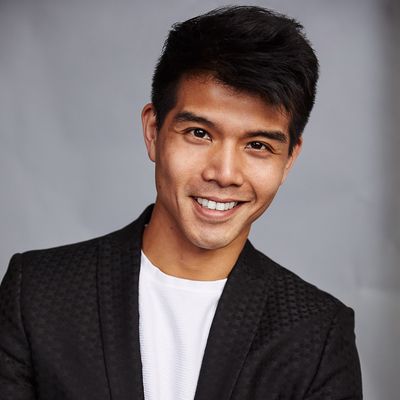
We're back with PROFESSOR Telly Leung! Godspell, Aladdin, Rent, Glee, Allegiance, In Transit ... the guy has had an incredible career and he's just getting started. Telly just returned from Godspell at The University of Michigan and Dan and Joe are ready to go back to college so they can be directed by Telly... Read More
From the show: Guys Who Like Musicals
Guests
Featured Shows

About
We're back with PROFESSOR Telly Leung! Godspell, Aladdin, Rent, Glee, Allegiance, In Transit ... the guy has had an incredible career and he's just getting started. Telly just returned from Godspell at The University of Michigan and Dan and Joe are ready to go back to college so they can be directed by Telly. This is such a joy of a conversation. We talk about why representation matters, the reckoning in our business, creating art, waiting overnight in line for 20$ tickets, and how the greatest buzz for Telly comes from teaching the next generation. We love this man. We love you. Happy Friday.
Telly was born and raised in New York City. He grew up in a traditional Chinese home in Bay Ridge, Brooklyn. After graduating from Stuyvesant High School he attended Carnegie Mellon University.. Not a big deal :)
It was also at CMU that Telly met fellow CMU-alum and KINKY BOOTS Tony-Award Winner, Billy Porter, who returned to his alma mater to direct the main stage production of Sondheim's COMPANY. After casting Telly as Bobby in "Company", Porter made a phone call to his colleagues who were involved in the upcoming Broadway revival of FLOWER DRUM SONG which eventually landed Telly the understudy for Wang Ta.
After playing Bobby in Sondheim's COMPANY in college, Telly would later get the opportunity to work with the legendary Stephen Sondheim in Roundabout's Broadway revival of PACIFIC OVERTURES in 2005. After PACIFIC OVERTURES, Telly originated the role of Boq in the Chicago company of WICKED, collaborating with fellow CMU-alum, Stephen Schwartz. Other Broadway credits include the final company of RENT - where he also got to make his film debut in Radical Media / Sony's RENT: FILMED LIVE ON BROADWAY, which is available on DVD and Blue Ray. After RENT ended its Broadway run, Telly went on an international tour with original RENT stars Adam Pascal and Anthony Rapp in RENT: THE BROADWAY TOUR. He would later reprise the role of Angel in RENT at the Hollywood Bowl, directed by Neil Patrick Harris and starring Vanessa Hudgens, Aaron Tveit, Skylar Astin, & Wayne Brady. In 2011, Telly would get another opportunity to collaborate with composer Stephen Schwartz in the Broadway revival of GODSPELL at the Circle in the Square Theater.
Telly was involved in the development of Broadway's ALLEGIANCE, creating the role of "Sammy" alongside Lea Salonga (MISS SAIGON) and George Takei (STAR TREK). ALLEGIANCE is the story of one Japanese-American family's struggles and triumphs during the Japanese Internment of World War II. The musical made its sold-out world premiere at the Old Globe Theater in San Diego in 2012 and premiered on Broadway in the Fall of 2015.
In 2016, Telly starred opposite Justin Guarini (American Idol) in IN TRANSIT, Broadway's first a cappella musical with music by Oscar-winner Kristen Anderson-Lopez, Russell Kaplan, Sara Wordsworth and James-Allen Ford, with direction and choreography by Tony-Award Winner Kathleen Marshall.
In June 2017, Telly Leung began his star turn as the title character in Disney’s ALADDIN on Broadway. He would continue to play the role for two years, and his caricature would eventually earn a coveted spot on the wall’s of New York’s historic Sardi’s restaurant.
Telly has appeared on television in GLEE (as Wes of the Dalton Academy Warblers), INSTINCT (CBS), ODD MOM OUT (Bravo), DEADBEAT (on Hulu), LAW AND ORDER: CRIMINAL INTENT and played Kevin in the pilot of ABC's performing arts drama, LIMELIGHT. He was also heavily featured in the PBS documentary BROADWAY OR BUST as a teacher and performance coach for the Jimmy Awards.
Transcript
This transcript was automatically generated and might contain errors.
[0:00] Dan Tracy: Welcome to Guys Who Like Musicals. Welcome to Guys Who Like the Musicals. We're back.
[0:05] Joe Carroll: We got guests. We got talking. We got interviews. No more of us pontificating about the world events or about shows and giving our two cents. Who cares what we think.
[0:12] Dan Tracy: Exactly. We'll still do that, but we're going to do that with friends and really accomplished artists. We're talking to Telly Leung this week. We're talking about... we actually don't talk about Aladdin.
[0:21] Joe Carroll: No. Like literally one of his biggest credits. We don't get to, but this was... Can I just say?
[0:27] Dan Tracy: Yeah.
[0:31] Joe Carroll: Goals to be 36 and playing Aladdin. This guy is young forever.
[0:38] Dan Tracy: He's young forever. I mean, I was looking at him during this interview and I was like, look at that. Look at his face.
[0:42] Joe Carroll: We got to start moisturizing, Dan. We got to start moisturizing.
[0:45] Dan Tracy: You know what it is?
[0:46] Joe Carroll: What?
[0:47] Dan Tracy: I got to stop drinking.
[0:48] Joe Carroll: Yeah. Well, okay. So here's what we're going to do. We're vaccinated.
[0:50] Dan Tracy: Vaxxed.
[0:51] Joe Carroll: We're vaxxed and we're ready, but we're going to stop drinking and we're going to start moisturizing and we're going to be directors and we're going to play Aladdin at 36, even though we can't play Aladdin, but that's okay. Telly Leung, Godspell in transit.
[1:09] Dan Tracy: We don't talk about Glee. He was on Glee for a bunch of episodes.
[1:12] Joe Carroll: No, we don't talk about Wicked. He's been on a bunch of TV shows. And it was still one of the best interviews we've ever had. So we're just going to jump into it. We love you.
[1:17] Dan Tracy: So an actor is saying his lines and then out of nowhere, he just starts singing. So Telly, yes, Aladdin and Allegiance in transit and Rent and Godspell and Glee and all of these credits mean nothing because you just got back from directing at the University of Michigan. That's the only thing that we want to hear.
[1:59] Telly Leung: I did. So in the middle of a pandemic. So what happened was Vince Cardinal, who's the head of musical theater over there, who I've taught master classes at the University of Michigan before. Actually, I flew in on a Monday on a day off from Aladdin. And I was there for all of 12 hours. And I flew on a Monday morning and flew back on a Monday night. But I got to work with his students. And as we all know, it's an incredible school, an incredible program. They turn out some incredible talent. Nobody we know, of course. That's on this. But I was so so what happened was Vince said, listen, the seniors have had so many of their expected experiences of senior year canceled. They've been in Zoom University for a year and a half.
Their senior show, which was going to be Rent, got canceled because there's no way to do Rent, you know, during a pandemic without touching each other and kissing and all of that. So he said, but we've secured the rights to Godspell. And I was talking to the faculty about who should come and direct this very last minute. And Lynn Shankle was actually the one that said, you should call Telly. And then everybody went, oh, do you think he'll do it? And so I was in New York and I think I got a call on a Wednesday. And it just so happened that on that Wednesday, I had a symphony job in Florida that canceled on me. That was an outdoor symphony. You know, I thought, surely this will go. Everybody's seated in pods.
But of course, back in February or so, the numbers were skyrocketing for COVID. So they canceled the gig. So literally the morning that this gig got canceled, that was going to be taking up most of my March, Vince calls and goes, would you ever consider directing Godspell? It's very last minute. You'd have to come to Ann Arbor by March 6th, which gives you about three weeks to prep. And I said, well, I've never directed before, but I have worked, never. And I said, so I really don't know what I'm doing, but I have worked with college kids before I teach. I teach at NYU on and off as an adjunct. And, you know, I've taught masterclasses at college programs all over the country. And I said, and I really know Godspell really well.
So I said, actually, yes. And he says, OK, great. Well, just so you know, you have to stage them nine feet apart. They have to be in masks the entire time. You have to do a room rest and air out a room every 100 minutes. And so I went, oh, God, what did I what did I just walk into? But all of also they were like, and also the, you know, everybody is furloughed in the at the university. Money is, you know, we're dipping into the endowments. Money is down. So you have no budget. Good luck. But it actually presented a really wonderful creative challenge for me as a first time director. I basically tasked all of my designers, an amazing group of student designers, with the three R's, recycle, repurpose, reuse.
So I said, if you have if there are set pieces from past shows and they had just done Romeo and Juliet, they said, well, there's a platform here that's balcony level. I said, great. Don't don't strike that. Don't take that apart. Keep that. They're like, well, there's a moving ladder piece from another musical review we did last year. Great. Use that. I said pull costumes. I had the costume designers pull costumes from every other show. So, you know, there are elements of Romeo and Juliet, 42nd Street. I mean, every show that SMTD has ever done in the last 10 years, you see little bits and pieces of it. And it was it forced all of us to be very creative. And and we filmed it. There was no audience. So, you know, that that's the other part of it that is tricky now. So even though I'm done directing and I just got back from Ann Arbor this week, now I'm in the thick of post production.
[5:52] Dan Tracy: Wow. So do we or is there a world where we can buy tickets?
[5:56] Telly Leung: Actually, it will be free. It will be streaming free. And if you go to the University of Michigan SMTD site and you sign on to what their season is, I think they just announced their season. You can get on a mailing list to sign up for information on when Godspell will be released. And I think we're aiming for the end of May. May 21st, I think, is the date.
[6:13] Joe Carroll: Cool. Who's doing the post production? Is it is that student done as well?
[6:20] Telly Leung: Yeah, it's actually I'm doing a little bit of post production, but also there is a great video production team that is made of all SMTD grads from you. They're called Sly Pup Productions, and they have been doing all of the live captures for all of the operas and dance concerts and musicals that that the department has done. So they've really stepped up and they've done an amazing job. And they're they're all you know, they're all SMTD grads. So even though they're videographers and editors and sound engineers, they are also, you know, percussion majors and they were dance majors. And so they're they're of this world where not only are they skilled videographers in the in that world, but they're also artists themselves. So they really know how to do the live capture really well.
[7:04] Dan Tracy: Oh, my God. So that's who we lost the job to, Joe.
[7:10] Joe Carroll: Well, that that's it. That's why they haven't been responding to our calls. No, because Dan and I did we Dan and I did the all the showcases for the class of 2020 and the class of twenty one for the acting majors. Yeah. And we were like, hey, musical theater majors, like, you know, can we help? And they were like, no, we're good. We got it because they got because they got this crew. And so this crew is also doing that and editing Godspell. I mean, talk about about ingenuity, you know, the horrible, horribleness being the key to invention.
[7:46] Telly Leung: I mean, did you did you want to? We're going to talk about the we're going to talk about Aladdin. We're going to talk about rent. We're going to talk about all the like the sexy stuff. But I want to like did you want to did you always want to direct? Is this something that the pandemic forced upon you in a way that you were kind of excited about or did it?
[8:03] Telly Leung: I was definitely excited about it, but I just never thought I was good enough to do it. So I think I had a little bit of imposter syndrome of I've worked with incredible directors, you know, during my time, Casey Nicholaw, Michael Greif, Joe Mantello, they're incredible directors, Stafford Arima. They really know what they're doing. And here I was going, I'm going to direct, you know, the next generation of Broadway. I guess I'd put a lot of pressure on myself to always have the answer and to always be right. And knowing that I was coming in and being a formative part of their education. And then ultimately, I what I sort of learned in my experience there is that the best thing I've ever heard a director say to me is, I don't know, let's find it together.
And I found my I found my catching myself in the rehearsal room, feeling all the stress and the pressure of having the answers and going, wait a minute, I don't need all the answers. I actually need to just hold the space for all of us to find the answers together. And it'll make for a better show. And it'll make for a better experience for everybody. You know, the reason why doing Godspell excited me at the University of Michigan is because it's the process of putting together Godspell is unlike any other show. So when they did it in 1970, you know, if you pick up the Godspell script from back then, you'll see the names Gilmer, Peggy, Lamar. Well, those are the original actors. And the script is basically just bits that they've created in improvisations.
It's work they devised. So when you pick up the script from 2011, it's the same. You'll see my name, Telly, Uzo, Nick Blamire, George Salazar, Lindsay Mendez. You'll go, oh, that's these bits that are in that script are all stuff that we created out of improv. So I very much wanted to go to Michigan and say, that's the experience I want to give these musical theater majors. I know they can sing. I know they can dance. I know they can act. But the experience of creating something from nothing and having complete ownership of this moment or complete ownership of this bit, also having a collective ownership by going, I've contributed this part to it or this idea, but this idea has morphed into something even better because there have been 13 heads put together in a room and we came up with something even greater that started from a germ of an idea that I had.
So I really wanted them to A, have ownership, but B, have a true collaborative experience. So I just held the space for that to happen. And when I sort of took the pressure off to have all of the answers and to have everything staged and to know exactly how I was going to stage them nine feet apart, I sort of went, OK, like, I don't know. And we'll we'll find it. It's OK.
[10:34] Dan Tracy: That's amazing. I think the best advice I ever got from from any director or teacher ever was that you don't need to have any answers. You just need to ask the right questions.
[10:41] Joe Carroll: Yeah. And I've had a director who's taken that too far, where the only thing they ever do is they answer a question with a question and you're like, no, but I need some help. Do I enter stage right or left?
[10:49] Telly Leung: Yeah, but do you enter stage right? That's a good question. Do I? Do you? You know, just throw it right. Just throw it right back.
[11:02] Dan Tracy: Right. What do you think it is?
[11:03] Telly Leung: Which is also take some stress away, but but is also really helpful because I think like the thing about working with stage actors as a director is that it's different from movies because you don't have final say. They have final say what happens on the stage is up to them. You know, when I worked on Sound of Music for a year, like we had all of these children and it was the children's job to carry the show. And the director had to teach the children how to carry the show because it was really up to them. And that's kind of the brilliance of stage performance and stage directing.
[11:39] Joe Carroll: Yeah. You got to like lead a horse to water and desperately hope that they it's all about inception. Hope that they get the note themselves so that they can actually bring it to their work.
[11:48] Telly Leung: That's right. Well, I love that because what you're talking about, I feel like, is the only thing that I felt was lacking in my university education was the true build it from the ground up the way that you do on Broadway or in development, you know, with workshops and readings when no one has any answers and you're just you have to. That's what the professional world is. The professional world is you're an actor walking into a space, have, you know, contributing your ideas to somebody who has written something, someone who's, you know, in a director and whatever. And in college, so often the professors like you look to your professor and you're like, did I is that the right answer? And for better or worse, they say yes or no, as opposed to this space that you created, where it sounds like you were having them truly come up with like, you know, I'm not going to give you the answer because nobody's going to give the answer in in three months when you graduate, people are going to be done giving you the answer.
[12:47] Telly Leung: Right. Our director on Godspell, Danny Goldstein, we always had a motto in rehearsals, which was strong and wrong. So don't sort of don't censor your idea before you've presented it. Let's make sure we're in a room where you can feel safe to commit boldly to something really strong. And you might fall flat on your face and it might not be the right choice at that moment, or it might be highly embarrassing that you even tried it. But we all sort of had strong and wrong moments in our creation of that show 10 years ago. And what ended up happening was we have we had a giant piece of oak tag that we called the graveyard. And everybody's on the graveyard, everybody's bad bits that never made it that fell flat on their face that got no laughs in a preview audience.
Everybody's on it. Even Schwartz is on it. Schwartz wrote like a little bit of a song. It was terrible. It never worked. And he was like, yep, he's like, we tried it. This is bad. Put it on the graveyard, you know, so it's very humbling. It's why I love going to Joe Allen. Because when you go to Joe Allen and you sit in that restaurant and you look at all of the posters around you of all of the, you know, quote unquote, flop shows, you realize, right, Stephen Sondheim's on this wall, Hal Prince is on this wall, you know, people that are people that have, you know, you only think of their successes, actually, they've had their their share of flops, as well, you know, and those and those, right, quote unquote, flops were also were part of that journey to get to, you know, I'm sure Hal Prince had to go through Merrily We Roll Along in order to get to Phantom of the Opera, Jimmy, right, right, right.
[14:23] Dan Tracy: Yeah. So, right. I mean, we came in really hot with the mug. He's got the Michigan mug. He's got the mug because, A, it's a cult and people can't, well, the Michigan, it's a cult. People will give you.
[14:34] Telly Leung: Swag left and right and but also I was staying at this hotel that had like the tiny coffee mugs. Like they have the really itty-bitty ones and I said, this is not acceptable. So I went to the end and I found the biggest mug I could possibly find. So now I drink out of this Michigan mug all day. Yes. Yes.
[14:52] Dan Tracy: That's amazing. That's amazing. Well, I have a million questions for you and I'm so thrilled that you're here. I want to, you know, we'll do a deep dive on some projects. We'll talk about some things but I want to, I heard, I read this story and this was some bad Wikipedia research. I'm just gonna straight-up, you know, just be honest about it, but your Broadway debut in Flower Drum Song came from meeting and getting to work with the iconic Billy Porter. Who came back to, is this true that he came back to Carnegie Mellon to direct the show that you were in and then that's kind of the bridge to your Broadway debut?
[15:32] Telly Leung: Yeah, Billy went to Carnegie Mellon and when he was in the class of '91 and when he graduated he went right into the original Broadway company of Miss Saigon, which was, you know, he was first tenor, of course. And he was covering John, I think, and he was a GI and, you know, so he's the first tenor like I would say like right, like he's like, like not first tenor the voice part. He is the first, right? As we refer to the first lady is there, you know, or the first, you know, yeah, Michelle Obama.
[16:10] Dan Tracy: Absolutely.
[16:10] Telly Leung: And Billy, you know, in working on Miss Saigon, he got to know this sort of very small community of Asian actors that were, you know, and Miss Saigon turned out a decades worth, gave a decades worth of Asian performers their debut, their breaks, all of that, right? So the gentleman who was the dance captain of Miss Saigon in '91 is this gentleman named Mark Oka, an incredible Broadway dancer. He's done like nine or ten Broadway shows and he was going to be the associate choreographer and dance captain on Flower Drum Song, which had a huge successful run out in LA at the Mark Taper Forum and had a new book by David Henry Hwang, directing and choreographed by Bobby Longbottom. And so Mark and Billy were friends and Billy had come back to Carnegie Mellon.
Again, his first time directing, he had never directed before but he was interested in exploring other sides of his artistry. I think at the time he was like, New York only sees me in one way, you know, I'm the black guy that comes in the middle of the show, does my first tenor duties, stops the show, and that's it. And I'm not being seen as other things. So I think he was looking for opportunities to expand his definition of what his artistry was and he was like, what better place to do it than his alma mater Carnegie Mellon? And he's from Pittsburgh, so he lived at home and he got to spend time with his family. And the senior show, I don't even think he got to pick the show. It just so happened that the department picked Company for us. He did come and cast the show. So he double cast the show with me and Leo Ash Evans, my best friend from college, as we were both Bobby in Company.
[17:36] Dan Tracy: No way.
[17:36] Telly Leung: We would switch. Leo is, you will talk about that in a little bit about musical theater college auditions. Company that Telly and I both work for that helps high school students who audition for college programs. Leo is the not an ad, but if you want to work with Telly or I, we're available for coachings. But Leo, that's amazing. So Leo is the sort of co, I don't know what his title is now. Oh, yeah, co-owner. Yeah, co-owner, co-boss of MTCA. That's crazy. Okay, so you guys were both cast. Sorry.
[18:09] Telly Leung: And it was during that time that Billy knew that Flower Drum Song was gonna open in the fall at the Virginia Theatre, now the August Wilson Theatre. And so he called Marco and he said, there are three Asian kids in my cast of Company. You should see them because it's an all-Asian cast and there's sort of the next generation coming up. Now granted, Bobby, me, I'm in every scene of Company. So he was like, you can't miss tech. We were in the middle of tech rehearsals. He's like, so you have to finish tech at midnight, which I did. Then I jumped on a Greyhound bus with my two classmates. We rode a Greyhound bus overnight, got to like, got to Port Authority at like 9 in the morning. I splashed some water on my face and I was at my first Broadway dance call at Ripley Greer.
And this was one of these agents submissions only calls, so like I didn't have an agent. I didn't have anybody. Billy Porter was basically my agent. Billy Porter picked up the phone and called, right? And so I was there with all of these other Asian performers who had done years of Miss Saigon, who had a Broadway credit, who did King and I, who did, so I was like, oh God, okay. And so, but I, you know, danced, did the jazz combination, did the ballet combination. And then at the end of it, they were like, can you stay and read some sides and sing? I said, sure, okay. And I saw when I walked in, Marco co-whispered to Bobby Longbottom on the side, hey, this is Billy Porter's student. And Bobby goes, oh, I hear you're at Carnegie Mellon now.
You're just a college student. He was like, I was like, yeah. He's like, and I hear you're doing Company. I said, yeah. He's like, sing Being Alive, which literally was in my book. I had just done it the night before. It was like the thing that was the most fresh and alive in me. So I said, great. And that was my audition for a Broadway show. And I took the Greyhound bus back to Pittsburgh, went back to rehearsal, went back to class, went back to tech. And I told, and Billy was like, all right, diva, how'd you do? How'd it go? Well, I think it went well. They kept me all through all the dance calls and I got to read and I sang Being Alive. He was like, mm-hmm. I already got a phone call about you.
And I said, oh, okay. He's like, I think you have a callback. I said, okay. Well, if I get a callback and if I get this job, Billy, I know I only get like 25 words in my playbill, you know, as like a person number five. But I said, but I promise you, Thank You Billy Porter will be the last four. And if you go to my playbill, my first Broadway playbill, it's like, thanks mom, thanks Carnegie Mellon, you know, and then it's like, Thank You Billy Porter are the last four words.
[20:28] Dan Tracy: Yeah, first Broadway playbill because he stuck his neck out for all of us, you know? He did it for me, Patina Miller, Leslie Odom. Like he has done that time and time again. I, so if this is not, this story is not unique to me. If you ask people in the industry, Billy has been a champion for a lot of people. And I think that he could hear, if you ask him, he'll also tell you that there have been people in his life that have been champions for him, the Rosie O'Donnells and that, you know, so like I, you know, it's, he paid it forward in a really beautiful way. And I think that's part of the reason why I love the teaching and opportunities like going to University of Michigan because it's my chance to pay it forward. It's my chance to sort of know who the next generation coming up is and lend a hand and be a resource if I can. So, yeah, so I have Billy to thank for that Broadway debut. Thanks, Billy.
[21:20] Dan Tracy: That is, oh my God, an unbelievable, iconic, it's an unbelievable story. It's like, it's something like if you, I don't know, I think it's the movie. Like if you want to write, Telly, if you want to write them like a movie of anything, I think that like, I see that. I just want to see that like play out on screen in a way that was, that's just Telly. It's like a Yentl.
[21:39] Telly Leung: To one day, right, right. You know, you need somebody to be your champion and you need somebody to stick their neck out and then you need to be ready when the time comes, you know? And I'm right, there's hundreds of stories similar to yours where the person didn't show up.
[21:57] Dan Tracy: Right, that's right. So, you know, that's right. There's this pressure of going, oh, like somebody picked up the phone and called on my behalf and really believes in me. And you better believe that there is that added pressure of going, I can't, not only can I not let myself down, I can't let the person down that stuck his or her neck out for me, you know?
[22:17] Telly Leung: Right, right. And so how did you have the confidence to just kind of push through that?
[22:22] Telly Leung: And, you know, I have to say, college is great and studying musical theater in college is great. I think I learned how to comport myself at auditions like that from years of summer stock. So summer stock and actually getting to put your technique that you learn all year long to the metal over the summer is, is like for me the best training, you know? So going to auditions for the Muni or Pittsburgh CLO when I was a college kid between, you know, between semesters for my summers was the best training in the world.
[23:06] Dan Tracy: You know, and it's, I have to say, like I think those many years of and many shows at the Muni and Pittsburgh CLO were sort of prepared me for that as well as much as college did.
[23:10] Telly Leung: It's really the gauntlet, like those auditions. It's like you come out of college having gone to all of those summer stock auditions and whether you were lucky enough to book work or not. Like, I mean, you know, Dan and I did a lot of theater in college that like the smaller places and you come out of those auditions for PCLO or the Muni and you have like, you have the scars of war in a way, you know? You're like, I waited in that waiting room with 500 people. One year I auditioned as a dancer, Dan. Did I ever tell you that? Oh God, I auditioned at the Muni as a dancer.
[23:45] Dan Tracy: God, mistake.
[23:45] Telly Leung: The mistake, the mistakes we make. I just remember watching John Riddle stand center stage and sing On the Street Where You Live. I'll never forget it. It was the last Paul Blake's last year and the iconic Paul Blake. And that was a, when they still made everybody sing On the Street Where You Live in the callback. And there's, I'm up there and I was feeling great because it didn't hurt as bad as a hockey audition. You know, like a hockey tryout. I was just so excited. I was like, this is great. No one's gonna hit me. I was like, I feel awesome. This is, I've never had that confidence as I did that first year.
[24:22] Dan Tracy: But then watching John Riddle stand there and sing On the Street Where You Live, I was like, oh.
[24:29] Telly Leung: Okay, did you tell him that when we had him on the show? I think you did.
[24:33] Dan Tracy: Maybe I did. Maybe I did. I'll never forget it. I did Titanic with John Riddle at the Muni. Did you? We sunk a ship on that stage.
[24:42] Telly Leung: We surely did. It was just a platform that they put on a forklift and we went boop boop boop and it just tilted. And people would like...
[24:55] Telly Leung: How are you gonna sink a ship outdoors with a... yeah, in the back? Oh my.
[24:59] Dan Tracy: Yeah, well, they did. They did. Oh my gosh. I want that revival. We've been, that's been kicking around for a minute, right? Like can we get Titanic? We've talked about on the show before, but like if you don't know the Titanic, you don't know Titanic. That is a gorgeous, yeah, yeah, slaps. We had, we had a fun, you know, we had Kevin Stites there actually conducting. He conducted the original Broadway cast. So, I mean, getting to learn that show from Kevin Stites is incredible and he brought, you know, he hired many of the people in that Titanic cast were from the Broadway company. So that was really great.
[25:32] Telly Leung: And also...
[25:33] Dan Tracy: More yes, and ended up coming to see that production. So it was actually really cool.
[25:39] Telly Leung: Wow. Well, I'd love to do, we'd love to do a deep dive into one of your projects and I wanted to kind of leave it to you. You've had such an amazing career up to this point and I thought it would be fun. You know, you've done Rent many times. You have a deep history with that show. I know that the Allegiance story, the story of developing that from literal germ of an idea to bring it all the way to Broadway might be cool for people to hear. Whatever you want to, but is there something, one of these parts of your career though? Gosh, be fun to dig in.
[26:11] Telly Leung: You know, I wish we had like a wheel or something, like a Telly wheel where you could just like spin it, pick one. I don't know. It's interesting. I guess the show that has been sort of reverberating a lot recently is Allegiance because it is a show, you know, it's a show that has only run, that only ran on Broadway for four months. I worked on the development of it for six plus years. There's car horns outside. Yeah, but I worked on that show for six plus years developing the show from 2009 on was the first reading I did and that Stafford Arima did and Lynn Shankle was brought on as well. And it's, you know, that show is sort of making another visitation for me because I realized so many people are actually teaching that show in either history class or, you know, I spoke to Brent Wagner's class in at Michigan because he was teaching it as part of his history of musical theater class.
I know that Michael McElroy is using it in his freshman classes at NYU New Studio and Broadway. So it's interesting. I've actually been invited, especially with the virtual format that we're all living in, to come into Zoom classrooms and talk about Allegiance. And so this show that only had a life of four months on Broadway actually is being told again and again and again in classrooms. And I'm also reminded of the importance of that show because it is about a time where there was, where the Asian American community felt a lot of racism and prejudice and fear and war hysteria. And we're sort of, unfortunately, visiting that time again in our nation's history where my community is again being attacked.
And purely based on the color of our skin and or where our families are from. So, you know, it's interesting, you know, that show asks so many questions about what it means to be American or what it looks like to be American. And you would think that after, you know, three years of internment, after fighting a world war, that we'd be beyond those questions. And yet here we are again in 2021 dealing with all of the same stuff, right?
[28:29] Dan Tracy: Yeah, but that's why it's so good that they're talking about it in these classes and that we go to places that are teaching this kind of history because that's the American conundrum is that our history books are not sufficient. There's a lot of things that you don't learn about and certain parts of the country you definitely don't learn about them. And I didn't know about Japanese internment camps until I was in college. There's a lot of things I didn't learn about until I was in college going to a Catholic high school in New England, right? There were a lot of things that I was taught that I...
[29:10] Telly Leung: ...were very important to my family and the values of what a religious school means and all of those things that I did get the benefit of having. But there's also things that we don't have. And that's why I wish that... I don't know how we make shows that need to matter more, but I just wish that there was some puzzle piece that we could unlock. I never got to see that show. I remember when you all were... I happened to be at New 42 at the same time. I think it may have been the Sound of Music Tour. What year was that? 2015? Yeah. So it was when I think we were rehearsing the Sound of Music Tour. We know Kevin Munhall pretty well, and so I saw him in the green room there a couple of times, but I really wanted to see that piece.
[29:57] Joe Carroll: Daddy Kevin Munhall.
[29:58] Telly Leung: Yes. I love him. Indeed. Baby. Daddy Munhall. Daddy Munhall. Daddy Munhall.
[30:04] Telly Leung: Yeah. I think with... We learned about Japanese internment like a quarter of... There was like a paragraph in a chapter in a history book in high school. And certainly, there was no story of the brave Asian American men and women who fought for the United States, and their families were living in internment camps while they were fighting for us. And again, I miss the show too. It's on Broadway HD, right? It's on Broadway HD. Yes. So if you have a subscription, you can watch it. And it's great, and it's being taught. So people are watching it. It lives on. That's sort of the amazing thing about this pandemic. I mean, I know I've burnt through my Broadway HD, because I miss Broadway so much that it's... But I really do think that... I think theater is, of course, entertaining, but it can really be an agent for change, because you can learn about the history.
And even if you read a book about the Japanese internment, it doesn't really mean anything until it's sort of put in the context of human beings and a story, and sort of knowing the human experience of what that is. And I think theater does such a good job of that. And as far as the formula as to having more stories like that, whenever Broadway is back, and I do think Broadway will come roaring back when we're allowed to do so, I think it's upon us to vote with our dollars. So if there is a kind of theater that you want to see, if there are stories you want to support, go. Pay full price. Pay full price, because know that your dollars is your vote. You are voting for more theater like this to exist.
And that was the thing that really scared me about Allegiance. When it opened and closed in four months, I don't think I was surprised, because Leia and I both knew, after working on Flower Drum Song, which also opened and closed in four months, that these stories... We knew we were climbing an uphill battle, especially with the story about the Jap... When you think Japanese-American internment, you don't think that that's going to be a commercially viable musical. And yet we found the value and the importance of doing it, because we knew how important that story was to tell on a big stage. So we knew if we got to tell it for a day after working on the show for six years, if we got to tell it for four months or four years or 40 years, any of that time is a blessing.
And at the end of it, our producer said to us, over 120,000 people saw the show in its four months. And that might not sound like a lot of people, but you have now reached more people than were actually interned, because it was 120,000 people who were removed from their homes and interned and put into these camps. So they said, actually, your reach is pretty great. And the fact that we filmed it, it'll only continue to reach more people. That's amazing.
[32:55] Joe Carroll: Well, that's amazing. And we've talked about this before, too, that when you get to the top of Mount Broadway, whatever that means, and of course, Broadway is not the end all be all of human existence, but because of that, the shows can be toured, they can be done regionally, they can be done in high schools, they can live on in this way that, like you said, Telly, that the story will continue to be told. So thank God it made it to that echelon in a way.
[33:26] Telly Leung: Right. Unfortunately, if shows, stories like that don't cross into the threshold of Broadway, then nobody really gets to see them again. That's another thing that would be interesting to try and figure out. Telly, what would you say has been the greatest challenge that you've had in your career? Besides now, besides Broadway being shut down.
[33:45] Telly Leung: Besides not being able to work for a year. Yeah. Besides this, I think. I don't know. Well, first of all, I have to say I would never count this. I would never I would never say that the pandemic is a blessing, but I think it has opened doors for people who consider themselves full-time performers and then not having to. It's forced all of us to find different ways to connect and tell stories. And whether that's the both of you doing a podcast or me directing or teaching more like I think it in a way like, yes, I haven't been working in the traditional sense as a performer would work, but I have continued to work, which has been interesting, you know, and I count myself lucky that I'm able to do that.
I think the hardest challenge I went through was what probably in twenty sixteen, I suffered a vocal injury on in transit and I actually had to take six weeks off, get surgery, sort of resew my voice back together again with a voice therapist. Our dear friend Ellen Letrick was my voice therapist and my incredible surgeon, Dr. Sulika, who took care of my surgery. And then he's my guy. And yeah, he's amazing. And, you know, my amazing voice teacher sort of Liz Kaplan, she sort of like sewed my voice back together, half note by half note, you know, quarter, you know, half step by half step. So it was it was I had what they called a pseudo cyst on my vocal cords, which is like the way I describe it to people is it's like when you wear shoes that don't fit and you get a blister on your foot and it's filled with fluid.
I know this is sort of gross for a podcast, but when it's when it's filled with fluid and basically what Dr. Sulika had to do was go in and like pop the blister because the blister was right on the surface of my vocal cords. And I worked really hard for many years to like muscularly bring my cords together so that I could still create a closure and create sound. But it wasn't sustainable to keep doing that. And the cyst got bigger and bigger. So, wow. So, yeah, I had to take six weeks off. And I think that was probably the scariest because there's always risk when I mean, even though Dr. Sulika is amazing and I had an incredible team of vocal professionals to help me get back on track. You know, I've defined myself as a singer for so long.
Right. That right. It's to have that taken away from you in a moment's notice, you know, and these injuries happen. They happen all the time. So, you know, you can sneeze wrong and get a vocal injury. Right. Right. So, I mean, and that's that's and, you know, and athletes get injured on the field all the time. Right. But for some reason, there is a weird stigma about vocal injuries that it's somehow the performer's fault or that, you know, once they're injured, they're damaged goods and they don't sing well anymore or they can't be counted on anymore. Right. They're not dependable anymore. And it's actually quite the opposite. I found that I sing better now having better knowledge of my voice and the anatomy of my voice after the injury than I ever did in my 20s when I would just wake up, you know, hung over and belt, you know, I mean, like, you know, that's what we did in our 20s. We just opened up, you know, we would like go out all night and wake up and like, you know, go to our 10 a.m. and like take some Advil, just get that swelling down and just you'll be for Advil and a Gatorade.
And we were like and then and then as you get older, you realize, oh, like, I can't do that anymore. And, you know, all of that. And actually, like, yes, there's you should. I'm not advocating that you do that. But I also think that as you get older, you start developing sort of habits physically and vocally where you go, I got to do this to just get through the matinee or I got to get I got to do this to just get through the get through the New York Times being here during previews. And you don't realize that you're just muscling through so much, so much of that when you should just be out and resting. Right. Right. Right. But there's also a stigma to taking time and rest. Yes, that's right. And there's so many people who won't take time off. That's something that drives me crazy. I hope post covid people take not coming to the building when you're sick more seriously.
[38:05] Telly Leung: I think they have to now. I think they have to. And that also means that, you know, producers and the powers that be need to hire more covers. So, yes, there's going to be more salaried employees and there's going to be more standbys. But it's necessary for the health of the company now. You know, it's an actual health concern, you know, that that has to that has to be counted in the bottom line when you start to capitalize a show. Yes, we need more people in the building or we need more people on standby that are within a five block radius just in case something happens, you know. And I also think that it's important that we we as young, you know, as educators now for the next generation, that we teach our students how to listen to their bodies.
I ran into that with my Michigan seniors for sure. They were exhausted. There were days where, you know, they're shooting showcase, they're finishing finals there, you know, and they're working on Godspell, where that's a show that, you know, you never leave the stage. And if you're not singing your own song, you're oohing and aahing for somebody else. So it's exhausting, you know. And I, I too, had to sit some of my students down and go, OK, now you have to listen to your body and shut up and spend the day drinking water and not talking to your friends before you get to rehearsal tonight. Right. Right. One of the things that we always ask people is there, especially in this time, is there a book or a resource or something that you have found invaluable to get you where you are or something that I always I like this to just even as far as art is concerned, if there's something that you found invaluable.
[39:24] Telly Leung: Yeah, the world is a hard place to be in right now with the 24-hour news cycle and everything that's happening and the uncertainty of it all. I have found solace in things that help me escape. And the biggest the thing that I escape into is RuPaul's Drag Race. Yeah. So that has been my saving grace. It is it is for some reason RuPaul's Drag Race is like it sometimes it feels like an election. It's like that nail bitery. Do you mean like I feel like, you know, on election night, what it would, you know, in November last year, but I was like, oh, like I stayed up all night. I think I was with Leo Ash Evans. I think we went through like two boxes of Cheez-Its and Ben & Jerry's and like ordered a pizza and like stressful.
And I find myself having that same sort of stress. But if but if it's over RuPaul's Drag Race and it's not like it's OK, do you mean like it's actually like I sort of need a little bit of escape from the world because we're constantly being bombarded by the reality of what's happening either on our televisions or, you know, on our on our alerts on our phone or, you know, right. So I so yes, thank thank God for RuPaul and thank God for drag queens there. I didn't realize there were like there's there's drag race like in every country, like almost every country now has their own.
[40:38] Joe Carroll: Are you watching all of the different...
[40:39] Telly Leung: I've watched all of them, all of them. If there can be more, please, can there can there be more? Can there be more so that I have something to escape to who that is not, you know, that is not people storming the Capitol or what's happening with voting rights or like I just like, yes, that is important. And it is important to stay up and current. It is also important to like just take a mental break and like and and put your, you know, and and focus on some drag queens trying to win a reality TV show.
[41:08] Joe Carroll: What would you say is the most influential musical in your life could be in your career, in your life? What musical shaped you?
[41:13] Telly Leung: Oh, Rent, for sure. Rent came out when I was 16 and I was the rent head sleeping on 41st Street to get my 20 dollar ticket. And I saw that original company so many times. I think in that one summer of 96, 97, I think I saw the original company over 10 times, which meant I grew up here. I grew up in New York. Yeah. So I didn't really tell my parents that I was like taking the subway at like one in the morning to go to go like, you know, hang out with the homeless folks on 41st Street and like make friends with them as I waited for my 20 dollar ticket and make friends on the sleeping bag line. So like that was me, you know, that and Rent and Chicago also did a 20 dollar ticket. And those and that was what I could afford in high school.
And I remember I would go. I saw Rent many times, but also Chicago was sort of the show that made me go, OK, I got to I got to put my ass in dance class and like go. And like it always inspired me. So I remember seeing this was back when it was still at the Schubert, when they had moved the first time they went from the Rogers to the Schubert. And I saw, gosh, you know, Bebe Neuwirth and the late, amazing Anne Rankin so many times. And I felt like I was watching a Fosse masterclass when I would watch Anne Rankin. I can't even imagine.
[42:30] Joe Carroll: Me neither. I also think like I see Bebe Neuwirth on she's on like all sorts of TV shows. She pops up and like, you know, all over the place. And remember, it wasn't Madam Secretary. She was on Madam Secretary for a long time. And I was I would watch her and be like, like, people don't understand. She's she's not like she's she's not politic. She's not a lawyer. She's not a political analyst. She's she's fucking she's Chicago. Yeah. Stop it. You know, like but, you know, there's so many there were so many theater people on that show. But I just remember being like it. She it was almost like she had this this secret that of course she didn't have as everybody knows. Bebe Neuwirth is an amazing, you know, Broadway legend.
But I was I was wondering if like people who were just fans of Madam Secretary had any idea. You know, no idea. But do your research, kids. Right. Do your research. There's YouTube. Can we talk about rent a little bit more? You've done so many iterations of this. So you're waiting online. You're waiting for your twenty dollar ticket. You're that kid. And then you you take it. Do you do the national tour first? No, I do the revival. So how I got rent was I had just finished Wicked in Chicago and I came home and the first job.
[43:44] Telly Leung: Coming home was actually Godspell at the Paper Mill, and this was back in 2006. So my dressing roommate at the time was Robin de Jesús, and I have Robin to thank. Do I owe Robin 10%? Because Robin was like, "So I'm gonna go do this musical. It's written by this guy. Nobody knows his name is Lynn, and he wrote like a rap musical, and there's a part in it for me, and it's really funny, and we're gonna go do it off-Broadway and maybe Broadway. I don't know, who knows?" So he was like, "But I'm leaving Rent, so tell me, really, you gotta like get on the Rent train. You gotta like audition for Rent. I'm leaving." And I was like, "Oh, okay." And I was like, "That's my dream show. I would love to do Rent one day."
But nobody ever left that show because it was like the steadiest job on Broadway and such a joy to do. I've always said if Rent was still running today, I'd still be in it. I'd still be doing it because I loved doing it so much, and I love doing it with that group of people. So I auditioned for Rent, but also Robin de Jesús, that was also the first professional job for a young Joshua Henry. So Joshua Henry was playing Judas in that production, and Robin again was like, "So Joshua, they need a cover for Chris Jackson's role. So you should audition. It could be your first Broadway show." And it was. It was probably debut. So literally, Joshua Henry and I owe Robin de Jesús 10% as well. Wow, unreal.
[45:01] Joe Carroll: And then you got to play Angel at the Hollywood Bowl recently. What was that like?
[45:06] Telly Leung: Well, so what was it like?
[45:12] Joe Carroll: Okay, okay. Wasn't that the—wasn't it? Yeah, dude, did you see that? Did you see that chart that came out a couple days ago?
[45:16] Telly Leung: That was like 2019 was a year ago, 2017 never happened. Like, you know, 2014 to 2016, what even was this, right?
[45:30] Telly Leung: Well, I think to me it was because we were like sophomores and juniors in college too, so it's like I remember that production very vividly because that was when we were like in the steep of paying attention to everything that was happening. I saw every single video of Aaron Tveit singing every song.
[45:51] Joe Carroll: Oh, you know, the funny part was that was like the beginning of people being able to film something and then put it on YouTube the minute it happened.
[45:58] Telly Leung: And I remembered, like, it's the Hollywood Bowl, and they're used to like symphony things, and like Vanessa Hudgens was the Mimi at the time. She was still with Zac Efron, right? So like, in fact, on one of the nights of one of those performances, she sang "Out Tonight" to Zac Efron. And like, now I've been—I'm happily married. We've been married. We've been together for 16 years. We've been married for five of those years, right? But, you know, my husband and I were always like, if I ever had a hall pass, it would be Zac Efron. So, of course, like now I'm doing the show with Vanessa, and Vanessa's still with Zac, and the spouses that are plus ones had backstage access. They had backstage passes. They could come backstage after the show, before the show. Jimmy is like with Zac all the time now, and I'm going, "Well, honey, this is it. This is the hall pass. If you don't take it now, I don't know when I'll chance. This is it."
[47:02] Joe Carroll: Oh my, but anyway, but like I remembered like Jimmy and Zac coming backstage.
[47:09] Telly Leung: Is this the biggest moment in Guys Who Like Musicals history? We're telling me on Telly's that he had an affair with Zac Efron?
[47:15] Joe Carroll: No, and it's now we get like we will end up being the biggest podcast ever.
[47:17] Telly Leung: Ever.
[47:19] Telly Leung: I do adore Zac though. He's like sweet as can be, and like he has also a phenomenal Netflix show. I'm forgetting the name of it now, but I finished it during quarantine. It's phenomenal, actually.
[47:32] Joe Carroll: Yeah, where he travels around.
[47:33] Telly Leung: Yeah, it's good. It's so, so, so good. But anyway, I remember Zac coming backstage going, "Hey, Act One's already on YouTube," and we had just done it. So somebody sat in that audience, filmed all of Act One, and already posted it on YouTube during intermission. And I was like, "Oh my gosh, I can't—you know, that was just so new to me in 2010. I was like, how is that? I can't believe it's so fast," you know? And nowadays it's Instagram stories, right?
[48:01] Joe Carroll: Right, right, right. That was really just getting started then.
[48:08] Telly Leung: That's so true, which is crazy to think about 11 years later. Now, here we are, especially where we are now.
[48:11] Joe Carroll: Wild, wild, wild, wild.
[48:12] Telly Leung: So one of the—I again, this is one of our questions that we ask everybody, and I call it the unreachable star question, which is your future, the goals that are on the horizon, a million miles from here. What are you pointed towards?
[48:24] Telly Leung: You know, I've really enjoyed working with the next generation, working with college kids. I've always had this, you know, I sort of don't see myself as somebody who performs into my 80s, you know? Like I think there are phenomenal performers—Chita Rivera being one of them—who I was like, "Right? She's amazing." Marilyn Maye, like these phenomenal—Len Cariou, like all of these phenomenal performers that I was like, they are performers for life. They will do it till their last breath, and I've never really envisioned that for myself. I think it's because I do a lot of teaching, and when I do get to see my students shine, you feel like there's a little part of you up there that's doing it, where I feel like I don't need to be up there because somebody that I've taught is up there doing it.
It's sort of an amazing feeling. One of my MTCA kids is Shereen Pimentel, who I coached, and obviously she's so talented. She didn't need a lot of coaching at all, but like she ended up going to Juilliard, and she ended up playing Maria in West Side Story. Again, I don't count myself as somebody who's responsible for that, but I do know that I was part of her journey. I was part of her song exploration journey. I was part of, you know, she did admit to me many years later—we did an event together, and she was like, "You gave me a song that I use all the time." I gave her "Migratory V" to put in her book, and she was like, "I use the song all the time now because I talked about how much I loved Audra McDonald."
I said, "Well, do you know this song?" And like she still uses it to this day, and I was, you know, little things like that that I go, "Oh, there's a little bit of me in there, and in somebody who's out there being amazing and being a star now, and that's good enough for me." Actually, that's really like that. I feel good about that.
[50:18] Joe Carroll: So do I see myself retiring? I don't know, at Carnegie Mellon and teaching musical theater? Maybe I do, or Ann Arbor in Michigan, or I do see that for myself. And I also know that, you know, as I got older, I felt like my 20s were all about performing and like reaching for the next opportunity. And then I met my husband, Jimmy, and all of a sudden, like your priorities start to shift where you go, "Oh, like I would really like a time where I know I have my summers off and I can plan a vacation, and it's not a working vacation because I booked a gig somewhere awesome, and I'm working in the vacations." Jimmy, like I feel like so much of our lives is that, and I know that now I'm 41 this year where priorities start to shift, you know?
Some of my friends who now have kids, who have started families, their priorities have shifted, and so I sort of feel that change coming on where I feel that for myself too. So I do see myself in academia. I do see it, if not maybe not right away, but for sure in the future.
[51:20] Joe Carroll: I just love that. That is the answer of like the greatest teachers though. Like what you just said is like, I don't want anyone teaching who doesn't think exactly the way that you think about it, you know? Because so many—there's so many bad teachers all over the place, and there's so many bad teachers in the arts. But there's this feeling with a lot of artists who like quote "don't make it," who then go into teaching, which I just think is a death trap, and it should be illegal. You know, and like for someone like you, who's had an unbelievable career, all sorts of wonderful projects, who says, "No, I actually get the same or better buzz by helping that next generation," and that—that's like, good Lord, makes me want to go back to musical theater college and study with you.
[52:07] Telly Leung: You know, I had when I was doing Godspell at University of Michigan, I had a wonderful student choreographer who's gonna be an up-and-coming, you know, he's graduating senior. His name is Conrad Sager. Phenomenal dancer, but one of these people that, you know, we got to talking, and he sort of gave me a big aha moment. He was like, "You know, Telly, sometimes as a performer, I am constantly looking at the clock going, when's our next 10-minute break?" And he goes, "But when I'm choreographing a show with you, I lose track of time. It doesn't even feel like I'm getting a credit for this." And I was like, "Ah, that's the thing that you should be doing. Of course, you should dance. You're an amazing dancer.
You should dance, be on Broadway, meet those amazing choreographers that you're gonna want to study under, like get your Broadway debut. But I know like you're gonna spend countless hours where you lose track of time in a studio choreographing shows and figuring out and staging numbers because that's—I watch you do it, and you lose track of time. I lose track of time when I'm with students." So it made me go, you know, when this pandemic is over, I only want to do things that make me lose track of time now, like whether that's teaching or directing or being a performer. I never want to be stuck in a position where I'm doing something and I'm looking at the clock anymore, you know? That's really from—I learned that from Conrad. I learned that from him because I was like, "That's actually the best way I've ever heard it put." Then I learned it from somebody who's like, you know, 21 and graduating college.
[53:30] Joe Carroll: Wow, I think I have to reassess my whole life.
[53:35] Telly Leung: I think I need to go—I just like my palms started sweating. What if you're Joe, and the only thing that makes you lose track of time is playing golf, but you're not good enough to be a professional golfer?
[53:48] Joe Carroll: You know what though? Like it's joy. Yes, in all seriousness, like that feeling of losing track of time. I can count—I can count on like one hand.
[54:02] Telly Leung: Oh, you got to figure that out, buddy.
[54:07] Joe Carroll: I know, but I know like what those moments were, right? But I know like exactly what Conrad's talking about right now, where you're standing in a rehearsal room, and you're like, "Fuck, it's like 10 minutes. Like I'm hungry. I just want to go around the corner for a coffee so that I can get through whatever."
[54:21] Telly Leung: Oh my God, yeah, I need to—I'm going for a walk after this. I got some shit to think about.
[54:29] Telly Leung: Casting director Kate Lumpkin described it like when she was a performer, she used to stay up all night stressing about whether or not how the next day was gonna go, whether, you know, but when she became a casting director, she slept easy.
[54:45] Joe Carroll: Similar kind of idea. It's like what's the thing that if you're—if you want to throw up the last show?
[54:52] Telly Leung: The last show that I did, I basically wanted to throw up the entire process. Every single minute I was on stage, I wanted to throw up, and there was a lot of things that caused that to happen. I think when I look back, it's not that I'm not supposed to be a performer, you know? Certain jobs have certain things that come into play, but you know, I do lose track of time when I'm editing. That's kind of one of the only times when I'm editing video. It's like I really get lost in the scene and like making the scene happen. And so maybe I should like follow that. I'd love that advice. That's great. I learned something today.
[55:26] Joe Carroll: Apparently we all learned it from a 22-year-old, right?
[55:31] Telly Leung: That's right.
[55:39] Joe Carroll: We need to get this motherfucker on the podcast.
[55:45] Telly Leung: You should! Listen, Conrad, you 21-year-old, you. He is wise beyond his years, and I like—first of all, wise beyond his years because he's—he'll just like drop a truth bomb sometimes, and you're like, "You're 22?" But also like staging—having worked with many, I've said to him, I was like, "You sort of—first of all, he had to choreograph the whole show nine feet apart and still make pretty stage pictures." So I was like, "You're doing it under duress, and you're still giving me great work." And he's a great collaborator, and I go, "Hey, this moment, I know you thought of this, but I really need this." And he goes, "Got it." And like five minutes later, he would have come up with a plan B. That's again a wonderful collaboration between all the artists in there. I mean, like he's someone to look out for for sure—University of Michigan class of '21 for sure.
[56:23] Joe Carroll: I just love that. Yes, get him on the podcast. You'll love him.
[56:28] Telly Leung: It's amazing.
[56:32] Joe Carroll: Where can people see or hear from you, or do you have anything to promote?
[56:36] Telly Leung: Yeah, I'm easy to find. I'm @TellyLeung on Instagram and Twitter. My website is TellyLeung.com. You know, I like—again, I always tell students who are like aspiring musical theater students or theater students or whatever, I said, "If you write me an email at Telly@TellyLeung.com and you have questions, I will get to it at some point. I might not get to it like right away, but if you're like, 'Hey, I'm a student of theater, and I'm trying to find out X, Y, & Z about something,' like I try to get to all of those. Again, just my way of paying it forward. So right now, drop me a line."
[57:09] Joe Carroll: I love that. You got any advice for Dan and I?
[57:13] Telly Leung: Y'all are doing—that's all the time we have for today. Y'all are doing it. I love this podcast. I love that you're doing this and giving people a platform to share their stories. And so I think you're doing it well.
[57:25] Joe Carroll: You're the best. Thank you for being here. This was such a joy.
[57:35] Telly Leung: You're great.
[57:41] Joe Carroll: Thank you for listening to Guys Who Like Musicals. We are now part of the Broadway Podcast Network. Whoa! We are hosted by Dan Tracy.
[57:45] Joe Carroll: That's you.
[57:45] Joe Carroll: And Joe Carroll.
[57:50] Joe Carroll: That's me. We're produced by Ryan Kincaid, and Matthew Mucha is the social content manager. You can find us on Instagram at Guys Who Like Musicals, on Twitter at Musical Guys, the old-fashioned way at www.guyslikemusicals.com. If you'd like a chance to be featured on the Ask the Guys segment of our show, please call 203-900-7990 and leave a message with your question. As always, thanks for listening.
© Broadway Podcast Network, All Rights Reserved