

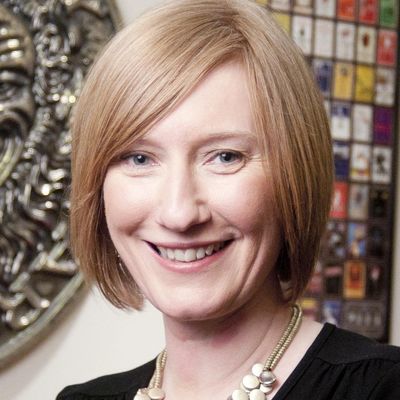
In this episode, we sit down with Heather Hitchens, the President and CEO of the American Theatre Wing, to explore her journey into the theater world. Heather shares insights on the crucial role of arts education in nurturing young talent and the delicate balance between tradition and innovation in arts organizations... Read More
From the show: Half Hour with Jeff & Richie (Post-Show Broadway Discussions and Interviews)
Guests
Featured Shows

About
In this episode, we sit down with Heather Hitchens, the President and CEO of the American Theatre Wing, to explore her journey into the theater world. Heather shares insights on the crucial role of arts education in nurturing young talent and the delicate balance between tradition and innovation in arts organizations. We dive into the American Theatre Wing's commitment to diversity and inclusion, highlighting initiatives like the Andrew Lloyd Webber Initiative. Heather also provides an inside look at the Tony Awards nominating process, the role of the Tony Administration Committee, and strategies to attract a broader audience.
Follow and connect with all things @HalfHourPodcast on Instagram, and YouTube. Share your thoughts with us on JOB on our podcast cover post on Instagram.
Transcript
This transcript was automatically generated and might contain errors.
[0:08] Jeff Malone: Welcome to Half Hour with Jeff and Richie.
[0:11] Richie Grasso: I'm Jeff.
[0:11] Richie Grasso: And I'm Richie.
[0:12] Jeff Malone: And today on our show, we want to welcome a very special guest.
[0:15] Jeff Malone: We have the president and CEO of the American Theatre Wing, Heather Hitchens.
[0:19] Jeff Malone: Heather, welcome to Half Hour with Jeff and Richie.
[0:22] Heather Hitchens: I'm so excited to be here. Thanks for asking me.
[0:24] Richie Grasso: Yes, of course.
[0:25] Jeff Malone: So Heather is a nationally recognized arts leader with nearly 30 years of experience in performing arts administration, policy, and program development. She currently serves as president and CEO of the American Theatre Wing, where she oversees the Tony Awards and a variety of grant-making professional development, educational, and media programs.
[0:42] Jeff Malone: Since joining ATW in 2011, Heather has significantly expanded its budget and programs, including integrating the Obi Awards and launching the Andrew Lloyd Webber Initiative to promote diversity in the theater. She also transformed ATW's Working in the Theatre show into a thrice Emmy-nominated docuseries. Heather's extensive leadership background includes serving as executive director of the New York State Council of the Arts, president of Meet the Composer, and CEO of the Delaware Symphony Orchestra. She's also a faculty member at Drexel University and a trustee of the Actors Fund. Heather holds a master's degree in arts administration from Drexel University and a bachelor's degree in percussion and music business from DePaul University.
[1:20] Richie Grasso: Wow. That's a wonderful, wonderful bio. I love it.
[1:22] Jeff Malone: It's one good thing about getting older is your life sort of makes sense.
[1:29] Heather Hitchens: Well, I wear a few hats as a director and producer, but one is also a music teacher. So when I see percussion, I say, "Yay, percussion."
[1:37] Richie Grasso: We love you wonderful things.
[1:40] Jeff Malone: Yes, it's amazing. Heather, it's really so great to have you on this show today. We wanted to kind of start things off by you telling us a little bit more about how you got your journey into the theater world and what was your aha moment that made you realize that this was your industry.
[1:55] Heather Hitchens: You know, it's interesting. I was a kid who had music, art, and the school play as part of my education from the beginning. It wasn't an elective; it wasn't communicated that this is core and this isn't. And I just found my home being creative. I think, you know, I first was connected to music. Back in those days, they wanted to start you on a violin, but I had lived through my sister and the Suzuki method and, you know, was not really the outgoing person I am today. So it shocked everyone when I said no, I'd rather play the drums. And that was, you know, at six years old, and I sort of found my way. But as you do that, you end up playing in pits for various different ways. And I also grew up in a household that both my parents valued the arts, and we went to theater and we went to music, so it was a place where I felt at home.
I didn't know how I was gonna make this work professionally, you know. I just knew and I went to school for music thinking I was going to perform and sort of discovered what if you want to call it arts administration by accident, like a lot of people do. I was actually working at a local radio station as the traffic manager, which is not like, you know, cars; it was like, you know, the log and making sure, you know, certain commercials didn't, you know, have two grocery store commercials or something at the time. But because we all need a job after college, I took a job and I thought radio was close. But there was a fabulous woman in there. Her name was Joan Stack, and she had a culture show on the radio.
And so I was listening to her, and one day she said to me, "Hey, listen, kid, you should go work for the American Music Heather Festival downtown Philadelphia because they do really great work." And anyways, I went there, I got offered an internship in fundraising, and that began a career. There were all these angels along the way that kind of guided me into the career. There was a woman there that was the group sales manager, and she sat next to me typing on the typewriter with one key off. But she would also, in addition to loving theater, was a huge music fan, so she would talk to me the whole time. It was like, "Hey kid, along the way, you're not gonna get ahead here because nobody gets..." She said, "But you can learn a lot here."
She said, "This is like boot camp." But she said, "I want to introduce you to a friend of mine. He runs the arts administration master's program at Drexel, and you're gonna be bored to tears. I can see who you are." And so I went up to Drexel and got my master's degree. Long story short, I went from there to Delaware Symphony to be the development director at first, and then the executive director left, and at 24, the board, in their great wisdom, decided to make me the executive director of the Delaware Symphony. It was kind of a sudden thing, and I went home and I remember calling my dad and saying, "Guess what happened at work today? They offered me this." And he said, "Well, what did you say?"
And I said, "Well, I said I needed to think about it." He said, "Well, you've thought about it now; now go accept the job." And I said, "Well, I'm not sure I know what I'm doing." And he said, "Well, what are your concerns? Go see the board chair." And so, you know, like only a 24-year-old can do with that kind of gravitas and confidence, I walked to the chair of the board, who was the head of Xeneca Pharmaceuticals, and I walked up to his office and I said, "I want to address this and I want to address this, and I'll take the..." and he was like, "Done." And that began my career as a CEO. I had no clue, you know, I was totally unprepared for that. But what I learned very quickly, because I had another great interaction with my dad when I mean, I think there was a musician's grievance my first week, things that I had never dealt with, you know.
I remember calling him, and he said, "What's the matter?" I said, "I think I bit off more than I can chew." And he said, "Are you, do you have like paralysis by analysis?" I go, "I don't know." And he was like, "Well, you need to like get off the pot and make some decisions." And you know, as a leader, you're gonna make good decisions, you're gonna make bad decisions; you better know why you made every decision, you fix mistakes early. And then he said, "Now call me when you have a real problem." Now that sounds harsh, but it's actually the best advice that was ever given because that's what you do. And so I found my way because I think what I finally realized about being in this business, in the creative business, is that we need artists; we need people with the souls of artists on the side of making the business decisions as well because it's a creative endeavor. We're making decisions that, you know, so that has been a key. And then of course I went on to Meet the Composer and worked directly with composers and then got appointed by Eliot Spitzer. Lucky me.
[7:18] Heather Hitchens: Wow, yeah, right. He talked about the arts like nobody I ever heard talk about the arts in that position. And you know, while it was a wild ride, I ended up working mostly for David Patterson, Governor Patterson. It was an honor of a lifetime to understand that kind of thing. But when it was time to come back, I think the thing about theater, because I started in theater at the American Music Heather Festival, is it really is where everything comes together if you love the arts. You've got dance, you've got visual art, you've got theater, you know. And so, you know, when the opportunity to run the Wing came to me, it's really brought everything together for me in many ways. So that's a little bit about my journey—being in the right place at the right time and having the right instincts, I think.
[8:09] Richie Grasso: Yeah. Really, really awesome. And I also answered my next question because I was gonna ask about a little bit of the path of getting into the American Theatre Wing, which is wonderful. And I know that Jeff was going to talk a little bit about the history of American Theatre Wing and how that transfers too, right, Jeff?
[8:24] Jeff Malone: Yes, it has a rich history. Like, how do you balance honoring tradition while pushing innovation within the organization?
[8:48] Heather Hitchens: I think that's a really good question. And I think this is something that leaders struggle with. I think history is a guide. You know, history is the foundation. I mean, and you can find clues to how you innovate in the history. For example, you know, we were founded by suffragists, and they always took positions, you know, about on behalf and advocated. So being an advocate for artists and creativity is in there. How you do that in a contemporary way might be different. And so I think, you know, you have to know where you came from and honor the roots of the history, but you also have to keep evolving. And I think, you know, that—and it is a balancing act, you know, it's a balancing act. And I think as you evolve, putting it into the context of the history, I think is critical to getting people to understand the evolution.
But I think that is, you know, and really for the Wing, which has been around for, you know, over a hundred years, well over a hundred years, there are a lot of clues in that history, you know, in terms of values. You're looking for the core values of the organization that, you know, that you recognize those core values when it was a war relief effort, when it, you know, founded the stage door canteens, and you know, the service that it provides now.
[10:11] Richie Grasso: It's wonderful because I also know that diversity and inclusion are big topics of the American Theatre Wing right now and in the arts landscape in general. What is the Theatre Wing actively doing right now to ensure that underrepresented voices are being amplified in theater right now in New York or in the world?
[10:29] Heather Hitchens: Well, we've approached this in a holistic way that, you know, and I think this is so important because after the reckoning, I think people need to understand this is not a program; this is not an initiative. This is part of your core values. So it's not, "This is our diversity program."
[10:46] Heather Hitchens: It's gotta be part, so we look at this in a holistic way, which is what does the board look like? What does the advisory committee look like? What does the staff look like? Um, how are the programs serving them? What are who are the vendors that we employ for our gala? So if you think of it as a principle and not a program, um, and so you know, we looked at it that way, and you know, in 2020, we relooked it and said, where are we with these things and where do we need to go further with these things? I think you also because we continue to evolve in diverse ways, like it's not a destination, it's a journey. Gender is continuing to evolve, right? Um, and so you can't just be like I've arrived.
Um, that you have to be continually just looking at all of your programs and how you run your organization and who's making the decisions to do that. So one thing we did was look at all those things to make sure that that was an active principle in everything that we did. Um, there we also launched and we made sure it was integral to all of our programs. We did also launch the Andrew Lloyd Weber Initiative. Of course, we launched that six years before um, you know, the reckoning in 2020, because we did notice that there were pipeline issues. Um, well, first of all, there is a disparity in this country. Um, if there is even arts education in the schools anymore, of who gets an arts education.
So when we looked at why do we have these issues less on the stage, but certainly behind the scenes, but certainly on stage as well, and who gets these opportunities. From the very beginning, we weren't offered these as opportunities because it's not in the schools. Um, so the Andrew Lloyd Weber Initiative was an answer to this, and it was a three-pronged program. It's a three-pronged program. One is Title I schools. So those are disadvantaged schools, making sure we're reaching out to them and helping expose them to theater. A lot of times we're giving sound and lighting equipment, but we won't give it without them. You know, it's not just for them to do their productions, they need to be training kids on that equipment.
So there's the pipeline. The second part is, you know, as a musician, and you're a music teacher, so you know this, is if you've got some talent, you know, if you're showing talent in one area, whatever you get in school is not going to be enough to launch you. You're gonna have to get advanced training somewhere. So the second part of the component is after school and summer programs for kids that are showing talent but that can't afford to get advanced training, and then the third part of the program is um university scholarships because we know there is an affordability crisis in higher education, but there's also, you know, one of the things, you know, is that um a lot of people that enter our industry as artists or creatives or behind the scenes people, they come from artistic families or they come from entertainment families, and they already have a network of mentors.
A lot, you know. So, what we were finding is a lot of young people were entering the industry or going through college, maybe they're the first person in their family to go to college, they had no way to navigate this. So, you know, our industry is so generous and so great that they we have a bunch of people that every university scholar, so they get a four-year scholarship, $10, ten thousand dollars a year, which helps close gaps. It's the difference between being able to go, you know, to the school of their choice or not, because the financing, I've learned more about the financing of higher education than and Loon Ruby, you know, it's the whole world. It's a whole world. But um, but so in addition to the support, they have a mentor that they can zoom with throughout their career.
And we just had um one of our scholars is at NYU and Alex Lackamore as his mentor. And Alex was like, he just called me Raphael and said, Can you come to my performances? And Raphael goes to performances, like he's reached out and a couple of times when like, should I do this or should I do this? Should I take this class? And you know, it's been a really mutually beneficial thing. But and then Raphael is like in a position to uh ask Alex to introduce him to folks for you know things that kind of, you know, so that that's one very comprehensive thing that we've done to sort of even the playing field. What's really exciting is now that we've been doing this for eight years, we're seeing people make their Broadway debuts or becoming an assistant general manager on Broadway.
And so it's working. And that's you know, super super exciting. And that was what we were talking about too, Jeff, was the educational component of this that answered so much of what we were wondering too.
[15:29] Richie Grasso: I love hearing this. It's like so important to bridge all that. And I know we're almost at the halfway part, so we have to uh uh now kind of steer a little bit to some Tony Award talk because a lot of our listeners and followers love the Tony Awards. It's something as a child I watched every year. I mean, I and I I've noticed every year in the speeches, there's more and more people are giving these acceptance speeches and saying, Oh, this was what I watched as a child. This is the night I looked forward to the Super Bowl of the theater industry. So can you walk us through a little bit about the process of how what a show goes through to be eligible for a Tony Award and then potentially win a Tony Award?
Because I always feel like there's some people like, wait, wasn't that revival? But is it a new show? But wait, does that count? Or who decides that? There's so many things that I always read. The Tony Awards committee says the Tony. So, what's like a quick rundown of like the process for a show to be eligible for this?
[16:19] Heather Hitchens: Let me give you the quick version. I know it's a process. And if anything's unclear, so first of all, it has to be um running in a Broadway theater. Right. And then they apply to for eligibility to the Tony Administration Committee. And there's lots of rules which are online that you can read, so we won't spend time about what that means. And um, and then the Tony Administration Committee, which is made up of half Broadway league people, half wing people, and the unions, they make decisions about eligibility. They make decisions about what's a revival and what's a new work. They make decisions about um, you know, leading actor versus featured actor. Um, and so um so that's that's the committee that makes so eligibility is that they apply for eligibility, uh, they're in a Broadway theater, they meet all the requirements, and then this committee decides that.
So that puts them on the path um to being, you know, to winning a Tony Award. Uh they they then have you know invite all the voters and the nominators. The nominators just the nominators deserve so much praise because I mean, having gone through COVID and everything else and having to see everything early. These are the most dedicated theater professionals. Also on the Tony Awards website. You can find out who the nominators are. I am so proud of that list. And I just want to say, I mean, these are top professionals in the field, and I just want to say I'm also proud of how we diversified this list. Um when you talked about advancing diversity, equity, inclusion. And when I talked about it being a principal in a program, it's it's reflected in that list.
I'm very proud of that list. And so the nominators see everything, they nominate the shows that are, you know, that are nominated, they nominate. And then, you know, there's a period of time and the voters vote. And we show up at the Tony's, and then um we know I don't know who's won. I'm always jealous. I'm I'm always jealous of the Olivier's because the they know who won beforehand. But then I'm like, could I keep I'm could I keep my face?
[18:24] Richie Grasso: Well, it's funny because it's funny you mentioned the nominators because of course being a Tony voter is important and wonderful too. And there's many of them, and I've I've I've been friends with some and I've heard about that process. But to me, it's about the nominator. That's gotta it's gotta be amazing to be a fly on the wall in those conversations and in those rooms because you're seeing everything from what roughly June May to May, right? So, like, because we always talk on this podcast, like things that open in May, June, July, August are still, of course, eligible. It's a whole year, but so many times I and this is it sometimes things are like remembered and sometimes are not. And I'm thinking to myself, so I don't know if you could say much about like do the nominators really do have to go see everything in a whole year, right?
[19:05] Heather Hitchens: They absolutely have to go see everything and they have to see it, you know, in a certain time frame, and they do. And you know, and we, you know, and of course, everybody crams into the spring because they think that. But I I think we you know, we should do this analysis, and I did at one point. I think if you look, there are things that well, there's a pretty good record in terms of remembering great work from the fall. So um I I you know we should do that as a separate pro actually we should do that as we should do that as a separate project so they don't rush to open in April May so that we can breathe a little bit you know because last year was a lot we were at a show I think every other night for the last two weeks of April just set up a tent.
Yeah we were at every we can just get catering yeah we were at every show we get to get get to just about every show and in April we were and then we were seeing the same people at the same nights like hey how you doing like it was a busy busy month for sure.
[20:02] Richie Grasso: For sure and there are um it I I think we've read this correctly around 800 voters um typically for the Tony Awards um what measures are kind of in place to ensure that voters have not uh that have they have seen all of the eligible productions before casting their ballots?
[20:02] Heather Hitchens: Well I'm glad you asked that because that's something that um I've worked on over time you know and with my colleagues at the league and we instituted a portal um and and so before it was always the honor system and people got a paper ballot. And so we instituted a portal at first you know and it was it it was sold to folks as first like this is gonna help you organize your Tony voting and it does because it tells you rather than waiting for something in the mail in the snail mail it tells you oh this is open and and you can you know uh you can go get tickets and then you know we had people start marking their attendance in I attended this night. Um that's spot checked by general managers so oftentimes we'll get an email these people from the wing or so league have not yet seen this show and da da da and then we'll follow up with our people I don't know if this is on you then uh then you get a ballot that is generated by what is in your portal so um if you didn't see it you will not be able to vote in that category. Well it it is not even presented to you.
[21:34] Heather Hitchens: And I actually sadly had to test this because I blew my knee out after the 18 Tony's and was like in not walking for a long time and I missed a few things and I thought darn it I hate this but this will be a great test, right? And that's really good to know and for our listeners to know too because every year there's what, why was this snubbed or why did that get nominated? Everyone has opinions and everyone wants to know why, so it's good to know that there's the equity in that. And that kind of leads to my next question of how do productions typically, you know, we hear of rumors that productions try to sway Tony voters. You know, what are guidelines in place to ensure that there's fairness? Is the portal helping with the fairness of this? Well, certainly with the fairness of who sees what and there are guidelines about what can be sent to Tony voters, etc., etc.
[22:28] Heather Hitchens: Um, you know, I'm of the belief, and I could be wrong, that like I'm a real theater person. Nothing's gonna sway me. I mean, we're all like nothing's gonna sway me. I don't care, you can send me, I mean, you can send me, I don't know, I mean you can't send a car, but it's not gonna sway me. I mean, that's not on the rules. But I can't think of anything that would sway me because I think, you know, most of the people that are voting are in this because they love something and they're voting for what moved them and what they think was excellent. Now we know excellent is highly subjective. But yeah, there's always all kinds of lore and stories around that. Um, we do try and, you know, put some guardrails around it. Um, but at the end of the day, you know, I think we count on the integrity of people to vote in a way that reflects their heart and not, you know, being swayed by somebody.
[23:31] Heather Hitchens: And like, uh, so like after this last Tony Award season, um, we kind of saw from the media after saying like there was declining viewership in the Tony's, uh, it was like 4.3 million in 2023, then 3.5 in 2024. What kind of strategies are you kind of thinking for this next season of the Tony Awards to kind of attract a broader audience while still maintaining that prestige and integrity of the show?
[23:59] Richie Grasso: We'll be right back.
[24:04] Heather Hitchens: Let's jump back into things. What kind of strategies are you kind of thinking for this next season of the Tony Awards to kind of attract a broader audience while still maintaining that prestige and integrity of the show?
[24:18] Heather Hitchens: Well, I think the first thing is that when you look at the ratings, they don't include any of the new ways in which people view things, so it's unclear. We do know that our digital impressions were very high and were up. But the fact of the matter is all award shows are having to reinvent themselves and think about this. One of the strategies we did was do streaming and, you know, because to sort of say like look, we're gonna ride, who knows what's happening with network television ultimately, but there's a reason to be on it right now still, but there's also a reason to have another foot in the digital world. And then, you know, we realized that there was a paywall issue with Paramount Plus, so we asked them to put it on Pluto, which was free.
[25:08] Heather Hitchens: Now we do know that there wasn't good communication from, you know, around that. We're working with CBS to make that clear, but I think that was one of the things. But I think in general, um, and I would say this is whether we're talking about the Tonys or we're talking about the industry in general, this is a time to really think about how we evolve and reinvent ourselves and think about what audiences need from us now. What audiences, what's gonna move audiences now? How do we become more relevant? How do we reach new audiences? Having Jay-Z part of the telecast to me was a way to say, hey, let's reach some new audiences. Um, so I think it's things like that.
[25:47] Heather Hitchens: Because we know we're gonna get the people that are our fans and, you know, I love the fact that, you know, people say they watch the Tonys and that's what got them the bug. To me, the Tony telecast is an access program in a way because if somebody doesn't have a theater, they're like, wait, I saw that on television. So, you know, that's how. So I think we, um, but back to, you know, I think there's just like how do we become more relevant? How do we connect with more people? How do we, you know, what's happening on Broadway? See, the thing about the Tonys, I think is the Tonys is the end of a conversation with the national audience, right? Or it's the beginning, it's the beginning of the conversation with the national audience. It's like, here we are and this is what was on Broadway. Isn't it cool? It might come to New York or it might be coming to you soon.
[26:32] Heather Hitchens: Whereas the Grammys and the Oscars are really the end of the conversation. You've seen the content. And so, you know, how do we all year round engage people in theater? How do we, you know, truly make Broadway the longest street in America? How does that get reflected back into the telecast? You know, I think is an interesting question. So, you know, I think it's all about not living out the definition of insanity by doing the same thing and expecting different results. Um, as I said, I think you have to put it in the context of the digital. It might not be, I suspect it's not as down if you combine those things. But there's definitely a reinvention that has to take place.
[27:12] Heather Hitchens: And that reinvention, you know, involves a lot of parties that have to, you know, really sort of wrap their heads around the future and, you know, be willing to do things in a different way, which, you know, is hard for people.
[27:30] Richie Grasso: No, it is. It is. And um, we have one more final question for you before we wrap up. Uh, and for this one, we'd love to know a little bit of your advice. What advice would you give aspiring theater executives? A lot of time I like to on the podcast ask actors what advice do you give to other actors? But from a theater executive perspective, a lot of people say sometimes it's somewhat inaccessible or difficult to get higher up executive, you know, behind the scenes jobs in theater. What advice do you give young people who are looking to be the next CEO of the American Theatre Wing?
[28:00] Heather Hitchens: Ask for advice, don't ask for jobs. Like in fundraising, ask for advice, don't ask for money. You know, people in this industry can be very generous. Show up, volunteer, do things. Um, and I think, you know, I think it's really about that and apply for things. Don't apply for things that you're not qualified for. That's, you know, coming from me that I then hired at 24, but you know what I mean? Um, but you know, in general, and then just build your knowledge, build your knowledge and don't get caught up in the like because it can be a little bit of like, oh, I'm not in with this club. Just build your knowledge, be good, you know, make your, you know, just really be good, show up, you know, do those kinds of things.
[28:50] Heather Hitchens: You know, you can look for these jobs, you know, on, you know, like the New York Foundation for the Arts, their jobs. You can look at the qualifications of those jobs and then have an honest conversation. I do a lot of mentoring where people are like, I'm gonna apply for that job. And I'm like, it says you need four to five years of this. Now, I maybe we've missed this in our conversation. So, okay, you don't have that, so how can you get that? Okay, you can't get it this way, but can you volunteer for this organization and get that?
[29:17] Heather Hitchens: So look at those job qualifications for the jobs that are your dream jobs. Have an honest conversation about where your deficits are and figure out how you can maybe, you know, solve for that by volunteering, by taking another job to get that. And I do think, and again, I think there was a, uh, I think jobs are becoming more open. I think search firms are realizing that they have to be more open about this process, that people have to, you know, that it's not just being handed down. Um, now, you know, there's still some of that going on, and that's where, you know, boards have to say, no, there has to be a search. There has to be, and when I say search, they have to be curious. We might find somebody we don't know that might be the perfect person.
[30:04] Heather Hitchens: So, but I do think that's getting better, but I do think it's still, you know, there is still in some places a tendency to hire their own. So, you know, I hope that's clear, but it's really about building relationships, looking seriously at what your skill set is, where you have places that you don't have the skill set and trying to build that.
[30:24] Richie Grasso: I love that. I love that. It's so important. Um, and we have one more, one more super quick question. We have like a minute left here.
[30:30] Richie Grasso: Um, favorite, I'm putting you really on the spot now. Favorite Tony, it's a favorite Tony Award moment for you, either as a child or as you're working there now, uh, from a Tony Award ceremony. You have one?
[30:41] Heather Hitchens: Well, I, of course, I liked bigger, but everybody liked bigger. So, but I loved um, watching Cicely Tyson in her 90s when her first Tony. I loved what that said about life, about our business, and of course, her performance in Trip to Bountiful. I couldn't leave the theater because I was like the way she moved, the way she, you know, so what that was really fantastic.
[31:10] Richie Grasso: I love that. That's so great.
[31:11] Heather Hitchens: We watch Tony Award clips all the time. We have friends that we get together, we watch performances.
[31:16] Richie Grasso: I know we are always streaming the performances.
[31:19] Heather Hitchens: Some of them are a little blurry from a long time ago.
[31:21] Richie Grasso: Some of them are always watching the clips and sharing the clips. We're big, big fans and we love it so much. This was such an honor for us to have you here. So we can't thank you enough for being here with us today.
[31:29] Heather Hitchens: Well, it's really my pleasure, and I love talking with the true fans and supporters of the theater because we can't do it without people like you.
[31:39] Richie Grasso: Amazing. Well, thank you all so much for listening to our episode of Half Hour with Jeff and Richie. We really appreciate it.
[31:44] Jeff Malone: Yes, we hope you enjoyed our conversation today with Heather. We will share all information on where you can learn more about Heather in the description.
[31:52] Richie Grasso: And to our listeners, if you have suggestions for future episodes, we'd love to hear from you. You can connect with us on Instagram at Half Hour Podcast.
[31:58] Jeff Malone: And Jeff, we're gonna make it a goal to get to the Tony Awards one day and do a podcast about going there. That's our goal.
[32:03] Richie Grasso: We love it. We're gonna be there one day. Here we go.
[32:07] Jeff Malone: Yes. Thanks again for joining us today, Heather.
[32:11] Heather Hitchens: I'm uh, thank you.
[32:14] Richie Grasso: Signing off for now, I'm Richie.
[32:15] Jeff Malone: And I'm Jeff.
[32:16] Richie Grasso: Saying ta ta for now.
[32:18] Jeff Malone: Bye.
© Broadway Podcast Network, All Rights Reserved