

In this exhilarating episode, hosts Jeff and Richie take us on an enchanting behind-the-scenes journey into the mesmerizing world of Broadway design. Joining them is the brilliant and acclaimed designer, J... Read More
From the show: Half Hour with Jeff & Richie (Post-Show Broadway Discussions and Interviews)
Featured Shows


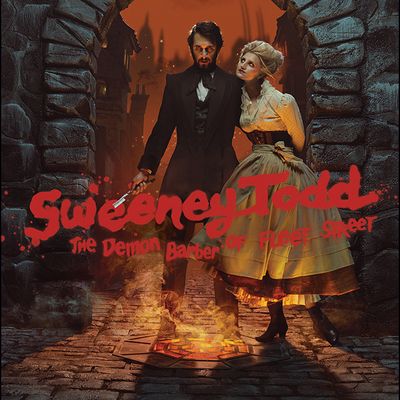
About
In this exhilarating episode, hosts Jeff and Richie take us on an enchanting behind-the-scenes journey into the mesmerizing world of Broadway design. Joining them is the brilliant and acclaimed designer, J. Jared Janas, whose creative genius has left an indelible mark on iconic shows such as the sensational "& Juliet" and the highly anticipated 2023 revival of the thrilling masterpiece, "Sweeney Todd." With each revelation, listeners will be captivated by Jared's personal voyage into the industry, as well as his awe-inspiring work that breathes life into these spectacular productions. Prepare to be enthralled as the hosts and their guest unravel the secrets behind the enchanting design elements that transport audiences into magical realms. So, theatre fans, don't miss out on this extraordinary opportunity to delve into the artistry of Broadway design. Tune in, be inspired, and let your imagination soar as you discover the mesmerizing world behind the curtain. Get ready to experience the magic of Broadway like never before!
If you liked this episode, don't forget to subscribe to this podcast and leave us a review.
Share your thoughts with us on this episode below:
On Instagram: @halfhourpodcast
On TikTok: @halfhourpodcast
On our website: www.twoworldsentertainmentllc.com
Transcript
This transcript was automatically generated and might contain errors.
[0:08] Richie Grasso: Welcome to Half Hour with Jeff and Richie, the Theater and Pop Music Podcast.
[0:12] Jeff Malone: I'm Jeff.
[0:13] Richie Grasso: And I'm Richie.
[0:14] Jeff Malone: And we're bringing you a very special interview episode today.
[0:17] Richie Grasso: And on today's show, we have a very special guest.
[0:20] Jeff Malone: His name is J. J. Jared Janas.
[0:22] J. J. Jared Janas: Welcome, Jared.
[0:24] J. J. Jared Janas: Thank you very much. Happy to be here.
[0:26] Richie Grasso: I'm going to read you all a little bit about Jared's credentials and bio here. So Jared is a highly accomplished wig, hair, and makeup designer whose impressive career spans the world of Broadway, off Broadway, and television. He has a portfolio that includes some of the industry's most iconic productions and has established himself as a master of his craft. Jared's most recent credits include four Tony Eligible Hit Broadway shows from this Tony season, which were Sweeney Todd, & Juliet, Kimberly Akimbo, and Goodnight Oscar, with additional credits that include Ohio State Murders, Top Dog Underdog, How I Learned to Drive, American Buffalo, Jagged Little Pill, Frankie and Johnny, The Claire de Lune, Getting the Band Back Together, Indecent, and Sunset Boulevard.
[1:05] Jeff Malone: Wow. That's an amazing list.
[1:08] Richie Grasso: Wow. Um, and so many other wonderful credentials here amongst all those probably shows. So welcome, welcome, welcome to Half Hour Podcast.
[1:16] J. J. Jared Janas: Thank you very much. I'm very happy to be here.
[1:18] J. J. Jared Janas: I do want to say this season it was not four Tony Eligible, but seven Tony eligible shows, right? Because Ohio State was this season, Top Dog Underdog, and I also helped on Cost of Living.
[1:30] Richie Grasso: Oh, okay. I didn't have that. That's amazing.
[1:32] Jeff Malone: Okay, yeah. So, so many more. I'm glad there's a ton there, and I thank you for making that correction.
[1:38] J. J. Jared Janas: No, that's okay. But this just happened to be like an embarrassment of riches this season.
[1:42] Richie Grasso: Oh my god. It was a wonderful season.
[1:44] Jeff Malone: So yeah, congratulations to you for truly, truly.
[1:49] Richie Grasso: Yay. So, uh, we would love to dive into all of those lovely shows that we talked about, but, uh, before we do that, can you let our listeners know a little bit more about your past wig, hair, makeup experience, and how you got into the business and what led you to these recent works?
[2:07] J. J. Jared Janas: Sure, absolutely. Um, you know, I came to this in a very different way from most people. Um, I didn't actually go to school for this. Um, I actually went to school for mathematics, and I was a mathematician for eleven years before I did this. Uh, so it's a very strange background. Um, and, uh, just to put it plainly, uh, when I was finishing, uh, at school, I had a month before graduation, I had nothing to do. And a very good friend of mine, I was complaining about that last month with nothing to do. So my very good friend of mine said, "Well, why don't you come help out at the student-run theater that she was the stage manager for?" And I said, "All right." So I showed up the next day, and she said, "We need help in the hair and makeup department."
I was like, "Okay, whatever you say." Well, I walked in, and, uh, the guy who was designing the hair and makeup for that show today is a physicist. So it's like the setup of a bad joke: a mathematician and a physicist walk into a hair room, you know. Um, and that's, um, that's really how it started. And then we did a show. This is back in '94. We did a show for three weeks, uh, well, you know, three weekends, because it's, you know, school. And, uh, at the end of that third week, I called my mother one week before graduation, and I said, "Oh my god, I've made a terrible mistake. I know what I want to do now." Um, and I had just discovered it. I didn't even know this was a career. I didn't know anything, you know.
Up to that point, I should say, up to that point, I had literally seen three shows my entire life. I saw the National Tour of Annie in '78, I saw the tour of Les Mis in '91, and the tour of Miss Saigon in '92. And that's what I thought theater was. I didn't know anything else. All I knew were humongous Tony Award-winning shows, and only three of them for that matter.
[3:43] J. J. Jared Janas: So, uh, so then I did that. Um, did that show and I knew I'd made a mistake. I know, like this is what I wanted to do, but now I had to learn everything. But I had just finished 20 years of schooling, so I was not about to go back to school to learn all this. So I wound up getting a series of apprenticeships, um, all over the place. Um, in hair and wigs, also in men's hair replacement, like toupees basically. Um, I did a lot of apprenticeships, and, uh, as a mathematician, I was living in Chicago at the time, and I was moved. My company promoted me and moved me to New York.
[4:18] J. J. Jared Janas: Wow. And so that's how I got here to New York. But you know what New York doesn't have is community theater. So I didn't know anybody, and I couldn't just volunteer somewhere, but we only have professional theater here. So it took me years before I was actually able to work my way into like my first off, off, off, off, off Broadway show, which was, you know, paid a hundred dollars or whatever it paid, but still, because there's no such thing as community theater, they have to pay you something. So, um, so they paid, and, uh, it was great, and then I just slowly started getting more and more gigs. And, uh, in 2005, I just thought, you know, I think it's time for me to make a career change. And, um, I applied for a position at the Santa Fe Opera, and, uh, and I got the job.
And the guy who was the wig master there was also the wig master of the Metropolitan Opera and was the wig designer of Wicked. Wow. Uh, his name is Tom Watson, and he gave me my really first big start. And then at Santa Fe, when we were there at the end of that, he pulled me outside and asked, "What are you gonna do when you go back to New York?" And I said, "Well, I'm gonna go back to my math job because I was on a leave of absence," and he said, "I want you to run my studio," and I said, "I'll see you there."
[5:19] J. J. Jared Janas: Oh, how amazing. And he even said, "Let's talk about the salary." He said, "No, no, don't care. I'll see you there. We'll discuss that when I get there." Because this was the moment. Like I said, you either take that leap or you don't. And it's that simple. The pay didn't matter. None of that mattered. It was all about this is what I needed to do. And so that's how it started.
[5:36] Richie Grasso: Yeah, exactly. The turning point in your career. So awesome. So tell me a little bit. I'm so curious to know a little bit more about your process when you are on a show and you're given the script and you're working with the director and you are looking at the character. Like what factors do you consider, such as like character's personality, time period, setting? Like what is your process when you're first starting a show to make sure that this is done, you know, correctly?
[6:00] J. J. Jared Janas: Well, okay, so the first thing I do is obviously read the script, right? I don't actually want to talk to, uh, the costume designer about the show yet. I'd love to just read the script myself and just start forming a picture in my head, even if that picture's completely wrong. That's fine. You know, I want to read that. I want to take a look at each character's social background, economic status. I want to talk about their, um, uh, what time of day is it? Uh, how many, how long, um, how much time is spanned throughout the entire show? You know, is it all in three hours, or is it, uh, two years? What is it, you know? Because if it's all within, like, say three hours, then we know, oh, we're talking about one wig a person.
We're talking, but if it's two years, well, who keeps the same hairstyle for two full years? Um, well, okay, women, I should say. Guys, I mean, I'm bald as you say, and so I've had this for 20 years. Uh, but you know what I mean. So, you know, there's a lot of things I'm looking for, and then I'm also looking for things like, um, are they tired? Are they sick? Are they, you know, what are they? Uh, so each of those things plays a factor. And, but I'll tell you one thing I won't do is that I will, if this is a show that's been done before, this is a revival or anything, I will not look up anything having to do with the previous version because I just don't like being influenced by something else.
Um, it's somebody else's design, and I really don't like to be influenced that way. Um, not that that's not that it's wrong to be influenced, but I just feel like I can't really design this show fully unless I can really think about it myself without any other outside influence.
[7:25] Richie Grasso: So do you usually have the creative control when you get the script first to kind of come up with your own, um, vision and then you present that to the whole creative team, or how involved is, let's say, the director or a playwright, um, in this process as well?
[7:43] J. J. Jared Janas: Sure. You know, I'm glad you actually asked that question because especially when you included playwright, because that's kind of important too. We rarely ever talk about the playwright, which is really interesting that you said that. Um, so I am technically part of the costume design team right now. Although I have my own budget, I have my own, I'm a designer of my own right as well. But the costume designer is responsible for the look from head to toe of every single character on that stage, right? Or every actor on that stage. And they've already had discussions with the director about what they kind of want. So the two of them have already formed a plan. And then when I've made my, like after I've read the script and I've sort of started thinking through what I what I'm thinking, um, I then talk to the costume designer and we start making a plan.
You know, they show me the sketches they've come up with, and usually their sketches include somebody like with hair, but the hair in the sketches is usually not prescriptive. It's just a placeholder. You know, I mean, granted, if so let's say we're doing, you know, 1970s, then I assure you they've drawn 1970s hair, you know what I mean? But if they're doing modern day hair, there's a lot of things you could be drawing, you know. Um, so oftentimes it's not prescriptive, it's just a placeholder. And then so it's my job to come in there with them, talk about all that stuff, figure out where we want to go, looking at period, looking at all the other factors I've already talked to you about. And then we present that to the director as well.
[8:56] J. J. Jared Janas: But now it's interesting you bring up playwright, and I say that because I've done a few shows where the playwrights are actually writing semi-autobiographical plays. Um, oftentimes you want to honor the characters in their own real life, right? So I did a show one time that Billy Porter wrote called While I Yet Live. And the characters are based on real people. And I remember, uh, one of the characters was, uh, Lilius White played one of his aunts, and she, um, you know, there was, there was Lilius White didn't look anything like his aunt, but I wanted to somehow honor, like what she actually looked like. So, you know, he showed me some pictures and we came up with something, which was really great that he was there and had that, you know, image in his mind for me.
And then, and I certainly want to make sure that he's happy, right? So, um, anyway, so that's what, no, that, and I, I kind of want to piggyback off a little bit of what you were saying about shows that have come before, like when you're doing revivals. So you've like, I'm gonna just use like you just did Sweeney Todd, right? So Mrs. Lovett. So obviously iconically played by Angela Lansbury and even Patti LuPone, two very different productions with two very different hairstyles. So when you're doing that, you know, for Mrs. Lovett, like you're telling, I would love to hear a little bit more about you didn't look at anything prior, you designed your own wigs based on what you're seeing and reading ahead. Tell me a little bit more about that, because I love hearing when revivals are not always just a mimic or an interpretation of an older production, right?
[10:07] J. J. Jared Janas: So Sweeney Todd is a little bit more difficult because, you know, I've seen, I saw the Patti LuPone production, and of course, who hasn't seen the video with Angela Lansbury, right? Right, right. So I mean, I, I mean, so this one's a little different, but I didn't go back and look at it again. I haven't seen those productions in years. Right. But so I didn't go back and look at them again before I designed those, and that's the important thing. Now I remember, of course, Angela Lansbury's wig having those two little, those two space buns, we'll call them, but they were, I remember them being flawless. I remember them not being messy or anything like that. And when I was, when so when I sat down with Annaleigh Ashford this time, and I'd worked with her before, so we have a very good rapport.
You know, one of the things that she made it very clear was that while she wanted to do her own, her very own Mrs. Lovett, she also wanted to somehow honor, um, two iconic Mrs. Lovetts, Angela Lansbury and Helena Bonham Carter. Oh yeah. You know, she wanted to like honor both of them. And I said, well, you know, I said, I think I think there's a way we can do this. And, but the best part of this was that Annaleigh said, "I think the texture is the most important." She said, and this is her exact, these are her exact words. "I think the texture needs to be like Bernadette Peters brushed her hair out." And I was like, I understand. I've got it. I know exactly the moment she said that the design was done. We fit it, we figured it out right away.
[11:36] J. J. Jared Janas: Yeah. But both, both, she, she gets two wigs out in act one and an act two, uh-huh. Which was, I don't think Angela, I think Angela only had one for the whole show, and Patti as well. But we, um, so I, I knew exactly what each wig was going to be the moment he said that. I was like, I, I, I've got it, I figured it out, you know. And I was like, so we can still honor, um, Angela Lansbury a little bit by giving us, okay. So, you know, the idea of two space buns made sense because she, this was utilitarian. She's just trying to get her hair out of the damn way, right? Right. She's trying to make her pies, you know, as poorly as she does, but the hair's gonna get in the way, right? So I was like, well, okay, who, how would she put it up if she had Bernadette Peters' hair?
Um, and then it wound up looking like the messy, the sort of like that controlled chaos that Helena Bonham Carter had. Yeah. And then Act Two, I was like, well, Act Two just has to be like, she thinks she looks the best. She is, she feels like she's done herself up better than anybody else with. So she just has to look like what could she possibly do with her hair? Knowing full well that she's not exactly a stylist. She doesn't really think about her looks the same way. So we came up with something really easy, but yet stylish for her. Not stylish for anybody else, but stylish for her.
[12:48] Richie Grasso: Mm-hmm. So how, in some shows, I'm sure you have to deal with things like quick changes and or makeup changes. How hard is that sometimes for you during like the creative process to come up with that where it's like, you know, they have 60 seconds and you have to have a completely different wig on or different makeup?
[13:08] J. J. Jared Janas: Well, first of all, you're funny. 60 seconds isn't a quick change at all. I would say, I mean, I would, that that's a, that's a hell of a lot of time. Um, like the fastest quick change I've ever had to put up with was 10 seconds. That was head to toe, full costume and hair. Wow. And, and the actress had to re-enter and she starts the next scene with the line. So she had 10 seconds, that was it.
[13:27] Richie Grasso: Wow.
[13:28] J. J. Jared Janas: Wow. Wow.
[13:29] J. J. Jared Janas: Um, so but yeah, um, you know, we do take that into consideration. But the nice thing is that, um, because of the way that wigs are attached to the head, they're all easily changeable pretty quickly. So really what you're doing in that sense is relying on an amazing team of people backstage. Right? Right? So it doesn't impact me nearly as much. But no, you did mention makeup. Now that's trickier because you can't, there's no such thing as a truly quick change in makeup except for removal of lipstick or addition of lipstick, right? You get the one thing we're never gonna do is really change eyes because removing eye makeup is so sloppy. Uh, and it just takes minutes to redo it. So we never do quick changes with eyes or anything like that.
It's gonna be like, let's say someone needs to be tarted up. Fine, add a ton of cheek and a red lip and get out there. You know, like you can do that in a few seconds, but you that's about all you can do with makeup, um really quickly. Um, at least if you don't have a makeup supervisor on the show, if you just if you're relying on the actors to do that stuff.
[14:24] Richie Grasso: Um and and it's so interesting to me because I so we see a lot of shows with a lot of people, not theater people, people who are just enjoying the show and they don't really know too much about what's going on behind stage.
[14:35] Richie Grasso: And I'll say sometimes at an intermission, I'll say, Oh my gosh, and those wigs are so great. And I I can't tell you the amount, and I hope you take this as a compliment. I can't tell you the amount of times people will say they're wearing wigs, and they can't believe that they're and I and I said, Yeah, like a lot of times they are. And the question I have is like I'll use Kimberly Akinbo, for example, a modern day present-day show. I Victoria Clark and Bonnie, congratulations to them because they're just doing amazing things. And I see Victoria, I'm like, wow, and I'm like, oh, and then I see her on the Tony Awards, and I was like, wait, her hair is not I almost thought that that was her hair in the show.
And so I'm like, okay, we're talking about a modern show. There's wigs in that too. So my question to you is how do you decide when you're using natural hair, when you're using wigs? Is that a budget issue? Is it, oh, it's modern day, so we're not gonna use as many wigs? Like, what is the process when it comes to wigs versus no wigs?
[15:26] J. J. Jared Janas: Yeah, there, you know, there are so many ways, so many things to think about when it comes to this. Yeah, first of all, so like so. Let's just talk about modern, because rightly we can all agree that if it's period, we probably have to use wigs, right?
[15:35] Richie Grasso: Right, right, right.
[15:36] J. J. Jared Janas: All right, so modern. So Kimberly Akimbo was set in 1999-ish. Okay, right. So still very modern, but you know, um, in that show, because we knew that we wanted people to look kind of more authentically late 90s. We knew we probably wanted to do wigs, but there are a few factors that come into this. One, does somebody have to wear have more than one look in a show? If they have to have more than one look, it's wigs. And the rule of thumb basically is once in a wig, always in a wig. So it's in other words, don't use their hair for part one and a wig for part two, unless there's so much time in the middle to prep their own hair to get it out of the way.
[16:09] Richie Grasso: Right.
[16:09] J. J. Jared Janas: So basically, it oftentimes I've been asked to recreate their the actor's own hair as a wig so that they can look like themselves and then look like something else later. So that's pretty common. So the second thing is, um, does the actor want to use their own hair? You know, okay. Actors have actors can have a lot of say when it comes to to their um to their hair because not wearing wigs means you have to style your hair every day. That's potentially damaging. You know, you're probably not used to using heat on your hair daily. I mean, I hope I hope you're not used to that at least.
[16:40] Richie Grasso: Right, right.
[16:40] J. J. Jared Janas: Um, because that is very damaging, you know. And uh so if if we have to use our own hair, then we have to use a lot of products to prevent the damage and sometimes even give them treatments so to counteract the damage, you know what I mean? So I personally I prefer wigs all the time because I don't want the damage. Plus, with the wigs, I can get a little bit better continuity. Because you know, let's say, for example, an actor's running late to a show. Well, if you're running late to your half hour call, then you're running, you're sweating. Now I'm not gonna get the same result out of your sweaty hair, and you're gonna continue sweating while you're trying to get ready, right? So I prefer to use a wig, I don't have to worry about that as far as continuity goes.
Um, so yeah, the actors have a lot of say, time period, all that stuff. Um, you know, and ultimately, um I mean, I think ultimately it just comes down to what's gonna be the the easiest thing for the production to make the production go best. Give us the best look quickly.
[17:29] Richie Grasso: How often are men wigged on the stage?
[17:33] J. J. Jared Janas: Well, um, not nearly as often as as um the like female presenting actors. Um I think that we have occasionally look so in a modern day show, it's it's a lot less common, but you know, like for example, I did a show right before the pandemic called 72 Miles to Go at uh Roundabout at the Lorapels. And um we had to have an actor who has to get um uh a mil a marine cut to his hair during the show. I mean, not on stage, but he could like goes off to Marines, comes back and got a shaved head. So we had to duplicate his hair really well. Um for stuff like this. So it's only when you need specific things like that in modern day shows that you really need that, you know, or like somebody just has you know the completely wrong color hair and they're not willing to color it again, or whatever.
You know, so very it's it's those moments when you need those wigs. Uh and by the way, when you said your friends didn't know that they were show wearing wigs, what's really fun is that in that show, 72 miles to go, I actually sent the I had the the actor and his understudy both had their wigs on. I sent that photo to my one of my friends who's probably the one of the top two wig makers I've ever met in my life, and he said, Why are you sending me pictures of these two actors? I said, Do you like the wigs? And he said, Wait, they're wearing wigs? I said, Yes, and it was the best compliment I've ever gotten. I'm one of the truly best wig makers.
[18:51] Richie Grasso: I'm glad you take that as a comment because I am always so blown away by just and to me, like I I worked in a lot of theaters, so I'm always like, this is this might be silly, but I'm looking for the the wig line. Like I'm looking for and when you see that it could totally be their scalp, I'm like blown away by that makeup blend. I mean, there's so many millions of things you all do so wonderfully, but to me, I've always like that blend of the wig to the skin and how it looks just, especially if I'm sitting in the front few rows, I'm like blown away by that skill set alone of just making it look so real. It's amazing.
[19:24] J. J. Jared Janas: Well, let me let me you mentioned Kimberly Akimbo earlier and Vicky Clark. Yeah, you know, uh, I'll tell you the secret behind her wig, her first wig, is that or both of her bunch of other, they're film fronts. It's film lace in front. So it's the lace that disappears in HD. Okay. So it also, but so one, that wig is way more expensive because it's so much more difficult to build on that lace. Number two, the life of the wig is much shorter. Like you probably get maybe five months out of that wig. Whereas with the regular theatrical lace, we can get a year or more out of it. Right. So, but we thought we all thought it was very important for Vicky to have film lace because we needed it to look like it really was her hair.
And then when we oh, I don't want to give away the secret for the second wig, because if you haven't seen the show, never mind. But it's very important. Suffice it to say, no, I mean the the listeners. If you haven't seen the show, it's very important that she has film lace that you really believe this is her own hair. Let me leave it at that.
[20:18] Richie Grasso: I understand exactly what you're saying. Because that moment in act two when everyone goes, I know the whole audience goes, like that's that to me. I feel so great when the audience does that. That's amazing. I had a reaction like that, and I said to myself, oh, and I almost started like tearing up a little bit because I found such uh emotion with that moment of uh that whole character's journey is so emotional. But yes, that is a moment. So I'm glad, oh my gosh, yes. On my social media, I have not been able to post about that. I want to post that so badly, but I'm like, nope, I can't. I have to do this. Once Kimberly Kimbo is finally done with it's this production in the tour and it's all done, then I'm gonna post that. But until then I can't, and I'm like, damn it, it's so good.
[20:57] J. J. Jared Janas: That's when you get to give the spoilers for that.
[21:01] Richie Grasso: Yes, right. I guess to give the secret away.
[21:02] Richie Grasso: I'm curious though, with with people that are using their regular hair, are they getting cut at the theater, or do they go to a salon and they have to say, oh, this is how my hair needs to be cut for the show I'm in? And how often are they going?
[21:13] J. J. Jared Janas: Alright, so can I assume we're talking about Broadway?
[21:18] Richie Grasso: Yeah.
[21:19] J. J. Jared Janas: Because you know, off Broadway and regional are very different stories. But let's talk about Broadway.
[21:23] Richie Grasso: Just Broadway.
[21:24] J. J. Jared Janas: Okay, good. So on Broadway, um, so for example, the guys who are not wearing wigs, right? So usually during during tech, I do all of the first haircuts for the men. Okay. Like I do them myself, I set the look, and then I take all the photos, and then usually the the the crew there, there's this usually like a supervisor and an assistant, whatever, um, one of them will maintain those cuts. Now, if I have however, if an actor wants to use their own barber, because they just have a connection, that's fine with us as well. And we can reimburse for that. But we have to send them with photos like you strictly must adhere to this haircut right here. You cannot change this. And there's even a rule on the call board that you're not allowed to change anything to do with your props, costumes, and makeup slash hair.
So they cannot change that style. Um, and now for some women, if we have to have their hair cut and colored, um, or even guys who have to have color, we don't usually do that at the theater. Um I prefer to send them to a salon to a special a color specialist. It costs a little bit more, but it's worth it, you know. Plus the salon is set up for proper color. Theater's not set up for the proper ventilation for that. And just better to set them out.
[22:34] Richie Grasso: And how often are you having to maintain the hair, do you think?
[22:38] J. J. Jared Janas: Oh, I mean, the haircuts are usually every two to three weeks for short hair, and for longer hair, anywhere from one to two months, depending on what they need, you know.
[22:48] Richie Grasso: Yeah, that's interesting.
[22:49] J. J. Jared Janas: So color, on the other hand, probably once a month.
[22:49] Richie Grasso: Yeah.
[22:49] J. J. Jared Janas: Once a month.
[22:53] Richie Grasso: No, where it's showing.
[22:55] J. J. Jared Janas: Exactly.
[22:56] Richie Grasso: So uh we would love to know what's your life like outside of wig hair and makeup design. Do you work in other spaces outside of Broadway? And what are some of the future projects you're working on?
[23:06] J. J. Jared Janas: Sure. You know, I do also uh work um off-Broadway regional opera, uh, some TV. I'm not I'm not the biggest fan of being on set. So I don't I haven't tried pursuing too much more with TV film. Usually for TV film, what we do is we act as the wig maker. Um so we build the wigs and send them off to set. We don't have to ever go, you know, that's the best part. Um I I prefer theater just because it, you know, they always talk about the theater community. Well, it really actually is a community. People do, you know, you you do make your friends within the theater community. Film TV, it's more like a Monday to Friday kind of job. So it's like every other career, it doesn't quite have the same sort of community. Um, but uh as far as future shows go. Like I have um coming up this year, you know, I have uh prayer for the French Republic is going abroad. Congrats on the show.
[23:52] Richie Grasso: So dude, thank you.
[23:53] J. J. Jared Janas: Yeah. Um I just signed on for uh signed a contract for this new national tour of Peter Pan that's going out directed by Lami Price.
[24:00] Richie Grasso: Yes, I saw that.
[24:01] J. J. Jared Janas: She's very exciting, and uh and uh I get to work with uh Serafina Bush, who's the costume designer. It's the first time I get to work with her. She she did for Colored Girls and got totally nominated for that. She's a lot of fun. So I'm looking forward to that. Um, you know, I they announced the national tours of uh Kimberly Akimbo and Juliet and Swing Todd. So those are off in the future.
[24:20] Richie Grasso: Yeah.
[24:20] J. J. Jared Janas: Um I have a few other shows that are coming that I don't have a signed contract for right now, so I'm not allowed to talk about them yet. But um there's there's a Broadway show coming up before uh Pair for the French Republic that I can't talk about yet, but uh that's that's exciting, you know.
[24:33] Richie Grasso: Yeah, yeah, yeah, yeah.
[24:34] J. J. Jared Janas: That's great.
[24:35] Richie Grasso: Yeah, we'll see when it's announced.
[24:37] Richie Grasso: Yeah, we um so we have one final question before we wrap up. We ask all our guests this on our podcast. We would love to know if you have any fun behind the scenes moment or memory that's something silly or funny, or just like a like a behind the scenes story that you might have from one of your shows about anybody or anything you've done that you'd want to tell our audience.
[24:58] J. J. Jared Janas: Oh my gosh. Wow, that's you put people on the spot like this, don't you? Um, there are so many moments that I'm not sure we can actually talk about.
[25:06] Richie Grasso: Yeah, I'm sure.
[25:07] J. J. Jared Janas: You know what? I'll tell I'll tell you this. You know, the funniest moment I think that ever happened to me was that I worked with an actor who has a perhaps a reputation for being maybe not the nicest person backstage, just putting that out there.
[25:26] Richie Grasso: Um no names, no names here.
[25:28] J. J. Jared Janas: Yeah, yep, yep. And she and she um, you know, I've always gotten along really well with her somehow, and I'm like, well, I I mean, I've seen the behavior, but I've never it's never been aimed at me. You know, I was like, I'm always waiting for that other shoe to drop, right? And then one day I went in for a fitting, and she was playing some hard rock music. Uh, and when I went into the music, she looked at me. Now, I for people at home who can't see me, I'm covered in tattoos. Um, although if you if you saw me in the street, you might be like, ooh, kind of like you know, the tougher looking tattooed guy. But if you looked at my tattoos, you'd realize that they're all part of my resume. Uh they're all show logos.
Like I have it. I've got Porgy and Bess on my leg for God's sake. You know, Sunset Boulevard on my leg. I've got Into the Woods on my right arm. You know, like so it's it's it's so it i if you're not paying attention, you might think something differently. Anyway, so when I walked into this actor's room, and uh she said something, she said, It's so nice to see you. Um, you know, I was gonna turn the music off, but something tells me that you're probably okay with this. And then she looked at me up and down and just gave me this look and I'm like, oh my god, that's why she's been so nice to me all this time.
[26:39] Richie Grasso: Oh my god.
[26:41] J. J. Jared Janas: And it never dawned on me. And that was really one of the funniest moments of my career.
[26:47] Richie Grasso: I love it. I love it.
[26:48] J. J. Jared Janas: So again, I refuse to say who it was, but that was.
[26:51] Richie Grasso: That's okay. That's okay.
[26:52] J. J. Jared Janas: That's awesome. We love hearing things like that. You know, things you can do. Although, if you want off record, I'll tell you later.
[26:57] Richie Grasso: Okay.
[27:00] J. J. Jared Janas: We're gonna be asking.
[27:01] Richie Grasso: Yeah.
[27:03] Richie Grasso: Cool. Well, this is great. So um, that's all we have for today's episode of Half Hour. So thank you all for listening.
[27:10] Jeff Malone: Yeah, and we really hope you enjoyed our conversation today with Jared. Jared, if people would like to learn more about um you and and your work, where can listeners find you on the social media interwebs?
[27:19] J. J. Jared Janas: Great. People can find me at two two places. Uh, one is my my website, um www.backstageartistry.com. That's where all my um my resume and all that stuff is there. And then uh on Instagram, uh, I'm at J J J A N A S. So J Janas underscore. You can find me uh there. And that's uh I use that strictly for work. I uh show all of my work there, including for young aspiring designers. I show them how I've done things step by step.
[27:48] Richie Grasso: I love it. That's awesome.
[27:49] Jeff Malone: That's all and we'll include that in our description for everyone to go follow you and check out everything that you're doing. So to all of our listeners, if you have any suggestions for future episodes, we'd love to hear from you. Um, you can connect with us on Instagram and TikTok at Half Hour Podcast. Also, if you'd like to check out our full reviews of some of the shows that Jared has done the hair, wigs, and makeup for, check out Tweenie Todd and Juliet, Kimberly Akimbo, Goodnight Oscar, Top Dog Underdog, or any other shows that we discussed today, um, you can go back and listen to our past episodes.
[28:20] Richie Grasso: Yes.
[28:21] Jeff Malone: So thank you so much for joining us today, Jared. We can't wait to see what's in store for you and all your future projects. And thanks again.
[28:28] J. J. Jared Janas: Thank you so much. This was so much fun.
[28:29] Richie Grasso: Yes.
[28:30] Jeff Malone: So signing off for now, I'm Richie.
[28:32] Jeff Malone: And I'm Jeff. Saying ta-ta.
[28:34] J. J. Jared Janas: Bye.
© Broadway Podcast Network, All Rights Reserved