

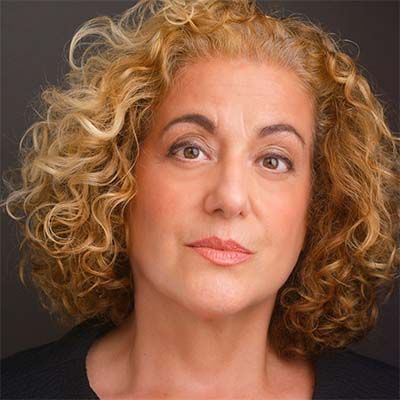
In this episode we have a conversation with the three-time Tony nominee Mary Testa, as she shares insights from her incredible career in the industry. From her current role as Granmama in THE GARDENS OF ANUNCIA at Lincoln Center to her collaboration with Michael John LaChiusa, Mary provides a glimpse into the world of Broadway... Read More
From the show: Half Hour with Jeff & Richie (Post-Show Broadway Discussions and Interviews)
Guests
About
In this episode we have a conversation with the three-time Tony nominee Mary Testa, as she shares insights from her incredible career in the industry. From her current role as Granmama in THE GARDENS OF ANUNCIA at Lincoln Center to her collaboration with Michael John LaChiusa, Mary provides a glimpse into the world of Broadway. She also discusses her thoughts on the current state of the industry and treats us to a fun behind-the-scenes moment from her first Tony-nominated role. Tune in to hear captivating stories and valuable perspectives from this seasoned performer. Don't forget to subscribe to our channel for all things theatre.
If you liked this episode, don't forget to subscribe to this podcast and leave us a review.
Share your thoughts with us on this episode below:
On Instagram: @halfhourpodcast
On TikTok: @halfhourpodcast
On our website: www.twoworldsentertainmentllc.com
Transcript
This transcript was automatically generated and might contain errors.
[0:08] Jeff Malone: Welcome to Half Hour with Jeff and Richie, which is now on the Broadway Podcast Network.
[0:12] Richie Grasso: I'm Jeff.
[0:13] Richie Grasso: And I'm Richie.
[0:14] Jeff Malone: And today we have a powerhouse of theater with us, an actor who has left a substantial mark on both Broadway and Off Broadway. She's been nominated for three Tony Awards, six Drama Desk Awards, and an array of others. She's a true pro of the industry, having been featured in 14 original cast albums. She's graced the stages of Broadway in shows like Oklahoma, Wicked, and Guys and Dolls, and has even dabbled in opera and film. She's the recipient of the Legend of Off Broadway Award, has a special Drama Desk Award celebrating three decades of outstanding work. You might recognize her from Ratatouille, the TikTok musical, or her appearances on television shows like The Good Fight and Marvelous Mrs. Maisel. She's currently starring as Grandmama in Lincoln Center's off-Broadway production of The Gardens of Annuncia. She's none other than the brilliant Mary Testa.
[1:01] Mary Testa: Hello.
[1:02] Mary Testa: Thank you.
[1:03] Mary Testa: That's quite an intro.
[1:05] Jeff Malone: Mary, welcome to Half Hour Podcast, and thank you so much for joining us today.
[1:09] Mary Testa: Thank you for asking me.
[1:10] Jeff Malone: Yes. So before we dive into your current show, Gardens of Annuncia, we want to just talk a little bit about your journey. We always like to ask our guests the intro question of how you started in theater and how you got to where you are today from when you went through your training or from some of your first shows. How you got started?
[1:24] Mary Testa: I um started uh, you know, I majored in theater at the University of Rhode Island and uh took all my theater credits, and that's where I met Bill Finn. Um I moved to New York. Um, I took all my I finished my first semester junior year. Uh, didn't want to finish because all I had was elective. So I worked three jobs for a summer to save up money, and I moved to New York in 1976 and immediately started singing with Bill and Alison Frazier and a woman named Kate Passick, and that's how In Trousers came about. And um, you know, I just sort of hit the ground running. Uh after school, I didn't really study and I started study voice for about six years, but um I just sort of uh was trial by fire. I just started working in the theater and have been working for 48 years. I'm very lucky.
[2:15] Jeff Malone: Wow, amazing. We love that. And you've been in the industry for over 48 years and have you worked on numerous projects. What keeps pulling you back to the stage and what are some of your favorite roles that you've played?
[2:28] Mary Testa: Well, you know, I like doing everything. I and I do everything. I do stage, film, television, concert work, um, and one opera. Um I I like the live experience. I will always love the live experience. I love the collaboration of what it takes to create a new musical or you know, work on a revival. I love the collaboration of actors and directors and designers and house and all of that. And um, I think I will always do um live theater. It's much harder than anything else because it's a lot of time and a lot of energy, but the excitement of live theater is that you know, everything can be different, and the audience is a definite member of the cast. So I love that whole experience. And so I think I will always do live theater. I'm hoping that I will age into a place where I still remember lines. That would be great, right? You know, um I think I will always do live theater.
[3:33] Jeff Malone: What are some of your favorite roles that you've played?
[3:36] Mary Testa: Well, you know, I they're all wonderful, but I have to say Queen of the Mist, which was a musical that Michael John LaChiusa wrote for me. Um, and it was um, and my um Drama Desk is for three decades of outstanding work and for Queen of the Mist.
[3:52] Jeff Malone: Oh amazing.
[3:53] Mary Testa: Anytime I get an award, it's always like doubled. Um my Obi Award is for two different things. Um, you know, it seems like they go, oh, well, let's just give it to her, and then here's all the reasons, you know. So yeah. But um uh yeah, Queen of the Mist was quite an experience, and that was probably like 11 or 12 years ago now. It was a brilliant piece and a brilliant character, and um it was kind of my soul, and so I think that will always be my favorite.
[4:24] Jeff Malone: Is that was through Transport Group, yeah?
[4:26] Mary Testa: Yes, yeah, I was an intern for Transport Theater Company way back when and I worked with Jack and Lori and then I assistant directed Joe Clark on The Memory Show through Transport.
[4:34] Richie Grasso: Oh, yeah.
[4:36] Mary Testa: A wonderful word.
[4:40] Richie Grasso: Oh yes, yes, he's wonderful.
[4:42] Mary Testa: And I loved everyone over at Transport too. It's wonderful.
[4:44] Richie Grasso: Yeah.
[4:45] Mary Testa: Um so in your current show, Gardens of Annuncia, you're playing Grandmama. We saw it a few weeks ago. We loved it. I loved the score, the message, the story. I just felt so good leaving there. And I just I love original works like that. Um, what can you talk to us a little bit about what was it like approaching and building this character? How long were you involved kind of with the process of the show to getting it to the off-Broadway space? And what do you wish audiences kind of take away from your character?
[5:09] Mary Testa: You know, um, I've been involved since the beginning. So I'm gonna say about five or six years ago, we started doing readings. Um, and Grandma has always been this wonderful sort of dichotomy. Um, and then of course, Michael John writes for me. So uh, you know, he writes to my strengths and all of that. I I really I I'm very proud of this show. I think it's beautiful and that they don't do shows like this anymore. And I really wish more people would see it. And um I I used to look at the chat things. I don't anymore, but I remember seeing somebody who said, Oh, it's such a slight show. And I thought it, no, it's actually a very deep show. It's a very deep show about being created by the people who love you and letting that go and holding on to it and making that part of your life. And so I just felt bad for that person because they obviously don't have that much of a soul.
[6:13] Richie Grasso: Yeah.
[6:14] Mary Testa: But um I uh I just really I think it's beautiful. I think I'm a very big fan of Michael John. I love everything he does. He's so prolific, and every show he writes is very different. I think this score is just gorgeous, and it's a total tribute to Graziella, who it's about her life, and it's she's retired now. This is her last um show. Uh, we, as I said, I've been involved, we've done several readings and workshops, and then we did it uh three years ago now at the Old Globe.
[6:49] Richie Grasso: Um, yes, yes, um, which is a beautiful theater and very similar in sort of feel to um the Mitzi Newhouse, except it's bigger, it's a bigger theater, it's a bigger stage, and it's proscenium. And so when we were doing it, I felt, and other people did too, like the Mitzi Newhouse was the perfect place for this theater. Given Michael John and Graziella's history with Lincoln Center and the number of projects they've done. So I'm immensely pleased that Ira Weitzman brought it and did it because I think it's a beautiful sort of ending for Graziella. And now she can go enjoy her garden and enjoy her house upstate and you know, retire knowing that she's got an extraordinary body of work to be proud of.
[7:37] Richie Grasso: And I will say to piggyback off that, Michael John LaChiusa's scores have always stuck with me. I and I'm and and kudos to his orchestrator because when we see that's Michael Starobin, the Michael Starobin. Because when we when we see the orchestra revealed in the middle of the show, I was like, oh, this has to be like a 20-piece orchestra. And I'm like, wait, these orchestrations are written so you would swear you're performing with this like huge 20, which is no, I mean, that what a like a skill to be able to make an orchestra sound that full and rich like that.
[8:06] Mary Testa: Well, Michael's a just a brilliant person. We he and I have collaborated over the years. We met doing In Trousers, he was the orchestrator on In Trousers. It was like his first job. He was such a young pup. Um and we have an album together, and we've collaborated over the years many times, and uh he's just wonderful. So the whole thing is like a present, you know.
[8:26] Richie Grasso: Yeah, totally, totally. And speaking on your collaboration, you've been part of seven projects with Michael John.
[8:33] Mary Testa: Yes.
[8:33] Richie Grasso: Could you can you share more about this partnership and what makes it so special and productive?
[8:37] Mary Testa: You know, I just get him and he gets me. We're Italian, and you know, we're both Italian to the I'm Italian too. So I I consider him like my tribe. And I really, you know, we talked about this and I've talked about this. Like Italians don't get their due. Like these days, every minority is getting their due, but Italians are constantly being pooped on. So I I get what I just think he is a genius. And I and I've said this many times in interviews, but he writes women like nobody. And the way he writes his scores, everything you need as an actor is in the music. Everything. So I just really love, and he's hilarious and very dear to me. And uh I don't even remember when we first met, but you know, I I have been involved with seven, too, have not been produced yet. But um yeah, I'm very proud to be uh one of his muses.
[9:39] Richie Grasso: I love that.
[9:43] Jeff Malone: We'll be right back.
[9:47] Richie Grasso: Welcome back. And and you've worked with so many people throughout your career. And and when you were whether you were just starting or to now, who is who are people in the industry, whether they're actors or producers, directors who you've idolized or you've admired that you've got to be.
[10:00] Mary Testa: I don't idolize anyone ever.
[10:03] Mary Testa: Okay, okay um I don't. I just don't have that gene. Um and I whoever I'd worked with that I think is smart and deep and interesting and collaborative is who I love. So um I've worked with plenty of directors who are not that way.
[10:21] Mary Testa: Um and um it's always, you know, an experience, but my favorite experiences are with people who truly understand that theater is a collaborative effort. Um, Daniel Fish is one. I adore him, I love working with him. I've worked with him a few times now. I love the way his brain works. Um, and you know, I just I just enjoy working with people that I love on projects that I love at places that I love. So, you know, I there's no director that I've watched their work and said, Oh, I just really well, maybe David Cromer. Maybe David Cromer. I've not worked with him, and I think his work is just exquisite. Um, but you know, if he wanted to, he'd hire me.
[11:06] Jeff Malone: So and just really quick what speaking about Daniel Fish, we you I know you worked with him on Oklahoma, this revival. Jeff still says to this day it's one of the greatest things he's seen. Because it was I because I said, Jeff, this is very different from the original, but it stayed so true to the story and the everything's stuck in roots still. And so I know there was the gamut of people that were like, this is not like the origin. Like, so when you were hearing that, or if you were hearing that, what was your experiences doing this? What felt like a new work, but was staying so rooted in the original text?
[11:38] Mary Testa: Well, again, I was involved from the beginning. Uh, from the first table read at New York Theater Workshop, and you know, nothing was cut. There were some lines that were um like uh a couple of lines that were given to another character so that there weren't so many, they had to like kind of cut it down a little bit. Um, but I I just thought it was just true and simple and um, you know, nothing was changed. Um the people who hated it, um, I found it sort of very interesting because if you want to see um, you know, Oklahoma the way it's always been done, you can see that anywhere in the country because it's done all over the place. Anyway, but I think if you're gonna do a show that's 75 years old, you need to look at stuff with fresh eyes, and you need to see how it resonates in this time.
And you can do historic and you know, if you want to see that personally, I'm not interested in that. So you know, uh, I think there's room for both people and you know, and and Oklahoma was an interesting experience because it was black and white. There was nobody in the middle. There were people who either hated it or people who saw it multiple times.
[12:51] Richie Grasso: Yes, yes.
[12:52] Mary Testa: And I love the classics. Like I am the first person to tell you I love what I love the lavish Lincoln Center revivals of the classics. I do, but then I see this and I'm like, oh my gosh, it was clearly a collaborative effort with so many people making that work so well. It was brilliant.
[13:06] Richie Grasso: Yes, it was brilliant.
[13:07] Mary Testa: Yeah, really. I remember sitting the couple next to us when we were at that show, they were huffing and puffing through the whole show. And I was like, why? Why are they doing that? Because of like this is so different and such a fresh take on a show. It gave so much of the context of the show like meaning that you were like, Wow, I never looked at it that way. And it's so much it also looked at Judd as not the really the villain, that the villains can be many people, and that you know, there's there is that yin and yang and everyone that is a good thing and a bad thing. And I think that it examined that beautifully. So yeah, I'm sure they huffed and puffed, and they either left an intermission or stayed and huffed and puffed the whole time. It was a very interesting experience, but again, another piece that I was very proud to be part of.
[13:59] Mary Testa: Yeah. Could you talk a bit more about the process of bringing such a song to life? Well, it's always actually that song has always been there from the very beginning. It's about I find Grandma hilarious because here she's very much in love with this man, but knows that if he is around her all the time, she will end up hating him. So she gives him the boot. And this is in the 40s, you know. Um this is a very different time. So she's waiting for a lot of things from him. His responsibilities out she's waiting for him to return so that she can get a little nooky for a week and then send him on his way again. Um because he realizes that she's the woman for him, but not again, not to be around all the time.
And I just find that just such an interesting thing. So the song has been there from the beginning, the same thing, it hasn't really changed. And I just love that they are singing together, but not together until the end when then they come together. It's just I I just think it's a delightful number, and you know, have always enjoyed doing it.
[15:08] Richie Grasso: Where do where do you think Gardens is going next after this? Do you think it'll license out? Do you think it'll you I hope so, but I don't know. I have no idea.
[15:17] Mary Testa: Yeah, I mean, we're not moving anywhere. Uh both Andrea and Eden have Broadway shows coming up. Right, right. There was never talk of that anyway. I mean, it's too bad. I would love to see this beyond Broadway, but you know, yeah, um, yeah. Like I can't tell you how many people are like, what's gonna happen with Cream in the Mist? Nothing, nobody cares. No, nobody cares. Um, but um, you know, they're just wonderful pieces of art that last as long as they last, and and that's it. And and so we did record the album though.
[15:48] Richie Grasso: Yes, I was so happy to see that.
[15:50] Mary Testa: That was so important. I always think it's such an important process part. Um, so as a seasoned performer, you've witnessed so many decades of theater. And I feel like especially in the last 20, 30 years, theater has changed so much. And then we throw a pandemic in there, and theater shifts so much too. What do you do? Do you feel like theater is fully back? Do you think theater, where do you think theater's going in musical theater specifically in the future here?
[16:14] Mary Testa: I don't know. There's like some wonderful new voices. Uh I I just wish they'd take more chances, but you know, it's all about money, and um I feel like these big jukebox musicals are it's all Broadway is all about tourists, it's all about uh having a show be uh uh feasible for tourists. So very often chances are not taken. If there are chances taken, a lot of the times it doesn't work because it's finding that it's finding that tourist audience that keeps the show going. So um, you know, uh I think theater is always gonna be in the same uh place that it always is, a little precarious. Uh I was having dinner with a friend the other night who was saying all of these off-Broadway theaters are in trouble.
Um financially. Uh playwrights, the signature, um, like they're all needing money, St. Ann's warehouse, which is one of my favorite places. Oh, yeah, yeah, yeah. Um, you know, everybody's in trouble. And so I honestly don't know what's gonna happen, but I don't think theater will ever die. People have been saying for a long time, well, the theater is dead, it's gonna go away. And it'll never go away. It's primal. And oh, yeah, and to have uh an experience to have someone moved for like I personally, I know I'm not being very clear right now, but I personally am not interested, but that's just me in seeing a show that washes over me and you know is just purely entertaining. There's total place for that.
But I like to dig in and be changed and be moved and be and learn something when I see a show. So um, and I'm not sure how much that affects other people. I think people just want to be entertained, and there's total place for that. I'm not saying there's no place for that, but for me, I want to be moved by theater. And so I'm not sure how many people want that. I mean, New Yorkers maybe, yes, but I don't know. So if my answer to you is I have no idea.
[18:25] Richie Grasso: Yeah, it's it's it's interesting because I feel like off Broadway was a space for the new works to eventually go to Broadway or not to just stay there and kind of have the native New Yorker feel. And sometimes Jeff and I are out shows, and I'll be at a show and I'll say, Oh, everyone here is a native New Yorker. And then I'll be at some shows and I'll say, I I think I'm the only native New Yorker here. It's interesting. You know, it's very interesting.
[18:46] Mary Testa: It's like the downtown scene is where really original creative stuff is happening. You know, that's for pennies at these places like Club Thumb, and you know, just uh the public used to be that way. It's I'm not sure it's that way anymore. Yeah, yeah. It's it's kind of corporate now. Um, so I don't know. Uh, but there is original voices happening, it just is not funded very well. So, you know, I don't know. I think there will always be creative people and always new voices that are trying to get, you know, get through to the top. And you know, uh, I yeah, I enjoy working on stuff like that. So um yeah it is it is interesting to see because we talk about that a lot about well how does one show find its audience especially in the sea full of people. There's so many people in New York City and sometimes these shows have such a hard time finding the audience and then
[19:41] Mary Testa: Yeah because it's like they need I'm sorry to interrupt you but they need budgets for publicity and very often they don't have the budget so nobody knows about them or just a small amount of people know about them. Go ahead I'm sorry to mention right but even to touch on that there's these big shows that don't even need the publicity when they have these gigantic marquees in Broadway and you see like you know even a show like Gardens like how can it even get out to more people so that more people know about it.
[20:15] Richie Grasso: Yeah. Ridgie and I always love seeing these smaller off Broadway shows or even seeing the show that doesn't have the buzz on the Broadway buzz. You know and we we we're the same way as you like we really like to feel something when we go and see a piece of theater where so much of this commercial jukebox stuff like yeah it's pure entertainment and that really is catering to the tourist you know it's also like a certain sound which has become popular too in singing which is um it it you know like shows like American Idol and the voice have affected this sound which is I don't know well it's up kind of interesting that we were talking about the other day is the pop sound in Broadway and how it has a very specific sound now and it's not really elevating to something bigger. It all sounds exactly the same. And we're like this this isn't telling a story, it's not really doing much. And why are all of these new composers kind of opting for this sound?
[21:22] Mary Testa: I know, because they want to get their work done. Yeah. And that seems to be the only or one of the only ways. I don't know. Ah, you know. It's tough. I think if you go your own way and you you are your own I saw like I just I I saw I did not see Taylor Mac's 24 Hours um show. Did you guys see it? No, no. Um, but there's the uh the film on HBO, um, and I think it's still playing. Uh it's a documentary about his and that to me was such a magnificent um experience. I wish I could have seen it live, but I was I'm always working, so I can never go. And it was a 24-hour show. Wow, but yeah. But I mean somebody like him, and he's like, you know, left of way left of center, but just brilliant. Um that's the kind of stuff I find just fascinating and you know this this kind of leads to a good question, actually.
[22:25] Richie Grasso: We'll be right back.
[22:29] Mary Testa: Let's jump back into things. Uh what advice would you give to a young performer who's kind of just starting out in the industry?
[22:37] Mary Testa: Uh you know, I I have given the advice of just like stay true to yourself. Just know that you're unique and um there's no one like you, and don't try to conform. Like when you go into an audition room, don't try and do what you think they want. You do what makes you happy, and then if you are what they want, they will hire you. I just think, you know, auditions, people need to do auditions for themselves, not for the people behind the table. Um, to just experience and express and, you know, be able to sing and and that's my advice. I mean, who knows? You know, some people click right away, some people it takes years, and some people it never happens for them.
[23:22] Richie Grasso: So I have no idea.
[23:25] Mary Testa: But that's good though. That's helpful. I think when people listen. And so we do have two more questions to ask you. These are kind of fun questions. The first one I wanted to ask is what's a role you haven't played that you're dying to play in a revival or a new work? What would you love to play?
[23:38] Mary Testa: I've always wanted, and I again I'm not this type of person, because I can't tell you how many people have said to me, when are you gonna do Mama Rose? And I was like, never, never. Oh, never. Wait, tell me why.
[23:49] Mary Testa: Because everybody's down and there's no reason to like it's like, well, I'm gonna, you know, I just uh no.
[23:56] Richie Grasso: Yeah, okay, okay.
[23:57] Mary Testa: I love that role. Yeah. I know I can ask them a lot. But um, I've always wanted to do, um, oh now I can't think of it. And not in the musical, not in um, can't think of it. In taming of the shrew. I've always wanted to be Kate. I've always wanted to be Catherine in Taming of the Shrew. And now I'm like kind of too old, but it doesn't matter because I think the older she is, the more interesting it is.
[24:20] Richie Grasso: Yeah, totally.
[24:21] Mary Testa: Yeah. So I've always wanted to do that, but in the play, not the musical.
[24:24] Richie Grasso: Not the musical, yeah, yeah.
[24:25] Mary Testa: Okay. Oh, I love that. Okay. Uh, and one final question we ask all our guests who come onto the podcast. We love to know a fun, silly, maybe unexpected moment that's happened backstage on on gardens or any show you've done in your career, maybe something that you're allowed to say on my that came from any of your past shows.
[24:42] Mary Testa: There's so many shows, but I will tell you this story because this always delights me to think about. When I was doing On the Town with George Wolf. Oh, yeah. Directing. Yeah. Um, George had when we did it in the park. Um, I played Madame Dilly, the drunk vocal teacher. Very small park. Well, it was actually my first Tony nomination. Yes, yes. That's amazing. But I used to come out. Uh my entrance was I had to crouch down behind a piano and and walk as the piano was being put on stage. So when we moved to Broadway a year later, I said to George, um, and George had had, and it's I think public knowledge, uh kidney problems. He had a kidney transplant. Um, you know, he was running the public theater at that point. So I said, George, have you figured out a better entrance for me yet? And he said, No, Mary, I'm too busy running the public theater and having a kidney transplant. I've not thought about your answer. But no, we just left.
[25:43] Richie Grasso: Oh my god.
[25:44] Mary Testa: That's my fun story. I love it. And did you still have to in the Broey run crawl behind the piano to get on for that?
[25:49] Mary Testa: Yes, I did.
[25:52] Richie Grasso: I love that show too.
[25:54] Mary Testa: It's a great that's a great show, and that and that the uh the score is great. I I it's and that's a great role. Yeah. You must have had a great time with that.
[26:02] Mary Testa: I had a very good time. Yeah. Well, we are just about wrapping up here. I can't believe we're almost at the half hour mark. This was so much fast.
[26:09] Richie Grasso: I know. We always we always like our podcast to be styled like you know, you're at half hour to places and we're just chatting, you know.
[26:15] Mary Testa: So it worked too well.
[26:16] Richie Grasso: Great. So that is all for today's episode of House Fower. We thank you all so much for listening today.
[26:21] Jeff Malone: Yes. We hope you enjoyed our conversation with Mary Testa. Uh Mary, if people wanted to follow you, where could they follow you?
[26:29] Mary Testa: Um on Instagram. Cool I guess. I think it's, you know, I I I to be perfectly honest, I don't do it because if I had to do it, I wouldn't. Um so I have a lovely uh man who does it for me. And uh his name is Gabe Crawford. And uh I believe my handle is very testa dot actress, but just hide over yeah, I know where to find your Instagram, so I'll link it in the link. That's why I, you know, I'm not meant for this business because I don't have a we'll link it in our description, and when people go on Instagram, they'll find you.
[27:07] Richie Grasso: Thank you.
[27:08] Mary Testa: Thank you very much for asking me to do this.
[27:10] Richie Grasso: Yes, of course. This was fun. And to all our listeners, too. If you have suggestions for future episodes, we'd love to hear from you. You can connect with us on Instagram and on TikTok at Half Hour Podcast.
[27:19] Jeff Malone: Yeah, so thanks so much for joining us today, Mary.
[27:22] Mary Testa: My pleasure. Thank you for asking.
[27:24] Richie Grasso: Thank you, thank you. And one more really quick question. What is there anything you're allowed to say that's coming up next for you, or you have some things in the I think my career is over. I'm nothing right now.
[27:31] Mary Testa: No, no. We're gonna see you guys. Nothing coming up. Um I do need a break. I do need a little bit.
[27:37] Richie Grasso: Okay, okay.
[27:39] Jeff Malone: We all need breaks, totally.
[27:40] Richie Grasso: Yes. All right. Well, thank you so much again. We're getting ready to sign off for now. I'm Richie.
[27:44] Jeff Malone: And I'm Jeff.
[27:45] Richie Grasso: Saying ta-ta for now.
[27:47] Mary Testa: Bye.
© Broadway Podcast Network, All Rights Reserved