

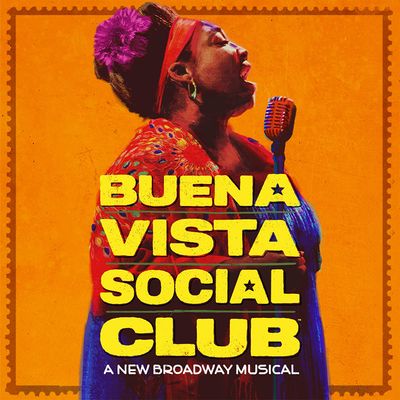
In this episode, we dive into the Broadway production of Buena Vista Social Club at the Gerald Schoenfeld Theatre. We discuss the show’s cultural impact, the role of Cuban music, and standout performances from the cast, including Natalie Venetia Belcon... Read More
From the show: Half Hour with Jeff & Richie (Post-Show Broadway Discussions and Interviews)
Featured Shows
About
In this episode, we dive into the Broadway production of Buena Vista Social Club at the Gerald Schoenfeld Theatre. We discuss the show’s cultural impact, the role of Cuban music, and standout performances from the cast, including Natalie Venetia Belcon. We also talk about the production’s design, audience reactions, and its chances at the Tony Awards. Tune in for our review and why we think this musical is a must-see.
Follow and connect with all things @HalfHourPodcast on Instagram, TikTok, and YouTube. Share your thoughts with us on Buena Vista Social Club on our podcast cover post on Instagram.
Transcript
This transcript was automatically generated and might contain errors.
[0:00] Jeff Malone: Welcome to Half Hour with Jeff & Richie, the podcast where we explore the latest shows we see, sharing our insights and opinions on the performance of storylines and everything in between. In today's episode, we're discussing the Broadway production of Buena Vista Social Club playing at the Gerald Schoenfeld Theatre in New York City. Whether you cannot catch the show in person or you want to expand your thoughts after seeing it, this episode is for you. And as always, we want to inform you that this episode will contain spoilers. So if you're ready to dive into this production, stick around with us. I'm Jeff.
[0:28] Richie Grasso: And I'm Richie. And we're thrilled to be your hosts for today's episode. But before we start the conversation about Buena Vista Social Club, here are a few words from our advertisers. Welcome, everyone, to a new episode of Half Hour with Jeff & Richie. Today, we're discussing Buena Vista Social Club. Step into the heart of Cuba, beyond the glitz of the Tropicana, to a place where blazing trumpets and sizzling guitars set the dance floor on fire. Here, the sound of Havana is born and one woman's remarkable journey begins. Inspired by true events, the new Broadway musical Buena Vista Social Club brings the Grammy Award-winning album to thrilling life and tells the story of the legends who lived it. A world-class Afro-Cuban band is joined by a sensational cast in this unforgettable tale of survival, second chances, and the extraordinary power of music.
[1:12] Jeff Malone: Broadway hot take for Buena Vista Social Club. My hot take on this musical is that every little thing that I saw on this Broadway stage was absolutely breathtaking and inspiring, and I felt moved when I left that theater.
[1:31] Richie Grasso: Totally agree. I didn't know what to expect going in, so I went in really open, and I just was soaked with the luscious sound of music, good acting, good singing, good dancing, great design. Just a beautiful, beautiful production that I need to go back and see again and just live in that world for a couple hours. It's extraordinary. It's breathtaking, and everyone should run to see this, and I hope it does well at the Tonys. It's got a lot of nominations, so we'll see.
[2:01] Jeff Malone: I totally agree. So let's dive into this production. So when you talk about overall plot here, you know, so Buena Vista Social Club, as many people didn't know, I didn't even know a lot about this. This was a Grammy-winning album. This was a documentary in the 90s about this sound of Cuban music from the 50s and all the way up through the 90s, and I think given the history of Cuba, it's so funny to me because there's a scene in the musical Guys and Dolls where they go to Cuba. It's the Marlon Brando character, I believe, in the movie, and they go, and they fly there for like the day and fly home, and everybody's like, oh my gosh, because back then you could go to Cuba, and we've had such interesting relations with Cuba.
Who can go to Cuba? I think things have changed lately with that, right? Like there's certain ways you can go, but there's a lot of... So it's difficult, and regardless of that, we see just beautiful Cuban culture and heritage on stage, and it makes you want to go. It makes you want to just submerge more into this music and this culture and learn more about it, and I just love that the Cuban representation is here on Broadway in this beautiful way, and you're taking something that's already kind of famous, and you're taking Omara and her story, a real woman who's still living today, and her story, and that's what I think is most inspiring about this. It's not like take the music of Buena Vista and go.
It was take the music of Buena Vista and mold it into this 1990s documentary guy who's going to go talk to Omara years later, and we're going to have flashbacks, and we're going to make it a story. That's what was impressive to me is the way that that concept came together, because a lot of times, Jeff, we sit here and say, Jagged Little Pill is coming to Broadway. Okay, okay. Or, oh, the music of ABBA is coming to Broadway. Okay, okay, okay. But it wasn't just like the music of Buena Vista Social Club and Cuban music go. It was like that, but more, and I liked that.
[4:00] Jeff Malone: Right. I think that when it comes to jukebox musicals and this whole concept here, there was something that felt a little different when you're watching this, and maybe it's because maybe we're not that familiar with this story and the music that it doesn't feel like wash, rinse, repeat to us. Like if you're going to follow this in terms of like another jukebox musical that kind of follows the same lines, it would probably be MJ that's the closest, because that was a documentary that they were inspired by, and then they turned that into a musical. So I think the same with this, it being an album and a musical, and a documentary, that it has like the same kind of through lines there. And I think like, you know, I've heard a few people say that they weren't that crazy about this book, but I found the book to be interesting.
Well, it was simple, and the plot wasn't all over the place. It was like, we're going to do some flashbacks, we're going to talk about her and her sister, we're going to talk about how one wanted to stay and one wanted to go, and then one left, and then years later she passed, and that was like it. And there was, of course, some subplots and some people who were trying to get big in the music industry, and some love circles and tensions between people, and we saw a little bit of all of it, but the general plot wasn't heavy. It wasn't like when you're watching Les Mis and there's 75 different characters and different plots and time periods, and I'm like, oh my god, what's happening here? It didn't need to be, so I wonder if people critique it because it's just a simple plot?
[5:33] Richie Grasso: Oh, it's totally that, or it's maybe semi-cliché. Sure, and some of the acting at times, we'll get into some great acting performances, but at times some of the acting and some of the book scenes come off a little bit, but then when you get to the music numbers, like whoa, you know, so I get it, some of the book scenes.
[5:46] Jeff Malone: Right, and I think a lot of this is about the music being on the stage, and I think telling this story is the whole concept itself. It's like most people probably don't know this story, and they don't know this music because of our relations with how we've been with Cuba for so long, and that probably goes for the whole world, so where does this sit? And to kind of watch this whole storyline of someone being so in love with their country and so in love with the music that's there, and wanting to be part of that, I think is what's so important and the takeaway. And I was going to ask you, quick, based on your music business and music history experience, when you see one sister in the 1950s, what was happening in the music industry in the late 50s, early 60s, quite a lot of change, and so that's the sound of music was changed, the way we were recording and listening to music was the 60s, really the late 50s, but why was one sister dying to go and follow that producer, America, go become, and one sister was saying, no, no, it's right here, I'm staying right here. Is that interesting to you? It's so interesting to me, I'm curious to know what your thoughts were on that.
[7:04] Richie Grasso: I think when you really look at the overall world sound during that time, it didn't exist. American music was what was sent everywhere. And people listen to it, you know, once you made it in the American scene, that was it. That's what you wanted. And I think when, you know, for so long, it was talked about as being world music, what does that mean? What is that sound? This definitely falls into that category of like, when that came here, like, you have to think back to CDs and records. And if you were not signed to a major label, how were you getting your sound put out? So that's why I sit here. And I wonder if that was the point of as an audience member is, do you sit there and say, Oh, I get why that sister wants to go. And then you're like, no, I get why that sister wants to stay.
[7:54] Jeff Malone: Kind of. I don't know if that necessarily came across in the book of this, though. I think that one sister just claimed a new life outside of Cuba because Cuba was about to go through major changes and difficult times, whereas the sister didn't care. Omara did not care. She wanted to be there with her, her people and her sound. But you knew that her sister was not about that. You knew her sister was about like, I'm leaving my roots, but she was already doing that before. She has Afro roots. She's Afro-Cuban. She's not just Cuban. She's Afro-Cuban. And she was trying to erase that. And Omara was like, why are you erasing where we come from? You know, we have descent that you're trying to erase.
And I think that we're going to get into the staging in a second. But I think when you go into some of the way that was staged with the young versions, the flashing back, the different relations, the way dance was woven in through it, it was beautiful. So I do want to kind of go over to some of the production now that we've talked a lot about the plot and the concept. And we didn't even talk much about the score, because obviously music is so important. So let's take a quick break. We get back, we'll go into some of the direction, actor performances and design after we hear a word from our sponsors.
[9:09] Jeff Malone: And we're back. So to me, the music is a character here.
[9:16] Richie Grasso: Of course.
[9:16] Jeff Malone: There are moments where, and I think this is where maybe people kind of go against the book a little bit. The plot completely stops for five to six to maybe even seven minutes at times to just be submerged in the dance and singing and instrumental music, which I love. But I think that's why a show that's already less than two hours, that is taking many moments of taking us into like, I don't want to say concert mode, but kind of. The band literally rolls forward and we become like, let's just listen to the band. And I like that, but not everyone likes that. And so that's where I think I wonder if people are critiquing some of the plot.
[9:56] Richie Grasso: Okay, I agree. But I also think that when you look at a production like this, there's two things that are going on. This whole score is done in the Latin language.
[10:10] Jeff Malone: Right.
[10:11] Richie Grasso: So you're not getting any music in English. So not that it's a strike against the show, but someone that might be sitting there that does not know what's getting sung or said in the music might be saying like, I don't understand what's happening here and I only get the book scenes. We were fine because it didn't matter. You can tell the story through dance, through emotive singing, through instrumentalists playing the way they're playing. You understand what emotions convey through music.
[10:43] Jeff Malone: Right. But that's for us. So you and I sitting there and enjoying this beautiful choreography that is telling a story with this music that is happening, you know what's going on. And I also think it was directed well, where we just had this bare stage, there were some chairs on the side, we had this walkway at the top, and all corners of the space were used. I liked the band rolling on and off. They weren't just shoved in the back the whole time. They weren't just under the pit the whole time. They were moved and woven throughout. So it was directed very well. I mean, we have direction, development and direction by Saheem Ali, choreography by Patricia Delgado and Justin Peck. And I mean, I'm so sorry, Justin Peck. I'm sure, and obviously Patricia too. If we're ready for back-to-back Tonys, I'm pretty sure that this could potentially happen.
[11:29] Richie Grasso: Oh my God. And then David Yazbek's a creative consultant on it. Like, how cool is that? Right?
[11:34] Jeff Malone: Yeah.
[11:35] Richie Grasso: I just think this whole design team, well, first of all, I will say, we're going to get to Tony nominations in a second, but all these designers are nominated. And it's just brilliant when you see Arnulfo Maldonado's scenic, Didi Aite's costumes, Tyler McClough's. And it's so interesting when you look at that, though. Yeah. When you look at that, though, the scenic design here, you really felt like you were in this Cuban setting, but you get a taste of that when you're like in South Beach, Miami, when you get these colors and these vibrant sounds, because a lot of people came from Cuba and they settled in South Beach and Miami and the lower Florida portions of this. But people that have gone to Cuba take these photos and it's almost like the country is still like what we're seeing in this set.
[12:30] Jeff Malone: Well, the scenery and the lighting and the costumes blended together to show us those 1950s Havana and Cuba settings. And this is where Didi, I think, gets it right. You know, sometimes she really gets a period costume right.
[12:45] Richie Grasso: Well, this was very right.
[12:47] Jeff Malone: Yes.
[12:47] Richie Grasso: So well done.
[12:48] Jeff Malone: And then like, sometimes we see things from her and we're like, okay, well, you know, it's very modern and modern on Broadway. Well, modern's tough on me. I don't think really translates that well. But then like when you have period, when like this works really well, or like Georgia's African hair braiding, she did really well. And that's why I think this team is working so well together. The direction of this, the way this is blended and moved, when the younger version of them, at the very end of Act One, when the younger Amara comes over and says, and she's singing and the younger version is behind her, I love moments like that. It's almost like, ironically, in the same theater, right before this was The Notebook.
And there were so many like, young, middle, old, middle, old, young, but now we're at the middle age, but now we're back to young. And I didn't like that about The Notebook, that we were just all over the place with what time period are we at, what age in this romantic?
[13:36] Jeff Malone: This was just like the younger and the modern. It was just simple. Simplicity works so well.
[13:42] Richie Grasso: But it was also so interesting when they introduced the young versions of the characters, you know, and there was such a director moment that like, I was like, oh my god, I got it. You know, when it is young, Abraham, I believe. And he's up on the set piece. And he's singing young with Amara. And there's a moment where they click and they introduce him older. And I didn't know if you caught it at first. I was like, oh my god, oh my god, oh my god, it's happening. And I watched this and I'm like, oh, that's him. And I'm like, he's alive. And he hasn't left. He hasn't left Cuba. And he's still singing here on the street. Like, oh, why? And it also just goes to show how extremely important music was to these characters' lives for many years.
How these instrumentalists still, it's just, it's culture. It's a piece of culture that we need to always keep telling on so many ways, especially on the Broadway stage. And I just think this worked so well in that way. And it's just miraculous. It wasn't just an acting piece. It wasn't just, oh, a band playing the music. It wasn't just a dance piece. You know, when you look at what Just Impact did last year with Illinois, that was mostly a dance piece, right? This is not just that. This is a hybrid. Are we slowly starting to change the style of musical theater writing? When you look at Illinois and you look at this, just using those two examples of dance is at the center of it. The band is at the center of it.
The band was at the center of Illinois too. When you focus the instrumentalists in the band on the center of it, I'll even use old friends. I said this on the old friends, the orchestra is the character because it's there. When you see the orchestra, my biggest thing is when you see the orchestra, use the orchestra. Blend the orchestra into your piece if it's on the stage. If they're under the stage, it's different. I'm not talking about that. So when it's one of these to look at how important this band is in, it's not just, oh, and then they get tucked away and they come out and they're sitting there. They're standing up. They're woven through the dancers. They're in and out and up and down.
They're right there with the actors and the dancers. Well, it's a major component of this show to begin with. So if they didn't intertwine the band at all, it would make no sense. The band is the character. It's literally why they're getting the special Tony award. Right. And they are winning a special Tony award for the band members of the Buena Vista Social Club Music Orchestra on Broadway. That is a Tony award being given to them because of that. And when I think of things sometimes, like, yeah, the bands come out at the end of shows, like I think of Real Women Have Curves. That was the band that sounded great, but we didn't really see them to the end. I even think of like On Your Feet when the band came out and that was cool.
But, you know, bands definitely come look at Dead Outlaw. The band is there, like, but that band is used really well, too. So I think when you I think we're seeing not I'm not talking about when City Center Encores, which the orchestra, it's different. They're meant to be seen that way and play overtures and things. I'm talking about the weaving of orchestra into these pieces and and how that's what John Doyle was doing it with the Sweeney Todd revival and the company revival. And we see it. It's important. It's wonderful.
[17:00] Jeff Malone: Yeah. And now let's talk about some of these actor performances. Totally. Because I mean, Natalie Venetia Belcon is Tony nominated for Omara could win it for the supporting for Omara. She's brilliant in this role. She's great. I definitely think that she is probably the strongest person in the show. I do think that there were others that, you know, could have potentially been Tony nominated. I think she's the only actor that is, you know, I know that there will talk more about the Tony nominations in a bit. But I do know that some people are wondering, like, why is she going in for supporting versus being leading? Because I mean, I think if you had to pick a leader here, who would it be?
[17:40] Richie Grasso: Well, it's hard to see not to compare the two shows when you see Marion Plunkett put in as leading, but she doesn't really sing her own song on the show. And she's just in and out. This character has multiple songs of her own and is also in and out. It was put in supporting, you know, a lot of that kind of sometimes comes down to the producers and the way they want to submit. A lot of times there's rumors that they'll put someone in a leading category, thinking that's their better chance or supporting category. I think she has the leading woman in a musical category. I mean, I think it's totally smart to be in supporting because also, she's not top billed. So technically, you know, the nominators get to vote on it. And if they should submit as supporting, then yeah, makes sense. I think she's gonna win it. I really do.
[18:23] Jeff Malone: Yeah. Oh, yeah. Yeah. Really, really amazing stuff. I do want to go to talking about these Tony nominations. There's a lot to get through. So I want to go through these and talk a little bit about that. And also talk a little bit about our experience the shows we're going to talk about. I always like to. So we're going to take a little quick break. When we get back, we'll talk about our experiences and some Tony nominations for Buena Vista Social Club.
[18:43] Richie Grasso: Okay, we're back. So 11 Tony nominations. One of them is a win for them because they're getting a special Tony for the musicians in the band. It does have 10 other Tony nominations. So Best Musical is one of them. Best Book of a Musical for Marco Ramirez. We have Actress in a Featured Role in a Musical, Natalie Venetia Balcon, right? Scenic Design, Tony nomination, Arnulfo Maldonado. Costume Design nomination, Didi Aite. Lighting nomination, Tyler Michelou. Sound nomination, Jonathan Deans. Two Direction nomination, Saheem Ali. Choreo nomination, Patricia Delgado and Justin Peck. And an Orchestrations nomination for Marco Paglia. So amazing to see all these Tony nominations. Like really, really, really amazing. What do you think of all those?
[19:27] Jeff Malone: Definitely, I think it is warranted that they got the nominations that they did. I mean, this was the last musical that we saw for the season. So we went out with a bang, I think. Yeah, I don't know what they're going to win. I do think that, you know, Natalie will win for Omara, guaranteed. I think the musical production this year is tough. Because this was off-Broadway and people raved about it. And this is now the second show, along with Dead Outlaw, that were both off-Broadway. And we also have maybe a happy ending in the mix here with Operation Mincemeat and Death Becomes Her. So everything, if you notice something, everything had some sort of an out of town this time. Yep. So in some way, shape or form.
And yeah, it's hard. I really think like every, all five nominations for best production of the musical are so different and interesting. I would wonder if this would win or not. It's definitely, it's tight. I think this will win some design nominations, because I think the design of this is spectacular. And I'm not sure if it's scenic sound, lighting, or costume, or a combination of some of those. I also think orchestrations is great, because it is really well orchestrated.
[20:51] Richie Grasso: Yeah. Book of a musical, I don't know. Maybe, maybe that's the one thing a lot of people say is the weaker element of it. Direction is really tough this year, too, for a musical. It would be interesting with Sunset Boulevard's direction, with maybe Happy Ending's direction. This would be another tough one to put in. I do think this could win choreo. I do think so. I really think it could. It could just take choreo right away.
[21:13] Jeff Malone: Yeah. I think that Broadway has a soft spot for traditional like ballet, and tap, and whatever else you want to add that are usually under the traditional Broadway style of dance. And more modern shows, they sometimes I think get overlooked when it comes to choreo. You know, I do think that you know, Jerry's choreo is amazing. So, you know, my two, I think it's coming down is between Jerry and Justin and Patricia.
[21:45] Richie Grasso: Yeah. And I think it's going to be a tight one. It's going to be tough, because they're both doing such great things. And I do think, you know, a lot of shows, I will say with Tony nominations get 10, 11, 12 nominations, and some shows will walk away with none. Mean Girls had a ton of Tony nominations, didn't get any. So that does happen with some shows. Some shows get two Tony nominations and win both of them. You know, that does happen, too. So you never know. But I think it's astonishing. It's wonderful. And also, when you look at the grossness of the show, it is selling. It is selling. It is. And I think to myself, how is it selling? There's no famous people in it. I think the title alone is people know the documentary of that title and the album of the title, which leads me to our experience of the show.
We go to the show, and the ushers are really, really strict with recording. They're flashing those flashlights every three seconds. They're constantly telling people to put phones down. And they said, why are people lifting their phones up so much? You always see it once in a while at a Broadway show, but not this much. And I think, you know, you had said a little bit about how maybe people, do people think they're actually going to see a concert of the Buena Vista Social Club album? Because it's concert-esque in the way Act One starts and even Act Two starts in that, like, hey, let's just play some music and have fun. I definitely think there are some people in that theater that may forget that this is a Broadway show.
Because I did look to my left when the first song started, and this guy immediately got up like we were at a concert venue and was starting to dance. And his wife had to be like, no, sit down. And I think that's fine, because I think everyone wanted to get up and immediately dance. And I think that's what's so beautiful about this music in general. You know, I think it's hard when you have a show like this, though, and maybe someone, this could be someone's first time going to a Broadway show. Or, you know, one thing I really noticed, because this was a very hard show for us to get tickets to, and we actually just ended up going to the box office to get the tickets, because it was the easiest way to do it.
But when I typed in on, like, StubHub to find tickets to the show, the Buena Vista Social Club that is still performing is what shows up. So by the time I finally got to the show, it still looks just like how the band looks. So I do think there is some truth in it that some people are probably going to this show thinking like, hey, the Buena Vista Social Club is playing in New York City. And they do bill it as Buena Vista Social Club, a new Broadway musical. They have that as the tagline. I think they need to do that so people realize it's a Broadway show. Because I was like, there were so many people that wanted to like, talk and dance and take phones out. And the ushers were really good and really strict about, like, making sure people are quiet while they're watching. But it's hard also when you have a high energy show like that. I get it.
[24:31] Jeff Malone: Yeah. And when you have songs that people love, you want to see them. It's the same thing when we see songs that, you know, we know on Broadway and want to see them. And you're like, I wish I could take a video of this right now, you know. But I mean, the audiences are really enjoying it. They really are. I remember getting chills, feeling emotions, feeling sad, feeling happy. It's just a wonderful piece of theater. It's really, really I mean, literally, when intermission hit, we turned to each other and said, I was like, wow, there's lots of process here. Oh, my God, I love this. This is great.
[25:10] Richie Grasso: Yeah. And I think it's got good legs. I think it's going to run for a long time. I think it could also not win Tony's and still run for a long time. I really do. I think people will enjoy this. I'm sure I could see a tour of this somewhere at some point. I just think this is meant to be right where it is on Broadway. It's just refreshing. In a season where there's a lot, listen, is this adapted from an album and a story and a real person and a documentary? Yes. But there's something also that feels so new about it.
[25:33] Jeff Malone: Yeah. You know, Death Becomes Her is based on a movie and Sons of Boulevard is based on a movie and a lot of things are based on other things. Sure. Even Boop's based on a cartoon character. Everything's based on something. I get that. But this just I know this is based on something. It just feels so fresh to me. Right. It feels so vibrant.
[26:09] Richie Grasso: So good stuff. Oh my gosh, just about time to wrap up. What are your final thoughts on Buena Vista Social Club on Broadway?
[26:15] Jeff Malone: Again, I think that this was a highlight for me this season because I was not expecting it. I love when I go into a piece of theater and I'm like, yes, this moved me. This was different. And I got all of that from this. So love it. Highly recommend it.
[26:38] Richie Grasso: Totally. Highly recommend it. Gotta go back. I hope they do an amazing number at the Tony Awards. And I guess we can actually say it is a Tony Award musical because they are getting a special Tony Award for that band. And yes to that, because that band, I have to say, before we go, is killing it. I don't think I saw any sheet music up there. I mean, they're playing it all from their heart and their memory. And you feel that. Brilliant. Brilliant. Brilliant. Brilliant. I'm so astonished by how amazing these orchestras and bands are this year on Broadway, especially this one. But go see it. Go see it. Go see it.
[26:49] Jeff Malone: That does wrap up our discussion of this episode. We hope you enjoyed our deep dive into Buena Vista Social Club. Remember, we want to hear from you. Continue the conversation with us on Instagram and TikTok at Half Hour Podcast. And drop us a comment on Spotify and let us know your thoughts on Buena Vista Social Club. And please leave us a review. Your reviews mean so much to us. Remember, you can subscribe to our channel for all past and future episodes as well.
[27:09] Richie Grasso: Until next time, I'm Jeff.
[27:10] Jeff Malone: And I'm Richie, saying ta-ta for now.
[27:12] Richie Grasso: Bye.
© Broadway Podcast Network, All Rights Reserved