

In this episode of Half Hour, we take a deeper dive into the 2026 Broadway revival of Arthur Miller’s Death of a Salesman at the Winter Garden Theatre. We walk through the production’s take on the American Dream, the pressure to succeed, and how those themes land in 2026... Read More
From the show: Half Hour with Jeff & Richie (Post-Show Broadway Discussions and Interviews)
Guests


Featured Shows
About
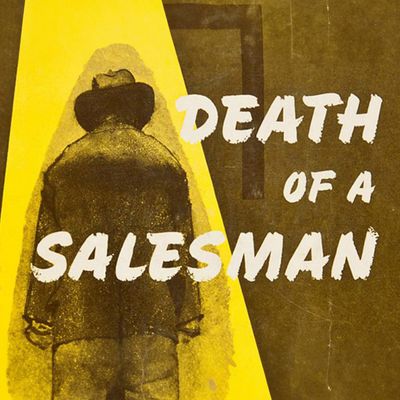
In this episode of Half Hour, we take a deeper dive into the 2026 Broadway revival of Arthur Miller’s Death of a Salesman at the Winter Garden Theatre. We walk through the production’s take on the American Dream, the pressure to succeed, and how those themes land in 2026. We break down Joe Mantello’s direction, including the spare, symbolic staging, the recurring car motif, and the way the production frames Willy Loman’s world as a kind of purgatory. We also look closely at the performances, from Nathan Lane’s take on Willy’s unraveling to Laurie Metcalf’s grounded, quietly devastating Linda, along with the supporting work from Christopher Abbott and Ben Ahlers. We talk about how this revival speaks to modern capitalism, influencer culture, technology’s impact on sales, the cycle of debt in America, and why Death of a Salesman keeps returning to the Broadway stage. We also consider critical reception so far and make some early Tony predictions for the production and its stars.
Follow and connect with all things @HalfHourPodcast on Instagram, TikTok, and YouTube. Share your thoughts on this production in the comments on Spotify, and let us know what you would like us to cover next. If you enjoy these post-show discussions, follow Half Hour and leave a rating and review so more theater lovers can find the podcast.
Transcript
This transcript was automatically generated and might contain errors.
[0:00] Jeff Malone: Welcome to Half Hour with Jeff and Richie, the podcast where we explore the latest shows we see, sharing our insights and opinions on the performances, storylines, and everything in between. In today's episode, we're discussing the 2026 Broadway revival of Arthur Miller's Death of a Salesman, playing at the Winter Garden Theatre. Whether you cannot catch the show in person or want to expand your thoughts after seeing it, this episode is for you. And as always, we want to inform you that this episode will contain spoilers, so if you're ready to dive into this production, stick around with us. I'm Jeff.
[0:29] Richie Grasso: And I'm Richie, and we're thrilled to be your hosts for this episode. But before we start the conversation about Death of a Salesman, here are a few words from our advertisers. Welcome, everyone, to a new episode of Half Hour with Jeff and Richie. Today, we're discussing Death of a Salesman. Famously described by critic Kenneth Tynan of The Observer as the greatest American play, Arthur Miller's Death of a Salesman has been an essential part of our national consciousness since its Broadway debut in 1949, and throughout every subsequent era. The original production, directed by Elia Kazan and starring Lee J. Cobb, won the Pulitzer Prize for Drama, the Tony Award for Best Play, and the New York Drama Critics Circle Award.
[1:05] Jeff Malone: The New York Times theater critic Brooks Atkinson wrote of that original production, "By common consent, this is one of the finest dramas in the whole range of the American theater. Humane in its point of view, it has stature and insight, awareness of life, respect for people, and knowledge of American manners and of modern folkways. It is virtuoso theater. It brings the theater alive." All right. So, when we want to talk about the greatest American play here, let's get into this story, plot, and concept. So, I agree with what a lot of these critics have said over many years. I will say, just from the actual play itself, I do think it's one of the greatest plays ever written for the American stage.
It has themes that sit really resonant and strong for many, many years, and even though it's set in a specific time period, there's still so many themes throughout this piece that stay relevant today. I feel like every time we hear of a production of Death of a Salesman, I think, okay, well, yeah, that's going to resonate today for many different reasons. It's drama. It's tragedy. It's serious. It's got so many underlying themes.
[2:16] Richie Grasso: At a time in the 1940s where maybe, of course, there was drama, but there were also splashy comedies in golden age musical theater and stuff, I think this sits. And I think it puts Arthur Miller, of course, he wrote many other things, but it puts him at a level of just understanding the culture of the time that he was in and writing themes that last. When you look at Shakespeare, there's themes that last, regardless of what time period you're setting in. There's themes. And I think sometimes I'm seeing plays written today, and I'm like, what's the point? What's the theme? What am I trying to get out of this? And what's the longevity?
[2:53] Jeff Malone: Yeah. And what's the longevity of it? Does every play need to have longevity? Yes and no. The Death of a Salesman clearly does. And it's been done multiple times. And I think just as a play and the concept of this play and the overarching themes and sense of American drama, it sits and it sits very strong.
[3:13] Richie Grasso: Well, we talk about that a lot with American media and entertainment in general. And when you look at a play like this, it's one of the, I would say, first in America that kind of gets classic status. This has now become a classic play for us. And when we look at that, I kind of have to say, why in certain areas? Because yes, this follows this idea of the American dream. And what was that American dream at that time? But now how do we bring it into 2026 and beyond? And how do we relate it to something from that time period to what's going on now? Still, so many people come here for the American dream. What do they do it for, et cetera?
[4:04] Jeff Malone: Well, and even, I think what I love about this the most is, are there some time period specific things mentioned in this? Sure. But you could also remove some of that. And we were talking about this a lot. What is he selling? We never really 100% know. We never really 100% know where he's going, what he's actually doing there. You trust this character, Willy, as this, I almost look at him as this tragic, sad clown of sorts. And I mean clown in a respectful way. People are like, he's just pushing through life, but he has that sad clown kind of energy to him. He travels all these miles and does all these things, but the younger people that run the business tell him no, and he's getting hit with no's. His family doesn't live up to his expectations.
He doesn't live up to his own expectations. Money is tight. And you wonder why they're just living paycheck to paycheck as he's gotten so much older and he's trying to make his life better. And he comes home. And I think the home life is so interesting because even with all the fights and all the arguing, there's this theme. I think I said this to you too, when we were leaving the theater, I said, I really believe that they all still really love each other. And someone could argue that. I do think someone could argue that because they want the best of each other.
[5:11] Richie Grasso: Right. But I also think that there is those sons love him. He loves his sons. His wife loves him and he loves his wife. And I do think that that is at the root of this. And what I think the play is kind of trying to tell us is, well, money gets in the way of that and success. And what is the American dream? Is a salesman the American dream job of the time, owning the best car, the best house, having the sons? And, you know, there's always those things like, oh, we all parents want their kids to thrive and be better than them in some ways, or do more and be the best they can be. And when you look at those scenes that the sons have, and they have these things like, oh, I'm doing this, I'm doing that.
I actually think it's fascinating the way it's written that the sons, one of the sons goes out West and wants to do woodworking and being in nature and building a life for himself. And the father's like, no, that's not, no, no, no. And you stay here in the city and you work and you, you say a businessman. And what was happening in the forties, fifties, sixties was the surge of that madman era business tycoon life, right? And the moving away of like blue collar jobs. So like, when you look at that, it, he talks about that in the play that, you know, no, you don't want to work on the farm or you don't want to do those more blue collar style jobs. You want to go into the business world in sales.
But like where I think, you know, Arthur Miller wrote so well in this is that you don't know really what he's selling ever. That's how I think this play can continue on for periods and eras and different times because sales has always been a part of the structure of kind of like the American dream in so many different ways.
[6:53] Jeff Malone: Look at if you relate it today to something in 2026, it would be like an influencer and influencer is basically doing selling. And it's so funny because when you hear things, it's kind of been like, especially this year, it's been like the death of this, the death of the influencer. So what are they doing? They're selling, they're being hired to sell something for a brand the same way that a salesman is going around and selling product for those things. And then there's this whole thing about the car and owning a car at this time was a really big deal. And he's proud of that. And he takes the car on long journeys, but the car breaks down, the refrigerator is breaking down, the life that they've built is breaking down.
So not only the West, but there's this whole, my brother was successful in Alaska. If only I went to Alaska, the quota would have shut up, but we're talking about, he drives miles and miles and miles through many states to make business. And yet still he feels stuck. And yet he's literally physically leaving so often. And yet he dreams still of leaving. And there's just all these themes. There's the theme of the affair that's being happening, that's happening, the son knowing some of that, there's so many layers of this. And I could literally speak a whole half hour just about the play itself, right? Because there's so much going on there that resonates.
[8:08] Richie Grasso: And even the line about like, oh, why did we switch the cheese? I like the Swiss cheese, not the American cheese. And it's like, oh, that's interesting. Like what we like and what works for us change versus not change. Like it's also, if you read in between the lines, I think Arthur Miller's pretty brilliant at what he does.
[8:27] Jeff Malone: And when you kind of talk about that a little bit more, because I find like what we're talking about too is, you know, in more modern writing, a lot of it is told to you. You don't have to do much figuring out when it comes to the playwriting. This leaves space for you to kind of figure out what is being said, which is why I think it also has the longevity and being such a great American play. And it's revived so often. You know, some people say like, why do we have this? You know, we have it all the time, but I look at it and I say, there's still like different lessons to be learned every single time you see a play like this. And I'm watching this and I'm saying, oh, well, like if I'm also relating it to today, I'm watching and why is his like downfall happening around being a salesman?
And we're thinking about the time and I'm like, oh, well, technology is starting to come into play. Things are happening quicker. You don't need to travel to different places. And what does it do? It cuts out these middlemen that had to go around and sell. And how in today's day, technology keeps advancing and we're cutting more and more people out of this workforce to a point where we're now going back to and people are saying, hey, work the blue collar job, work in the mechanic world, work in the landscaping world, work in different spaces that like technology has not come to kind of take away those jobs. And not to mention on top of it, you have someone like Willy's character, who's deteriorating physically, deteriorating mentally.
There's hallucinations throughout and his wife is keeping track of the books. And if we only had 10 more dollars this week, and if we only had this and it's just, it kind of is the echoing of the paycheck to paycheck lifestyle.
[10:07] Jeff Malone: You know, like, if only we pay this off, then we'll be here. And that's why when this wraps up at the end with the death, and I find the ending to be, I can see that ending every day and pick something different out of it. The fact that almost no one was at the funeral. The fact that we end with Linda is really, really big deal. And I think that when she says at the end, we finally paid off the house and you're not here. That is like, isn't that what maybe thousands and thousands and maybe millions of Americans feel? Like, we live in a house and pay a 30-year mortgage and we pay it off and then we either sell it or move. Like, isn't that kind of incredibly, when you think about it like that?
Or you stay in it, but paying off a car, paying off a student loan, paying off a mortgage, it's like you spend your whole life in America paying off things and working to pay off your life. Because we've normalized making debt a real thing for people and living in debt to the point where you spend all this time building up debt, paying it off, and then what happens? You die? Yeah. Like, what did you do it for? And I think sometimes that's the big question after the American dream, like, what did you do it for? And we're going to talk about Laurie and Nathan and all these performances in the next segment in a second. But I think when Laurie’s sitting there, and listen, I've seen this a million times in a million different ways.
I've seen the Lindas at the end sobbing and crying through, we're free. We're free. Oh, I've only like really lost. There was something about her that was like transactional. And yes, there was love there, but it was like, we are free and clear now. And we're free and we're free and we're free. And what are we free of? We're free of the money, but we're free. He's free of his suffering. They're free of him. They're free of him, which is so sad. There's just a release of tension because for two and a half hour, two hours and 45 minutes, you're just tension built. There's this looming tension and what looms is money, money, money. The fact that they have no money yet, ironically, he is selling things and yet he still doesn't have money.
There's irony in that job. The sons and the relationships and the others of their town and their life. And Linda's character is really important. And I just, there's layers and layers and layers, but I do know we got to get on to talk about this actual production and these performances and design. So let's kind of maybe make our way over there now and take a quick break.
[12:40] Richie Grasso: All right. We'll be right back.
[12:43] Richie Grasso: Okay. And we're back. So now let's get into this production because this has been a play that we have seen before. We have read before. And what'd you think?
[12:51] Jeff Malone: Well, I think Joe Mantello does an incredible job with this. This is one of the strongest things I've seen this season. I think this is going to get a lot of Tony buzz. Again, there's movies. I've seen this. I've read this. I've seen this a million times. This, I left the Winter Garden Theater with you and I said, if you remember, I looked back at the theater and I said, that's how you do this play. And I said that like three times, I think, I said, that's how you do it. I kind of had no notes. Of course, everyone wants to change their own things and make their own thing. But I think from a direction, I loved that all the different locations that we either hallucinated to in Willy's mind, or that we had, we're still set in this ambient sort of garage, a lurky, murky kind of falling apart warehouse.
I can't think of another way to describe it. And what the vibe I took, and maybe you had a slightly different take or not, but my take was that like these large pillars and this, the car is sitting behind them the whole time. It's that like empty, lifeless garage feel like their home is gray and falling apart. But even the office and the different places they go, the hotel room, the different places are all just still this looming gray cloud in his life. There's no sense of color and warmth and light. And we're going to be reminded for the whole play that in his mind is this looming negative energy.
[14:20] Richie Grasso: Yeah. You know, I applaud Joe Mantello. I think he has a style and he brings it to all of the plays that we've seen him direct. And you kind of know what you're getting in terms of a visual when you see his work. I just kind of had a moment here of realizing something that there seemed to be a little bit of a different concept in his directing here. And I don't know if you might agree with this, but him bringing, and this is big spoiler. So, you know, I know we said this in the beginning, but I'm saying he drives this car into the, onto the stage in the very beginning and he gets out. And I almost feel like we're in a little bit of this like purgatory for Willy in how Joe decided to kind of stylize this and bring it to the stage. And he's actually reflecting himself on where were all of the things that went wrong in his life.
[15:19] Jeff Malone: Yeah. It's a reflection piece of sorts and drove himself into the purgatory reflection aspect of it. And then at the end he drives himself. And then he drives out. So I don't know. You know, I wonder if that could be a really big thing that was like intended by this, but I'm watching this and I'm saying, because when we're in this warehouse style and you see there's so many different things, but we're not in a traditional house is why I'm saying he feels like he's a little bit more in this purgatory. The people that he sees that came around here, past people that got in and out of the car, what were they doing? They were there to remind him about certain things from the past. And from a sound design perspective in his past reflections of the better days, I guess, for lack of a better term, when he is, his kids were younger and they were on the football team and there was this joy and this, there would be this ambient music, the lights would warm up.
It would go to that space, that space. And then when you went back to the modern day, it's like, there's the boys sleeping on like literal wood board benches as beds. Like there's nothing warm and homey about this at all. The glass of milk, the fridge in the back that's break. It just felt the gravel floor. It just felt so like desolate. And that this was, this looked so tragic that there are his, he worked his whole life and this is what he has, a car falling apart and this home that looks like it's falling apart around him the whole life. But that's why I think it like had that moment of saying like, Oh, maybe this is why we're not in a traditional house, Broadway stage. Maybe this is why we're like looking at it from a different space.
It almost had this like dystopian feel to it that he was just reflecting on, you know, even as far as around the pillars, there were certain elements and items around it, like a tricycle and a toy and paper and things like that. And why was that there? Those were like the reminders of what his life was.
[17:11] Jeff Malone: Yeah. And then when you kind of transition into some of the, um, the acting performances here, I mean, let's start with the big ones first. We have Nathan Lane and Nathan Lane is, you know, Broadway gold, right? He's done everything. And he's usually done a lot of comedy, um, to see him in a serious role. You know, I've heard people say, Oh, well, you know, it sounds he's, he does that. He sounds the same. He kind of acts the same, but there was nothing to me. I thought this was a next level performance for him. I do think that he kind of elevated to this like serious, tragic, I didn't think he was trying to, he normally tries to pull for joke lines and laugh lines and be the sticky kind of silly, like, and there was none of that.
This was a, the physicality of him. This was the worn, you know, I've heard many times that in many, I've done some of the research. There's been many revivals of this where Willy can't, the actors that play Willy don't always finish out eight shows a week because it's really, really difficult. And some people either have to get a matinee cover or they only do it for three months. They don't do it for eight months or whatever, you know, and he's gotta be tired doing this because it's gotta really wear on you to carry a show like this. He almost never leaves the stage. He's constantly talking. He's talking the whole show and he's very, very good in the role.
[18:25] Richie Grasso: Yeah. I think this role also might be a little bit of a sentimental role for him too, because this is him probably also reflecting on his longevity in the theater space and in the TV film space and how long has he been doing things in there. And it, you know, it doesn't relate in terms of like the death of a salesman plot, but it could relate to him as like, this has been my career in the theater field. So I wonder if there's any correlation with that for him in saying like, wow, I'm really reflecting on the things that I've done now in this space.
[18:58] Jeff Malone: No, totally. And then, you know, we have Miss Thing, Laurie Metcalf, which this is the second time we're seeing her on the stage this season because we saw her in Little Bear Ridge Road as well. Come on, superstar. I mean, I have no notes for that woman. I think this woman is, I am very fortunate to be living in the time where I can watch this woman perform live, because I think there'll be many years from now when I'll be saying, oh, I saw Laurie Metcalf in many things on Broadway and it'll be like, oh, you did? Because Linda is tough. It is tough. It's, it's, it's not, it's tough because it's not so clear. You know, when you see like leading women roles in plays and music, like, okay, we get what Mama Rose is, like, we get it.
Like that's it. That's the role. But Linda's so mysterious and, and it's like, she's a mom, she cares, she inserts herself and then she doesn't. And she's trying to kind of route, she's really one of the few female characters in the show. There's this, that incredible scene where Nathan Lane's scared, Willy's telling her to be quiet, be quiet. And he's trying to explain this dream life to the sons and he's telling her to be quiet. And then finally the son goes out and almost puts his fist up to almost punch the dad, leave, like leave my mom alone kind of thing. That was, I mean, I couldn't, I stopped breathing for a second in that moment. I was like, oh my God, this is crazy good. And then the way Laurie handles the death of the end.
[20:45] Jeff Malone: Welcome back to Half Hour with Jeff and Richie. Today, we're diving deep into the 2026 Broadway revival of Arthur Miller’s *Death of a Salesman*.
[21:00] Richie Grasso: That's right, Jeff. This production at the Winter Garden Theatre is making waves, and we can't wait to discuss its take on the American Dream.
[21:15] Jeff Malone: Absolutely. The themes of pressure to succeed and the pursuit of the American Dream resonate strongly, especially in today's context.
[21:30] Richie Grasso: And Joe Mantello's direction really brings a fresh perspective to the material. The spare, symbolic staging is quite striking.
[21:45] Jeff Malone: Not to mention the recurring car motif that plays such a crucial role in Willy Loman’s world.
[22:00] Richie Grasso: It really frames Willy’s existence as a kind of purgatory, which is both haunting and thought-provoking.
[22:15] Jeff Malone: Speaking of performances, Nathan Lane's portrayal of Willy is nothing short of mesmerizing. His unraveling is palpable.
[22:30] Richie Grasso: And Laurie Metcalf as Linda is grounded and quietly devastating. She brings a depth to the character that is truly moving.
[22:45] Jeff Malone: Plus, we can't overlook the supporting performances from Christopher Abbott and Ben Ahlers. They add so much to the overall dynamic.
[23:00] Richie Grasso: This revival speaks to modern capitalism and influencer culture, which is fascinating. It’s interesting to see how technology impacts sales and the cycle of debt in America.
[23:15] Jeff Malone: Exactly. It raises the question of why *Death of a Salesman* continues to resonate with audiences and keeps returning to the Broadway stage.
[23:30] Richie Grasso: And the critical reception so far has been intriguing. There are already some early Tony predictions floating around.
[23:45] Jeff Malone: Yes, it will be interesting to see how this production and its stars fare in the awards season.
[24:00] Richie Grasso: So, what note or compliment would you give them on this *Death of a Salesman* revival?
[24:15] Jeff Malone: I would say that the entire team has done a remarkable job of breathing new life into this classic while staying true to its core themes.
[24:30] Richie Grasso: I agree. It’s a delicate balance, and they’ve managed to capture the essence of Miller’s work while making it relevant for today’s audience.
[24:45] Jeff Malone: What would you say to the cast and creative team of *Death of a Salesman* on Broadway?
[25:00] Richie Grasso: I would express my admiration for their courage in tackling such a heavy subject matter with such sensitivity and insight.
[25:15] Jeff Malone: Absolutely. It takes a lot of talent and heart to bring these characters to life in a way that resonates so deeply.
[25:30] Richie Grasso: And I think it’s important for them to know that their work is sparking conversations about the American Dream and its implications in our current society.
[25:45] Jeff Malone: Well said, Richie. This revival is not just a performance; it’s a commentary on our times.
[26:00] Richie Grasso: And that’s what makes it so powerful. It’s a reminder that the struggles of Willy Loman are still relevant today.
[26:15] Jeff Malone: Exactly. The themes of aspiration, failure, and the pursuit of happiness are universal and timeless.
[26:30] Richie Grasso: I’m excited to see how audiences continue to respond as the run progresses.
[26:45] Jeff Malone: Me too. It will be interesting to see if the production evolves as it goes along.
[27:00] Richie Grasso: And I hope it inspires more discussions about the state of our society and the pressures we face.
[27:15] Jeff Malone: Definitely. That’s the beauty of theatre—it can reflect and challenge our realities.
[27:30] Richie Grasso: Well, that wraps up our discussion on *Death of a Salesman*. We’d love to hear your thoughts on this revival.
[27:45] Jeff Malone: Yes, please share your comments on Spotify, and let us know what you’d like us to cover next.
[28:00] Richie Grasso: And if you enjoy these post-show discussions, don’t forget to follow Half Hour and leave a rating and review.
[28:15] Jeff Malone: Thank you for joining us today, and we’ll see you next time for more Broadway insights!
© Broadway Podcast Network, All Rights Reserved