

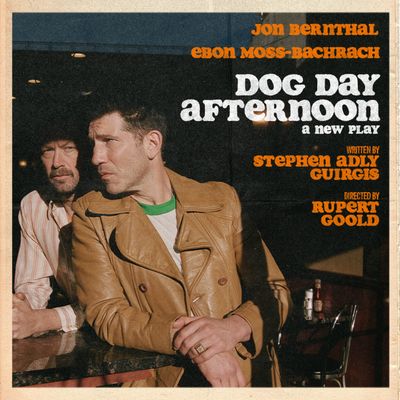
In this episode of Half Hour, we take a deeper dive into the Broadway production of Dog Day Afternoon at the August Wilson Theatre. We walk through the true crime story behind the show, how the Oscar-winning film was adapted for the stage, and what shifts when a sweaty Brooklyn bank robbery plays out live in front of an audience... Read More
From the show: Half Hour with Jeff & Richie (Post-Show Broadway Discussions and Interviews)
Guests
Featured Shows
About
In this episode of Half Hour, we take a deeper dive into the Broadway production of Dog Day Afternoon at the August Wilson Theatre. We walk through the true crime story behind the show, how the Oscar-winning film was adapted for the stage, and what shifts when a sweaty Brooklyn bank robbery plays out live in front of an audience.
We break down the overall production, including Stephen Adly Guirgis’ script, Rupert Goold’s direction, and the balance between gritty tension and comedy. The conversation digs into performances from Jon Bernthal and Ebon Moss-Bachrach, how this staging captures 1970s New York, and where the play lands in today’s Broadway landscape.
We also touch on critical reactions, Dog Day Afternoon’s awards potential, and what they think works best in this limited engagement.
Follow and connect with all things @HalfHourPodcast on Instagram, TikTok, and YouTube. Share your thoughts on this production in the comments on Spotify, and let us know what you would like us to cover next. If you enjoy these post-show discussions, follow Half Hour and leave a rating and review so more theater lovers can find the podcast.
Transcript
This transcript was automatically generated and might contain errors.
[0:00] Jeff Malone: Welcome to Half Hour with Jeff and Richie, the podcast where we explore the latest shows we see, sharing our insights and opinions on the performances, storylines, and everything in between. In today's episode, we're discussing the Broadway production of Dog Day Afternoon, playing at the August Wilson Theatre. Whether you cannot catch the show in person or you want to expand your thoughts after seeing it, this episode is for you. And as always, we want to inform you that this episode will contain spoilers, so if you're ready to dive into this production, stick around with us. I'm Jeff.
[0:29] Richie Grasso: And I'm Richie, and we're thrilled to be your hosts for today's episode. But before we start the conversation about Dog Day Afternoon, here are a few words from our advertisers. Welcome, everyone, to a new episode of Half Hour with Jeff and Richie. Today, we're discussing Dog Day Afternoon. The legendary true crime story that captivated audiences in the acclaimed film is now a live pulse-pounding Broadway event. Step back into the sweltering summer of 1972, New York City, a time when the Vietnam War looms large, Watergate headlines flood the news, and one man's desperate act captivates the nation. Emmy Award winner Jon Bernthal and two-time Emmy Award winner Ebon Moss-Bachrach ignite the stage with grit, heart, and humor.
Witness the gut-wrenching twist as it unfolds, immersing you in the unfiltered chaos of a man and a city on the edge. With masterful direction by two-time Olivier Award winner Rupert Goold and written for the stage by Pulitzer Prize-winning writer Stephen Adly Guirgis, Dog Day Afternoon is a raw, gritty reminder of what happens when passion and desperation collide.
[1:27] Jeff Malone: All right, so let's get into our overall thoughts on the story, plot, and concept here. So we know this is based on a true story. We know that there's a famous film starring Al Pacino from the 70s that's also based on this true story, and now we have this play adaptation of this story. So whether you don't know it too well or not, it is based on true events that happened in 1972 in a summer in New York City, and I think that's a good place to start. Like, that's a good rooted place. Like, whether you think this is theatrical or filmic, clearly some people thought it was theatrical for them to adapt it for that way because it was something that really happened, right?
[2:06] Richie Grasso: Well, I feel like, yes, we can look at this in two ways. From the concept here and the idea around this piece here is like, yes, this is a true story, so the idea is coming from that, and then there was also a film adaptation of this true story, and now we have the play version. So I immediately look at this and I say, if we didn't know anything about the film and we didn't know that this was a true story, where do we sit with something like this first, and are we allowed to say, like, this can live on its own, or does it need to kind of match what people are expecting?
[2:47] Jeff Malone: Well, it's interesting because I don't really know this. Before going into the play, I didn't really know much about it. I knew it was a movie. I'd never seen the movie. I knew of the story a little. I didn't know it very well, but I will say that I feel as if it was kind of nice to go into this kind of blind like that. Like, I didn't know the specific plot points. I knew it was about a bank robbery, and listen, what I think kind of, you know, there's not too much to know going into it other than you're about to watch a bank robbery and what unfolds, and if you have watched TV shows before, you've seen, like, what happens normally in a bank robbery. Police get involved. This could be a standoff.
It can be dangerous, right? There's all these things. So I think what I find interesting in this is I had no idea that this was going to be as comedic as it was, and so people had said, well, the movie's not really comedic, and the actual events of that day weren't really comedic. Like, I was talking to some people who actually lived during that time in the 70s and remember that was a really big deal. Like, the world stopped that day. Like, the news stopped this big bank moment, and I was like, okay, and then I think what was funny was we were already started with this play adaptation of comedic one-liners from the women that worked in the bank, and the robbers go in, and things start to go wrong, and they realize there's not as much money to rob, and oh, now what?
I don't want to do this anymore, but wait, what? And, you're already here, but the phone's ringing. Do we pick it up? It seemed like we were watching almost some sort of farcical Neil Simon comedy of sorts unfold, and I was like, whoa, whoa, whoa. We're laughing at this. Okay. So I think that was jarring, but not in a bad way. Sometimes I'll see things that are jarring, and I'm like, oh, I don't think this play knew what it wants to be. I actually think that this play version knew what it wanted to be. It was taking the event and the famous film and saying, why don't we make this theatrical and a little grandiose? I mean, the set moving the way that it was was grandiose in and of itself, and we'll talk about that later, but I think that this kind of lived in this like, hey, we're kind of far enough removed from the events of this that we can kind of just tell the story the way we want to on a stage.
[5:01] Richie Grasso: Yeah. I think when you look at the book here, and the play of this, it's like we are getting that they're leaning into more of the comedic sense of this, and why do we think that they're leaning into the comedic sense of this? Are we thinking that it's like, oh, okay, maybe someone looks at this day in like, how quickly we knew that this happened, and then they made a film immediately after the event happened, and it was more of a serious film that happened, and now we're so far away from it, we're getting this play, but like, let's make this comedic because of how bizarre this story kind of is that this is a bank robbery that was held up for so long, but that Sonny, the main character in this play, is the one that's really controlling and calling the shots throughout this whole thing.
Like, the actual events, and I looked up, and I saw photos from the real bank robbery happening. He's actually going outside. I could never imagine that happening in today's day. I could never imagine that happening in today's day that someone could go outside and like, they don't immediately take that.
[6:08] Jeff Malone: Right, right. So I think like we're looking at this and I'm saying, oh, they're turning this into a comedy because I think like that it happened for 14 hours. It's kind of bizarre. Well, that where sometimes absurdist comedy is a subgenre of comedy where things seem so absurd that we kind of just play into it. The whole like, I need to go to the bathroom. She asked, he's got to go to the bathroom, take them to the back, but go on the floor, but check the, but let's go, but oh, let's get donuts. And then they were, they were brought donuts because that was one of the things they wanted from the police. And all these, and then there was, there was this struggle with like the state local police versus, and the city police rather versus like the federal police getting involved.
There was just different layers being added on here. The demands of bringing the wife and all these things. And, and then for the whole play, spoiler alert to end so tragically that one of them was just completely, as the innocent victims were being brought out, the other bank robber was just completely shot in the middle of the street like that.
[7:10] Richie Grasso: Right. So like, that's how it ended, Sal. Right. So like, I'm like, whoa. And then it was like a serious ending and I ended like, whoa, oh, okay. It's over now. And this was ended really seriously.
[7:20] Jeff Malone: Yeah. Well, I think that's where we struggle on this because I don't think it was a fully thought out, complete comedy. Like, I think like act one is very entertaining. And the way that this has set up is like, yes, we're laughing at this because there's so many bizarre moments here. And I would wonder actually, if there's been interviews done and I didn't do the research on this actually see, but like if people did actually recount, like what happened inside the bank when this was all happening. And, you know, it says like the, the plea, the FBI brings them donuts, but like, he actually orders pizza and brings pizza to the hostages that he has in the bank. So like, I look at some of this and I'm saying, oh, you know, maybe they're, you know, telling their story from inside that it really wasn't that wild or crazy.
And like, that's why I think we can kind of laugh at something like this. Now, no one, they didn't kill anyone in there. I think, you know, they did kill Sal after the, because he did walk out with a gun, but Sonny did not. Sonny was arrested and he was sentenced to 20 years in prison. He only served five. He did have a wife named Leon. He did have a, another wife. And like, we're just kind of going through the motions of this whole thing. And I, and I think, you know, a lot of critics are going back and forth in this piece because they're talking about how like the film is so serious. And now this play is like not serious at all.
[8:51] Richie Grasso: Right. And there's also like a little bit of a cliché element to this. It's like the seventies, it was a hot summer day where the bank is going to, it's a bank robbery. Like if you're not from New York City, you're looking at this as like, you're stereotypical in New York City, seventies movie. You know, there's like a lot of that. Also the dog, the famous thing is the dog days of summer. Right. So the title of this piece is Dog Day Afternoon. There's a lot, you know, how different would this have been in the modern day? If all those bank tellers had cell phones, like they only had the one landline to work with. There was no cameras and video and being able to call and the technology was different.
So it made this time period look very old. Like it made it feel like the seventies were a really long time ago, even though in hindsight, they weren't really that long ago, but it just, the feel of this whole piece felt like, whoa, something like this could almost never, it's almost like, you know, when people say, oh, the movie Home Alone could never really happen today because of technology and the way we would instantly have been able to that, that whole series of events would probably never have happened today. So Home Alone feels old, but it's really not that old. I kind of look at something like that with Dog Day Afternoon. And I say all these events, yeah, sure. Bank robbery could happen, but I think the way in which it would happen in the timeline of events would be so different that maybe the playwright's intention of this was to add some comedic element to this.
I mean, you can't tell me putting Jessica Hecht in there doesn't add some sort of comedic element to this, which, when I read the casting on this, I was like, wait, Jessica Hecht. Amazing. Love her. Whoa. That makes me feel a little different now about where this piece is going to go.
[10:25] Jeff Malone: Yeah. You know what I mean? Totally. But I also think like, they're looking at this and like, we're going to kind of transition into the production here, but you know, in the writing itself, I think the idea was to kind of mirror how a lot of seventies films kind of looked around that time and now put this on the stage. So I think this is a great time to take a quick break and when we get back, we're going to get into this overall production.
[10:50] Richie Grasso: Okay. And we're back. So let's get into this overall production here, because I think that this show overall had a lot of great moments. It had some of my favorite direction that I think that happened within the play world this year. It had amazing scenic design that I thought there were some of the coolest moments that were also happening on the stage. So like, let's kick it off with direction. I think, yeah, the design and the direction were top-notch. I thought all the design, the lighting, the scenery, the costumes, it put us in a real period and the way that that set was moving, almost like it was on its own mind. It was on tracks that was just opening and moving and setting in. I felt like it was pretty incredible technology to move while the actors are on the unit and to collapse it and open and collapse.
A couple of times I was like, okay, is this too many times? Like we're opening and closing the set, but it was so seamless with that 70s music and the 70s look and the lighting and the sound. All of that married together really well. I thought that was a really strong design concept from all the designers across the board.
[11:53] Richie Grasso: And to say that as well, yes, I thought Rupert's direction of this was really seamless. It just flowed nice. It knew that it was probably going to get a tourist audience. It knew it was going to have people that were going to want to be moving this along and not have too many pregnant pauses or anything too dramatic and serious. So I think it kind of moved at a nice pace overall. I just thought it was a really cool way to take you from scene outside of the bank into the bank. It had this like motion of going.
[12:27] Jeff Malone: Which felt filmic. Right. Okay, we're going this way and we're continuing the scene as we transition this way and we're walking through the door outside as it's moving. First off, got to praise the actors for being able to do that because I'm sure they're on like a wild moment of like, this is like a boat going back.
[12:46] Richie Grasso: Yeah, and like I'm sure the first time they got on and did that they were like, whoa, you know, but I thought that was very strong and I thought overall the direction of this moved. It just moved nice. It just flowed. Act one flowed. It will be a little more sensitive in act two. Some of act two weighted itself down a little bit more. There was like the guitar singing moment. There were some of the more serious moments on the phone. And it did feel, I think that that kind of matched the like, now we're in the evening and people are getting tired and you've held up the news circuits and the police all day and night and we're not getting anywhere. So I think that played into the direction of it too, that it got a little heavy until that big moment at the end where like the sound effect of the helicopter and the wind and the light, it was so realistic looking like you would thought you were on a soundstage in Hollywood with that final scene.
It was the loud sound. I thought the police coming into the audience and the people coming, going through the aisles like that, it really kept us wrapped up in it. It was just very strong, I thought, I think.
[13:45] Jeff Malone: Yeah. And I think there was, this was another moment from a director this season that it was continuous acting that we were getting.
[15:55] Jeff Malone: To see him live on stage, very, very impressive.
[16:25] Richie Grasso: Dog Day Afternoon with Jeff & Richie, Ebon Moss-Bachrach, and a True Crime Classic on Broadway.
[18:45] Jeff Malone: She is a true role model.
[18:58] Richie Grasso: Let's negotiate here. Let's get the hostages out of the building. And those are big moments here.
[19:04] Jeff Malone: Totally. No, I think overall, as I was saying earlier, Act 2 felt a little more confusing and a little more heavy to me. But as a piece from start to finish, the acting, the design, the direction seemed to just be cohesive overall. And I did enjoy this for the most part from all of those departments.
[19:22] Richie Grasso: I agree with that as well. And I think like, how do you think the play handles the fact that the audience really knows the film as well?
[19:30] Jeff Malone: I don't know. I know people that know the film really well and liked it. And I also know the people that know the film really well and didn't like it as much. And then I know people like us who went in kind of blind and were like, this is good. This is nice. There's some good things happening here. I don't think seeing the film before or after really sways people one or the other, because you're going to have people, it got some mixed reviews, and I think you're going to see people that enjoy it or not, regardless of their relationship to the film.
[19:56] Richie Grasso: Yeah. I feel like my hot take for Dog Day Afternoon here would be that I think the critics were a little too hard on the play overall because they were relating it too much to the film version here and they're not actually letting the play breathe.
[20:10] Jeff Malone: Yeah. Which is hard when you're doing film adaptations like this, right?
[20:14] Richie Grasso: I get that. Yes. I get that.
[20:17] Jeff Malone: All right. Well, I think this is a great time to take another quick break here and when we get back, we'll get into our final thoughts about the piece, our Tony talk, and our half minute.
[20:26] Richie Grasso: Okay. And we're back. So let's get into Tony talk first.
[20:28] Jeff Malone: So I definitely think that this has potential to be nominated for new play. I think that Jon Bernthal definitely can get a nomination. I would say maybe Jessica Hecht as well. And I do think there's a lot of room in here for creative nominations with direction, scenic design, lighting, sound design. There's across the board, even costumes might all have an opportunity here.
[20:56] Richie Grasso: I would agree with that. I think all the design categories have an opportunity to get nomination, director nomination, Jessica nomination, Jon, and overall play. I think it could very well be, or at least some of that.
[21:04] Jeff Malone: Right. I wouldn't write this play off. I don't think it's in the position to be like, Hey, we're in the spring season. There are a lot of plays that opened this spring. There were a lot of plays that opened in the fall. I'm trying to think really from the fall in the new play category, what's going to get represented in the Tony space as well. And one of the plays that I do kind of go back to is Liberation, which could kind of come in and maybe, you know, take away from some of these other plays that have opened this season. But I think this has great potential. And if this is considered for new play, then yes, there is not many best new play potential. There are many revivals this season for play and musical, but for play.
[21:49] Richie Grasso: Revival is the stacked season. Yeah. And there's some incredible performances happening in those revivals as well, which might make it hard for something like Jessica or Jon to be nominated in this. But I still think there's potential for that at the time of us recording this and the time of this being released, the Tony nominations will have not come out yet. So people listening to this may, they're coming soon. So people listening to this episode may already know the nominations by the time they listen to it.
[22:12] Jeff Malone: Yes. Overall, I will say that the audience of this felt a little touristy. It felt like there was a lot of not frequent theater goers at the performance we were at. There seemed to be a lot of like chatter and talk at times, like maybe people thought they were almost at a movie watching this. And there was a couple of times where I felt like the audience was just a little like, oh, we're just kind of out from watching this funny, silly play. And I think that we're trying to find some of the root of this. And so it's interesting how like it's selling really well and to like the bridge and tunnelers or the tourists, people, this is a show that they're going to this spring for sure.
[22:45] Richie Grasso: Totally. Yeah. And do you feel like this is a show that makes you kind of like curious to go back and learn more about the original Bank Robbery and watch the film?
[22:51] Jeff Malone: Yeah. It makes me want to watch the film. It makes me want to do some of the research, especially when I talk to people who are around in the seventies that said, I remember this. This was a big news break. And I remember. And so to say Dog Day Afternoon and that to be some of the first things people say, right. I think in that way, the play is then doing its job.
[23:14] Richie Grasso: Yeah. I think that I would say, yes, this is keeping a story alive. I don't necessarily know if it's like the most important story to keep alive. I sometimes struggle when I look at like robberies and like crime and say like, oh, are we learning a lesson? I do think there is a lesson here like that. This is not something that we need to be doing to kind of like get what we want, but it kind of makes you wonder if you like sympathize with someone with the way that they think like they were struggling. They needed money. They didn't want to hurt anyone. They just needed money. And it goes back to this whole world of like, there are so many people out there that have so much money that could help someone.
And then there's no way to actually get it. It's interesting. And yeah, the reasons for this, the backstory of these robbers and why they did this. There's a whole story there too. And that's why I wonder if when you look at this, there was the intention for the playwright to kind of say, oh, you know, let's kind of add some like some silly zingers in here to kind of keep this moving a little bit. I don't know. You know, there was a lot of layers to this. I thought this was a layered story. The police officers not agreeing on how to handle the situation. That was a whole element. There was just so many elements to it. I think that's what kept me as an audience member captivated throughout the whole.
[24:40] Jeff Malone: Yes, I agree with that as well. Oh my gosh, we're almost out of time. It's time for our half minute. This is where we each ask each other for 30 seconds to go on about what they would want to tell the production team of this show. So if you had 30 seconds alone with the creative team, what note or compliment would you give them on Dog Day Afternoon?
[25:02] Richie Grasso: I would say congrats to the team of Dog Day Afternoon, this large cast, this creative team and playwright and director for bringing something that was a famous film from a long time ago and bringing it to the modern day and making it feel like it was just written and that it's got a little bit of everything, some drama, some sad, very serious moments, some comedy, some wonderful design, a flow and a sense of direction. And I feel like I would totally praise them on that and say, thanks for taking something that a lot of people knew, but also making it feel a little more fresh.
[25:37] Jeff Malone: There you go. There you have it.
[25:39] Richie Grasso: There you have it. Okay. So now I get to ask you the same question. If you had 30 seconds with the design, creative team and cast of Dog Day Afternoon, what would you say to them? And go.
[25:48] Jeff Malone: I would kick things off with Rupert here. I would say that I was fully taken into the piece and I was given a full night here of pure entertainment in a way. And I'm taking away everything I need to know about this as a film and as a real true story and say, like, you gave me an entertaining show that made me think, that made me enjoy, and that made me kind of want to maybe learn eventually about this, but that I'm okay with where this is because it was fun and a good night at the theater.
[26:21] Richie Grasso: There you go. Amazing. Awesome. Our half minute on half hour podcast. Half minute. Half hour. What are your final thoughts on Dog Day Afternoon, Jeff?
[26:30] Jeff Malone: I went in to see this play with no expectations and I left pleasantly surprised because I thought to myself, based on what the critics said, that I was not going to enjoy this piece. And while I was watching it, I said, wow, I really have no idea like why I even considered what the critics had to say. And I'm so happy that I kind of went in with no expectations and then left really coming out enjoying this piece. So I would say, go check this out and go and see it for your own, because I know other people that have gone and seen it and said, wow, that was actually really enjoyable.
[27:06] Richie Grasso: So there you go. Totally. I would echo a lot of that too and say, go check it out. It was entertaining theater. There's a lot of well executed moments here from the cast and the creative team. And I think this is going strong this season. It'll be interesting to see how they do with the Tony nominations, which come out very soon.
[27:23] Jeff Malone: Agreed. Cool stuff. Well, that does wrap up our discussion of this episode. We hope you enjoyed our deep dive into Dog Day Afternoon. And remember, we want to hear from you. Continue the conversation with us on Instagram and TikTok at Half Hour Podcast and drop us a comment on Spotify and let us know your thoughts on Dog Day Afternoon. Please also leave us a review. Your reviews mean so much to us. And remember to subscribe to our channel for all past and future episodes. Until next time, I'm Jeff.
[27:46] Richie Grasso: And I'm Richie saying ta-ta for now.
© Broadway Podcast Network, All Rights Reserved