

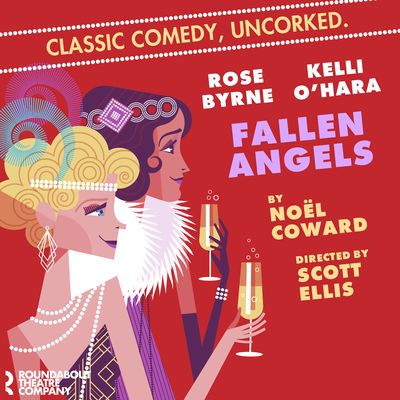
In this episode of Half Hour, we take a closer look at Roundabout Theatre Company’s 2026 Broadway revival of Fallen Angels at the Todd Haimes Theatre. Written by Noël Coward and directed by Scott Ellis, the production stars Rose Byrne and Kelli O’Hara as two women revisiting a shared past over the course of one increasingly chaotic afternoon... Read More
From the show: Half Hour with Jeff & Richie (Post-Show Broadway Discussions and Interviews)
Guests


Featured Shows
About
In this episode of Half Hour, we take a closer look at Roundabout Theatre Company’s 2026 Broadway revival of Fallen Angels at the Todd Haimes Theatre. Written by Noël Coward and directed by Scott Ellis, the production stars Rose Byrne and Kelli O’Hara as two women revisiting a shared past over the course of one increasingly chaotic afternoon.
We break down the play’s structure, its farcical pacing, and how Coward’s dialogue continues to land with a contemporary audience. We also discuss the performances from Byrne and O’Hara, the role of physical comedy and timing, and how the production balances period style with modern sensibilities. The conversation also touches on David Rockwell’s scenic design and how the staging supports the rhythm of the piece.
We also get into the show’s Tony Awards presence, its place in the current Broadway season, and why revivals of classic comedies like Fallen Angels continue to resonate.
Follow and connect with all things @HalfHourPodcast on Instagram, TikTok, and YouTube. Share your thoughts on this production in the comments on Spotify, and let us know what you would like us to cover next. If you enjoy these post-show discussions, follow Half Hour and leave a rating and review so more theater lovers can find the podcast.
Transcript
This transcript was automatically generated and might contain errors.
[0:00] Jeff Malone: Welcome to Half Hour with Jeff & Richie, the podcast where we explore the latest shows we see, sharing our insights and opinions on the performances, storylines, and everything in between. In today's episode, we're discussing the 2026 Broadway revival of Fallen Angels playing at the Todd Haimes Theatre. Whether you cannot catch the show in person or you want to expand your thoughts after seeing it, this episode is free. And as always, we want to inform you that this episode will contain spoilers, so if you're ready to dive into this production, stick around with us. I'm Jeff.
[0:29] Richie Grasso: And I'm Richie, and we're thrilled to be your hosts for this episode. But before we start the conversation about Fallen Angels, here are a few words from our advertisers.
[0:33] Jeff Malone: Welcome, everyone, to a new episode of Half Hour with Jeff & Richie. Today, we're discussing Fallen Angels.
[0:39] Richie Grasso: Sparkling, dizzying, and deliciously potent, Noël Coward's champagne-fresh comedy of bad manners shocked and delighted audiences in its 1925 premiere. Now Emmy nominee Rose Byrne and Tony Award winner and Emmy nominee Kelli O’Hara join forces to bring Coward's unmatched wit to life once again under the direction of Roundabout Interim Artistic Director Scott Ellis. Two upper-class wives, their husbands away for the day, share a few toasts to their pre-marital dalliances with the same man, who just may be en route from France to visit. Old rivalries and past scandals bubble to the surface in this intoxicating romp from one of theater's comedy masters. So let's get into the overall thoughts on the plot and concept here.
So the second I hear a Noël Coward play coming to Broadway, I say, okay, great. Like, we know we're in for a treat. I looked up a little bit about it's been a long time since Fallen Angels has been on Broadway. This was controversial in the 1920s because we're talking about pre-marital affairs. We're talking about women speaking about sexual relations in this way, which a hundred years ago was a very different time to be doing that on the stage. I think that we are just about a hundred years later, give or take, from the show being written. And I think that the humor, the wit, the charm, all stays. It is there. The base of the text is there. And then you throw these incredible prose in with gorgeous set and costumes.
I mean, this, I know we keep, I know this feels overdone. Like, oh, it's bubbly, like champagne. What a bubbly thing. The champagne, the champagne. But to reference this play in any other way, I don't know, it makes the most sense to kind of refer to this in this whole Tony season as this like fresh, bubbly, light, simple, joyous thing. You know, in a season, I like Schmigadoon, simple like that and joyous, but there's a lot of heavy in this season. So to find some joyous, light things like this, totally fit in this season.
[2:34] Jeff Malone: Yeah. When I look at a play like this, obviously during the time that this came out in the 1920s, this was probably more on the nose for how he must have felt for what was going on at times, but what people were ignoring. So obviously now jump to our 20s. It's like, this seems a little more common, I think, in the world of like premarital sex and what's going on with people in general and not like waiting till marriage and blah, blah, blah. You know, I look at this and I say, this is like a little bit of a glimpse back in time for us to kind of like look at this and say, wow, that's what they were outraged at and like laugh at this and say, this is funny. It also gave like these two star women and even the maid at times, this like really strong, like the male characters didn't command the space.
They were kind of written as like these silly golfers with money that just kind of, where is my wife? And like, oh, you're telling me what to do. Oh, this man's coming. Okay. And it seemed like if they were rowing the boat and I loved that. And I thought that I keep throwing Saunders the maid in there because I think she was in and out so much that these three women really carried this plot of these like independent women that were going to have the night that they were going to have. And they were going to say what they wanted to say and they were going to do what they were going to do. And for a 90-minute play, it moved and it felt fresh and it just took us on this journey. It was very smart.
[4:11] Richie Grasso: Yeah. I think there was a lot of funny in it as well, where, you know, you always hear about in marriage, like where people will say to you, oh, the seven-year itch. And they were in the seven years of their marriages and how they were longing for someone else now, because they were bored in their relationship. Or they're just referring to the past and something that happened in their past. And it kind of leads you to believe like, did that happen? Who was lying? Who was not? Were they both? I'm going to assume they were both telling the truth about this. Maybe one was over-exaggerating. Like you don't really know. And then even at the end, when it all comes together and he shows up, you're kind of like, oh, okay.
Is he, who does he remember more? He clearly was going there to see them. They were uncomfortable with me there. The husbands were there. It was like farcical. The whole thing is farce. It's very farce. And you know, it's funny too, because you watch them and you're like, oh, but they're also best friends and they're sitting there and they're like what they do in front of their husbands as best friends in like, kind of like the sister pack versus behind closed doors where they're getting drunk together. And then they're ripping each other apart was the funny in that itself, you know? And I look at this and I say, yeah, when the guy does come here and he now is there, it's like, it goes back to that.
They both want the same guy. It's like the funniness in that in itself as well. And I think just in the way that the husbands presented themselves, it's like they work, they play golf, they're the husband. And then this like charming Frenchman comes in with an accent and, you know, it's the whole like, you know, stereotypical, like, oh, whisk me away in Italy, in Pisa or Florence, wherever they were. Right. So I think it's just, it was really well written and it reminded me how amazing Noël Coward was at what he did. The title alone, we talked about this when we were leaving the show, like what a title, like this could have been called like a night of champagne or like two women and a Frenchman or whatever.
Like it could have been anything. And instead Fallen Angels, like here's these angels, these women that, oh, these wonderful, perfect people, but they fell from the sky. They're here. There's a lot of physical falling in the show. So there's this like, what do you think of the title of just Fallen Angels?
[6:22] Jeff Malone: Well, I would say it's like that, but it's also like, oh, like you're my angel, like in term of endearment in a way, but like that they're the fallen angels now because they, you know, got a little wild.
[6:38] Richie Grasso: Yeah, exactly. So yeah, I think that's fine. You know, I think like a bigger thing too, is like when you look at something like this and you hear that there was outrage about this play when it first came out, like where do you, where and why do you feel like that was? Because I think it was a time where women didn't dominate this, the plot per se. And they, those, the women characters of the 1920s plays were more the wife or the ingenue or the love interest or, you know, and, but to have them command and carry the plot, they're on that stage carrying the show mostly, but the husbands are a little bit. And so I think that was probably at a time. And then to be talking about affairs, them having in the same fair with the same man, I think the way this play ends is really interesting that they go, they're like, oh, we're going to go upstairs.
And they go upstairs, both of them at the same time with him. And the husbands are like, womp, womp. Okay. And there's like the chandelier moving above them. And it's like, whoa, that is really progressive for the time. And even a little bit today, like when you see like, well, we're going to go upstairs with him now. And I was just like, oh, okay. Whoa. That's kind of like, oh.
[7:38] Jeff Malone: You know, I think it's funny to watch like in the writing, like how innuendo was played. It was just, it was so different. There was like, it was like sophisticated in a way. Everything today is like on the nose. Yeah. Just beat you over the head with like, there's no innuendo at all. It's just like outright. This had innuendo with the dialogue and the way Noël Coward writes. And it's just whimsy of the words and like you're eating up the words and you're enjoying the dialogue with the accents and the charm of it all.
[8:07] Richie Grasso: Yeah. It's just really smart. It's really smart. I wish we wrote plays more like this.
[8:11] Jeff Malone: Yeah. Well, I think it's also funny too, because you're putting these like, looks like they're very wealthy, you know, women in this as well. And what they're saying though is kind of like rude in a way to each other. You know, I think that's the funny of it all as well.
[8:29] Richie Grasso: Yeah, totally.
[8:30] Jeff Malone: All right. Well, let's take a quick break. And when we get back, we'll get into this overall production now and what we thought.
[8:32] Richie Grasso: Okay. So let's get into the overall production here with the direction, scenic design, actor performances. Go.
[8:39] Jeff Malone: Scott Ellis directing this, very strong. I really enjoyed this, using the stage all over in this unit set of a house that is just designed so well. We have set design by David Rockwell, costume design by Jeff Mashey, both Tony nominated. Scenic and costume design, gorgeous. You know, Roundabout always does really, really high-end elevated stuff. Wigs, costumes, lighting, and you're in this beautiful apartment, this art deco 1920s. And it's just like, they have everything they could need, but not quite. Right. And so these were, I think that's the way Scott directed. This was very smart. The bits of the couch, the phone, the staircase, the maid coming in and out. It's what farce is. Farce needs to move.
Farce needs to have levels and dynamics and energy. And you can't sit. There was times where they would sit and have the dinner and then they get up and then go back to the dinner and they go to the couch. It was moving and moving and it was very well directed. And there was a lot of like comedy in threes that happened. A lot of like, oh, cigarette. No. Yeah. Yeah. Okay. Oh. And then like the bits, right? Here's the bit of like, she, she couldn't light the cigarette and they're moving the cigarette further away. And that was like a two or three minute bit. And I was like, wow. They kept that going. Her bit the next morning of coming down the stairs. And every time she'd fall kind of down the stairs, like rolling over the couches, like all these moments, plus tons of props and making sure nothing falls or spills. I mean, there's a lot of smoking, drinking, eating, but there's a lot to track there. The maid not dropping anything. It was pretty impressive stuff. They were very comfortable up there.
[10:23] Richie Grasso: Totally. You know, I really thought it was directed well. I really think when you get a piece like this and yeah, farce is like not really that common on Broadway anymore. Not, not in many ways. So like to see this and to take, you know, an old piece and put this on the stage now, you know, and I think Roundabout does a really great job with doing that. So I thought, you know, it was nice to have that there. I also think what was really fascinating about the direction, which kind of leads into some of the acting performances is in the main scene of them drinking throughout the night, you see them getting a little more drunk, a little more drunk. And then I would love to have been a fly on the wall of that rehearsal process of like, when am I shifting?
Where are the beats? Cause it would could have so easily been like, well, just kind of drink and then like whatever. And it's almost like they found beats and moments where, where am I going to take the turn? Is it the next drink? Is it the fight? Is it the vocal? And so, and that's where I think Rose and Kelly brought this, like you're slurring your words, but as an audience, we have to understand what you're saying still. So you can't slur your words too much or else we're not going to understand what you're saying. So they had to be really careful with that. How much do you see overdone comedy? And you're like, okay, this physically is just getting a little too much. No, never felt that with them.
They brought the physical and they needed to. And then when the maid came in, they had to kind of snap in again. The phone rang. Oh my God, he could be on the phone. And then, oh, it wasn't him. The ups and downs and ups and downs of that pacing is so, so important in a scene like that. And I think they must've spent a lot of time working on that.
[11:52] Richie Grasso: Yeah. Well, I think that ties into the writing versus the direction versus the actor performances here. And when you have the writing and you're writing these scenes that they're having more of a gossip moment while Saunders, the maid is not there, you know, and then when she does come in, it's written well that they have to change the tone of what they're talking about. And they're talking about nonsense. You know, when she actually comes there, she'll be like, can a dog swim? Yeah. And then literally when Saunders is like, you know, I did that one. They're like, okay, thank you. Like, goodbye. Like, and the whole bit, like, I always think old plays having like a bit, like, what's the maid's thing?
Like every maid and every play has like a thing, either they're like gossipy or they're like rude or they're like hilarious. With this one, it was like, she had all these other jobs before being the maid. She was like in a nunnery. She was in like all these places. She played the piano, like, and thought she could sing opera. And so like—
[12:42] Richie Grasso: Yeah. And then she had a walk.
[12:44] Jeff Malone: Yeah. And then Kelli O'Hara was making fun of it.
[12:46] Richie Grasso: And they were like, and here's this. And now like, why is she the maid there? Like, what's her life story? That was funny.
[12:49] Jeff Malone: Or when she worked on the boat.
[12:51] Rose Byrne: Welcome to our discussion about "Fallen Angels." It's such a delight to be part of this revival.
[13:21] Kelli O’Hara: Absolutely! The energy in the theater is electric, and I think audiences are really connecting with the humor and the heart of the piece.
[13:51] Rose Byrne: Noël Coward's writing is timeless. The way he captures the nuances of relationships is just brilliant.
[14:21] Kelli O’Hara: And the farcical elements! They really keep the pace lively and engaging.
[14:51] Rose Byrne: Yes, it's a delicate balance. You have to maintain that rhythm while also allowing the emotional moments to breathe.
[15:21] Kelli O’Hara: The physical comedy is key too. Timing is everything in this show, and I think we’ve really found our groove.
[15:41] Rose Byrne: Definitely! And the way Scott Ellis directs us, he really understands the material and how to bring out the best in both of us.
[15:51] Kelli O’Hara: I agree. It’s been a collaborative process, and I think that shows in our performances.
[16:01] Rose Byrne: And let’s not forget David Rockwell’s scenic design. It adds so much to the atmosphere of the play.
[16:11] Kelli O’Hara: The set is stunning! It really transports you to that time period while still feeling fresh and modern.
[16:21] Rose Byrne: Exactly! It’s a perfect blend of classic and contemporary, which I think resonates with today’s audiences.
[16:31] Kelli O’Hara: And speaking of resonance, the themes of friendship and betrayal are universal, aren’t they?
[16:41] Rose Byrne: They really are. It’s fascinating how Coward’s work continues to speak to us, even decades later.
[16:51] Kelli O’Hara: And the humor! It’s sharp and witty, yet it has a warmth that makes you care about the characters.
[17:01] Rose Byrne: Yes! I love how we can make the audience laugh while also pulling at their heartstrings.
[17:11] Kelli O’Hara: It’s a fine line, but I think we’re managing to walk it well.
[17:21] Rose Byrne: And the audience reactions have been incredible. You can feel their engagement throughout the performance.
[17:31] Kelli O’Hara: It’s so rewarding to hear their laughter and see their reactions in real-time.
[17:41] Rose Byrne: And it’s a testament to the writing and our direction that we can elicit such strong responses.
[17:51] Kelli O’Hara: Absolutely! I think this revival is going to leave a lasting impression on everyone who sees it.
[18:01] Rose Byrne: I hope so! It’s such a joy to be part of this production.
[18:11] Kelli O’Hara: And I can’t wait to see how it evolves as we continue to perform.
[18:21] Rose Byrne: Yes! Each performance brings something new, and that’s the beauty of live theater.
[18:31] Kelli O’Hara: It really is. I’m so grateful to be sharing this experience with you and our amazing cast.
[18:41] Rose Byrne: Same here! Here’s to many more performances and memorable moments.
[18:51] Kelli O’Hara: Cheers to that! Let’s keep the magic alive on stage.
[19:01] Rose Byrne: Absolutely! And to all the fans out there, we hope you enjoy the show as much as we love performing it.
[19:11] Kelli O’Hara: Yes! Thank you for your support, and we can’t wait to see you at the theater!
[19:21] Rose Byrne: Until next time, keep celebrating the magic of Broadway!
[19:31] Kelli O’Hara: Bye for now!
[19:41] Rose Byrne: Bye!
[19:51] Kelli O’Hara: See you soon!
[20:01] Rose Byrne: Take care!
[20:11] Kelli O’Hara: Bye!
[20:21] Rose Byrne: Bye!
[20:31] Kelli O’Hara: Bye!
[20:41] Rose Byrne: Bye!
[20:51] Kelli O’Hara: Bye!
[21:01] Rose Byrne: Bye!
[21:11] Kelli O’Hara: Bye!
[21:21] Rose Byrne: Bye!
[21:31] Kelli O’Hara: Bye!
[21:41] Rose Byrne: Bye!
[21:51] Kelli O’Hara: Bye!
[22:01] Rose Byrne: Bye!
[22:11] Kelli O’Hara: Bye!
[22:21] Rose Byrne: Bye!
[22:31] Kelli O’Hara: Bye!
[22:41] Rose Byrne: Bye!
[22:51] Kelli O’Hara: Bye!
[23:01] Rose Byrne: Bye!
[23:11] Kelli O’Hara: Bye!
[23:21] Rose Byrne: Bye!
[23:31] Kelli O’Hara: Bye!
[23:41] Rose Byrne: Bye!
[23:51] Kelli O’Hara: Bye!
[24:01] Rose Byrne: Bye!
[24:11] Kelli O’Hara: Bye!
[24:21] Rose Byrne: Bye!
[24:31] Kelli O’Hara: Bye!
[24:41] Rose Byrne: Bye!
[24:51] Kelli O’Hara: Bye!
[25:01] Rose Byrne: Bye!
[25:11] Kelli O’Hara: Bye!
[25:21] Rose Byrne: Bye!
[25:31] Kelli O’Hara: Bye!
© Broadway Podcast Network, All Rights Reserved