

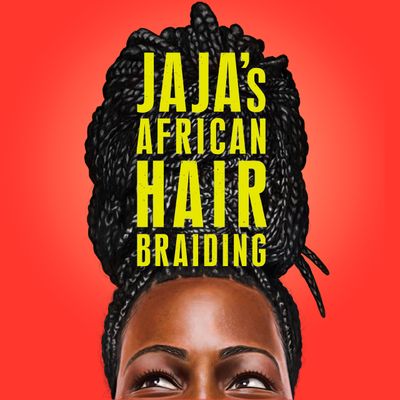
In this week's episode, we attended Manhattan Theatre Club's latest gem, "JAJA’S AFRICAN HAIR BRAIDING." We're dishing all the details: the importance of the plot, the direction by Whitney White, and Jocelyn Bioh's stellar writing... Read More
From the show: Half Hour with Jeff & Richie (Post-Show Broadway Discussions and Interviews)
Featured Shows
About
In this week's episode, we attended Manhattan Theatre Club's latest gem, "JAJA’S AFRICAN HAIR BRAIDING." We're dishing all the details: the importance of the plot, the direction by Whitney White, and Jocelyn Bioh's stellar writing. We're also putting the spotlight on the cast featuring – Brittany Adebumola, Maechi Aharanwa, Rachel Christopher, Kalyne Coleman, Somi Kakoma, Lakisha May, Nana Mensah, Michael Oloyede, Dominique Thorne, and Zanzi Williams. So, what are you waiting for? Join us for a deep dive into "JAJA’S AFRICAN HAIR BRAIDING"!
If you liked this episode, don't forget to subscribe to this podcast and leave us a review.
Share your thoughts with us on this episode below:
On Instagram: @halfhourpodcast
On TikTok: @halfhourpodcast
On our website: www.twoworldsentertainmentllc.com
Transcript
This transcript was automatically generated and might contain errors.
[0:00] Richie Grasso: Welcome to another episode of Half Hour with Jeff and Richie, the podcast where we deeply dive into the shows that we see.
[0:06] Jeff Malone: This week we are discussing the new Broadway play from Manhattan Theater Club, Ja Ja's AFRICAN Hair BRAIDING.
[0:12] Richie Grasso: Want to know what happens when you take a trip to a hair braiding salon in Harlem? Well, then join us for the next 30 minutes.
[0:17] I'm Richie, a theater director and producer.
[0:20] And I'm Jeff, a music industry producer and manager.
[0:23] Let's explore Ja Ja's AFRICAN Hair BRAIDING.
[0:29] Half hour.
[0:34] Richie Grasso: Welcome to today's show, everyone. Before we get started, we always like to let our listeners know that there will be some spoilers in our discussion about the show and this episode.
[0:42] So if you still want to see it first, that's okay. Go check it out and then come back and listen to the episode.
[0:47] You have been warned. That being said, I'm going to give a little overview of the show we're speaking about today.
[0:54] The show we are speaking about today is Manhattan Theater Club's Ja Ja's AFRICAN Hair BRAIDING, which is playing at the Samuel J. Friedman Theater in Midtown Manhattan in New York City.
[1:05] This is a play by Jocelyn Bioh's, and the play welcomes you into Ja Ja's bustling hair braiding salon in Harlem, where every day a lively and eclectic group of West African immigrant hair braiders create masterpieces on the heads of neighborhood women.
[1:22] However, the uncertainty of their circumstances simmers below the surface of their lives. And when it boils over, it forces this tight-knit community to confront what it means to be an outsider on the edge of the place that they call home.
[1:34] It's a little excerpt of a description of the play.
[1:44] Jeff Malone: Did you know this, Richie?
[1:45] Richie Grasso: Oh.
[1:46] Jeff Malone: Yes. I discovered this in some research in the Broadway company of a show we saw, The Curious Incident of the Dog in the Night-Time.
[1:54] Richie Grasso: Night-night, nighttime.
[1:56] Jeff Malone: Wow. Um yes, yes. Um, isn't that so great? And now here she is with a play on Broadway.
[2:01] And I just wanted to read a something, an excerpt from the playwright's note from the playbill, and then we're gonna kind of dive into this. But she has this nice little um section where she speaks about having her hair in braids for a lot of her life and spending a lot of time in these salons growing up.
[2:16] But when Jocelyn says, I'm quoting Jocelyn here, I'm just gonna read a little snippet of it. She says, This play is for each and every person who enters the shop, their hopes, their dreams, their incredible stories of how and why they came to this country.
[2:29] I celebrate these amazing women and thank them for what they do. To many people, they are just hair braiding ladies, quote unquote. Random women people pass by on the street, but to me, they are heroes, craftswomen, and artists with beautiful, gifted, and skilled hands.
[2:44] And that's Jocelyn the playwright's quote. Uh, with that said, let's discuss Ja Ja's AFRICAN Hair BRAIDING, shall we?
[2:52] Jeff Malone: Sure, let's get into it. What are your overall thoughts on this and your experience at the show, Richie?
[2:57] Richie Grasso: You know, I feel like you just reading that a little bit changes my thoughts on the overall piece. Not fully, but it kind of like gives into what I was thinking about the show after I left anyway. And it's just like, and why I was like super interested in the show when it was first announced, because I feel like sometimes when you're in your barber shop or even like you're at a salon, and now here when you're at a hair braiding salon, sometimes when you look at these people, you have to applaud them and you have to say to yourself, Wow, they're basically like sometimes your therapist or like your best friend.
[3:37] Um, and you just end up telling so much to these people that you sit in their chair for I don't know how long. Like, you know, I get my hair cut, it takes 30 minutes. And I'm sure my barber knows so much about me that more people in this world don't know. Is that weird?
[3:56] Jeff Malone: No.
[3:58] Richie Grasso: And um, when you look at something like this, and you know, these women that are getting their hair in braids, some of them are there for hours. You know, they're spending more time with this woman in the salon than they do sometimes, probably with an their own family member, and just so much comes out in that space. And that's why I was super intrigued because I wanted to kind of feel like what is it like to be in that salon? And I feel like what this play does really takes you in there, you know, it gives you the glimpse of what it's like to sit down and get your hair braided. Because like I'm probably never gonna have my hair braided in my life, and it's it's just an interesting piece to kind of see and take in.
[4:37] It was a piece that really let you explore what the culture of a hair braiding salon in Harlem is like, and clearly this playwright has spent a lot of time there, so it allows you to say, yeah, you're you know, a setting for a play in a location like that makes sense because you're there for a long period of time. Of course, comedy will ensue, of course, drama will ensue. And we see that in this piece. I was really blown away by the wonderful healthy mix of comedy and drama. There were moments where I was like, oh my gosh, that's hilarious. And then there were moments I was like, oh gosh, what? Like, whoa, that was and and I also think when someone says something, and I I will really commend this acting ensemble because I do kind of look at them as an ensemble.
There were definitely standout people for sure, but everyone kind of had their moment. And if there was someone, did you notice that if there was a smaller character, most likely that actor or actress was playing multiple smaller characters?
[5:32] Jeff Malone: Yeah.
[5:33] Richie Grasso: And then the larger characters were just played by one actor or actress. And I was just really taken by the reactions of the actors when someone would say something or do something, and I was watching. And then when you talk about hair braiding, there were some actors that were literally braiding hair, really the whole show. And and and getting or having to sit and get their hair braided the whole show.
[5:56] Jeff Malone: Right.
[5:56] Richie Grasso: That in and of itself is difficult, let alone remembering cues and lines and blocking to have to then be practicing this very intricate detailed skill, quite um astonishing to me.
[6:08] Jeff Malone: Yeah. You know.
[6:09] Richie Grasso: So when you come into this piece a little bit, like think more about the actual plot here. And and we'll get into some of the character performances at the same time because there's a few things I want to applaud here. Uh also with the creative design. Let's kind of tie all three of these things together here. Because one, I loved the set. It was actually very interesting because I was going down, um, I think I was going to a concert in Brooklyn or something, and I drove by, and maybe this is just something like we don't notice, but I drove by a hair braiding salon, and I was like, wait, I would think that that was the set.
[6:43] Jeff Malone: Yeah, yeah.
[6:45] Richie Grasso: So when we came into this piece uh into the theater, and we see this, you know, salon shop outside, I was like, oh wow. And that you see these beautiful women all over the stage on what style you can get. And I always think back to like when I would have to go to the salon with my mom, and like there's all these different hairs, you know, hair designs that you could get. So when I see all of these different women on the stage, I'm like, wow, it and there's so much beauty in seeing that. So going to this concert, I see this shop, and I'm like, wait, that literally looks like the outdoor shop. And then when the you know the show starts and they open up the salon and it opens up into this beautiful piece that on this rotating stage, yeah, it's amazing.
[7:31] Jeff Malone: Wow.
[7:31] Richie Grasso: It gives you like the whole shock factor of like so cool to see, like it almost felt like I don't know if you felt this with in the show, too. Like, you know, when you're watching a TV show and like the set you you can kind of see like the set is filmed if it's filmed in front of a live audience. That's what I kind of felt like. We were watching an episode getting filmed for a TV show, and like they come and they pull and they pull you in. So you have the effect of like seeing the outside, and then them walking through the door as the set is moving, which was super cool. I loved it.
[8:07] Jeff Malone: I I definitely think the set was a highlight for me. It was a wonderful design. It could have just been one of those scenic pieces where the curtain is up while you're walking into the theater and you're just gonna see the set, and that's it. But to have that whoa revolve, and and and I like how it started, like it was like a day in, you know, so it started with them opening up, and then it started, and then and and it was nice, and there was a lot of intricate detail in just everything the costume, the hair, hair design, the makeup design, the lighting design, the whole thing was designed very well. I will say that I was very impressed with that.
[8:39] Richie Grasso: And David Zinn did the scenic design, so it was like really cool. There's there is something about, and we're gonna go into this cast and standout performances now, but like I said, there are some standout performances, but I think as a whole, there is this ensemble feel of people working together to tell this story where everyone is almost always on stage, most of the time, except Ja Ja. We're gonna talk about that in a second.
[9:04] Jeff Malone: We'll be right back.
[9:08] Richie Grasso: Welcome back. Who were some standout performances for you or some uh in this piece?
[9:13] Jeff Malone: Oh, I loved Brittany, who played Miriam. I loved her whole story. She's like an immigrant here. She and talking about how like she wants to be going home. She has this love relationship at home with someone who's a singer or is famous, and she's like had a one-night stand with him, but like she was a mom, and that and there's like hearing that story, and this is what's getting told to the woman that's sitting in her chair. Yeah, it's super cool. I love that. And I actually really liked um the daughter of Ja Ja who um is Dominique Thorne who plays Marie. I loved watching her art in this story, and before we get into like the nature, you know, plot point at the end. I those were two that really stood out for me. What about for you?
[10:00] Richie Grasso: For me, I definitely think uh Nadidi, I hope I'm saying her name right. Um, she was, I believe, believe at the chair in the front, towards the front of the stage. She had some really good moments for me. I really, really appreciated some of her acting, and I liked her character arc. Uh, I also will say I liked Ja Ja. I liked the woman who played so Mika Kakoma who played Ja Ja was really wonderful, and I want to talk about that for a second. You know, the name of the piece is Ja Ja's AFRICAN Hair BRAIDING, and about halfway through the piece, I said, where is Ja Ja? Like I was like, we're learning about all these people, and we see the daughter is opening up the shop, and I'm like, oh, this is good playwriting because we're led to believe that something is lurking still.
There's an elephant in the room. Why would you not introduce the title character of the show in the first few minutes of the show? And then when she comes in much later and only is in like one scene and then leaves, and then all the plot points with her getting married and then not getting married and the immigration issues. You say, Oh my gosh, this was such an interesting thing to bring her in later. It's kind of like the I don't know. I just I just was really like that smart playwriting. And if it was just the AFRICAN hair braiding salon, cool, but it's Ja Ja's, and so we're saying her name, she must be here somewhere, and then she appears later. I really thought that was smart. I liked that a lot.
[11:21] Richie Grasso: Okay, now that you're bringing that up, this is like kind of touching on something for me here. Like, what do you kind of feel like thinking a little bit more? Like, it's so you're saying Ja Ja's AFRICAN hair braiding salon. Okay, so we have different characters in this piece. And when you think about braiding, it's like and and all of these women, I don't know if they're all immigrants or not. I don't know if it's fully made clear, right? We're intertwining, like in a braid, these women into society here, and they all have their own issues that they're dealing with. So we have Ja Ja, who is I believe technically illegal, and she wants citizenship here in the country, so she's going to marry someone.
Um, and you have her daughter who I think is using a family residence uh address, super smart, like valedictorian of the class, wants to get into college, but like doesn't know how, and like her friend like comes in to the salon, and like she's like, What are you doing here? Like, you're the smartest, or not even a friend, but like someone that she went to school with. Then you have like different hair braiders in in here. So you have one whose shop I think burned down and she's starting a new shop. You have another one who has like a deadbeat husband who like just comes and takes her money and then like does all of these things. So it's like we're watching this like braiding happening of like going into the culture, and it's just like interesting to me.
So, because it's working up to like this major part here in like everyone has in the salon has a dream to do something here, and like they love braiding these women's hair, but I I feel like there's so much more, and then it's so easy to see how like their dream is built up, built up, built up, built up, and then all of the sudden it's just crushed with Ja Ja, and it's just which is like which is like the major part here. So, like I feel like there's so much meaning in this title.
[13:26] Jeff Malone: For sure. I mean, there's the literal symbolism of the threading uh the hair braiding being the symbol of what's going on. All these people in the salon are so different, and yet they're all there doing the same thing. So I think that's what's fascinating to me is that you it you another really smart playwriting moment, right? Let's take very different people and let's have some of them fight and bicker and argue. And sometimes I think what's also fascinating is one of the characters that comes in is the black woman who's like who's very moody and diva, just like, I need my hair done, and why are you doing it like that? And how much money is this? And it shows problems within that culture of that style of salon.
So you're not just there's there's sub-levels to these women and their ages and their backgrounds and who's born in this country and who's not, and who's at that chair and who's at that chair, who took that client and who didn't. I was also fascinated by, oh, do you want to discuss price? Let's go outside and discuss price. Because you would not discuss price with the woman sitting next to you hearing the price that you're giving, and then saying, Oh, well, then next week, what are they gonna take? My that client and give her a deal because she knows how much I charge now. Fascinating stuff that they were really doing well in the play.
[14:48] Jeff Malone: Very fascinating.
[14:49] Richie Grasso: Right.
[14:50] Jeff Malone: I would love to know more on like why they do that though.
[14:53] Richie Grasso: Yeah, sure.
[14:54] Jeff Malone: I know that's like our idea of like I didn't even think of it that way. In she leaving the salon with the client and then saying, like, okay, I'll talk to you about the price outside. I didn't even think about like, oh, you know, like when we go into a barber shop, everyone pays $35 to get their hair. And maybe that's not always how it is in some cultures or some styles of hair. And maybe some maybe this is more common than we think. We don't need like you said, when we go to a barber shop, we usually pay the same rate if I'm going to that guy or I'm going to that guy to cut my hair, right?
[15:26] Richie Grasso: So right. Well, it's super interesting because also they might be looking at the client and saying, like, oh, okay, her hair's easy or it's not, or that style is easy or it's not, or she's just gonna be a difficult client and I'm gonna charge her 50 extra dollars because I'm not dealing with what she's gonna cause havoc on me today. And they know that it's hours of work, so you're not there for 30 minutes like a barber. You know, I don't mean to keep comparing this to us, you know, and getting our hair done's very, very.
[15:53] Jeff Malone: No, but it's not comparing what it's not comparing it like that, it's just what we know. That's why it's interesting to see something like this, men. Men going to see what it's like to be in a salon for a woman is very different than men going to a barber shop, but we don't know because we don't really go to a salon. I mean, when I was a kid, that's when I went to a salon. But you do spend hours there and you do hear things and see things.
[16:16] Richie Grasso: And you know what? There's also this thing with like because they're all talking about so many different things. If you were offended by something someone said, or if you were caught off guard by something that someone said, it's almost like you can't just like you know, when you think about it, you can't just get up and walk out, you know. You kind of have to either you're like stuck there, right? So I think they showed that in a nice way of like the woman who is downstage left getting her hair braided the whole time, her facial reactions. I really need to see um oh god, uh uh Jennifer, maybe Rachel Christopher her facial reactions were priceless, just the way she was reacting to this environment.
[16:56] Jeff Malone: And I was like below I would that was the audience comfort for me. When I saw something or heard something that was like, whoa, whoa, whoa, I would look to her, and her face was the like, oh, this is how I reacted to that, and I loved that, and I think that's really smart too from a director's standpoint.
[17:12] Richie Grasso: Well, it is really cool from a both a writing and a director standpoint to see like the other clients in the salon and how they're acting, but also the other braiders in the salon and how they're acting, because everyone had like their kind of own their own monologue moments, right? So if someone is talking, you can see the facial reactions for most of them, unless they're doing something different. Like one might be listening to music because she like can't be bothered with anyone in that salon, which is also fun to watch, or when she does hear something, she's like, Yeah, you know. I just took my headphones off to kind of show you. She's like, because she wants to know. So it's cool. But there is like, I think some key words in here. Two to be exact trust and loyalty.
[18:04] Jeff Malone: And it seems like in this salon with the braiders, definitely, they're talking a lot about who do they trust, and who can they trust, and who do they want to trust, but also who of their clients and who of their fellow braiders in the salon are loyal to them? There are two very big words there, especially for those that are immigrants who might not have immigrated fully into the country yet. They have to be able to trust people, which leads to like this major part here with Ja Ja. Ja Ja meets a man. We don't this is all kind of tall to us, so we don't know who he is. He's never shown whatever. But Jaja on her wedding day comes into the salon. That's how we meet Ja Ja. And everyone is so happy for her.
But it's interesting because they all kind of talk about her while she is not there, saying like they don't trust him. How is she trusting him? This is too fast too soon. Oh even the daughter. Yeah. Oh, I've heard like uh that he has another wife already. He has a girlfriend, and Jaja like doesn't want to hear it, but Jaja trusts him because Jaja is craving that great craving kind of her next step in the United States, and like the major plot point here, and this is the big spoiler, so we'll be right back.
[19:40] Richie Grasso: Let's jump back into things. She gets caught, and it's and she's taken to an immigration holding place. So she's not arrested, but she's like, and and they're all trying to freak out because they've dealt with this before. And I think that was probably the saddest moment for me because this brings up such a major topic here that I feel like so many of us have forgotten or like don't talk about anymore, especially because pre-COVID, you know, immigration was such a major topic here, and like people getting sent back to their home countries and doing like certain states doing raids and Donald Trump with building the wall and all of these things. That was so talked about. You know, we even saw it in shows like Orange's New Black when like there were inmates in there that were found out that they were illegal, and then they were like ice came and took them, and it was like kind of the same thing because I'm I'm pretty sure what is this take place in 2018 or 2019? I think the playbill it says.
[20:43] Jeff Malone: Yeah, yeah.
[20:46] Richie Grasso: And I remember thinking that's right before the yeah, yeah. Right before the pandemic, that's what was really talked about, and it hit me hard because I was like, Oh, have we become numb to some of that? With oh, are we just on to the next thing over and over again? Like, oh, okay, now like the pandemic hits, so we forget about everything. And then, like, what's next? Now, like, we're dealing with you know the break of another war and things like that. And I'm like, wow. I love that she brings this topic back in here because it is so hard to look at something like this and say, wow, these women are living here, they're doing amazing things, they just want to be citizens here. There's no easy way to get in here.
And I think there's such a meaning in that. And why I go back to those words trust and loyalty is because when you are here, whether you're here on a green card or not, or you stay longer than you're supposed to, you have to know who you can trust and who is loyal to you in this world. And as much as there was a lot of differences between the women in the salon, what what happened with Ja Ja at the end happened, they all came together and they supported that daughter and said, We'll we'll figure this out. Also, because they're looking at it like we need to support Ja Ja, we need to support Ja Jo's daughter, and I need to support myself and make sure that I'm safe too, because it's a reality check for everyone here.
[22:07] Jeff Malone: And at the end, I believe it ends with her locking up the salon and the daughter, um uh Marie. Murray. And she's just panicking and like screaming and like deep breathing, and and she's so nervous, and she doesn't know what and then ends of play. And I'm like, oh my gosh, like we can have all these funny comedic bits throughout, but then it ends with the reality of what even the playwright is saying here. And I think with the director, and I didn't mention the director's name, Whitney White earlier, who directed this wonderful direction. Uh, what they're trying to say is is these women do have these hopes and dreams. They are working all day trying to get clients. Yes, there's bickering and comedy and silliness, and of course, you want a little bit of that in the play, but the play is a message to everyone.
And I think that's also ties into a little bit of what Manhattan Theater Club does and what they are doing. We've seen a wide array of things from Manhattan Theater Club. We get the star-studded shows, we get the new works, and they spread them out throughout the year. I think this is so appropriate for Broadway to have something like this. And it's something that I'm learning about a AFRICAN hair braiding salon, and that culture from written by someone who spent hours and hours and hours and hours in them her whole childhood. I would think if I spent hours and hours and hours somewhere and I wrote a play about people who would trust my opinion on where I spent hours and hours. And so that's amazing that her voice is shown now in this piece for sure.
[23:40] Richie Grasso: I think that does touch a little bit on Manhattan Theater Club, like you're saying here, with the fact that the stories that MTC is putting out very current. It's very real, you know, when we see in some of the things like the collaboration and summer 17 uh 1976, it's like, oh, these are real stories. I feel like told by like real people. Like you could see this happening today, you could see it happening yesterday, and you can see it happening tomorrow. And I do applaud that because I feel like a lot of the theater that we're seeing today isn't championing that. A lot of the theater that we're seeing is escapism theater, which is fine, but this is conversational theater. When you see a show like Ja Ja's AFRICAN hair braiding, it's so conversational, and it leaves you leaving the theater saying, Wow, it doesn't have an ending fully.
It ended, but like there's so much more to JaJo's AFRICAN hair braiding beyond what you just saw on the stage. And it's stuff to talk about. It's stuff to talk about with who you saw the show with. It's stuff to talk about with the casting creatives from the show and the blood, sweat, and tears that they're putting into a piece like this. And it also touches on like topics that we're seeing, you know. When you look at like the collaboration, what is celebrity? And what is celebrity relationship and how did that work? And in summer 1976, like, what is two friends that became friends unintentionally that then departed. And now with Ja Ja's AFRICAN hairbraiding, it's like, what is it like to be in a salon with that is full of immigrant women here in New York alone?
But not only that, but in Harlem. And what does their day-to-day life look like in this shop? You know, and who comes in there? Who tells their story and who listens to the story that is being told to them?
[25:52] Jeff Malone: For sure. You know. And it's nice to see Manhattan Theater Club making sure that that's part of their mission. They did cost of living last year, which really brought to light disabled people and what they go through and what their spouses and their caregivers go through. That was a whole wonderful piece from last year, too. And they're and of course they get the Tony nominations, the Tony Award. They have a wonderful, beautiful Broadway house that they own right there on Broadway, and it's great. But it's nice to see this. And I I I will say overall, I think people should really see go see Ja Ja's AFRICAN Air BRAIDING. It was a wonderful piece, and I really did enjoy it. I just keep thinking about it. It just keeps popping into my head every few days since we've seen it.
[26:29] Richie Grasso: It really does. It really does.
[26:30] Jeff Malone: Yeah, that's what I'm saying. I didn't know what was expecting, but you know, it's a one-act, 90-minute show, and you get the full experience of like what it's like to be in a day in a hair braiding salon. It's cool. You know?
[26:44] Richie Grasso: It's cool to see, but it's also like I'll go back to that word of conversational. It's like there's so many topics in here that are so current and timely and important that it sh you should go see it and be like, okay, now what do I do now after that's kind of the thing there, you know?
[27:07] Jeff Malone: We talk about it on a podcast after. That's what we do. And we love talking. And it's like just having this 30-minute conversation like this, Jeff. Like, that's what it's about. Starting the conversation, engaging with it, having there's things I still don't understand that I'm learning, and you and we learn and we and we bounce things off each other. I learned some new things in the last 30 minutes just listening to you and some of the things that I've said too that you've heard. So that's what it's all about, you know.
[27:30] Richie Grasso: Well, when you go off on a tangent, because you like, I don't know. Well, we have these conversations and like you get inspired by something that the other says, you know. That's why this all started. You know.
[27:39] Jeff Malone: So oh my gosh, wow, that flew by.
[27:45] Richie Grasso: That really flew by.
[27:46] Jeff Malone: There is the bell. Uh and that does wrap up our episode discussion for today on Ja Ja's AFRICAN hair braiding. We hope you enjoy our deep dive into this play on Broadway.
[27:56] Richie Grasso: Right. But before we have like, I think a minute left.
[27:59] Jeff Malone: Oh, okay. Uh just give me your overall thoughts and who this show is for.
[28:03] Richie Grasso: Yes, okay. Okay, the show is for everyone because I think Broadway is for everyone. Uh and I really enjoyed it. I really did. It got extended, by the way, a couple times. It's playing now to the end of November. So people have a little bit more time to get there before their next show. I think Prayer for the French Republic is their next show going in. Uh and yeah, go to see this. 90 minutes, you're gonna laugh, you're gonna have a great time, and then you're gonna really be taken aback by some of the moments and just really think about your life and other lives, especially in New York City, for sure.
[28:33] Jeff Malone: I agree. I do think that this show is for everyone, especially the people that love intellectual theater plays. Um, you know, I know a lot of people like their escapism musicals, but this this makes you think and it makes you feel at the end. So definitely I highly recommend it. I loved it. Um and I can't wait to see more writing like this, more current writing.
[28:56] Richie Grasso: For sure.
[28:57] Jeff Malone: For sure. Yay. Well, that does wrap up our discussion of the episode today. We hope you enjoyed our deep dive into Ja Ja's AFRICAN hair braiding on Broadway. And don't forget, we want to hear from you. Continue the conversation with us on Instagram and TikTok at Half Hour Podcasts. Let us know your thoughts on Ja Joss AFRICAN hair braiding and any other Broadway or off-Broadway show you'd like us to discuss. If you enjoyed our show, please leave us a review. Your feedback helps us bring more Broadway to you. Remember, you can listen to our past episodes and stay tuned for our upcoming ones as well. So until next time, I'm Jeff.
[29:29] Richie Grasso: And I'm Richie saying ta-ta.
[29:32] Jeff Malone: Bye.
© Broadway Podcast Network, All Rights Reserved