

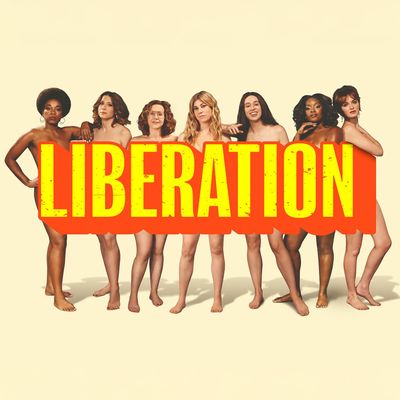
In this episode of “Half Hour”, we cover Liberation at the James Earl Jones Theatre. Bess Wohl’s new play captures complex power dynamics and contemporary questions about equality, anchored by an ensemble cast and Whitney White’s direction... Read More
From the show: Half Hour with Jeff & Richie (Post-Show Broadway Discussions and Interviews)
Featured Shows
About
In this episode of “Half Hour”, we cover Liberation at the James Earl Jones Theatre. Bess Wohl’s new play captures complex power dynamics and contemporary questions about equality, anchored by an ensemble cast and Whitney White’s direction. We dig into the production’s treatment of solidarity, feminism, and generational change, examining how moments of vulnerability emerge as agents for progress.
Follow and connect with all things @HalfHourPodcast on Instagram, TikTok, and YouTube. Share your thoughts with us on our podcast cover post on Instagram.
Transcript
This transcript was automatically generated and might contain errors.
[0:00] Jeff Malone: Welcome to Half Hour with Jeff and Richie, the podcast where we explore the latest shows we see, sharing our insights and opinions on the performance of storylines and everything in between.
[0:08] Richie Grasso: In today's episode, we are discussing the Broadway play Liberation, playing at the James Earl Jones Theater in New York City.
[0:15] Jeff Malone: Whether you cannot catch the show in person or you want to expand your thoughts after seeing it, this episode is for you.
[0:20] Richie Grasso: And as always, we want to inform you that this episode will contain spoilers.
[0:24] Jeff Malone: So if you're ready to dive into this production, stick around with us.
[0:26] Jeff Malone: I'm Jeff.
[0:27] Richie Grasso: And I'm Richie, and we're thrilled to be your hosts for this episode.
[0:29] Jeff Malone: But before we start the conversation about Liberation, here are a few words from our advertisers.
[0:34] Jeff Malone: Welcome everyone to a new episode of Half Hour with Jeff and Richie.
[0:37] Richie Grasso: Today we're discussing Liberation.
[0:39] Richie Grasso: 1970s Ohio.
[0:41] Richie Grasso: Lizzie gathers a group of women to talk about changing their lives and the world.
[0:44] Richie Grasso: What follows is a necessary, messy, and bitingly funny exploration of what it means to be free and to be a woman.
[0:50] Richie Grasso: In Liberation, Lizzie's daughter steps into her mother's memory into the unfinished revolution she wants to help ignite and searches the past to find the answer for herself.
[0:59] Richie Grasso: Tony Award nominees Bess Wohl of Grand Horizons and Whitney White of Jah's African Hair Braiding present a refreshingly irreverent and intensely relevant powerhouse of a play about what we inherit, what we forget, and what we're still fighting to understand.
[1:13] Jeff Malone: All right, theater hot take for Liberation.
[1:16] Jeff Malone: I think that Liberation is easily my favorite structure of a memory-style play that I've seen.
[1:23] Richie Grasso: I would totally agree with that.
[1:25] Richie Grasso: I loved the way the structure was throughout this piece.
[1:27] Richie Grasso: My hot take would be that Liberation to me is groundbreaking theater that is done in a smart way that conveys a message and a meaning that mixes joy and happiness with pain and suffering all in one.
[1:42] Richie Grasso: It's the future of what I think theater should be, and it's hitting the nail on the head in that way.
[1:47] Jeff Malone: All right. Let's get into this show then.
[1:50] Jeff Malone: So let's start with our overall thoughts on the story, plot, concept, and theme.
[1:54] Richie Grasso: So this was off-Broadway before it came to Broadway, right?
[1:58] Richie Grasso: The play is also not based on a true story, and it is rather inspired by real people.
[2:02] Richie Grasso: So I thought that was really interesting because you would have thought that maybe a lot of this was based on actual real events.
[2:07] Richie Grasso: And it is all based on real events, but the literal actual specificities of these people and the locations and things might be slightly different, right?
[2:17] Jeff Malone: Um, I think a play like this belongs on Broadway.
[2:20] Jeff Malone: I think a play like this sets the tone for what Broadway can be.
[2:24] Jeff Malone: We can tell conveying messages in a way that mixes so many different types of emotions with a wonderful gathering of people.
[2:31] Richie Grasso: Yeah. And I think that this play really broke ground like that for the Broadway scene of this year in particular.
[2:37] Jeff Malone: I can agree completely.
[2:39] Jeff Malone: You know, I did some searching about, you know, where this play kind of came from from Bess Wohl and how this play started.
[2:47] Jeff Malone: And you know, she was in an interview, and she talks about how the play came from this very deep and real question that she always had for her mother, which is, do you regret having me?
[2:58] Jeff Malone: And do you regret taking a slightly more traditional path than might be what you have originally imagined for yourself?
[3:04] Jeff Malone: And I feel like that's such an interesting concept to kind of take and grow a play from because you think about all of these people in the world, especially women, and especially around the liberation movement, and you say, like they either went on this feminist journey on like wanting to fight for women's rights, or did they just go down this path of a traditional marriage?
[3:31] Richie Grasso: And so much of like in the writing in this play is about that.
[3:35] Richie Grasso: Like the women getting mad at each other if they were going more of a traditional route.
[3:39] Richie Grasso: And I feel like that's such a hot topic to really kind of talk about and discuss on like why that's included in the play like that.
[3:46] Jeff Malone: Yeah, not to mention, I feel like the piece also really does a great job with highlighting different walks of life.
[3:52] Jeff Malone: Older women, younger women, single women, women who are married or with someone, queer women, women of color, right?
[3:59] Jeff Malone: So many different backgrounds of women coming together at this time.
[4:02] Jeff Malone: And the 70s was this really groundbreaking time of American history, too.
[4:06] Jeff Malone: And so I think that it was great that we kind of set it in the 70s as well, and we saw these characters come alive.
[4:12] Jeff Malone: And whether they are not literally real people or not, it also reminds you that there were people like that these characters are representing many, many people of that time.
[4:22] Richie Grasso: Even there were more conservative women, more liberally minded women.
[4:25] Richie Grasso: They talk a lot about that.
[4:27] Richie Grasso: I think the play is written in such a way that it goes into those uncharted waters a little bit and allows us to say things and hear things and watch people's reactions.
[4:35] Jeff Malone: And it's the simplicity of like sitting on folding chairs in a gym, right?
[4:39] Jeff Malone: There's no bells and whistles per se with anything.
[4:42] Jeff Malone: Sometimes so many memory shows have so many added special effects and visuals and things to really take a—this was understood by like I really liked the concept of like the quick lighting change to like, oh, and now I'm interviewing one of my mom's friends from the present day.
[4:55] Jeff Malone: And it was like blue lighting, I think.
[4:56] Jeff Malone: And we associated that color and that cool color of lighting with that.
[5:00] Jeff Malone: And then we went back to like the warmish yellowish gym look.
[5:03] Jeff Malone: And I think from a lighting perspective, that was a really great way to show the difference.
[5:06] Richie Grasso: But I also liked this idea of the concept of coming to the audience saying, Hey, thanks for being here.
[5:12] Richie Grasso: Like, did you turn those phones off?
[5:14] Richie Grasso: Great, awesome.
[5:14] Richie Grasso: Like, here, who I—here I am.
[5:16] Richie Grasso: She's starting to cry in the first three minutes about her mom.
[5:18] Richie Grasso: Here I am thinking, oh my gosh, is this the play, right?
[5:21] Richie Grasso: The actual actress? Is this their story?
[5:23] Richie Grasso: Like, this is really heartfelt.
[5:25] Richie Grasso: And it set the tone for me at the very beginning.
[5:27] Richie Grasso: Like, we're gonna go to an emotional place.
[5:30] Richie Grasso: And it's gonna be filled with laughter and comedy at times too, but we're gonna go somewhere.
[5:34] Richie Grasso: And we're gonna set that from the beginning.
[5:35] Richie Grasso: We're not gonna make anything confusing to the audience.
[5:37] Richie Grasso: We're not gonna try to sway people.
[5:40] Richie Grasso: We're just gonna say, hey, I'm an actor.
[5:42] Richie Grasso: Here I am, I'm playing this character.
[5:43] Richie Grasso: We're gonna set the scene.
[5:45] Richie Grasso: And they do this great thing at the top of Act Two as well, which is the nudity aspect of this, right?
[5:50] Richie Grasso: We start Act Two with that, the stripping of the clothing and the exposure like that.
[5:55] Richie Grasso: So I think what Whitney White does and what Bess Wohl does really nice is they start and end each act really well.
[6:00] Jeff Malone: The guy playing basketball at the end of Act One, the memory moment of her saying, now you take this and pass this on building the bricks at a time of the wall.
[6:09] Jeff Malone: I was really, really impressed with those four bookends—the start of Act One, the end of Act One, the start of Act Two, and the end of Act Two.
[6:15] Jeff Malone: All really unique.
[6:15] Richie Grasso: And I thought that was really smart.
[6:17] Richie Grasso: Yeah, I agree with that too.
[6:18] Richie Grasso: And it really helps when you look at something like this.
[6:21] Richie Grasso: You know, a lot of how the narration in this play is like written is very similar to like what the Constitution means to me.
[6:29] Richie Grasso: Yeah, it's like involving the crowd in that way, the audience.
[6:34] Richie Grasso: And I don't mind it as much in a play like this, or like in a play like what the Constitution means to me.
[6:40] Richie Grasso: It feels warranted to have a narrator that's engaging with the audience, it's kind of setting the scene, and I think it also helps you as an audience member you kind of navigate throughout what the actual text is of this piece.
[6:53] Richie Grasso: And I think you have to really sit down and kind of comprehend everything that's going on, the bouncing back between different generations and how it kind of hits you at that time.
[7:05] Richie Grasso: Like, what was it hitting you like in the 70s versus what was it hitting?
[7:10] Richie Grasso: I think it takes place in the 2020s now that she's asking these questions, like asking the questions to her mom or her mom's friends as the memory piece of like kind of seeing like what happened, what went wrong, what went right, and do we learn from history in that way?
[7:30] Jeff Malone: And it's such an interesting topic to kind of also bring up because structure-wise, I think some people could be confused by a play like this, and I don't think there was enough in there for me to be confused by.
[7:46] Jeff Malone: There's a lot of characters, but there's all around of like a same story that's happening within this play.
[7:54] Richie Grasso: And I also think it's there to kind of show you that there were a lot of issues that were getting fought for in the liberation movement, and it was not just one.
[8:04] Richie Grasso: You know, I think it's very easy to sit there and say, like, why didn't we just pick one topic to talk about in the play?
[8:10] Richie Grasso: But like that's not the point.
[8:12] Richie Grasso: The point is there were so many things that were being talked about and fought for that you can't just pick one.
[8:18] Jeff Malone: And similar to how like something like SUFS was a women's rights movement for the voting rights at that time.
[8:24] Jeff Malone: Now we're years later in the 70s talking about a piece like Liberation for women's rights.
[8:28] Jeff Malone: And then we have to jump forward in ahead to say, what is the women's liberation movement like today?
[8:33] Richie Grasso: One of the characters says, um, in the flash forward in the present day, one of the characters says to the person interviewing, like, what happened?
[8:40] Richie Grasso: Why I feel like it stopped.
[8:42] Richie Grasso: Or I feel or something like I'm paraphrasing, but it feels something like it's slowed down.
[8:45] Richie Grasso: Who's fighting this movement now?
[8:47] Jeff Malone: And I think when you know, they also mentioned the play Roe v. Wade, which was a big deal, and now we're sitting here with no more Roe v. Wade as we're watching a play about the 70s talk about how much of a big deal that was when Roe v. Wade came through in the 70s.
[8:58] Jeff Malone: So we're sitting here all these years later, like, yeah, this women's liberation movement needs to keep moving, needs to keep pushing forward because there's still—there's been so much done, but there's still much so much more to do.
[9:09] Richie Grasso: Right.
[9:09] Jeff Malone: Right.
[9:10] Richie Grasso: And I think that was eye-opening to me.
[9:11] Jeff Malone: Yeah, because I think you look at it, and I think like what are action points in general?
[9:17] Richie Grasso: I mean, I think there's so much as it being a memory play and talking about these topics and seeing like where we are today with them, and saying like, okay, asking the question, you know, do you regret having me?
[9:31] Richie Grasso: And do you regret not being able to continue on in like what you were fighting for?
[9:37] Richie Grasso: Because I believe her mother in real life was actually part of the liberation movement, and she was a writer, and it's very similar aligned with that.
[9:45] Richie Grasso: It's just different, written differently in the play.
[9:48] Richie Grasso: Um, but you know, what was her continuation in that path after having her?
[9:54] Richie Grasso: Or did she move into this traditional, you know, family?
[9:57] Jeff Malone: Which there are multiple times within this play, they talk about, you know, moms being the head of the family, and like one of the characters even comes in and is like, I can't come to this.
[10:10] Jeff Malone: You guys don't take into account that like I have kids at home and I need to be a mother when I'm home.
[10:15] Richie Grasso: Which was cool.
[10:16] Richie Grasso: And I look at them and I'm like, oh, okay.
[10:19] Richie Grasso: There were probably a lot of women that wanted to be part of this movement, but they were the head of taking care of the home and the family during the summer.
[10:27] Richie Grasso: And that character introduction was cool in the way they did that.
[10:29] Jeff Malone: And so I do want to get into some of the acting moments and some of the direction and some of these specific choices too, because that's where we're gonna kind of really dive in.
[10:36] Jeff Malone: So let's take a quick moment where we hear from some of our advertisers and we'll be right back.
[10:41] Richie Grasso: Okay, and we're back.
[10:42] Richie Grasso: So we have this amazing cast first.
[10:44] Richie Grasso: Let's maybe start with someone talking about some of the casting.
[10:46] Richie Grasso: Betsy Adam as Margie, Audrey Corsa as Dora, Kaylee Davion as Joanne, Susannah Flood as Lizzie, Crystalin Lloyd as Celeste, Irene Sophia Luccio as Isadora, Charlie Thurston as Bill, and Adina Verson as Susan.
[10:59] Jeff Malone: So out of all those, I mean, it's such an ensemble piece.
[11:02] Jeff Malone: I almost feel like there's not really one specific leading person per se.
[11:06] Jeff Malone: But who stood out to you from an acting performance in particular?
[11:10] Richie Grasso: Literally every single one of them.
[11:12] Richie Grasso: Yeah.
[11:12] Richie Grasso: Yeah.
[11:13] Richie Grasso: Literally every single one of them.
[11:15] Richie Grasso: I think I turned to you when we were at intermission and we were standing there, and I'm like, um, it's so great to be able to see a cast that's full of amazing actors that are really getting into character and taking on these roles and making it their own.
[11:35] Richie Grasso: You know, I mean I don't have anything to compare it to, but I do get to say, like, no, I really feel like they fully invested themselves into playing these.
[11:44] Richie Grasso: Which is why it felt like an ensemble piece.
[11:46] Richie Grasso: And it's hard for me to sit here and say, oh, that one was so great, and this one, they all worked so well off each other, all of them truly, that I just named.
[11:53] Richie Grasso: Every single person stood out.
[11:55] Richie Grasso: I hope a lot of these people would be Tony nominee potentials.
[11:58] Richie Grasso: I would hope that this play gets a Best Play Tony nomination, right?
[12:00] Richie Grasso: Because I feel like just the ensemble feel of this piece felt so good in that way.
[12:05] Jeff Malone: And this is a direct transfer from off-Broadway.
[12:08] Jeff Malone: It played at the Laura Pels Theater last season.
[12:11] Jeff Malone: We did not get a chance to see it off-Broadway, but we now have seen it on Broadway.
[12:15] Jeff Malone: But the whole cast and creative team was a direct transfer, which I think was amazing because seeing this now, and we heard amazing things about the play when it was off-Broadway.
[12:25] Richie Grasso: Um, is a great opportunity for so many more people to actually go and see this.
[12:30] Jeff Malone: So I think that's why when you get a cast like this, and it's like a big question to you as well of like when you see a cast transfer completely, like no differences added in here.
[12:42] Jeff Malone: What does that mean to you as like a production?
[12:46] Richie Grasso: To me, it means that something worked really well, and it also shows that the actors and the team want to stay on and continue.
[12:52] Richie Grasso: They don't know that there's no other show, maybe at this time for them to go to, or maybe they don't even want to go to, they want to stay with this company in this ensemble.
[13:00] Richie Grasso: When you see the original casts of things at the heightened level that this is, I think it means a lot.
[13:06] Richie Grasso: Even one or two are of course the understudies are there, probably doing some great work too if they ever go on.
[13:10] Richie Grasso: But I think that there's just power in the ensemble.
[13:13] Richie Grasso: There's power in that company saying, No, we want to bring this is gonna go on Broadway.
[13:16] Richie Grasso: Yeah, we're gonna bring this, we're gonna go, we're all gonna go with it, right?
[13:19] Jeff Malone: You know, and it's directed by Whitney White, so right there, you know, we saw Whitney White's direction at Jah's African Hair Braiding, and we loved it.
[13:28] Jeff Malone: And then we saw Whitney White's direction for The Last Five Years, wasn't a fan, wasn't a big fan.
[13:34] Richie Grasso: Now I'm seeing Liberation again.
[13:36] Richie Grasso: I'm like, loved it.
[13:37] Richie Grasso: So I'm like, I think she has a really great technique when it comes to the plays.
[13:43] Jeff Malone: Um, maybe we just had super high expectations with the production of The Last Five Years, and it just like didn't fall in the right way.
[13:52] Richie Grasso: But also, there may have been too many cooks in the kitchen with The Last Five Years, and it wasn't fully what she wanted to do either.
[13:58] Jeff Malone: Would love to know about that from her one day.
[14:00] Richie Grasso: But I look at her direction and I say, I really enjoy what she did with this play, and I really enjoyed what she did with Jah's African Hair Braiding, so it makes me trust her still as a director.
[14:13] Jeff Malone: Totally.
[14:13] Richie Grasso: I think that's a great point.
[14:14] Richie Grasso: I think she does really do some nice things.
[14:16] Richie Grasso: I mean, I think the simplicity of it of just like putting chairs on a stage and letting actors play in a space without feeling like we need to do too much theatricality, right?
[14:24] Richie Grasso: There was the bleachers off to the side, there was some staging there, but in general, it was kind of like front and center.
[14:29] Richie Grasso: And a lot of times I don't always like that.
[14:30] Richie Grasso: I'm like, oh, why are we not using levels and using, but there was just something about like the entrance of that door into the gym that was kind of whoa at times, like impressive, and just the simplicity of the way the chairs were on stage and they were all just gathered around each other, seemed so comfortable.
[14:45] Richie Grasso: And I thought that worked really well for the piece.
[14:47] Jeff Malone: Yeah. And I always look at a director and how they have the actors on the stage and how they have them responding to what's actually being said within the piece. And I think, you know, I would take an actor at certain times without this piece throughout this piece, and I would say, what are they doing? Like during while someone has a nice long monologue or what's going on there, and I could see them. They were fully in character throughout that whole piece. And I also noticed, you know, as it being the memory, when she decided to make Lizzie watching versus being part of being the mom versus being the daughter, and you really had to follow along. Sometimes she was just in the wings or in the corner of the stage, and she was watching and observing what was going on versus when she was actually playing her mom. And that is such a technique, I think, as an actor that you know, Suze Susanna Flood really mastered.
[15:49] Richie Grasso: Totally agree. And that's a good collaboration between director and actor too, and working, it's very clear that they all worked really well together on this. And then bringing in some of the designers on this, I mean, first of all, I will just say these costumes were so impressive. So period. Really, period. But like it was almost like crystal clear. Like we are gonna make this the height of 70s fashion. Like, of course, some people probably wore plain shirts and pants in the 70s, but like they really went with the fashion of this and elevated this experience of like, no, we're gonna do the 70s, we're gonna do the 70s, we're gonna go there with the patterns and the styles. It was very and the wigs and hair and makeup were so impressive too.
The whole design of that. Lots of costume changes too. That every time they came to a new day in the gym, they were in new looks. And then easy on, easy off clothing for the nudity scene, right? That's like that's tough to have to get actors used to that. So very impressive with that. And that's like a big thing to kind of talk about in this production, too. You know, you have all of these seasoned actors coming on stage and they are fully kind of embracing and letting their hair down in a way to actually get fully nude in front of a live audience. I mean, I think that takes a lot of willpower and guts in today's day and age to actually get on stage, especially in the world of cell phones. And I know like we have to put our phone in a lockbox so that people are not recording or doing anything like that.
But you know, I also think that is also trusting the audience and making sure like that you are not kind of going to go about and like posting videos and the photos like that out in the open. But you know, it was a great scene, and I think an important scene because I think when you look at you know, protesting and getting nude, and especially during the 70s with taking your clothes off, that was a big part of that moment.
[17:39] Jeff Malone: Oh, yeah, sure. And that's why I think that was important to put into this piece in a really smart and very mature way, too. Um, I also will say the lighting and scenic design were really strong. I love that wall of lights on the side of the stage that kind of shined into the gym. I also love that we were looking at, and this is a David Zinn set, which I'm always very impressed with what he does. I was kind of impressed that there was this like there wasn't literal, it could have been so easy to say basketball hoop here, basketball hoop there, let's give a cookie cutter gym. If you notice, it was like it was like this avant-garde off the side. It was like we were looking at the side cut of the gym.
Like that there was like the bleachers were like all the way over there, and then the basketball hoop was not center, it was like off. It was kind of nice that we didn't see like this like perfectly centered gym, and instead we saw like a corner of a gym. I like that. And there's something so specific about that that it could have been, oh, a gym. Okay, cool. Here's a basement gym. But like you, there's a designer making it like what if the whole wall is lights that are shining off to the side, you know, lighting in a gym is usually very harsh, right? And fluorescent. And so I just thought that design was smart with the lights and the scenery together like that. When you like kind of dive into that a little bit more, you kind of say it's like, oh, okay, it's like these six and seven women at times sitting in the corner of a gym, their own little corner.
What does that mean to them? What are they doing outside of that corner? But at so many times they're just in their own little corner. And that's like I feel like that's what we fight for so much in this world of like, you know, we're just this little group over here, and we're trying to do our thing. And I think there is so much representation in like why it is just the corner of the gym and designed it. That spoke to me. And also the glorification of the word boy and like man. Because like varsity men's this boys swimming, that all on the walls, the boys' sports things, that was all boy centric. I noticed that. Because you think about it, and you're like, oh no, they probably did not have girls sports at that time. And they do. I think they had girls' sports at the time. I just don't know if it wasn't as prolific.
[19:46] Richie Grasso: Right, right. Right. And it was probably like club. It wasn't like fully like a sport within within the district. Maybe, right? Because this is a community center. Right. Right. So maybe it was more of a community. Yeah, it's interesting. But I thought all the designers worked very well together in general on this. I was very impressed with that.
[20:02] Jeff Malone: Yeah, so was I. And was going back to what you were saying about the actors, is there one that like really did also stand out to you that like they truly all did so much? To me, there's something really impressive about Betsy Adam. I just think that she's really, really good at what she does. I liked her perspective of this character, and I really loved her playing the mother at the end. And that moment, I just thought she stood out for me. They all truly did, but Betsy to me was really, really impressive.
[20:30] Richie Grasso: I thought the two actors, yes, Betsy Adam, and I believe it was Adina Verson who plays Susan. Yes. When they both had to get into character as the mother, what an interesting concept to watch and see. Like normally, I think they would portray it as like these two actors would not be playing the mother, but that they had to fully get into that character and be the mom. And it was just so different to watch that I loved it. Really, really loved it.
[21:03] Jeff Malone: So all right. I think it's a great time to take another break, and when we get back, we're gonna talk about our own experience at the show and what we think how we think this show will stack up at this year's Tony's okay, and we're back. So let's start off with how we had our own experience at the show. Really great experience. I think it was just nice to see people seem to enjoy it. I think the locking of the phones is really important. I'm glad they're doing that. I know the ticket sales haven't been too strong for this, and I really hope that they pick up over the holidays because I think that this all this got great reviews, and I think people should be running to see this. I know it's a limited run.
Um again, with limited run shows, especially plays in the fall. Do they always last into the spring for Tony nomination potentials? Yes and no. Hills of California definitely got some nominations last year at this time. I do think this has potential to get Tony nominations. I really hope this gets a best play nomination. I would think it would.
[21:59] Richie Grasso: Yeah, I mean, I think with stacking up at the Tony's, I definitely think that this would get a best play nomination. It seems like it is on the path for that. It could even get a best direction nomination in terms of play. Cast is probably a little bit harder, other than that it many of them could be nominated for supporting, depending on what else we get this season.
[22:20] Jeff Malone: Right. Um, I don't know who would actually be considered leading. And I don't know if because there's no one like above Bill titled as leading, I think that would be hard to figure out like who would be leading, and they'd have to figure that out amongst the nomination committees and things.
[22:33] Richie Grasso: Right. I feel like if they were gonna go down the path of, you know, putting someone as the lead, it would be Susanna Flood as Lizzie, who has the daughter and the mom. And then everyone else would be up for supporting maybe.
[22:47] Jeff Malone: Yeah, yeah. Um, it could definitely get some design awards and creative awards as well, as well as costumes. Like we said, we loved the costumes. So it would be interesting to see there, but I don't think that this play is going to get shut out at this year's.
[23:00] Richie Grasso: No, I think it'll go strong. I think it's it's really I really do hope it will. Also, just a side note about people bringing phones to theaters when there's lander pouches. The point of the lander pouch is to then not have access to your phone, which means you need to turn your phone off when it goes into the pouch because when or if it rings or vibrates, you don't have a way of answering it or turning it off. And every time I've gone to a play where a phone is put in the lander pouch, someone's phone is ringing and they don't know how to either hit the side button or turn it off or answer it because your phone is locked. So they ask you to tap your screen and show that the phone is locked for your benefit so that you're not dealing with a ringing phone and a locked pouch.
I don't know why that concept is not still understood by a lot of people. Um, but I just see we're seeing more and more lander pouching, which is I think a great thing. Um, but I think we need to just remember the purpose of it and let's keep those phones on silent, please, because of course at our show the phone was ringing from someone. And of course, right at the most like intense part of the show. Um I find it very interesting because I have such anxiety about my phone going off all the time. So my phone is always on silent. I know that's not how a lot of people in this world operate, but like as soon as I walk into a theater, I'm immediately like, okay, is my phone in theater mode? Is it silent? Is it basically off? Um, because if my phone was to go off, I would be so embarrassed. But that's just me.
[24:30] Jeff Malone: Yeah, that's okay. One question I did kind of want to talk about for us, like just riff on last year, is how do you feel like this play is standing in today's political climate? I think it's definitely standing because I think we're dealing with a lot of these issues today. And it's reminding us that oh, the issues of the 70s are still the issues of today. Some, some I think there's different levels. Um, and I also look at this as someone who understands that I'm not a woman, right? So I don't know all these struggles personally 100%. I'm looking at this with sympathy and with empathy for these people and what they're going through, meaning these people, meaning the characters in the piece. For women's rights in general, we have a lot to do.
We have a lot to to go far when it comes to women getting married versus not getting married. And the institutional, they talk a lot about that in the piece. Getting married, is that wrong? Is that right? Is it about love? Is it about the institution? Having children, do you want to have children or do you feel like you need to have children or both? Those are questions that I can't sit here and answer. I can't answer those, but I know that they are personal decisions, and I know that those are decisions that women need to be making, and we need to be living in a society that allows women to make those decisions on their own, with their either if they have a partner or not in life, or with their spouse or with their doctor, or with their parent or with someone that they need to trust and work on with, not the government and laws saying do this but don't do that. You can do this, but you can't do that. And I think that we have a lot to work on still as a society and as a world with women's rights like that.
[25:59] Richie Grasso: We definitely do because I think the word equality is still so not equal in so many different aspects of today's world. And there are always going to be some sort of power person that really wants all of the power. I think looking in today's world, and you see all of these billionaires and what they are kind of taking on in the world and like how they do not want people to ever be on their level never makes sense to me. Um that is like such a huge takeaway from a play like this is like why do people not want everyone to be equal? It doesn't make sense. It really, really doesn't make sense to me that like it could be so easy for everyone to be on the same playing field, but everyone is so power hungry that it is never gonna work.
[27:00] Jeff Malone: Well, we can be hopeful, but yeah. But when you look at some of the huge big power people in this world today, what makes you think that they would ever be on the same level as anyone else below them? And like that's the question to leave like kind of everyone with. It's like we could be hopeful, but there's too many people in this world to ever like think that, especially with wanting power.
[27:23] Richie Grasso: I'm gonna be a little more hopeful in the sense that hopefully we're gonna keep climbing the uphill battle and slowly be getting more and more, hopefully not too slow, right? But moving in the right direction.
[27:34] Jeff Malone: I think we will. Of course, and that's why I say women's rights in this piece, mainly women of color, queer women, older women, younger women, conservative women, liberal women, women in general. There's so many different representations of women in this piece, and I think that this is an important piece for today.
[27:48] Richie Grasso: Oh, I 1000% agree with that.
[27:51] Jeff Malone: So oh my gosh. Final thoughts on just about out of time here. Final thoughts on liberation on Broadway. I really enjoyed this play. I mean, I loved the structure of this. I loved the direction. I loved the whole cast. I think they were all great. And I love the topics that Vestwall is really bringing up in a piece like this because I do think there is hope, and there is a lot for equality in the youth and the generations that are currently alive and wanting a better world that a play like this really helps kind of ignite that.
[28:25] Richie Grasso: Totally. Yeah this is an important piece. This is a wonderful piece. It just really evoked so much emotion. And I really see why this is important to bring to Broadway to broad from off Broadway to Broadway and it's going to have a good solid run here. And I hope community theaters and high schools maybe or just other regional theaters rather do this piece. You know, in some way, shape or form. I know it would depend on you know what we who you're working with in terms of the nudity element of this and stuff could be hard in some places but I think it's a really really great piece and I think I think they could make a high school version.
[28:55] Jeff Malone: Yeah maybe not yeah doing that you see in there. Um but yeah I I would agree I think like the actual text of this play is super important for high schools to do as well. So well that does wrap up our discussion of the episode we hope you enjoyed our deep dive into liberation. And remember we want to hear from you continue the conversation with us on Instagram and TikTok at Half Hour Podcast and drop us a comment on Spotify and let us know your thoughts on liberation. Please also leave us a review. Your reviews mean so much to us and remember to subscribe to our channel for all past and future episodes. Until next time I'm Jeff and I'm Richie Sang Tata for now. Bye.
© Broadway Podcast Network, All Rights Reserved