

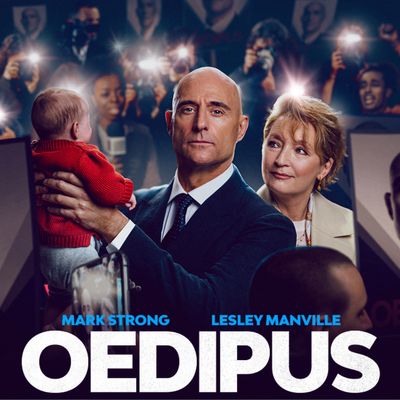
In this episode of Half Hour, we take a deeper dive into the 2025 Broadway production of Oedipus at Studio 54, directed by Robert Icke and starring Mark Strong and Lesley Manville... Read More
From the show: Half Hour with Jeff & Richie (Post-Show Broadway Discussions and Interviews)
Featured Shows
About
In this episode of Half Hour, we take a deeper dive into the 2025 Broadway production of Oedipus at Studio 54, directed by Robert Icke and starring Mark Strong and Lesley Manville. We break down the plot and concept, looking at how the production reframes Sophocles’ tragedy as an election-night political drama and what that does to the story’s sense of inevitability and fate.
The conversation covers the direction and translation, the use of contemporary political language, and how the staging shapes the tension of the evening. We discuss the scene work, highlight standout moments from Strong and Manville, and consider whether modernizing a classic in this way clarifies or complicates its themes. We also speculate on where this production might go after its New York run and what it suggests about the future of updating Greek tragedy for Broadway audiences.
Follow and connect with all things @HalfHourPodcast on Instagram, TikTok, and YouTube. Share your thoughts on this production in the comments on Spotify, and let us know what you would like us to cover next. If you enjoy these post-show conversations, follow Half Hour and leave a rating and review so more theater lovers can find the podcast.
Transcript
This transcript was automatically generated and might contain errors.
[0:00] Jeff Malone: Welcome to Half Hour with Jeff & Richie, the podcast where we explore the latest shows we see, sharing our insights and opinions on the performance of storylines and everything in between. In today's episode, we're discussing the Broadway production of Oedipus playing at Studio 54 in New York City. Whether you cannot catch the show in person or you want to expand your thoughts after seeing it, this episode is for you. And as always, we want to inform you that this episode will contain spoilers. So if you're ready to dive into this production, stick around with us. I'm Jeff.
[0:29] Richie Grasso: And I'm Richie. And we're thrilled to be your hosts for this episode. But before we start the conversation about Oedipus, here are a few words from our advertisers.
[0:33] Jeff Malone: Welcome, everyone, to a new episode of Half Hour with Jeff & Richie. Today, we're discussing Oedipus. Election night, the polls predict a landslide victory. Everything is about to change. Starring the internationally renowned, multi-award-winning Mark Strong and Lesley Manville, Sophocles's epic tragedy is transformed into an essential, explosive human thriller. After his revelatory Oresteia, visionary director Robert Icke of 1984 and The Doctor reimagines another ancient Greek tragedy, bringing the secrets of the past bursting into the present.
[1:11] Richie Grasso: All right. So let's do our theater hot take for Oedipus. I feel that this production should come with an additional warning that you probably will leave this production trusting politicians even less. I will say that I was very impressed with the new setting of this very, very old play. And I thought that the ticking down of the time up to the big moment at the end, to me, was haunting. It was jarring. It was very well acted. It's one of the strongest things this season I've seen. And I'm looking forward to seeing how this plays out in Tony Awards Season 2.
[1:41] Jeff Malone: Yes. All right. Let's dive into it. When we look at this original piece, we're talking about Sophocles's ancient Greek tragedy. This play is thousands of years old, right? So when something is passed on, this story, through so many different translations and adaptations, it's kind of nice when someone takes something that most people know how it ends, and gives a modern, classic, modern-day spin on it. And I think that was really smart. I don't always like when Shakespeare or Sophocles or a lot of the tragedies become modernized. Sometimes they really work, and sometimes they say, oh, did you just set it in the modern day because that's what you wanted to do? But this felt really smart to do that. I thought that was cool.
[2:29] Richie Grasso: I don't know how many other times we've really seen Oedipus in the mainstream, but to see it done like this, in this modern political world was really, really cool. Yeah, I thought it was a very interesting way to kind of take this story and tell it in a more modern way. Sometimes I think we see things that are inspired by, especially from Shakespeare, it's not a direct translation to the stage where people are inspired by his work, and then they put it into a new version, like The Lion King in a way, right? So something like this, where you're actually still keeping the same names, and the same storyline here, I thought was really interesting.
[3:10] Jeff Malone: Yeah, and then, I mean, we're going to obviously get into this, but Mark and Lesley's performances were also incredible, too. We know this had a pretty strong run in London. Coming to New York made the most sense with something like this, because of the rave reviews that it got. And I just thought that there was also this incredible thing with setting this in the political modern world, and this, like, it's election night, and what is going on in headquarters on election nights? And there's even reference to, like, he's going to show his birth certificate, and the whole world thinks, there's such reference to modern politics, and yet there's no specific reference of very specific people, or locations, or times. It's just the modern day in what a typical political realm would be, and I think that was kind of smart, too.
[4:03] Richie Grasso: And with this, too, you know, when you touch on the words that this, the original work is around, like, fate, and prophecy, and blindness, even, and pulling that into these words that that's so similar to the political space here, like, from a concept here, to bring that, like, what's the fate of, what's the outcome of the election? And what is also blinded, in a way, for the politicians on what they're not seeing anymore, but also as a group of people that are voting in this space, and the things that we don't know about someone, and what we eventually learn later on, or what they don't even know about themselves.
[4:45] Jeff Malone: Well, that's what's interesting, too, is most times, you know, the general public will have theories, or ideas, or rumors about someone's past politically, or personally, and their ties to things, or their past comes out of the woodwork, right? And everyone's thoughts on that. So then it's like, oh, he said, yeah, I'm gonna release my birth certificate, release my birth certificate. Meanwhile, there's this feeling of, like, they don't even know, and have put two and two together yet in his past, in his lineage. And he's spending the night of the headquarters, waiting for the clock is ticking down, waiting for us to get these results. And he's instead, piecing together, wait, I was how old when that happened? And where? Wait, who are you? And then connecting all this to this haunting and daunting conclusion of, like, oh my gosh, this woman who he married, actually was his mother. Spoiler alert. And how we get that? How do we get there?
[5:46] Richie Grasso: Right, right. Because it's like, when you first originally read the piece, you're like, how do we get there? Right. But the smart part of this was set it in a world where truth and lies is a blurred line anyway. So that is such a blurred line in so many political worlds, not just the United States, but everywhere. Who said what, when, and who knows who, how, and money, money is in different. There's always mystery and thoughts on no matter who it is. Right. So I think the mystery and this, the literal blindness, right, literally at the end, right, but also the figurative blindness to who we are and what our past is. That was so perfect about this. And then the families there, then the people running the campaign.
And you're also in this like, and we'll talk about this in a second in the next segment, this like sterile environment. Right. We're in this like stone, like palace, like large room, big doors. It doesn't feel warm and homey. They try to have a dinner there. They try to have couches set up, but it immediately becomes just a space of cold, hard truth.
[6:56] Jeff Malone: Well, that's what I find so inspiring when watching this is like what he was inspired by when writing this and kind of relating the whole political mask over something like this play is very on the nose for so many things in a different way. And when you look at this, it's like, oh, okay. The birth certificate is such the focal point in this play. It is the kind of conflict in this play here that he announces that he is going to release his birth certificate. And that is where all the secrets lie in this. That is like, everyone freaks out. Well, really, his mom freaks out because he's saying like, you can't release the birth certificate because I have to tell you a truth now.
[7:42] Richie Grasso: Yeah, they keep pushing the personal situation off and the mother off. They keep pushing her off. And is that like what you thought would have happened in this play? Like that was what was going to be like the conflict there around this birth certificate being like the main thing that gets us to end?
[7:57] Jeff Malone: Sure. But I also know there's like extreme irony there with like past political worlds and political campaigns we dealt with where everyone wants to see everyone's birth certificate. That became a big thing with past presidents in the modern past. So yeah, I just think this was smart. It's nice to see adaptations when this is smart. The concept and the plot work here. It's very easy to follow. I thought good acting also really helps that too.
[8:25] Richie Grasso: Yeah, I agree. Yeah. So well, I definitely want to dive into some of these actor performances and scenery and costumes and design. So why don't we take a quick break and we come back. We'll go into that segment next.
[8:34] Jeff Malone: And we're back. So I want to dive into a little bit of the direction, the actual performances and the design. Earlier I said Robert's name wrong, who's the adapter and director of this. It's Robert Icke. So Robert Icke, I want to talk a little bit about his direction of this. I thought the direction of this was really seamless. I liked that the different doors revealed different people at different times. There was an upstage corner door, but most of this happened in the center of the room. We didn't have too many bells and whistles. It was pretty self-explanatory. I thought that the staging was nice with that carpet and just them being in the middle of the room with the furniture. Did you feel the same way?
[9:13] Richie Grasso: Yeah. I mean, with him directing and creating this piece, I think that there's so much of the vision being put on the stage in that way. I liked that the room felt sterile and very like campaign trail plays. The people coming in and out and moving things around also was like a very interesting choice to do. But I think it made sense like, hey, OK, we're done here now. You're either losing or you're winning, but we got to move all your stuff out because it ends today. And I'm mostly fascinated by this choice with this countdown clock.
[9:45] Jeff Malone: Yeah, that was very, very cool. And that's probably a mix of direction and design. Yeah. But what were you fascinated about first?
[9:50] Richie Grasso: I wrote down here, I'm fascinated by like how this clock changes the experience for the audience members, not only the actors on the stage, because I think that there is a tick and that sometimes the tick is even louder. But for us as an audience member, I watched that clock at a few times because I said, oh, wait, it almost felt like one of those clocks like at a basketball game or something like when you're a kid and it's like going down. But when I first saw it, I thought it was going down quicker than it actually was. And it was going to jump at certain times throughout the piece. And then I realized, oh, no, this is the full two hour-ish play that we're watching here. And it's just going to count down.
And I thought about that a little bit after too, because I said, oh, a lot of people know the outcome of this play. So it's now more of a moment of like us sitting here and watching, seeing that timer and saying, oh, when is it going to happen? Because like another big spoiler here is like there is a scene after the play ends where they do a flashback. So that was also interesting to include that there. But so like we get up to the two hours before we know that the play is actually ending. And my point here is that, oh, I think as the audience members here, are we supposed to spend a little time saying like, oh, how long does it actually take him to crack the code here that his mother is his lover right now?
[11:34] Jeff Malone: Well, I think that's why the clock was important, because it showed you this visual throughout that time is running out until you find out that you're going to be winning this political seat, but also that you're going to find out this big revealed truth. And yes, since the majority of people already know the ending, it's not like we have to sit here and wonder when is the clock going to thicken? When is it going to be revealed? We kind of all know that that's coming towards the end. I will say another aspect of the clock that I found fascinating was because the actors can see it. It's very visual. It's right there. Now, of course, so many actors in this have done this so many times that they're probably comfortable with the pacing of it.
But especially for understudies going in who haven't done the show too much, I wonder how glued to the pacing they need to be. Meanwhile, what I'm trying to say is like when it gets to one hour in, are you at the same scene every time? Or when you're at the end, are you give or take within a line? What if you rushed that night and you're ahead of the clock? What if someone skipped a line? Or what if a prop mishap happened or a furniture piece took an extra couple of seconds and you delayed the start of the next scene or moment in the scene and now we're off? I wonder what the direction would have been. I'm going to assume the director didn't tell the actors to worry about the clock or literally sit, abide, glued to the clock.
But I wonder if that's just in the corner of their mind as a peripheral, as from an actor's perspective, from a pacing perspective. That would be really interesting for me to know, asking someone to the show. I just like I loved seeing something like that. At first, I didn't know what to think about it. And then it had me thinking and then it became a whole character in the play that this clock is there and that we're winding down.
[13:10] Richie Grasso: We also see on television screens moments of things. I couldn't tell if they were fully repeating or not, but there were news moments happening of like, oh, the election results are coming in and this and that. And then people would come in and they would be like, Dad, you're winning and you're going to be great and it's amazing. So I did really enjoy that. And I also enjoyed the costumes. I thought seeing this, it felt very political in a way. And at times, too, I think I said this to you after the play, I didn't know if we were in the current day, if we were in a made-up world or if we were like in this, like it almost gave the feeling of like being in a dystopian kind of like way, life after today. I know.
[14:00] Oedipus at Studio 54 [14:30] Oedipus at Studio 54 [15:00] Oedipus at Studio 54 [15:30] Oedipus at Studio 54 [16:00] Oedipus at Studio 54 [16:30] Oedipus at Studio 54 [17:00] Oedipus at Studio 54 [17:30] Oedipus at Studio 54 [18:00] Oedipus at Studio 54 [18:30] Oedipus at Studio 54 [19:00] Oedipus at Studio 54 [19:30] Oedipus at Studio 54 [20:00] Oedipus at Studio 54 [20:30] Oedipus at Studio 54 [21:00] Oedipus at Studio 54 [21:30] Oedipus at Studio 54 [22:00] Oedipus at Studio 54 [22:30] Oedipus at Studio 54 [23:00] Oedipus at Studio 54 [23:30] Oedipus at Studio 54 [24:00] Oedipus at Studio 54 [24:30] Oedipus at Studio 54 [25:00] Oedipus at Studio 54 [25:30] Oedipus at Studio 54 [26:00] Oedipus at Studio 54 [26:30] Oedipus at Studio 54 [27:00] Oedipus at Studio 54 [27:30] Oedipus at Studio 54
© Broadway Podcast Network, All Rights Reserved