

In this episode, we discuss the off-broadway production of OH MARY! Starring Cole Escola as Mary Todd Lincoln. Please note that this episode will contain spoilers about the show. If you haven't seen the show yet, you can catch OH MARY!.. Read More
From the show: Half Hour with Jeff & Richie (Post-Show Broadway Discussions and Interviews)
Guests


Featured Shows
About
In this episode, we discuss the off-broadway production of OH MARY! Starring Cole Escola as Mary Todd Lincoln. Please note that this episode will contain spoilers about the show. If you haven't seen the show yet, you can catch OH MARY! playing at the Lucille Lortel Theatre.
Follow and connect with all things @HalfHourPodcast on Instagram, TikTok, and YouTube. Please share your thoughts on OH MARY! on our podcast cover post.
Transcript
This transcript was automatically generated and might contain errors.
[0:00] Jeff Malone: Welcome to Half Hour with Jeff & Richie, the podcast where we explore the latest shows we see, sharing our insights and opinions on the performances, storylines, and everything in between. In today's episode, we'll discuss the new off-Broadway play, OH MARY! Whether you cannot catch the show in person or you want to expand your thoughts after seeing it, this episode is for you. As always, we want to inform you that this episode will contain spoilers, so if you're ready to dive into this production, stick around with us. I'm Jeff.
[0:27] Richie Grasso: And I'm Richie, and we're thrilled to be your hosts for this episode, so let's start the conversation about OH MARY!
[0:36] Jeff Malone: Half Hour!
[0:41] Richie Grasso: Welcome, everyone, to a new episode of Half Hour with Jeff & Richie. Today, we're talking about the new off-Broadway play, OH MARY!
[0:48] Jeff Malone: OH MARY is a dark comedy starring Cole Escola as a miserable, suffocated Mary Todd Lincoln in the weeks leading up to Abraham Lincoln's assassination. Unrequited yearning, alcoholism, and suppressed desires abound in this one-act play that finally examines the forgotten life and dreams of Mrs. Lincoln through the lens of an idiot, played by Cole Escola. And not saying Cole Escola's an idiot, that was just what the blurb is for the show, and I would also like to say that Cole Escola wrote this, which is fascinating. So, as always, let's start with our bold statement about the piece, and then see how that folds into the discussion. So, I'm gonna go first today, because you go first a lot. And I'm gonna go with this.
Bold statement is that Cole Escola has mastered a what-if play here in OH MARY! I would say, my statement being that Cole Escola has set the bar just a little bit higher for the comedy of the modern day, especially on the stage. Great. And we're gonna expand on that, because the bar has been set. I mean, I always think of comedy, listen, we've talked about, when we talked about The Cottage, for those of you who want to go listen to the Farcical episode where we talk about comedies, I always say comedy builds off what came before it, drama does too, but there's something about when you see Noises Off, and you see these farcical wild shows, and you see POTUS, and you see the, it's definitely farcical, right?
You even see what SNL has done over almost 50 years, right? And how we just play on comedy. And then you see what review shows have done, and what, just the history of comedy being told on stage, they need to piss. And I don't know what about OH MARY! is just so funny, that the bar of comedy has just been raised a little higher for any other playwright or any other writer out there, because how do you top this? Like, you go into this show that is selling so well, you're playing downtown at the Lortel Theatre, and Cole Escola we've seen in some TV, we've seen do things before, this is like, wow, have you put yourself on the map? And when you say, what if, Jeff, it kind of is the, yes, what if this was the dynamic of these two people?
What if we tell this, it's Titanic did it? What if Titanic was told like this? You're taking things that people know really well from history, and you're expanding on them, and I think that's what works so well.
[3:24] Richie Grasso: Right. So Titanic is a little different, though, because I wouldn't really say that's a retelling of Titanic, because that's more of like, going in the past. This, I think, is really taking a storyline here of like, hmm, we really don't know much about Mary Todd Lincoln, and what if it would have been like, this is how wild and crazy she was? But we go to this very, it's kind of the Hamilton approach, like, tell Hamilton the way you're going to tell Hamilton, but put them in the period costumes. I'm just such a fan of that, like, I love when costumes stay, and wigs here, there's no wigs in Hamilton, but usually, but with this, the wigs, the costumes, the scenery, it's all period. So we're in the period, and they are just living like these wild one-liners, it's full of one-liners.
The plot is light enough where you don't have to really be super embedded in it, if you know who Abraham Lincoln was, you know Mary Todd Lincoln was, but also you don't need to know who they are, because Cole is letting you explore these people and learn about these people on your own in this modern day, and there's so many times where I think I turned to you, and we were with our friend Anne as well, we were like, wow, we were just hysterically laughing, like, what is happening here? Like, what? I think I said about a hundred times, I was like, what is going on? Like, in the best way, because I was so in it for the whole, I don't even think it's 90 minutes, I think it's 80 minutes or something, this whole piece, it's just so wonderful.
[5:06] Jeff Malone: Well, when you look at this plot and concept and the absurd comedy that's happening on this stage, and you kind of say to yourself, listen, we've heard rumors our entire lives about like, oh, is Abe Lincoln, you know, was he homosexual? Or, you know, is Mary a beard for him? And like, was she even in her own ways, you know, kind of like lesbian? And you like, go to it, and you're saying, okay, inspiration had to have come from these rumors with Cole. Cole had to say, oh my god, what if I did take that? And like, make that funny and make a whole narrative and storyline here? And how do we make that fun?
[5:45] Richie Grasso: Well, and don't forget, it's so scripted that it's not, listen, I've seen things that try so hard to be funny that it's not. And I've left a theater being like, oh, this is not, this is messy, or this is too improvised, or this is not done, or this is all over the place. And this is so not that. This is very, if you notice every line, every move, every kiss, every, it is staged, like, very well. Sam Pingleton directed this very well. And there's even the like, I don't want to compare it to like review in Disney, but there's that like, the backdrop comes down, the curtain closes now, and you hear the scene changing, open the curtain, now we're in a new location, there's a new costume, the lights go out, music lights, it's that very vaudevillian, I guess is the word I'm looking for.
That style of telling the story is just so well done. Every minute detail is meticulously put together that you're not sitting there like, oh gosh, this concept is like all over the place. I didn't think that at all.
[6:48] Jeff Malone: No, it wasn't. I really feel that when you have comedy, it's very easy to be line, line, line, or it's done with people that know comedic timing. And I'm going to applaud everyone up on that stage because all of these actors have the comedic timing to make this feel natural.
[7:15] Richie Grasso: Totally. Totally. And you can even see sometimes because you know, if we're watching things with every little detail, I was watching to see like, okay, how is each actor going to respond to each other? And is it going to work? Is it going to feel like that line moment? And it's not. And they use the facial expressions to really let you believe that they're doing this and that they are these people. And it's interesting because there was some great chemistry between everyone on the stage, and we'll get to the actors in a second. But I want to say, how many times were we just, it was one of those shows where you have to really pay attention, but you also don't. Like you're just, you're on the journey with them.
Of course you always want to pay attention. What I'm saying is like, they kind of reached their hand out and said like, let's go. Get on the train, hold on tight, trust us, we're going to give you a really great thing here. And that's what is so wonderful about theatre when it trusts its audience, as I'm just saying in every episode lately, that it trusted us to be like, listen. And I will be honest, the first few minutes when it was all about Mary being drunk, part of me was like, are we just going to be that Mary Todd Lincoln's drunk the whole time? Is that just going to be the whole thing that she's drunk? And it wasn't that. It was her yearning for feeling suffocated, her yearning for cabaret, her yearning for so many things for a life outside of this being the first lady, that it just grew and expanded in the Shakespeare lessons.
And Conrad Rigamora playing Mary's husband, I love how it's titled, by the way, Mary's husband, not Abraham Lincoln. His whole affair that he was having, it just kept a book unfolding and unfolding in the best way. I didn't want it to end. I was like, wait, no, it's going to get to the assassination. I don't want this to end. I just kind of wanted it to keep going. It was unraveling in the best way.
[9:15] Jeff Malone: So when you look at something like this, though, now Abe Lincoln was assassinated. So it's very hard, I think, to kind of make this whole thing funny. And where do you feel like a story like this could either be like, it shouldn't, we shouldn't really be doing this, or it's just the right amount of funny for this to work?
[9:39] Richie Grasso: I think this works because I don't want to say, oh, we're so far removed from the time period, but because we're not making fun of a current president or something that happened recently, there is a part of me, I always use the example that Mel Brooks did, Mel Brooks being the genius of comedy that he is, I always say, when The Producers came out in the late 60s, that was only 20 to 30 years after the Holocaust. And that was really fresh and really risky for him to do something like that. We're talking about OH MARY being, oh my gosh, we're not at 200 years yet, but 150 years ago, 160 years, I mean, so far long ago that there's a part of me that thinks I think we're a little removed from history at this point.
But if you notice, I think Conrad has a lot of lines where he says, I'm at war right now. You can't go do cabaret, I'm at war. But it reminded the audience that it was a tough time and that Abraham Lincoln wasn't liked by a lot of people for a while. And then I think it was just a reminder that he was the president, but then everything just kind of unfolded with the whole gay love of John Wilkes Booth and all of that. I think we just were sucked in at that point where it didn't really matter. I think, let's put it this way, I think we had to set the tone in the beginning. And I think it was clear, he was the president, there was a war, what does he do? His wife's bothering him. There was one scene, if you remember, it was about 20 minutes in, he was really yelling at her.
And I was like, oh my god, this is kind of scary. It kind of went to serious tone for me. But then it let us realize, okay, to answer your question, I don't think we have to worry too much about that. Yes, this was the president. I think we can still walk out of the theater and respect the president and the horrible time that the Civil War was. We can respect everything that Abraham Lincoln did. Of course, he was assassinated. It was very tough for the country. There hasn't been many presidents have been assassinated. I think there's still respect for that. But I think we can also go into farcical land and realize that we're in the theater. But I think what I'm saying is that Cole has created a hypothetical narrative here with the what if, and taking real moments from Abraham Lincoln's life, and then creating moments that don't exist.
So I think in comedy, we can say to ourselves, okay, it's obviously not real. Let's laugh about it. Again, like you said, it's over 100 years ago now, even more, where we're like, yes, these people existed, but is it tarnishing their name? Or is it just like, can we laugh? I think we have to look at it and just laugh and enjoy it. It's comedy. And I just keep hearing people left and right saying this is one of the funniest things they've ever seen. I mean, for me, it's definitely up there as one of the funniest things I've ever seen on a stage. It's truly impressive. And I think what else is really impressive, from a writer's standpoint is when you see, like they're talking, I think of the movie, It's a Wonderful Life, because that way that that movie is written and spoken is so, oh, literally, I think they actually say in the movie, oh, Mary, but oh, Mary, oh, you're going to last on the moon.
Oh, let's go to the moon. And the way they talk was this, but then every once in a while, Cole or Conrad would drop like an F-bomb or say something really vulgar and so present modern that it jolts us and it reminds us as an audience, like, whoa, we're on a roller coaster. They would never have said that word. And that's what's so funny. And then they bring, like, when the woman, Bianca Lee plays Mary Chaperone in Bill, I thought she was so great in her time period look that she was like, well, when I was licking the ice cream and she's telling the whole ice cream story, which I think is so funny that when later Cole's like, well, this one with the ice cream, like, it's just so funny to me that she just goes there in that jolting way about the ice cream when the way Bianca described the story was so like, I'm in a 1930s movie.
That's what was funny to me was the way we went back and forth of that vibe and energy. But they knew how to stay in character and that was great, which kind of leads now into all of their performances and the direction in this show.
[14:11] Jeff Malone: We'll be right back.
[14:27] Richie Grasso: Where it was just, like, nothing's happening. And I think where Sam Pinkleton is, like, really getting this is, like, knowing how to build in these comedic entrances. How to build in, like, and this is obviously working with the actors. But, like, facial responses, body language responses to what's happening there. And that's why I'm praising these five actors in this show, because they really are also owning each character. And there is something, like you said, Jeff, about it, and we know this from a Noises Off example. Half of comedy, half the time, is the entrance and the exit. How did you enter with that door? The door is sometimes the character. We saw that in The Cottage, too. The way you enter and exit a scene is so important.
I mean, Cole in the gowns and the wig flopping around, it's just all part of the character. And Cole's so comfortable up there. I mean, to me, Cole is the feature of this. It's all the Cole show, and I mean that in the most respectful way. It's so amazing what he's doing. And what happened to us was interesting. So, the show started, and there was definitely some technical difficulties happening, because they had to stop the show with sound effects and everything. And it really makes you see, one, this is live theater, so anything could happen. But two, this show would not work without these sound effects, the comedic timing of lighting and doors and things like that working. And I think that's a big thing that most people take for granted in the theater, that these are important parts.
It's not just the actors up on the stage. It's the whole team working together to really make, especially something like this show, work. And yes, and then after the first act, they had to reset the lights and sound, I guess, and we waited about 20 minutes, and then they restarted the show, and then we got to see the whole show. But it's also fascinating to see those scenes down in front of the Grand Curtain, and the set changing. The set was wonderful. And to see the set changing as much as it did. Then you get to this, I knew, ever since you were talking about cabaret, I said, oh, we're going to end in a big cabaret here, right? Well, I think the big thing here to say, too, is here's next bold statement, but Cole Escola might be the next Mel Brooks. In terms of writing absurdist comedy? Yeah, sure. But also performing, because we've seen Mel Brooks in his own work.
[16:49] Jeff Malone: Right.
[16:50] Richie Grasso: So put yourself in there, and you can perform your own comedy. But in terms of writing as well, he really captures it and understands it. And I just thought that at the end, when, I mean, Cole's ending of that show is so fascinating, too. Because in the pre-show, we're hearing all these ballads sung by these cabaret women. There was some Liza Minnelli, there was some Barbra Streisand, there was all that. So I was like, why are we hearing these pop ballads, or modern ballad ballads? And so then it made sense at the end. But it was also amazing how she's singing, like, she'll be coming around the mountain. Or like, I'm a little teapot, like, because that was so music from that time period, that maybe Mary Todd Lincoln would have sung in the cabaret.
And I just think that that is the cherry on the cake of this whole thing was the ending. I was hysterical. But did you notice the way she was at the piano? She's like, oh, well, we're here. It's one more night. She was doing Judy. She was channeling, like, we have one more song for you tonight. Like, when, like, you know, Jinx does the Judy impression and all that. Like, there was that. She wasn't just being Judy. She was being what all the cabaret stars do. Oh, you're here. You want one more song? You know, that's just such a thing. And Cole was so comfortable up there, and the audience was eating it up. True, true.
[18:07] Richie Grasso: And that really leads to one thing, too, because sometimes in comedy, when someone gets a laugh from something, or like they feel like that's the moment they repeat it over and over again. So like example, you'll have a play where like, farting is like, the joke that happens over and over again, where I'm going to praise Cole on this is like, there wasn't that thing that was overused in the show. He really relied on bringing new elements in here. If there was the only thing that was kind of reoccurring would have been the ice cream moment bit, but like, it doesn't have a sound effect that's like, coming at you left and right over and over again. Like, that joke was actually funny, because like, you got a different reaction from Mary Chaperone every time.
And so there is the unofficial rule in comedy in threes, they always say if something happens three times, it's really funny. I'm not sure exactly how many times the ice cream bit happened. But if it happened three times, let's just say it did, it was scattered throughout the piece where like, okay, and then the third time we wrote about the ice cream, it was kind of funny. You know, like, I always think comedy in threes kind of works like that. But well, it was always funny. It's almost like you also knew it was going to happen. But at the same time, you didn't know when it was going to happen. Yeah. And also just talking about, I mean, like we said earlier, Bianca Lee, she was wonderful. I loved her gowns and the wigs.
I mean, the production elements were wonderful. Tony Mack played Mary's husband's assistant and Kyle, he was great. I love because it wasn't his name Kyle at the piano when he said Kyle or whatever. I thought it was so funny. Conrad Ogamora, Mary's husband as Abe Lincoln, he was great. He had some really great acting moments. His whole character's narrative was great. And he's such a pleasure to watch on stage. I think Conrad was really great. And James Scully as Mary's teacher, wonderful, like really charming, really dedicated. And I love how there was a twist, like when you get to the assassination, because we all know how this happens. It's like Mary picks up the gun because you think, oh, he's cheating on him.
That's why he must have shot him because, okay, in this farce, that's how he shot. But really, Mary takes the gun, shoots him and says, he did it, he did it. That was just like the extra level of comedy that we wanted and needed. And then she's in the cabaret. It's just so smart. But that's why it's the big what if moment of like, oh, wait, she hears their conversation in the bar. She's like, I hate both of them. And like, yeah, I'm gonna shoot Abe. So it's like, yeah, it's bizarre. But it has that little touch of like, oh, she's Roxy or Velma from Chicago. And that she gets to go star in her cabaret. Oh, yeah, her husband. It's very clear that Cole has done his homework on musical theater and comedy that has come before.
And that's what I think is always so smart with writers do is they take what's come before, they make it their own, and they put it into the world. They don't ignore what's come before them. But they also don't copy what came before them. They just take something and they say, this is what we know about the legends. Let's look at it like this now and pan over a little. And listen, that works even when you look at Wicked. Let's just look at like before Dorothy got here. Like, let's pan over. There's some smart theater to be had where people do that and they do it in a really respectful, correct way. And another name—
[21:42] Jeff Malone: And with Wicked, you have a little bit of the prequel. I mean, I probably would relate this more to like the end Juliet style. Like, what if Juliet didn't kill herself? So it's like the same thing. Like, what if Mary actually killed Abe? It's like—
[21:58] Richie Grasso: And another thing I want to say, this kind of leads a little bit into more of just our experience with the show and where this show goes. We're at a limited run of the Lucille Lortel Theater downtown in the West Village, which is an amazing, just fun, the theater, everything. We'll be right back.
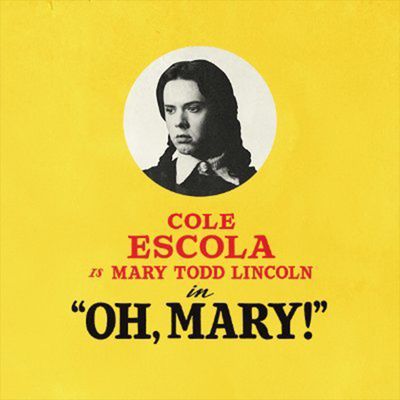
[22:15] Jeff Malone: Let's jump back into things. This is closing in May. I think this needs to go to Broadway and do a limited run for a couple months in a small Broadway house and just run there and let the mainstream— I think it can go mainstream. I think it can get a tourist vibe on every— This is sold out. We had to buy our tickets like, what, months? A month or more in advance for this. I love the design of this, making it look like it's an old 1940s play. The poster, the font. Okay, so for all you listening, if you go to the Hudson Theater and you walk upstairs to the balcony, which Jeff and I have done many times in the Hudson Theater, they have posters on the wall in the stairwell of old plays that played there.
Jeff, you know what I'm talking about, right? And you see, it's like, Mary Sue, the play, or it's like, The Duck on the Lake, the play. It's like these random titles of plays in that it looks like a brushstroke of a paintbrush. So Cole and the team here, the marketing team, just put this, like, oh, Mary, exclamation point, like the old, I love that it copies—
[23:18] Richie Grasso: Oh, oh, Mary. And it says on the top, the greatest play of the generation. Like, that's how plays were billed a long time ago. When it says here, entire production directed by Sam Pinkleton, like, as opposed to what, part of the production? Like, I think it's so funny that that's what they used to put, entire production directed, like, of course the entire production was directed by him, right?
[23:38] Jeff Malone: Yeah, but that just shows, as well, how much Cole—
[23:42] Richie Grasso: Detail.
[23:43] Jeff Malone: Invested in the detail in this production. It is so smart. It is so funny. And like, I don't know, I teeter a bit, though, on how well this would work on Broadway.
[23:55] Richie Grasso: Okay, tell me why. And I said this to you after, like, think of a show like, Oh, Hello. And we saw that when it was on Broadway. And it, you know, that comes from, like, the SNL world. And it's like, it's really funny, and it really worked. And I think it works because the clientele that goes to Broadway really probably resonates with something like that. I would be a little worried, I would say, with this on Broadway, only because I don't know how well it could be received from the general Broadway population. Whereas, like, off Broadway, downtown, in the village, this is the perfect place.
[24:32] Jeff Malone: Yeah, you're right. And part of me why I say Broadway is I'm seeing a bunch of producers' names at the top of the playbill, but one that stands out to me is Kevin McCollum. I will say something about Kevin McCollum, what an accomplished Broadway producer he is. And to see him putting his name on something like this, a new work, downtown, good for you, Kevin McCollum. Thank you for supporting something like this. And that's why it leads me to believe that Kevin could easily probably, I think, move this to a Broadway house if he wanted to. And so that's why I say that, because I see a big Broadway producer's name at the top of this.
[25:05] Richie Grasso: Oh, this is, or maybe Kevin's just interested in investing in new works downtown and good for you in that way too. Do you know what I mean?
[25:09] Jeff Malone: Let's talk about it again, because off Broadway is thriving.
[25:15] Richie Grasso: Yeah, I really feel like off Broadway is thriving in terms of like, people putting out new works, and maybe they don't need to be on Broadway. Broadway is so commercialized right now where something like this could get eaten up, chewed up, and spit out so easily. Although, let's call it right now, this should be in the Booth Theater.
[25:32] Jeff Malone: Oh my gosh. I mean, for multiple reasons, maybe they're at the Booth, and also just add to the comedy of it all. Like that it's John Wilkes Booth, and it's like the theater. But I also think if it moved to Broadway, I think that cabaret number could be bigger. I think they could put the assassination in a literal booth of a theater, and then stage it like that. They could totally run with it. I mean, I'm not saying it shouldn't be on Broadway. I would love for this to be on Broadway, and I'm sure everyone would go back and see it that saw it off Broadway, but I just don't know. I feel like I saw some people leave during our show, so I'm just wondering how absurd it might be for some people. It's like the same thing with Titanic.
[26:18] Richie Grasso: Does Titanic work on Broadway?
[26:23] Jeff Malone: Right, and we talked about that. Yes and no, right? And it's nothing disservicing to what's being done in the show, because it's such a great show. But I always think like, yeah, when you think, a few people have said the Booth Theater on Broadway, because they also have those big doors, like Kimberly Kimbo's there right now, and you see the big faces. Like this would have the yellow, like, oh Mary, all over it. It would be the funniest, like you would think you were in the 1940s, the way they would paper the side of that theater.
[26:43] Richie Grasso: So yeah, I don't know. I just really enjoyed this overall, and I think that, I hope it has a future somewhere. Maybe regional theaters will do it. Maybe it'll tour. Maybe it'll just, the rights will come out, and people can, I don't know. We'll see. It did extend multiple times, so it's now playing till mid-May, but you know.
[27:05] Jeff Malone: Yeah, you know, and also like, does it like, work filmed? Yeah, I don't know. Maybe. Like, Oh, Hello was filmed.
[27:12] Richie Grasso: Yeah, true, true.
[27:19] Jeff Malone: So, oh my gosh. Almost out of time here. Let's give our final wrap-up thoughts on Oh Mary, Jeff.
[27:24] Jeff Malone: Oh Mary. I mean, I don't even know if people can go see it, because I feel like it's pretty sold out. It might be. But if you can, definitely go check it out. I would 100%. Like, this is that perfect downtown show in the village, like right near all the gay bars. This is the perfect show around there that just like, works. It's funny. It's great. Cole Escola is one to watch in this industry, for sure.
[27:45] Richie Grasso: I agree with all of it. Cole Escola, amazing. SNL should be looking at this, because I felt like this was one large, giant SNL skit, and I mean that with all respect, because some of the SNL skits are so good, and I just feel like Cole has a future in comedy writing and acting, even more than he already is, because he should just keep growing in this industry. And the whole thing is brilliant. It's brilliant comedy, laugh out loud, and it's definitely one of the funniest things I've ever seen, for sure. It's way up there. I just enjoyed the whole thing. So thank you, thank you, Cole, and all these producers and everyone. So that does wrap up our discussion of the episode today. We hope you enjoyed our deep dive into Oh Mary.
We will share the link with ticket information in our description. And don't forget, we want to hear from you. Continue the conversation with us on Instagram and TikTok at half hour podcast and let us know your thoughts on Oh Mary. If you enjoyed our show, please leave us a review. Your feedback helps us bring more theater to you. And remember, you can listen to past episodes and stay tuned for upcoming ones as well. Until next time, I'm Jeff and I'm Richie saying tata for now. Bye.
© Broadway Podcast Network, All Rights Reserved