

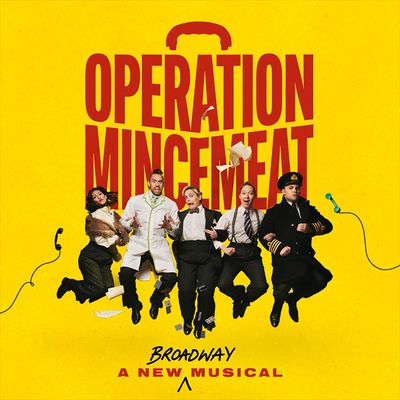
In this episode, we dive into the Broadway production of Operation Mincemeat at the Golden Theatre. We explore its unique mix of British humor and historical storytelling, unpack the creative team's choices, and share our thoughts on the show's pacing, score, and scenic design... Read More
From the show: Half Hour with Jeff & Richie (Post-Show Broadway Discussions and Interviews)
Featured Shows
About
In this episode, we dive into the Broadway production of Operation Mincemeat at the Golden Theatre. We explore its unique mix of British humor and historical storytelling, unpack the creative team's choices, and share our thoughts on the show's pacing, score, and scenic design. Plus, we discuss how American audiences might perceive the humor and speculate on potential Tony nominations. Tune in for our take on this fast-paced musical that blends World War II history with sharp comedy!
Follow and connect with all things @HalfHourPodcast on Instagram, and YouTube. Share your thoughts with us on Operation Mincemeat on our podcast cover post on Instagram.
Transcript
This transcript was automatically generated and might contain errors.
[0:00] Jeff Malone: Welcome to Half Hour with Jeff & Richie, the podcast where we explore the latest shows we see, sharing our insights and opinions on the performances, storylines, and everything in between. In today's episode, we're discussing the Broadway production of Operation Mincemeat, playing at the Golden Theatre in New York City. Whether you cannot catch the show in person or want to expand your thoughts after seeing it, this episode is for you. And as always, we want to inform you that this episode will contain spoilers, so if you're ready to dive into this production, stick around with us. I'm Jeff.
[0:26] Richie Grasso: And I'm Richie, and we're thrilled to be your hosts for today's episode. But before we start the conversation about Operation Mincemeat, here are a few words from our advertisers. Welcome, everyone, to a new episode of Half Hour with Jeff & Richie. Today, we're discussing Operation Mincemeat.
[0:38] Jeff Malone: Operation Mincemeat is the Olivier Award-winning best new musical with 74 five-star reviews. The year is 1943, and right now, we're losing the war. Luckily, we're about to gamble all our futures on a stolen corpse. Singing in the Rain meets Strangers on a Train. Operation Mincemeat is a fast-paced, hilarious, and unbelievable true story of the twisted secret mission that won us World War II. Bursting at the seams with the kind of chaos you couldn't invent, the question is, how did a dead body, a fake love letter, and, of all people, Ian Fleming, come together to wrongfoot Hitler? Alrighty, so let's start with our hot take on Operation Mincemeat. So while I think Operation Mincemeat was extremely well-crafted, well-produced, and well-directed and well-executed for the stage, in a very clean and polished production, I will say that this didn't quite work for me the way I think it seems to be working for many others, especially those in London, where the score and especially the comedy didn't quite land with me, even though this true story is an important one to tell, and I appreciate the style in which they told it, I wasn't that obsessed with this.
[1:47] Richie Grasso: So not super hot about it? He's a little warm.
[1:50] Jeff Malone: A little lukewarm on the warm take. My hot take is that I found the show to be smart, and it's definitely full of British humour, and I think that I was a little bit more invested in this piece than I thought I was going to be.
[2:01] Richie Grasso: Oh, okay. Let's talk about it. Here we go. When you take something like World War II, which has been comedically shown in places like The Producers on Broadway who've seen this, I wonder if this creative team says, well, why can't we do that again? It worked for The Producers. Why don't we do some humour with World War II about a mission that probably seemed silly at the time and tell it in a caricature-y way, but then bring it to heart? And I think the heart aspect of this is what I appreciated the most, the love letter song, the ending that we honour the actual corpse and the body of the person that they used to save the mission, all of that, right? I just found that this very slapstick-y, overacted, over-physically moved, pitter-patter, pitter-patter song style kind of got old too fast for me, and I found that the concept, like I said earlier, we're talking about very high polish production elements.
Nothing seemed messy. I never thought, oh my God, this is not working, or this is a mess, or everything is so well executed, the choreography, the scenic elements that come in and out. I just found that I didn't find almost any of it to be funny, and it was almost beating me over the head with humour, and I didn't really quite connect with the comedic element of it.
[3:21] Richie Grasso: Yeah, I think when I look at this whole plotting concept here and bringing humour into a piece like this, do we not find it super funny? Sure. And I wonder if there's many things that contribute to that, because it's not our humour, it's not our history that we're kind of really resonating with, where we think it's funny. Whereas I think why this was doing so well in the West End, and why it's kind of translating over here now on Broadway, is that it is their jokes. They do think that this is funny, and their British humour is a little more dry than, let's say, our American, risqué, naughty-naughty. Because right down the road, we have O'Mary, which is our American history, and it's laugh-out-loud funny, we're on the floor, but it's also sexual and crude, and this is a little bit probably more G-rated humour, if you want to say that.
Not saying that everything needs to be super funny, but I think that's the difference between what our friends are doing across the pond versus what we're doing with comedy here on Broadway. And I don't know if this sticks with Tony voters, or sticks with American tourist audiences, or just sticks. I mean, it got mixed reviews. Without a doubt, I don't think for a second that the five of them up there aren't working so hard, because they're working extremely hard. I've seen much lazier things on a stage.
[4:46] Jeff Malone: Right, which is why I think I go back to what I was saying earlier about why I think I was a little more invested in this, was because I actually found the story to be somewhat interesting, and a story that I didn't know. So to finally see something this season that's kind of different and new and fresh, I applaud that. And in terms of the writing, I think the book is semi better than the actual music and lyrics. Yes, I think the scores of the weaker end of this, I think the script and the way we tell the story of, I love that they play different characters. Yeah, I think this story, like you're taking this true story, I mean, someone discovers the story, and there's people have known of this story before.
It's not like it was a forgotten story. But I think when you look at this, and you say, wait, what if we didn't tell this in like a serious, dark, documentary style way? We told this in a really slapstick, edgy, silly way. I wonder if this could have had more of a Noises Off, The Last Five Years, not The Last Five Years, Noises Off, I meant The 39 Steps, or something that was very parody-esque, or The Play That Goes Wrong, where we weren't relying on score. And we were just kind of keeping this in funny, comedic play. I think they actually would have enjoyed it more, because they would have been able to say, wow, this is a really funny play adaptation of this story. The music almost, at times, pulled me out of it.
And I was adjudicating the score to the point where I'm like, this song is not working. Why do they have a song there? I couldn't understand what they were saying, and I think the score was one of the weaker moments for me.
[6:21] Richie Grasso: Yeah, that's where I kind of agree with you on the show overall. I do think that there were some moments in the score that were fun. And then there were maybe some things that maybe could have been cut. I don't know. The Nazi parody in The Producers is so different, and funny, and over the top. And now we have a Nazi kind of parody song, which kind of mimics The Producers a little bit. But it's just not as funny. I wonder, because I will say the score was really, really reliant almost on Six and Hamilton, and these pop sounds, that I almost wonder, in Springtime for Hitler and The Producers, it's like Golden Age parody. So there's a different element to it. In orchestral, this is more like dance, beat, the top of act two.
And you're like, okay, sure. I didn't find the score to do much with that. Also, a patter song, like Just Getting Married Today and Company from Sondheim is one song in Company that's like that. There were so many patter songs. And then we're going to go here. And I was like, whoa, whoa, whoa, what are you saying? I couldn't understand half of the lyrics. I really couldn't. And I was trying so hard, but it has nothing to do with what they were saying or their accents. It was really the pace of the lyric was so fast for about two thirds of the show. I was kind of just zoning out at times. Like, I don't know what they're saying. I'm just going to have to interpret what's going on in the plot based on the physicality, because the songs were way too fast for me. Call me old. I don't know. Call me whatever. I just didn't, I couldn't catch a lot of the lyric. I think I struggled a little bit more in act one though with that.
[8:06] Jeff Malone: So I agree with you. I think like getting into this show took a little bit longer for me, especially trying to kind of get their dialect down a little bit more and then isolating it and watching it. And at first I was like, I don't know, do I want to like this? Do I not want to like this? I never want to have that feeling when I'm seeing a show. And then I was like, it's kind of cute. It's kind of spunky and fun and different. And people around me are laughing. So like, you know, as this show kind of progresses, I start realizing like the actual plot that's happening. And I was like, oh, this is getting interesting. And like, when we get to act two, finally, I'm like, okay, now I'm invested.
I'm listening. I've kind of learned how to watch this show. And by doing that, I enjoyed it more. That's really like what it comes down to for me. And I thought like, there were some touching moments. I agree with you like towards the end, they bring in and they're like kind of telling the story about this dead man who kind of really ended the war there or like, and moving on, like, they have that whole fun Broadway moment at the end. But I also kind of think like, in general, where like, I'm going to applaud this team, because I feel like they're very new and what they're creating, but it kind of felt like they were pulling from too much. And they were not really defying like what they want to be as creators.
So like what you were saying was like the music and it's like, it sounded a lot like Hamilton, it sounded a lot like Six, it sounded a lot like Gentleman's Guide and like they didn't find their own niche.
[9:41] Richie Grasso: Meanwhile, they say like, it's like Monty Python's Pamela. It's like Mel Brooks humour. And I keep seeing people say like, it's this, it's that. I'm like, well, you just named six big shows. And why can't this be its own thing and have to feel like it's pulling from so much? Right? Like, that's what I would want more out of this piece. Like, I want them to find what, like on their next work, it needs to be like, you need to find your design and style. I almost feel like we were one step away from like, put the band on stage and have the actors play the instruments. That's kind of how much I almost wanted the music to be not like, oh, we're just a small band sitting backstage. Like, I don't know, highlight the oom-pah-pah feel of marching and dancing and put them in the plot more, maybe. I don't know.
[10:27] Jeff Malone: Alright, well, let's get into the production now. And before we do that, here are a few messages from our sponsors.
[10:33] Richie Grasso: Okay, so we're going to get into the production here. And let's start off with the direction and the creative team here because the creative team is mostly all in the show as well.
[10:44] Jeff Malone: Yes. So I mean, it's choreographed by Jenny Arnold, directed by Robert Hastie. The direction and choreography was very superb. All parts of the scenery and stage, there's doors opening different areas and there's different ways. It was very well staged, I thought. It was very impressive. And the choreography of all that, too. We had the lighting design by Mark Henderson, sound design by Mike Walker, and set and costume design by Ben Stones. Again, really, really elevated. You only needed a hat. Oh, I loved moments where like, they had the flashlights and they were in the submarine and they just changed their hat and they instantly went back to being the people on stage. And then with just one quick, sometimes it's just such a refreshing reminder that all you need is a quick light change and maybe a hat or a mask or something to completely trust your audience and say, yeah, now I know that it's the submarine crew.
Oh, now I know that the people above ground. Oh, there's the submarine crew again. It was so wonderful. The end of Act One was one of my favorites. I loved that. I just thought there was moments like that where I was like, okay, this is really working really well.
[11:42] Richie Grasso: Yeah, they definitely had cool moments. Yeah, I thought like the direction of this worked well. Moving into kind of like the, you know, the book, the music and the lyrics. I think that's where they probably maybe could have had someone come in and help them a little bit more and going back to what we were talking about and kind of defying like, what they really want this show to be and not so pull from other elements. But like, I don't know, because I teeter back on that because sometimes shows do that and we love it. And then now this is a show that's doing it and we're not completely loving it.
[12:23] Jeff Malone: Yeah. Like Something Rotten, for example, they're parodying like a ton of different Broadway or like even Chuck did the same thing where they were like parodying different things. That was making it clear that it was being parodied. I don't think this was trying to parody Six and Hamilton. I just think it was taking the elements of Six and Hamilton. Right. And it didn't feel like they were making references to any pop culture or musical theater other than like, oh, I wonder if this story could ever be adapted into a musical or things like that. But I think.
[12:50] Jeff Malone: Talk about the team, right? The five of them, David Cumming, Claire Marie Hall, Natasha Hodgson, Jack Malone, and Zoe Roberts. I mean, they're all so talented in the way they change their caricatures. I thought a highlight moment for me was Jack Malone singing the Love Letter song, the ballad. I was very moved by that. I thought that was so touching to think that this person who's deceased might actually have a letter of a loved one. And he reminded you of what people at war at the time or even in the present were dealing with, with their loved ones. I thought that was a beautifully written song. I thought it was one of the highlighting moments for me.
[13:30] Richie Grasso: Yeah, I agree with that one. I thought it was touching. It was moving. And there were a few songs like that. I don't know if the lyrics were very memorable in any of the songs, but you kind of just go back to that pitter patter sound. And that's what I remember from it.
[13:48] Jeff Malone: Yeah, yeah. I like that they brought in the element of making the kind of film musical thing at the end. Yeah, with the staircase and then the chair flying and then all those funny, silly elements where that's the producer's showy elements to it, right, that they're trying to bring in. And then it grounded itself. It did bring itself to the reality of like, let's actually remember that this is a true story. And let's honor the fact that they actually wound up finding out in real life who this corpse was. And this was a person who served and should have been honored. And they said his name at the end. And they put his hat on the floor. That was so touching. It almost wanted to bring a tear to your eye. Like, after all this camp, after all this singing and dancing, we're going to just for a second root this in. And they sang this very salary kind of song at the end. Like they just came together and just put their vocals out and stood and sang.
[14:36] Richie Grasso: Yeah, I thought it ended strong. It was bookended well. I mean, like I said, this execution of this was well. I just think the meat and potatoes of the actual book, music and lyrics and comedy element of it wasn't quite where I sit with a lot of it. And then there's only five actors in the show total. And they're gender bending the roles, they're playing all different things. We can kind of go down the list and maybe talk about their performances here. David Cumming is like, I don't know if he would be considered lean when we get to our Tony conversation here, but he is a main character. Has a great role. I think it's a little, maybe kind of too over the top for you.
[15:11] Jeff Malone: I thought he was great. No, I thought he was great. The role I loved then when he like changed over to being like the typist song and he was like in the heels doing all the anyway back to that like nerdy bookie scientist guy. He was great. I thought he was definitely one of the stronger performers here. I thought Claire Marie Hall was also really strong. She had a few great belting vocal moments, which was nice.
[15:34] Richie Grasso: Yeah, she had a strong character throughout this too. She actually, I think there was a song towards the end. If I remember the correct order of it. We did it or okay. It's when she's with like the motherly figure in there and they're having that duet together. I liked that one. I thought it was pretty. I thought it was like very women empowerment. I think when Natasha Hodgson playing with this male character, Zoe Roberts played a male character, like Jake Malone played a female character. There was so much gender bending going on here, but it was like, we didn't need high elevated makeup and wigs and gowns. And it was just like, just do the hair a little bit and just throw an earring in or just throw pants on instead of a skirt. And it worked right. It all like, it was the way they held themselves in these. It's clearly actors here. The five of them are actors to the highest degree.
[16:30] Jeff Malone: Yeah. Really owning the characterization of these characters. Yeah. And then when you get into like more of the design elements, I think that the scenic design in this is nomination worthy. Definitely. I thought there were some cool wow moments. I think when they bring that grand staircase down at the end and we're like onto this movie set, I think there's like a lot of cool moments there. And it's lit like when they were doing the lighting and the grid behind them and the chalkboard feel of all this with the scenery pieces coming in and out of the portals. I thought it all worked so well. Right. It was very, very strong. Lit really well. Costume really well. The sound element, you know, we're in the Golden Theatre.
We don't always see musicals there. So I thought it was nice to kind of see a small scale musical in that space. It worked really well. Right. So really kudos to all of them. I was impressed. Like I said, and to think that those actors up there wrote it, they're clearly very comfortable with the material they wrote. It's not very often you hear you see people eight times a week performing the works that they wrote. Right. So I think that's pretty impressive in and of itself.
[17:35] Richie Grasso: All right. So let's move over to our own experience at the show and our Tony talk. But before we do that, here are a few messages from our sponsors.
[17:41] Jeff Malone: Okay. Own experience at the Showtime and some Tony talk. Well, I said earlier, the John Golden is usually a playhouse. It was nice to see a small musical here. People seem to be enjoying it. There was definitely mixed people who were not laughing, people who were hysterically laughing. This is like, I don't want to say love it or hate it, because I didn't hate it. I just didn't really love it the way it seemed other people are seeming to like and love it. And so I look at it like, okay, I didn't really laugh much. I didn't really understand a lot of this humor, but some people are going to walk out of there thinking this is amazing. And some people are going to walk in there and be like, oh, okay. Maybe it's not love it or hate it. Maybe it's get it or don't really get it. But I got it. And I still, like, I'm looking at this like from the humor perspective, the humor perspective.
[18:28] Richie Grasso: Yeah. A lot of the humor, I don't really get. I get the whole premise of this. I just didn't really get the humor. Right. Why do you think our humor is so different? I really like to think about this and like have the conversation because I feel like so many people could talk about this, but like, why do we feel like our humor is so divided and different?
[18:46] Jeff Malone: It's interesting. I don't know, other than I think it could come down to the specific location, story, plot, you know, of this is a British English war story. I mean, World War Two was about all countries and Americans were involved too, of course. But there was a specific, you know, I don't know, really. There's got to be a reason. But everyone always says, everyone always talks about like, okay, dry humor. Like, first off, like, what does that even mean? Sometimes I think.
[19:22] Richie Grasso: I will say a lot of British comedy seems to rely heavily on physicality and American comedy, not as much.
[19:31] Jeff Malone: No, American comedy relies on sarcasm. Right. And the way a line is delivered. Yeah. The witty. It's usually witty and sarcastic.
[19:38] Richie Grasso: And I do find with British humor, it's like more.
[19:45] Jeff Malone: And even some British humor works like I think Noises Off, I believe that's a British piece is you want me to get the sardines and get on the phone. Something about pacing is so funny to me.
[19:55] Richie Grasso: Yeah. Which that was the funny part. I think when they're in this show and they're on the phone, that's where I think the comedy is. She's like, when she's the guy, she's in Spain and they're on the phone and she's like, what? It's also like a lot of yelling and.
[20:14] Jeff Malone: Yeah. And it's the pacing, too. I also think like with Mel Brooks, like look at Roll in the Hay and Young Frankenstein. The whole thing is a parody on like a sexual experience, but they're in a hayride going. And there's a lot of sexual innuendo and a lot of Americana comedy, even in sitcoms and television and TV. We see a lot of that. What's underlying? What is that? What's the double meaning behind what that person said? Or there's sometimes delivery accents. This was all one accent, but you want me to make love to a bush and like singing in the rain like that's funny, right? Because that's like the way it's delivered. But maybe it'd be different. You know, I think of a lot of different comedic one liner moments. It's hard. And some Americans will like this and.
[20:59] Richie Grasso: Oh, yeah, totally. And I know people that enjoy humor like this. I just think a little bit more about like when we see a piece like O Mary or like Book of Mormon and it's roaring laughing in a theater versus I didn't really feel like this was a roar. This was more like chuckle giggles, except there was sounded like there was a bird in our theater.
[21:17] Jeff Malone: Oh, yes. Someone was at a high pitch. I know it was very interesting. But in terms of Tony buzz for this, do I think this will get some nominations? Yes. I don't think this will be overlooked. I could get a Best Musical nomination. I don't know about score. I don't know if all these actors fall into supporting or leading, you know.
[21:39] Richie Grasso: Well, if we go based on what they were nominated for for the Olivier's, I mean, it was nominated for Best Musical and won. I mean, I don't know if it's going to win in this season. I don't think it's going to win in this season, but I do think it has the potential to get nominated. There's so many musicals, so it's going to be really tough. It's really going to come down to I think, you know, there are some shoe ins for Best Musical. Definitely. Maybe Happy Ending and definitely Dead Outlaw will be up there. And then we're going to go down the list of like, oh, okay, maybe this will get in. But there's real women have curves. There's just in time. There's death becomes there. There's boop. There's smash. There's one of us, the social club. Like we're going to definitely probably get five nominations and some things may be left out.
[22:30] Jeff Malone: Yeah. And so I don't know where that this is. There's not nothing quite like running like this on Broadway right now, so it could stand out in a good way for that. And when you look at it, they also Jack Malone was nominated for supporting actor and he won the Olivier and Natasha Hodgson, I think, was also nominated. She did not win, though. And then I don't know. I think this has a potential for Best Musical because I do think they'll nominate this for Best Book. I don't know if they're going to nominate it for Score. Right. The book I could see and I could also see some acting and some design and like scenic design. Probably scenery was pretty highly elevated.
[23:17] Richie Grasso: Yeah. So this one kind of is like that on the fence musical for me this year. It is on the fence because you want to like it. And I did enjoy parts of it. But part of the parts I didn't find that funny or relatable. Well, I'm in for the Tonys. Yeah. It'll be interesting to see how Tony voters go this way. Yes, because I didn't think it got slammed in the reviews. No, it was mixed. It was just a mixed bag of reviews.
[23:40] Jeff Malone: Right. Yeah. So it's interesting, you know, but. What are your final thoughts wrapping up on Operation Mincemeat? Again, I'll go back to what I said earlier. When I first started off, I was more invested in this musical by the end of it than I thought I was going to be. Not my cup of tea in terms of humor. No pun intended. But I can see a lot of people liking this musical and the humor that's in it. So I can look past my own feelings on this and know that what they've created and what they're doing on that stage is good work. And I will say I know some people who will go to this and be like, Oh, my gosh, I don't know what you're talking about. That was the funniest thing I've ever seen. That was so smart.
I know some people who will see this and be like, what happened? I didn't get any of that. I didn't find any of that to be funny. You're going to get a mixed bag of people. That's why I kind of find myself like right in the middle. Like there's some cool stuff happening here, but I don't really find much of it. And especially the score wasn't doing much for me. When you have multiple songs that are only like two minutes long, it doesn't do. And then you have that ballad about the love letter that's five minutes long. It just seems inconsistent.
[24:42] Richie Grasso: Right. But I applaud it in it being a new work, taking an idea like we always talk about an idea in history and creating this whole narrative around it. There was no narrator, which is nice. Thank goodness. Thank goodness. Right. And there were a few moments where they broke the fourth wall, which I wish they didn't. But other than that, it was like, you know, it was fun. If you're looking for something different and you like British humor, go check it out. It's definitely not like anything else really playing on Broadway right now. So.
[25:12] Jeff Malone: That does wrap up our discussion of the episode. We hope you enjoyed our deep dive into Operation Mincemeat. And remember, we want to hear from you. Continue the conversation with us on Instagram at Half Hour Podcast. Drop us a comment on Spotify and let us know your thoughts on Operation Mincemeat. If you enjoyed our show, please leave us a review. Your feedback helps us bring more theater to you. And remember, you can listen to our past episodes and stay tuned for the many upcoming ones as well. Until next time, I'm Jeff and I'm Richie saying tata for now. Bye.
© Broadway Podcast Network, All Rights Reserved