

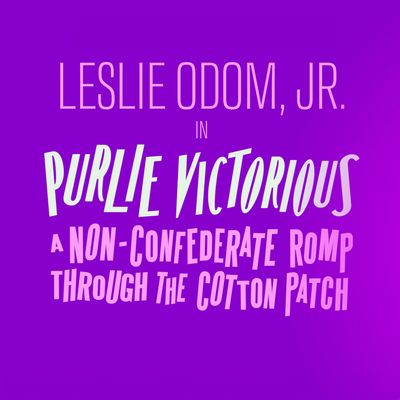
In this week's episode, we dive into the 2023 revival of the Broadway play "PURLIE VICTORIOUS." We unpack the significance of this timeless show in the present-day context, dissecting its plot and themes... Read More
From the show: Half Hour with Jeff & Richie (Post-Show Broadway Discussions and Interviews)
Featured Shows
About
In this week's episode, we dive into the 2023 revival of the Broadway play "PURLIE VICTORIOUS." We unpack the significance of this timeless show in the present-day context, dissecting its plot and themes. We also give a shout-out to the visionary scenic design by Derek McLane and the masterful direction by Kenny Leon that brought the story to life. Our discussion wouldn’t be complete without acknowledging the remarkable performances by the star-studded cast, including Leslie Odom, Jr, Kara Young, Billy Eugene Jones, Jay O. Sanders, Heather Alicia Simms, Vanessa Bell Calloway, Noah Robbins, Noah Pyzik, and Bill Timoney. Light-hearted yet insightful, this episode is a must-listen for all theatre enthusiasts. So, grab your headphones and tune into our podcast to discover how "PURLIE VICTORIOUS" continues to captivate audiences in 2023. Let's chat Broadway!
If you liked this episode, don't forget to subscribe to this podcast and leave us a review.
Share your thoughts with us on this episode below:
On Instagram: @halfhourpodcast
On TikTok: @halfhourpodcast
On our website: www.twoworldsentertainmentllc.com
Transcript
This transcript was automatically generated and might contain errors.
[0:00] Richie Grasso: Welcome to another episode of Half Hour with Jeff and Richie, the podcast where we deeply dive into the shows that we see.
[0:06] Jeff Malone: This week we are discussing the new Broadway play revival of PURLIE VICTORIOUS.
[0:11] Richie Grasso: Are you ready for our thoughts on this Broadway classic? Then join us for the next 30 minutes.
[0:14] Richie Grasso: I'm Richie, a theater director and producer.
[0:17] Jeff Malone: And I'm Jeff, a music industry producer and manager.
[0:20] Richie Grasso: Let's explore PURLIE VICTORIOUS.
[0:26] Jeff Malone: Half hour.
[0:30] Richie Grasso: Welcome to today's show, everyone. Before we get started, we always like to let our listeners know there's going to be some spoilers in our discussion about the show that we're talking about in the episode today.
[0:40] Jeff Malone: So if you still want to see it first, that's okay. Go check it out on Broadway and then come back and listen to this episode.
[0:45] Richie Grasso: You have been warned. So that being said, here's a little bit of an overview on the show we're discussing today.
[0:51] Richie Grasso: The full title, by the way, is PURLIE VICTORIOUS, a non-confederate romp through the cotton patch. This is a Broadway revival.
[0:59] Jeff Malone: It is playing at the Music Box Theater on Broadway in Midtown Manhattan in New York City.
[1:05] Richie Grasso: It is a three-act comedic stage play written by American playwright Ossie Davis. The play tells the fictional story of Reverend Purlie VICTORIOUS Judson, a dynamic traveling preacher returning to his hometown in rural Georgia to save his small hometown church.
[1:19] Jeff Malone: The play, starring Davis himself in the title role, was on Broadway in 1961.
[1:23] Richie Grasso: It did run for 261 performances. The play now is being revived on Broadway 2023, which is what we're talking about here now at the Music Box Theater.
[1:32] Jeff Malone: It is directed by Kenny Leon. It marks the first major New York production of the play since the original close in 1962.
[1:38] Richie Grasso: And fun fact, we'll talk about this a little bit later. This was also made into a musical, which is very cool.
[1:45] Richie Grasso: In 1970, it was made into a musical. It was revived on Broadway two years later in 1972. And it had a 2005 Encore's run as well.
[1:54] Jeff Malone: Just some fun information about the show. But this is the first revival of the play, and today we're discussing PURLIE VICTORIOUS of the play, starring Leslie Odom Jr., Tony Award winner Leslie Odom Jr., and Kara Young.
[2:08] Richie Grasso: We're going to talk about their performances and a bunch of others soon. Before we do that, let's just talk overall thoughts, Jeff. What were your thoughts on PURLIE VICTORIOUS on Broadway?
[2:19] Jeff Malone: Here's my bold statement so far of the season.
[2:23] Richie Grasso: Okay, go.
[2:25] Jeff Malone: I think that this has probably been one of my favorite plays in a very long time.
[2:30] Richie Grasso: Totally agree.
[2:32] Jeff Malone: Very long time. From Kenny Leon's direction to this amazing cast. And such like an important story. Like I know that this is not a current story, but it's an important story.
[2:47] Jeff Malone: And it plays into so much of what's still happening in the world today. So, you know, that's probably sounds very vague right now to everyone. But I do, I do have to say, like, I don't know. There was just I kept wanting more in this whole show.
[3:07] Jeff Malone: Like I was never bored for one second, and it was just so good. I think when you're a playwright like Ossie Davis and you're smart and you know what you're doing, you can have success with this because this is satirical.
[3:21] Jeff Malone: This is satire on a very serious subject matter. Not to compare it, but when I think of something like The Producers with Mel Brooks, a very serious subject matter of Nazis, and it's satirical, and you do it smart, I think it works.
[3:37] Jeff Malone: And so I think we can, of course, have plays about this serious subject matter talking about how dreadful and horrible and serious it is. And then you have plays like this where we say, wait, this was actually so bad and so crazy that there is some comedic lining here.
[3:55] Jeff Malone: And Leslie and Kara find that. Kenny Leon finds that in the direction amongst the rest of the cast for sure. But this is actually, I will agree, Jeff, a highlight of this Tony season for me.
[4:06] Jeff Malone: It did get extended till February, which is wonderful. I was just like blown away. I was laughing, and at the end, I cried. I thought the ending was so moving to me.
[4:17] Jeff Malone: Leslie has this moment, I'll kind of just ruin it now, where he comes down to the edge of the stage and breaks the fourth wall and talks to the audience and says this monologue that is so moving, but full of hope and passion, but also just spellbinding.
[4:34] Jeff Malone: I'm just gripping my seat watching him. I think he cried giving it. Watching him crying, saying it. I would go back in a heartbeat just to watch him give that last five-minute monologue.
[4:45] Richie Grasso: Uh yes, to I know I'm going off on tangents, but this was wonderful and in so important, and I cannot believe it's taken this long to have a revival of this on Broadway. I understand why someone wanted to musicalize this.
[4:58] Richie Grasso: Uh, it makes complete sense. And yeah, really, really great. Oh my, there's so many different places we can start.
[5:06] Jeff Malone: Going off on a tan, you going off on a tank.
[5:09] Richie Grasso: Me, me.
[5:11] Jeff Malone: Not you.
[5:12] Richie Grasso: No way. Um let's start with the cast, probably.
[5:16] Jeff Malone: Yeah.
[5:17] Richie Grasso: Yeah, yeah. Let's do it. You because you already touched on them. And the chemistry that Leslie and Kara have is beyond.
[5:27] Jeff Malone: It's Leslie is great as himself. Kara, as we know from the few things we've seen her in now lately, is amazing. And together, and I don't want to say that the others aren't because we're gonna get to some amazing supporting.
[5:41] Jeff Malone: I truly think every supporting performer in this was amazing too. But Leslie and Kara have great chemistry.
[5:49] Richie Grasso: I think I said in my On the Street Review, Kara Young, Kara Young, Kara Young. This has to be another Tony nomination. I believe she's already a Tony nominee for Cost of Living, I believe that was her Tony nomination.
[5:59] Jeff Malone: She was, uh, this has to be another Tony nomination for her. This woman took this role and said, Oh, I could be really over the top, silly stupid with this. I could also be really stiff and boring with this, and it was neither.
[6:15] Jeff Malone: It was this beautiful eclectic mix of comedy and physical comedy, and like, oh my gosh, I couldn't believe what she was doing with the role. It's like a great role, and she just found it for me.
[6:28] Richie Grasso: I think like going off topic here, like we've seen Leslie in Hamilton, we know him as Burr, he's amazing, great. We've seen Kara in Cost of Living. It was such a different performance because that was like so like contemporary and like real and new.
[6:47] Jeff Malone: Um, this was such a different acting performance from her, and from both.
[6:54] Richie Grasso: Yeah.
[6:54] Jeff Malone: So, like, this is where I have to applaud because we like talk about things a lot with actor performances, and like, how do you transform yourself into this role, right? And they did.
[7:04] Jeff Malone: They gave me something that I did not say, oh, that's Leslie Odom up there on the stage, and oh, that's Kara Young up on the stage. Okay, whatever, they're doing the same thing over and over again. I did not get that for a second.
[7:16] Jeff Malone: I said, Whoa, transformation here. Okay.
[7:21] Richie Grasso: Yeah.
[7:22] Jeff Malone: That is perfect. And at first, okay, so like Leslie, he's just perfect. And then Kara, though, I'm like, what is she gonna give us?
[7:33] Richie Grasso: Yeah.
[7:33] Jeff Malone: I don't I don't know it. I didn't know anything about this show. So I'm like, what is she supposed to be? And the comedy, the comedic timing that she just brought to this, and the accent, and you thought she was like from either Alabama, Louisiana, this whole style.
[7:52] Richie Grasso: And I'm like, where did this come from?
[7:54] Jeff Malone: Yeah, she's a br that's a great performer she is. She really knows what she's doing. And it's uh, it's amazing to see that. Not let alone some of these supporting roles.
[8:02] Richie Grasso: We had Billy Eugene Jones as Gitlow Judson, Heather Alicia Simms as Missy Judson, those two had amazing chemistry together too. And I was blown away by it.
[8:11] Jeff Malone: I was gonna say, let's stop on them right there, real quick, because the comedy that they brought to this was great. We just saw Billy in Fat Ham.
[8:21] Richie Grasso: And was really blown. Was great too. But that was another thing, because like I remember him from Fat Ham, but I didn't like fully remember him because he's playing a different role.
[8:31] Jeff Malone: And I said, like, I feel like I know this guy, but where do I know him from? Do I know him from TV or do I know him from something else?
[8:37] Richie Grasso: And then when you were like, Oh, he's from Fat Ham, I was like, Oh my god, yes. And and and we I also want to go into um Jay O'Sanders plays the captain.
[8:46] Jeff Malone: What a crazy role that is. Like the lines that you have to deliver, and I'm like, and so it's hard to like.
[8:54] Richie Grasso: I hate when there's like horrible people in shows and the acting is so good, but the character is so I'm not saying written bad because the character was written well, but just a bad person, right?
[9:03] Jeff Malone: Like the character is like a really, really, really horrible person. But like Jay is playing it, and I'm like, wow, you're like really in it, dude. Like you're you're just committed to this horrible character, and and you are funny at times because that playwriting, this is what I think Ossie Davis does so well is it takes us on this roller coaster of like, did you just say that?
[9:26] Jeff Malone: Like that is not what really happened in American history, right? And you're like, no, it actually did. And then I'm like, you even see in Jay's face, like, this is crazy.
[9:37] Richie Grasso: Like, I just I just that last scene where they're doing the money and signing, and what name did you sign? I'm with them.
[9:43] Jeff Malone: Yeah. I always say that good playwriting and good direction and good acting, of course, but the playwriting and direction is am I with you the whole time or most of the time? I was there with them, with them.
[9:53] Richie Grasso: And then we know like Jay's um, you know, uh, the captain's son kind of saves the day, right? A little bit, you know, and helps them out with, but there's just like the wait, what the ping pong pall back and forth.
[10:03] Jeff Malone: Oh, that last scene with right, not the last scene in the church, the scene right you know leading up to it with with the captain. I he was great. I just was really all of these people I can't stop speaking the praises of because I thought they were so wonderful.
[10:16] Richie Grasso: Totally. And the one other person I want to shout out is Vanessa Bell Calloway, who plays Adela Landy, the in the show. I think she's the in the home most of the show, right?
[10:25] Richie Grasso: And she's kind of there. She's got a lot of fun banter with Leslie and Kara a lot. I just thought her comedy was great.
[10:35] Richie Grasso: Kind of leading into that, I want to talk a little bit about the directing, though, and the writing of some scenes.
[10:50] Jeff Malone: Welcome back. What I found super interesting in here with this moment here is we start the show out, and I don't know if it's supposed to come across as like, are they putting the play on or are they the actual people? It was interesting because in the beginning there's a coat rack of clothing, and it looks like we're an ensemble of actors that are literally and figuratively putting on these clothes and becoming the characters to tell the story. Which I've seen things done like that before. It makes sense. But it also needs to be usually bookended at the end with, and now we take the coat off and hang it back up because we've told the story, which didn't happen at the end of this. And I wonder if Kenny Leon thought about it and said, Well, we're ending with this moving monologue.
How do I then just say, like, curtain blackout end of show, take the coat off? But I think that could have actually added something to it. So as much as I loved Kenny Leon's direction of this, I did kind of feel like that felt off the wagon a little bit, like the end with that. You know what I mean?
[11:55] Richie Grasso: Yeah, like I'm kind of stuck on this now. Um, but it was something I did want to talk about because I would like I feel like it did start that way, and then we end in the church. But is there some symbolism into that? Like that they end in the church, and it's almost like maybe it's like a little play that happened in the church. I don't know. There's a lot of ways you could think about it. I'm probably trying to stretch it the farther than it needs to be. Uh it's just probably like that.
[12:21] Jeff Malone: Well, because this the set became the church. You know. I don't know. And it was almost like a doll's house where like the curtains came and then glued to the wall, then like the wall would come in and out. It was very dolls house-esque. And then when the church came at the end, it was glorious and beautiful. We saw was this whole thing set in this church that they were trying to save at the end, and then they got. There's a lot of symbolism here, right? Um, with this wonderful set design by Derek McLane. His scenery. We love everything Derek McLane does. And I just loved the set. I like a lot of his scene. That the captain is in. Um, I don't even know if it's a home or if it's a storefront, whatever I want to, whatever it's meant to be. And then like stripping that away and it turning into the church was just I'm like, oh, I love a moment where you're just like, wow, this is happening. You're fully invested into this show. And then it's like, whoo.
[13:28] Richie Grasso: Yeah. And it was just, I do think it ends really well. And when we were doing some research, we realized like the musical ends in the church, of course, too. And it's like a choir song, like a church choir. And you know, I could see how it could be musicalized, but taking all the music out of it, it was important to just see the play version of this, right? And the story. And I think this is an opportunity for us in 2023. You know, what was an audience in 1961 witnessing this during the civil rights movement? And now all these years later saying, Wow, we've made a lot of progress. Wow, we actually have not made a lot of progress. In some ways we have, in some ways, we haven't. And how is a modern audience looking at this and saying, Oh gosh, those American days were so crazy, whatever. Versus, oh, this is actually crazy because I think there's actually people that still act and talk like this today in some parts of this country. And that is what is really crazy to me.
[14:22] Jeff Malone: Okay, I want to bring up a story here that I'm gonna relate this to, which is you're gonna find this to be so bizarre. Okay. First of all, a lot of this play is like uh talking about like the Jim Crow laws still being in effect in the South, and you know, segregation and all of that, and how like now that's stripped away. But so I'm scrolling through TikTok the other day, and I stop on this video, and it's a girl talking about her experience on going to an estate sale because she saw these Ralph Lauren like cowboy boots that she really has it's been on her thing, and she goes to estate sales all the time, okay? She walks into this home, and you're not even ready for this, but it has all of these like racist paintings.
What? No, I'm it's in the home. In the home in today's day, like crazy like blackface dolls, figurines. I can show you the video. You're gonna be like absolutely blown away. But I'm bringing up I'm bringing this up because as far as we've come, a story like this is still so important because there's still people in this country, especially in deep South Alabama, that are this way. Yeah, and it's crazy, and that's why I think it's important that we keep telling.
[15:40] Richie Grasso: But then, but then I gotta ask you this question, Jeff. Is someone like Oz, why did someone like Ossie Davis tell this story not in this because it is serious? A family trying to save their church. They feel very strong about it. They're trying to figure out how they can't get it from this white slave owner, and then they win it at the end, and that's why I think the emotions come out because it is got a serious undertone. But why the comedy? I'm dying to know from your perspective why is Ossie Davis throwing this to the comedy of the satire? Because it works. I'm sitting there and I'm saying, wow, we're laughing a little bit because it's so crazy, right?
[16:18] Jeff Malone: I think that's why he has to do it in comedy. I really think that's why it's done in comedy. Because and I think this goes back to what Kenny Leon's trying to do in the beginning, in like we're putting these clothes on and telling the story, because we're telling the story on how ridiculous that time period was. Like from slave owners to now having help in your home to treating them like you are still better than the African American group of people. It's like, and when any time the captain comes in and he's talking or whatever, you see his like in like a weird way, his like love for them. But he like doesn't know how to show that he actually does love them, and when he's like in his most vulnerable state, you're like, oh, okay.
It almost feels like they're a family, but as soon as one of them does something wrong, he snaps. But that's that's the satire of that's that's the satire. And the rest of the cast is looking at him like rolling their eyes, or you're crazy. And I feel like that's why he's doing this in comedy, because he has to show, like, this is how it really felt to be like, uh, oh, okay, you're going to crack a whip at me. Oh, you're crazy, man. Or like, or even um Vanessa Bell Calloway's character, Adela, she's like, what are you going to do? You're not going to do anything. You know, you're not going to do anything that you say you're going to do to your son, and you're not going to do it to me either. Like, I think it has to show that because when you show the connection that you actually have with someone, it's like a power play here.
[18:12] Richie Grasso: Well, that's why the satire was the captain saying, Well, no, I do care about you. Keep everything the way it is. And no, like, and that's why there's this like extreme slavery, racism issues going on here. And we need to be reminded that these were these were crazy times and really horrible, sad times. But I think someone like Ossie Davis took a second and said, What if we like kind of drew on the absurdity of this and said, there is a comedic undertone that maybe an audience black, because we were an audience of black and white, a mix, you know, as any New York audience is, I find that every audience we go to in the probably shows is a mix of old and young, black and white, male and female.
I kind of was looking around at one point and seeing like a lot of people were laughing at everything. I didn't feel like just one demographic of people were laughing at something, and one demographic was not. Which I will say in some Broadway shows, sometimes that happens. I'm not gonna name a specific show right now, but there are some times where I'm like, oh, all the women are laughing at that, or all the whatever are laughing at. But this was like a everyone was at the moment, and ha haha. At the I kind of felt like we came together and looked at this piece of history and said, Yeah, it's crazy. And we gotta live in the times we're to in today and say, how do we learn from this? And how do we learn from Ozzy Davis's writing? And how do we learn from a revival of this? And say, can this keep getting revived? Why hasn't this been revived a lot? And why is this working in 2023?
[19:42] Jeff Malone: We'll be right back.
[19:48] Richie Grasso: Let's jump back into things. Yeah, but one thing like you can look at too is like when we're sitting in the theater, it's very easy to kind of like notice the people around you. And like you're saying, like so for me, like noticing the the people around me. Uh I'm watching like the two women in front of me, or like listening to the two women behind me, and like, or maybe there's like five people over there, and some are like just receiving the piece very, very differently. And it's interesting to watch that because it makes you feel different about something as well.
[20:22] Jeff Malone: Sure, and that's and and that's women, men, all different races. It's very interesting to feel because you're like, oh wow, that person's feeling that right now, and I wonder why.
[20:32] Richie Grasso: Yes, or or what am I feeling? Or like, did I hear that person sniffle? Why are they crying? When I think you know when I think you see a piece about black culture and you worry about how you're perceiving it and taking it, and maybe versus how your black friends are perceiving it, when you're seeing a gay play about gay culture, and maybe your straight friends are perceiving it differently than you as a gay person, a piece about women, a piece about Americans versus non-Americans. I mean, like we can keep going elderly versus youth. I mean, there's so many demographics of people that see a show. I see a show and you see a show, we walk out of there maybe very different than a friend of ours with us.
[21:08] Jeff Malone: You know, that's what theater is about—exposing emotions and telling different stories and opening your eyes to things that maybe you don't see in your daily life.
[21:17] Richie Grasso: That's why I think theater and Broadway and off-Broadway work so well in New York because you're seeing everything in New York, you know.
[21:24] Jeff Malone: Um, really, really, really impressive stuff though across the board. And let's just talk a little bit about Broadway revivals, play revivals. Is this working?
[21:33] Richie Grasso: It got amazing reviews. I I got extended. Clearly, this was the time to do this. You know, I wonder if they were waiting for COVID, not COVID, if this is a COVID project or delayed or not. I don't know. It's working. And I think everyone should really see this. I do.
[21:50] Jeff Malone: I just—I went in blind too. I knew it was a—I actually knew it was a musical before it was a play because I had always heard of Pearly, Pearly, Pearly, but Pearly Victorious is the play. And, uh, yeah, I don't know. Maybe, hey, let's get some producers to come and be like, let's bring the musical back now, right?
[22:07] Richie Grasso: Well, okay, so play musical bounce back and forth kind of shows. Now, I know this has a play and has a musical version. I know Spring Awakening has a play, has a musical version. What else has vault? Do you know off the top of your head?
[22:25] Jeff Malone: Well, I know a lot of—I do know Hello Dolly is based on a play, The Matchmaker, I believe it's Thornton Wilder. I know that a lot of Roger and Hammerstein old musicals, from my knowledge of that, come from books based on the book, blank, based on the book.
[22:42] Richie Grasso: Uh, no, but I mean like successful, like Broadway kind of like has a Broadway play. Someone saw it and was like, oh, let's make that a musical. Do we know of anything else?
[22:52] Jeff Malone: There are more. I know there are more. There just nothing is coming to my head right now.
[22:57] Richie Grasso: I know I feel like I'm putting you on the spot.
[22:59] Jeff Malone: I know. I think you have the spot, Mr. Broadway. I think Cabaret is based on a book, not a play, but I know it's based on—oh gosh, I have to think. A lot of things are based on books. I do know that. And then unfortunately, you know, the book world. Well, I know everything's based on—you know everything's based on movies now, but you know.
[23:13] Richie Grasso: Well, I know everything's either based on a book or a movie or whatever. I just didn't know if there was other things out there that have had both a play that has been successful and a musical that has been successful or people know of.
[23:31] Jeff Malone: So the only other one that I really know of is Spring Awakening on the stage. Well, it's an old play, an old play, you know. I don't know. You know, you'll—you can even go as far as West Side Story is based on Romeo and Juliet. That's an old play, you know. It just—you know, things like that, yeah, things like that.
[23:47] Richie Grasso: Um, my question to you though is like, is it interesting that more plays are not turned into musicals or vice versa?
[23:55] Jeff Malone: Well, actually, this just break—uh, light bulb moment. Kimberly Akimbo was a play, and then by the same playwright who then, like, Ossie Davis, did the book for the musical. So there we go, Kimberly Akimbo's an example. I think that it takes a smart creative team and a writer to say, okay, let's musicalize this. Because you really have to look at a play and say, this will not work as a musical, or yes, this will work as a musical. Why or why not? And then, you know, you need the funding, you need the backing, you need the writer to be on board with—or at least give the rights over to a new writer to adapt it. Lots of levels there.
[24:31] Richie Grasso: Uh, yeah, I'm just curious because I feel like we see a lot of plays now, and I wonder if there's anything that we've seen that might be like, oh, that could actually work as an interesting musical.
[24:43] Jeff Malone: Yeah. And in the last second, before we get ready to wrap up, I did want to talk about the ending of this.
[24:47] Richie Grasso: Yes.
[24:48] Jeff Malone: I was moved by the ending of this play because I didn't think it was going to hit me as emotionally as it did. Because for most of the play, it's like, I think it's the same thing, no intermission, nine, 90 minutes or 100 minutes—uh, laughing, laughing, laughing, and then laughing, like, you know, and then there's like all that. And then I get to the end. I just—I don't know. That monologue, watching him speak to the audience like that, and then watching the ensemble behind him respond the way they did. We weren't seeing the first preview. We were seeing this show a few weeks in. And to see the emotions of what he was saying about coming together as a community and working hard, I just started crying.
I thought it was absolutely beautiful. The whole thing, the ending. I could have just watched him give that monologue every day. The way he's talking about the church and the community and his mission and just being a human being in general, and just I was just blown away by that.
[25:40] Richie Grasso: Well, there is such a moment too earlier, not when they were in the church yet, but when they're—when he's learning that the money was given to him. Or the church was registered.
[25:54] Jeff Malone: Yes.
[25:54] Richie Grasso: And the captain is reading that the son had registered it in the name of Pearly Victorious. I was like, oh, that's the moment. And then I think—I don't know if it was before or after, but you know, Pearly—Leslie has his moment where he's saying to him, he's like, you took so much. You take so much, you take everything from us. I'm paraphrasing that in some form of a way. That's where I was having my moment. It's like, oh, it's just so hard and cringe to watch that this man is like he took from all of these people, and he thought he was doing them all a service of giving them opportunity. And in fact, it's not that, you know, it's like you're taking away from them.
[26:45] Jeff Malone: Not to mention to think in real American history here, how many estates, how many lives were lost, how many estates were lost, how many opportunities were lost by people over time because of that. This is just one story we're hearing, you know. It's just—it's just really, really sad. And when you think of that too, and like you think of it today, and I'm sure there's so many people still in this world that are, you know, in situations like this, and not even like saying it's here, but like around the world, yeah. Who is, uh, you know, stuck in something that they should not be, yeah, and who's taking away from that life, you know. And I think that's like there's such a message in it at the end that makes—it's another one of those plays at the end.
We left there, and I'm like, oh, but there's such an interesting moment at the end though because the church is there now, and everyone is welcome in the church, and it doesn't matter what nationality you are, or what background you are, or if you're a man or woman, it doesn't matter because they all were welcome.
[27:57] Richie Grasso: And then the comedy cherry on the cake, not to—is the coffin is standing upright, and they wheeled him in and left him standing because what do they say? Didn't they say he died standing up, so we're gonna bury him standing up?
[28:13] Jeff Malone: I just like that is smart. Yeah, that is really smart. That's like five percent of the whole scene, right? But like that's smart comedy writing to me, you know, like—and this guy is in the coffin there, but also that—that the funeral is happening in that church, right? Yes, so it's right—is it ironic or is it like, oh, right, right, you know? Um, but you know, so oh my gosh, but oh my gosh, time's flying by here. Let's just do a quick recap. What is our final thoughts on Pearly Victorious?
[28:16] Richie Grasso: Probably if you listen to the full episode, I'm sure you know by now you should go check out this play. If you didn't listen to it, you wouldn't have got this far in the podcast episode, but I highly recommend this. This is probably one of my favorite things so far this season. I loved it, loved it, loved it—the acting, the set, the costumes, which we didn't even say, but by Amelia Sosa, that wake hair makeup by our good podcast friend Jay Jared. Yes, we have an episode with Jay Jared if you want to go out, talk—go back and listen to his episode. Yeah, check out—I wonder if this was one of the shows that he was talking about he was going to be talking about this. We didn't know to him a while back, yeah. But yeah, I highly praise so much of this, and this is for everyone to go check out. It really is. I totally keep pushing—gonna keep pushing plays on people.
[29:36] Jeff Malone: Go see more plays. Yeah, this is great. I really enjoyed it. I literally laughed and I literally cried, and I thought it was beautiful and wonderful. And I will say, I always like to talk about experience in the theater. I'm just gonna throw a quick 30 seconds here at the end. This—we saw the matinee where everyone's phone is gonna go off in the whole world or whatever in the United States. So everyone turn your phone off. So there were so many reminders at this matinee that we went to. Turn your phone off. Turn—is it off? It's not silent, right? It's off announcements, ushers. And yet they still went. If anyone's wondering, yes, they still went because some people asked us. A couple—there wasn't a lot.
It didn't stop them from the piece. I wondered if more went off if they would have stopped. But I was like, you heard the announcement as Patty's. Oh gosh, I'm going to quote Patty LuPone from the Gypsy Revival. You heard about the announcement at the beginning. You heard an intermission. Who do you think you are? You know, but it's like, you know, but she's right. You heard the announcement, did you not? There were so many announcements to turn your phone off. So I still heard the going off at 22 or whatever it was, 20 minutes into the performance. It wasn't the end of the world, but it was frustrating. And people were scoffing around us, like, come on, really? You know, the actors kept going, praise the actors for—but I always like to talk about something that happens at the show. That was all because people just don't listen and they don't care because everyone is so, you know, they think they're invincible.
[30:59] Richie Grasso: Yeah.
[30:59] Jeff Malone: So, but that's—that's anyway. So I didn't mean to end with that, but I just wanted to say that earlier. But yes, go see Pearly Victorious on Broadway. We do—we are gonna wrap up our discussion now in this episode, and we hope you enjoyed our deep dive discussion into Pearly Victorious. Don't forget we want to hear from you. Continue the conversation with us on Instagram and TikTok at half hour podcast. Let us know your thoughts on Pearly Victorious and any other Broadway or off-Broadway shows you'd like us to discuss. And if you enjoyed our show, please leave us a review. Your feedback helps us bring more Broadway to you. And remember, you can listen to past episodes and stay tuned for upcoming ones. We're only knee-deep in the fall season, y'all. We got lots of shows coming up. Until next time, I'm Jeff.
[31:37] Richie Grasso: And I'm Richie saying ta ta-ta.
[31:39] Jeff Malone: Bye.
© Broadway Podcast Network, All Rights Reserved