

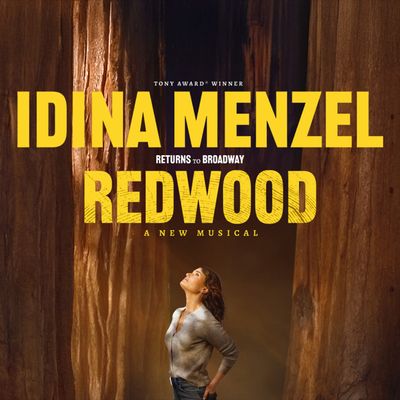
In this episode, we take a deep dive into the highly anticipated Broadway production of "Redwood" at the Nederlander Theatre, starring Tony Award-winner Idina Menzel. We explore the show's ambitious themes of loss, self-discovery, and nature's transformative power, while dissecting why this promising concept struggles in execution... Read More
From the show: Half Hour with Jeff & Richie (Post-Show Broadway Discussions and Interviews)
Guests
Featured Shows
About
In this episode, we take a deep dive into the highly anticipated Broadway production of "Redwood" at the Nederlander Theatre, starring Tony Award-winner Idina Menzel. We explore the show's ambitious themes of loss, self-discovery, and nature's transformative power, while dissecting why this promising concept struggles in execution. From Menzel's performance to the score and script, we leave no stone unturned in our analysis. Is "Redwood" a towering achievement or does it fall short of expectations? Tune in for our candid thoughts on this production and what it reveals about the challenges of bringing new, original musicals to Broadway.
Follow and connect with all things @HalfHourPodcast on Instagram, and YouTube. Share your thoughts with us on "Redwood" on our podcast cover post on Instagram.
Transcript
This transcript was automatically generated and might contain errors.
[0:00] Jeff Malone: Welcome to Half Hour with Jeff and Richie, the podcast where we explore the latest shows we see, sharing our insights and opinions on the storylines, performances, and everything in between.
[0:09] Richie Grasso: In today's episode, we're discussing the new Broadway musical Redwood playing at the Nederlander Theatre in New York City.
[0:15] Jeff Malone: Whether you cannot catch the show in person or you want to expand your thoughts after seeing it, this episode is for you.
[0:20] Richie Grasso: And as always, we want to inform you that this episode will contain spoilers.
[0:24] Jeff Malone: So if you're ready to dive into this production, stick around with us.
[0:27] Jeff Malone: I'm Jeff.
[0:28] Richie Grasso: And I'm Richie, and we're thrilled to be your hosts for this episode.
[0:30] Jeff Malone: But before we start the conversation about Redwood, here are a few words from our advertisers.
[0:35] Richie Grasso: Welcome everyone to a new episode of Half Hour with Jeff and Richie.
[0:38] Jeff Malone: Today we're discussing Redwood.
[0:40] Richie Grasso: Redwood is an original musical making its Broadway debut after a successful run at San Diego's La Jolla Playhouse.
[0:46] Jeff Malone: Written and directed by acclaimed theater artist Tina Landau with a contemporary score by Kate Diaz.
[0:51] Richie Grasso: The show follows Jesse, played by Tony Award winner Idina Menzel.
[0:54] Jeff Malone: Jesse seemingly has it all: a thriving career and a loving family.
[0:58] Richie Grasso: However, a life-changing event causes her to abandon everything she knows and embark on a journey that leads her to the majestic Redwood Forest of Northern California.
[1:05] Jeff Malone: In this awe-inspiring setting, Jesse encounters unexpected individuals and experiences that challenge her to confront her past and find a path forward.
[1:13] Richie Grasso: Through her journey among the towering trees, she discovers new depths of strength, resilience, and healing.
[1:18] Jeff Malone: Redwood explores themes of loss, self-discovery, and the transformative power of nature, featuring stunning visuals that bring the grandeur of the Redwood Forest to life on stage.
[1:26] Richie Grasso: Alrighty. So let's start with our hot take on the new musical Redwood.
[1:32] Jeff Malone: Go ahead. You can start.
[1:40] Richie Grasso: Okay. There are people that stand Idina Menzel, and then there are definitely people that do not. I think that Jesse Green is a big Idina Menzel stan. And you're gonna find out what I am on this podcast.
[1:55] Jeff Malone: Okay.
[1:56] Richie Grasso: I will say I'm trying to be as constructive as possible, but I did leave this theater very frustrated, very confused. I felt like I wasn't understanding a lot of what was happening here. I wanted to help them fix things because I feel like there's a lot of problems here, and I want to talk constructively about what's going on here because we're talking about a mega show, mega budget, mega production, and most of this is not working for me.
[2:25] Jeff Malone: And I would love to just dive in and see how we could pick it apart a little bit.
[2:28] Richie Grasso: And let's do it.
[2:29] Jeff Malone: Let's do it. Here we go. So concept. Listen, when you talk about this concept, it actually sounds to me like in a pitch or on paper, this could be great. Like I hear, oh, a woman goes through this tragedy. Spoiler alert here, as you know. I'll give another spoiler alert. She loses her son tragically. That relationship is actually haunting to me and so sad, and I feel like she is to escape that and to go and to go to the trees and to find this nature, no pun intended, rooting herself in this world. If I was sitting at a pitch meeting, I'd say, yes, this is musical theater. Of course, that sounds like screaming to be brought to the stage.
[3:11] Richie Grasso: And I think emphasis on screaming.
[3:13] Jeff Malone: Yeah, well, we'll talk about screaming in a second. And so then we're there, and I'm like, if that's the height of this, it seems like every production meeting and design choice and moment through rehearsals to now seems to have been a slow decline to what we saw. Because 90% of this is not working for me. I truly think 90%. There's a couple moments of glimmers of hope where you're like, oh, I feel, oh, I see, oh, but other than that, I mean, we're gonna get into the specifics of performances and design a little later. I want to save design for a little later. But when you think about this, Jeff, Idina's name is all over this. It's Idina is conceiving this, she has additional contributions. Tina Landau's name is all over this: lyrics, book conceived, and Kate Diaz music and lyrics with Kate Diaz.
Three women working hard to bring this to life. To me, the score was not working for me. I don't know one song I can remember. Every song seems so intense and loud and in my face for a show that's supposed to be about the peaceful nature of a forest.
[4:26] Richie Grasso: Yeah, nothing about this score was peaceful to me because then when Idina was singing it, she was singing it way out of range. And I hate to use this word, but it does sound like she's screaming a lot. Yeah, she is singing notes way out of her range. She actually has this lovely alto, raspy, edgy jazz-like lower register to her voice that's almost never used in this piece. And it doesn't need to be about hitting the high note, hitting the high note.
[4:57] Jeff Malone: You mean the score of the book?
[4:59] Richie Grasso: The book and the score. Because, like you're talking about here with this whole plot around this, you know, this tragedy that this woman is going through and how she needs to get back to her own roots. Yes, it is the perfect idea for a musical. I 1000% agree with you. The execution of this is what I have an issue with in this book and score. So I think there's a lot of loopholes in this book, number one, that it's very messy.
[5:26] Jeff Malone: Yeah, the book is very messy.
[5:28] Richie Grasso: The script goes from night and day. Wait, we're flashback, now we're present, now we're in the tree, but now we're back to New York. It's too much for a one-act musical. We're getting, we're all over the place. And then the direction of it is this like walk out, walk off. Walk out, walk off. And we're gonna get to direction in a second. But that added to the joltiness of the book. And I'm going down this road of the book first because even the way that she's introduced to us is kind of manic in a way. She's driving across the country, escaping New York City, which I've never would have figured out until later on in the piece when they actually tell us that that's what she did. I thought she was always from California from the beginning.
[6:07] Jeff Malone: Yeah, yeah, that was unclear.
[6:08] Richie Grasso: Because it was unclear in how they set it up. And the song really hits you in the face hard. And she's doing these vocal riffs, and we'll talk about her performance later, but when you go to score, it was almost like, and I'm really I've said this on this podcast a lot. So many of these modern scores are like these grunge rock, rock or folk, or rock, or and it's done, it's got to be aggressive and loud, and like I don't know. Like it doesn't, I understand she's like a rocker singer, and I get that, but there's no gentle moments in any of this score. But like let's talk about that a little bit here on like how this score was written. If she's part of this, maybe she wanted it written that way.
[6:49] Jeff Malone: Yeah. And I look at this and I say, I don't know if this should have been one act. You know, it was what a hundred and an hour and fifty minutes, maybe. So a little shy of two hours. I struggled with this in the writing because I felt like there was not enough time to actually connect with some of them as characters, you know.
[7:09] Richie Grasso: And it's a five-person show.
[7:11] Jeff Malone: Yeah.
[7:11] Richie Grasso: So that's alarming a lot.
[7:14] Jeff Malone: Right.
[7:14] Richie Grasso: Right off the bat that I can't connect with the characters in this piece. And I think there's loopholes in the story here about her relationship with her wife and her son that are almost completely forgotten throughout this piece. And I don't know if the, you know, the tree people that she meets when she gets to the Redwoods are supposed to act as her wife and son, too, from the ways that they kind of handle doing things with her. It was just very unclear.
[7:39] Jeff Malone: And to include flashbacks into the piece that really had no relation.
[7:44] Richie Grasso: And what it wasn't even flashbacks, because it was mostly like telephone calls that were happening to her. And everyone seemed angry all the time.
[7:52] Jeff Malone: All the time.
[7:55] Richie Grasso: Like out of 100. Always. The environmental people in the forest with her angry that she was there. The wife, her ex-wife, angry, the son in the flashbacks angry, and she's angry. And if you want to push that, then make the moments when she is in the forest alone to be the most tranquil, gorgeous, beautiful. And at times the score would try, but then it would build, and then it would build, and then the song would be her screaming again. I'd be like, oh my gosh, why are you belting again for the eighth song in this show when we could have done with a beautiful, gorgeous, simple ballad?
[8:33] Jeff Malone: And I like just once.
[8:35] Richie Grasso: Just once. Where in here did someone say, like, let's incorporate Disney into this? Because I don't think it was funny to really incorporate the whole princess thing and like the ode to kind of like Frozen that she plays Elsa in the piece. I don't know if you even got that.
[8:51] Jeff Malone: I don't think I really did.
[8:52] Richie Grasso: There was a moment where he like called her a princess, and like people it was getting a laugh.
[8:56] Jeff Malone: Yeah, yeah.
[8:56] Richie Grasso: It's a little bit more. I thought it was super tacky.
[8:58] Jeff Malone: Yeah.
[8:59] Richie Grasso: And I also looked at this and I said, that's her character in that film. Elsa when she goes into the woods in Frozen 2, and she's connecting with her roots in that area. And I'm like, it just seems like she pulled different areas of herself into this piece. And every moment in this piece was written like defying gravity.
[9:23] Jeff Malone: And it why do we feel like we're gonna get we're gonna just get to her performance in a second, but we're gonna wrap up this concept idea. It is like I you said that to compare this to Next to Normal.
[9:35] Richie Grasso: Okay.
[9:36] Jeff Malone: Okay. Great example, too. That is a show that doesn't beat you over the head with, oh, my son died, and let me remind you. And it's the oh my gosh, wait, he's not really. And when we pull down to I Miss the Mountains when Alice Ripley sings that, you know, that she does belt it at the end, but there's a moment of just oh, I get I un in one song, I understand who the mother is, and I get what she's going through. And she can belt later in the show, but I get it. Every song, I just wasn't even understanding all of the words that were sung.
[10:08] Richie Grasso: What was she actually trying to say?
[10:10] Jeff Malone: No, because they weren't driving the plot.
[10:11] Richie Grasso: That's the issue. Nothing drove the plot. As a musical, I said that maybe this should have been a play.
[10:15] Richie Grasso: Maybe we should have had an acting moment within Dina here where we actually got to see, like, oh, okay. I get she's an actor, but like the singing portion of this, it didn't add anything. It was very jarring, it was ear-piercing, quite literally, to the point where there was many moments where the vocal was just not sitting right with her voice. And we're gonna talk about her performance in a second. So I do want to maybe get ready to transition over there to some directing direction and some design and some actor choices. So why don't we just go right to now?
[10:46] Richie Grasso: So next segment coming up, but before we do, here's a few messages from those that make the show possible.
[10:52] Jeff Malone: Okay, and we're back. So let's start with the direction. So Tina's written this book. Tina's done some Broadway shows. Now we're talking about the direction. When most of the show is down or up, it just seemed very like people were on stage, off stage, on stage, off stage. For example, the ex-wife, every single time she walked on stage, she had to be taking pictures. We know she's a photographer. It's we get it. Like we don't need you to see up I'm taking pictures again. I'm taking wait, I'm busy about it. We get it.
[11:25] Richie Grasso: Yeah. Like there was moments where it just seemed like one tree. I don't know. We have one big huge tree, and everything else is projections. And I'm gonna talk about design in a second, but it just seemed like front and center the whole time, all her songs being up. It just didn't seem like it was directed in a way that seemed like you have this very concept-y piece, and the direction didn't match the concepts. It just seemed like on off, on off to me.
[11:57] Jeff Malone: I agree. I don't think there was much direction actually happening on the stage, other than yes, actors walk on, actors walk off, actors walk center, and then let's put them up in our tree. That's great. And then move them into now the scenic design of projections.
[12:16] Richie Grasso: I will say mixed things. It's pretty cool about yes. I've seen very mixed things about the projections here. And here's my feeling on this. You want really great projections, you're gonna go to a concert or you're gonna go to a theme park and you're gonna get projections for something that's a sit-down on Broadway. I don't know if I'm fully on the whole immersed projection screen. Listen, is it expensive? I'm sure it is. So I'm not gonna say it looks cheap. No, but if something kind of gives that off that it could potentially be cheap, I don't know if that's really what we want there.
[12:56] Jeff Malone: And I get it, there's a beautiful big tree on the stage, but there was also a beautiful big tree in the center of Appropriate that I think had more of a scenic design around it, that it was more impactful. So I don't know if maybe there should have been one or two more redwoods on the stage with the big one, and then you have the projections around it to give it full context, and that forest feels like it's moving. I didn't always feel like the forest was moving.
[13:22] Richie Grasso: And I will say it is impressive to see it come out into the audience like that, and to see it, it's impressive. Yeah, you're also seeing that at theme parks, you're seeing that at concerts, so it's not quite new, even though for the Broadway space it might be. So there's a part of me that's like, oh, these projections are really cool. But I agree with you. Add a few physical trees in with the projections, not just one.
[13:44] Jeff Malone: Yeah. And I will also say this, and this might be something I could be way out of line for saying this, but is there irony in the fact that she's trying to go back to nature, but nothing about this set is natural? Like, is that ironic, or are we supposed to ignore that little baby elephant in the room? Because there's a part of me that's like, wait a second. I thought she was trying to escape like her tech life and all these problems and go to this like serene place.
[14:09] Richie Grasso: You and I, Jeff, have been to the Redwoods in Northern California. It is escapism, like I've never seen. I feel like I'm in another world. And I, other than taking my phone to take some pictures, I wasn't on the phone. I wasn't in, I was in this natural environment. So for her to be in this natural environment, but it's like all projections. I'm like, wait, is that camp? Like, is there actually a camp element to this that we're gonna over? I hope not either, because then it's almost like maybe a disservice to what we're talking about here.
[14:35] Jeff Malone: Because I'm not saying we needed literal real trees on stage, but actual scenic trees. Well, it's interesting because when I read Jesse Green's article in the New York Times, he wrote that he has never seen the Redwoods. But I think I might be misquoting this here now, but since I brought it up, he says something like, I feel like I was there. And I think if you go to the Redwoods, Jesse Green, you're not gonna feel like you were there.
[14:59] Richie Grasso: No, because we're seeing video and movie, but it just seems so ironic to me. And maybe that's just not, you know, Tina Landau did Spongebob on Broadway, and I remember reading that the whole set was made of like recycled ocean materials, and I was like, wow, that's also really cool. That was super cool. Wouldn't you think that the same director would have said, let's put some like naturalistic elements into the space along with the projections?
[15:27] Jeff Malone: I feel it, it's the vibe, but not all of the projections worked for me. I actually thought the fire felt the most fake in the whole thing. I said, wait, what's happening? Like this, no, now this looks like you're in like a tech nightmare.
[15:41] Richie Grasso: Yeah, and the floor being white doesn't really help when you're trying to like be in like the grass and the dirt and the ground. I don't know. Like, I just feel like you know, it's tough. I will say though seen beautiful nature things happen on Broadway for before, you know, when you're at Big Fish and a reveal of the floral comes to you and you're like, wow, that was beautiful. Don't tell me you can't do it.
[16:07] Jeff Malone: No, right. And that's why I also look at this and I say, if there is anything that does stand out nice here, it is that highly elevated projection because it's clear that a lot of money and time went into it, and it is somewhat of an aha moment. But it doesn't make up for or put a band-aid on this weak book and score.
[16:24] Richie Grasso: Right. Now let's get to the actual performance here if I miss Idina Menzel and the rest of the cast. I said earlier about being an Idina Stan or not. And I sometimes lean a little bit more on the not side because I feel like some of the decisions that she's made in her career are very interesting choices because I think she could have the biggest career in Broadway, and many will probably tell me she is. She's a standard name in the Broadway space.
[16:55] Jeff Malone: But sometimes I think the choices that she makes are like questionable. If If/Then was not a great musical, but that puts this musical. Oh, If/Then looks great compared to this musical. But I with Idina, she sounded okay in Wicked and Defying Gravity, she wins her Tony for that. Then she goes on to If/Then, I'm like, okay, her vocals, I'm not quite sure that's her range.
[17:16] Richie Grasso: And actually, she started on Rent before Wicked, right? And then we go to this, I'm like, oh, these vocals. Listen, she is singing out of her range. I'm sorry. These vocals are not in her range anymore. It is pitchy, she is very flat, a lot of the notes. She's literally screaming.
[17:33] Jeff Malone: Yeah. The screen bends flat.
[17:36] Richie Grasso: She's looks in her face like she's uncomfortable singing some of these notes. There were quite a few knee grab moments where I was like, oh my gosh, oh, she's not on the, she's not on the note.
[17:45] Jeff Malone: No. For how much money are we paying for these? I'm not saying, oh, she's deserved to just lower the key or sing something a little bit more rude than if in her vocal. If you're part of this process, why did you have it written that way if you can't, unless she thinks she can.
[18:00] Richie Grasso: Right. But I I don't know if it's just me. I the vocals are real, and the acting's okay. I mean, it's a little campy at times. Some of her like one-liners that she throws out.
[18:09] Jeff Malone: Yeah.
[18:09] Richie Grasso: I actually think her best moments were when she was not singing, and she had the monologue about explaining that her death of her son. I was it was very well delivered monologue. The end song where the son is singing most of the time is amazing, and she's just kind of with him, and that's a nice moment.
[18:25] Jeff Malone: But all her solo stuff, I don't know.
[18:27] Richie Grasso: It's not working for me. And it and but I look at it though, and I say, she sometimes I say she would be just a little bit better if she just stuck with film, and not to say, like, oh, well, they can just like fix her vocals, but they could, or she can redo them and actually hit the note properly because she can hit notes.
[18:52] Jeff Malone: Yeah, hitting the note eight times a week, she's tired already.
[18:56] Richie Grasso: Yeah, oh, already. Very good. The show's only been running a month, not even. And I look at this though, and I say, there are other roles out there for her that she should be doing right now.
[19:06] Jeff Malone: Yeah, she should be, you know, Mama Rose in something because you don't have to be a pretty singer in that musical.
[19:15] Richie Grasso: I also think that there's I don't it's nice that she's originating a new role. I just don't really know. This is just not right for her. And if she thought it was, I but I also don't know if it's just her. I just don't think this show was really well put together either.
[19:31] Jeff Malone: So you're kind of putting someone who's can't sing in the range of the score with a not great score.
[19:36] Richie Grasso: Yeah. Um and in terms of some of the other people on stage, like Zachary Noapizer, he's amazing. He can really sing, and the other all of them can really sing. I thought um Kylie uh Wilcoxon, she had an amazing vocal moment in her song.
[19:51] Jeff Malone: But why did every single one of them have a same style song written for them?
[19:55] Richie Grasso: A belt out song. And I'm really kind of getting sick and tired of so much contemporary musical theater being every song needs to push the belt and the key change to the high note and belt and belt. It doesn't let it sit with you, and it doesn't make sense to me.
[20:10] Jeff Malone: There was no like cheery moment throughout the piece. I don't uh I don't know if it was warranted, but you know, like even with uh a lot of people are relating this to Dear Evan Hansen. So there was even comedic relief in Dear Evan Hansen. There were high moments, low moments, choral moments throughout that piece, and that was a small cast, right?
[20:31] Jeff Malone: But when you think of those scores, and you think of other Tony-winning scores, like when you have "Kimberly Akimbo," that's not screaming in my face the whole show. That's light at times. When you look at stuff that's contemporary, some big belter moments and then some really nice low moments. You can't write a modern show and push me with vocal for an hour and 45 minutes because the first song started on a ten. Yeah, and had no in terms of belt and scream, and every other song after that was at the same level.
[21:01] Richie Grasso: Yeah.
[21:01] Jeff Malone: Why?
[21:02] Richie Grasso: I know.
[21:03] Jeff Malone: Like, why? I actually was like, maybe we don't need a song here right now. I would rather just have a lot of people. And maybe they were trying to learn more about the Redwoods or learn more about this woman's path to finding out the root of her issues, because that's really what this piece was all about. It pushes and it pushes to the point where it almost felt like a modern-day audience can't have—we can't have an intermission because people might leave or they won't stay for—and we gotta just get the story in in an hour and 45 minutes. And it just seems like all the wrong reasons to put this on stage.
[21:31] Richie Grasso: Yeah.
[21:32] Jeff Malone: So let's get into our own experience at the show now.
[21:35] Richie Grasso: And also some Tony talk.
[21:37] Jeff Malone: Tony talk.
[21:38] Richie Grasso: Let's do it.
[21:38] Jeff Malone: Here we go. We'll be right back with a message from our sponsors.
[21:43] Richie Grasso: Okay, and we're back. So first, kind of let's talk about our own experience. Not that we haven't been doing that for the last 20 minutes of the piece.
[21:51] Jeff Malone: Right.
[21:51] Richie Grasso: But like overall own experience because I kind of was feeling the energy from the audience. And I don't know if the audience was really like on it either, or if you know, around me there were probably a few, let's call them the Idina Menzel stands. And then everyone else probably was like, what am I watching? It just seemed to look we were numb by the end. The audience kind of left, like, okay, cool. And it wasn't like we were reacting throughout as much because it was like thrown in our face.
[22:21] Jeff Malone: And I feel like, you know, I will also say this. I also left disappointed. And I use that word because I see the what 30 plus producers on this. I see how extremely difficult it is to get something here. So I respect the art form enough to say, yeah, good for these women for working hard to try to bring a story to the forefront here. It had its run out of town. It's not like they didn't have an out-of-town run. But I look at this and I say, what—why is this getting put up?
[22:52] Richie Grasso: I'll tell you why. Is it because, oh, "Wicked" came out? The movie, Idina Menzel is gonna be popular? We'll sell tickets. She can get another Tony nomination. Is it the marketing side of the city? I'll tell you those tickets are not cheap. I'll tell you why. It's clearly that Idina Menzel is attached to the project. She has a huge fan base, which is fine. And how many people, after we posted that we went to see "Redwood," said to you, oh my god, I really want to see this?
[23:19] Jeff Malone: Yeah.
[23:20] Richie Grasso: It's Idina Menzel. I love her. I love her from "Wicked." "Wicked" has such a huge fan base, everyone forgets, and they love Idina Menzel and Kristen Chenoweth. When "Queen of Versailles" comes next year, it'll be the same thing. It will be the same thing. And whether the show is good or the show. But I think Kristen puts herself in the right. But I'm just saying, I do. I've always thought Kristen is in the right place at the right time. And Idina doesn't quite hit the code. But I'm talking about fan base.
[23:45] Jeff Malone: Yeah.
[23:45] Richie Grasso: Yeah. Whether the project is good or the project is bad, people will go because they are fans now. And that's fine. And I think a lot of producers probably see the same thing that you saw on paper and said, wow, this is a really great idea. Wow, there's a lot of intention. People are gonna go and see it because it's Idina Menzel, and she probably has great potential to be nominated for a Tony, or potentially win it for a Tony. The show has the potential to be nominated for a Tony and maybe win for a Tony. I don't know, really in this season if that's going to work, but when it was announced that it was coming, it didn't have as much competition.
[24:21] Jeff Malone: Right.
[24:21] Richie Grasso: That because it was announced a while ago. I mean, turning to Tony talk, I don't see this getting many nominations because I don't think that there's something going on in the Broadway industry that no one wants to talk about because when you see an article come out from Jesse Green praising this piece, who's the critic of the New York Times, by the way, if anybody's calling it, praising this and also giving a critic's pick to this, when every other review kind of gave it a terrible review, except for maybe like two others.
[24:48] Jeff Malone: I have to do this and saying, hmm, why? That doesn't make any sense.
[24:52] Richie Grasso: And I've read most of his review, actually all of it, and two moments in there I said, he says she had, um, what is the words? Control singing all of the songs effortlessly. No, no, no. There was little to no control. She was out of control in most of the songs. And praised when she was going up the tree trunk, floating around singing her aerial acrobatics around that. But that seemed like not very precise. She just seemed like she was kind of all over the place, swinging by. I know there was a specific aerial choreographer that worked with her on that, and I know that's an art form in and of itself, but it seemed like she wasn't even quite on it.
[25:33] Jeff Malone: Right.
[25:33] Richie Grasso: I'm like, what am I watching?
[25:36] Jeff Malone: Yeah, I mean, I—okay. What will it get Tony nominations? Maybe I can't see this winning anything. I really at that point I don't really think it would, but it could get the nominations, and we talk about the leading lady category for the Tonys, and her name is always popping up. And we're like, um, okay. I wonder if she will or would not get nominated because the same thing happened last year with "Lempicka," and we were like, oh, is Eden gonna get nominated?
[26:05] Richie Grasso: And she did, right?
[26:06] Jeff Malone: Yeah, but then the show had closed. But she still got nominated, even though we were not the biggest fans of her performance in that piece.
[26:12] Richie Grasso: Right, right, right.
[26:13] Jeff Malone: So it'll be interesting to see how the Tony voters, or not really the Tony voters per se, but how the committee who decides the nominees, that's a smaller group, right? Decides if she's gonna be a nominee. When you have a Vi, Audra, you have Nicole, you have Megan Hilty, Jennifer, you have Jasmine and Betty Boop.
[26:28] Richie Grasso: Yep.
[26:29] Jeff Malone: You have, uh, uh, uh, last five years. Um, Adrian Warren.
[26:32] Richie Grasso: Warren, yep.
[26:35] Jeff Malone: Plus, if anybody in other pieces were not even, you know, but can this be a big year? Because last year for supporting actress there were eight nominees in the category. If there's another one, are there going to be eight this year? It's gonna be very interesting to see if it is going to happen.
[26:51] Richie Grasso: I mean, I look at this and I just say, I don't know. I was not sold on this piece. It's so low in my musicals right now. I won't tell you where it sits. Ask me off camera, but it just did not hit for me at all. I had no feeling after the piece. I had maybe one heart-touching moment when the son Spencer was singing to her, and I said, okay, that, um, was it. You know, that was the "Dear Evan Hansen" moment for me.
[27:22] Jeff Malone: And in terms of contemporary musicals, we gotta try harder.
[27:27] Richie Grasso: We really do, especially when it goes back to the root, I keep saying root, the book and the score. You have to get that strong.
[27:34] Jeff Malone: Yeah.
[27:35] Richie Grasso: Because I could sit here and I could say, oh, Idina, yeah, she didn't say it, but oh, at least she had great dialogue and great songs. You know, I can't even say that. Like if she has a, uh, under whoever the understudy is for this piece, like I don't really think I would go back and see it because I don't think the show is good. I really don't, right? I think the concept is good. I don't think the show is good.
[27:55] Jeff Malone: Yeah.
[27:56] Richie Grasso: So we're running out of time.
[27:58] Jeff Malone: Okay, final thoughts. I know you just gave your final thoughts. I'll get, but if anything else you wanted to say, final thoughts on "Redwood"?
[28:04] Richie Grasso: I don't know because, like, for my final thoughts though, like, I'm not going to terror talk so terribly about this piece because I do know a few people that really enjoyed it. It's not sitting at the bottom of their list this season. So I don't want to discourage people from going if they really do want to see it.
[28:21] Jeff Malone: And they are really big fans of Idina Menzel.
[28:23] Richie Grasso: Because if that's the case, you're probably gonna enjoy it. And if you're not, then you know, maybe go see something else.
[28:30] Jeff Malone: Yeah.
[28:30] Richie Grasso: I sometimes when I see shows I really don't gel with, I get angry. I didn't really leave here angry. I just felt like I said, disappointed, disappointed that this is what's people are putting on the stage, disappointed that there can't—that we're glossing over things by saying put projections in, put a Tony Award winner, Idina Menzel in and make it that we're—we have to boil this down.
[28:53] Jeff Malone: Yeah, we have to boil this down to script and score.
[28:56] Richie Grasso: It was not a well-executed script or score, it's not very well directed. The music, especially, is just very piercing and jarring to me. And I don't, I unfortunately don't think this was the strongest thing I've seen in a while. I wish everyone involved the most success. It's a job for a lot of people. But I don't know what—what's happening in commercial theater when I see this and when I see not two producers, not three producers. I think there's 30 to 40 producers on this. That's a lot of people giving it. But when you have the creative team of Tina Landau, and you have Idina Menzel and Loja Playhouse backed in their out of town. I get it. Like, you know, they have a lot of connections in the industry that can get people behind it, you know.
[29:35] Jeff Malone: Yeah.
[29:36] Richie Grasso: When the last producer name on there is Sara Bareilles, you know, maybe Sara Bareilles or Ingrid Michaelson should have wrote the music to this piece and got it a little bit more in the soft spot. Find the root to what we really needed to get with. Which Sara does in her music, especially "Waitress," which Ingrid, as much as I didn't really like "The Notebook" that much, did in a couple songs go there. And I'm saying I don't know who Kate is this new composer. Maybe this will be her first of many. Maybe you should go back to the drawing boards a little bit and work on that.
[30:06] Jeff Malone: I know maybe, but I mean it's just—it's difficult.
[30:11] Richie Grasso: Yeah, because I feel like I wanted more.
[30:13] Jeff Malone: Yeah.
[30:13] Richie Grasso: And it's tough.
[30:14] Jeff Malone: So yeah.
[30:16] Richie Grasso: Well, that does wrap up our discussion for this episode. We hope you enjoyed our deep dive into "Redwood" on Broadway. And remember, we want to hear from you. Continue the conversation with us on Instagram at Half Hour Podcast.
[30:26] Jeff Malone: And drop us a comment on Spotify and let us know your thoughts on "Redwood."
[30:29] Richie Grasso: If you enjoyed our show, please leave us a review. Your feedback helps us bring more theater to you.
[30:33] Jeff Malone: And remember, you can listen to past episodes and stay tuned for the many upcoming ones as well. Until next time, I'm Jeff.
[30:39] Richie Grasso: And I'm Richie.
[30:41] Jeff Malone: Ta ta for now.
[30:41] Richie Grasso: Bye.
© Broadway Podcast Network, All Rights Reserved