

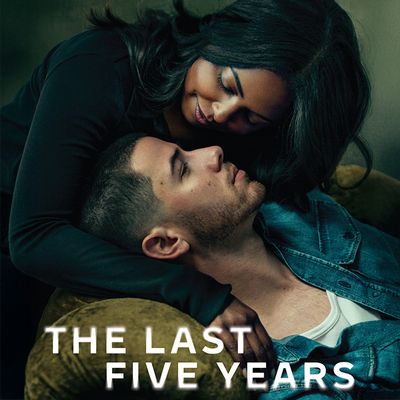
In this episode of Half Hour with Jeff & Richie, we dive into the Broadway revival of The Last Five Years at the Hudson Theatre. From its innovative concept to its missteps in execution, we discuss the direction, performances by Nick Jonas and Adrienne Warren, and how the production compares to Jason Robert Brown's original masterpiece... Read More
From the show: Half Hour with Jeff & Richie (Post-Show Broadway Discussions and Interviews)
Guests

Featured Shows
About
In this episode of Half Hour with Jeff & Richie, we dive into the Broadway revival of The Last Five Years at the Hudson Theatre. From its innovative concept to its missteps in execution, we discuss the direction, performances by Nick Jonas and Adrienne Warren, and how the production compares to Jason Robert Brown's original masterpiece. Tune in as we unpack the challenges of this revival, share our thoughts on its Tony Award potential, and explore whether it lives up to Broadway standards.
Follow and connect with all things @HalfHourPodcast on Instagram, and YouTube. Share your thoughts with us on The Last Five Years on our podcast cover post on Instagram.
Transcript
This transcript was automatically generated and might contain errors.
[0:00] Jeff Malone: Welcome to Half Hour with Jeff & Richie, the podcast where we explore the latest shows we see, sharing our insights and opinions on the performances, storylines, and everything in between.
[0:08] Richie Grasso: In today's episode, we're discussing the Broadway production of The Last Five Years, playing at the Hudson Theatre in New York City.
[0:14] Jeff Malone: Whether you cannot catch the show in person or you want to expand your thoughts after seeing it, this episode is for you.
[0:19] Richie Grasso: And as always, we want to inform you that this episode will contain spoilers.
[0:22] Jeff Malone: So if you're ready to dive into this production, stick around with us.
[0:25] Jeff Malone: I'm Jeff.
[0:26] Richie Grasso: And I'm Richie.
[0:26] Jeff Malone: We're thrilled to be your hosts for today's episode.
[0:28] Richie Grasso: But before we start the conversation about The Last Five Years, here are a few words from our advertisers.
[0:34] Jeff Malone: Welcome everyone to a new episode of Half Hour with Jeff & Richie.
[0:37] Richie Grasso: Today we're discussing The Last Five Years.
[0:39] Jeff Malone: The Last Five YEARS follows two New Yorkers, rising author Jamie, played by Nick Jonas, and aspiring actress Kathy, played by Tony Award winner Adrienne Warren, as they fall in and out of love over the course of five years.
[0:50] Richie Grasso: With an acclaimed score by Tony Award winner Jason Robert Brown's, the musical explores whether a couple, once united by their dreams, can remain connected as their paths diverge.
[0:59] Jeff Malone: Experiencing this first-ever Broadway production of one of the most beloved musicals of all time in a bold new production directed by Tony Award nominee Whitney White.
[1:07] Richie Grasso: All right. Broadway hot take for The Last Five Years.
[1:11] Jeff Malone: As Kathy says it herself in the show, we can do better than that.
[1:17] Richie Grasso: Okay. My hot take on this is I love the show so much. I don't feel like this production does justice to the original work of the piece. There's a lot of problems in many departments of the show, unfortunately, and I was not a fan.
[1:33] Jeff Malone: All right. So we're gonna dive into that.
[1:34] Richie Grasso: Diving in. So when we thought talk about just the overall concept of this piece, this how this was the early 2000s off-Broadway. And I know that it was very cutting edge for its time.
[1:47] Jeff Malone: How do we move the same story in different directions? Where one character is starting at the beginning of a love story, the other character starting at the end of a love story, and they're gonna work in opposite directions.
[1:58] Richie Grasso: But they're gonna have no choice but to meet in the middle at the middle of the piece and have a convergence, and they're gonna have to sing or act together. And then they both go their own ways again.
[2:06] Jeff Malone: At the time, I had heard that it was somewhat controversial. It wasn't quite grasping the audience. We had J. Norbert Leo Butz and Sherri Rene Scott, both and Jason Robert Brown's could do the three named people all doing this show.
[2:21] Richie Grasso: And then there was this big revival that I did not see that original production, but I loved listening to the soundtrack.
[2:27] Jeff Malone: Yeah, because it's hello, Sherri.
[2:29] Richie Grasso: Yeah. Then we go to the, I want to say it was 2012, 2010, somewhere around there. We had a revival at Second Stage off-Broadway in Midtown that was wonderful.
[2:42] Jeff Malone: Betsy Wolf and I'm forgetting who I want to say, Adam. Someone's gonna shout me out on this. I forget who played Jamie, but beautiful. It was a beautiful staging of this show that we all like heard for so many years, but then got this fresh production of, okay.
[2:59] Richie Grasso: And it was never on Broadway. And so everyone always wondered, like, why not? And like it could work. So clearly, this was an opportunity to bring this to Broadway.
[3:07] Jeff Malone: I feel as if the I always say here, bring it to Broadway, everything belongs on Broadway. I still believe that. I still believe this show could have worked on Broadway.
[3:17] Richie Grasso: What we're seeing right now in this Broadway reincarnation seemed to be a money grab of throw big stars in, put it in a bigger house, and see how it sells on the mainstream commercial market.
[3:29] Jeff Malone: Yeah. And this score is so beautiful. The idea of the plot and the concept moving in this way was to trust audiences 20 years ago and then 10 years ago. You can trust audiences with this.
[3:40] Richie Grasso: Yeah, I think that this production complicated it more that that's why they had to put an insert in the play though that gives us the song order. That's why they give us they were not trusting the audience from the start.
[3:53] Jeff Malone: Right. It was clear that they were gonna say, well, no one's gonna understand this, but we have stars in it, and it's not a concert version of it, so let's just spell this out and let's change the direction of it.
[4:01] Richie Grasso: Well, I feel like the show has every bit of component to make it like not work, but then it just kind of does. And here's the thing: we'll get into the actual production of this quite quickly because I think a lot of people do know this show already.
[4:18] Jeff Malone: And if you don't know this show, I'm hearing a lot of people say, wow, that show, this production really confused the hell out of me. And I'm like, okay, like why? Because we've had the two off-Broadway productions. I mean, it's done all over the world, and we had the film with Anna Kendrick and Jeremy Jordan.
[4:39] Richie Grasso: So that was my first kind of introduction to The Last Five Years where you're like, oh, we really need to watch the film. And I liked the film. And I think the film had every little bit of component to also not work, but it kind of did, and then some people say it kind of doesn't, and it's just like it's a tough show.
[4:59] Jeff Malone: The relationships are starting at the end and at the beginning, and then they're meeting in the middle, and you really have to know that as a director to kind of master it, don't you think?
[5:10] Richie Grasso: Yeah, I also don't feel like this piece needs to be directed much. I think there can be so much trust put into the music director and the actress doing it to tell this story through the music.
[5:19] Jeff Malone: There's no dialogue in this show, right? There is just song and telling story through song. It's literally spelled out for you in a way.
[5:26] Richie Grasso: And I think that this is another example of when people try to change something. Listen, Jamie Lloyd changed Sunset and look what happened. I'm not saying directors can't put their own spin on something and completely give a different fresh take to it.
[5:38] Jeff Malone: Oh, of course. I think this could have had a fresh take in a way. I don't think this worked well. We'll get to the direction in a second.
[5:43] Richie Grasso: In terms of the overall concept, the main part of the concept is that they do not interact with each other until the middle, when it's the marriage and when it's their moment where they felt like they were maybe quite literally both on the same page.
[5:58] Jeff Malone: Because every song makes it clear that they're never on the same page until they are on the same page. The impact of this 85-minute show where you're getting to about 40-ish minutes in and you're hitting that middle is supposed to make you feel.
[6:11] Richie Grasso: It's supposed to make you witness and say, oh, this is making sense, oh, there they are. They're in the same moment of the relationship. And when they're in that same moment of the relationship, they're in love. It works.
[6:23] Jeff Malone: Timestamps still for a minute, and they are maybe on the same page for a moment.
[6:28] Richie Grasso: Yeah. So let me ask you a question with this actual concept. Do you think they are ever on the same page, though, in their relationship if it was told consecutively?
[6:38] Jeff Malone: Yes, but that's not the point of this. And if it you could certainly have moments where they're on the same page, even though that's not where they are in the same time of the plot.
[6:49] Richie Grasso: But I didn't like the idea of adding them into the scene.
[6:52] Jeff Malone: Right. There were moments where the direction was being added them into the scene, which I think added more confusion to this already something, but I think it's a difficult piece to follow.
[7:03] Richie Grasso: But I think that's more the production of this. I think more for you, this is a question of like, do you think, in the actual text, not this production, that they are ever on the same page?
[7:16] Jeff Malone: Yeah. Like in life. Like when they first start dating. Because you can look at the songs and you can say, oh, was she ever really into the relationship in the beginning, or was she into the relationship at the end?
[7:27] Richie Grasso: Her first song and his last song are about the heartbreak.
[7:34] Jeff Malone: Right. They're on the same page there. I think-ish. Although it seems like one of them maybe, but it I first song for him and the last song for her shows the joyous, giddy meeting and the yes, there are times in this relationship when they're on the same page.
[7:50] Richie Grasso: Yes, obviously. There are many times where they are not. The point I'm trying to make is in the way the story is told, when they are both together physically talking about their love at the same time, 40 minutes into the piece.
[8:03] Jeff Malone: That's when you're supposed to feel the impact of the piece. And I didn't feel it because I didn't believe what was happening for the first 40 minutes and the last 40 minutes of the show.
[8:12] Richie Grasso: But I think that's because when I'm looking at how he has written the lyrics to this, and I say, okay, yes, on most people's relationships in the marriage and they're getting married, that's when they are on the same page, right?
[8:28] Jeff Malone: And then wherever else you land in your relationship is probably always going to be different. And I find that in the beginning, she is not really on the same page, or she doesn't really want to be in the relationship in her beginning.
[8:42] Richie Grasso: Does that make sense? I feel like I hear what you're saying.
[8:46] Jeff Malone: It seemed like she was more hesitant when you get to the end, I feel like she's more hesitant about getting into the relationship with him.
[8:54] Richie Grasso: And during his ending, like where he's having the break, he doesn't want to be in the relationship with her anymore. And I feel like that's kind of why this story is told that way.
[9:03] Jeff Malone: But I don't know. Maybe I'm like overanalyzing it.
[9:05] Richie Grasso: It's a great way to look at it, but the way the structure of the concept of the piece is structured, it is these two stories not moving at the same time and moving in opposite directions.
[9:15] Jeff Malone: And you have to trust that text alone without over directing it because the piece was over directed.
[9:21] Richie Grasso: And I don't even know, we'll get into that in a second, but how I can even say it was over directed when there's like almost nothing happening on stage.
[9:27] Jeff Malone: So, and we'll talk about the actor performances and the vocals in a second. But overall, I would say this concept works. Trust your audience. It's done in communities and colleges and regionals all over the world, and yet it landed on Broadway and it didn't get good reviews, and it's not working.
[9:42] Richie Grasso: And that's a problem because I think there were too many cooks in the kitchen here. And I think everybody had to throw their two cents into like how do we make this work on Broadway? And it was overcooked.
[9:52] Jeff Malone: That's a great way to put it. So let's take a quick break.
[9:54] Richie Grasso: And when we get back, we're gonna get into the direction, the actor performances, and the design of this production.
[10:01] Jeff Malone: Okay, and we're back. So let's get into this overall production now because we talked a lot about the actual concept here.
[10:07] Richie Grasso: And I think there is so much happening in this production that a lot of people don't agree with. And I think you said it best yourself. There's like really not a lot actually happening in the production.
[10:18] Jeff Malone: So like let's start with the direction here and see what kind of happened wrong.
[10:23] Richie Grasso: Because it for me, it kind of felt like Whitney White didn't really get that they were not supposed to be on the stage together.
[10:31] Jeff Malone: Yeah, and it seemed to be like it was just like, let me take a new spin on this. There was also choreographers build on this, but I there was some moments that seemed choreographed and some that didn't.
[10:40] Richie Grasso: I thought it was a very flat, two-dimensional staging of like walk on, sing, walk off. There was no diagonals, there was no certain there was just very stiff come down front and center all the time.
[10:51] Jeff Malone: Pulling backdrops in for the "Summer in Ohio" song, unnecessary.
[10:56] Richie Grasso: That whole song seemed stagy and choreographed for no reason. The stand on a platform, stand off a platform, go grab a flower in the back, walk forward, look at the musician up above, seemed very robotic to me.
[11:10] Jeff Malone: Nothing felt organic about this. It just like when you really look at the creative team with this, and now like and and the actors that were cast in this show.
[11:21] Richie Grasso: I can't help but say that yes, this was a cash grab, and this was completely rushed to the Broadway stage, even down to the scenic design because I'm looking at the scenic design.
[11:32] Jeff Malone: Which doesn't make any sense because it's a ground row of buildings, there's a big platform that just sits there moving on and off. There's this flower bin in the back that's like almost never used.
[11:40] Richie Grasso: Yeah, and it's David Zinn. We've seen all the time, and I'm like, what happened here? Is it just everyone was too busy and this was an afterthought?
[11:49] Jeff Malone: You know, it's the Hudson Theatre. I'm pretty sure they don't have a pit in that theater.
[11:54] Richie Grasso: So half the time the band is on stage or the orchestra is on stage. We saw that with Merrily We Roll Along, they were on stage, and I'm pretty sure they were also on for Head Over Heels, they were on stage somewhere or off stage.
[12:07] Jeff Malone: They just there's no pit. So we're building them into the scenic design now, and they have now become part of the show.
[12:17] Richie Grasso: And they're having these moments of like featuring some of the musicians. Yes, they would come down and we would like look at them, and I didn't understand what the point of that was.
[12:27] Jeff Malone: Like, where we, I mean, we can already see and hear them. And there are new orchestrations, and some of them sounded different, some of them didn't to me.
[12:34] Richie Grasso: I think that was nice. I guess the orchestra does sound great.
[12:36] Jeff Malone: No, they sound great, but I don't know why the cast was now interacting with them.
[12:40] Richie Grasso: But it felt weird.
[12:42] Jeff Malone: Yeah. The overall set though is where I'm having a big issue because why do they have these tiny little buildings on the stage? A big platform that just kept moving up and down.
[12:54] Richie Grasso: Like you said, the flowers, it's a backdrop that came in out a couple times. Lighting that's mismatched. But it was overly lit because we were filling so many voided spaces with lighting.
[13:05] Jeff Malone: It didn't seem it almost seemed like we're watching a concert version of this because we were lighting at like a concert.
[13:10] Richie Grasso: Yes, and also they have they came up with this idea of like a blue light and an orange light. When they're at the end of the relationship, they're in blue light, and when they're at the start of their relationship, it's in orange light.
[13:23] Jeff Malone: Some people told me they didn't even pick that up. And I said, well, it was clear that they were trying to do that because they're really, really not trusting the audience with this.
[13:33] Richie Grasso: And I would have what I would have done with this too, and I don't leave, you know, and sometimes I'm a little like anti-like give me so much video, but I wonder if there would have been an opportunity to add some projections and similar to like, you know, at the end of Rent when they watch Mark's video and you see them all up there going through life and they're singing no day but today, and you're like feeling, oh my gosh, you just watched their life in his through his camera.
[13:33] Jeff Malone: I wonder if there could have been moments where we saw photos and video of them going through life at times throughout in between songs or some video visual correspondence with this.
[14:05] Richie Grasso: I don't know if that would have fixed anything here or not. But there's also, and then, you know, some of the costumes were okay, but then like I wasn't a huge fan of like all the outfits.
[14:11] Jeff Malone: I thought some were okay. I think she was in different wigs throughout. Some worked for me, some didn't. I just thought it didn't seem to really work what they were costuming.
[14:21] Richie Grasso: It didn't, nothing seemed to be on the same page. It kind of felt like they were over-costuming for no reason to try to change your idea of where they are in the relationship, depending on the year.
[14:39] Richie Grasso: It's kind of hard to costume, probably a modern day show. And it works and it doesn't work. I don't know. It's just like I think moving into now Nick Jonas and Adrienne Warren in here. I think she has better moments throughout this piece than Nick Jonas does. But do I agree that they both were cast well? No. I think they both were completely miscast in this show. Well, we start with Adrienne. She's a Tony Award winner. She knows how to command a stage. She has a great voice. She's enjoyable to watch throughout the whole piece. But her vocal timbre, I guess we could say, didn't see it seemed very Tina Turner. I don't know if she always sings like that. I don't want to say, oh, now she's just gonna be billed as like a Tina Turner impersonator.
But like it's very throaty, it's very gut, and some of the gut-wrenching sad stuff, it worked, but for the brighter stuff, it didn't really work for me. Um for Nick, it's very clear that he just can't crawl out of the pop sound. Yeah. I know plenty of pop singers. Look at Ariana Grande, who can not change their voice for the style, but yeah, I will say, change their voice for the style. Ariana Grande can go release an album tomorrow and go right back to her pop sound, but then go sing the operatic aria sounds of Glinda. That's a vocally trained person. Yeah. And so, like Nick didn't decide to go Broadway on this, he decided to go very riffy, very nasal, very wide, very like that, and took a pop route with this, which is just a different style of singing and didn't for me work for contemporary musical theater ballad belting.
But that goes back to this whole direction here because I think they directed this as like a pop concert. Well, it was also like Adrienne, you just sing however you want. Nick, you just sing however you want, and let's hope those two voices sound good together. Versus, let's work on this musically to get you both to be in the same ballpark. They're not even in the same city when they're singing, I don't know, ballpark or field. And so another problem I have is I feel nothing between the two of them. Literally nothing. I actually never even thought they were in a relationship. When he was singing to her at times on the bed and stuff, it just felt like they were friends. Yeah. I didn't feel like there was any romantic emotional connection between the two of them.
Uh, who's to say and uh what makes it even worse is they were added into scenes together, which could have helped them develop the relationship, and I think it did a big detriment to them because even more. I was like, no, I don't think. Even if you're gonna do that, just a quick hand squeeze, an arm around the shoulder, a grab, a look at someone and turn and look at them one more time, and then turn and look at them a second time. There's moments you can have in theater that can make you feel. Um, and I'll go back to our show I just referenced. Nicole Scherzinger's on stage alone, power belting, and I feel more for this woman connecting with literally a bare stage. Yeah, than you have two people performing together and not finding the emotional consistency of this.
It just leads me to believe that I don't know how much I feel when she's singing I'm still hurting, or they sing goodbye until tomorrow, or whatever. These really difficult songs. And it just seems like it seems forced, it seems concerty, it seems like they're friends. It doesn't seem like I'm feeling it.
[17:49] Jeff Malone: And I agree with you on that because it just it just didn't match. But that's why I say, like, I think she has better moments throughout this piece. I thought her I could do better than that was great. It was actually one of the stronger things. I think she sounded great in that song. I, you know, she kind of sets the whole show though, with um I'm still hurting, and uh I think she did a fine job with it, but then it goes into that Nick Jonas song, and I'm like, this is not flowing right off the bat.
[18:18] Richie Grasso: Well, she moves backwards emotionally, which is more difficult. There's the famous um saying that's um it was something like um Gene Kelly and Ginger Rogers had to do the same dance moves, but she had to do it backwards and then heels. It was something like that. Like how, like, as much as the Fred Astaire or who have Gene Kelly over the mailed it, the women always had to do the same dance, but they were doing the steps backwards and they were wearing heels. The point was always like the woman always had it harder in the Hollywood scenes. She has it harder, she really has it. And she proves that she can handle that source of material because all he has to do, I don't know I don't say all he has to do, but he has to just move linearly through the emotional journey. She has to work backwards, and that's hard. So I give her credit for that.
[18:58] Jeff Malone: I do give her credit as well with that, but I also think like her counterpart doesn't help her at all in this shape. Right. She's almost alone at times up there because he's not doing much. And he has experience, and I feel like she's carrying even her engagement, and both of them have too much engagement almost with the audience. Yeah. With either winking or whatever. Uh maybe at one point I even look at her and and her face to us is like, what the hell am I doing here? Um, but you know, it's interesting. I mean, I will always say that just listening to the score live is nice, but that's not enough for a $200 orchestra Broadway seat. No. And I know that he's going on tour soon when this closes in June.
So I wonder if the Jonas Brothers fans are like, Oh, I'll see him in the summer at a stadium tour where he's comfortable and better, maybe. Yeah. And why am I gonna spend top Broadway dollar on this? I don't know. I mean, it I guess it's selling, but and uh and from another direction point of of this production, though. It's known that usually when they meet in the middle, and I think in the off-Broadway productions as well as in the movie, they do it on the boat. There's a boat in Central Park. Right, and they're like, and it's this convergence of I love the symbolism of a boat being like they're actually both literally not even on land anymore, and that they're both floating together. Yeah, it's that beautiful, mystified feeling of like, oh, they're suspended for a moment. The bed uh just seemed clunky. Uh it's directed with a bed. It's after uh like their wedding seems like it's they're in their room. It that just did not work.
[20:34] Richie Grasso: No, yeah. It really did not work, right? Exactly.
[20:36] Jeff Malone: No, I know. Well, let's take another break. When we get back, I do want to talk a little bit about our own experiences of the show, some Tony Award potential talk here. So let's go on a break and we'll be right back.
[20:45] Richie Grasso: And we're back. So it seemed to be like when we were there at the Hudson, like there was an audience mixed of Jonas Brothers fans, Broadway fans, pop music fans, a little bit of everything. Uh Jason Robert Brown fans, right? You know, Jason Robert Brown's, I always say just work writes so well and works so well. Yeah. And when you're given such beautiful subject matter, you would think it would just go. Like there's the gas in the car. Now just drive the car. And like the car is stumbling and crashing left and right here because it's just the source material is so good. I don't know what happened here. But did I feel like some people were confused at the time short? I feel like I it, you know, I will say for an 85 to almost 90 minute show, it felt long.
It felt really long. It felt really long. And I was I just saw it. Especially when we know the show and we know this the soundtrack, the cast recordings, and we've listened to them. And there's something about this production though that it just I never felt like we were getting to the middle. I was like, oh wait, are we in the middle now? Even knowing the show. I'm like, are we in the middle? Because it just felt weird. And yeah, it was like you don't want it to, you don't want to have that feeling when you're at a show where you're like, oh, can this just be over? And like kind of after like the second song, I was like, can this just be over? Because it's not working. Nick really did not work in this.
[22:10] Jeff Malone: No show. Not at all. And what do you think from a Tony Awards perspective? You know, I think the Tony committee will rule that this is considered for best revival. I would say they've had some big commercial off-Broadway runs already. So it would be eligible, I guess, for that category. It wouldn't be eligible for book, really. You know, and it wouldn't be eligible for a score because it's a revival. Unless orchestrations could be considered because it is real orchestration. And then her for leading, him for leading, and then lighting, scenery, costumes, all of that. Um, unfortunately, I don't know if this gets any nominations. Maybe one or two. I don't think either of them get nominated, if you ask.
And that would be the only thing that I was gonna say, maybe was getting nominated was Adrienne Warren. I mean, not when you have when you have Jasmine as Boop in this season, you have Audra McDonald in this season, and Idina and Megan Hilty and Nicole Scherzinger said big, big names and big shows. I don't know if she's holding on. That's why I'm saying maybe. I don't think this is getting revival. No, compared to what else we have. I mean, I think Floyd Collins is also gonna be uh considered revival, and we have Sunset and we have Gypsy and we have Pirates and Mattress in there, yeah. So I think there's already too much. I don't think this is gonna get any. I don't know if this is gonna get it got very mixed reviews.
Um it's selling, it's only running until the end of June, so it's doesn't it's not like it has a long extended run, or or maybe they're gonna replace them with I don't but if it doesn't hold up right now, it may just close. I think for a bold statement on this is I kind of would want it not to get anything because I want us as creatives and as producers to get this cash grab mindset out of our minds because that's what this felt like. And until we change that narrative, we're gonna keep getting things like this.
[23:53] Richie Grasso: Yeah, and it works sometimes. I'm not against stars being in musicals and or in plays. It does work sometimes if it's cast right, but this doesn't feel like it was cast right, right? Right. You know, it just really feels like let's put a Jonas brother on because the Jonas brothers were on and they did their little residency and it was very successful. So let's put Nick. I know that they were trying for Joe. I don't think Joe volleyed with it enough. And then they put Nick in. Okay, great. Uh I had heard other rumors about this production that that they wanted to have rotating cast and it'd be a la Little Shop of Horrors as well, where they were just gonna keep pumping in stars here and there.
The model for it should work that way. Right. I don't think with this direction and design concept either that it's really sustainable in that. It's not in the big Broadway house, though. They needed to hit it out of the park. Yeah, yeah. They needed to hit it out of the park with great chemistry between the two actors that they were gonna put in this show. They needed to have a great scenic design that told it and had a vision and didn't have it. Sometimes it doesn't work, right? You know, and it's just like what else are we gonna do? Yeah, and and sitting around us didn't feel like anyone else was right. There wasn't a raving energy. There was no standing ovations, there was no like there was weird clapping throughout, though, from people that didn't understand the show.
Because that was another problem with the lighting and the direction is how do you know when to properly applaud and go on to the next scene just because he's riffing a moment or holding a long note? We're supposed to act like we're in a concert. No, and especially and there's hooting hollering for him because it's not your traditional Broadway um audience. It's more just like we love the Jonas brother, and we're gonna support him and do whatever he's doing. Well, guess what? He's going on tour. Right.
[25:45] Jeff Malone: Right. So my gosh, it's out of time. What is your final thoughts on The Last Five Years on Broadway channel? I am going to go with um if you really want to see it, go check it out. But there's a lot of other shows on Broadway right now for you to check out.
[26:03] Richie Grasso: There are. I will say this is not my cup of tea, although I do love the show and the original concept and the original score. Um, this is not working. This is not one of the better things I've seen this season. Kudos to the people who are putting a lot of time in, the musicians, the crew, people who are working hard. Um, but it's just a mess for me, unfortunately. I don't really know how I recommend this to people because I felt nothing.
[26:24] Jeff Malone: Yeah, unfortunately. And a lot of people have been asking us about it too. They're like, you know, I really want to see it. Oh my gosh, this casting sounds like a really great uh cast. And I'm like, well. Yeah, and does Nick do Broadway again? I don't know. Does Adrienne? Sure. I mean, I think she could I I I think there's other great roles for her. I think she could do some great roles. She's obviously clearly what what she did in Tina was amazing. Yeah, I don't know about Nick. And with Adrienne, I I'll go back to what something that you said earlier. She has a lot of work to do to clear her Tina Turner image now.
[26:57] Richie Grasso: Yes. Because she does slightly fall in that boat that you know, like the Ethan Slater with Spongebob, or like uh you would say someone like Jasmine Amy Rogers right now is Boop, like when or like Stephanie J. Block with Cher when you're gonna be able to do that. Jesse Mueller with uh Carol King. I mean, they are uh they play the role and they're iconic in it, and then how do they crawl out of that? Right. It's very hard to strip that image that you've created and that you've won for. But I root for it though. I want to see Miles Frost do the next play or and not be MJ. I want to see that. You know, I want to say Mileo Joy Moon do the next thing and not be the Alicia Keys. I want to see that.
I do. I wanted to see Adrienne do this and and it didn't work for me, but I want I don't want them to be billed as I love seeing Jesse Mueller. I like Jesse Mueller. I like seeing her. I don't think I want to see, oh my gosh, is this gonna be a Carol King person? You know, I want to see that.
[27:51] Jeff Malone: I agree with you. So hopefully they're communicating. It just I think when you take a role, it makes it a little bit harder, especially if it's such like an iconic role that people will remember and love. And you win for, it's very hard to strip yourself from it. Sure. Look at Kristen and Idina. Like they still get billed as Glinda and Alpha Bow. It'll be interesting with Jonathan Groff playing Bobby Darin right now. Yeah. Does he get slotted in there? A lot of people don't really know Bobby Darin as much as like a Frank Sinatra or something, right? Because he had such a shorter life. But uh But it's hard because I think with Jonathan Groff, he created his name already outside of that. Right. So he did enough and now, like, yes, he's going in. Versus the newcomer who steps in and plays the iconic person from the start. Adrienne Warren gets a little more known for her Tina Turner uh performance versus like her having a big legacy before Tina Turner.
[28:45] Richie Grasso: Right, right. Right.
[28:46] Jeff Malone: So well, listen, that does wrap up our discussion of the episode today. Uh The Last Five Years, not quite there for us, but hey, there like Jeff said, there's a lot of other shows running right now too. We hope you enjoyed our deep dive into The Last Five Years on Broadway. And remember, we want to hear from you. Continue the conversation with us on Instagram at Half Hour Podcast. And drop us a comment on Spotify and let us know your thoughts on The Last Five Years. Also, please leave us a review. Your review means so much to us. And remember, you can listen to our past episodes and stay tuned for our upcoming ones as well. Until next time, I'm Jeff.
[29:15] Richie Grasso: And I'm Richie saying ta-ta for now. Bye.
© Broadway Podcast Network, All Rights Reserved